

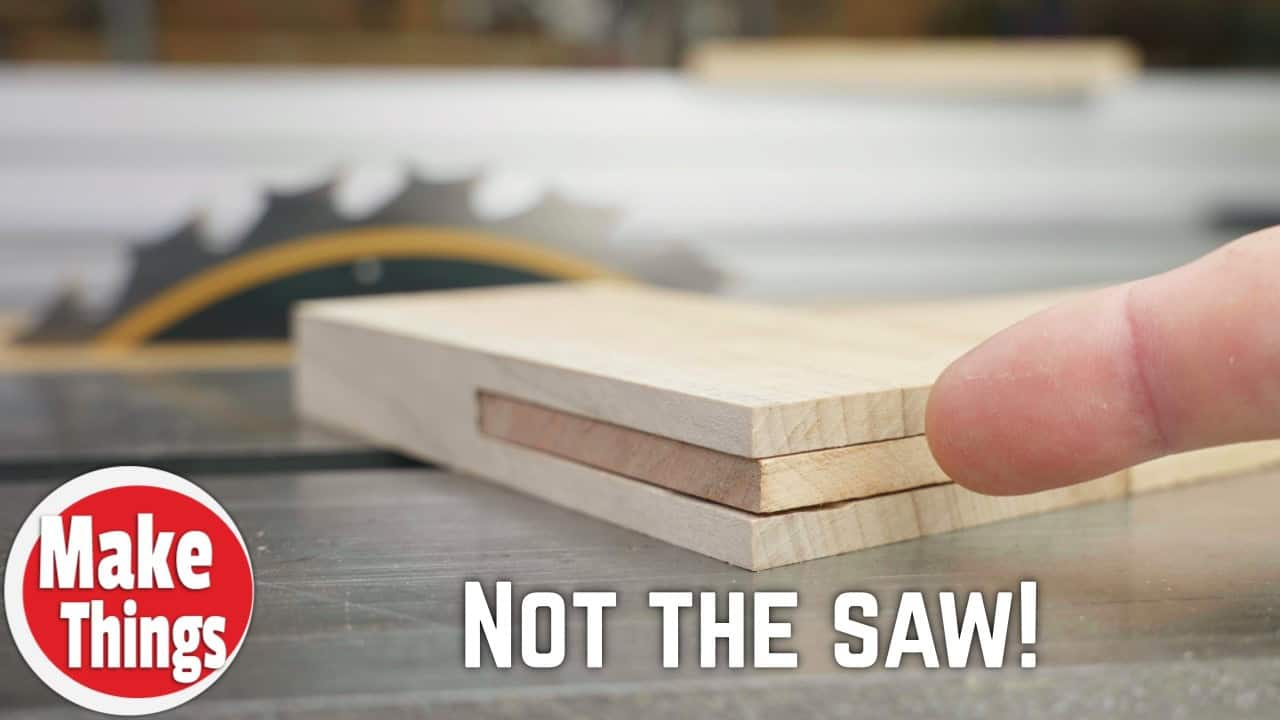
Rob from Make Things shared the woodworking tip featured in this video.
Rob addresses a common woodworking frustration that many makers experience when their joints don’t fit as precisely as intended. The issue isn’t usually with cutting technique or saw setup, but rather with the marking and layout phase that happens before any cutting begins.
Watch the full video and subscribe to Make Things:


The Problem with Interpretation
The core issue Rob identifies is interpretation. When marking wood with any pencil or marking tool that creates a visible line, woodworkers must decide which part of that line represents the actual cut location.
Thicker marks require more interpretation, creating opportunities for error. Even when using the same marking tool consistently, slight variations in how the mark is interpreted can lead to cumulative errors that result in poorly fitting joints.
Why Sharpening Pencils Creates Problems
While sharpening carpenter pencils might seem like an obvious solution, Rob explains why this approach actually creates more problems than it solves. As a sharpened pencil is used, the point changes shape and the line width varies.
This means the reference point established with the first few marks isn’t the same as the reference point several marks later. The inconsistency makes it difficult to maintain accuracy across an entire project.
The Mechanical Pencil Alternative
Mechanical pencils solve many marking problems by maintaining a consistent point and line width. Rob uses them for general layout work and measuring tasks throughout his shop.
However, even mechanical pencils still require interpretation when marking joinery. The question of which side of the line to cut remains, especially for precision work where small errors compound into noticeable problems.
The Kurdashi Knife Solution
Rob demonstrates how a Kurdashi knife eliminates the interpretation problem by creating a positive reference for cuts. Instead of a line that requires interpretation, the knife creates a precise score that shows exactly where the cut should begin.
The geometry of these knives makes them particularly effective. Under magnification, one edge is completely flat while the other has a bevel, allowing the flat edge to reference against squares and other tools while the point creates an extremely thin mark.
Why Not Use a Utility Knife
Rob compares utility knives to Kurdashi knives under magnification to show why the specialized tool performs better. Utility knife blades center themselves rather than providing a flat reference edge, creating a small but significant offset from the intended reference.
Attempting to angle a utility knife to compensate introduces the risk of cutting underneath the reference or damaging the reference tool itself. For dovetail work, this could mean cutting into tails during layout.
Practical Considerations
These knives come in right and left-handed versions, and Rob suggests having both for comprehensive dovetail work where you need to reference both sides of tails. The tools require periodic sharpening to maintain their effectiveness.
Rob demonstrates a simple sharpening method using fine sandpaper on glass, feeling for the bevel and pulling the knife forward before flipping to work the flat back. This maintenance keeps the tool performing at its best.
This approach to marking represents a fundamental shift in thinking about woodworking accuracy. By addressing precision at the layout stage rather than trying to compensate during cutting, woodworkers can achieve much tighter joints with less frustration.
Watch the full video and subscribe to Make Things:

Matt’s Take
These are my personal thoughts and tips based on my own experience in the shop. This section is not written, reviewed, or endorsed by the original creator of this project.
This marking issue hits home for me because I’ve seen so many woodworkers get frustrated with their joint fitting when the real culprit is happening way before the saw touches wood. Rob nails it with the interpretation problem – those thick pencil lines might look helpful, but they’re actually working against you when precision matters.
The Kurdashi knife approach makes complete sense from a geometry standpoint. Having that flat reference edge eliminates guesswork, and the scored line gives your chisel or saw a positive place to register. I keep both right and left-handed versions in my layout kit for exactly the dovetail situations Rob mentions. When you’re working with hardwoods, that initial score also helps prevent tearout during the actual cut.
The sharpening point is crucial – a dull marking knife is almost worse than a pencil because it tears rather than slices. I use the same glass-and-sandpaper method Rob shows, and it takes maybe two minutes to get that edge back. For general shop work, I still reach for a mechanical pencil plenty, but for joinery where fit really matters, the knife wins every time.