

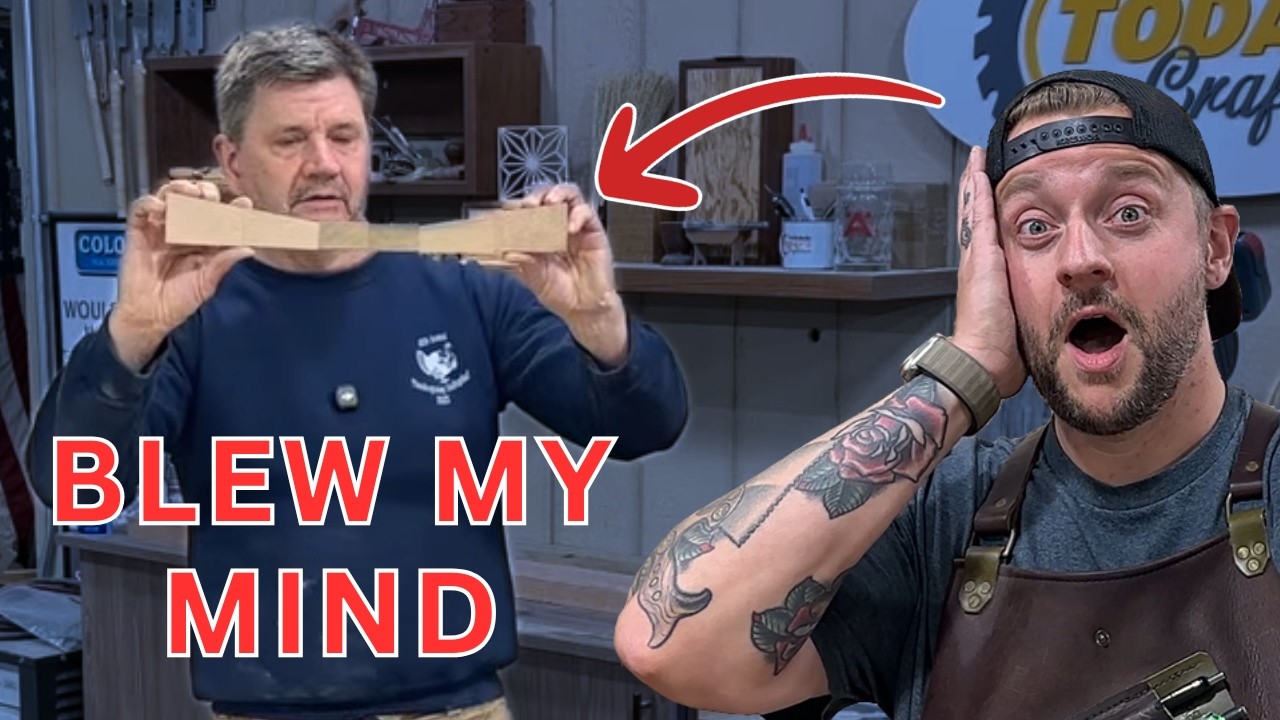
Jeff and Jon from TodaysCraftsmen shared the woodworking tip featured in this video.
This technique demonstrates how to create curved bench slats using a thickness planer instead of traditional methods like cutting curves on a table saw. The approach involves creating angled wedges that, when ripped into slats, naturally form a comfortable seating curve.
Watch the full video and subscribe to TodaysCraftsmen:

The Planer Sled Method
Jeff starts with rough eight-quarter lumber that needs proper preparation. After jointing one face and one edge, he creates a plywood sled with a wedge-shaped shim attached to one side.
The sled holds the lumber at an angle as it passes through the thickness planer. This creates a tapered piece that’s thick on one end and gradually becomes thinner toward the other end. The wedge angle determines how pronounced the final curve will be.
From Wedge to Curved Slats
Once the angled piece comes off the planer, it gets ripped into individual slats on the table saw. Each slat maintains the same angle from thick to thin, but when arranged side by side, they create a natural curve.
The demonstration shows how multiple slats of varying thickness create a comfortable seating surface. The curve dips in the center where people naturally sit, providing ergonomic support that flat slats cannot match.
Design and Assembly Benefits
This method eliminates the need for complex curved cuts or steam bending techniques. The resulting slats can be mounted to a simple frame with screws hidden underneath, creating clean sight lines.
Jeff mentions that the curve makes an enormous difference in comfort compared to flat benches. The technique allows for easy customization of the curve depth by adjusting the wedge angle or the number of slats used.
The approach works particularly well for outdoor furniture projects where comfort and simplicity are priorities. Jeff notes that proper air circulation around the wood allows even species like cherry to perform well outdoors without special treatments.
This planer technique opens up curved seating projects to woodworkers who might otherwise avoid complex shaping methods. The process requires only basic shop equipment while delivering professional-looking results that prioritize both comfort and visual appeal.
Watch the full video and subscribe to TodaysCraftsmen:

Matt’s Take
These are my personal thoughts and tips based on my own experience in the shop. This section is not written, reviewed, or endorsed by the original creator of this project.
This planer sled approach is brilliant for anyone who’s ever wanted to tackle curved seating but felt intimidated by steam bending or complex jigs. I love how it turns your thickness planer into a curve-making machine with just a simple wedge setup. The key insight here is that you’re not actually cutting curves at all — you’re creating thickness variations that naturally form the curve when assembled.
When building the sled, take your time getting that wedge angle right. A steeper wedge gives you a more pronounced curve, but remember that you’ll be ripping these into slats later, so factor in your kerf width and how many slats you plan to cut. I’d recommend making a test piece first to dial in the curve before committing to your final lumber. Also, make sure your sled is dead flat and secure — any wobble will translate into inconsistent thickness.
Safety-wise, keep your hands well clear of the planer rollers, especially with angled pieces that might want to shift. The sled helps with stability, but always use push blocks when feeding material through. For the table saw work afterward, those tapered slats can be tricky to handle, so consider using a push stick and go slow on the cuts. The comfort difference this technique creates is remarkable — once you sit on a properly curved bench, flat slats feel like punishment.