


Much of the furniture sold new today is worth a small fraction of its price once it leaves the store, and close to nothing within a decade. Older solid-wood furniture works the opposite way. Its price bottomed out years ago, and the piece itself is often still perfectly sound.
The gap comes down to how things were built. Earlier makers used solid lumber, cut joinery and hardware that could be tightened or replaced. Budget pieces now rely on particleboard, staples and cam locks that strip out after a move or two.
The 32 pieces below are categories where buying used almost always gets more furniture for the money. Each entry covers what to inspect, typical secondhand prices and the flaws worth walking away from.
1. Quartersawn Oak Library Table

Between about 1900 and 1925, parlors and school libraries across the country had a rectangular oak table with one wide drawer and a lower shelf. Mission and Arts and Crafts makers cut the tops from quartersawn white oak, which shows silvery ray fleck and resists cupping.
These sell for $150 to $400 and make excellent desks, since most stand 29 to 30 inches high with knee room underneath. A comparable new solid oak writing table runs well past $1,200.
Check that the top is attached with wooden buttons or metal clips that allow seasonal movement. Cracks along the glued seams usually mean someone screwed it down too tight.
2. Dovetailed Dresser Built Before 1970

Dressers from makers like Bassett, Kling and Drexel were usually built from solid maple, oak or birch, sometimes with figured veneer on the drawer fronts over a hardwood core. Drawer sides were typically 1/2-inch solid stock joined at the front with dovetails.
Used, they run $75 to $300. New dressers at that price tend to have stapled drawer bottoms and side-mount slides screwed into fiberboard that loses its grip within a few years.
Lift the dresser by one corner. A heavy case that stays rigid is the one to take home. Drawers that drag usually need nothing more than paraffin wax rubbed on the runners.
3. Top-Grain Leather Club Chair

New chairs in the $500 to $900 range often use bonded or PU leather, a thin polyurethane skin over fabric that flakes once the surface wears. Club chairs from the 1940s through the 1980s were usually covered in top-grain or full-grain hide over a hardwood frame and coil springs.
Expect to pay $250 to $700 for a sound one. Dry, faded leather responds well to a cleaner followed by conditioner applied in thin coats over several days.
Turn the chair over and look at the hide where it wraps under the frame. Real leather shows a fibrous, suede-like underside. A woven fabric backing means it is not leather at all.
4. Drop-Leaf or Gateleg Table

Few pieces solve a small dining area like a table that folds down to 12 or 16 inches deep and opens to seat six. Duncan Phyfe style mahogany drop-leafs from the 1930s and 1940s, plus older oak gatelegs, sell for $60 to $200 and turn up constantly.
Good ones use a rule joint, a matched cove and round-over along the hinge line that hides the gap when the leaf hangs down. Cheap new versions use a flat butt joint that leaves a visible crack.
Swing each gate or support leg open and closed several times. A loose pivot can usually be fixed with a new dowel and a little glue.
5. Steel Tanker Desk

Postwar office suppliers like Steelcase, Art Metal and McDowell-Craig built steel desks for typing pools and county offices. A full double-pedestal model can weigh close to 300 pounds, and the drawers ride on ball-bearing slides that still feel smooth seventy years later.
Surplus auctions and used office dealers sell them for $100 to $350. Plan on a delivery fee or several strong friends, since the pedestals rarely come apart.
Many original tops are scuffed linoleum or laminate over particleboard. Swapping in a 1-1/2-inch walnut or maple slab turns a gray government desk into the best-looking piece in a home office.
6. Hardwood Sofa Frame Worth Reupholstering
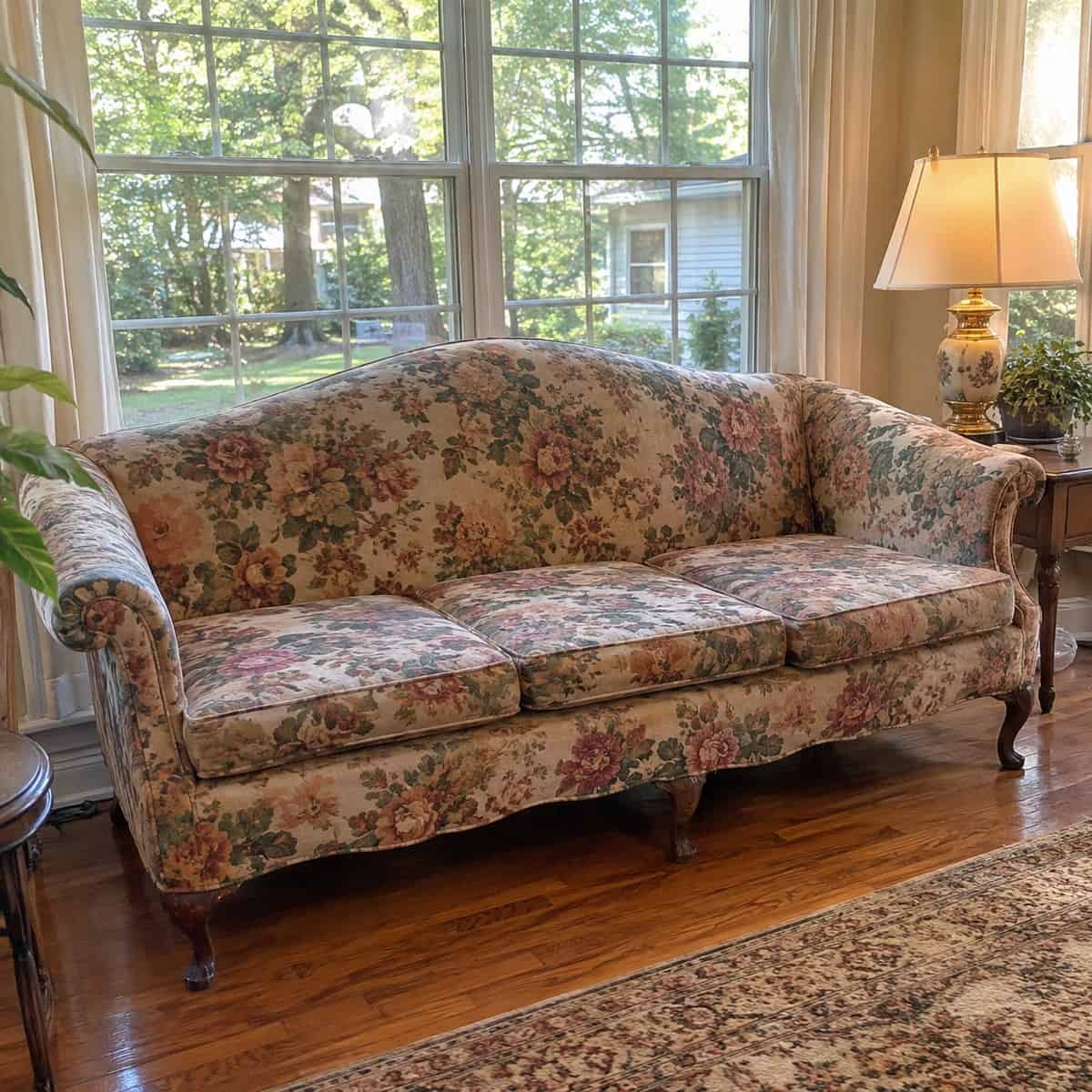
Fabric is the cheap part of a sofa to replace. The frame and springs decide whether it lasts, and many older sofas from regional makers and custom upholstery shops used kiln-dried hardwood with eight-way hand-tied springs.
Lift one front corner about six inches. A solid frame rises evenly, while a weak one twists, creaks or lifts on one side only. Press into the seat deck and feel for individual coils rather than a flat foam slab.
Use a flashlight to inspect seams and the dust cover underneath for bed bugs, droppings or shed casings before it goes in the car. Reupholstery typically runs $1,000 to $2,500 with fabric.
7. Stacking Barrister Bookcase

Globe-Wernicke, Gunn and Macey sold sectional bookcases from roughly 1890 into the 1930s. Each shelf unit was bought separately so a family could add sections as its library grew, and every level has a glass door that lifts and slides back into the case.
A three-stack in oak commonly sells for $300 to $700, well below a new solid oak case with glass doors. The doors also keep dust off the books, something open shelving cannot do.
Look for the maker’s paper label on the back or inside a door. Doors that stick usually need their metal slides cleaned and waxed, not replaced.
8. Painted Jelly Cupboard or Pie Safe

Farmhouse kitchens from the 1870s through the 1920s stored preserves, pies and dry goods in tall pine or poplar cupboards. Pie safes have punched tin door panels, often in star or tulip patterns, that let air circulate.
Plain painted cupboards sell for $200 to $600. They work as pantry storage, linen cabinets or bathroom storage that holds far more than a new freestanding unit.
Treat any layered old paint as lead-based until tested. A swab kit like 3M LeadCheck gives a quick answer, and flaking surfaces should be wet-wiped and sealed, never dry-sanded indoors. Original paint with honest wear is usually worth more than a fresh stripping job.
9. Extension Dining Table With Its Leaves

A solid walnut, oak or cherry table that opens with two or three leaves can go from seating six to seating ten. Tables from the 1920s through the 1960s used wooden slides or geared steel mechanisms built for decades of holiday dinners.
Many sell for $150 to $500 as families downsize, while a new solid wood table of the same size starts above $2,000. Veneer over a solid lumber core is fine. Veneer over particleboard is not.
Ask where the leaves are before anything else. Then fit them in and check the edges, since leaves stored in a damp basement often warp and stop sitting flush.
10. Mid-Century Walnut or Teak Credenza

Lane, Broyhill, American of Martinsville and Danish exporters turned out low sideboards from about 1955 to 1975, typically walnut or teak veneer over lumber-core or good plywood. Values have climbed for twenty years and show no sign of reversing.
Prices range from $250 at an estate sale to $2,500 or more for a known designer. Even the high end often costs less than a new solid-wood piece of similar size.
Run a fingernail along the veneer edges and corners, feeling for lifting or bubbles. Small lifts reglue easily with yellow glue and a clamp. Large missing sections are where repair bills climb.
11. Set of Mortise-and-Tenon Dining Chairs

A chair with a rectangular tenon locked into a matching mortise has far more glue surface than one held by a pair of round dowels. Older oak, maple and walnut chairs used that joint, plus corner blocks screwed and glued under the seat.
Sets of four to six turn up at estate sales for $100 to $400. One wobbly chair in a set is normal and fixable: knock the joint apart, clean out the old glue and reglue with hide glue or yellow glue.
Flip a chair over. Triangular wood blocks in each corner are a good sign. Metal brackets and staples suggest a later repair or a lower-grade chair.
12. Wrought-Iron Patio Set
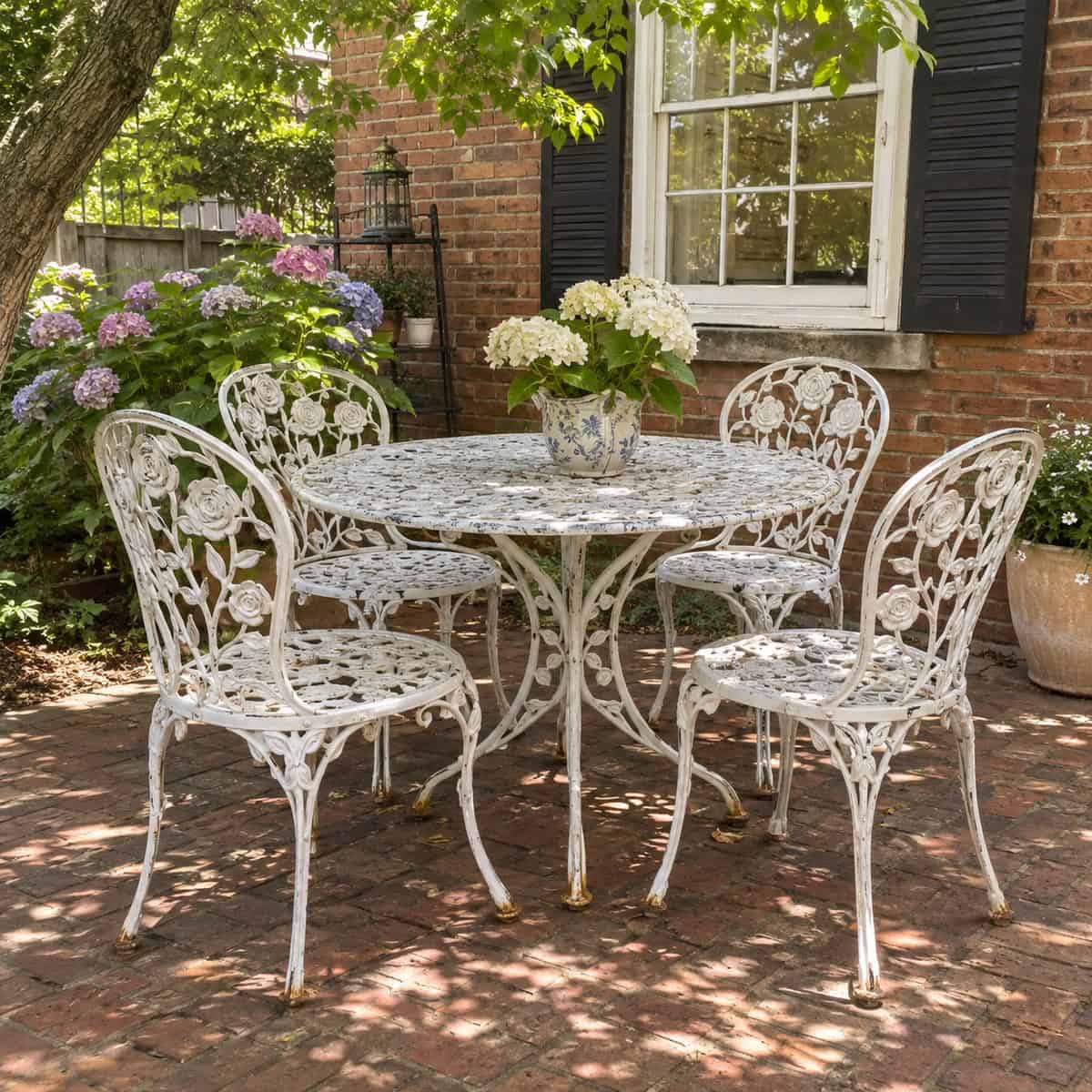
Woodard and Salterini built heavy iron patio furniture in the 1940s and 1950s, and Woodard patterns like Chantilly Rose still sell for more than new aluminum sets. Even unnamed pieces from the era weigh two or three times what modern tube steel does.
Expect $150 to $600 for a table and four chairs. Surface rust is cosmetic. Sandblasting and powder coating runs roughly $75 to $200 per chair at a local shop and leaves a finish that lasts for decades.
Check the welds where the legs meet the seat ring. Clean cracks can be rewelded. Rust that has eaten all the way through the metal is the one deal breaker.
13. Cedar Hope Chest, With One Safety Fix

Lane made millions of aromatic red cedar chests from 1912 through the 1980s, many given as graduation gifts, so they fill thrift stores and estate sales. A clean one runs $75 to $250.
Chests made before 1987 by Lane and Virginia Maid have a lid lock that latches automatically when closed, and children have died after climbing inside. The CPSC recall covers roughly 12 million chests, and Lane offers a free replacement lock. Install it or remove the old latch before the chest goes into a home with kids.
If the cedar scent has faded, a light scuff with 220-grit sandpaper inside the chest brings it back.
14. A Mismatched Pair of Nightstands

Bedroom suites get split up at estate sales, and the nightstands are usually what is left over. That makes solid-wood bedside tables with working dovetailed drawers some of the cheapest good furniture around, often $25 to $75 each.
Exact pairs are rare and cost more. Two pieces of similar height, within an inch or so of the mattress top, look intentional once they share a paint color or matching hardware.
Choose stands with a drawer plus an open shelf or cabinet below. The open space holds books and chargers, which keeps the drawer clear for the small things that collect beside a bed.
15. Mission Oak Morris Chair

The Morris chair was the original recliner. Gustav Stickley, L. and J.G. Stickley and dozens of smaller Grand Rapids shops built them from about 1900 to 1920 in quartersawn oak, with a back that tilts on a rod or pegs set into the arms.
Signed Stickley chairs bring thousands, but unsigned period examples often sell for $300 to $800. New solid oak Arts and Crafts reproductions usually start around $2,500.
Make sure the adjustment rod and back pivots are present, since replacements have to be made to fit. Cushions are almost always worn out, and an upholsterer can make new ones for $150 to $300.
16. Glass-Front China Cabinet

Formal dining fell out of fashion, and mahogany and cherry china cabinets that cost a month’s pay in the 1950s now sit unsold for weeks. Listings for $50 to $200 are common, and estate cleanouts sometimes give them away.
Many have glass shelves, mirrored backs and wired interior lights. Moved into a living room or home office, one becomes a display case for books, pottery or collections.
Check that every pane is intact and the doors close square. Old wavy glass is worth keeping. A missing shelf is easy to replace with tempered glass cut to size at a local glass shop for $30 to $60.
17. Refurbished Ergonomic Office Chair

A new Herman Miller Aeron or Steelcase Leap sells for $1,300 to $1,900. Office liquidators sell the same chairs, cleaned and fitted with fresh parts, for $350 to $700, often with their own warranty.
These chairs were designed to be serviced. Gas cylinders, casters, arm pads and seat mesh can all be ordered and swapped with basic tools, so one worn part does not end the chair’s life.
Sit in it before paying. Test the tilt tension, lumbar support and height controls, and confirm the size, since Aerons come in A, B and C sizes for different body frames.
18. Solid Hardwood Bed Frame

Older beds join the headboard and footboard to the side rails with steel hook-in brackets or long bed bolts. Both can be tightened or replaced indefinitely, unlike the cam locks in flat-pack frames that strip out of particleboard after a move or two.
Spindle, sleigh and four-poster beds in maple or cherry run $100 to $500 used. Measure first, because many antique beds are three-quarter size at about 48 inches wide, or shorter than a modern full.
Buy the frame used and the mattress new. Secondhand mattresses are a common route for bed bugs and cannot be fully inspected.
19. Hoosier Kitchen Cabinet

Between about 1900 and 1930, Hoosier, Sellers, McDougall and Napanee built freestanding kitchen workstations with a flour bin and sifter, a sugar jar, spice racks and a pull-out enamel or zinc work surface. Every step of baking had its own spot.
Complete cabinets sell for $400 to $1,200, depending on how many original parts survive. Missing glass jars and sifters are widely available as reproductions.
Check that the base drawers and sliding counter move smoothly. In a modern kitchen short on upper cabinets, a Hoosier makes a strong coffee station or baking center.
20. Nest of Tables
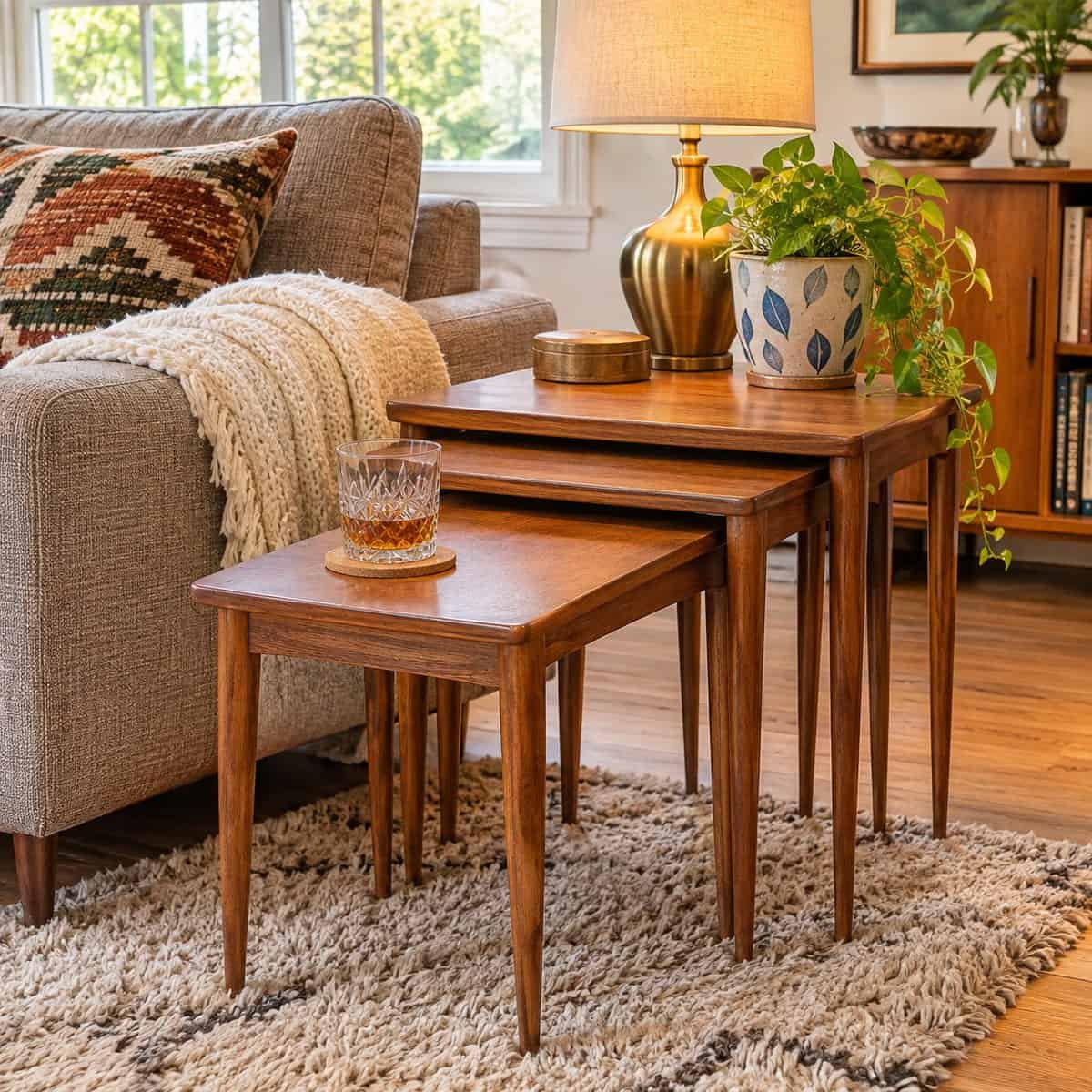
Sets of two or three graduated tables that slide under one another were a staple of living rooms from the 1920s through the 1960s. Mahogany, walnut and teak versions sell for $40 to $150 a set, often less than a single new end table.
Stacked, they take up the footprint of one small table beside a sofa. Pulled apart, they become extra surfaces for guests, drinks or a laptop.
Look for solid legs and aprons with veneer that lies flat. Danish teak sets from the 1960s are especially sturdy and hold their value well if a future move means selling them.
21. Bentwood or Rattan Chair

Thonet’s steam-bent beech cafe chairs and their many copies have been made since the 1860s, and vintage ones turn up for $40 to $150. The same goes for 1950s through 1970s rattan from Ficks Reed and Calif-Asia.
Natural cane and rattan can be repaired. A local caner typically charges $1 to $2 per hole for a hand-woven seat, and pressed sheet cane set into a groove costs less.
Modern resin wicker cannot be fixed once the strands crack. Keep natural rattan indoors or on a covered porch, out of direct sun and rain, and it will last for decades.
22. Church Pew as a Dining or Entry Bench

As congregations merge and sanctuaries are renovated, oak and pine pews are being sold off in large numbers. Prices often run $100 to $400 for an 8- to 12-foot pew, with better deals for buyers who bring their own truck.
A pew works as dining seating, an entry bench or a long hallway seat. A cabinet shop or confident DIYer can cut it to length and reattach the end panel.
Check that the end supports are solidly attached and the seat has not split along its length. Ask whether the pew numbers or hymnal racks come with it, since those details add character.
23. Drop-Front Secretary Desk

A secretary packs a writing surface, drawers and pigeonholes into a footprint about 30 to 36 inches wide. Colonial Revival versions in mahogany and maple from roughly 1910 to 1960 sell for $100 to $350.
The fold-down front rests on pull-out supports called lopers. Check that both slide out evenly and hold the weight of a laptop and a pair of forearms.
Ask for the key if there is a lock, and open every small interior drawer. Missing or loose ones are common and inexpensive for a repair shop to rebuild. Closed, the front hides bills and paperwork in a way no open desk can.
24. Weathered Teak Patio Furniture
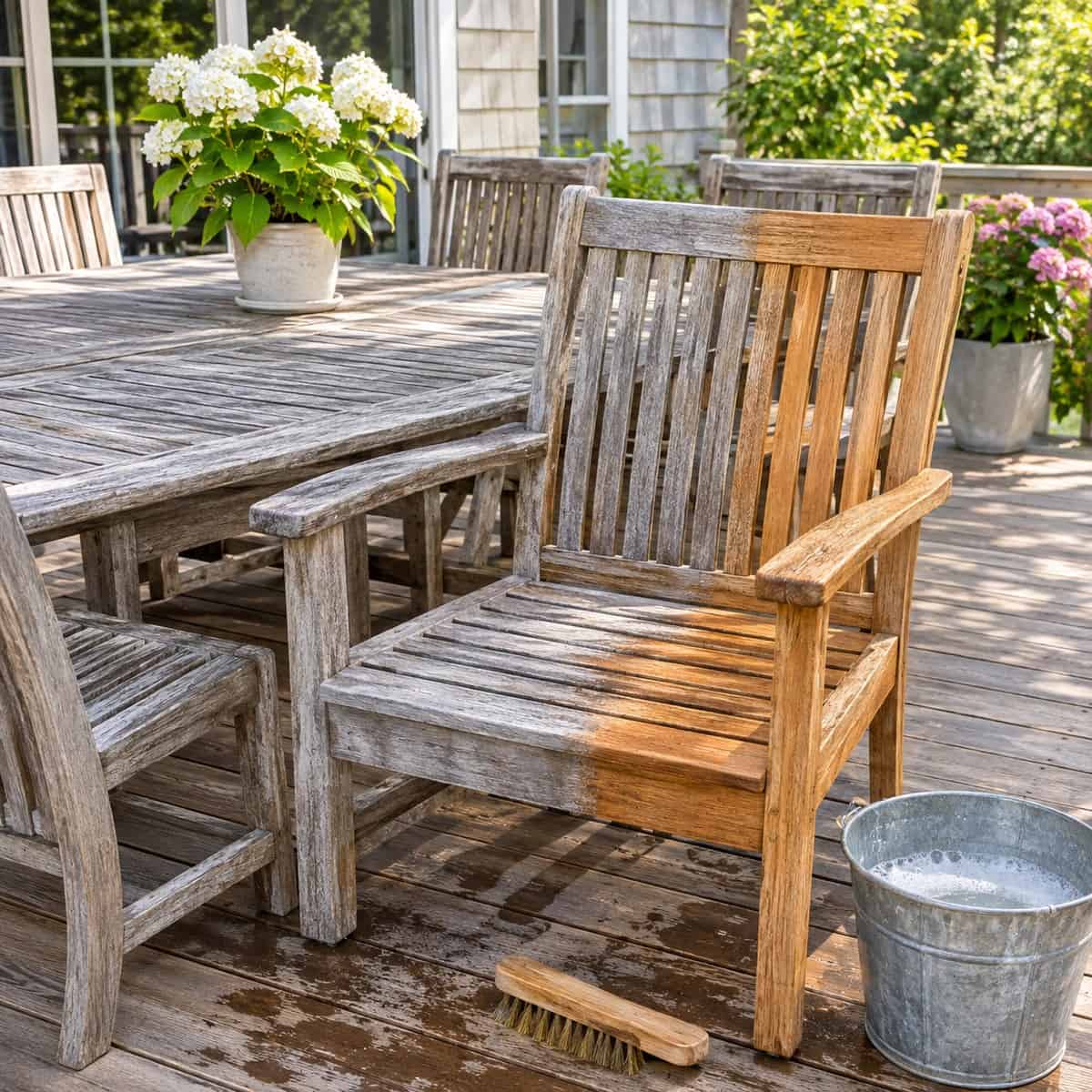
Teak contains natural oils and silica that resist rot and insects without any finish. A set that has gone silver-gray after years outdoors is usually solid underneath, and used sets from brands like Smith and Hawken or Kingsley-Bate often sell for a third of new.
A teak cleaner, a stiff brush and a light sanding with 120 grit bring back the golden color in an afternoon. Leaving it gray is equally fine.
Check joints for loose bolts and look for soft or blackened wood near the feet, where water pools. Swap any rusty hardware for stainless steel and the set is ready for another twenty years.
25. Spindle-Back Rocking Chair

Rocking puts constant stress on chair joints. Windsor, Boston and press-back rockers from the 1880s through the 1940s held up because their spindles were set deep into drilled seats and often wedged in place.
Expect $50 to $200 for a sound one. New budget rockers frequently use soft rubberwood with screws and dowels that work loose under daily use.
Sit in it and rock with some force. A creak can be fixed, but a seat that shifts against the legs signals bigger work. Check the rockers for cracks running along the grain near the leg joints, the most common serious break.
26. Victorian Marble-Top Washstand

Before indoor plumbing, Victorian bedrooms held a washstand for a basin and pitcher. Walnut Eastlake examples from the 1870s and 1880s, usually topped with a 3/4- to 1-inch slab of white marble, sell for $150 to $450.
They make excellent bathroom vanities, coffee bars or bedside tables with a nearly indestructible top. Converting one to a vanity is a common project, though cutting the marble belongs with a stone fabricator.
Look for marble without cracks running through its full thickness. Stains and dull spots can be polished out. Make sure the slab sits on wooden pins or in a recess so it cannot slide off.
27. Maple Butcher Block Cart or Island

Old meat market butcher blocks and 1970s maple kitchen carts from companies like John Boos are thick enough to survive years of resurfacing. A new end-grain block of similar size can top $1,000.
Used blocks with deep cuts or a dished center sell for a fraction of that. Flatten with a belt sander or router sled, sand to 150 grit and soak with food-safe mineral oil over a few days.
Check for cracks running deep along the glue lines. Small surface checks are normal and fill with oil and board wax. A block that rocks may only need leveling glides.
28. Oak Hall Tree With Storage Bench

Victorian and Mission hall trees from the 1890s through the 1920s combined coat hooks, a beveled mirror, an umbrella holder and a lift-top seat for boots. Most were quartersawn oak with cast iron or brass hooks bolted through the frame.
Prices run $250 to $800 depending on size and carving. Modern entry benches with similar storage are often veneered particleboard with hooks screwed into a thin back panel.
Check the base for wobble, since hall trees get top-heavy when loaded with coats. Anchoring one to a wall stud with a furniture strap is a smart step in any house with children.
29. Beveled Glass Mirror in a Wood Frame

Mirrors from the 1880s through the 1940s often used thick plate glass with a ground bevel around the edge, set in oak, walnut or gilded gesso frames. The bevel catches light in a way flat modern glass does not.
A large overmantel or dresser mirror can sell for $75 to $300. New mirrors of similar size usually pair thin glass with an MDF or resin frame for the same money or more.
Spotting or cloudy patches, known as desilvering, are common and many buyers like the effect. Check the back for sound frame joints and a secure hanging wire. Heavy mirrors belong on two anchored hooks.
30. Wardrobe or Converted TV Armoire

Many older homes were built with small closets or none, so wardrobes filled the gap. Victorian knockdown wardrobes come apart into panels held with wedges or pins, so they can be carried upstairs and reassembled.
The more common bargain is the 1990s TV armoire, often solid cherry or oak, now selling for $50 to $200 or less since televisions hang on walls. Pull the TV shelf, add a closet rod or pull-out trays, and it becomes clothes storage, a pantry or a closed home office.
Measure doorways and stairwells before buying. Many armoires stand 6 to 7 feet tall.
31. Chrome Kitchen Step Stool

Cosco step stools from the 1950s and 1960s, with a padded vinyl seat and two pull-out steps, were built from heavy steel tubing and still stand solidly on kitchen floors seventy years on.
Used ones sell for $25 to $80. They outlast most plastic folding stools at a similar price and are tall enough to reach upper cabinet shelves.
Check that the steps slide out and lock smoothly and that all four rubber feet are intact. Replacement feet and vinyl seat covers are easy to find. Skip any stool with cracked welds, since this is a piece of safety equipment as much as furniture.
32. Counter-Height Wooden Bar Stools

Solid maple, oak and birch stools from the 1940s through the 1970s were built like good dining chairs, with legs tenoned into the seat and a ring of stretchers near the floor that keeps them rigid. Many survived decades of diner and kitchen use.
Expect $30 to $90 each. New stools at that price often depend on a single center bolt or dowels that loosen and make a tall seat unsteady.
Measure seat height before buying. Counter stools run about 24 to 26 inches, while bar-height stools sit around 29 to 31 inches. Regluing and tightening joints once a year keeps them steady.
Judge the Joinery Before the Finish
The same handful of checks applies to almost every piece here. Pull a drawer, flip a chair, lift a corner and look underneath. Solid wood, cut joints and bolted hardware mean a piece can be repaired. Staples, particleboard and cam locks usually mean it cannot.
Finishes, fabric and hardware are the easy parts to change. A sound frame bought for $100 can be refinished or reupholstered into something that lasts another fifty years.
Two rules hold without exception: buy mattresses new, and test old paint for lead before sanding. Everything else on the list is fair game at the next estate sale.