

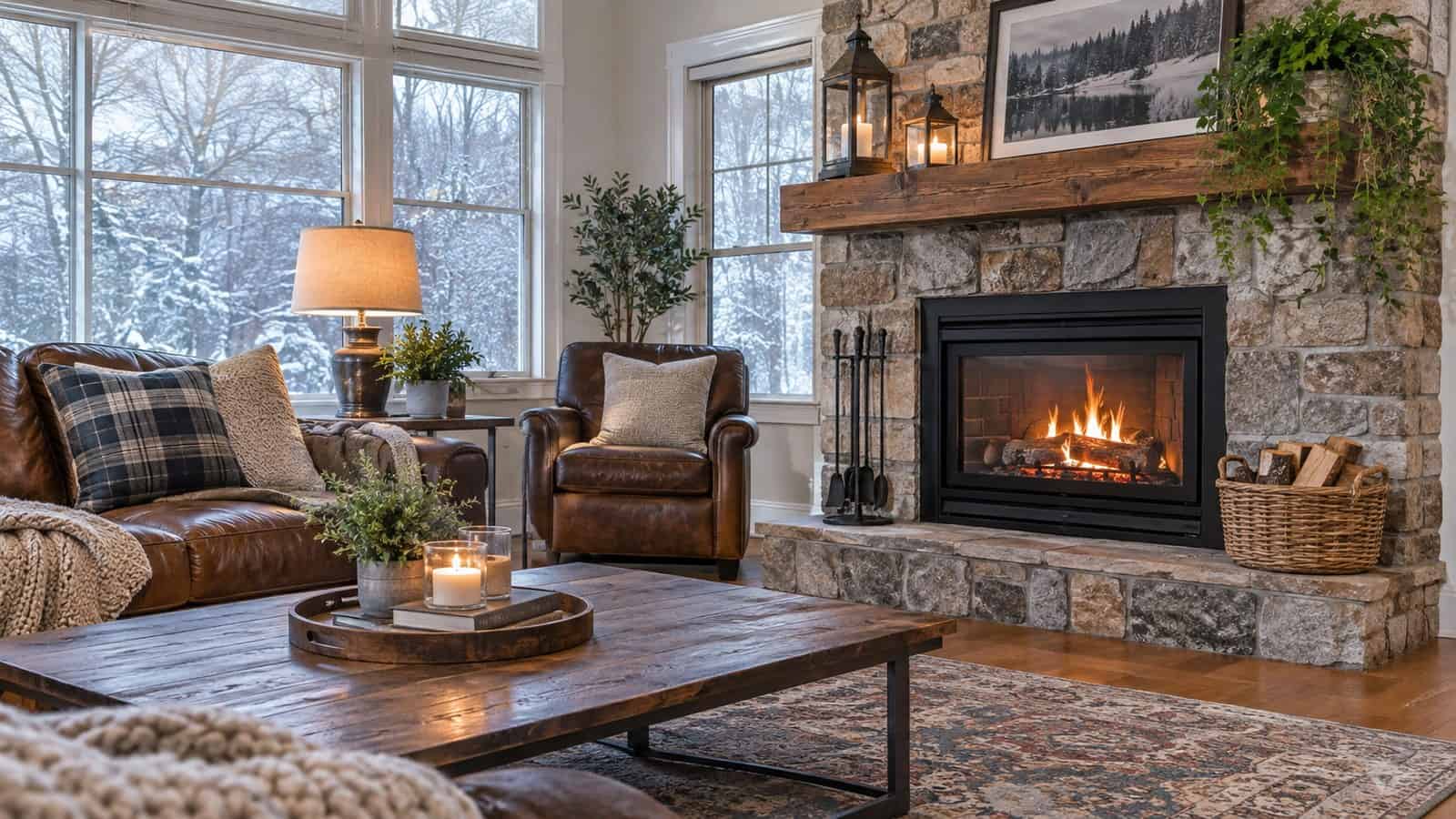
A chimney sweep can usually tell within a minute of walking into a living room whether the fireplace gets used. Logs with a layer of dust, a remote buried in a kitchen drawer, and a hearth doing duty as a plant shelf all point to a decision that stopped working.
Most fireplace regrets have nothing to do with broken parts. They come from choices made for looks, convenience or a fast quote. The bill arrives later as high gas costs, soot stains, foggy windows and repair calls.
The 29 decisions below are the ones sweeps, installers and home inspectors run into over and over. Each comes with the fix or the better choice, so the fireplace earns its spot in the house instead of turning into furniture.
1. Skipping the Level 2 Chimney Inspection
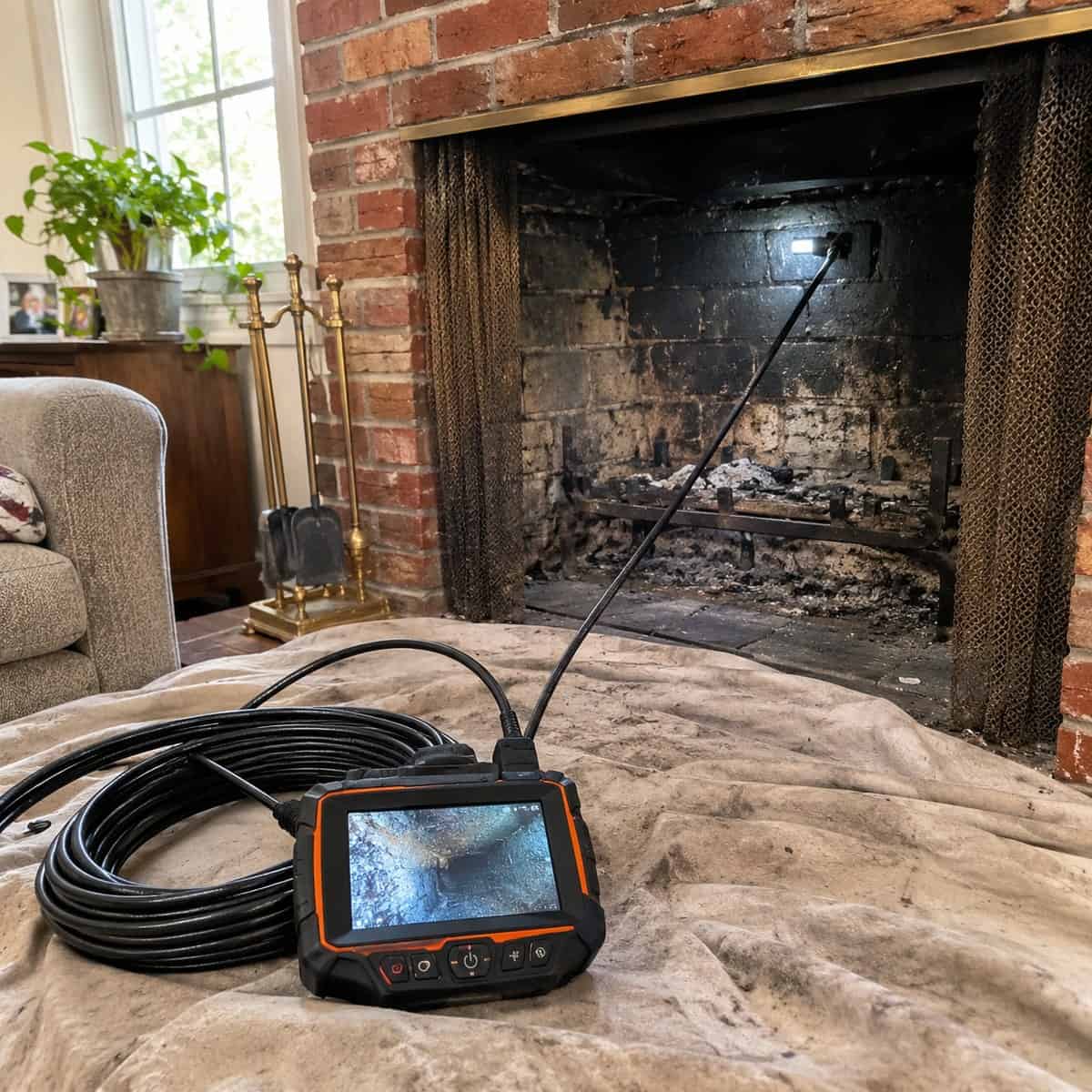
A general home inspector shines a flashlight into the firebox and writes recommend evaluation by a chimney professional. That line gets skipped at closing far more often than it should.
The NFPA 211 standard calls for a Level 2 inspection whenever a property changes hands. It includes a video scan of the entire flue, a look at the chimney where it passes through the attic and crawlspace, and a check of the crown outside. Expect $250 to $500 in most markets.
A cracked liner found before closing turns a $3,000 to $7,000 repair into a negotiating point. Found in November, it goes on a credit card.
2. Picking a Gas Unit by Showroom Size
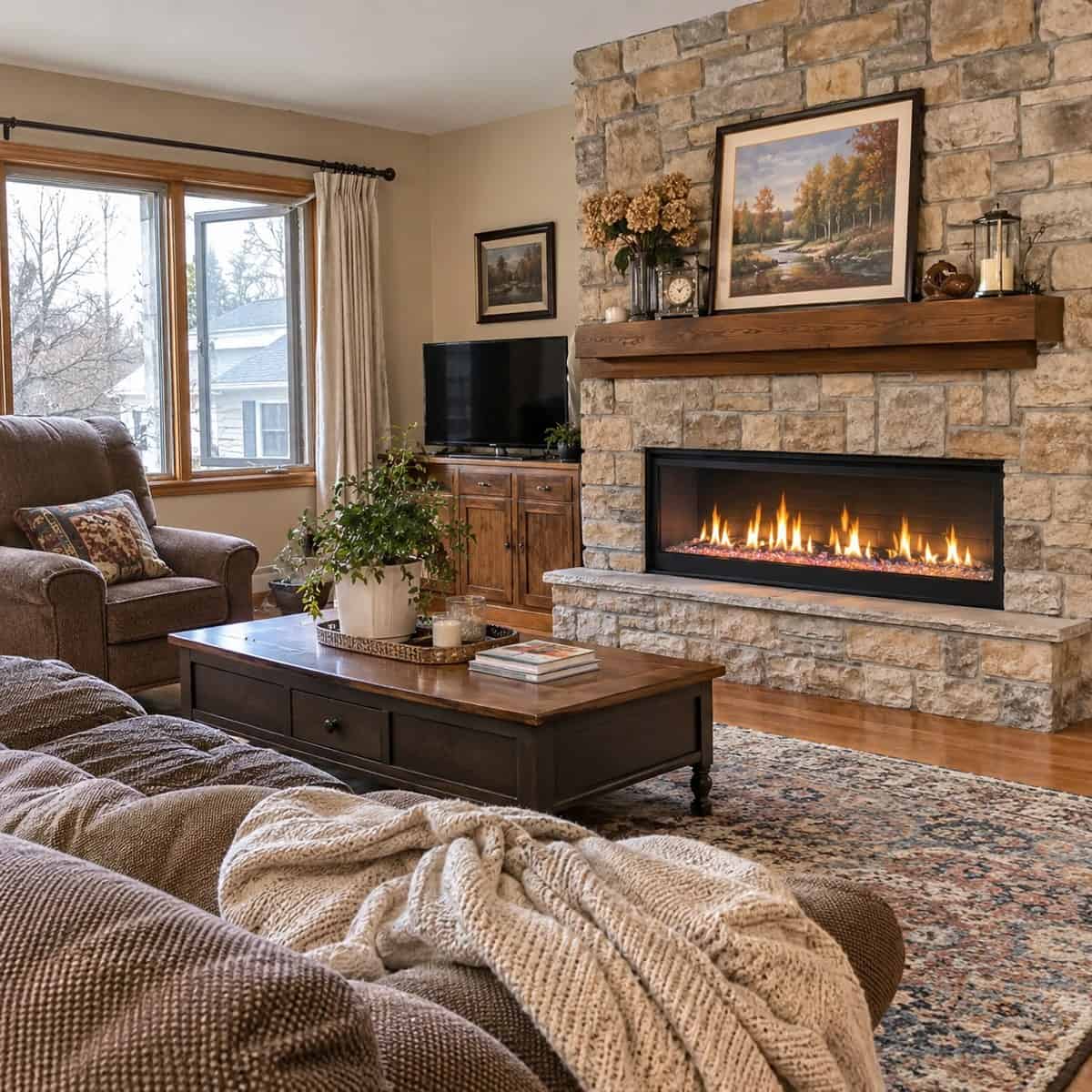
Showrooms light their units in big spaces with tall ceilings, where a 42,000 BTU linear model looks perfectly proportioned. Installed in a 14-by-18 family room, the same unit makes the space stuffy within half an hour.
A practical starting point is 20 to 30 BTU per square foot in an older, leakier house and closer to 15 in newer, well-insulated construction. That puts most living rooms somewhere between 8,000 and 15,000 BTU of real need.
If the long look matters, choose a model with an adjustable flame and a thermostatic remote. A heat-release kit that vents warm air up and out of the room is another option.
3. Bringing Home a Vintage Uncertified Stove

A cast-iron stove from the 1970s or early 1980s can look like a steal at $200 to $400. Most of those units came before EPA certification began phasing in during 1988, and they lack the secondary burn tubes or catalytic combustors found in modern stoves.
That means more smoke, faster creosote buildup and more wood hauled every winter. Insurers often ask whether a stove carries a testing lab or EPA label, and some decline coverage for unlabeled units.
Look on the back of any used stove for a metal certification tag. No tag, no purchase. Washington state and a number of other jurisdictions restrict installing uncertified stoves altogether.
4. Hanging the Television Over the Mantel

The wall above a mantel is where the warmest air in the room collects. Most flat screens list a maximum operating temperature of roughly 95 to 104 degrees, and a wood fire or a large gas unit can push that wall past it.
Posture is the other issue. A typical mantel puts the center of the screen 60 to 70 inches off the floor, while comfortable viewing from a sofa puts it closer to 42 inches.
Put the screen on another wall. If it truly has to live over the hearth, use a pull-down mount that lowers it to eye level, plus a mantel shelf at least 6 inches deep to deflect rising heat.
5. The Flat Galvanized Chase Top

Houses with a factory-built fireplace usually have a framed box on the roof, sided to match the house and capped with a sheet-metal lid. The original lid was often thin galvanized steel with no slope and no drip edge.
After 10 to 15 years, rust spots turn into pinholes, and rainwater runs down inside the chase where nobody looks. Rotted framing, a corroded firebox top and ceiling stains near the hearth follow.
Replace it with a custom stainless or powder-coated cover that has a raised center or cross-breaks to shed water and a drip edge that clears the siding. Most cost $300 to $800 installed, far less than reframing a chase.
6. A Ventless Gas Fireplace in a Tight House

Ventless gas units are marketed at nearly 100 percent efficiency. That is technically true, because nothing leaves the house, including the water vapor, carbon dioxide and nitrogen dioxide the burner produces.
Each therm of gas burned releases close to a gallon of water. In a tight house, a few evenings of use can fog windows and push indoor humidity past 50 percent, the range where mold starts to take hold. Some owners also report a lingering odor and headaches.
California prohibits them in homes, and a number of local codes restrict them. A direct-vent unit costs more to install but keeps combustion byproducts outdoors.
7. Painting the Brick With Interior Latex

Painting a dated orange-brick fireplace is one of the cheapest makeovers around and one of the easiest to get wrong. Ordinary interior latex on the brick face near the opening tends to blister, yellow and peel within a season or two of fires.
Brick also holds moisture. A film-forming paint can trap it, leading to flaking and spalled faces.
For the surround, use a breathable mineral masonry paint or a limewash. Inside the firebox, leave the brick bare or use a high-heat coating rated around 1,200 degrees. Scrub soot off first with TSP or a masonry cleaner, or nothing will stick.
8. Expecting an Electric Fireplace to Heat the Room

An electric fireplace on a standard outlet makes about as much heat as a $40 space heater, roughly 5,000 BTU per hour. That suits a small bedroom or office. In a 400-square-foot open living area, it barely registers.
Running cost adds up as well. At 16 cents per kilowatt-hour, four hours a night at full output costs close to $1, or about $30 a month.
For an apartment, a room with no venting route or a purely decorative look, electric is a sensible pick. If heat is the goal, look at hardwired 240-volt models around 8,000 to 10,000 BTU, or a ductless heat pump.
9. Flooring Laid Right to the Firebox

Remodels often run new hardwood or carpet straight to the face of the firebox, with a plan to deal with the hearth later. Later rarely comes.
Residential code generally requires a noncombustible hearth extension reaching 16 inches out from the opening and 8 inches past each side when the opening is under 6 square feet. Larger openings need 20 inches and 12. Factory-built units list their own minimums.
A popping chunk of pine can throw embers more than 2 feet. Choose slate, tile, stone or a raised hearth and set it before the flooring goes in, so the new floor butts cleanly against it.
10. Leaving the Open Brick Firebox As Is

A traditional open fireplace pulls hundreds of cubic feet of heated air per minute up the chimney while it burns. Cold outside air seeps in through every gap to replace it, so rooms away from the hearth get chillier.
Most estimates put open-fireplace efficiency somewhere between the single digits and the low teens. In practice, that heat mostly warms the sky.
Keep the brick and the mantel and add an EPA-certified wood insert or a direct-vent gas insert with a stainless liner. Installed prices typically run $3,000 to $6,000 for wood and $3,500 to $7,000 for gas, and many of those units reach 70 percent efficiency or better.
11. Gas Ignition That Needs Wall Power

Most newer gas fireplaces use intermittent pilot ignition, which lights the pilot only when heat is called for. It saves gas, but the control board needs power, usually from a 120-volt receptacle or adapter in the base.
That catches people during an ice storm. The house is dark, the furnace is down, and the one appliance that could keep the living room livable will not light.
Choose a model with built-in battery backup or buy the add-on pack, often $40 to $120. Test it in October by unplugging the unit and trying to start it.
12. A Masonry Chimney With No Cap

An uncapped masonry chimney is an open pipe pointed at the sky. Rain soaks the smoke chamber and rusts the damper, raccoons move in, and wind can push smoke back down into the room.
Water is the expensive part. Moisture mixed with creosote forms acids that eat mortar joints, and freeze-thaw cycles break up the crown.
A stainless cap with spark-arrestor mesh costs $75 to $300 for the part, plus installation. Code calls for mesh openings between 3/8 and 1/2 inch, since finer screen clogs with soot. Copper looks right on older houses and lasts for decades.
13. A Firebox Too Big for Its Flue
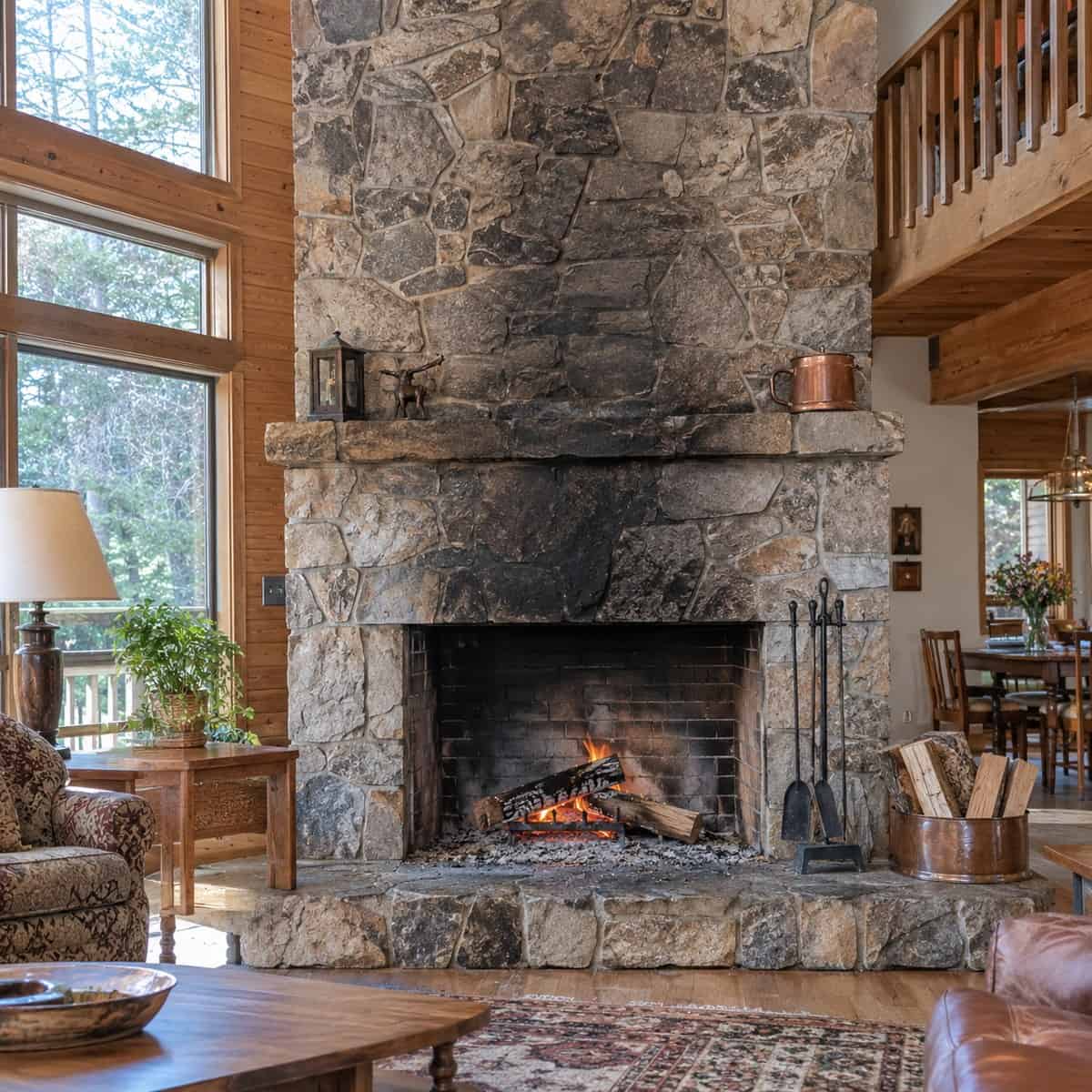
A tall, wide firebox makes a strong impression, but the flue above it has to carry all the smoke and air that big opening invites. When the opening outgrows the flue, smoke curls out under the lintel.
Sweeps measure both. A 36-by-30-inch opening covers 1,080 square inches and generally needs a flue with about 108 square inches of interior area. Many older houses have far less.
A quick test tells the story. Hold a sheet of metal across the top few inches of the opening during a fire. If the smoke stops spilling, a permanent steel or glass smoke guard, around $150 to $400, can solve it.
14. Mantel Wood Inside the Clearance Zone

Reclaimed beams and painted shiplap became the default fireplace wall over the past decade, and plenty went up without anyone opening the installation manual.
For masonry fireplaces, code keeps wood at least 6 inches from the opening. Within 12 inches, combustible trim can project no more than 1/8 inch for each inch of distance from the opening. Factory-built units may call for 12 inches or more.
Wood placed too close slowly darkens, dries and cracks, and years of heating lower the temperature at which it can ignite. Measure before installing. Tile, stone or cement board can fill the clearance zone and still look intentional.
15. Heating the Whole House With Propane Flames

In rural areas without gas lines, leaning on a propane fireplace to cut oil or electric bills is tempting. The math rarely works with propane at $2.50 to $4 a gallon.
A 30,000 BTU unit burns about a third of a gallon per hour. Eight hours a day for a month comes to roughly 80 gallons, and that heats one room.
Use propane fireplaces for zone comfort on cold evenings, controlled by a wall thermostat so they cycle. For whole-house heat, a cold-climate heat pump or a properly sized furnace almost always costs less. Ask the supplier about a pre-buy price as well.
16. An Insert Vented Into the Old Flue
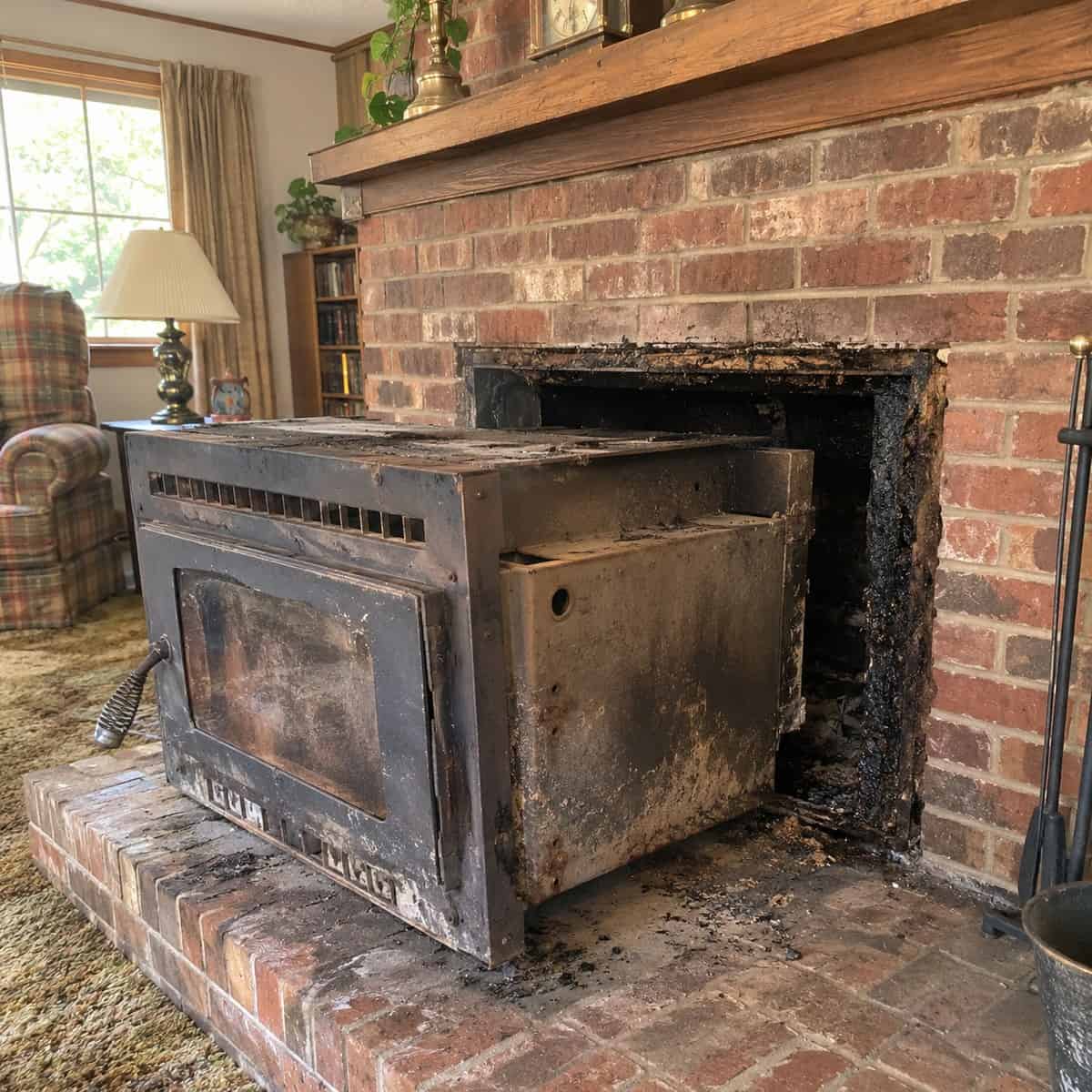
Many inserts from the 1970s and 1980s were slid into the firebox with a metal plate sealing the face and the exhaust dumped into the original masonry flue. Sweeps call these slammer installs.
The oversized clay flue cools the exhaust, so creosote builds quickly, and the insert has to come out for every cleaning. Most manufacturers now require a full-length stainless liner from the insert collar to the top of the chimney.
A correctly sized insulated stainless liner, often 6 inches in diameter, runs $1,500 to $3,500 installed. Draft improves, and annual sweeping becomes a quick job.
17. Burning Through a Cracked Tile Liner

Clay flue tiles, standard in American masonry chimneys from roughly the 1920s on, last a long time until heat shock splits them. A single creosote fire can crack several tiles in minutes.
Cracks let heat and gases reach the framing, which in many older homes sits within 2 inches of the masonry or touches it. None of this is visible from the hearth or the roof without a camera.
If a scan shows cracks or missing mortar, relining options include a stainless liner, about $2,500 to $5,000, or a cast-in-place or ceramic resurfacing system when most tiles are sound. Stop burning until the work is done.
18. Freestanding Ethanol Burners on Tables and Walls

Ethanol burners promise a real flame with no chimney, and slim wall and tabletop models suit modern rooms. They also put liquid fuel and an open flame within arm’s reach of a coffee table.
Refilling a burner that is still warm can ignite fumes and throw flame, and the CPSC has warned consumers about several models after serious burn injuries. With no vent, combustion gases and moisture stay in the room.
For the look without the risk, consider a water-vapor electric unit. If ethanol is a must, pick a heavy fixed unit listed to UL 1370 and let it cool completely before refueling.
19. Bare Glass on an Older Gas Unit

The glass on a running gas fireplace can climb past 400 degrees and stays hot well after the flame shuts off. Young children have been badly burned touching it.
Gas fireplaces made since January 2015 must ship with a mesh safety screen over the glass under the ANSI standard. Units bought before then rarely have one.
Find the model number on the rating plate, usually behind the lower grille, and order the matching barrier from the manufacturer or a dealer. Universal versions are also available. Most cost under $200 and attach with clips or a few screws.
20. Trusting a Warped Cast-Iron Damper

Older masonry fireplaces rely on a cast-iron damper just above the firebox. Years of heating and cooling warp the plate, rust the frame and ruin the seal. Even closed, it leaks warm air in winter and lets humid air drop in during summer.
Close it and shine a light upward. A visible gap, daylight, or a handle that no longer stops firmly means it is not sealing.
A top-mount damper closes at the chimney crown against a rubber gasket, keeps out rain and animals, and costs $400 to $900 installed. An inflatable chimney balloon, about $60, works as a stopgap for a fireplace that rarely sees use.
21. Burning Firewood That Has Not Dried
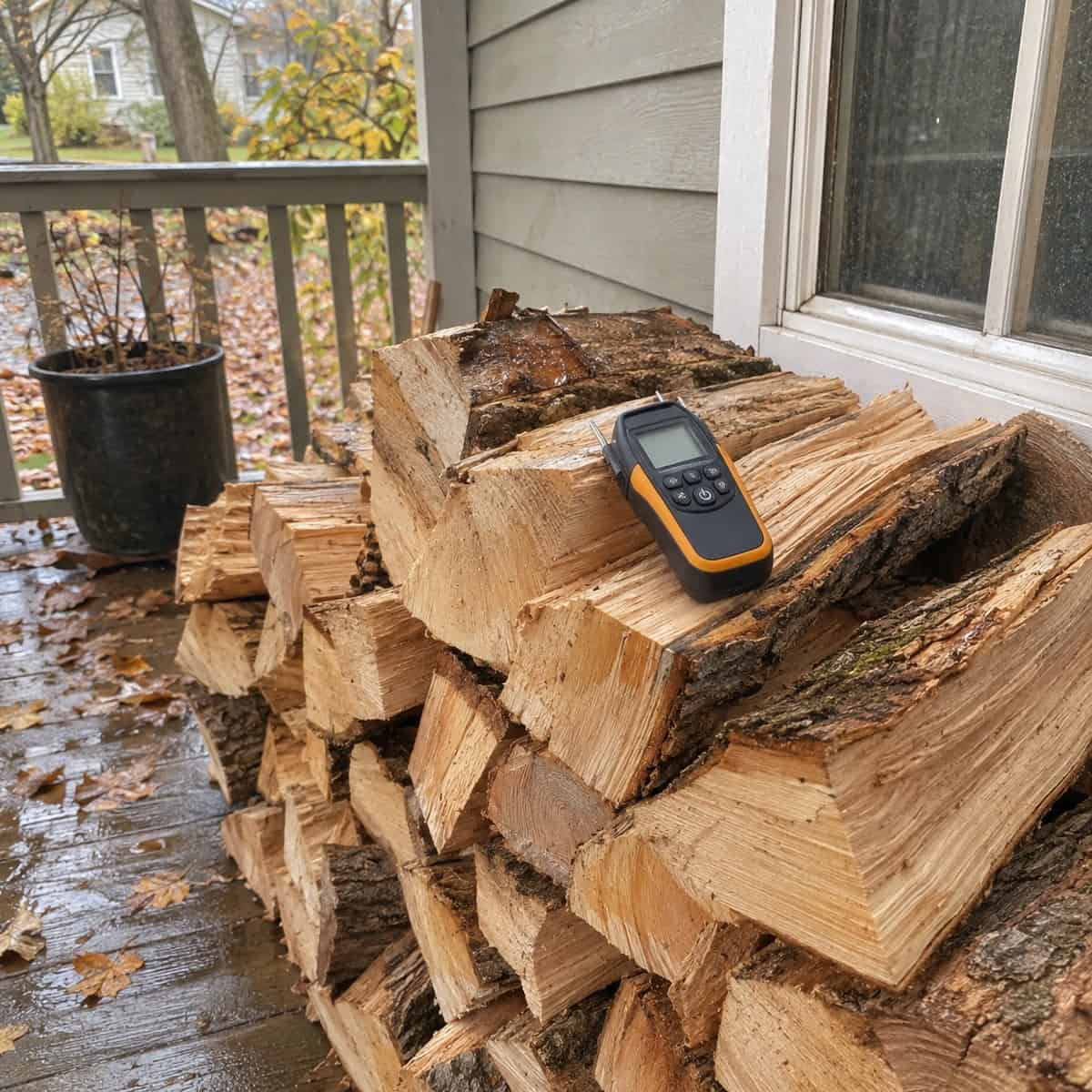
Firewood bought in the fall and burned the same winter is often too wet. Fresh-cut oak can run 40 to 50 percent moisture and needs a year or more of split, covered drying to reach the 20 percent target.
Wet wood hisses, smokes and puts out little heat because much of its energy goes to boiling off water. It also cools the flue gases, leaving the creosote that fuels chimney fires.
A $25 moisture meter settles the question. Split a piece and test the fresh face. Stack wood off the ground with the ends open to the wind, and keep the pile about 20 feet from the house to discourage termites.
22. A Chimney Stack Outside the Heated Envelope
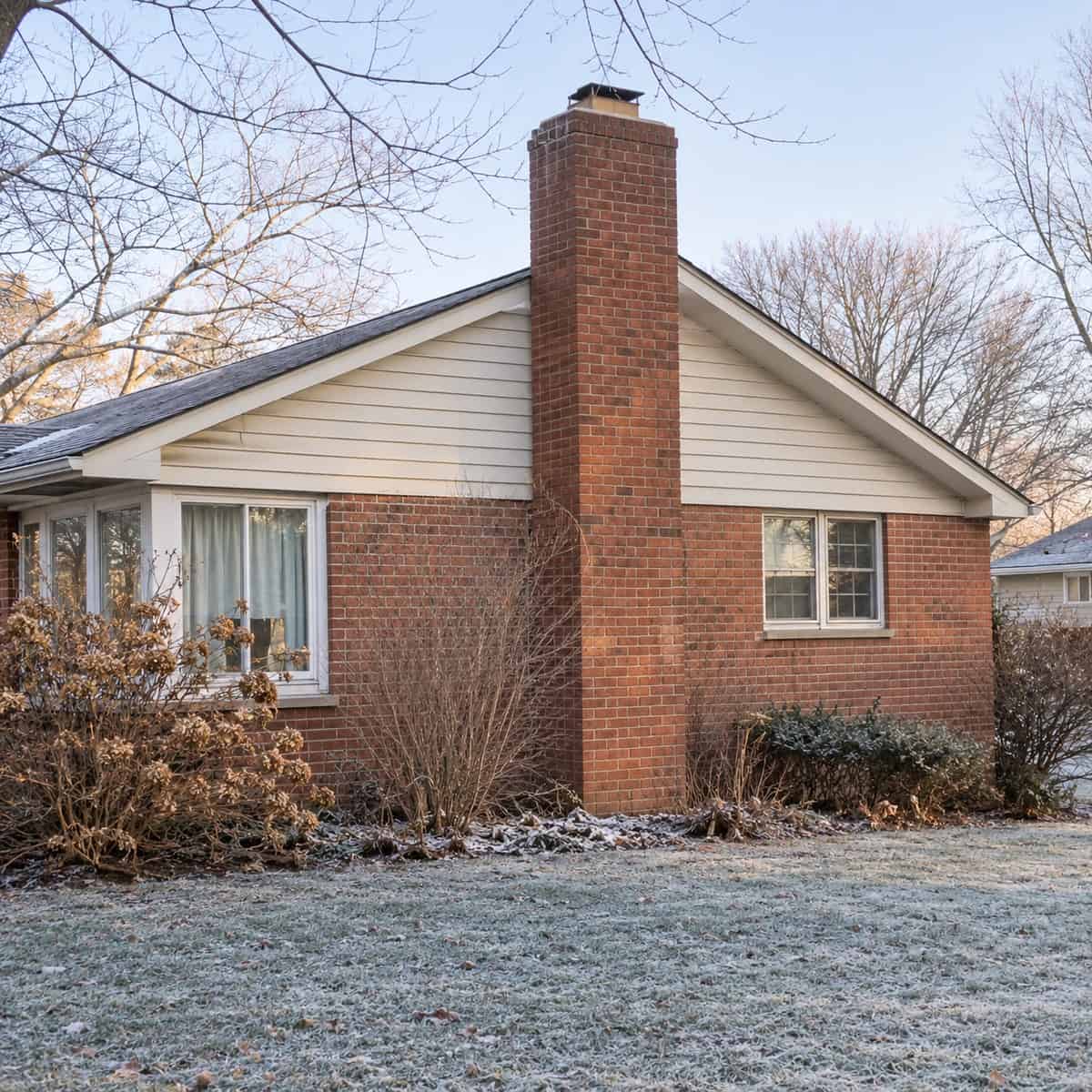
Chimneys built against the outside wall are common on ranch houses and older homes. On a cold night, the whole stack chills, and the heavy air inside it sinks toward the firebox, fighting the fire before it starts.
The first few minutes are smoky until a warm column forms. Once the fire dies, much of the heat the masonry stored radiates outdoors.
Warm the flue before lighting by holding a rolled newspaper torch up near the open damper. A lasting fix is an insulated stainless liner, which heats quickly and drafts better. In new construction, keep the chimney inside the heated part of the house.
23. A Direct-Vent Cap in a Bad Spot

Direct-vent gas fireplaces exhaust through the wall, and where the cap lands matters more than saving a few feet of pipe. Too close to a window, deck or soffit, and exhaust drifts back inside or stains the exterior.
The manual lists the clearances. Common figures are 9 to 12 inches from an operable window or door, 12 inches above grade or expected snow, and 3 feet from gas meters and regulators.
Vinyl siding needs a standoff or heat shield, around $30 to $80, or it will warp. Many manufacturers prohibit or tightly limit caps under decks, so call the installer if one ended up there.
24. Treating Vented Gas Logs as a Heater

Vented gas logs look like a wood fire, but they are listed as decorative appliances, not heaters. They need the damper open while running, and many installers lock it with a clamp so it cannot close.
Most of the heat goes straight up the flue, along with warm room air pulled in behind it. A 60,000 BTU log set can push up a gas bill while barely warming the room.
If heat is the goal, a direct-vent gas insert in the same firebox is the better purchase. If the look is all that matters, keep the logs and plan on getting real heat from somewhere else.
25. No Carbon Monoxide Alarm Near the Hearth

Any home with a fuel-burning fireplace needs carbon monoxide alarms on every level and outside sleeping areas. Plenty of older houses were never fitted with them.
A blocked vent cap on a gas insert, a failed gasket, or a wood fire smoldering overnight with the damper partly closed can all release CO with no smell.
Combination smoke and CO alarms cost about $40 to $60 each. Mount one in or near the fireplace room, roughly 15 feet from the unit to limit false alarms, and replace each alarm by the date printed on the back, usually 7 to 10 years.
26. Patching an Orphaned Factory-Built Firebox

Many homes built from the late 1970s onward have a factory-built metal fireplace inside a framed chase. The unit was tested as a system with a specific chimney pipe, cap and hearth, and its listing depends on that combination.
Over time, refractory panels crack, the box warps, and the original maker may be gone, leaving no source for parts. Mixing brands or adding an unapproved insert can void the listing.
Find the label on the side or floor of the firebox. If parts are unavailable, replace the unit with a new listed zero-clearance model or an insert approved for it, rather than patching.
27. A Fire Competing With the Range Hood

Newer homes are built tight, which helps heating bills but works against open fires. Range hoods, dryers and bath fans all pull air out of the house, and a chimney with nothing but warm air to drive it loses that contest.
The telltale sign is a fire that drafts well until the range hood comes on, then sends smoke into the room. Cracking a window clears it.
Many codes call for an outside-air supply on new masonry fireplaces, usually a 4- to 6-inch duct with a damper into the firebox or hearth. A sealed direct-vent gas unit or a stove with an outside-air connector avoids the problem entirely.
28. Cheap Tempered Glass Doors on Open Fireplaces

Glass doors are often added to stop drafts from an open fireplace. Budget sets use tempered glass, which tolerates roughly 450 degrees and can shatter if shut over a hot wood fire.
Even quality doors cut radiant heat, so a fire behind closed glass warms the room less. Many owners keep them shut during every fire and wonder why the room stays cool.
For doors that can stay closed while burning, choose ceramic glass rated around 1,400 degrees. Otherwise, keep the doors open while the fire is strong and close them after it dies down, once the damper is shut.
29. Ordering an Insert Without the Blower
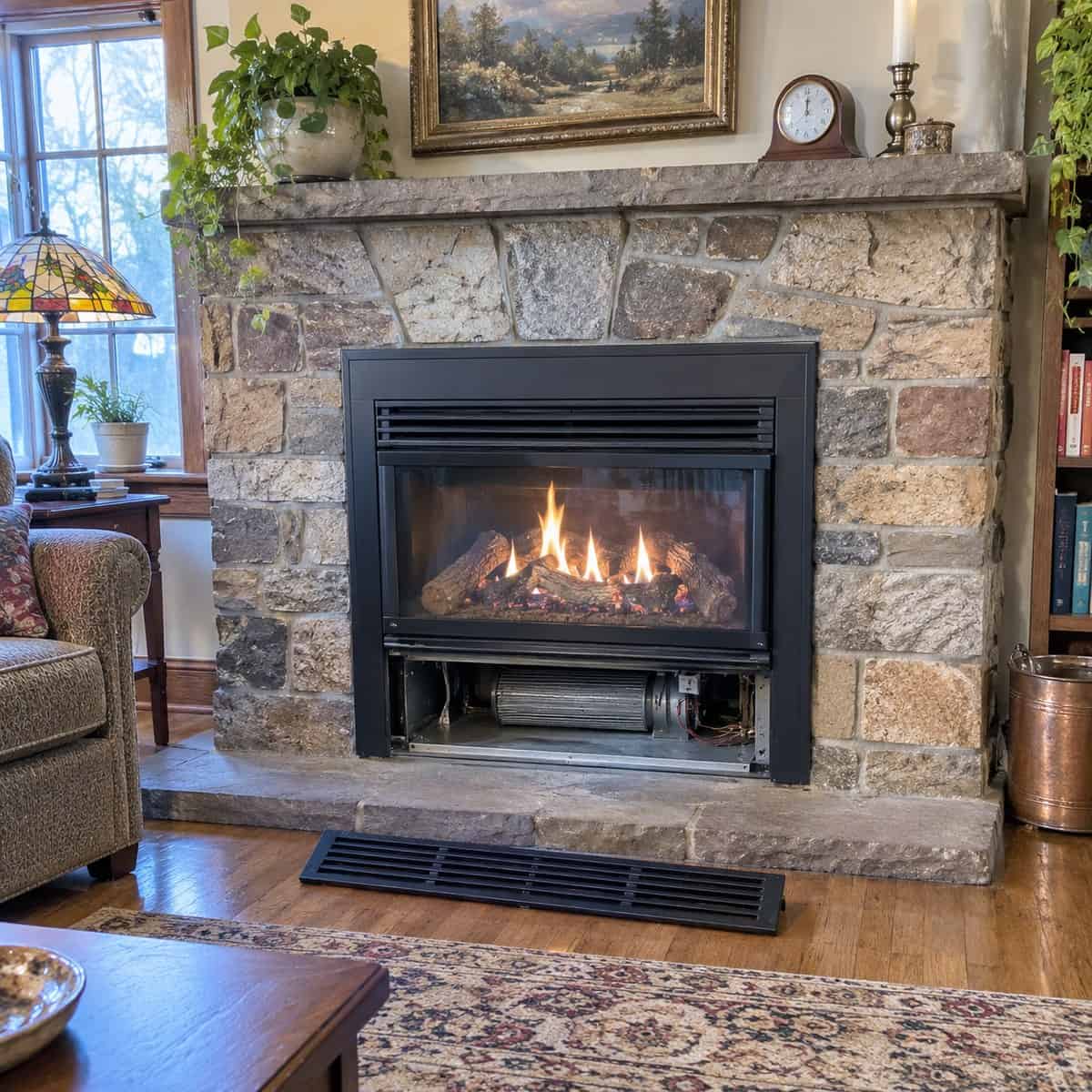
Gas and wood inserts sit inside a masonry box, and that brick or stone soaks up a large share of their heat. Without a blower, most of the warmth reaching the room is radiant heat through the glass.
A blower, usually $150 to $350, pulls room air through a channel around the firebox and pushes it back out heated. In a 15-by-20 room, that can mean the difference between warm feet and a warm room.
Order it with the insert. Adding one later often means pulling the unit, and some models need an outlet run to the firebox. Look for variable speed and a thermostat that starts the fan once the insert warms up.
How to Keep a Fireplace in Regular Use
Nearly every item here traces back to one step that got skipped: deciding what the fireplace is for before choosing the unit, the finish or the location. Real heat, ambiance and backup heat during outages each call for different equipment.
Start with a Level 2 inspection on any fireplace that came with the house, read the installation manual before buying anything new, and budget for a cap, a liner and a carbon monoxide alarm ahead of the decorative work. A hearth that is safe, sized correctly and easy to run is the one that actually gets lit.