

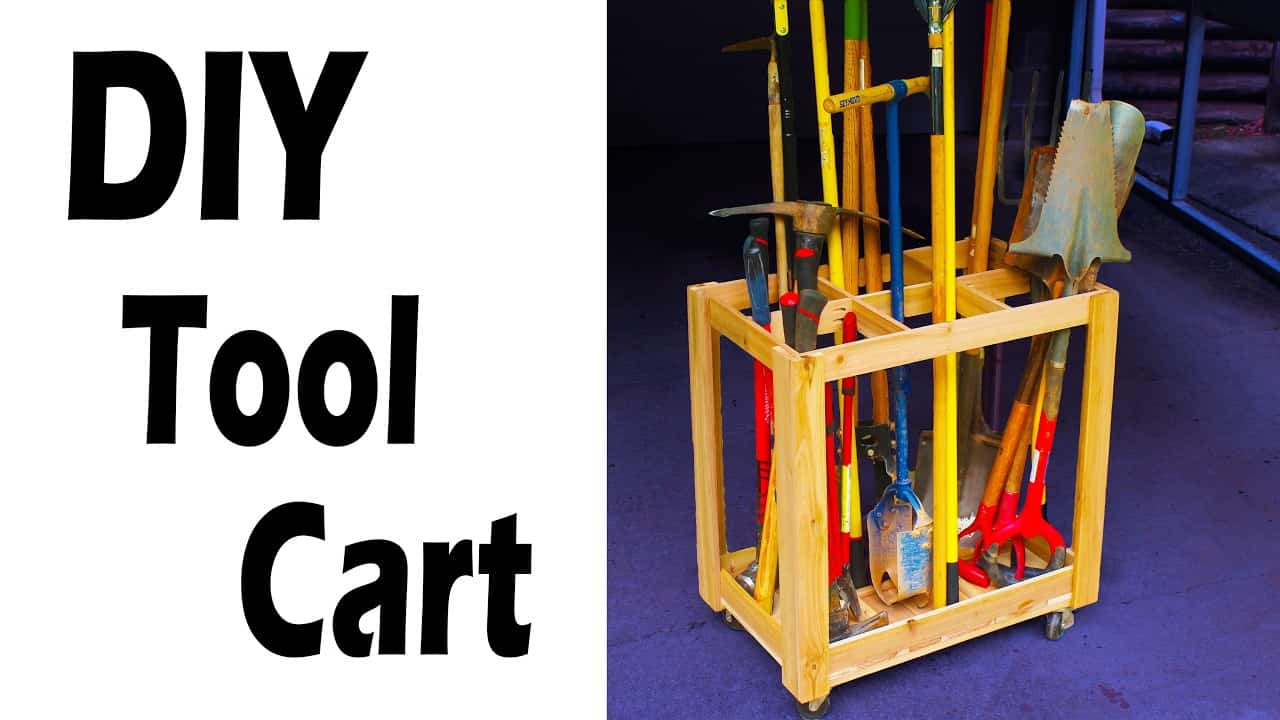
This project was built and designed by Clinton from Specific Love Creations.
Clinton tackles a common garage organization problem by turning an inexpensive moving dolly into a functional utility cart with storage compartments for yard and garden tools.
Watch the full video and subscribe to Specific Love Creations:


Starting With a Smart Base
The foundation of this cart comes from an unexpected source: a heavy-duty moving dolly from Harbor Freight. Clinton explains that buying individual casters can be expensive, but purchasing a complete dolly provides four quality wheels at a fraction of the cost.
The dolly already includes a sturdy metal frame rated for significant weight capacity. By removing the carpeted surface, Clinton creates a clean foundation that won’t hold moisture or interfere with wood attachments.
Building the Platform
Cedar fence pickets serve as the primary building material for their affordability and rot resistance. Clinton measures the dolly frame and cuts boards to fit across the open sections, leaving small gaps between each piece for drainage and wood expansion.
The boards attach directly to the metal frame using screws or nails. This creates a solid platform while maintaining the mobility of the original dolly wheels.
Creating Storage Compartments
Low side walls around the platform perimeter prevent small items from rolling off the cart. Clinton rips the fence pickets to a more appropriate height and uses pocket screws for secure attachment at the corners.
Interior dividers create a grid system that keeps tools organized and prevents them from sliding around during transport. These dividers don’t need precise measurements but should be positioned symmetrically for the best appearance.
Adding Vertical Storage
Four corner posts extend upward to support an upper storage level. Clinton creates L-shaped legs by combining two ripped pieces of cedar, which provides much better structural integrity than single boards.
The legs attach at each corner with the bottom flush to the platform edge for maximum connection strength. This design creates a tall cart suitable for long-handled tools.
Upper Level Construction
The top section mirrors the bottom platform but gets assembled as a separate unit before installation. This approach makes it easier to ensure square corners and proper fit.
Clinton builds another frame with dividers, then slides the completed assembly onto the corner posts and secures it with glue and fasteners from multiple angles.
Finishing Touches
The completed cart features multiple compartments on both levels, providing organized storage for various tool sizes. Clinton demonstrates how even tools with large handles fit comfortably in the divided sections.
Optional additions like hooks on the sides or legs can provide hanging storage for cords and accessories. A handle attachment would make the cart even easier to maneuver around the garage or yard.
This project transforms a basic moving dolly into a comprehensive tool storage solution that addresses common garage organization challenges. The design maximizes storage capacity while maintaining mobility, and the cedar construction provides durability for long-term use.
Watch the full video and subscribe to Specific Love Creations:

Matt’s Take
These are my personal thoughts and tips based on my own experience in the shop. This section is not written, reviewed, or endorsed by the original creator of this project.
Starting with a moving dolly as the base is honestly brilliant — those casters alone would cost you $40-50 if bought separately, and here you’re getting the whole rolling platform for around $25. I’ve priced out wheels for shop projects before, and it always makes me wince. Clinton’s approach of stripping off that carpeted surface is smart too, since that stuff just holds moisture and grime over time.
Cedar fence pickets are a solid material choice for outdoor storage projects like this. They’re naturally rot-resistant and surprisingly affordable compared to other cedar lumber. When working with any outdoor cart, those small gaps between boards aren’t just for looks — they prevent water from pooling and give the wood room to move with seasonal changes. If you’re in a really wet climate, consider sealing the end grain of your cuts to extend the life even further.
That L-shaped leg design Clinton uses is a great example of how combining pieces can be stronger than using thicker single boards. Two pieces glued and screwed together create a beam that’s much less likely to split or bow under load. When you’re building vertical storage like this, always think about weight distribution — keep your heaviest tools on the bottom level to maintain stability when rolling the cart around.