

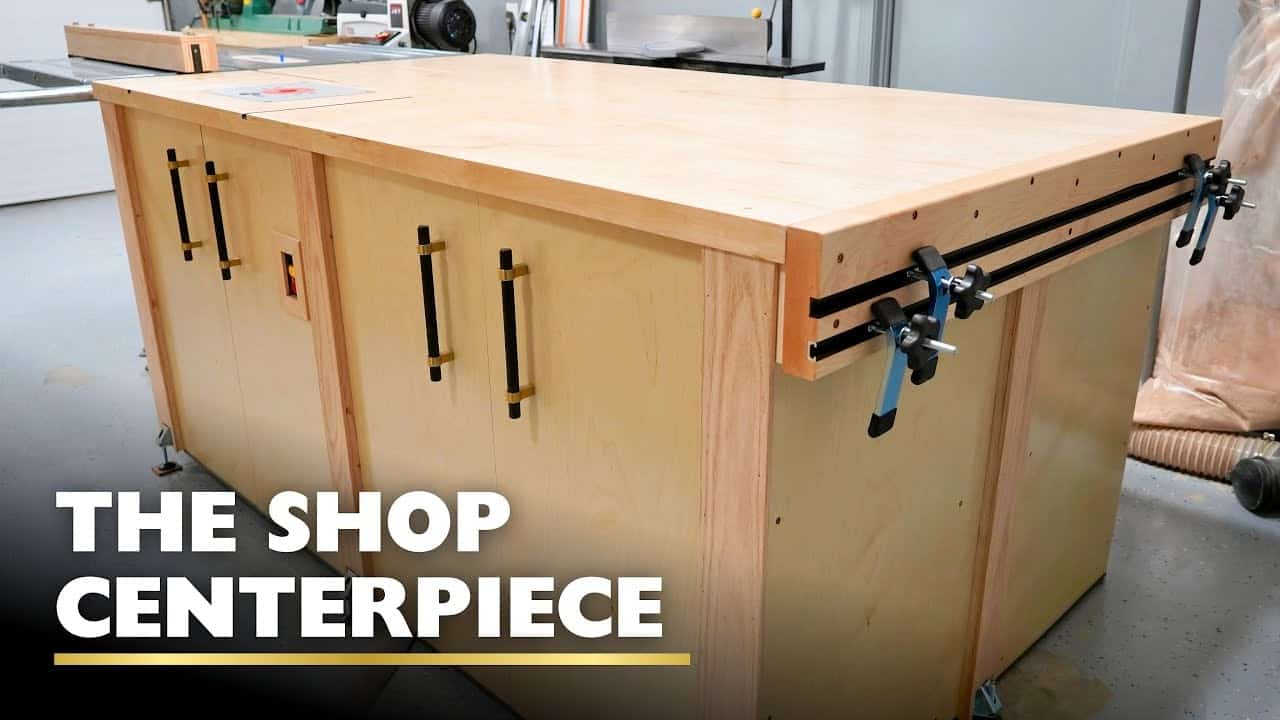
This project was built and designed by Connor from Shopfix.
Connor repurposed an older table saw and built a rigid, modular workstation around it to improve accuracy, storage, and workflow in a small shop.
The result is a multifunctional bench that combines solid joinery, integrated routing, reliable dust collection, and flexible clamping in one platform.
Watch the full video and subscribe to Connor’s channel:

Design and overall approach
The workstation was designed to be a durable, flat reference surface that grows with the shop rather than a simple saw stand.
Connor prioritized a level, vibration-free top and open storage that can house long stock while keeping dusty zones isolated from cleaner compartments.
Base structure and joinery
Construction began with milled 2x4s joined with pocket holes to achieve precise, repeatable frames for the top and bottom.
Corner bracing and a center vertical support eliminate racking, while adjustable leg levelers let the bench sit perfectly on an uneven concrete floor.
Worktop construction and attachment
The work surface is two plywood sheets laminated together and cut as a single unit for perfect alignment and stiffness. Connor used figure-eight fasteners to allow seasonal movement, finished exposed edges with birch edge banding, and applied a hard wax oil and paste wax for durability and low friction.
Motor clearance and dust collection
The front cabinetry is inset to provide clearance for the saw motor while keeping storage roomy and accessible.
For dust control, a custom rear panel was built with magnetic dust ports and a gasketed connection to maintain strong vacuum and quick hookups.
Router integration and fence system
Adding a router lift was a key upgrade that expanded the workstation’s capabilities beyond a basic router table.
The lift was recessed slightly below the surface and leveled with set screws, then paired with a T-track fence system to allow fast, repeatable fence adjustments and integrated dust collection.
Clamping station and T-tracks
Connor installed a hard maple clamping board with parallel T-tracks at the bench end to create a versatile workholding area for thin and wide panels.
The heavy backing screws and countersunk fasteners prevent deflection under load, making the system reliable for glue-ups and assembly.
Cabinets, doors, and hardware
The lower front includes full-overlay doors mounted on Euro-style soft-close hinges for clean, dust-protected storage. Hinge jigging, reinforcement blocks at the legs, and careful shimming produced even gaps and users can adjust doors in multiple directions for a precise fit.
Finishing touches and workflow benefits
Small details—edge banding, oak trim over exposed framing, and a thoughtfully finished top—elevate the bench visually while protecting high-use surfaces.
Integrated features like a routed groove for runners, accessory openings in the shelf layout, and an external router power plug streamline daily work and setup time.
Why this workstation matters
This workstation is a practical example of building for accuracy, durability, and adaptability rather than short-term convenience.
The combination of a flat, stable top, integrated routing, strong clamping, and tidy dust management makes it a true shop backbone that can be adapted to many projects and tools.
Please support Connor by visiting his website: https://www.shopfix.services/.

Matt’s Take
These are my personal thoughts and tips based on my own experience in the shop. This section is not written, reviewed, or endorsed by the original creator of this project.
What really stands out about Connor’s approach is how he prioritized flatness and rigidity from the start. That laminated plywood top with figure-eight fasteners is smart thinking — you get the stability of a thick slab while still allowing for seasonal movement. The hard wax oil and paste wax combo is a proven finish for shop surfaces that need to be both durable and slippery.
The router lift integration caught my attention because getting that flush and level can be tricky. Recessing it slightly below the surface and using set screws for fine-tuning is the right way to dial it in. When you’re dealing with both table saw dust and router chips, having separate collection zones like Connor built really makes a difference in keeping things manageable.
That clamping station with parallel T-tracks is brilliant for a small shop. Hard maple backing prevents flex under clamping pressure, which is crucial when you’re trying to keep panels flat during glue-ups. The adjustable leg levelers are often overlooked but essential on concrete floors — even a small wobble will throw off your cuts and make the whole setup frustrating to use.