

Izzy Swan shared the product demo and shop build featured in this video.
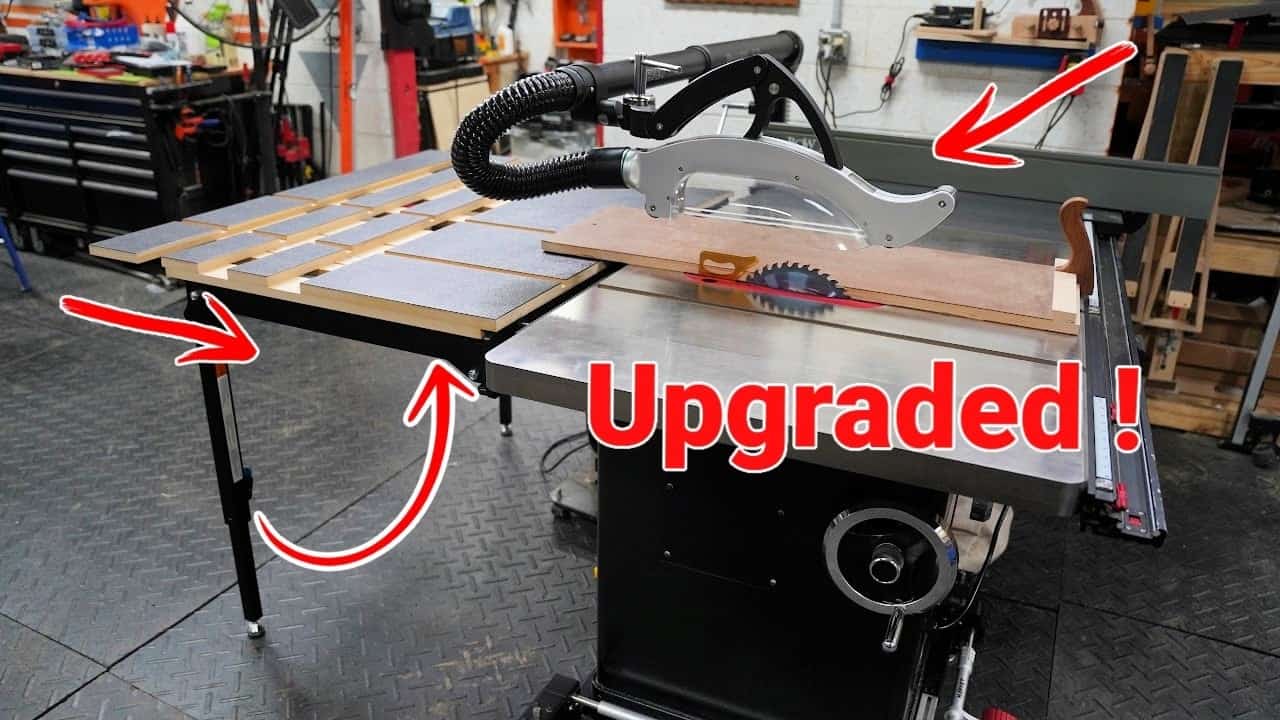
Izzy Swan repurposed an older table saw setup into something safer and more dust-efficient by adding the Shark S10 overhead safety and dust-collection arm, then paired it with a folding outfeed table that expands with equidistant support for longer stock.
Watch the full video and subscribe to Izzy Swan:


Why the Upgrade Was Worth Waiting For
For years, Izzy Swan avoided overarm safety and dust-collection systems because earlier options often felt incomplete in the details that matter during real cutting. The main concerns were rigidity, ease of repositioning, and whether the dust collection performed without adding friction to the workflow.
The Shark S10 stands out because the system prioritizes straightforward installation and repeatable positioning, which is a big deal when the arm needs to be moved quickly but returned precisely. That combination turns a safety accessory into a practical part of daily cutting rather than an occasional add-on.
Shark S10 Installation: Built to Be Straightforward
The installation approach is designed to be simple and solid, starting with attaching a slider bar to the back of the saw’s mounting area and then using the built-in adjustment positions to align everything. Once alignment is correct, the system locks down with the confidence of a rigid mechanical connection.
The hood itself mounts using a receiver and compression collar design, which helps ensure the arm stays positioned the way it was set. This reduces the “wobble and recheck” feeling that can happen with less thought-out designs.
Dust Collection and Safety in Real Use
Dust collection was presented as straightforward, with the ability to adapt the outlet for different hose connections and included components that simplify the hookup. The key benefit isn’t just extraction, but how smoothly the system integrates into cutting without constant fiddling.
Quick repositioning with positive stops was one of the most emphasized improvements over other overarm systems. When an arm can be moved out of the way and returned to the same working position reliably, it becomes easier to actually use it every session.
Extra Cutting Confidence: Blade Coverage and Tilt Convenience
Hood placement over the blade is handled with straightforward set-screw adjustments, letting the cover sit where it needs to for safe operation. Fine-tuning is treated as part of the product experience rather than a frustrating afterthought.
There’s also a practical convenience detail: the system can be configured with a bubble window so users don’t need to remove or move the hood when setting angles. That reduces interruptions when switching between straight cuts and angled work.
What Changed the Outfeed Table: Support Without the “Drop-Off” Problem
Longer materials were the driving reason to revisit outfeed support, especially because folding outfeed tables that fold down often have limited usable length. When support is too short, longer boards can overhang beyond the stable portion and begin falling or destabilizing during cuts.
Izzy Swan addressed this by designing an outfeed that folds out but extends far enough to keep longer stock supported. The bigger challenge is not just reaching more length, but keeping thin material from bending or catching on gaps as it slides.
The Equidistant Slat Idea: Smoother Sliding for Thin Stock
The standout feature of the expanding outfeed concept is that the slats expand while maintaining equidistant spacing. That matters because thinner pieces need continuous, evenly supported contact to slide smoothly instead of sagging into large gaps.
With smaller gaps and consistent spacing throughout the extension, the risk of catching on the structure is reduced. This is a design principle that can be adapted to other sliding-support accessories where thin stock behavior is unpredictable.
Designing the Expanding Mechanism (and Keeping It Approachable)
The outfeed table concept was planned digitally first, then prototyped using MDF parts to move quickly from idea to workable mechanism. This is a useful pattern for shop upgrades: prototype for function first, then refine materials for durability and long-term use.
Because MDF isn’t ideal for sliding surfaces, hardwood pieces were added where movement contacts the mechanism. That hybrid approach keeps the prototype feasible while still handling the real forces that happen during use.
Folding Legs and Leveling: Getting Alignment Without Headaches
Rather than spending extra time engineering a full custom leg system, the build uses purpose-built folding legs and then adapts the mounting. This reduces complexity while still achieving the stability expected from a long outfeed.
Leveling and adjustment screws help bring the outfeed top into plane with the saw’s table surface. Accurate height alignment is critical because even small step-ups can cause friction, affect sliding, and spoil cut quality over the length of a longer workpiece.
Finishing the Outfeed: Durable Surface and Professional Look
An ABS-style veneer was applied to the top surface, emphasizing durability and a low-friction feel for sliding. The goal is not only function, but making the outfeed look consistent with a professional shop setup.
Using a countertop-style application approach makes the surface finish predictable and tidy, which is especially helpful when the table has multiple moving features and an expanding extension. The result is a clean, shop-ready surface rather than a rough prototype feel.
Accurate Miter Bar Grooves: Locking in a Tight Fit
The outfeed’s miter bar grooves were tuned for accuracy so the sleds and jigs can travel smoothly without looseness. Alignment between the outfeed groove and the saw’s own groove is where many outfeed tables fall short, creating binding or inconsistent support.
A practical method was used: a spacer material slightly thicker than the miter bar helped locate the groove position precisely, then a matching jig ensured the router passes produced a groove that mates tightly. This kind of “set-and-route with a reference” approach is widely applicable to other alignment-sensitive shop parts.
Why This Upgrade Matters Overall Takeaways
Pairing the Shark S10 with a well-supported outfeed changes the cutting experience in two ways: safer, cleaner operation up at the blade, and steadier handling down the line where long stock needs support. Together, these improvements reduce interruptions and make it easier to keep jigs moving predictably.
The expanding outfeed concept also highlights a broader woodworking lesson: thoughtful spacing and alignment beat brute-force length. When a sliding surface is consistent, thin stock behaves better, and the workflow feels smoother from setup through the full cut.
Final Thoughts from Izzy Swan’s Approach
The overall takeaway is that serious upgrades come from designing around real shop friction points—repeatable positioning, dust collection that doesn’t slow the user down, and outfeed support that handles thin materials reliably. Izzy Swan’s combination of a product demo and a supporting build shows how safety hardware and cutting ergonomics can be improved at the same time.
Izzy Swan from izzyswan_woodworking also demonstrates how an expanding concept can be prototyped quickly and then refined for stability, accuracy, and everyday use.
Watch More and Subscribe
Watch the full video and subscribe to Izzy Swan:

Matt’s Take
These are my personal thoughts and tips based on my own experience in the shop. This section is not written, reviewed, or endorsed by the original creator of this project.
The Shark S10 really does address some of the biggest pain points with overarm safety systems. I’ve seen too many woodworkers skip using their guard because it’s a hassle to adjust or interferes with their workflow. Having quick, repeatable positioning with positive stops makes all the difference — you’re more likely to actually use safety equipment when it doesn’t slow you down.
That expanding outfeed concept is brilliant, especially the equidistant slat spacing. Thin plywood and sheet goods can be finicky on outfeed tables with big gaps between supports. They’ll catch, bow, or vibrate against the edges. Keeping consistent spacing as the table extends solves a real problem that many commercial outfeed tables overlook.
The hybrid approach using MDF for the prototype structure but adding hardwood wear surfaces is smart shop thinking. MDF machines easily and holds dimensions well, but it doesn’t hold up to sliding friction. Adding hardwood strips where the mechanism contacts moving parts gives you the best of both worlds without overcomplicating the build.
One detail worth noting is the miter slot alignment process. Getting outfeed miter slots perfectly aligned with your saw’s slot is critical but often rushed. Using a spacer that’s slightly thicker than your miter bar to establish the groove width, then routing with a guide, is a technique that applies to any shop-made jig or extension table.