

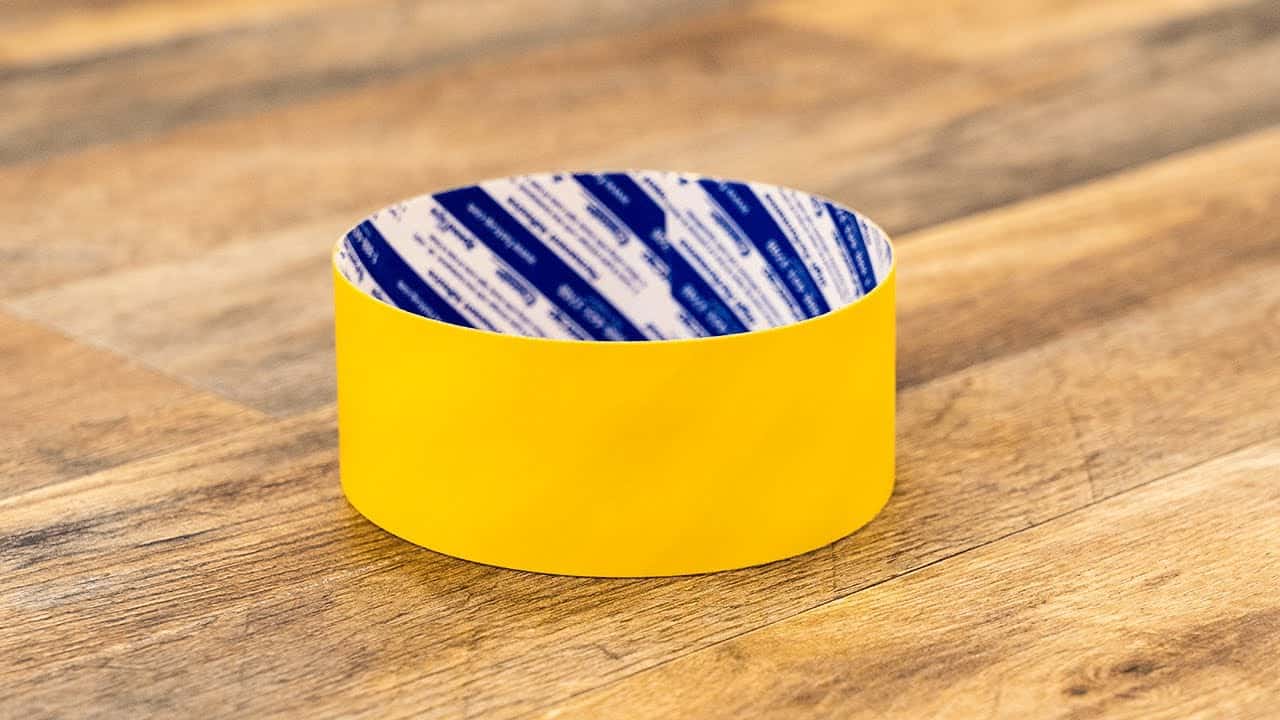
Jodee from Inspire Woodcraft shared the woodworking tip featured in this video.
Sharp blades and true zero-clearance throat plates are the classic solution for clean, chip-free cuts, but Jodee demonstrates an inexpensive alternative for when a perfect insert isn’t available.
This approach centers on a self-adhesive PVC zero-clearance tape that creates a narrow, supportive gap for the blade and helps eliminate tearout where the teeth exit the wood.
Watch the full video and subscribe to Inspire Woodcraft:


Why zero-clearance matters
Zero-clearance inserts support wood fibers right up to the blade, preventing small fibers from tearing out as the teeth exit the material. They also stop tiny offcuts from falling into the throat, which improves safety and reduces blade chatter.
Options for getting zero-clearance
Many woodworkers make or buy custom throat plates or inserts to achieve a perfect fit for their blades, and these work great when available.
When a custom insert isn’t practical, shop-favorite hacks like masking tape across the cut line can help but have downsides like frequent replacement or poor durability.
The PVC zero-clearance tape solution
Jodee highlights a thin, self-adhesive PVC strip designed to act as a replaceable zero-clearance surface that sticks to the throat plate or sled. The material is rigid enough to support fibers across longer spans and more durable than masking tape, while still inexpensive and easy to replace.
How to install and tailor the tape
Installation is peel-and-stick, but getting a clean, attractive fit may require trimming around curves, contours, or saw-stop locks so the insert functions normally.
If the new strip raises the insert slightly above the table, the throat plate can be adjusted down or the installer can take other small leveling steps.
Creating a kerf and riving-knife considerations
To establish the blade kerf in a taped insert for a table saw with a removable riving knife, the tape can be covered with a sacrificial board and the blade raised to cut the slot while the knife is removed.
This prevents messy plastic shavings from distributing across the shop and gives a clean chip-free kerf for subsequent cuts.
Feeding concerns and small tweaks
Some users worry the leading edge of the PVC can catch material during feeding, but Jodee hasn’t experienced this problem and suggests a simple ramp filed into the edge if it becomes noticeable.
For miter saws, the process is similar and often cleaner when a high-tooth-count blade is used and the operator feeds slowly.
Rejuvenating worn sleds and other uses
One especially useful application is restoring worn crosscut sleds: the tape fills and narrows a widened kerf, returning the sled to zero-clearance condition without rebuilding the sled.
The strips can also be used around other openings or custom jigs where a narrow, supportive slot is beneficial.
Practical tips and limitations
Because the strips come in multiples, they’re a low-cost way to experiment with placement and fit before committing to a permanent solution. Users should accept that the tape adds a slight thickness and may need occasional replacement, but the trade-off is cleaner cuts and a revived jig or insert.
Conclusion
The PVC zero-clearance tape offers a simple, affordable method to reduce tearout and extend the life of inserts and sleds, making it a useful addition to many shops.
Jodee’s demonstration shows practical installation techniques and small adjustments that make the tape easy to adopt across table saws, miter saws, and jigs.
Support Jodee by visiting his online store here: https://inspirewoodcraft.com/collections/all.

Matt’s Take
These are my personal thoughts and tips based on my own experience in the shop. This section is not written, reviewed, or endorsed by the original creator of this project.
I really like this tape approach for restoring old sleds and inserts. The ability to bring back that tight zero-clearance fit without rebuilding the whole jig is pretty brilliant. I’ve seen plenty of crosscut sleds get retired early because the kerf had opened up too much, and this gives them a second life for just a couple bucks.
The durability aspect is what sells me on this over regular masking tape tricks. That PVC material should hold up much better to repeated cuts and won’t leave residue when you eventually need to replace it. For shops that don’t have time to make custom inserts for every blade, having a roll of this tape on hand seems like a smart move.
One thing I’d add is to keep realistic expectations about cut quality. While this definitely helps reduce tearout, you’ll still get the best results by combining it with a sharp blade and proper feed rate. The tape creates the support structure, but blade sharpness and cutting technique still matter for truly clean cuts.
At $2 per strip with multiple pieces included, it’s cheap enough to experiment with different applications around the shop. I can see this being useful on router sleds, band saw tables, or anywhere you need to tighten up a gap that’s gotten too wide over time.