

Izzy Swan shared the woodworking tip featured in this video.
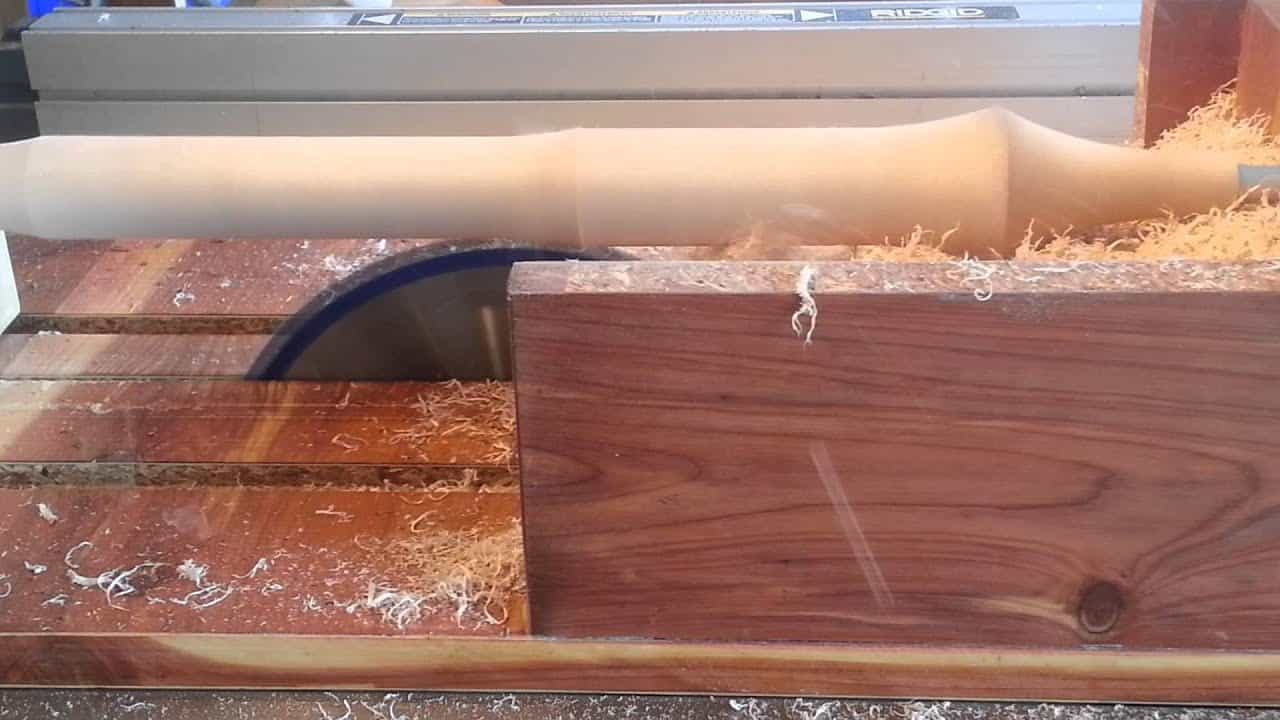
The video introduces a compact, homemade jig that allows a table saw to be used for turning tasks normally reserved for a lathe.
This simple setup makes it possible to produce dowels, tenons, tapers, and shaped profiles using common shop hardware and a bit of ingenuity.
Watch the full video and subscribe to Izzy Swan:
How the Jig Works
The jig clamps a workpiece between a driven head and a supported tailstock so the blank can rotate smoothly while being shaped.
Bearings and a simple bolt-based fastening system let the stock spin with minimal friction, enabling controlled shaping and sanding.
Setup and Fastening
Construction relies on straightforward hardware and repurposed parts to keep costs low and setup fast.
The head uses a threaded bolt through bearings to hold and align the blank while a tailstock rod slides into a matching hole to support the opposite end.
What You Can Make
The approach is flexible enough for rustic furniture applications and small shop projects, producing round tenons, dowels, and decorative profiles on both round and square stock.
It also handles tapers and more complex shapes when combined with basic templates or sanding jigs.
Shaping and Finishing
After shaping, the parts can be smoothed and refined with the usual sanding progression and finish choices to match the project’s aesthetic.
Izzy also teases additional finishing tricks and a simple bowl-making method in follow-up content to help bring natural wood to a glossy look.
Tips and Takeaways
The main advantage of this jig is its adaptability: it converts existing shop equipment into a useful turning station without specialized machinery.
It’s a practical technique for shop makers who want to expand capabilities while reusing common materials and salvaged parts.
Overall, the jig demonstrates how simple mechanical ideas can expand a small-shop toolset and open up new shaping options without a full lathe.
Please support Izzy by visiting his website: https://www.izzyswan.com/.

Matt’s Take
These are my personal thoughts and tips based on my own experience in the shop. This section is not written, reviewed, or endorsed by the original creator of this project.
This is a clever setup that really showcases the problem-solving spirit of woodworking. Using a table saw for turning operations isn’t something you see every day, but the principle is solid — you’re essentially creating a horizontal lathe using the saw’s motor and fence system for support. The key here is getting that workpiece spinning true, which is where those bearings and the tailstock support become critical.
Safety-wise, this type of setup requires extra attention since you’re working with spinning stock in a non-standard configuration. Keep your hands well clear of the rotation, work with steady feed pressure, and make sure everything is locked down tight before starting. The fence becomes your tool rest in this scenario, so having it properly aligned and secured is essential for both safety and quality results.
What I appreciate about this approach is how it opens up possibilities for shops that don’t have room or budget for a dedicated lathe. Sure, you won’t get the same range of motion or tool control as a proper turning setup, but for basic dowels, tenons, and simple tapers, it’s a resourceful solution. Just remember that finish quality will depend heavily on your sanding technique since you can’t use traditional turning tools in quite the same way.