

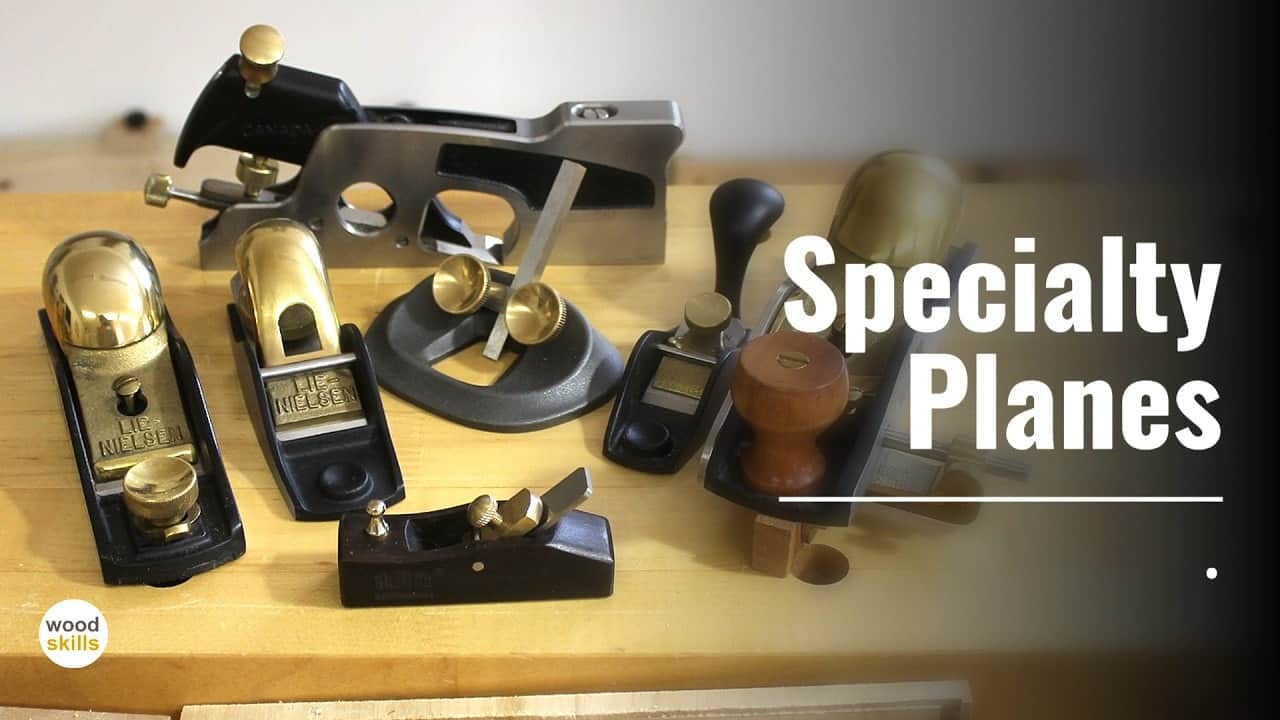
Norman Pirollo from WoodSkills shared how specialty hand planes expand precision and control beyond standard bench planes.
Specialty planes help furniture makers and woodworkers shape joinery details, refine edges, and dial in consistent profiles without relying on a single “do-everything” plane. This approach is less about collecting tools and more about matching the right tool to the exact job—especially when crisp layout lines and molded features matter.
Watch the full video and subscribe to Norman’s channel:


Why “Standard” Bench Planes Aren’t Enough
Bench planes excel at general tasks like smoothing surfaces and setting up many types of joinery, but they don’t always offer the best geometry for fine work. Specialty planes reduce guesswork by guiding the cut with fences, stops, skewed irons, or dedicated geometries.
When a project demands tight definition—like rabbets that land exactly on a marked line or profiles that must look identical across multiple parts—specialty planes make consistency easier. They also speed up setup because the plane design is already “pre-decided” for the job.
Block Planes: Small Planes, Big Control
Block planes are often treated as a basic category, but they come in useful variations that change how they perform. Low-angle and standard-angle versions, for example, are suited to different cutting situations such as end grain versus general smoothing.
Norman emphasizes adding smaller block plane types when detail work starts dominating a build. Smaller, one-handed planes can reach tight areas and help create small chamfers or controlled trimming where larger bench planes feel clumsy.
Skew Rabbet Options for Cross-Grain and Straight-Line Accuracy
Rabbet work becomes far more reliable with planes designed specifically for cutting rabbets, especially when a fence helps maintain a straight reference. A skewed rabbet plane adds flexibility for cutting across grain or along grain, depending on setup and technique.
In practice, this means rabbets can be established with better visual alignment and less drift. The fence-supported approach also helps keep the groove location predictable, which is especially valuable when rabbets must connect cleanly at corners.
Dedicated Rabbet and Plow Planes for Groove Consistency
Beyond skew rabbets, dedicated rabbet planes with adjustable features allow deeper or heavier-duty groove cutting with more repeatability. A fenced rabbet design can also use additional cutting geometry (like a nicker) to improve control as the blade enters the wood.
For grooves such as those found in drawer joinery, a dedicated plow plane becomes a major efficiency gain. With adjustable fences and depth stops, a plow plane helps define groove bottoms and keeps spacing consistent across a set of parts.
Combination Planes: Versatility with Trade-Offs
Combination planes can be excellent when a shop wants fewer “families” of specialized tools, but they still need to be understood as a compromise. A well-chosen combination plane can cover multiple operations using interchangeable components, and it can work along grain or across grain depending on configuration.
That said, some combination models are overly complicated and rarely used, which is why Norman frames them as “powerful, but not always practical.” The key takeaway is to choose the version that best matches the kinds of work being done most often.
Molding Planes: Creating Elegant Profiles the Right Way
Molding planes include hollows, rounds, beads, and more complex shapes that reproduce classic edge details. These tools are valuable because the profile is built into the plane, so the result is uniform and repeatable—ideal for furniture components that should visually “flow” together.
Norman notes that many woodworkers can develop custom profiles by combining simpler molding elements rather than relying on complex multi-feature planes. This is useful when a specific ogee-like shape is desired, but a pre-made complex plane doesn’t match the exact aesthetic.
How Profiles Get Built: Hollow + Round + Rabbet Logic
A common approach to creating shaped edges is to generate the main curves using hollow and round planes, then use rabbet-type cutting to refine fillets and transitions. This layered strategy helps keep lines crisp where shapes meet, rather than forcing a single tool to do everything.
Testing on scrap is presented as part of the learning process, because molding planes can cut very cleanly but still require the right adjustments and sequencing. Once the target profile “reads” correctly on a test piece, it becomes easier to reproduce across the actual project parts.
Router Planes and Chisel Planes: Leveling and Groove Bottom Definition
Some specialty planes don’t chase decoration—they solve geometry problems like leveling proud areas or defining groove bottoms. A router plane with a fence can deepen grooves along an edge and help keep the base of a channel more accurate and square to the surrounding surfaces.
Similarly, a chisel plane is for situations where wood is proud in a localized area, such as certain joint features. By using the board surface as a reference, it can shave down only what needs attention without disturbing the rest.
Shoulder Planes for Marked-Line Precision
Shoulder planes are designed to cut exactly where a line already exists, which makes them a powerful companion to layout methods like marking gauges. A precise shoulder plane helps define shoulders cleanly before further shaping, producing edges that look sharp and deliberate.
Norman emphasizes that this detail work is where specialty tools feel most justified. When shoulders and fillets must align with profile transitions, shaving right up to the marked line reduces cleanup and prevents “almost-right” geometry.
Less About Owning Many Planes, More About Matching the Job
People often ask why so many planes are kept in a workshop when a few bench planes could theoretically handle most tasks. The core answer is that each specialty plane has a different function and a different geometry, and the overlap is usually limited to broader categories.
Many specialty tools are also long-term investments because they remain useful as skills grow. Restoring vintage planes is an additional path for woodworkers who enjoy maintaining and learning older tool designs.
Overall Takeaways for Better Joinery and Profiles
Specialty hand planes make woodworking more precise by embedding the correct shape, reference, and adjustment into the tool itself. Rather than forcing one plane to do everything, the shop can select the best option for rabbets, grooves, shoulders, and molding details.
As skills progress, this approach tends to reduce rework and improves visual consistency across a furniture set. The best “collection” is the one that reflects the projects being made most often—so specialty planes should be chosen around real needs, not curiosity alone.
Conclusion
Specialty planes are best understood as precision instruments for specific woodworking outcomes, especially when tight layout lines and repeatable profiles are required. From block plane variations to shoulder and molding tools, each addition supports cleaner geometry with less effort and better control.
Norman Pirollo from WoodSkills shared practical context for why these planes remain essential for furniture makers and traditional woodworkers.
Watch the full video and subscribe to Norman’s channel:

Matt’s Take
These are my personal thoughts and tips based on my own experience in the shop. This section is not written, reviewed, or endorsed by the original creator of this project.
The jump from bench planes to specialty planes is one of those transitions that really changes how you approach joinery work. What I find most compelling about Norman’s breakdown is how he frames it as matching tools to specific outcomes rather than just collecting more planes. When you’re working on furniture where crisp shoulders and consistent profiles really matter, having the right geometry built into the tool makes a huge difference.
The skew rabbet plane discussion hits on something I see a lot of woodworkers struggle with—getting clean cross-grain cuts without tearout. That skewed iron angle can be a game-changer when you’re cutting across difficult grain, especially on harder woods. And the fence support he mentions is key for keeping those rabbets straight and consistent across multiple pieces.
One thing worth emphasizing from a safety standpoint: specialty planes often have exposed blades or unique cutting geometries that demand respect. Take your time getting familiar with how each one cuts, especially with molding planes where the blade profile can catch unexpectedly. Always secure your work properly and keep those blades sharp—a dull specialty plane is often more dangerous than a sharp one because you end up fighting it.
The hollow and round combination approach Norman describes is really elegant for custom profiles. Starting with simple curves and building complexity gives you way more control over the final shape than trying to find one complex plane that does everything. Plus, you learn a lot about how profiles actually work when you build them up step by step.