

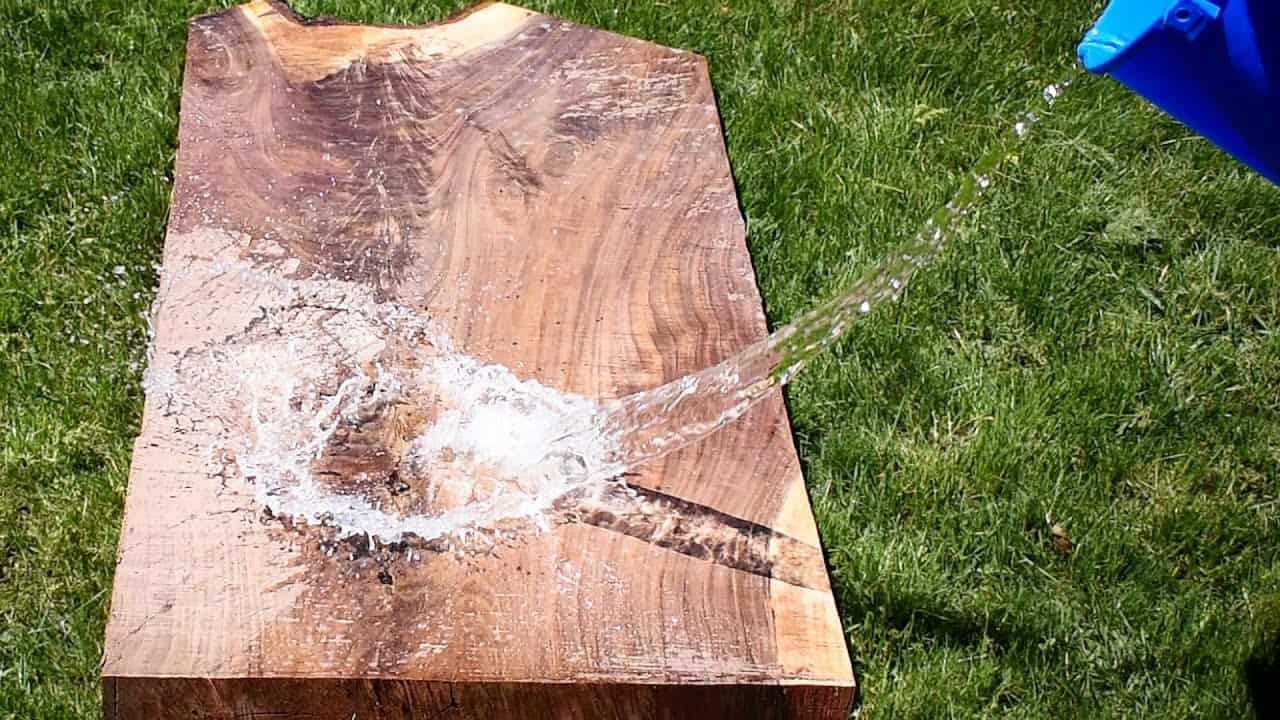
Billy from Newton Makes shared the woodworking tip featured in this video.
Slabs have a special appeal: big, dramatic grain and the promise of skipping board glue-ups, but they bring hidden challenges that affect both design and workflow.
Watch the full video and subscribe to Newton Makes:
Why Slabs Are Tempting
Slabs offer an immediate aesthetic payoff with long, uninterrupted grain and a one-piece look that many woodworkers find irresistible.
The perceived time savings and avoidance of glue seams make slabs attractive for furniture tops, benches, and tables, especially when the wood looks flawless at first glance.
The Hidden Challenges
Wood is unpredictable and what looks great on the outside can hide problems like bark inclusions, cracks, pith-related checks, and foreign objects that trees grow around.
Issues such as bark beetle damage can destroy sapwood while leaving heartwood sound, producing slabs that appear nice but yield much less usable material than expected.
Milling and Layout Strategies
Chainsaw milling and Alaskan-style cuts are thrilling ways to harvest slabs, but careful layout is essential because defects can force multiple re-cuts and a lot of waste.
Workflows that leave parts oversized during initial milling and let the wood acclimate before final surfacing help avoid surprises after planing and jointing.
Practical Cutting Techniques
Circular saws can pinch in slab work, so shallow passes or alternative tools like a reciprocating saw are sometimes necessary despite being messier or slower.
Resawing requires sufficient initial thickness; otherwise the slab only yields one useful board plus thin waste, so expect to make tough choices about how much to keep.
Design Decisions and Compromise
Working with slabs often means letting the material dictate the final dimensions, which can require shortening or narrowing a top to avoid defects.
Skipping epoxy fills in favor of a clean look is a valid aesthetic choice, but it usually increases the amount of scrap and forces design compromises.
Lessons for Woodworkers
Collecting a large inventory of slabs raises the odds of finding pieces that match a desired project, but it also increases the amount of milling and storage work.
Slabs offer unique beauty and character, yet the trade-offs—extra labor, waste, and unpredictable layouts—mean they are best used when those attributes are the goal.
The takeaway is straightforward: slabs can produce stunning results, but success requires realistic expectations, careful milling, and a willingness to let material limitations shape the final piece.
Please support Billy by visiting his website here: https://www.newtonmakes.com/shop.

Matt’s Take
These are my personal thoughts and tips based on my own experience in the shop. This section is not written, reviewed, or endorsed by the original creator of this project.
Billy raises some excellent points about the realities of working with slabs. That unpredictability factor is real — I’ve seen gorgeous slabs turn into expensive firewood once you start cutting into them. The bark beetle damage he mentions is particularly sneaky because it can look minimal on the surface but extend deep into the sapwood.
His point about chainsaw milling being thrilling but requiring careful planning really resonates. There’s something exciting about cutting your own slabs, but that excitement can quickly turn to disappointment if you don’t account for drying movement and hidden defects. Leaving extra material during initial cuts is smart — you can always remove more, but you can’t add it back.
The circular saw pinching issue is worth emphasizing for safety. When a blade binds in thick material, kickback can be violent. Taking shallow passes or switching to a reciprocating saw might feel slower, but it’s much safer than fighting a pinched blade. And that reality check about resawing thickness is spot-on — if you start with a 2-inch slab, you’re not getting two 1-inch boards without planning for kerf loss and cleanup.
The biggest insight here is letting the material drive the design rather than forcing your vision onto flawed wood. Sometimes the most beautiful pieces come from working with what the slab gives you instead of against it.