

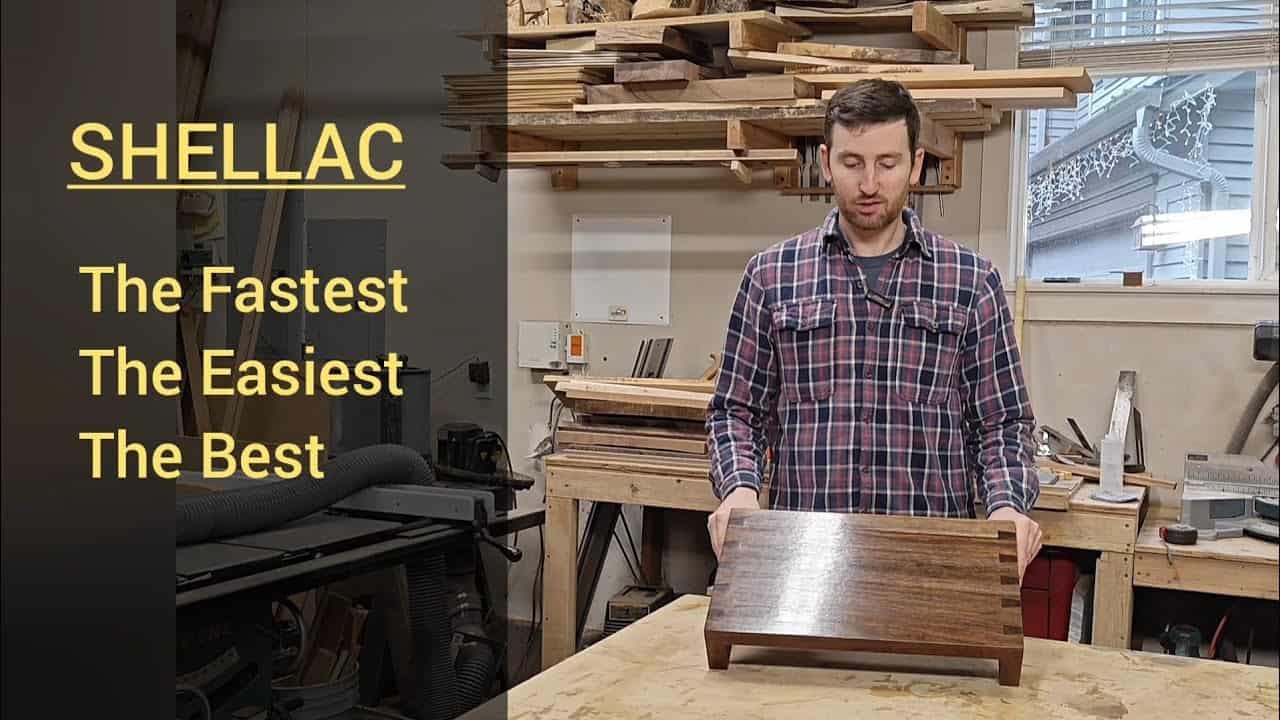
Keaton Beyer shared the woodworking tip featured in this video.
The video demonstrates a fast, approachable way to finish wood using shellac, highlighting why this traditional film finish remains popular for quick projects and easy repairs.
The method focuses on using a rubbed shellac technique that builds a durable-looking surface in a single session and finishes with a light wax for extra luster.
Watch the full video and subscribe to Keaton Beyer Woodworking:
What is shellac and why use it
Shellac is a natural resin refined into flakes that dissolve in alcohol to make a film finish historically used for centuries.
It dries extremely fast, polishes to a warm, attractive sheen, and is very forgiving to repair, which makes it ideal for small furniture, cutting boards, and quick shop finishes.
The main trade-off is durability: shellac is less resistant to alcohol and heavy wear than modern plastic finishes, so it’s best chosen where quick turnaround and easy maintenance matter more than industrial-level toughness.
Keaton emphasizes practical applications where repairability and appearance outweigh those limitations.
Mixing and preparing shellac
Shellac flakes are dissolved in denatured alcohol to create a finish; mixtures are made to a shop-preferred concentration and can be measured by weight or volume. Warming the jar slightly and shaking it periodically helps the flakes dissolve completely, and a short rest in a warmer area speeds the process in cold shops.
Keaton recommends preparing an amount that will be used within a reasonable time and storing mixed shellac in a sealed container, as it will remain usable but can age or thicken over time.
Applying with a rubber (rubbed shellac technique)
The application uses a simple homemade rubber—a cotton cloth bundle with an inner wad to hold the liquid and an outer wrap to shape it—so the pad fits comfortably in the palm.
Early coats are applied liberally to build a base quickly because shellac’s alcohol carrier evaporates in minutes, allowing multiple passes in the same session.
During the initial wet coats the goal is coverage and build; once the surface starts to feel tacky, the approach shifts to smoothing.
Keaton demonstrates keeping the pad moving in long strokes and figure eights to avoid burning holes in the finish and to stretch the shellac thinly and evenly across the surface.
Polishing, burnishing, and finishing touches
After several fast, wet coats and a period of drying, the process moves to a drier pad and a tiny amount of oil to aid burnishing. This lets the applicator use progressively more pressure to compress and smooth the finish, revealing highs and lows under a raking light so problem areas can be addressed with another pass.
For a final improvement in luster and to hide small voids or streaks, a thin layer of paste wax is buffed on and off. This “cheat” brings out the sheen and helps the piece look finished without additional long sanding or grain-filling work.
Practical tips and adaptability
The method is forgiving and particularly useful for quick projects or pieces that may need future touch-ups, because repairs are as simple as reapplying shellac and working it in with alcohol. Keaton points out that one of shellac’s best features is how easy it is to refresh decades-old finishes with the same rubbed approach.
Woodworkers can adapt the technique by choosing how much grain filling they want up front: skip the labor-intensive pumice/polish route for a more natural look, or invest extra time filling pores when a mirror-smooth surface is required.
Small adjustments—more or fewer wet coats, tiny dabs of alcohol to loosen the surface, or extra burnishing pressure—let the user dial in the finish for different projects.
Why shellac still matters
Shellac offers a unique combination of speed, beauty, and reparability that modern finishes often cannot match, making it a valuable option in the shop’s finishing arsenal.
For pieces that need a warm, hand-rubbed appearance and the possibility of easy future maintenance, this approach delivers excellent results with minimal complexity.
Keaton’s demonstration shows how approachable the technique is for hobbyists and pros alike, and how a small investment in technique yields a finish that is both attractive and practical.
Please support Keaton, but visiting his website: https://www.keatonbeyerwoodworking.com/.

Matt’s Take
These are my personal thoughts and tips based on my own experience in the shop. This section is not written, reviewed, or endorsed by the original creator of this project.
Shellac really is one of those finishes that every woodworker should have in their arsenal. The fact that you can go from raw wood to a beautiful, warm finish in a single afternoon is pretty remarkable. I keep a jar of mixed shellac on my finishing shelf at all times because it’s perfect for those quick projects where you don’t want to wait days between coats.
One thing I love about the rubber technique is how it teaches you to really feel the finish as you’re applying it. That transition from wet coats to burnishing is something you develop a sense for over time. If you’re new to this method, don’t worry if your first attempt doesn’t look perfect – shellac is incredibly forgiving, and you can always dissolve what you’ve done with a bit of alcohol and start over.
Safety-wise, make sure you’re working in a well-ventilated area since you’re dealing with alcohol vapors. Also, those cotton rags can be a fire hazard if they’re soaked with alcohol and bundled up, so spread them out to dry completely before disposing of them. The beauty of shellac is that it’s one of the most natural finishes you can use – it’s literally bug secretion dissolved in alcohol – so it’s food-safe once cured, making it great for cutting boards and kitchen items.