

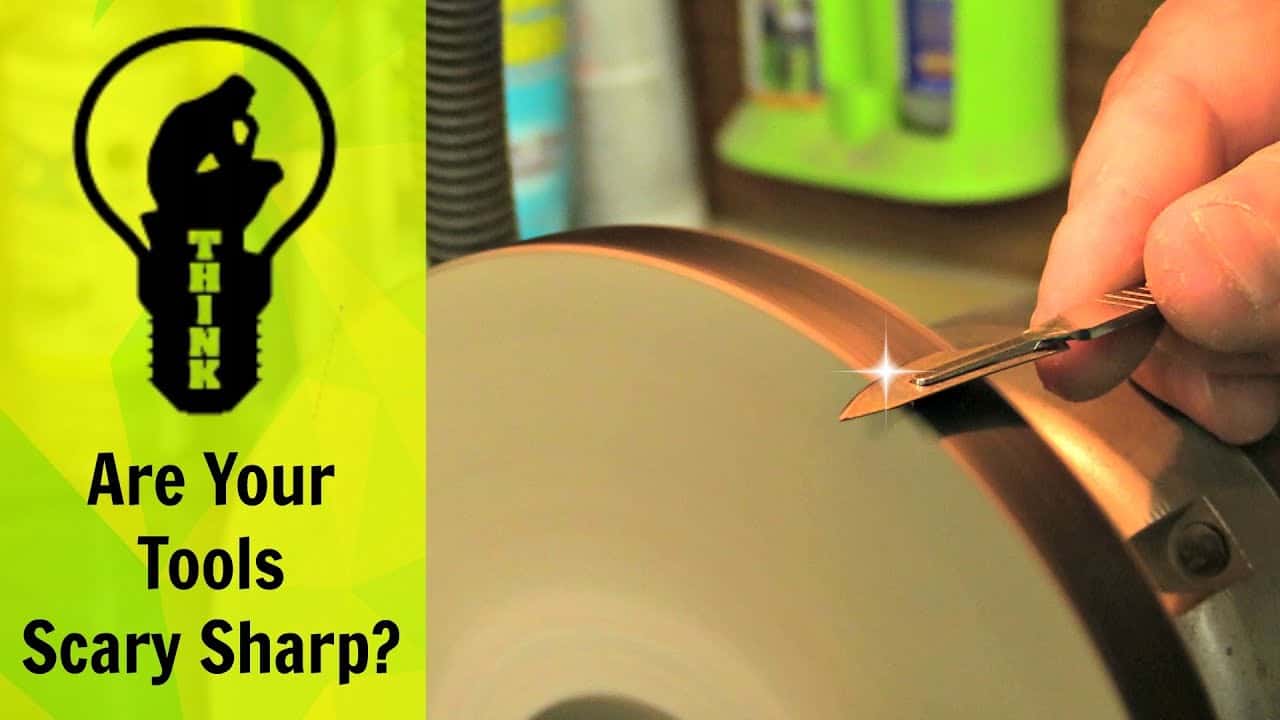
Izzy Swan shared the woodworking tip featured in this video.
Izzy demonstrates a simple, effective sharpening method built around a pair of cardboard wheels—one loaded with diamond grit for shaping and one dressed with a white polishing compound for a mirror-like finish.
Watch the full video and subscribe to Izzy Swan:
What the Razor’s Edge System Is
The Razor’s Edge approach uses two inexpensive cardboard wheels—one loaded with diamond dust for rapid material removal and one treated with a white rubbing compound for polishing.
The wheels are cheap, simple to dress, and can produce a true mirror polish on cutting edges without complex jigs or expensive equipment.
Preparing and Loading the Wheels
Loading the diamond wheel is straightforward: a thin ring of glue around the wheel edge holds loose diamond dust, which is pressed into the cardboard by spinning the blade against it until the grit is evenly loaded.
After the diamond grit is set, the whole surface is waxed to hold the abrasive in place, and the opposite wheel is worked with white polishing compound and then waxed to create a durable polishing surface.
Sharpening Technique and Safety
One important safety detail is wheel rotation direction—the wheels must be set so the top of the wheel moves away from the user, or the edge can catch and be thrown into the operator.
Sharpening technique relies on consistent body position: keep the blade level, use the same reference point on the wheel for repeatable bevels, and maintain light, controlled contact while watching blade temperature and holding one finger on the edge to sense heat.
How the System Performs on Different Tools
The cardboard wheel setup excels on knives, shop blades, and carving tools, producing a razor-sharp, mirror-polished edge quickly compared with many traditional methods.
Chisels can be sharpened as well, but results depend on the woodworker’s expectations; for ultra-precise joinery purists, a dedicated flat-faced stone setup and jigs may still be preferred.
Practical Tips and Troubleshooting
Start with non-essential blades to build confidence before sharpening prized kitchen knives or heirloom tools, since the method takes a short learning curve and can remove material quickly.
If wax or compound buildup appears on the wheels, it can be cleaned off with leather or a cloth, and wheels can be re-dressed or re-waxed as needed to maintain consistent performance.
Why This Method Is Useful
This system is low-cost, adaptable, and fast, making it a great option for makers who want a high-polish edge without investing in expensive precision sharpening gear.
It also scales well for workshop tasks—quick touch-ups between projects, re-profiling edges, and getting chisels back into service with minimal setup time.
Overall Takeaways
Izzy’s cardboard-wheel setup offers an accessible sharpening route that balances speed, polish, and affordability for everyday woodworking edges and knives.
With attention to wheel rotation, loading technique, and practice on non-critical blades, many woodworkers can adopt this method to keep tools performing at their best.
Please support Izzy by visiting his website: https://www.izzyswan.com/.

Matt’s Take
These are my personal thoughts and tips based on my own experience in the shop. This section is not written, reviewed, or endorsed by the original creator of this project.
This cardboard wheel approach really appeals to me because it solves the biggest frustration with sharpening systems — the balance between cost and results. You can get scary sharp edges without dropping hundreds on waterstones or fancy jigs. The diamond dust does the heavy lifting for reshaping, while that white compound creates a polish that rivals much more expensive setups.
Temperature control is absolutely critical with this method. Cardboard wheels spin fast and can heat up a blade edge quickly, which will ruin the temper on your good tools. I always keep a cup of water nearby when power sharpening, and if the steel gets too hot to touch comfortably, it’s time to let it cool. That finger-on-the-edge technique Izzy mentions is perfect for monitoring heat buildup in real time.
The wheel rotation direction is a safety point worth emphasizing — having the top of the wheel move away from you prevents the blade from catching and potentially launching toward your body. It’s one of those details that seems obvious once you know it, but can cause a dangerous situation if you set it up backwards.
For anyone considering this system, start with beat-up pocket knives or old chisels you don’t mind experimenting on. The learning curve is short, but those first few attempts will help you dial in pressure, angle, and timing before you tackle your favorite kitchen knives or expensive hand tools.