

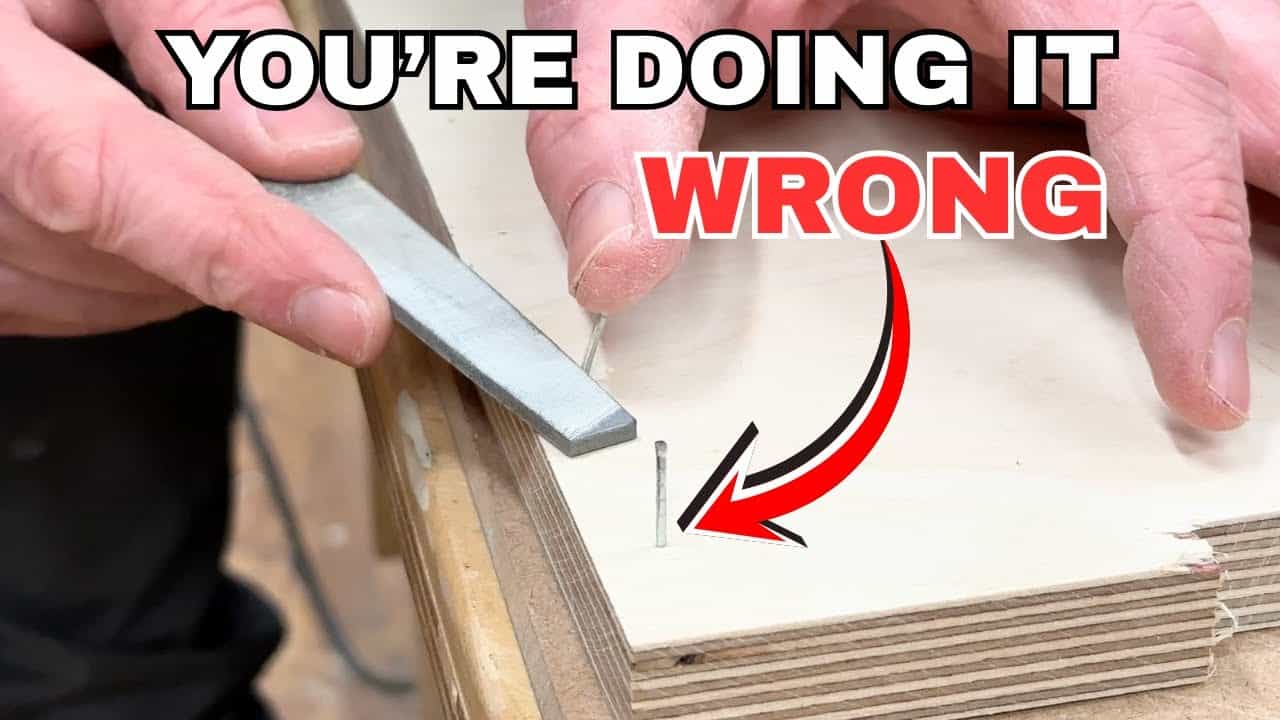
Jon Peters from Longview Woodworking shared the woodworking tip featured in this video.
Many woodworking projects run into stubborn brad nails that either snap or refuse to budge, and Jon demonstrates a simple, low-tech alternative: cutting the nail flush with a metal file instead of forcing removal.
The technique preserves surrounding material, saves time on tricky pulls, and avoids unnecessary damage when nails are rusted or embedded in softer plywood.
Watch the full video and subscribe to Jon Peters – Longview Woodworking:
Why pulling nails sometimes isn’t the best option
Nails driven into softer cores or left in place for years can corrode or shear off when gripped, leaving a broken shank that is difficult to extract cleanly. Attempting to yank them out can mar the face of the workpiece or split weaker material, turning a small repair into a larger one.
Jon shows that patience and the right choice of method reduce risk; a stubborn nail doesn’t always require more force, but rather a different approach that respects the wood around it.
The file method: simple, effective, repeatable
The core of the technique is straightforward: bend the exposed nail slightly and use the edge of a metal file to wear through the shank until it severs flush with the surface. This removes the protruding portion without levering or prying, which keeps the face and edges intact.
The advantages are practical — no specialty tools are needed, it’s quiet and controlled, and the remaining sub-surface shank rarely affects later trimming or trim installation when handled thoughtfully.
Alternatives and their trade-offs
Pulling with pliers or an extractor can work when the nail head is intact and the surrounding wood is strong, but these methods risk breaking the nail or marring finished faces. Driving the nail through to the reverse side is an option when the backside is accessible and cosmetic damage there is acceptable.
Cutting with a saw or rotary tool is possible, though cutting into metal can dull blades and requires care; Jon notes that occasional contact with a nail happens and usually isn’t catastrophic, but it’s another factor to weigh when choosing a method.
Practical tips and safety
Clamp the workpiece securely and use a small sacrificial block when prying to prevent dents and scratches during extraction attempts. Protect eyes and hands when filing a nail and be aware that a cut nail still remains below the surface until removed or covered.
- Use a file with a clean edge and steady strokes to keep control while cutting.
- If attempting a pull first, place a scrap block under the tool to distribute force and reduce marking.
- Consider the final use of the part — if trim will cover the area, a flush cut may be perfectly adequate.
When to pull, when to cut, and when to drive through
Choose pulling when nails are accessible, the heads are present, and the surrounding wood is robust enough to take leverage without damage. Opt to drive through when the backside is unimportant and the fastest fix is acceptable.
Pick the file method when a clean face is important, the nail is corroded or fractured, or when removing the shank would cause unnecessary damage or take too much effort.
Overall takeaway
This small shop trick reframes a common frustration into a predictable choice: preserve the workpiece first, then decide which removal method fits the situation. Jon’s file technique is a useful addition to the set of options for anyone who repairs or repurposes wood with hidden or stubborn fasteners.
Watch the full video and subscribe to Jon Peters – Longview Woodworking:

Matt’s Take
These are my personal thoughts and tips based on my own experience in the shop. This section is not written, reviewed, or endorsed by the original creator of this project.
This is one of those simple techniques that feels obvious once you see it, but it’s easy to get locked into the “must pull every nail” mindset. I’ve definitely been guilty of wrestling with stubborn nails when a quick cut would have saved time and prevented damage. The file method is particularly smart because it requires zero investment in specialty tools — every shop has a metal file somewhere.
Safety-wise, keep that workpiece locked down tight when you’re filing. A slipping piece can send your hand right into the file edge. I also like to wrap the file handle with some tape or use one with a good grip, since you’re applying steady pressure for several strokes. Eye protection is worth it too, especially if you’re dealing with rusty nails that might throw particles.
The decision tree Jon presents is solid: pull when you can, drive through when the back doesn’t matter, and cut when preservation is key. One thing to consider is the wood species you’re working with. Softer woods like pine will often let you pull nails cleanly, while hardwoods or plywood with void cores tend to grip nails differently and may benefit more from the cutting approach.