

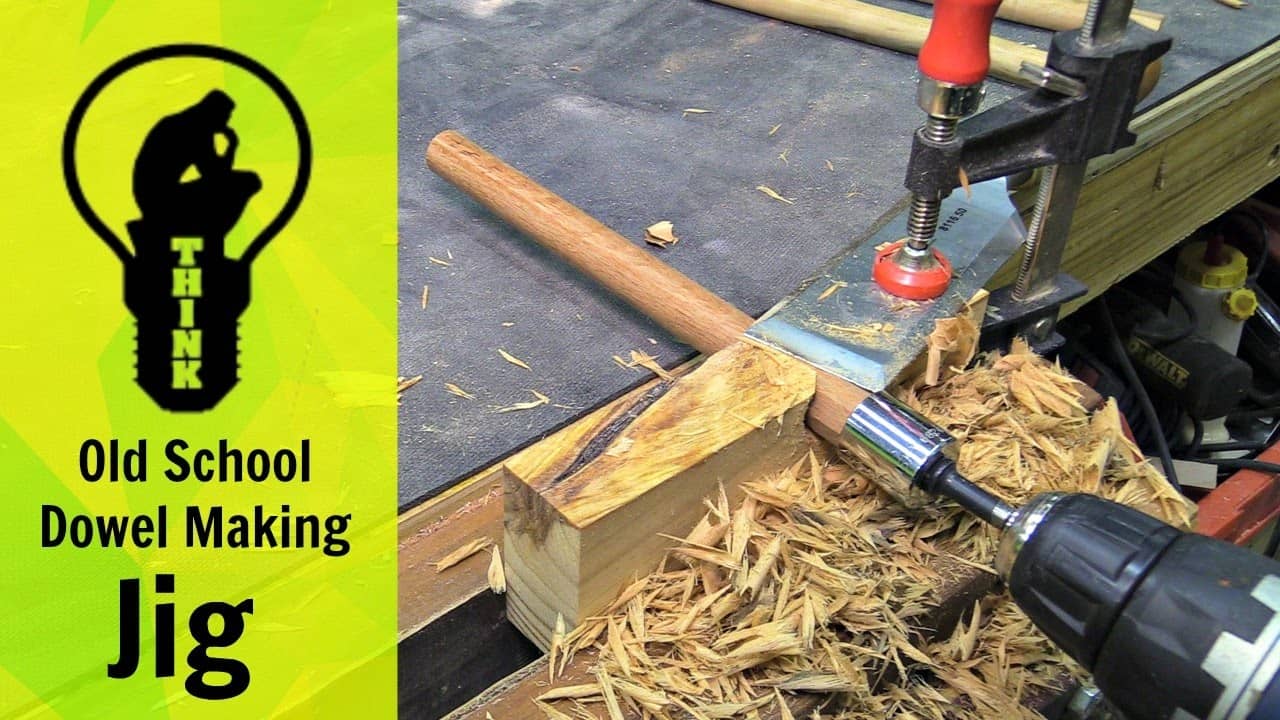
Izzy Swan shared the woodworking tip featured in this video.
Izzy demonstrates a simple, old-school dowel-making jig that can be made quickly in a modest shop and used to produce clean, tight-fitting dowels.
The process focuses on a drilled guide, a chamfered lead, and careful chisel work to turn pre-milled stock into usable dowels in minutes.
Watch the full video and subscribe to Izzy Swan:
Overview
The jig is a low-tech, fast solution for making custom-sized dowels without buying multiples from a supplier.
It’s especially handy when a project calls for non-standard diameters or a batch of matching dowels that need to be consistent.
Making the Jig
Construction is straightforward: a sturdy block of wood with a through-hole sized for the dowel and a chamfered entry to guide the stock.
The chamfer can be formed with a countersink bit, a router bit with a bearing, or even a knife or rotary tool for a quick, clean lead-in.
Using the Jig
Preparation matters—stock should be milled nearly to the final diameter before being pushed through the guide.
With a sharp chisel held at a steep angle and a steady, controlled feed, the jig peels the stock into a round dowel while leaving a smooth surface.
Small adjustments to the chisel position or jig alignment let the user fine-tune dowel diameter, and a steady push produces the cleanest results with minimal tearing.
Key Tips
- Keep the chisel razor-sharp to slice cleanly and reduce tear-out during the turning process.
- Mill your blanks close to the final size before using the jig so the chisel only needs to remove a little material.
- Create a chamfer at the entry to help the blank seat and begin rounding without snagging.
- Start cutting gently and progressively—work into the cut rather than forcing full-depth removals on the first pass.
- Maintain a steady, straight feed through the jig; small hesitations can leave facets that require sanding.
Adaptations and Why It Matters
The technique scales for a range of diameters and can be adapted to different chisels, drill-press setups, or clamp methods depending on available tools.
It’s a useful shop trick for anyone who values custom joinery, wants to save on hardware, or needs a batch of matching dowels without buying pre-made stock.
Because the jig is quick to build and easy to tweak, it’s a practical addition to both beginner and seasoned shops looking for flexible, low-cost solutions.
Conclusion
This dowel-making method gives woodworkers a simple, repeatable way to make tight-fitting dowels with minimal equipment and time investment.
The approach highlights how small jigs and good technique can expand shop capabilities and reduce dependence on store-bought parts.
Please support Izzy by visiting his website: https://www.izzyswan.com/.

Matt’s Take
These are my personal thoughts and tips based on my own experience in the shop. This section is not written, reviewed, or endorsed by the original creator of this project.
This is one of those brilliant old-school techniques that really shows the power of simple jigs. What I love about Izzy’s approach is how it transforms basic shop materials into a precision tool that can produce dowels more consistent than many store-bought options. The key insight here is that you’re not trying to remove a ton of material — you’re doing the heavy lifting with your planer or table saw first, then using the jig for that final shaping pass.
The chisel technique is worth practicing on some scrap before diving into your project wood. That steep angle and steady feed rate take a bit of getting used to, but once you find the sweet spot, the results are really satisfying. I’d add that grain direction matters more than you might expect — feeding the dowel so you’re cutting with the grain rather than against it makes a noticeable difference in surface quality.
From a shop efficiency standpoint, this jig really shines when you need specific diameters that aren’t readily available, or when you want your dowels to perfectly match your project wood. Plus, there’s something satisfying about the complete control you have over the process — you can dial in exactly the fit you want for your mortises without being limited to standard sizes.