

This project was built and designed by Izzy Swan from izzy swan.
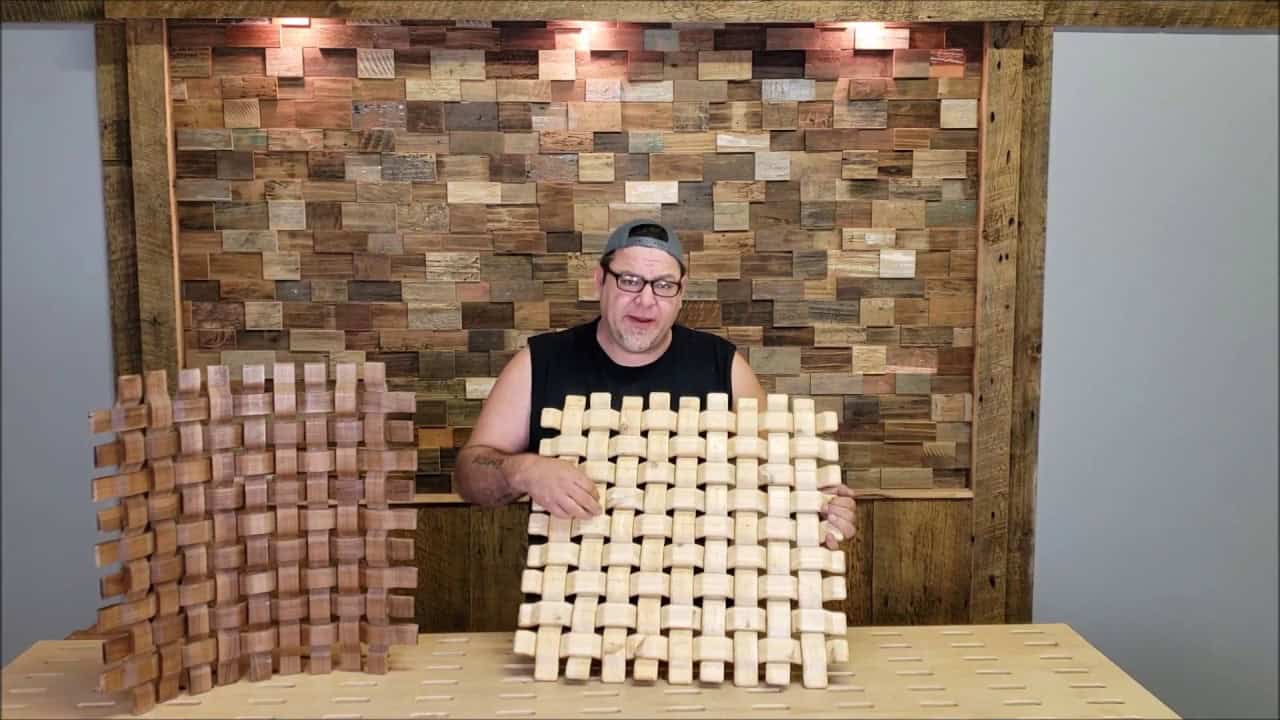
The piece is a striking wood panel that appears woven but is actually assembled from a series of matching curved parts that interlock visually.
The build blends CNC cutting with traditional cleanup and assembly techniques to make a complex-looking surface approachable in a small shop.
Watch the full video and subscribe to Izzy Swan:
Design
The design relies on a repeated curved module that, when arranged in a grid, reads like woven material instead of segmented parts. Izzy experiments with different layouts before committing, which helps find patterns that read well from a distance and up close.
CNC and Prep
The parts were laid out and cut on a CNC machine to keep each module consistent, with tabs left in place to prevent pieces from shifting during cutting. After machining, the tabs are removed with a flush-trim cutter and the edges are smoothed quickly using a flap wheel to speed cleanup without losing the profile.
Assembly and Joinery
The visual weaving effect is achieved by planning where each row is cut so overlaps fall on one side of the panel, and alternating which rows are cut from which end to maintain grain direction and alignment.
For initial assemblies Izzy uses pin nails to hold sections while iterating on fit, though a permanent version would benefit from glue and staged glue-ups to manage clamp time and movement.
Shaping and Finishing
Each part gets a gentle roundover on its edges to sell the woven illusion and to give the final surface a tactile, finished look. The choice of cedar gives the panel warm, orange-toned character once a finish is applied, turning an otherwise bland face into something that pops visually.
Tips and Lessons
Using CNC for layout and repeatability shortens the most tedious parts of the job but does not eliminate the need for careful cleanup and thoughtful assembly planning.
Paying close attention to grain flow, alternating the cut direction for rows, and mocking up layouts before gluing helps avoid alignment and movement issues in the finished panel.
Why This Project Matters
The panel is a great example of using simple repeated geometry and careful layout to create an eye-catching surface without complicated joinery.
The techniques shown are adaptable to hand tools and templates, making the idea accessible whether a shop has CNC or prefers more traditional workflows.
Please support Izzy by visiting his website: https://www.izzyswan.com/.

Matt’s Take
These are my personal thoughts and tips based on my own experience in the shop. This section is not written, reviewed, or endorsed by the original creator of this project.
This type of geometric paneling showcases how strategic planning can make complex-looking work much more manageable. The key insight here is that visual complexity doesn’t always require complicated joinery — sometimes it’s just about how you arrange simple, repeated elements.
The CNC approach is smart for consistency, but the same effect could absolutely be achieved with templates and a router. If you’re going that route, make a solid MDF template first and use bearing-guided bits to ensure each piece matches perfectly. Either way, those cleanup steps with the flush trimmer and flap wheel are crucial — CNC cuts still need finishing touches to look professional.
That grain direction planning is spot-on and applies to any panel work. When you’re dealing with multiple pieces that need to read as one surface, keeping the grain flowing in the same direction across rows prevents that “patchwork” look that can kill the illusion. The pin nail approach for test fitting is also clever — it lets you work out any spacing or alignment issues before you commit with glue.
Cedar’s a great choice here since it’s stable and takes finish beautifully, but this concept would work with any species that’s easy to machine cleanly. The real magic happens in that gentle roundover — it’s amazing how that small detail sells the woven effect and makes the whole panel feel intentional rather than assembled.