

This project was built and designed by Tom from Alley Picked.
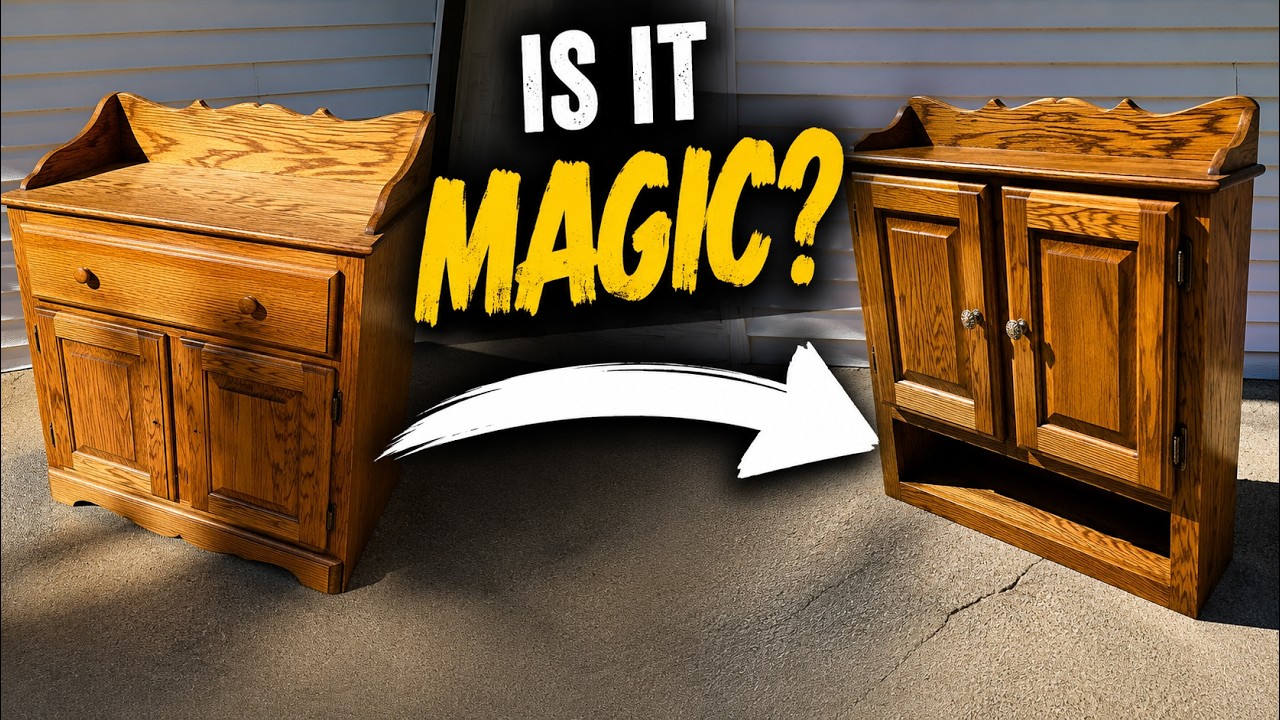
Finding the perfect workshop storage doesn’t always require buying new furniture. Tom discovered a dry sink cabinet at a Habitat for Humanity store for just five dollars and saw potential beyond its original design.
Watch the full video and subscribe to Alley Picked:
The Vision
The original cabinet wasn’t exactly what Tom needed for his workshop, but the price made it worth reconsidering. His plan involved flipping the cabinet upside down, cutting it vertically in half, adding shelves, and restoring the wood finish.
This approach demonstrates how repurposing furniture often requires looking beyond current form to see future function. What appears unusable in one configuration might be perfect when reimagined.
Disassembly and Reconstruction
Tom began by removing the doors, drawer, top, and back panel. Since he planned to invert the cabinet, the original bottom would become the new top, requiring him to trim several inches from the base.
The most challenging step involved cutting the cabinet in half vertically. This process required careful planning to maintain structural integrity while creating the desired proportions for workshop storage.
Surface Preparation
Rather than completely sanding off the existing finish, Tom chose a more efficient approach. He cleaned the surface thoroughly using steel wool and paint thinner, which removes dirt and prepares the wood without excessive material removal.
This method works particularly well on pieces with existing finishes that aren’t completely deteriorated. It saves time while still providing a good foundation for new stain and topcoat.
Refinishing Process
Tom applied golden oak stain to refresh the wood’s color and appearance. Since some areas retained original finish, the drying time extended beyond typical staining projects.
For the topcoat, he selected warm satin polyurethane rather than gloss, which provides durability without an overly shiny appearance. He applied the finish following the grain direction and monitored for bubbles and drips during the initial drying period.
Final Details
The doors required minimal work since they remained in good condition. Tom cleaned and reinstalled the original hinges and added vintage brass knobs salvaged from another project, demonstrating how small details can enhance the overall result.
These finishing touches show how repurposing projects benefit from attention to hardware and accessories that complement the restored wood finish.
This transformation illustrates how creative vision can turn discarded furniture into functional workshop storage. The key lies in recognizing potential rather than accepting current limitations, especially when the price makes experimentation affordable.
Watch the full video and subscribe to Alley Picked:

Matt’s Take
These are my personal thoughts and tips based on my own experience in the shop. This section is not written, reviewed, or endorsed by the original creator of this project.
Finding workshop storage at thrift stores and habitat stores is one of my favorite treasure hunts. The key is exactly what Tom did here — looking past the current form to see what’s possible. That $5 price tag gave him plenty of room to experiment, and even if it hadn’t worked out perfectly, he wouldn’t be out much.
His approach to surface prep is spot-on for pieces like this. Steel wool and paint thinner can save hours compared to full sanding, especially when you’re dealing with an older finish that’s mostly intact. Just make sure you’re working in a well-ventilated area and wearing gloves — paint thinner isn’t something you want on your skin. I also keep a tack cloth handy during this process to pick up any residue before staining.
The decision to go with satin polyurethane instead of gloss was smart for workshop storage. Satin hides dust and fingerprints better, which matters when you’re grabbing tools and supplies regularly. Plus, it gives you that nice, finished look without being so shiny that every little scratch shows up immediately.
Those little details like the vintage brass knobs really do make the difference between “repurposed” and “restored.” It’s worth keeping a small collection of interesting hardware from other projects — you never know when the perfect piece will complete a build like this.