

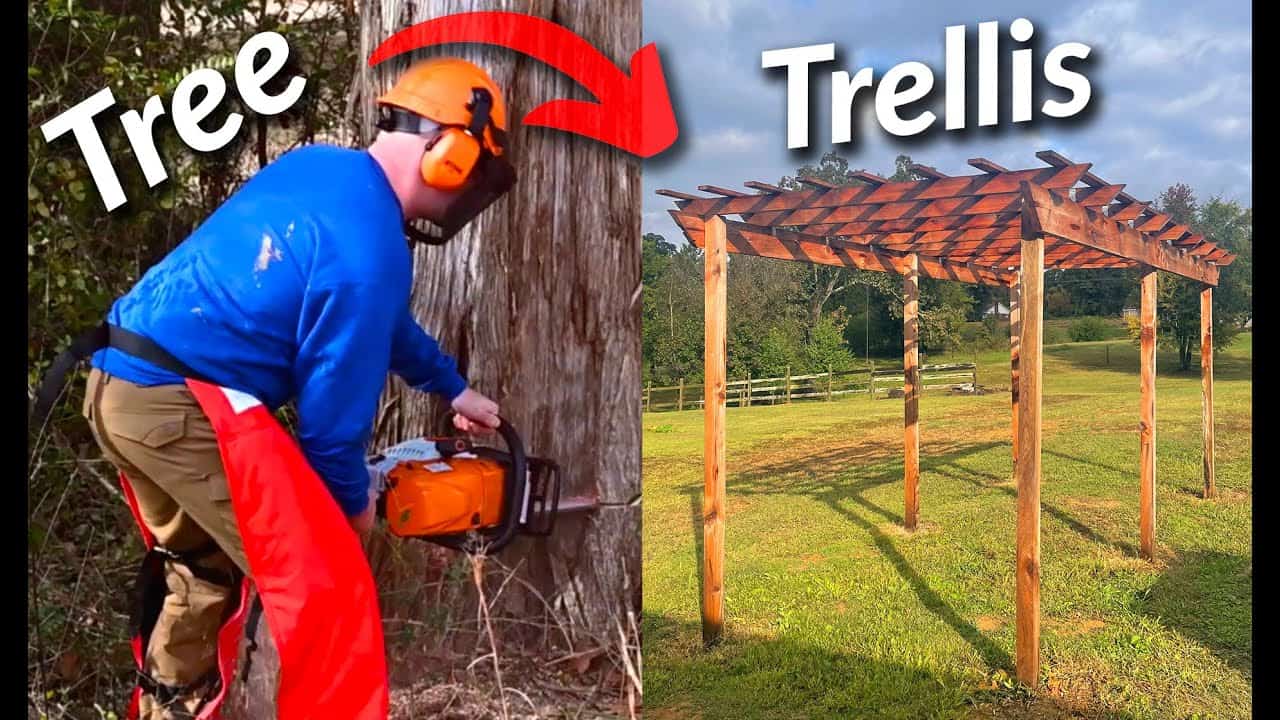
This project was built and designed by Caleb from YouCanMakeThisToo. It’s a thoughtful example of how a declining cedar tree can be repurposed into a functional, beautiful trellis using smart planning and woodworking techniques.
Rather than letting the tree go to waste, Caleb transforms it into a lasting structure that brings both utility and charm to his outdoor space. The project blends tree management, milling, and clean construction into one seamless process.
Watch the full video and subscribe to Caleb’s channel:
Evaluating the Tree Before Removal
Before starting any removal, Caleb carefully inspects the cedar’s condition. Many limbs are dead, and signs of rot are visible, making it clear that the tree poses a potential hazard.
The lean of the tree and distribution of weight help determine the safest direction for it to fall. Planning the cut line ahead of time ensures the felling process is smooth and minimizes danger to nearby property.
This early evaluation is key to making use of the wood instead of simply cutting it down and discarding it. With the right approach, even a tree in poor shape can still be a valuable resource.
Safety First During Tree Work
Working with trees and power tools requires full attention to safety. Caleb uses proper protective gear throughout the process—helmet, gloves, safety glasses, and hearing protection.
He emphasizes understanding how to operate the chainsaw and other tools before use. Following equipment manuals and double-checking each cut ensures the process remains under control from start to finish.
Before felling the tree, he prepares the area and clears any obstacles. A single wedge is used to open up the hinge, helping the tree fall in the intended direction without binding or kickback.
Milling the Cedar into Usable Lumber
Once the tree is safely on the ground, the next step is milling. Caleb brings the logs to a local sawyer who helps break them down into planks that can be used for future builds.
The choice to use a professional mill ensures consistent cuts, flat boards, and usable stock that saves time in later steps. From hazard to hardware-ready lumber, the transformation begins here.
Each slab is cut to size with the future trellis in mind. Milling early also allows time for the wood to begin drying before construction starts.
Laying Out the Trellis
With the cedar boards prepped, Caleb moves on to clearing the space for the new trellis. He uses batter boards and string lines to define the layout and make sure the structure stays level and square.
This step includes marking post holes and confirming spacing between supports. The attention to detail here helps create a clean visual and ensures the structure sits properly on uneven ground.
Installing Posts and Framing the Structure
Each post is set into the ground at marked locations. Depending on soil conditions, some holes may be backfilled with dirt while others may benefit from concrete for added stability.
After setting the vertical posts, the top structure begins to take shape. Two-by-eights are used for the main beams, offering strength and a wide surface area for the crosspieces that follow.
Hurricane ties and outdoor-rated fasteners are added at each connection. These details improve durability and ensure the frame can withstand both weather and plant growth over time.
Adding Crosspieces and Structural Details
Two-by-fours are installed perpendicular to the main beams to support climbing plants. These also create shade and visual texture that enhances the garden’s appearance.
Caleb spaces these slats evenly and fastens each with corrosion-resistant screws. By securing them properly, the structure remains sturdy and ready for use as a trellis and shade feature.
Every cut is carefully made, and pieces are sanded to remove splinters before installation. While these may seem like small steps, they help prevent long-term maintenance issues.
Finishing Touches for Longevity
Once assembled, the cedar frame is lightly sanded and treated to protect against moisture and UV exposure. Caleb’s goal is to let the natural wood color shine through while adding years of life to the build.
Rubio Monocoat or other oil-based finishes are good options for outdoor cedar, helping seal the surface without hiding the grain. While not shown in detail, the finishing step plays a big role in keeping the trellis looking fresh.
Function and Aesthetic Value
This trellis isn’t just a way to repurpose old wood—it adds something beautiful and functional to the property. Climbing plants like honeysuckle or jasmine can easily take hold, creating a living canopy over time.
It also provides light shade for sitting areas or garden beds, blending practical utility with clean design. The final look is refined, yet still rustic enough to feel at home in the landscape.
Please support Caleb by visiting his website: https://www.ycmt2.com/.

Matt’s Take
These are my personal thoughts and tips based on my own experience in the shop. This section is not written, reviewed, or endorsed by the original creator of this project.
There’s something really satisfying about taking a tree that’s reached the end of its life and turning it into something that’ll serve the garden for years to come. Cedar is perfect for this kind of outdoor project since it naturally resists rot and insects, even without treatment. That built-in durability means this trellis should hold up well to weather and plant growth over time.
The milling step really makes a difference here. Having consistent, flat lumber to work with saves so much time and frustration during assembly. If you don’t have access to a local sawyer, portable band saw mills are becoming more common and can handle smaller logs like this. Just remember that fresh-cut cedar can be pretty wet, so letting it air dry for a few months before building will help prevent warping and splitting.
Those batter boards and string lines might seem like extra work, but they’re worth their weight in gold for keeping everything square and level. On uneven ground especially, taking time with the layout prevents headaches later when nothing wants to line up properly. And using hurricane ties on outdoor structures like this is smart thinking – they’re cheap insurance against wind loads and the extra stress that comes when plants start loading up the framework.