

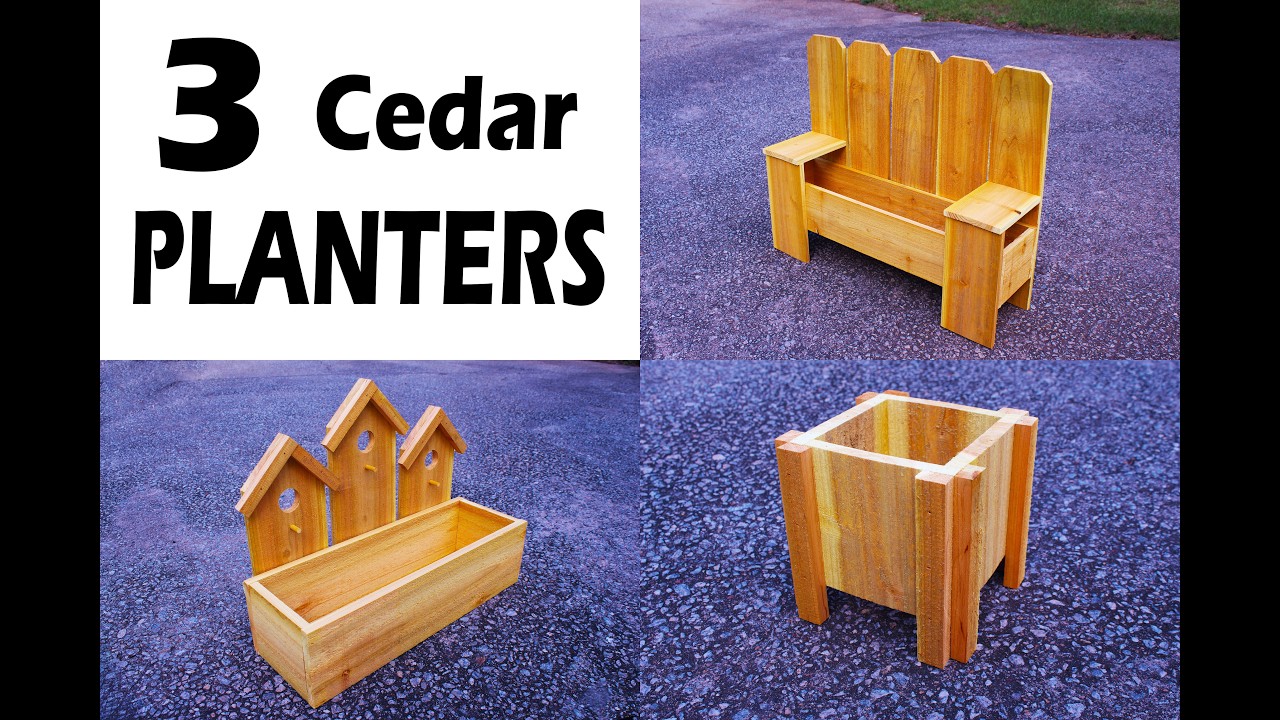
These projects were built and designed by Clinton from Specific Love Creations.
Clinton demonstrates three distinct cedar planter designs using fence pickets as the primary material. Each project offers different aesthetics and functionality while remaining accessible to woodworkers of all experience levels.
Watch the full video and subscribe to Specific Love Creations:

The Birdhouse Planter Design
The first project combines functionality with decorative appeal through a charming birdhouse theme. Clinton starts with two fence pickets, creating a rectangular base that forms the main planter box.
The construction emphasizes proper grain alignment across all boards to prevent issues with wood movement over time. A fitted bottom piece includes drainage holes drilled in each corner along with additional holes throughout the surface.
The decorative birdhouse elements feature peaked tops cut at forty-five degree angles, creating miniature roof structures. Small dowel pegs add authentic detail to complete the birdhouse appearance. These decorative pieces mount to the back and sides of the main planter box.
Simple Box Planter with Corner Accents
The second design focuses on minimalism while adding visual interest through corner detailing. Using just one fence picket, Clinton creates a compact square planter suitable for smaller plants or as decorative pot covers.
The construction method uses stepped joints where board ends meet board sides rather than simple butt joints. This approach significantly increases the structural integrity of the small planter box.
Thin strips applied to the corners create triangular accent details that elevate the basic box design. This project works well for concealing plain nursery pots or creating uniform planters for indoor use.
Bench Planter Combination
The third project represents the most ambitious design, requiring four fence pickets and combining seating with planting space. Clinton creates a functional piece that serves dual purposes in outdoor settings.
The base follows similar construction principles as the first project but uses larger dimensions. A slatted back section with deliberate spacing allows for wood movement while maintaining structural support.
Front legs and connecting pieces complete the bench structure, creating a cohesive piece suitable for porches or garden areas. The design allows plants to be displayed while providing comfortable seating space.
Construction Considerations
All three projects emphasize the importance of waterproof adhesives for outdoor durability. Clinton consistently recommends aligning wood grain direction across joints to minimize expansion and contraction issues.
The drainage systems in each planter ensure proper water management. Corner notches and drilled holes provide adequate drainage without compromising structural integrity.
Assembly methods remain consistent across projects, using glue reinforced with mechanical fasteners. This approach ensures strong joints while the adhesive cures and provides long-term durability.
These three cedar planter designs demonstrate how basic fence pickets can be transformed into attractive functional pieces. The projects range from simple weekend builds to more involved constructions, offering options for various skill levels and intended uses.
Watch the full video and subscribe to Specific Love Creations:

Matt’s Take
These are my personal thoughts and tips based on my own experience in the shop. This section is not written, reviewed, or endorsed by the original creator of this project.
Working with cedar fence pickets is one of my favorite approaches for outdoor projects like these. The material is naturally rot-resistant and typically well-dimensioned, making it perfect for planters that need to handle moisture and weather. Plus, at around $3-4 per picket, it’s hard to beat the value when you’re building functional outdoor pieces.
The grain alignment Clinton emphasizes throughout these builds is absolutely critical for outdoor projects. When boards expand and contract at different rates, you get splitting, warping, and joints that fail over time. I always take a few extra minutes to check grain direction before assembly — it’s one of those details that separates pieces that last years from ones that fall apart after a season or two.
For the drainage systems shown here, I’d add that you want those holes slightly larger than you think you need. Organic matter tends to accumulate and can block smaller drainage holes over time. A 1/2-inch bit usually works well, and spacing them every 4-6 inches across the bottom keeps water from pooling while maintaining structural integrity.
The stepped joint approach in the simple box design is a smart move that more beginners should consider. It creates so much more glue surface area than a basic butt joint, and when you’re working with thin fence picket material, every bit of joint strength matters.