

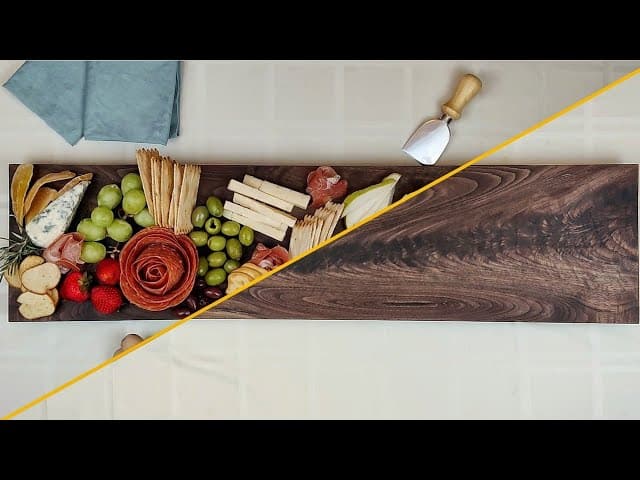
This project was built and designed by Keaton Beyer. It’s a beautiful and functional charcuterie board that highlights the unique character of crotch wood.
Keaton’s design turns an often-overlooked piece of lumber into a show-stopping centerpiece. If you’re holding onto a special board and waiting for the right moment to use it, this is the kind of project that brings it to life.
Watch the full video and subscribe to Keaton’s channel:
What Makes Crotch Wood Special
Crotch wood is known for its dramatic feathered grain and rich color variations. While it’s not as strong as straight-grain lumber, it more than makes up for it in visual appeal.
Turning it into a charcuterie board allows the grain to shine while creating something useful and long-lasting. Keaton’s board serves as both a conversation piece and a functional serving tool.
Adding Sliding Dovetail Feet
To prevent the board from warping or cupping, Keaton adds sliding dovetail feet to the underside. These not only provide structure but also elevate the board slightly, giving it a more refined look.
Fitting sliding dovetails takes time and precision. Test pieces are used to dial in the perfect fit before cutting into the final workpiece.
Addressing Imperfections During Assembly
Even with careful routing, small imperfections can happen. Instead of trying to hide them completely, Keaton embraces them and uses techniques that add visual interest.
Beveling the edges helps clean up minor tear-out. When filling voids, he uses matching wood pieces instead of glue and dust, which creates a cleaner and more natural appearance.
Finishing for Function and Beauty
A light spritz of water raises the grain before final sanding. This step ensures a smooth surface once the finish is applied.
Mineral oil is used as the main finish, keeping the board food-safe and enhancing the grain. A light coat is applied first, with more added as the board is used over time.
To seal everything in, Keaton uses a homemade board conditioner as a final step. This adds a layer of protection and gives the board a warm, natural sheen.
Why This Project Stands Out
This build is about more than just creating a serving board. It’s about using beautiful materials instead of letting them sit unused.
Crotch wood deserves to be shown off, and this project gives it a practical purpose. It’s a reminder that good design can elevate even the most rugged boards.
Want to See the Full Build?
Please support Keaton, but visiting his website: https://www.keatonbeyerwoodworking.com/.

Matt’s Take
These are my personal thoughts and tips based on my own experience in the shop. This section is not written, reviewed, or endorsed by the original creator of this project.
Crotch wood can be intimidating to work with, but it’s absolutely worth the effort when you find the right piece. The wild grain patterns mean you’ll want to take your time with any machining operations — tear-out happens fast with all those grain direction changes. Sharp tools and light passes are your friends here.
Those sliding dovetail feet are a smart move beyond just preventing warp. They distribute weight evenly and keep the board stable on the counter, which matters more than you might think when someone’s loading it up with cheese and crackers. The fit on sliding dovetails is critical — too loose and they’ll rattle, too tight and you’ll split something trying to get them together.
For food-safe finishing, mineral oil really is the gold standard for cutting boards and serving pieces. It penetrates well, won’t go rancid, and you can reapply it whenever the wood starts looking dry. Some folks swear by adding beeswax to the mix for extra protection, but straight mineral oil does the job beautifully and keeps maintenance simple.
This kind of project shows why it’s worth hanging onto those special boards when you find them. Crotch wood doesn’t come around often, and when it does, it deserves to be something people will actually see and use rather than hiding in the lumber rack.