

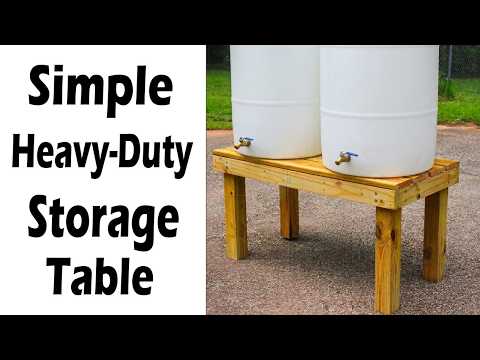
This project was built and designed by Clinton from Specific Love Creations.
Clinton needed a sturdy platform to elevate two water barrels for his garden irrigation system. The design had to support nearly 900 pounds when both barrels were full while keeping the containers elevated for easy drainage.
Watch the full video and subscribe to Specific Love Creations:
Using Reclaimed Materials
Clinton challenged himself to build the entire rack using only materials he already had on hand. He sourced pressure-treated lumber from various storage areas around his property, including an old dog kennel and storage building.
The pressure-treated lumber was essential since the rack would sit on the ground and be exposed to constant moisture from rain and watering activities. This treatment prevents rot and ensures the structure remains stable for years of use.
Building the Frame
The frame consisted of a rectangular base measuring approximately four feet long and two feet deep. Clinton used reclaimed pressure-treated boards to create this foundation, cutting them to proper lengths and assembling them on a flat workbench.
He positioned the shorter boards between the longer ones to create the proper overall width. Careful measuring and squaring ensured all joints were properly aligned before securing them with screws.
Adding the Legs
Four pressure-treated posts were cut to create sturdy legs for the platform. Each leg was positioned at the corners of the frame and secured with heavy-duty structural screws.
Clinton used large structural screws rated for over 1,000 pounds of shear strength each. He drove four screws into each leg from two different sides of the frame, creating an extremely strong connection that could handle the massive weight of filled water barrels.
Creating the Platform Surface
The top of the rack needed a solid surface to support the barrels. Clinton repurposed leftover deck boards, cutting them to span the width of the frame.
He installed the outer boards first to ensure proper alignment, then added the center boards by eye. Pre-drilling the screw holes prevented the boards from splitting during assembly.
Testing and Performance
The completed rack proved incredibly sturdy during testing. Clinton demonstrated its strength by jumping on the platform repeatedly, showing no flex or movement in the structure.
Even with one barrel partially filled from rainwater, the rack showed no signs of stress. This type of simple but robust construction makes it ideal for long-term outdoor use in various weather conditions.
This straightforward design shows how effective water collection systems can be built using common lumber and basic joinery techniques. The elevated platform makes gravity-fed watering much more practical while providing a stable base for heavy water storage containers.
Watch the full video and subscribe to Specific Love Creations:

Matt’s Take
These are my personal thoughts and tips based on my own experience in the shop. This section is not written, reviewed, or endorsed by the original creator of this project.
Water barrel racks are one of those projects where the engineering matters more than the aesthetics. Clinton’s approach with the heavy-duty structural screws is spot-on — when you’re supporting 900 pounds, regular deck screws just won’t cut it. I always tell folks to think about dynamic loads too, not just static weight. Water moves when you bump into barrels or when wind rocks them, so that extra connection strength pays dividends.
The pressure-treated lumber choice is crucial here, especially for the legs that’ll be sitting on potentially damp ground. One thing worth considering for future builders is adding some gravel or concrete pads under the legs to improve drainage and prevent settling. Even pressure-treated lumber benefits from staying off direct soil contact when possible.
I really appreciate seeing someone work with what they have on hand. That’s real-world woodworking right there. The deck board approach for the platform surface is smart too — those boards are designed to handle moisture and weight. Just make sure to leave small gaps between boards for drainage if you’re building something similar. Standing water on any wood surface, even treated lumber, will eventually cause problems.