

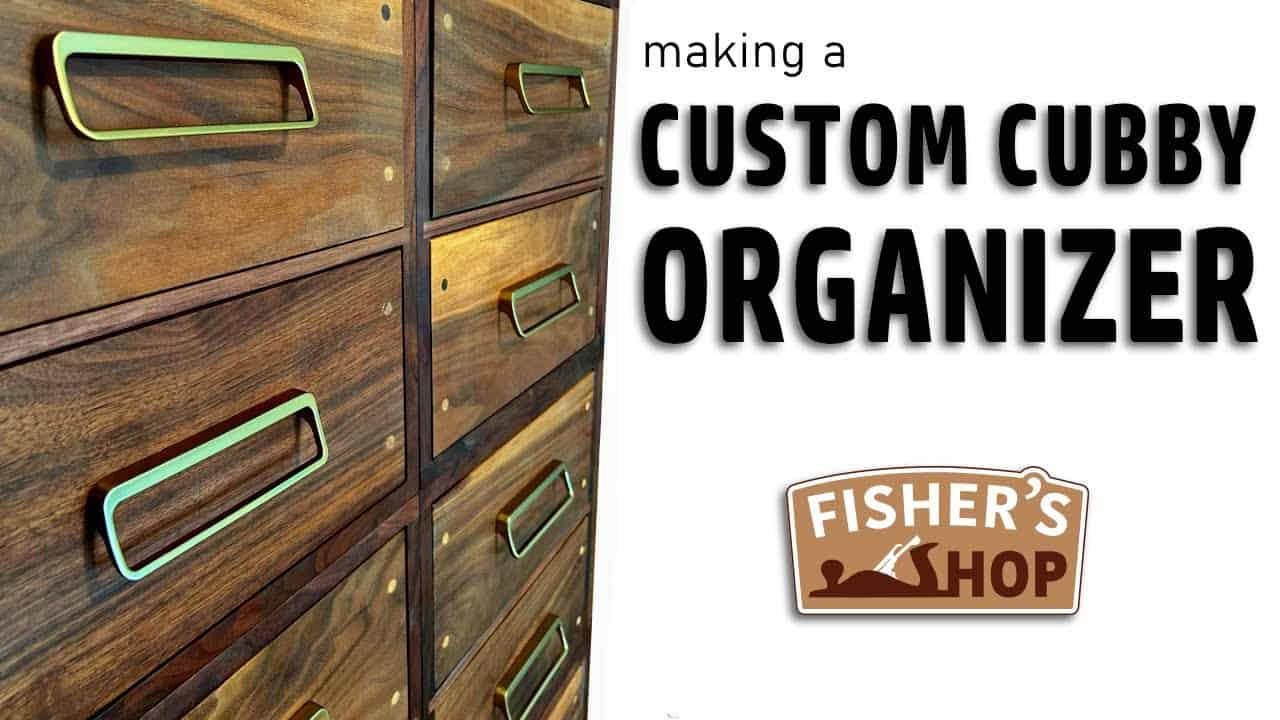
This project was built and designed by Drew Fisher from Fisher’s Shop.
Drew designs a modular cubby system to organize a quilter’s chaotic craft room, combining adjustable shelving, removable drawers, vertical book storage, and a few custom features like walnut accents and a small hideaway for a cat.
Watch the full video and subscribe to Fisher’s Shop:
Design
The organizer is a modular system composed of multiple cubby types that stack together to fit a closet or corner space, allowing the user to mix and match modules as needs change.
Each module focuses on a specific function — adjustable shelves for bins, drawers for fabric scraps, vertical slots for patterns, doors for tidy storage, and a playful small cubby for a pet — all tied together with walnut trim for a cohesive look.
Lumber Prep and Edge Treatment
Drew emphasizes clean edges and matched accents, trimming rough panel edges before breaking sheets down and banding exposed plywood faces with thin walnut strips for a refined appearance.
Edge banding and flush trimming are handled with purpose-built jigs and careful sanding to ensure the veneer transitions are clean and ready for finishing, which elevates the overall look of the assembled units.
Joinery and Assembly
Box construction centers on simple, reliable techniques: rabbets and dados for bottoms and shelf supports, glue and screw assemblies for speed, and drilled shelf-pin holes to provide adjustable shelving options.
Right-angle fixtures and assembly clamps are used to square parts during glue-up, helping the boxes come together quickly while maintaining tight faces and consistent gaps.
Drawer Systems and Details
Drawers include both traditional slide-mounted units and removable wooden-based drawers that act as portable bins, giving the user the option to carry a drawer to the work area for convenience.
Unique features such as adjustable dowel back-stops and drilled holes in drawer bottoms allow small folded fabrics to stand on end and be kept near the front, making selection faster and reducing needless walking back and forth.
Clamping, Jigs, and Workflow
The build relies heavily on repeatable jigs and specialized clamps to speed production and keep parts consistent across many identical or similar pieces.
Using drilling jigs for shelf pins, hinge mortising jigs for doors, and simple temporary fixtures for layout helps manage the project’s complexity and maintain accuracy when making multiple modules.
Shaping and Aesthetic Choices
Walnut was resawn and laid out to create striking door faces that showcase the transition from sapwood to heartwood, a deliberate choice that gives the system visual interest and warmth.
Small details like plug accents on drawer fronts and rounded corners where necessary add a subtle, handcrafted feel without complicating the build or assembly process.
Finishing and Installation
A straightforward oil finish is chosen to deepen the tone of the wood and protect surfaces while allowing for easy touch-ups later, keeping the finishing process approachable for most woodworkers.
Installation is as simple as stacking the modular boxes in the closet footprint, clamping them flush, and fastening a few units to studs for stability, demonstrating how modular design simplifies final placement and future changes.
Lessons Learned and Adaptability
The project demonstrates the power of modular thinking: build only the modules needed now and add more later, or rearrange to suit shifting storage needs and evolving craft supplies.
Techniques used here — clean panel prep, repeatable jigs, simple joinery, and thoughtful drawer solutions — can be adapted to many other storage projects without requiring exotic tools or complex joinery skills.
Conclusion
The modular cubby system offers a practical, attractive way to tame a craft room by combining adjustable shelving, portable drawers, and tailored details that prioritize functionality and ease of use.
Get Drew’s plans here: https://fishersshoponline.com/plans/p/organizer.

Matt’s Take
These are my personal thoughts and tips based on my own experience in the shop. This section is not written, reviewed, or endorsed by the original creator of this project.
This modular approach is brilliant for anyone dealing with a craft room that seems to evolve every few months. The beauty of building in sections like this is you can tackle one module at a time without overwhelming your shop space or budget, and you’re not locked into a design that might not work six months down the road.
I really appreciate the focus on jigs throughout this build. When you’re making multiple identical pieces, spending time upfront on a good drilling jig or assembly fixture pays dividends in accuracy and speed. That shelf pin jig alone probably saved hours of layout work and eliminated the potential for misaligned holes that would drive you crazy during assembly.
The walnut edge banding is a nice touch that transforms what could look like a basic plywood project into something much more refined. If you’re new to edge banding, take your time with the trimming process — a sharp blade and light passes will give you clean results without tear-out. The contrast between the walnut trim and lighter plywood really makes the whole system feel intentional rather than utilitarian.
Those removable wooden drawer boxes are clever too. Being able to grab a drawer and carry your fabric scraps right to your cutting table eliminates a lot of back-and-forth trips. It’s those little workflow improvements that make a storage system actually get used instead of becoming another place where things pile up.