

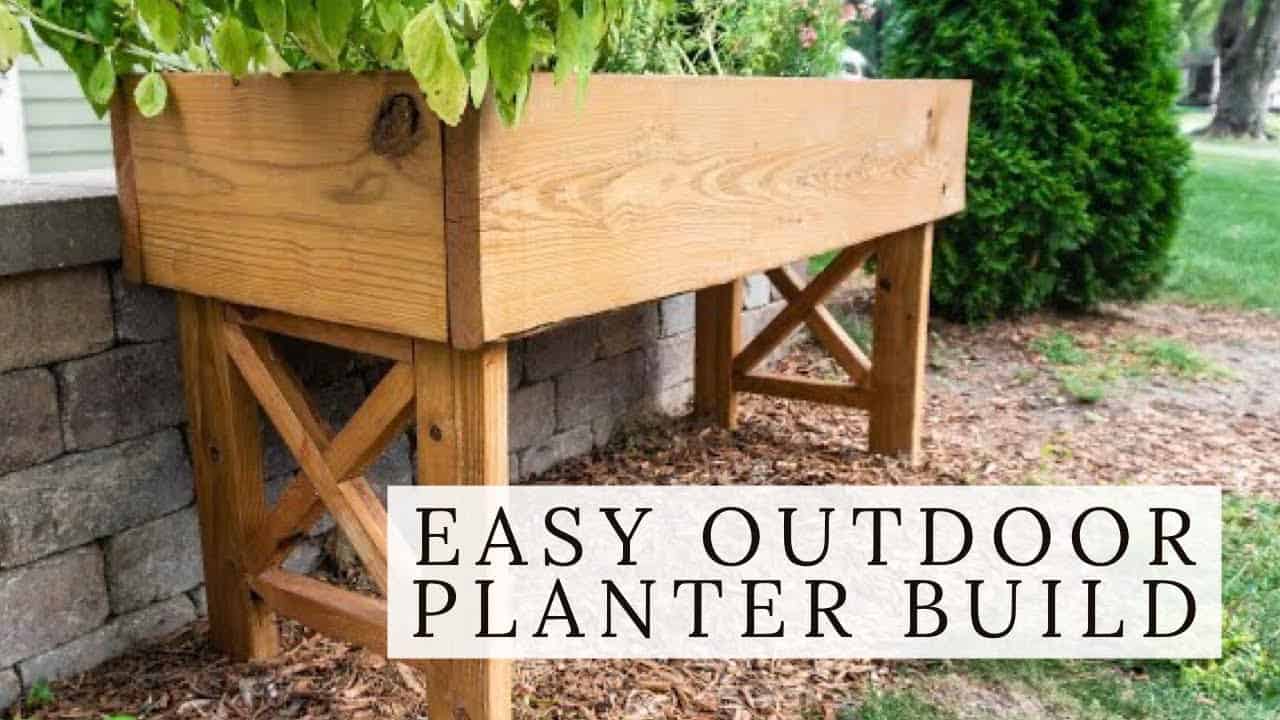
This project was built and designed by John Dolechek. It’s a great way to add height, structure, and style to your outdoor garden while making planting more accessible and comfortable.
The elevated design reduces the need for bending and kneeling, making it easier to care for plants. It also helps define the space and adds visual appeal to your yard or patio.
Watch the full video and subscribe to John’s channel:
Starting the Build
The project begins with measuring and cutting the wood. The legs are made from two-by-fours, chosen for their strength and ability to support the weight of the soil and plants.
A triangle square is used to mark cuts cleanly and ensure everything stays aligned during assembly. Attention to these early details makes the rest of the build go more smoothly.
Pressure-treated lumber is used for durability and resistance to rot. While the color may not be ideal at first, a good quality stain helps improve the final look.
Designing the Frame
John uses SketchUp to plan out the project, allowing him to visualize how everything will come together. The structure includes an X-brace design between the legs, which adds both stability and style.
The walls of the planter are cut from two-by-tens. Due to their size, some cuts require flipping the board to complete the pass with the saw.
Notches are made at the corners so the legs can fit flush with the sides. This detail helps the final build look seamless and solid.
Assembly Process
Pocket hole joinery is used throughout the build, made easy with a Kreg jig. This technique keeps the screws hidden and helps create tight, clean joints.
The legs are assembled first, with wood glue and exterior-grade screws ensuring long-term durability. Once the legs are complete, they’re attached to the planter base using the pre-cut notches.
The pocket hole method is also used to build the rectangular frame of the planter bed. It’s a straightforward system that gives a strong, clean finish.
Adding the Sides and Final Details
With the main frame done, the side panels are wrapped around the structure. A temporary board is used as a spacer during this step to ensure even spacing and alignment.
Drainage holes are drilled into the bottom of the planter to prevent water buildup. This step helps protect the wood and keeps the soil in good condition over time.
The assembled planter is then sanded and cleaned. This removes any rough edges and prepares the surface for staining.
Staining and Finishing
John applies a two-in-one exterior wood stain that both protects the wood and enhances its appearance. The result is a rich finish that complements the garden and helps the planter last longer outdoors.
The new stain tone helps cover the greenish tint of pressure-treated lumber. It also brings out the grain and adds a finished look to the entire piece.
Final Results
A year after completing the project, the planter is filled with healthy, flourishing herbs. It’s held up well outdoors, showing that careful construction and good materials make a lasting difference.
This is a satisfying project that provides function, style, and long-term usability. It’s a great option for beginners and experienced woodworkers alike.
Want to See the Full Build?
Please support John by visiting his website here: https://johndolechek.myportfolio.com/.

Matt’s Take
These are my personal thoughts and tips based on my own experience in the shop. This section is not written, reviewed, or endorsed by the original creator of this project.
The elevated planter design really showcases how thoughtful construction details make all the difference in outdoor projects. Those corner notches for the legs are a smart touch — they create a much cleaner look than simply butting the pieces together, and they add structural integrity by creating more glue surface area. When you’re working with pressure-treated lumber, taking time for these details helps the final piece look intentional rather than just functional.
Pocket hole joinery is perfect for this type of project since the screws stay hidden and create strong mechanical connections that won’t rely solely on glue in outdoor conditions. The X-brace design between the legs is particularly clever — it prevents racking while adding visual interest. When building anything that’ll hold soil and water, that diagonal bracing becomes crucial as the weight adds up quickly.
The drainage holes are absolutely essential, and it’s worth drilling them generously. Soil that stays waterlogged will eventually cause problems for both your plants and the wood. I’d also suggest considering adding a layer of landscape fabric before filling with soil — it helps with drainage while keeping the dirt from washing out through those holes over time.
Seeing it thriving with herbs after a year really proves the value of building with quality materials and taking time with the joinery. Outdoor projects face tough conditions, so investing in exterior-grade fasteners and a good finish always pays off in longevity.