

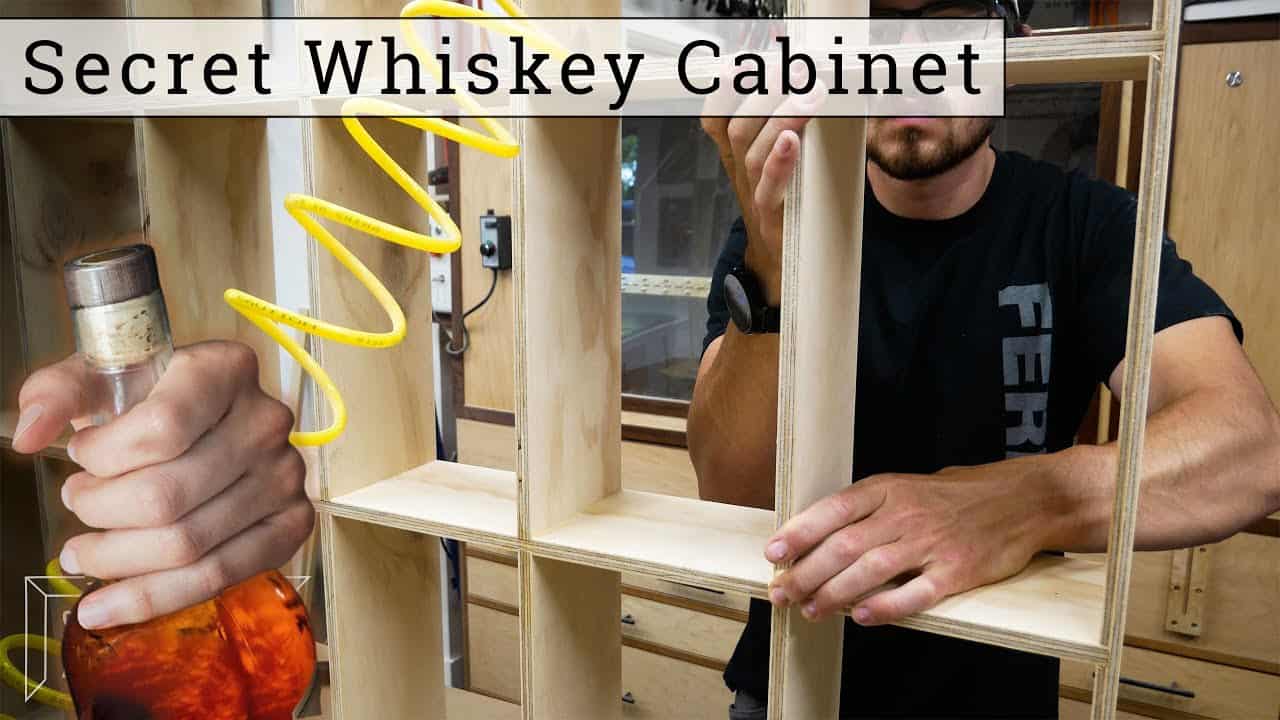
This project was built and designed by Sam Macy. It’s a creative wall sign that secretly opens to reveal a whiskey cabinet, combining craftsmanship with clever design.
By merging aesthetic appeal and hidden storage, this piece offers both function and fun. It’s an ideal project for woodworkers who enjoy thinking outside the box and want to create something that gets people talking.
Watch the full video and subscribe to Sam’s channel:
Why Combine a Sign with a Cabinet?
The idea behind this project is simple: build something that looks like wall art but functions as a hidden storage unit. Sam designed a wooden sign that conceals a whiskey cabinet behind a drop-down front, blending modern techniques with timeless joinery.
Projects like this are ideal for personalizing a space. Whether it’s a workshop, man cave, or home bar, it adds surprise and personality while still offering real utility.
Preparing the Materials
The project begins with a sheet of plywood, which is broken down into smaller panels. Sam cuts the largest dimensions first, allowing room for fine-tuning the final fit later.
By sizing everything slightly oversized at first, there’s flexibility for exact trimming during assembly. This ensures tight joints and clean lines once the cabinet is put together.
Cutting and Placing the Dividers
To organize the interior, Sam cuts dividers from the same plywood. These are spaced using a dado stack on the table saw, allowing for precise and consistent grooves across the cabinet walls.
A helpful technique is flipping pieces after marking to keep everything symmetrical. This step not only ensures a perfect layout but also speeds up the build by reducing the need for corrections.
Assembly and Box Construction
With the internal layout complete, Sam glues up the cabinet. He checks for square and clamps the box to hold everything together while the glue dries.
While the carcass sets, attention turns to the cabinet face—where the hidden door and visual style come to life. For this, Sam uses a CNC machine to cut custom lettering into the face panel. If a CNC isn’t available, a scroll saw or jigsaw can do the job manually with some added patience.
Choosing and Applying Redwood Cladding
The face of the cabinet is clad in California redwood, a softwood known for its straight grain and weather resistance. Sam planes the redwood to uniform thickness, then glues and nails it over the plywood sign face.
This gives the front panel a solid-wood appearance, even though the core remains lightweight plywood. The natural color and texture of the redwood also add to the rustic, handmade look of the final piece.
Refining the Fit and Finish
Once the cladding is in place, Sam flush trims the edges using a router. Edge banding is added to cover exposed plywood and create a uniform look along the cabinet sides.
To seal and protect the surface, he applies several coats of spar urethane. This finish is designed for outdoor use, so it adds a high level of moisture resistance and brings out the grain of the redwood beautifully.
The Hidden Drop-Down Door
What makes this project truly stand out is the hidden drop-down mechanism. Sam installs a solenoid-controlled latch that releases the cabinet door when activated.
The trigger is a concealed button mounted under the workbench. When pressed, the solenoid pulls back the latch, and the front face drops down to reveal the hidden storage space behind it—just big enough for a couple of bottles and glasses.
Soft-close hinges help control the drop speed, preventing the door from slamming open. The mechanism is subtle but adds a high-end, gadget-like feature that sets this build apart from typical wall decor.
Final Thoughts on the Build
This whiskey cabinet sign isn’t just about storage—it’s about surprise, creativity, and problem-solving. From internal dividers to CNC carving and hidden mechanisms, it’s a project packed with learning opportunities.
Whether used to store whiskey, tools, or keepsakes, the piece can be customized to fit any space or purpose. It’s a great conversation starter and a fun way to challenge your woodworking skills with something that feels both traditional and tech-forward.
Please support Sam by visiting his website here: https://sammacydesigns.com/.

Matt’s Take
These are my personal thoughts and tips based on my own experience in the shop. This section is not written, reviewed, or endorsed by the original creator of this project.
Hidden storage projects like this one always get me excited because they combine traditional woodworking with that element of surprise that makes people smile. The solenoid-controlled latch is a brilliant touch that elevates this from a simple cabinet to something that feels almost magical when you demonstrate it to guests.
When working with redwood cladding like Sam used here, it’s worth mentioning that this species can vary quite a bit in color and grain, even within the same board. I’d recommend laying out all your pieces before gluing to get the best visual flow across the face. Also, redwood can be prone to tear-out when routing, so taking light passes and keeping your bits sharp will save you some headaches on the edge work.
The spar urethane finish choice is smart for a piece that might see some moisture from condensation on cold bottles or glasses. If you’re planning to build something similar, consider the weight distribution carefully—bottles can add up quickly, and you’ll want to make sure your wall mounting system can handle the fully loaded cabinet plus the dynamic forces when that door drops open.
Projects like this remind me why I love woodworking. You start with basic box construction and joinery, then layer on creative elements like hidden mechanisms and custom lettering. It’s functional furniture that doubles as entertainment, and that’s always a win in my book.