

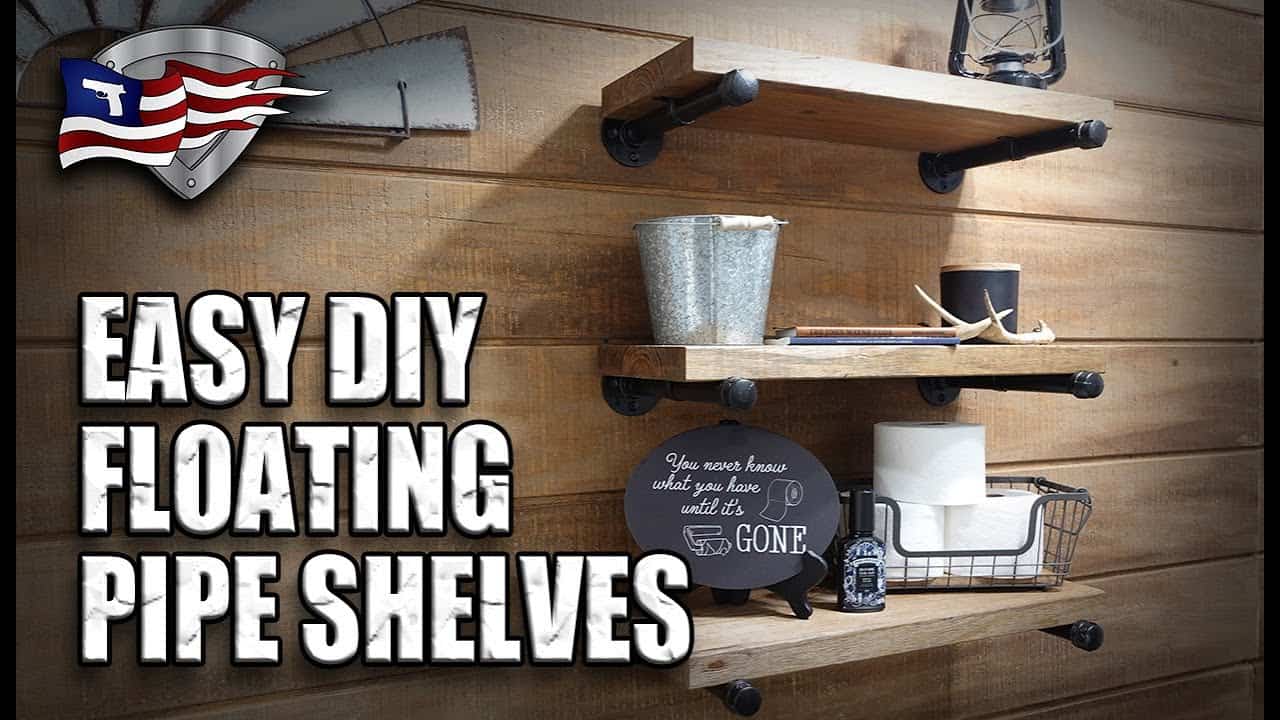
This project was built and designed by Jason from PatriotDIY. It’s a straightforward shelving project that combines black pipe brackets with rustic wood to create a bold industrial-farmhouse look that works in almost any space.
Floating shelves like these are a great way to turn an empty wall into functional and stylish storage. With a few pipes, some basic lumber, and careful placement, Jason shows how to make a statement piece that’s budget-friendly and beginner-friendly.
Watch the full video and subscribe to Jason’s channel:
Planning Shelf Dimensions
The first decision is how large you want your shelves to be. Jason doesn’t stick to one set of dimensions—instead, he recommends tailoring the size to fit your specific wall space and what you want to display.
Depth is important. Too shallow, and you can’t store much. Too deep, and it starts to look bulky or impractical. A depth of 8 to 10 inches is often a sweet spot for most books, plants, or décor.
Selecting and Prepping the Wood
Jason uses pine boards for this build, though other softwoods or even hardwoods could work depending on your budget and look. Once the boards are cut to length, you have the option to sand them smooth or leave them slightly rough for more character.
For a traditional farmhouse feel, Jason skips the full sanding routine. Leaving slight imperfections in the wood gives each shelf a lived-in look that adds charm and texture to the finished piece.
Staining for the Right Look
The stain you choose plays a big role in how the shelves blend with your room. Jason opts for a darker, warm tone that enhances the natural grain without hiding the wood’s detail.
He applies the stain generously and wipes off the excess after a few minutes. This not only brings out depth in the boards but also ensures the shelves have a slightly aged and weathered appearance, perfect for farmhouse or industrial settings.
Making the Pipe Brackets
For the supports, Jason assembles brackets using black steel pipe parts—flanges, nipples, and end caps. These materials are readily available at most hardware stores and require no welding or cutting.
Each bracket is dry-assembled first to make sure the components fit well. Then, a coat of black spray paint is added for a uniform look and to help protect against rust. The finished brackets offer a sturdy, industrial accent that complements the wood beautifully.
Wall Mounting Tips
Jason takes his time laying out the placement of the brackets before drilling. Using a level ensures that everything lines up cleanly, which is essential when installing more than one shelf on the same wall.
He recommends using wall anchors or screws appropriate for your surface—drywall, masonry, or wood. Proper hardware ensures that each shelf can hold its weight and avoid sagging over time.
Installing the Shelves
Once the brackets are mounted, the shelves are placed on top. A small overhang on the front and sides gives each shelf a more finished look. This also helps balance the proportions visually, especially if the pipe brackets sit slightly inset.
To secure the shelves, Jason uses pipe straps—small metal brackets that wrap around the pipe and screw into the underside of the shelf. These keep the wood from shifting and maintain a tight connection to the wall.
Painting the straps the same color as the pipe helps them blend in seamlessly. The result is a clean, floating appearance without any visible fasteners.
Style Versatility and Use Cases
These shelves can work in nearly any room: kitchens, bathrooms, home offices, or living rooms. The combination of natural wood and black steel gives them a universal style that fits many design themes.
For those who want a more rustic look, using reclaimed wood is a great option. For a cleaner industrial style, you could go with more refined wood and smoother finishes. The basic concept stays the same, but the final look can be tailored to match your taste.
Affordable and Beginner-Friendly
One of the biggest advantages of this project is the cost. The materials—especially when buying pipe parts in bulk—are budget-friendly. The build doesn’t require a workshop full of tools either, making it perfect for beginners or weekend woodworkers.
Jason’s clear process and tips make it easy to replicate, and the modular nature of the shelves means you can expand the project later. Want to add a third shelf? Just repeat the steps.
Final Thoughts
Floating pipe shelves are a practical and stylish upgrade for any home. Jason’s version strikes the perfect balance between simplicity and visual impact. With thoughtful design choices and minimal tools, it’s a great project to build confidence and create something useful at the same time.
Whether you’re starting with one shelf or building a full wall unit, the steps remain approachable and the results are always impressive.
Please support Jason by visiting his Etsy Store: https://www.etsy.com/shop/patriotdiy.

Matt’s Take
These are my personal thoughts and tips based on my own experience in the shop. This section is not written, reviewed, or endorsed by the original creator of this project.
What I love about pipe bracket shelves is how forgiving they are for beginners. The industrial hardware does most of the visual heavy lifting, so even if your woodworking skills are still developing, you’ll end up with something that looks intentional and well-made. The key is really in the prep work—taking time to get your wall layout right and ensuring your brackets are level will make or break the final result.
One thing worth mentioning about the pipe components: those black steel fittings can vary quite a bit in threading tightness from the store. I always do a test assembly before painting to make sure everything threads together smoothly. Sometimes you’ll get a nipple that’s a bit stubborn, and it’s better to know that before you’ve got paint on everything. Also, if you’re mounting these on drywall, don’t skimp on the wall anchors—these shelves can get heavy once loaded up with books or decorative items.
The beauty of this style is how adaptable it is. You can easily adjust the pipe length for different shelf depths, or even create an L-shaped bracket for corner installations. Pine is a great choice for keeping costs down, but if you want something with more character, looking for construction-grade lumber with knots and grain variation can add a lot of personality without breaking the budget. Just remember that softer woods will show dings and scratches more easily, which might actually be perfect for that lived-in farmhouse look.