

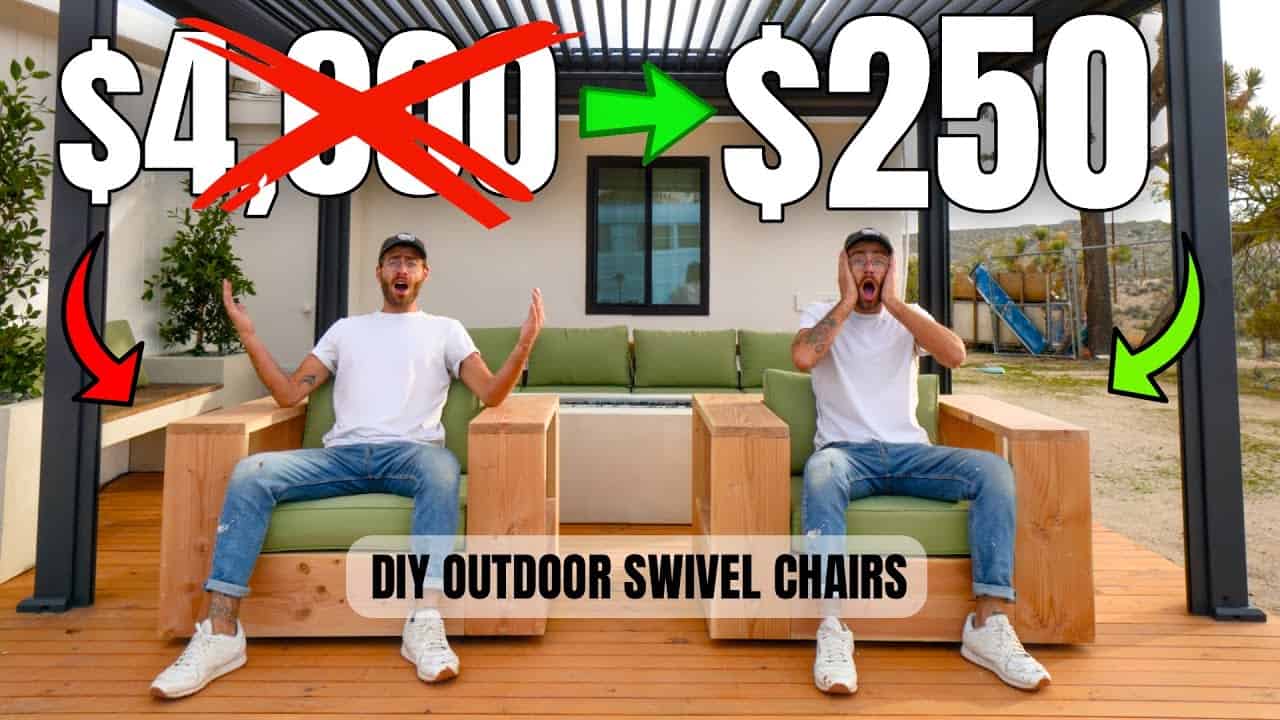
This project was built and designed by Mike Montgomery from Modern Builds.
Mike reimagined a high-end outdoor swivel chair and made a version that keeps the modern aesthetic while using accessible materials and straightforward shop techniques.
Watch the full video and subscribe to Modern Builds:
Design
The design channels a chunky-yet-refined modern look with a thin profile on the front and a wider, structural beam on the back, creating a pleasing contrast of proportions.
Mike kept the silhouette true to the inspiration piece while simplifying joints and component layouts so the chair can be built in a typical home shop.
Lumber Prep
Rather than relying on off-the-shelf appearance, Mike spent time planing and flattening the stock to achieve clean faces and squared edges for a more contemporary result.
Preparing boards to consistent thickness and edge quality reduces fitting work later and helps parts sit flush for a tighter final assembly.
Joinery and Assembly
The core structure uses simple butt joints reinforced with screws and glue, with selective use of pocket holes to keep visible surfaces clean and assembly straightforward.
Where screws are visible, Mike filled fastener holes with dowel plugs, trimmed flush, and sanded to produce a seamless look that reads like higher-end joinery.
Clamping and Fit Tricks
Clamping sequences and temporary blocks played a big role in getting wide assemblies tight and square without complex fixturing.
Mike also prioritized mirror-image side assemblies so paired chairs read right when the front and back aprons are installed, a small step that prevents mismatched fits later on.
Shaping and Surface Prep
Sanding progressed from a coarser grit to a finer finish with a grain-raising pass using water between grits to ensure a glassy final surface suitable for an outdoor finish.
Attention to grain direction when installing dowel plugs and trimming edges keeps the aesthetic tidy and elevates construction-grade lumber into a custom-looking piece.
Finishing and Hardware
An exterior-rated, water-based spar urethane was used to protect the wood and bring out natural tones while keeping the finish appropriate for outdoor use.
To add the swivel function, Mike installed an economical pivot base recessed into the underside and adjusted the reveal so the chair can rock and rotate freely, turning a stationary design into a more versatile piece.
Overall Takeaways
The project demonstrates how thoughtful preparation, selective joinery choices, and attention to proportion can turn everyday lumber into furniture that references high-end retail designs.
By focusing on fit, finish, and a few key hardware additions, the approach offers an accessible path for makers wanting a modern outdoor chair without paying retail premiums.
Please support Mike by visiting his website: https://www.modernbuilds.com/.

Matt’s Take
These are my personal thoughts and tips based on my own experience in the shop. This section is not written, reviewed, or endorsed by the original creator of this project.
What really stands out here is Mike’s approach to lumber prep — that extra time spent planing and flattening stock makes a huge difference in the final result. When you’re working with construction-grade lumber, those few passes through the planer can transform basic boards into something that looks intentionally crafted rather than just assembled.
The dowel plug technique for hiding screws is one of those simple tricks that elevates the whole project. It’s worth having a dowel plug cutter in your shop arsenal — they’re inexpensive and give you that clean, furniture-grade look without needing complex joinery. Just make sure to align the grain direction of your plugs with the surrounding wood for the most seamless appearance.
I appreciate the focus on getting those mirror-image assemblies right from the start. It’s one of those details that’s easy to overlook until you’re deep into assembly and realize something’s not lining up. Taking a moment to mark your parts clearly and do a dry-fit assembly can save you from having to remake components later.
The swivel base addition is clever — it transforms what could be a basic chair into something more functional and interesting. For outdoor furniture, that kind of versatility really adds value, especially when you’re investing the time to build something from scratch.