

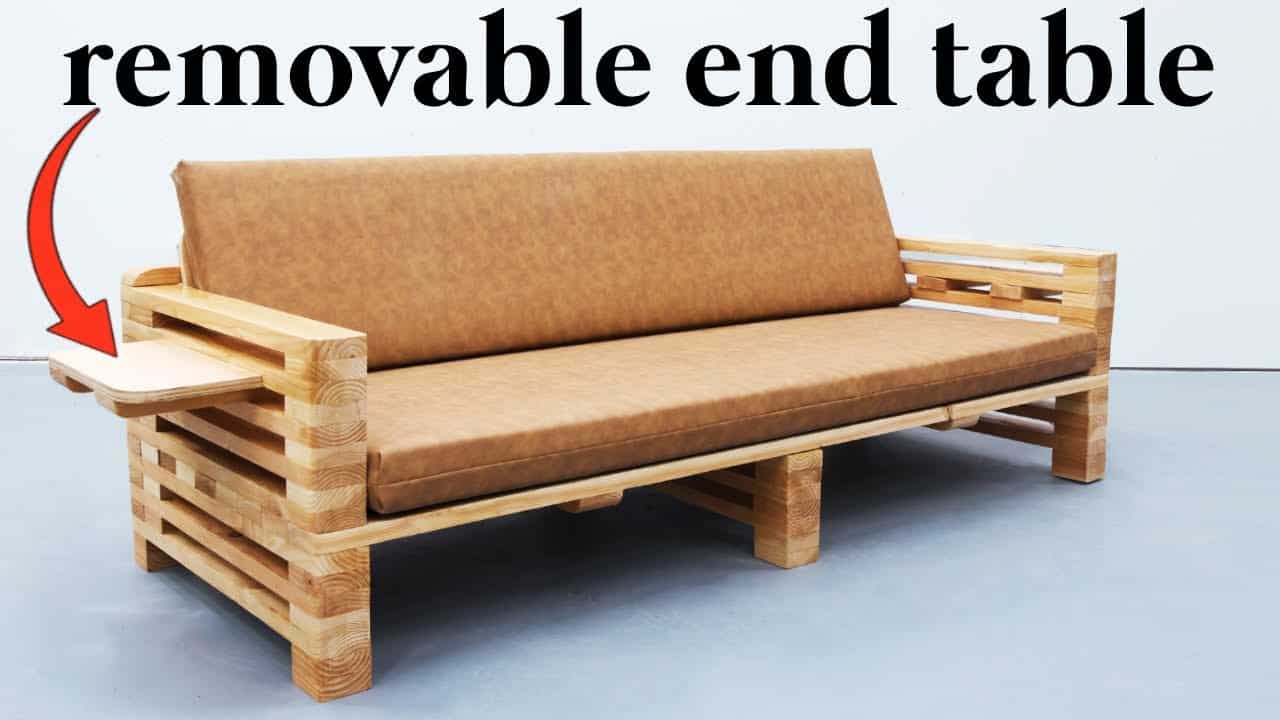
This project was built and designed by Jonny from Jonny Builds. It’s a clean, budget-friendly sofa made entirely from 2x4s, perfect for indoor or outdoor use.
The design features a modular finger joint system that makes assembly and disassembly simple and efficient.
Watch the full video and subscribe to Jonny’s channel:
Why a 2×4 Sofa Makes Sense
Using 2x4s for furniture projects is practical, affordable, and accessible. They’re widely available, easy to work with, and surprisingly strong when combined with thoughtful joinery.
Jonny’s design shows how a little planning can turn construction lumber into a stylish and useful piece of furniture. The modular aspect also means it’s easy to move, store, or modify later.
Material Prep and Planning
Before the build begins, Jonny selects quality 2x4s and recommends planing them for a cleaner finish. While a planer isn’t required, it helps remove mill marks and smooth rough surfaces.
Each board is cut to size using a miter saw, which provides clean, repeatable cuts for this type of project. Setting up a stop block helps speed up the process and keep the measurements consistent.
Once all the cuts are made, each piece is pre-sanded to make the final finish easier and more professional-looking. Starting with smoother stock also helps glue-ups go more smoothly.
Building the End Assemblies
The end frames serve as both the armrests and legs of the sofa. Jonny creates them by stacking and gluing smaller assemblies first, then combining them into the full end sections.
Double-stacked squares are used as feet, offering both stability and visual symmetry. These are clamped securely and allowed to dry completely before moving on.
Framing the Back and Seat
With the end sections done, the next step is framing the back. Back boards are hammered into place to establish the sofa’s width and ensure the frame stays square.
A center support is added for stability and load distribution. This makes the sofa strong enough for everyday use without compromising comfort.
The seat slats are then measured, cut, and installed, with spacer blocks in between for airflow and aesthetics. Alternating grain direction adds a subtle design element that gives the sofa a handcrafted feel.
Choosing and Fitting Cushions
Cushions bring comfort to the final product and can also help define the sofa’s dimensions. Jonny sourced his cushions from the Simple Cushion Company and built the frame to fit them precisely.
Sizing the frame around your chosen cushions ensures a clean look and functional layout. It also makes replacement or customization easier down the line.
Sanding and Finishing
Once assembled, the sofa is given a full sanding, focusing on all exposed edges and joints. Special attention is given to rounding off sharp corners for safety and comfort.
Jonny finishes the piece with Total Boat’s Halcyon varnish, a clear, durable finish that doesn’t darken the wood too much. Multiple coats are applied to make the sofa weather-resistant and easy to maintain.
Final Assembly and Modularity
With the finish dry, the sofa is reassembled using the finger joint connections. The modular design makes it easy to break down for storage or moving without damaging the structure.
At roughly $160 in material cost, the project is budget-friendly and highly functional. It’s a great example of how basic materials can be turned into long-lasting furniture with a bit of planning.
Want to See the Full Build?
Please support Jonny by visiting his website here: https://www.jonny-builds.com/.

Matt’s Take
These are my personal thoughts and tips based on my own experience in the shop. This section is not written, reviewed, or endorsed by the original creator of this project.
This modular approach really showcases what makes 2×4 construction so appealing for furniture projects. The finger joint system is particularly clever — it gives you all the strength of traditional joinery while keeping things simple enough for weekend builders. Plus, being able to break it down means you’re not stuck if you need to move or store it later.
One thing I always emphasize with 2×4 projects is taking time with material selection upfront. Spending a few extra minutes at the lumber yard to find straight, dry boards with minimal knots will save you headaches later. A moisture meter can be worth the investment if you’re doing several projects — anything over 19% moisture content is likely to cause problems as it dries.
The cushion-first approach here is smart planning. Too many folks build the frame first and then struggle to find cushions that fit properly. Measuring your cushions (including any compression) before you cut a single board eliminates that guesswork. For outdoor use especially, having cushions that fit snugly helps prevent them from sliding around or blowing away.
At $160 in materials, this demonstrates how thoughtful design can stretch a budget. The key is keeping joints simple but strong, which this finger joint system does perfectly. It’s the kind of project that builds confidence while teaching fundamental skills.