

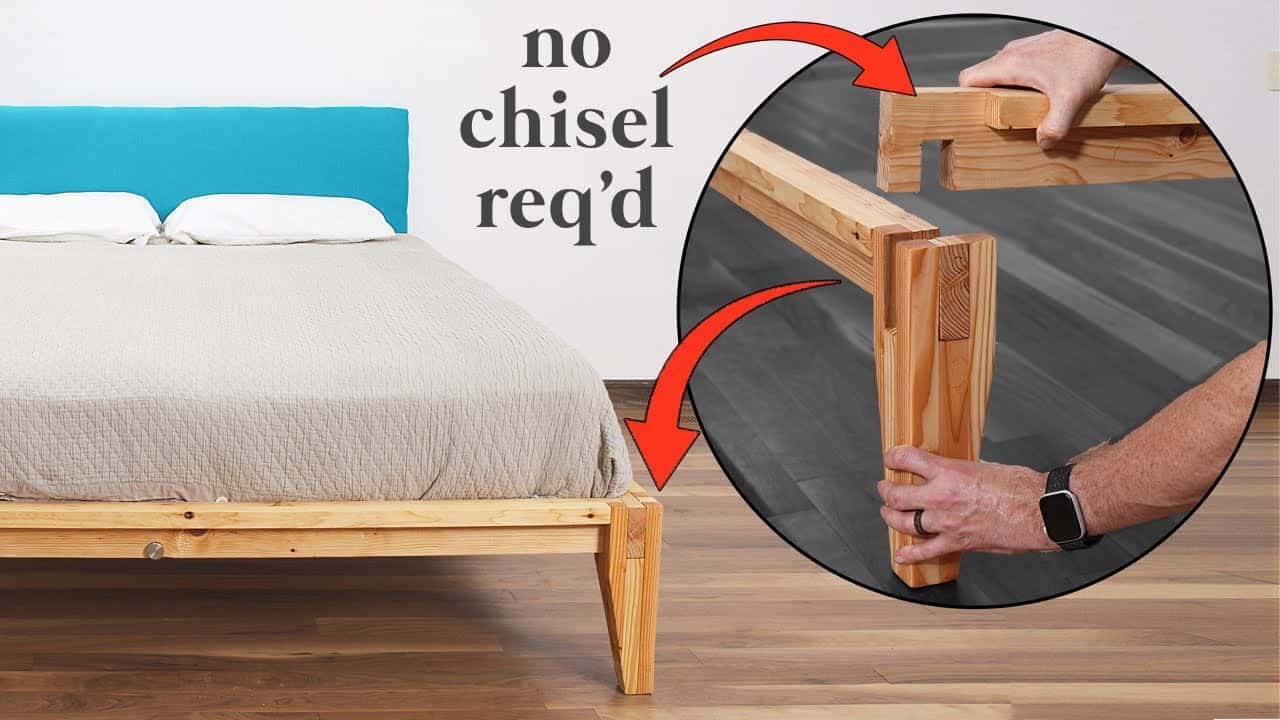
This project was built and designed by Jonny from Jonny Builds. It’s a modern and sturdy platform bed made entirely from 2x4s, featuring castle joints that bring both strength and visual interest to the design.
If you’ve ever considered replacing a bulky bed frame with something custom and cost-effective, this project is worth checking out. The finished piece is clean, sharp, and surprisingly affordable.
Watch the full video and subscribe to Jonny’s channel:
Why Go the DIY Route?
With furniture prices on the rise, more people are turning to DIY for value and customization. Jonny’s project is a great example of how thoughtful design and some woodworking skills can create something both beautiful and budget-friendly.
By using only eleven 2x4s—each around eight dollars—he kept material costs around $330. That’s a big difference compared to similar beds retailing for over $1,000.
Starting the Project
Jonny begins by planing each 2×4 to remove the rounded edges and ensure flat, smooth surfaces. This step is key to creating clean lines and tight joinery throughout the project.
Having uniform boards makes everything from cutting to assembly more predictable. It also gives the bed a finished, modern look that’s hard to achieve with off-the-shelf lumber alone.
Making Castle Joints with Additive Joinery
Instead of cutting traditional joints with chisels, Jonny uses an additive approach to form castle joints. He glues together multiple small sections to build up each leg, creating a stacked joint that accepts the horizontal frame members.
This technique simplifies the process for woodworkers without advanced tools. It also results in a bold, architectural design feature that sets the bed apart.
Building the Frame
The long side rails and end rails are cut precisely to fit into the leg joints. Jonny uses jigs and clamps throughout to maintain square cuts and keep everything aligned.
Each cut is made with care, knowing that accuracy here will pay off later during final assembly. Dry fits help verify that all components slide together cleanly.
Putting It All Together
Assembly begins with gluing and clamping the legs and stretchers. These connections form the rigid base of the bed and must be strong enough to support both the mattress and daily use.
As the frame comes together, Jonny highlights the importance of patience and double-checking measurements. Even small adjustments can make a big difference in how well everything fits.
Adding Slat Support
To hold the mattress, support ledges are installed along the inside of the frame. These provide a place for the slats to rest securely while distributing weight evenly.
This detail ensures the bed stays quiet and supportive over time. It also simplifies future maintenance or upgrades to the mattress base.
Upholstering the Headboard
The headboard adds a soft finishing touch to the bed. Jonny builds it using plywood, foam padding, and upholstery fabric for a clean, comfortable look.
The process involves wrapping and stapling the fabric around the foam-covered panel. It’s a small detail that adds a lot of character to the final piece.
Sanding and Finishing
After the entire frame is assembled, everything is sanded to a smooth finish. Any sharp corners or rough edges are eased over for comfort and safety.
Jonny finishes the bed with a protective coating that brings out the natural beauty of the wood. The result is a sleek, custom piece that looks great in any room.
The Cost Breakdown
This bed was completed for about $330 in material costs. Even when factoring in time and finishing supplies, the savings over retail are significant.
It’s a good example of how thoughtful design and basic tools can produce high-quality results. The castle joints give it a custom-built feel that’s hard to find in store-bought furniture.
Wrapping It Up
This platform bed project shows what’s possible with a small material list and a strong design. Jonny’s build balances form and function while staying well within a reasonable budget.
It’s a great reminder of what’s achievable with common materials and a bit of patience. Whether for your own home or as a gift, this kind of furniture build adds long-term value.
Want to See the Full Build?
Please support Jonny by visiting his website here: https://www.jonny-builds.com/.

Matt’s Take
These are my personal thoughts and tips based on my own experience in the shop. This section is not written, reviewed, or endorsed by the original creator of this project.
Castle joints are one of those techniques that look way more complicated than they actually are. Jonny’s additive approach is really smart here — instead of cutting complex interlocking joints, you’re essentially building them up with multiple pieces. It’s a great way to get that bold, architectural look without needing mortise and chisel skills. The visual impact is fantastic, and structurally, these joints create incredibly strong connections that’ll handle years of use.
That $330 material cost really drives home the value of building your own furniture. When you consider that similar platform beds can easily run $800-1200, you’re looking at serious savings even after factoring in your time and finishing materials. Plus, you get exactly what you want in terms of size and finish. Using construction lumber for furniture projects has become increasingly popular, and with some careful selection and prep work, you can get great results.
The planing step at the beginning is crucial and something I’d emphasize to anyone taking on a similar project. Those rounded edges on standard 2x4s might not seem like much, but they’ll throw off your joinery and give the whole piece a less refined look. Taking the time to get everything flat and square from the start makes every subsequent step easier and more precise.
One thing that stands out is how clean the final assembly looks. The combination of precise cuts, good glue-up technique, and that upholstered headboard really elevates what could have been a basic utilitarian piece into something that looks custom and intentional. It’s a solid example of how good design and execution can transform humble materials into something special.