

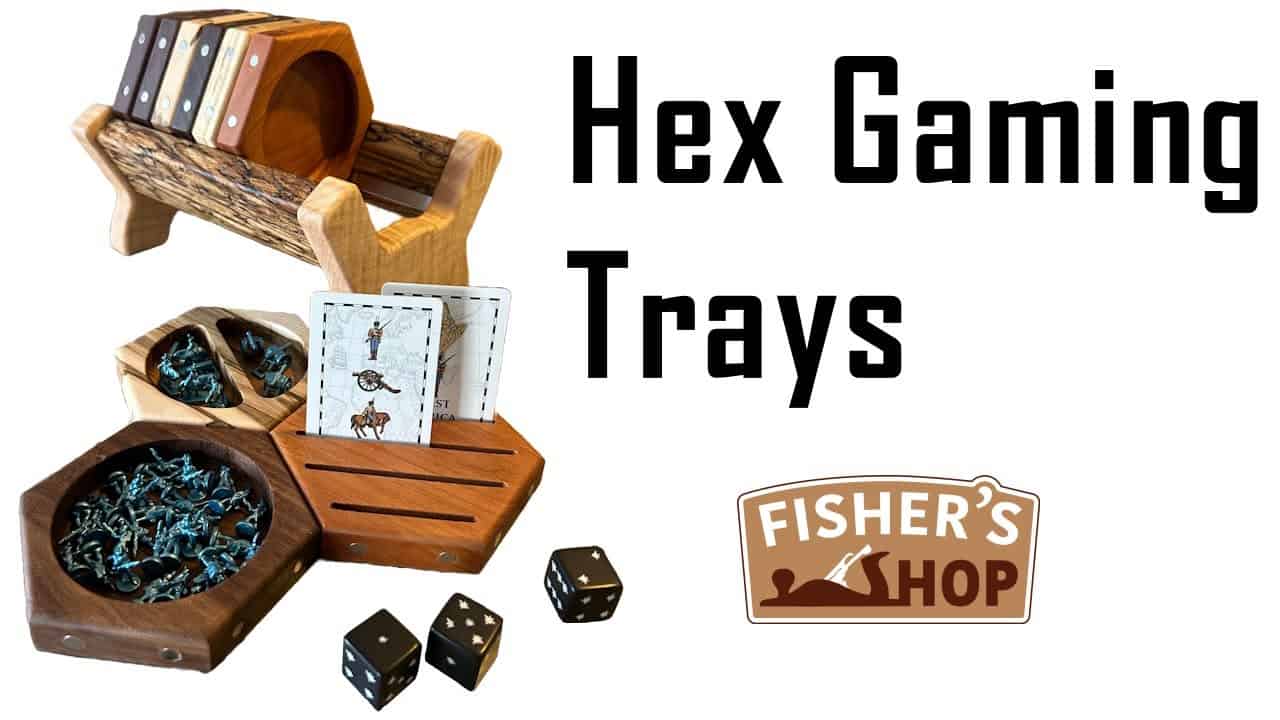
This project was built and designed by Drew Fisher from Fisher’s Shop. These hexagonal trays combine precision, versatility, and fun into one creative woodworking build.
While they’re perfect for board game nights, they also work great as coasters, catch-alls, or candy dishes. The modular design, held together with magnets, adds both function and flair.
Watch the full video and subscribe to Drew’s channel:
Choosing the Right Wood
Drew begins by selecting a variety of hardwoods to create a beautiful and varied look. Ambrosia maple, curly maple, ash, cherry, rosewood, and black walnut are all included in the mix.
Each board is cut down to a manageable size and then planed to a uniform thickness. This step ensures consistency across all the trays for a seamless final fit.
Designing and Cutting the Trays
The hexagonal design is created using CNC software, which allows for precision and repeatability. By optimizing the layout, Drew is able to cut multiple hex shapes from each board.
A thin layer of plywood is added below the workpiece to protect the CNC spoilboard. Various bit sizes are used depending on the level of detail and depth required for the cut.
Shaping and Smoothing
After the hexes are cut, each piece is cleaned up by hand. The edges are rounded over using a router, and all surfaces are sanded smooth.
A jig is made to ensure accurate cutting of the crosspieces used to close off the tray ends. These support pieces are also sanded and prepped for assembly.
Installing the Magnets
Magnets are added to allow the trays to snap together in any configuration. A small drilling jig ensures the magnets are installed at the same height and depth across each piece.
Once the magnets are glued in place, the trays are tested for proper alignment and strength. The result is a set of trays that hold together securely but are easy to rearrange.
Applying the Finish
To enhance the grain and protect the wood, Drew applies a penetrating wood oil. The finish is wiped on generously, then buffed to a clean, smooth sheen.
This step brings out the unique characteristics of each wood species. It also provides a durable surface suitable for daily use.
How the Trays Work
The completed trays can be used individually or grouped together during a game. Each tray keeps tokens, dice, or cards organized and within reach.
When not in use, the trays fit neatly into a custom cradle for easy storage. The modular system adds a touch of design that’s both playful and practical.
Why This Project Stands Out
This project is a great way to combine digital fabrication with traditional woodworking techniques. It’s also an example of how thoughtful design can lead to something that’s both attractive and useful.
Whether you’re into tabletop games or just like building functional accessories, this project checks all the boxes. It’s fun to make, easy to customize, and adds personality to your game nights or home décor.
Want to See the Full Build?
Get Drew’s plans here: https://fishersshoponline.com/plans/p/hextrays.

Matt’s Take
These are my personal thoughts and tips based on my own experience in the shop. This section is not written, reviewed, or endorsed by the original creator of this project.
These magnetic hexagonal trays are a perfect example of how CNC work and traditional techniques can complement each other beautifully. The magnet installation is particularly clever — having a drilling jig for consistent depth and alignment is crucial since even small variations can throw off how the trays connect. When working with rare earth magnets, I always test the polarity before gluing to avoid the frustration of trays that repel instead of attract.
The wood selection really makes this project shine. Using multiple species like Drew did creates visual interest, but there’s also a practical consideration — different hardwoods can move slightly differently with humidity changes. Since these trays need to fit together precisely, keeping the wood acclimated to your shop environment for a week or two before machining helps minimize any seasonal movement issues later.
That penetrating oil finish is a smart choice for something that’ll see regular handling. It provides protection while still feeling natural to the touch, which matters when you’re moving pieces around during game night. For anyone considering a similar project, the modular design concept could easily be adapted to other shapes — triangles, squares, or even custom shapes that fit specific game components.