

This project was built and designed by Tom from Alley Picked.
Tom lives in a house where every room is on the smaller side, which has forced him to get creative when it comes to finding places to store everyday items. Rather than relying on expensive garage organization systems that require open walls and big budgets, he shares a series of simple, in-wall and space-saving storage builds he has added to his home over the years. These ideas focus on using gaps most people overlook, like the empty cavity between wall studs.
Watch the full video and subscribe to Alley Picked:

Built-In Pantry Shelving
Tom’s pantry is narrow, but he noticed it was missing a dedicated spot for canned goods and tea supplies. Years ago, before he started documenting his builds, he cut into the wall cavity itself and framed in a series of shelves between the studs.
The result is essentially a large built-in box tucked inside the wall, adding a surprising amount of extra shelf space without taking up any floor area. It’s a great reminder that the space inside a wall can often be more valuable than the space in front of it, especially in a tight kitchen.
In-Wall Medicine Cabinets
Tom applied the same wall-cavity concept to his bathroom, building a deep, double-door medicine cabinet directly into the wall. He used pre-made cabinet doors from a home improvement store and swapped the center panels for mirrors, giving the cabinet a finished look while keeping the shelves deep enough for real storage.
Because storage is always in short supply, he didn’t stop there. A second, smaller medicine cabinet was added behind another door in the same bathroom, sized specifically to fit the gap between two wall studs. A matching, more compact version was later built into a second bathroom, proving the same idea can scale up or down depending on available space.
In each case, building into the wall allowed for noticeably deeper shelving than the thin, pre-fabricated cabinets typically sold in stores.
Vanity Cabinet
To avoid items ending up shoved under the sink or crammed into a drawer, Tom built a simple two-door cabinet to sit beneath the bathroom vanity. The design is straightforward, a basic box with doors, but it’s sturdier and more customizable than the inexpensive cabinets commonly found at big box stores.
Hidden Wall Safe
In the living room, Tom built a hidden wall safe tucked behind a piece of decorative artwork. While the safe itself is wood and could be opened with basic tools, the real value is in how well it blends into the room.
He added a lock for extra security, though he notes the project could easily be built without one. Looking back, he also considers how mounting the artwork on hinges to double as the safe’s door could have made the concept even more seamless.
Jewelry Cabinet
Another small storage build is a jewelry cabinet made from inexpensive pine. Tom dressed up the front with a simple carved design on the door, showing how even a basic storage box can be personalized with a bit of woodworking detail.
The cabinet’s interior can be customized with hooks and shelves and scaled to whatever size is needed, making it a flexible option for anyone looking to store jewelry, small tools, or other personal items in a compact footprint.
Basement Stud Storage
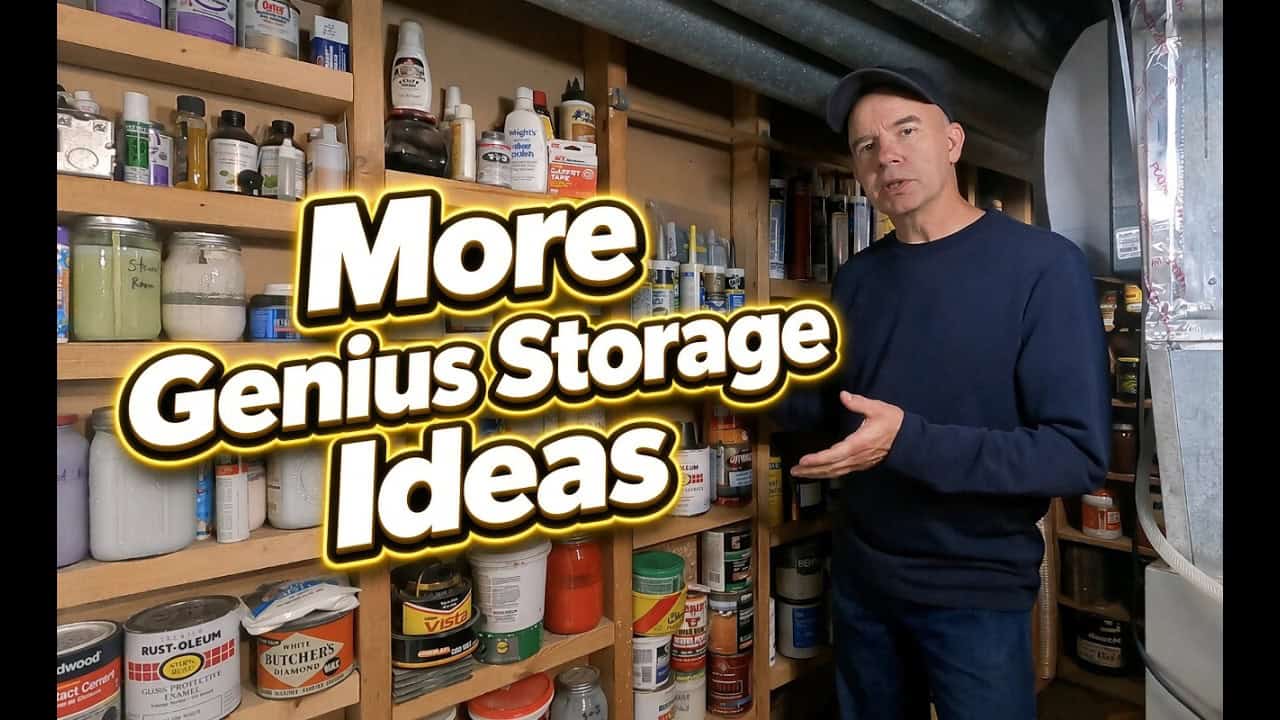
Down in the basement utility room, Tom shows one more creative use of exposed wall framing. Where finished walls expose the studs, he cut and installed simple wood strips between them to create narrow shelving.
This setup now holds paint, wax, tape, filler, and countless small items that previously had no dedicated home. A nearby set of narrow shelf units also keeps dozens of small paint bottles organized and elevated off the floor, which matters in a space where a nearby drain has occasionally overflowed.
Finding Storage in Overlooked Spaces
Taken together, these projects highlight a simple principle: almost any empty gap in a home, whether inside a wall cavity or between exposed studs, can be turned into functional storage with a little planning. None of the builds require major demolition or a large budget, making them approachable for anyone dealing with limited space.
Tom’s approach shows that storage solutions don’t need to be elaborate to be effective. Sometimes the most useful ideas come from simply looking at the space already available and figuring out how to make it work harder.
Watch the full video and subscribe to Alley Picked:

Matt’s Take
These are my personal thoughts and tips based on my own experience in the shop. This section is not written, reviewed, or endorsed by the original creator of this project.
Tom’s approach here is a great example of thinking in three dimensions instead of just floor space, and it’s a mindset I’d encourage any woodworker to adopt. Before cutting into any wall cavity, though, it’s worth taking a few minutes with a stud finder to map out what you’re working with. You want to confirm there’s no plumbing, electrical, or HVAC running through that bay, and exterior walls often have insulation that needs to be accounted for or re-stuffed around your new shelving.
When building shallow, in-wall boxes like these, cheap Baltic birch plywood is a solid material choice since it holds screws well in thin cross-sections and doesn’t require much depth to stay rigid. For face frames and doors, standard 1x pine or poplar is easy to work with and takes paint or stain nicely if you’re matching existing trim.
On the medicine cabinet builds, swapping mirror panels into stock cabinet doors is a smart, budget-friendly move. Just make sure you’re using mirror-safe adhesive or proper clips rather than standard construction adhesive, since some adhesives can actually damage the mirror’s backing over time.
Finally, for anyone inspired to try a hidden wall safe, keep in mind that fire resistance is worth thinking about separately from concealment. A wood box hidden behind artwork is great for keeping things out of sight, but it won’t protect important documents in a fire the way a rated safe would. Sometimes it makes sense to use the hidden space for everyday valuables and keep irreplaceable items elsewhere.