

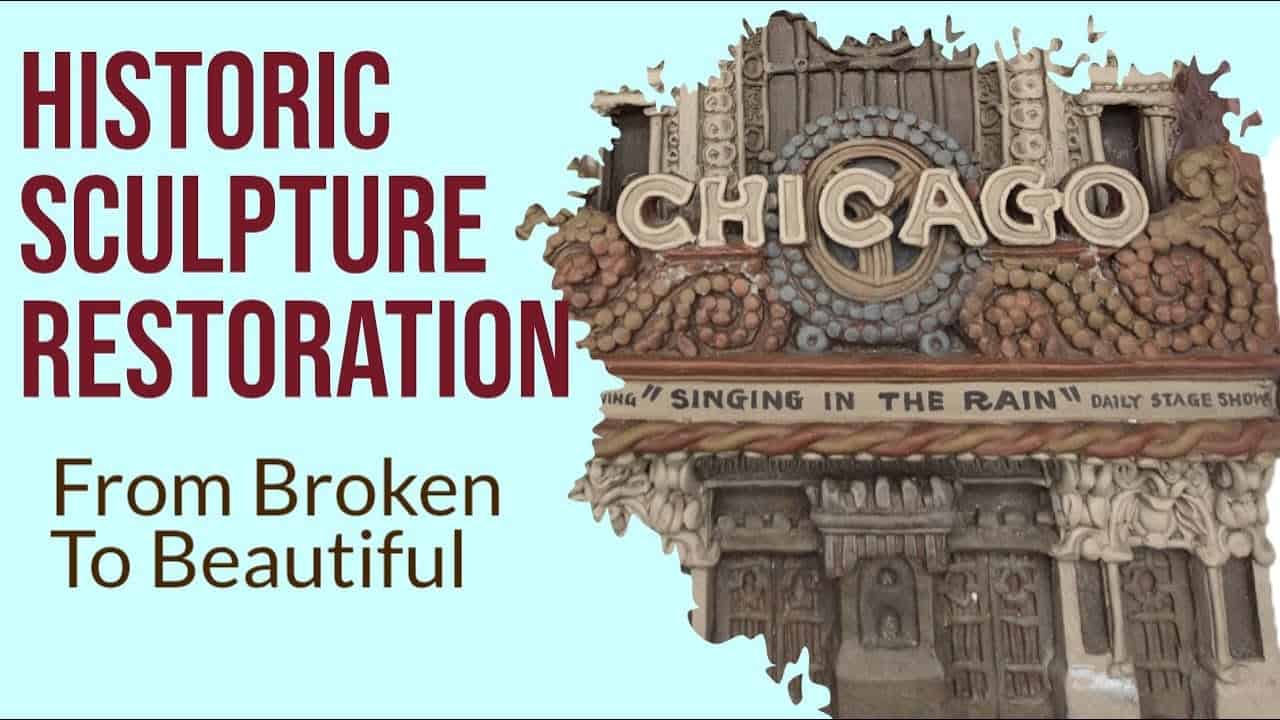
This project was built and designed by Tom from Alley Picked.
Tom restores a plaster relief of the Chicago Theatre that arrived battered, dirty, and missing part of its marquee, and he documents the techniques and decisions used to return the piece to a display-ready condition.
Watch the full video and subscribe to Alley Picked:
Design and Historical Context
The relief is a limited plaster cast by local sculptor Zani (Alice) Jacobson that celebrates Chicago architecture and the iconic theatre marquee.
Because the original was carved in wax, molded in latex, and hand-painted, the cast retained fine surface detail that guided the restoration choices and dictated materials that would respect the original look.
Assessment and Prep
Initial inspection revealed a detached marquee, multiple chips, old failed glue, and decades of grime that hid delicate details.
A tag on the back provided provenance and a reminder that careful restoration keeps the artist’s intent and collectible value intact.
Structural Repairs
Tom separated misaligned glued parts using a conservative approach and then bonded the pieces with a clear two-part epoxy for strength where needed.
For small voids and chipped areas he favored an epoxy putty over plain plaster because it could be sculpted quickly and held up during sanding and paint matching.
Surface Restoration and Paintwork
Cleaning started with compressed air and a mild soap solution applied with a soft brush to remove surface dirt without abrading fragile areas.
Touch-up paintwork focused on thin, layered applications to blend repairs into the original patina rather than repainting the entire surface, acknowledging that subtlety preserves character.
Finishing and Remounting
To restore a natural sheen without masking texture, Tom applied a thin coat of a beeswax-based finish and buffed it back for a restrained glow.
Reattaching the marquee used shortened bolts as internal posts and a temporary non-hardening clay barrier to prevent epoxy from seeping through during curing.
Lessons and Takeaways
This project shows how research, patience, and modest experimentation can enable successful conservation even when tackling a new material or technique.
The restoration balanced structural repairs with delicate surface work to maintain the sculpture’s age and story while returning it to a displayable state.
Conclusion
The restored relief now reads clearly as a piece of Chicago history, demonstrating that careful preservation keeps local artistry in circulation for collectors and the public alike.
Watch the full video and subscribe to Alley Picked:

Matt’s Take
These are my personal thoughts and tips based on my own experience in the shop. This section is not written, reviewed, or endorsed by the original creator of this project.
Restoration work like this really highlights how different materials behave compared to fresh lumber in the shop. That two-part epoxy choice for structural repairs makes perfect sense – plaster can be brittle, and you need something that’ll move with the piece over time without cracking. The epoxy putty approach for filling voids is smart too, since it gives you working time to shape and blend before it sets up.
The cleaning phase caught my attention because it’s easy to get aggressive with restoration work. Starting with compressed air and working up to gentle soap is the right call – you can always do more, but you can’t undo damage from being too heavy-handed. That soft brush technique translates well to finishing work on wood projects where you’re trying to preserve grain detail or remove dust without scratching.
Using shortened bolts as internal posts for reattachment is a clever mechanical solution. Sometimes the best fix isn’t more glue – it’s giving the adhesive some help with a proper mechanical connection. That temporary clay barrier trick is worth filing away too. Any time you’re working with runny adhesives near delicate surfaces, having a way to contain the squeeze-out can save hours of cleanup work later.