

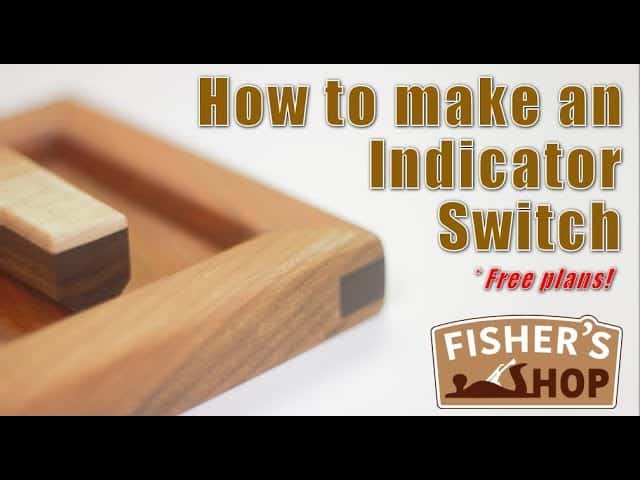
This smart and practical project was built and designed by Drew Fisher from Fisher’s Shop. It solves a common household problem with a simple, elegant sliding switch that helps you track whether or not your dog has been fed.
If you’ve ever asked, “Did someone feed the dog today?” this project is for you. It also has potential for other daily-use reminders around the house.
Watch the full video and subscribe to Drew’s channel:
The Idea Behind the Switch
The core of this build is a sliding panel that shows one of two color-coded positions. One side signals the pet has been fed, while the other shows they haven’t, providing a quick and clear visual reminder.
Drew uses maple for the lighter “fed” side and walnut for the darker “not yet” position. This contrast makes the switch easy to read from across the room.
Materials and Starting the Build
For this project, Drew selected maple, walnut, and cherry to give it a clean and stylish look. These hardwoods provide durability and visual contrast, making the switch both functional and attractive.
Basic woodworking tools like a bandsaw, drum sander, jointer, and table saw are used throughout the build. The goal is to keep things precise without making the process overly complex.
Cutting and Preparing the Panels
Drew begins by cutting the walnut and maple panels to size using the bandsaw. Once cut, he sands each piece to a consistent thickness, ensuring a snug fit in the final assembly.
These panels are glued together to form the main back panel that the sliding switch will move across. Clean alignment during glue-up is essential for smooth operation later on.
Building the Frame
Cherry is used for the outer frame, giving the project a nice visual contrast with the lighter and darker woods. Drew rips the cherry into thin strips and shapes grooves using a router table to guide the sliding panel.
After the glued back panel dries, he trims it to final dimensions using the jointer and table saw. A slight round-over is added to the edges for comfort and a refined look.
Assembling and Fine-Tuning
The frame is assembled with tight joints and careful glue application. Splines are added to the corners for strength and a nice decorative touch.
Drew carefully tests the sliding panel to ensure it fits and moves smoothly within the grooves. He fine-tunes the height and thickness using a drum sander until it operates without friction.
Adding a Handle and Final Details
To make the switch easy to use, Drew adds a small handle made from scrap walnut. A cap of maple with interesting grain detail adds a personalized, handcrafted touch.
He attaches the handle securely and makes final adjustments to ensure smooth operation. The entire frame is then sanded to remove sharp edges and give it a smooth feel.
Finishing and Mounting
After all parts are assembled, Drew applies Danish oil for a natural, clean finish that highlights the contrast between the wood types. He also brands the back of the piece for a personalized signature.
The switch can be mounted near your dog’s feeding area using screws or adhesive, depending on your wall surface. Once installed, it offers a clean and practical reminder that blends in nicely with your home decor.
Other Uses for the Indicator Switch
Though designed for pet feeding, this project can serve many purposes. It works just as well as a dishwasher status indicator, a vitamin reminder, or even a “mail delivered” sign near your front door.
It’s a great way to add functionality and personality to your space using simple woodworking techniques. With a few design tweaks, you can even customize it for other family members or household routines.
Want to See the Full Build?
Drew Fisher walks through each part of this build in his YouTube video, offering helpful tips and clear steps along the way. If you’re looking for a small, satisfying woodworking project with daily usefulness, this is a great one to try.

Matt’s Take
These are my personal thoughts and tips based on my own experience in the shop. This section is not written, reviewed, or endorsed by the original creator of this project.
This is the kind of project that gets me excited about woodworking – simple, functional, and actually solves a real problem. The three-wood combination Drew chose here is spot-on. Maple and walnut naturally provide that high contrast you need for quick readability, while the cherry frame ties everything together with a rich, warm tone that’ll age beautifully.
The sliding mechanism is cleverly simple, but getting those grooves just right is critical. When routing grooves like this, I always recommend making test cuts on scrap first. You want that panel to slide smoothly but not be so loose it rattles around. A snug fit that moves with light finger pressure is the sweet spot.
Danish oil was a smart finish choice here since this’ll get regular handling. It penetrates well, is easy to reapply if needed, and won’t chip like a surface finish might. Just remember to let it cure fully between coats – rushing the finish on a project this nice would be a shame.
The mounting consideration is worth thinking through carefully. Near the food area makes sense, but consider eye level placement so everyone in the family can easily see and operate it. This concept really could work for so many daily reminders around the house.