

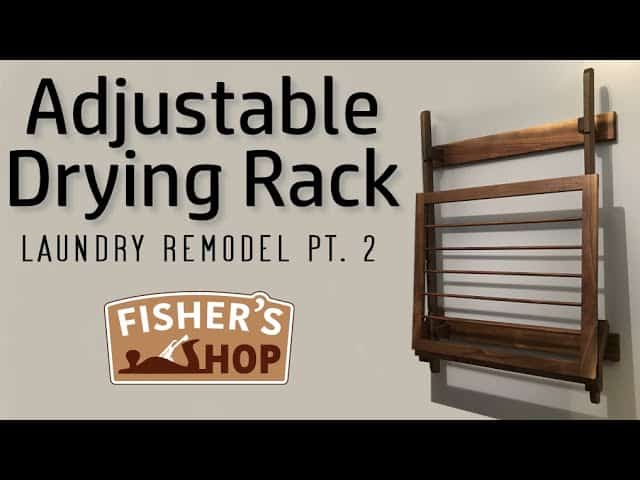
This project was built and designed by Drew Fisher from Fisher’s Shop. His adjustable drying rack is a clever solution for anyone needing extra functionality in a small laundry space without sacrificing style.
Watch the full video and subscribe to Drew’s channel:
Why Build an Adjustable Drying Rack?
Many laundry rooms lack the space for a permanent drying station. Drew’s design allows the rack to fold neatly away when not in use, helping the room stay open and clutter-free.
The rack can be lowered when needed, offering multiple dowels for hanging clothes. Its simple design provides both efficiency and visual appeal.
Starting the Project
Drew began by selecting materials from his scrap wood pile, making use of shorter boards that might otherwise go to waste. This approach reduced material cost and gave new life to leftover lumber.
He planed each board to a consistent thickness, creating clean and even surfaces for the frame. Taking the time to prepare the wood properly made the rest of the build go smoothly.
Making the Dowels
For the drying bars, Drew shaped his own dowels using a router. This allowed for more control over size and consistency than pre-made dowels might offer.
He carefully sanded each one to ensure smoothness, avoiding any rough spots that might catch on clothing. The end result was clean, reliable rods ready for use.
Building the Frame
The outer frame was assembled using half-lap joints, which provided strong connections without adding unnecessary weight. Drew marked and cut each piece before drilling evenly spaced holes for the dowels.
After a thorough sanding, the frame was ready for assembly. Clean lines and well-fitted joints helped give the project a finished, professional look.
Creating and Attaching the Brackets
Drew designed a set of wooden brackets that allow the rack to rest at different heights. These brackets feature small teeth that catch notches in the vertical rails, locking the frame securely in place.
Each bracket was carefully matched to ensure symmetry and even support. After some final shaping, he was ready to attach them to the rack and test their function.
Final Assembly and Details
Once the components were ready, Drew glued and clamped the frame, letting it dry overnight. The next day, he added a piano hinge along the top edge, allowing the rack to swing down easily when in use.
To round out the build, he added subtle edge profiles and trimmed away any sharp corners. The result was a rack that looked great and functioned exactly as intended.
Installing the Rack
After completing the build, Drew mounted the rack securely to the laundry room wall. He used a level to ensure proper alignment and inserted dowel plugs over the mounting screws to create a clean look.
The final installation allowed the rack to pivot smoothly up and down. When not in use, it rests flat against the wall, saving valuable space in the room.
Why This Project Is Worth It
This adjustable drying rack is both a space-saver and a stylish addition to any laundry area. It offers practical benefits while also showcasing quality woodworking.
Building your own allows you to customize it to your wall size and material preferences. It’s a great weekend project that results in something you’ll use regularly.
Ready to Watch the Build?

Matt’s Take
These are my personal thoughts and tips based on my own experience in the shop. This section is not written, reviewed, or endorsed by the original creator of this project.
Drew’s approach to using scrap wood really highlights one of the best parts of woodworking — turning leftover pieces into something genuinely useful. I always keep a scrap pile for exactly these kinds of projects. The key is making sure your scraps are properly stored and organized so you can actually find what you need when inspiration strikes.
The half-lap joints Drew used for the frame are a smart choice here. They’re strong enough to handle the weight of wet clothes but relatively simple to cut accurately. If you’re new to half-laps, take your time with the layout and use a sharp chisel for the final cleanup — clean joints make all the difference in how professional the final piece looks.
One thing I really appreciate about this design is the locking mechanism with the notched brackets. It’s a clever way to make the rack adjustable without relying on hardware store brackets that might not match the aesthetic. When you’re designing your own brackets like this, test the fit multiple times during construction — you want them snug enough to hold securely but not so tight that adjusting becomes a struggle.
Piano hinges are perfect for this type of application where you need smooth, reliable movement over time. Just make sure to predrill your screw holes to avoid splitting, especially if you’re working with hardwood. A little paste wax on the hinge pin will keep things moving smoothly for years.