

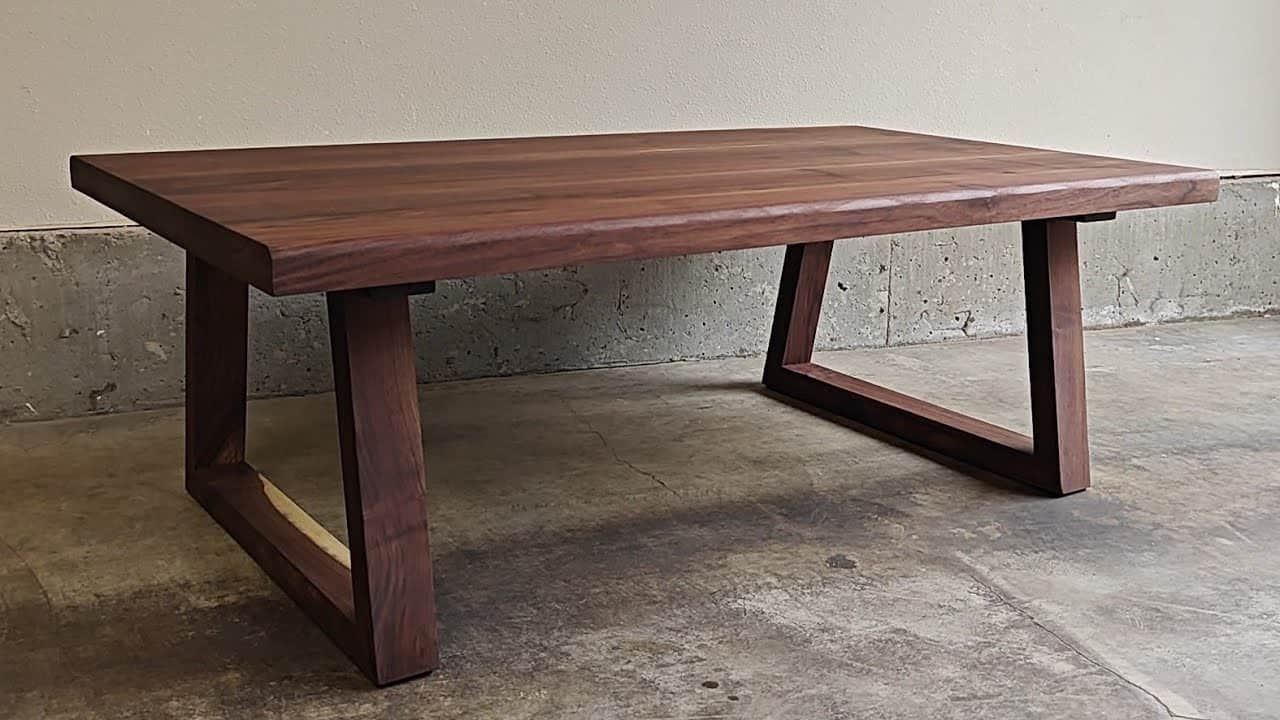
This project was built and designed by Keaton Beyer. The final piece is a clean, modern walnut coffee table created specifically for clients who wanted a custom piece to match their existing decor.
Drawing inspiration from a previous dining table build, Keaton reimagined the design to suit a smaller, more relaxed setting. The result is a striking blend of craftsmanship, personal detail, and practical functionality.
Watch the full video and subscribe to Keaton’s channel:
Designing for a Purpose
The design was created with Bill and Lisa in mind, using their input to shape the final proportions and joinery decisions. They appreciated the concept of reusing local wood, adding meaning to the materials used in their furniture.
This kind of collaboration between builder and client allows a project to become more than just a piece of furniture. It becomes something with a story behind it, tied to place and purpose.
Sourcing and Milling the Wood
The walnut used for this build came from a local hardwood supplier in the Portland area. Sourcing materials locally supports nearby mills and often results in boards with more unique character.
Before milling begins, rough boards are cut into shorter, more manageable lengths. This step makes the lumber easier to handle and reduces waste during the flattening and jointing process.
A planer sled is used to flatten one face of the boards, creating a reference surface. From there, the boards are flipped and planed to final thickness, revealing the beauty of the grain beneath the rough exterior.
Cutting and Prepping the Components
With the lumber milled and flattened, the next phase is breaking it down into pieces for the table’s top, base, and legs. Rather than relying strictly on measured plans, Keaton works directly off the boards to determine final dimensions.
This adaptive approach ensures the best possible layout while maximizing the use of each board. It also helps maintain visual continuity, especially across the tabletop.
Mortise and Tenon Joinery
Joinery begins with mortises, which are cut precisely to fit into the table’s leg assemblies. Keaton takes a non-traditional approach, using tools in creative ways to suit the build and ensure accuracy.
Once the mortises are complete, tenons are sized and shaped to fit snugly. A good fit is critical, as these joints contribute both strength and visual balance to the overall design.
Sliding Dovetails for the Tabletop
For the tabletop, Keaton uses sliding dovetail joints to keep everything aligned and stable. These joints allow for natural wood movement while ensuring the top remains flat over time.
Each dovetail groove is cut after the boards are clamped and marked. Precision here is essential, as too tight a fit could restrict movement, while too loose would affect stability.
Assembling the Table
With all parts cut and joinery complete, the table is ready to come together. As often happens in woodworking, a few surprises pop up during this phase.
A minor misalignment in the base requires an on-the-spot fix. Keaton opts to reinforce the bottom section with screws, hidden where they won’t affect the final appearance.
Sanding and Finishing
Once assembly is complete, the entire piece is carefully sanded to a smooth, tactile finish. Edges are eased slightly for comfort and safety, preserving the modern lines without sharp transitions.
The final step is applying a hard wax oil finish. This enhances the walnut’s rich grain and offers durable, low-sheen protection that ages gracefully over time.
The Final Piece
The finished table is both beautiful and built to last, combining craftsmanship with thoughtful design. It’s a perfect example of what’s possible when you work with solid wood and focus on clean, reliable joinery.
Custom furniture like this offers something mass-produced pieces can’t: a unique story, local materials, and a lasting connection to the person who built it.
Want to See the Full Build?
Please support Keaton, but visiting his website: https://www.keatonbeyerwoodworking.com/.

Matt’s Take
These are my personal thoughts and tips based on my own experience in the shop. This section is not written, reviewed, or endorsed by the original creator of this project.
Keaton’s approach to working directly off the boards rather than strict measurements is something I really appreciate. This method lets the wood guide the design and helps avoid forcing dimensions that might not work with the grain patterns you’re actually dealing with. It’s especially smart when you’re trying to get the best visual flow across a tabletop.
The sliding dovetail choice for the tabletop is solid engineering. These joints handle seasonal movement beautifully while keeping everything aligned, which is crucial for a piece that’ll see daily use. When cutting these, taking your time with the setup is worth every minute — a router with a sharp bit and multiple light passes will give you much cleaner results than trying to hog out material in one go.
That on-the-spot fix during assembly is classic woodworking reality. No matter how carefully you plan, sometimes the wood has other ideas. Hidden screws are a perfectly legitimate solution when they’re placed thoughtfully. The key is making sure they’re doing structural work, not just covering up poor joinery elsewhere.
Hard wax oil is an excellent finish choice for walnut, especially on a coffee table. It brings out the grain without looking plastic, and when it eventually shows wear, you can refresh it with just a light sanding and another coat. Much more practical than trying to maintain a high-gloss finish in a living room setting.