

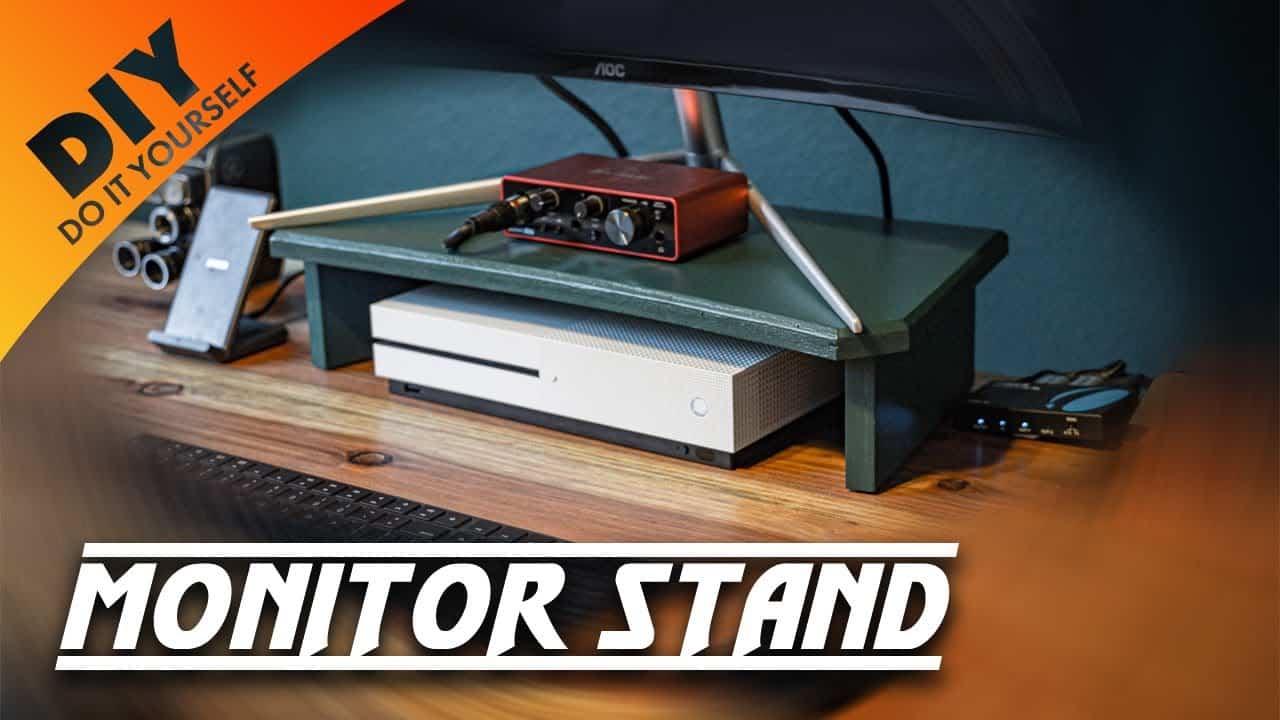
This DIY monitor stand was built and designed by Josh Hardcastle from Rookie DIY. It’s a great project for anyone who wants a simple yet attractive way to improve the ergonomics of their workspace while using scrap wood from around the shop.
If you enjoy practical woodworking projects and tips, check out Josh’s channel, Rookie DIY, for more inspiring builds and step-by-step tutorials.
Watch the full video and subscribe to Josh’s channel:
Why Build Your Own Monitor Stand?
Elevating your monitor not only helps maintain good posture and ergonomics but also frees up valuable space on your desk. Josh’s design provides a stylish solution that can be customized easily to match your personal aesthetic and workspace needs.
Building your own stand allows you to adjust the dimensions, materials, and overall design to fit exactly what you want. Plus, using scrap wood makes this project cost-effective and environmentally friendly.
Designing the Monitor Stand
Josh started his design by sketching out several ideas to find the perfect combination of function and style. He chose a geometric shape with curved elements, giving the stand a modern and visually appealing look.
You can easily replicate his process using digital software or traditional sketching methods. Planning your design beforehand ensures your finished product meets both practical and aesthetic goals.
Preparing and Shaping the Base
Josh began by selecting scrap plywood and cutting it down to form the base of the stand. A simple rectangular shape was initially established, allowing flexibility for further customization.
He then refined the shape by cutting it into a geometric form with smooth, elegant curves using a bandsaw. Carefully sanding the edges helped create a sleek, professional finish that enhances the stand’s appearance.
Adding Curved Edges
To achieve a sophisticated look, Josh added curved details to the front edge of the monitor stand. He created a reusable template from hardboard, which allowed him to replicate the curve precisely on the plywood base.
Using the bandsaw, he carefully cut along the marked curve, then sanded the edges to smooth and perfect the shape. This added a touch of refinement and uniqueness to the project.
Constructing and Attaching the Legs
Next, Josh constructed the legs from plywood, carefully measuring and cutting each piece to the desired height and width. Ensuring consistency in size was crucial for stability and visual appeal.
He attached the legs slightly inset from the edges of the base, creating a cleaner and more professional appearance. To maintain a seamless look, screws were strategically placed and later concealed with wooden plugs.
Assembly and Finishing Details
Josh drilled carefully positioned holes to secure the legs to the base, adding stability and durability. The wooden plugs were used to conceal screw heads, enhancing the overall aesthetics of the piece.
He also created a chamfered edge around the top surface, softening the look and making the stand more visually appealing. This small detail significantly elevated the final appearance of the stand.
Sanding and Finishing the Stand
After the assembly, Josh sanded the entire monitor stand to ensure a smooth, comfortable finish. Sanding also prepared the surface for staining or painting, helping achieve a clean, professional look.
A final coat of paint or stain completed the stand, providing protection and seamlessly blending it into the workspace environment. Choosing your own finish allows further personalization to suit your style and décor.
Why You’ll Love This Project
Building your own monitor stand provides practical workspace improvement while also allowing creative freedom. It’s an excellent way to repurpose scrap materials, making it environmentally friendly and budget-conscious.
This simple woodworking project is approachable for beginners and customizable enough to challenge experienced woodworkers. The final result adds functionality and visual interest to any office or workspace.
Ready to Build Your Own?
If you’re ready to start your project and need detailed visual guidance, Josh’s full video provides step-by-step instructions. His clear explanations and demonstrations will help ensure your DIY monitor stand is both successful and satisfying to build.
Please support Josh by visiting his website here.

Matt’s Take
These are my personal thoughts and tips based on my own experience in the shop. This section is not written, reviewed, or endorsed by the original creator of this project.
This type of project is perfect for getting comfortable with your bandsaw if you’re still building confidence with curves. The key with those curved cuts is taking your time and letting the blade do the work – rushing through curves is where most people run into trouble. A sharp blade makes all the difference too.
I really like how Josh used a hardboard template for the curves. That’s a smart approach that ensures consistency and gives you a chance to perfect the shape before committing to your good wood. You can even test different curve profiles on scrap to see what looks best with your particular monitor setup.
The wooden plug technique for hiding screws is solid, but make sure you’re drilling your pilot holes at the right depth. Too shallow and the plugs won’t sit flush, too deep and you might weaken the joint. A depth stop on your drill bit or a piece of tape as a visual guide helps get this right every time.
For the finish, consider your workspace environment. If you’re prone to coffee spills or have a busy desk, a polyurethane topcoat over stain will give you much better protection than just paint or stain alone. The extra durability is worth it for something that’ll see daily use.