

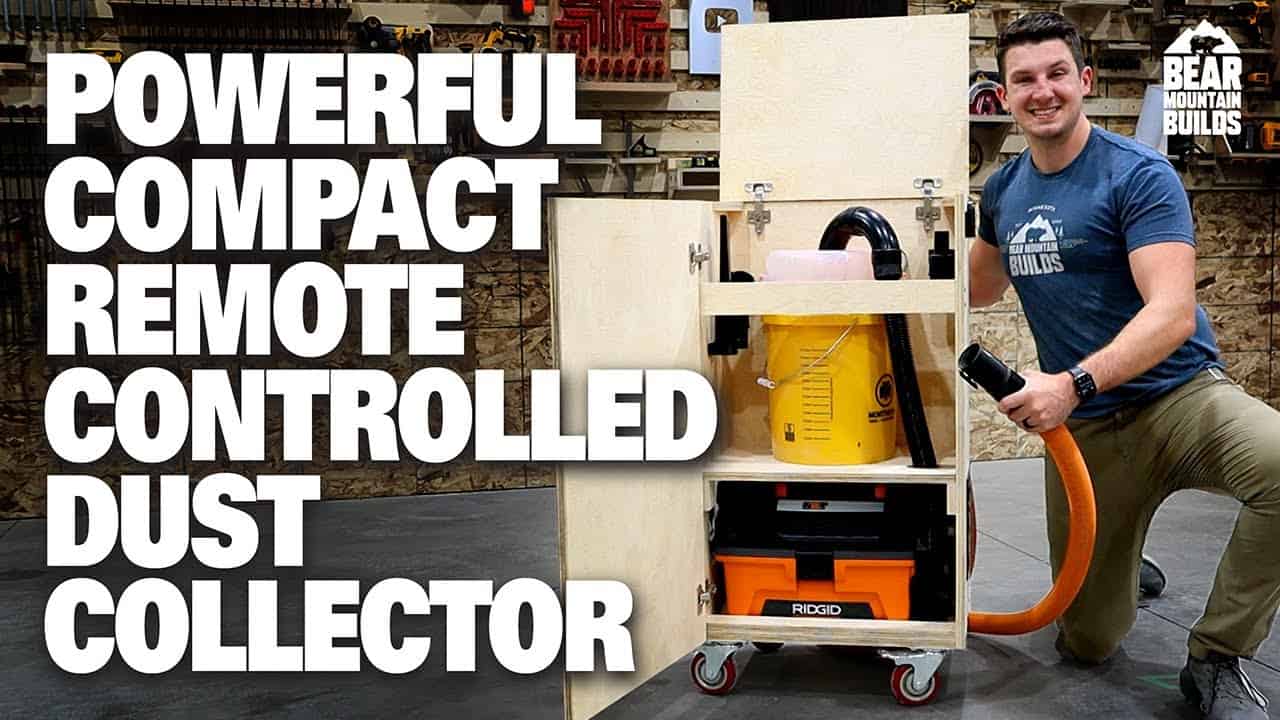
A clean workshop is a more efficient and enjoyable space, and a cyclone dust extractor can make a big difference. This project by Zach from Bear Mountain Builds, offers a budget-friendly way to improve dust collection without investing in an expensive commercial unit.
Watch the full video and subscribe to Zach’s channel:
Why Build a Cyclone Dust Extractor?
Cyclone dust collectors separate heavy debris from fine dust, keeping your vacuum filter cleaner for longer. This design is particularly useful for small workshops where space is limited but dust collection is essential.
Zach built his extractor using a high-powered vacuum with a capacity of 100 CFM, making it comparable to high-end systems at a fraction of the cost. He also added a remote-control feature, allowing for convenient operation from anywhere in the shop.
Planning the Build
This dust extractor is constructed primarily from a sheet of plywood and basic hardware. The design includes a sturdy base, three vents with HEPA filters, and a hose hanger for added organization.
Before starting, Zach prepared his materials, ensuring all cuts were precise for a clean and professional assembly. Taking time to plan the layout helped him maximize efficiency and minimize waste.
Constructing the Base and Housing
Zach began by cutting the plywood to form the structure of the extractor. He carefully measured and cut openings for the hose and vents, using a roundover bit to smooth out the edges. This helped prevent hoses from catching on sharp corners during use.
The housing was assembled using fasteners that provided both durability and a clean aesthetic. Zach reinforced the structure with gussets instead of standard braces, helping to keep the footprint compact while ensuring stability.
To provide easy access for maintenance, he installed a front door and a hinged top lid. This made it simple to remove dust buildup and clean filters when necessary.
Improving Mobility and Usability
To make the extractor easy to move around the shop, Zach attached four-inch caster wheels. Larger wheels helped it roll over shop debris without getting stuck, making the unit more practical for a workspace with frequent movement.
For convenience, he added holders for remote controls, ensuring they were always within reach. With the remote-operated vacuum, he could start and stop the system without needing to walk across the shop.
Final Assembly and Performance
The last step was connecting the vacuum to the cyclone separator, allowing dust to be collected efficiently in a five-gallon bucket. This setup prevented fine dust from clogging the vacuum’s filter, extending its lifespan and reducing maintenance.
Custom 3D-printed vent covers were added to improve airflow and enhance the overall function of the extractor. The final result was a compact, high-performance system that kept the shop cleaner and more organized.
Want to See the Full Build?
If you’re interested in making your own, Zach provides a full video tutorial detailing each step of the process. His breakdown makes it easy to follow along and build an extractor tailored to your shop’s needs.
Watch Zach’s video for the complete process and support his channel: