

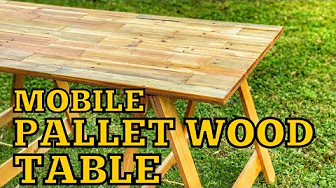
This project was built and designed by Chris from A Glimpse Inside. It’s a versatile table made from reclaimed pallet wood, featuring a collapsible base that makes it perfect for outdoor gatherings, tailgates, or backyard parties.
The design combines portability with a rugged, handmade look. It’s a great way to put salvaged wood to work while creating something that’s both functional and eye-catching.
Watch the full video and subscribe to Chris’s channel:
Creating the Folding Base
The build begins with a sheet of plywood that’s cut into strips to form the sawhorses. These sawhorses act as the main support system for the table and are designed to fold flat for easy storage.
Glue and brad nails are used to secure each sawhorse component before clamping them into place. A piano hinge is installed at the pivot point, allowing the legs to swing open or fold closed.
For added stability, Chris adds rustic rope to hold the sawhorse legs at the right angle. This not only reinforces the base but also complements the reclaimed look of the table.
Breaking Down the Pallets
Once the base is complete, attention turns to the pallet wood. To preserve the wood’s character, Chris cuts along the side rails with a circular saw instead of prying them apart.
This technique makes it easier to remove usable slats while keeping nail heads and worn textures intact. After disassembly, any protruding nails are trimmed flush using an angle grinder.
The pallet wood is then sorted and cut to length for the tabletop. Chris chooses a brick-like, staggered layout to create an intentionally chaotic, rustic pattern.
Building the Tabletop
A half-inch plywood sheet is used as the substrate for the tabletop. Each pallet piece is glued and nailed in place, starting from one corner and working across the surface.
Gaps are filled in with smaller offcuts to create a cohesive layout. Once the full surface is covered, the edges are trimmed flush using a circular saw.
Chris then sands the entire top, gradually moving from 100 grit to 180 grit sandpaper. This step smooths out uneven spots while preserving the texture and character of the wood.
Stabilizing and Finishing the Surface
To strengthen the tabletop and prevent movement over time, Chris wraps the plywood in Tyvek house wrap. This layer acts as a barrier under the epoxy layer that comes next.
A two-part epoxy is mixed and poured over the entire surface. It fills in cracks and imperfections, creating a durable, glass-like coating that locks everything in place.
Once cured, the epoxy is sanded down to reduce the shine and give the surface a more natural look. This technique keeps the rustic feel while improving the strength of the finished table.
Staining and Sealing
The edges of the table are stained to deepen the color and match the varied tones of the pallet wood. After staining, multiple coats of Halcyon clear marine varnish are applied for protection.
Between coats, light sanding helps build up a smooth, semi-gloss finish. The final result is a protective topcoat that can handle outdoor use while enhancing the wood’s visual texture.
Assembling and Packing Up
Once the tabletop is complete, the table is assembled by placing it on top of the folding sawhorses. The weight of the top keeps everything in place during use.
For transport, the sawhorses collapse and are secured with the same rope used for bracing. This allows the table to be packed up quickly and carried with ease.
Why This Project Is Worth Building
This table is a practical way to turn salvaged wood into something useful and portable. The folding base, weather-resistant finish, and rustic design make it ideal for outdoor use.
It’s a rewarding project that doesn’t require advanced joinery or expensive materials. With a little patience and creativity, it becomes a centerpiece for any event or gathering.
Want to See the Full Build?
Please support Chris by visiting his website here: https://www.aglimpseinside.org furniture.

Matt’s Take
These are my personal thoughts and tips based on my own experience in the shop. This section is not written, reviewed, or endorsed by the original creator of this project.
This is such a clever approach to pallet wood projects. Most people try to carefully disassemble pallets to avoid damage, but Chris’s method of cutting along the rails with a circular saw is actually brilliant. You end up with cleaner cuts and preserve more of that weathered character that makes pallet wood so appealing in the first place. The angle grinder trick for flush-cutting protruding nails is a real time-saver too.
The epoxy flood coat over Tyvek is an interesting technique I don’t see used often. That house wrap creates a good vapor barrier and prevents the epoxy from soaking too deep into the plywood substrate. Just make sure your workspace is well-ventilated when working with epoxy — those fumes can sneak up on you. The marine varnish over the sanded epoxy is a smart choice for outdoor durability.
What really makes this project shine is the folding base design. Portable tables are incredibly useful, but most are either flimsy or a pain to transport. The sawhorse design with piano hinges and rope bracing hits that sweet spot of being sturdy when set up but collapsing small enough to actually want to move it around. For anyone tackling this, take your time getting those hinge placements right — a little extra measuring upfront saves a lot of frustration later.