

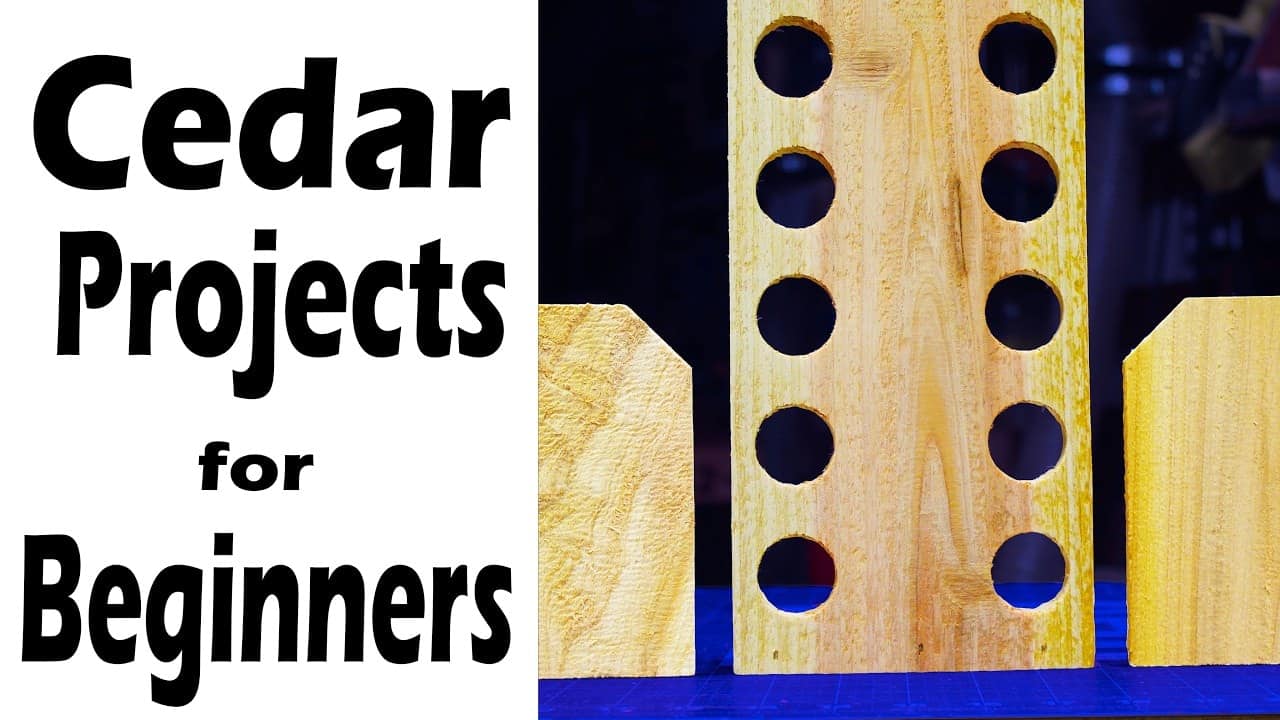
Clinton from Specific Love Creations shared the woodworking projects featured in this video.
Cedar fence pickets can become surprisingly useful home pieces when the layout is simple and the cuts are repeatable.
This article walks through three beginner-friendly builds—each focused on practical design, careful measuring, and sturdy, good-looking assembly.
Watch the full video and subscribe to Specific Love Creations:

Project 1: Corner Shelf with Angled Details
The first project turns fence pickets into a compact corner shelf that uses the often-wasted gap in room interiors. The design relies on angled ends and tight part alignment so the shelf looks intentional rather than “assembled.”
On the smaller components, 45-degree cuts create matching faces that fit together cleanly. A helpful approach is to cut conservatively, test the fit, and trim only as needed so the final piece still matches the intended size.
For the shelf frame, the build uses repeating corner shaping—either by leveraging factory “dog ear” ends or by marking and cutting matching corner triangles. Aligning multiple boards flush, then transferring reference lines, keeps the spacing consistent and prevents the frame from drifting.
Assembly comes together faster when everything is dry-fit first, then glued and secured once the geometry looks right. After curing, the result is a simple corner display designed to hold books, decor, or plants while adding visual warmth from the cedar.
Project 2: Cedar Egg Holder with Space for Flexibility
The egg holder is a quick, functional build that uses holes and evenly spaced dividers to keep eggs separated and easy to grab. It’s a great beginner project because the core work is layout, drilling, and alignment rather than complex joinery.
Square layout matters here. Marking consistent reference points around the board’s corners, then using a straightedge to guide evenly spaced hole locations, ensures the dividers land symmetrically.
Round holes are best drilled as straight as possible, followed by light sanding to remove splinters and rough edges. The smaller cedar blocks are then angled so they sit under the main board and support it from below.
Once assembled with waterproof-capable glue, the egg holder becomes stable for kitchen counter use. A nice design idea included in the build is the ability to scale the number of egg spaces by adding extra holes between the original positions.
Project 3: Wall Shoe Rack with Angled Shelves (Two Versions)
The third project is a more “statement” style build that mounts on a wall and uses angled shelves to store shoes without them slipping off. The same foundational layout techniques apply to both versions, but the more complex one uses additional segmentation for a cleaner visual rhythm.
In the simpler version, longer shelf supports get evenly referenced across the main board, then smaller shelf pieces are aligned to form repeated steps. A helpful detail is accounting for any slight warping by orienting the board consistently so it doesn’t create gaps during assembly.
In the upgraded version, shelf pieces are cut shorter and used in greater quantity, which creates a sharper, more artistic look. Keeping parts in order during cutting helps colors and line patterns stay matched, making the final face look cohesive instead of “random.”
For strength, the build emphasizes secure attachment using glue and mechanical fasteners where needed. The angled shelf surfaces provide practical stability, and optional extra support under each shelf can improve durability under frequent use.
Overall Takeaways: What Makes These Cedar Builds Work
Across all three projects, the biggest wins come from disciplined layout and test-fitting before committing to glue. When reference marks are made carefully and parts are aligned by flush edges and center points, the builds look clean even with simple materials.
These projects also show how “leftover” cedar pickets can become specialized storage pieces with minimal complexity. By generalizing the techniques—angled mating cuts, repeatable spacing, and sturdy assembly—builders can adapt the same methods to trays, small organizer shelves, or other display units.
Watch Clinton from Specific Love Creations for more approachable cedar builds, including additional ideas for improving fit, spacing, and durability on similar projects.
Watch the full video and subscribe to Specific Love Creations:

Matt’s Take
These are my personal thoughts and tips based on my own experience in the shop. This section is not written, reviewed, or endorsed by the original creator of this project.
Cedar fence pickets are one of my favorite materials to recommend for beginners. They’re affordable, forgiving to work with, and the natural oils in cedar make them naturally resistant to moisture and insects. Plus, they come pre-dimensioned, which eliminates a lot of the milling work that can intimidate newer woodworkers.
The layout techniques Clinton demonstrates here are absolutely fundamental to clean-looking projects. Taking time to mark reference points and dry-fit everything before gluing might feel slow, but it’s what separates projects that look intentional from ones that look cobbled together. When I’m working with multiple identical pieces, I always cut one as a template first, then use it to mark the rest – it keeps everything consistent and saves time in the long run.
One thing worth emphasizing is the importance of sharp drill bits when making those egg holder holes. Dull bits will tear out the cedar fibers and leave rough edges that are tough to sand smooth. A quick test drill on scrap material will tell you if your bit needs sharpening. Also, backing up your workpiece with another board when drilling helps prevent blowout on the exit side.
These projects show how simple construction methods can create genuinely useful storage solutions. The angled shelves on that shoe rack are particularly clever – gravity becomes your friend instead of your enemy. Cedar’s lightweight nature makes wall-mounting straightforward, but always make sure you’re hitting studs for anything that’ll hold significant weight.