

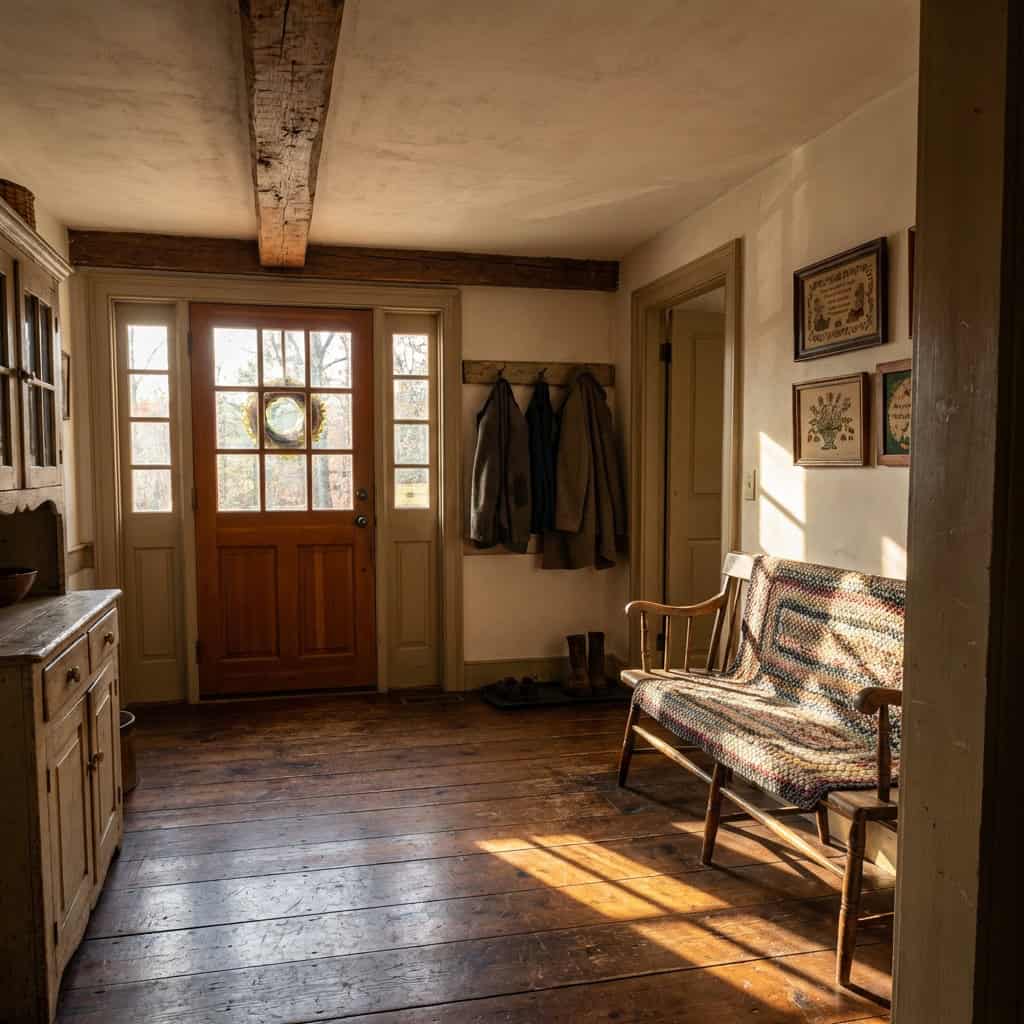
Ever walk into an old house and just feel something?
That heaviness when you close the front door. The way the banister feels solid and warm in your hand.
Those wide-plank floors that creak in all the right places.
That magic? It’s not just nostalgia.
It’s the woodworking.
Old homes were built with a level of craftsmanship — and a quality of wood — that’s almost impossible to find today.
And the details are everywhere once you start looking.
I rounded up 12 of my favorite woodworking features that give old houses their soul. Let’s take a look — fair warning, you might fall in love.
1. Wide-Plank Floors
Let’s start with what’s under your feet.
Those gorgeous wide-plank floors you see in Colonial-era homes? Some of those boards are 18 to 20 inches across.
Try finding that at your local lumber yard today. You can’t.
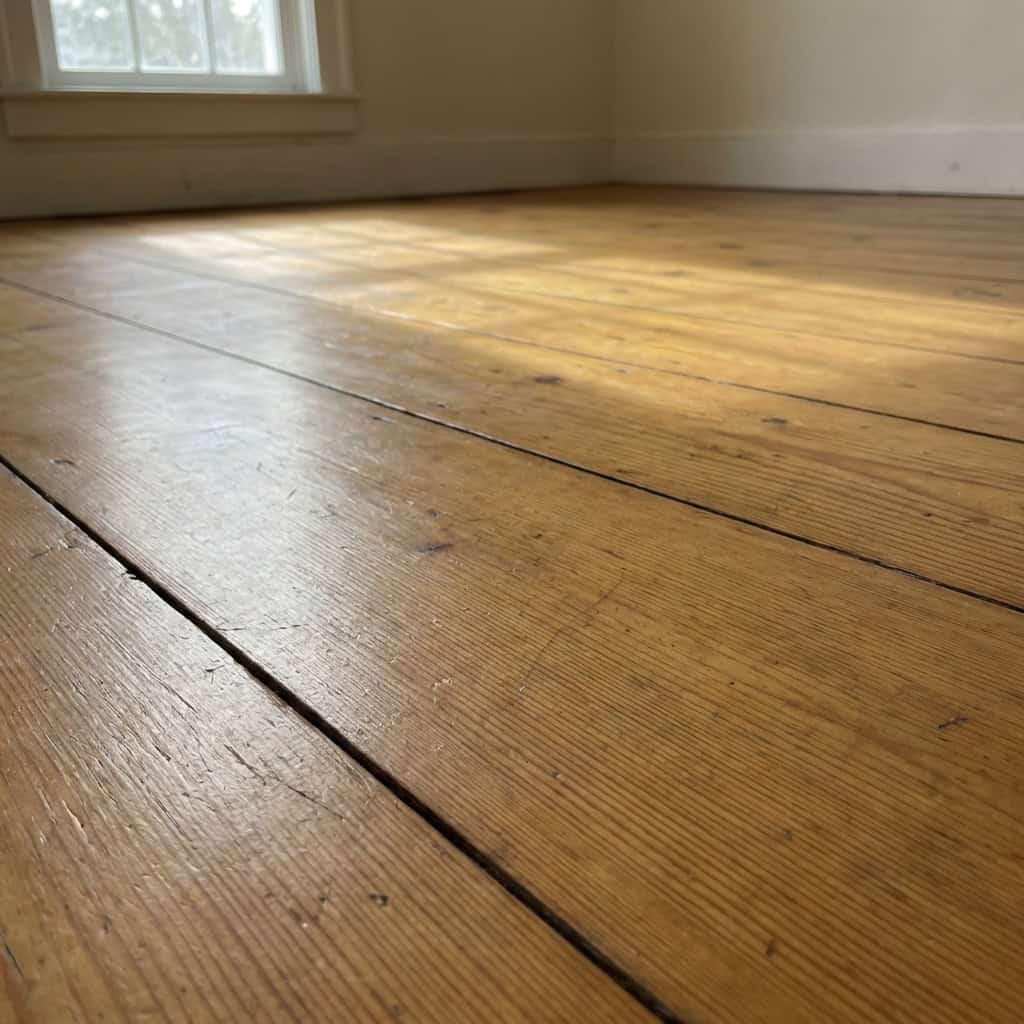
That’s because those boards came from old-growth trees — white pine, oak, chestnut — that had been growing for hundreds of years before they were cut.
The grain is tighter. The wood is harder. And the character is off the charts.
And those scratches and dents?
Each one is a little piece of the home’s story. I wouldn’t trade them for brand new hardwood if you paid me.
2. Hand-Cut Joinery
This is where it gets really fun for woodworkers.
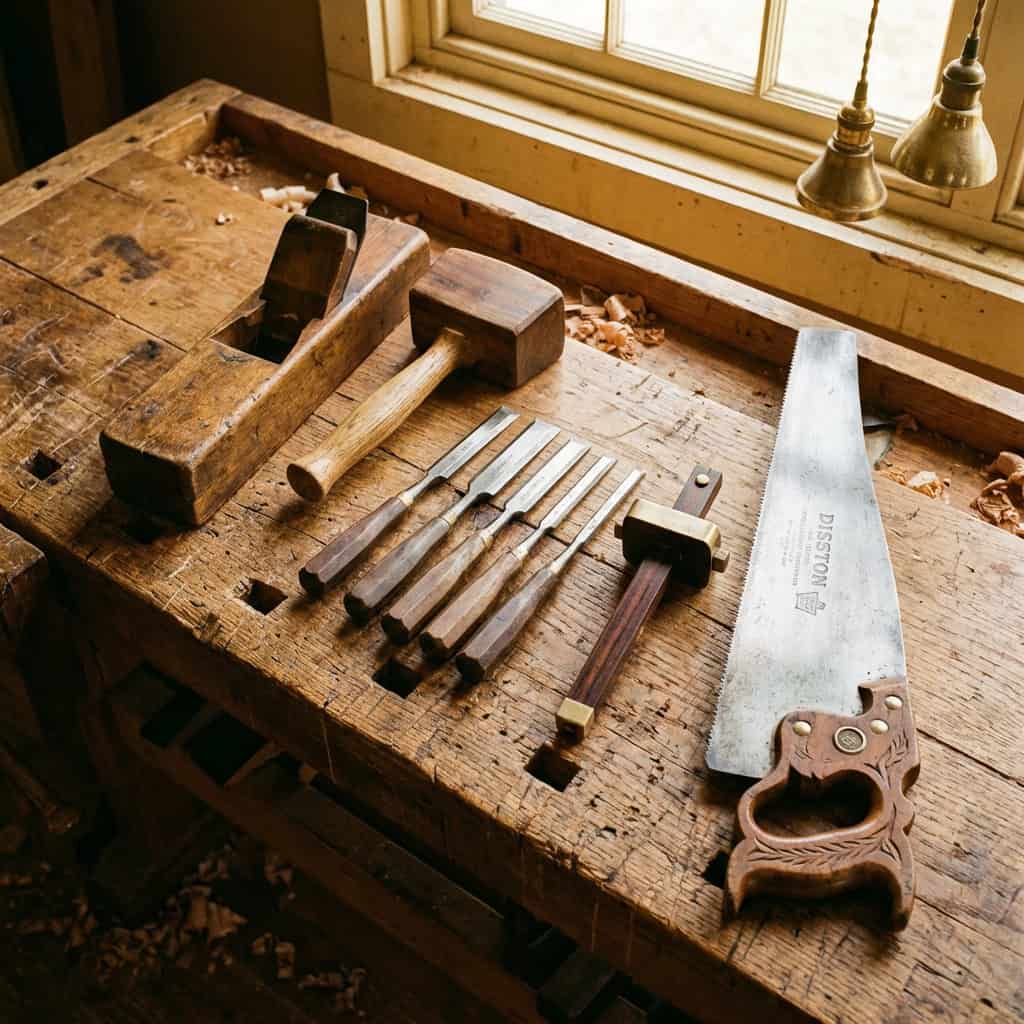
Colonial builders didn’t have the luxury of running to the hardware store. Nails and screws were expensive and scarce.
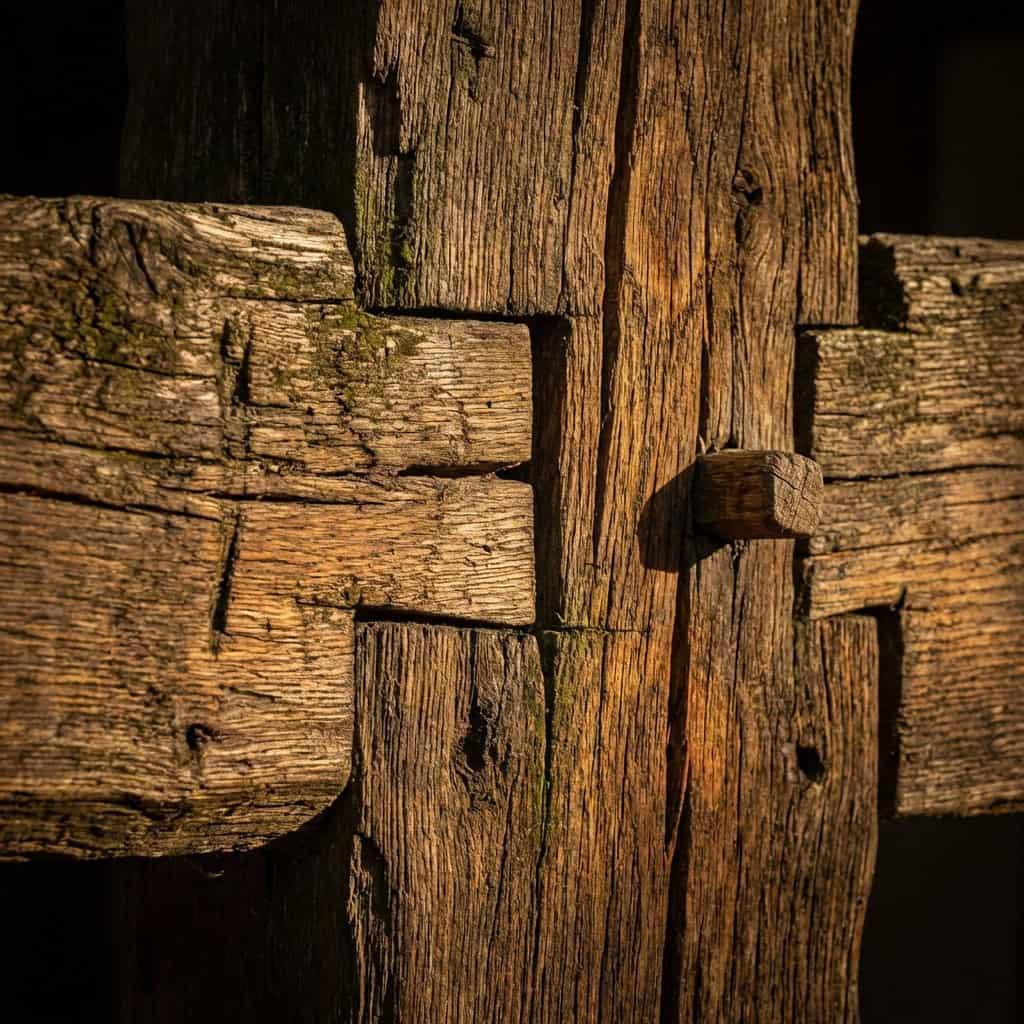
So everything was joined with mortise and tenon joints, hand-cut dovetails, and wooden pegs.
Just hand tools and an incredible amount of skill.
Think about that for a second.
The structural bones of these homes were essentially built using furniture-making techniques. On a building scale.
No wonder they’re still standing 200+ years later.
3. Ceiling Beams & Exposed Timber
There’s something about looking up and seeing a massive hand-hewn beam running across the ceiling that just stops you in your tracks.
In the oldest American homes, these beams weren’t decorative.
They were the structure.
Hewn from whole logs with a broadaxe, each one shows the marks of the tool that shaped it.
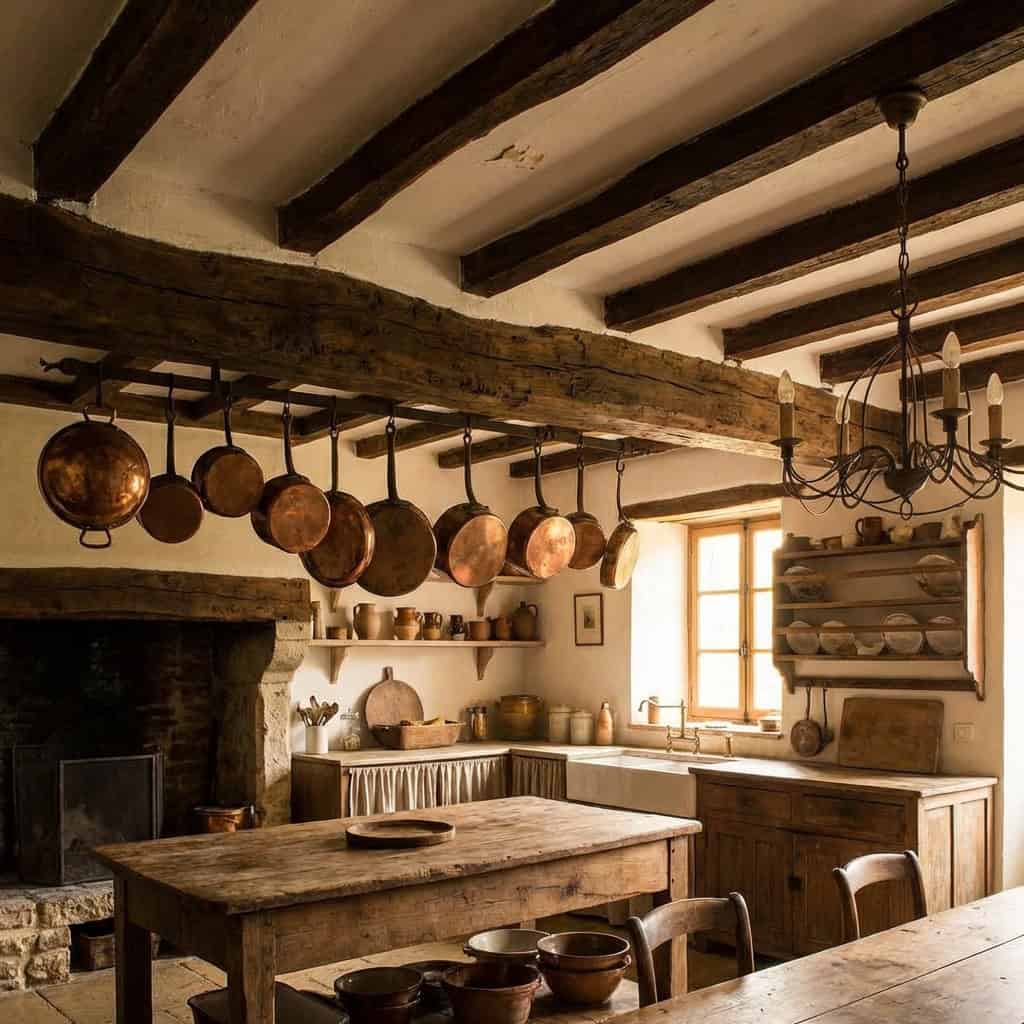
You can actually see the individual axe strokes if you look closely. Every beam is one of a kind.
Today people pay good money to add faux beams to their ceilings.
But there’s nothing quite like the real thing — a timber that’s been holding up a house for 200 years and isn’t going anywhere.
4. Fireplaces & Mantels
If old houses have a heart, it’s the fireplace.
And the mantels? This is where woodworking really got to shine.
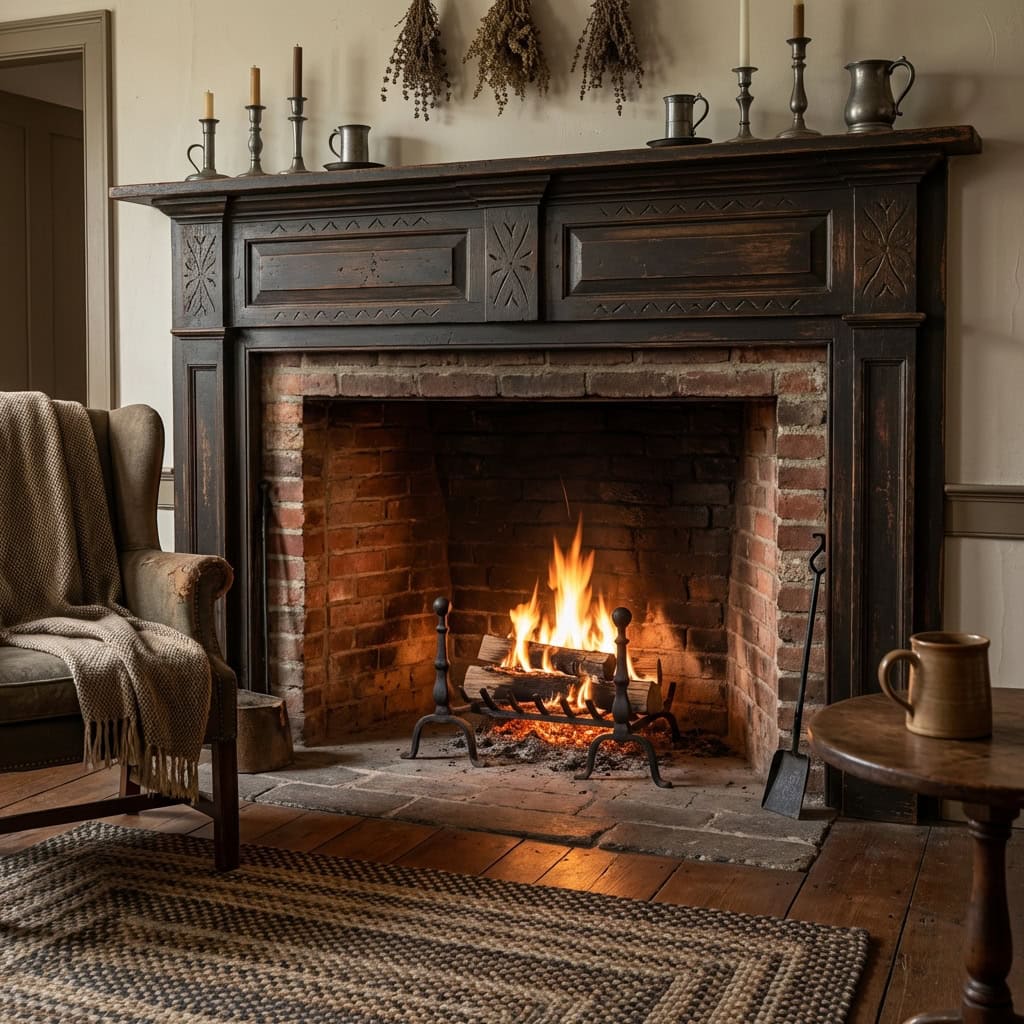
In Colonial homes, mantels were simple but beautifully crafted — raised panels, modest molding profiles, and solid wood you could feel the weight of.
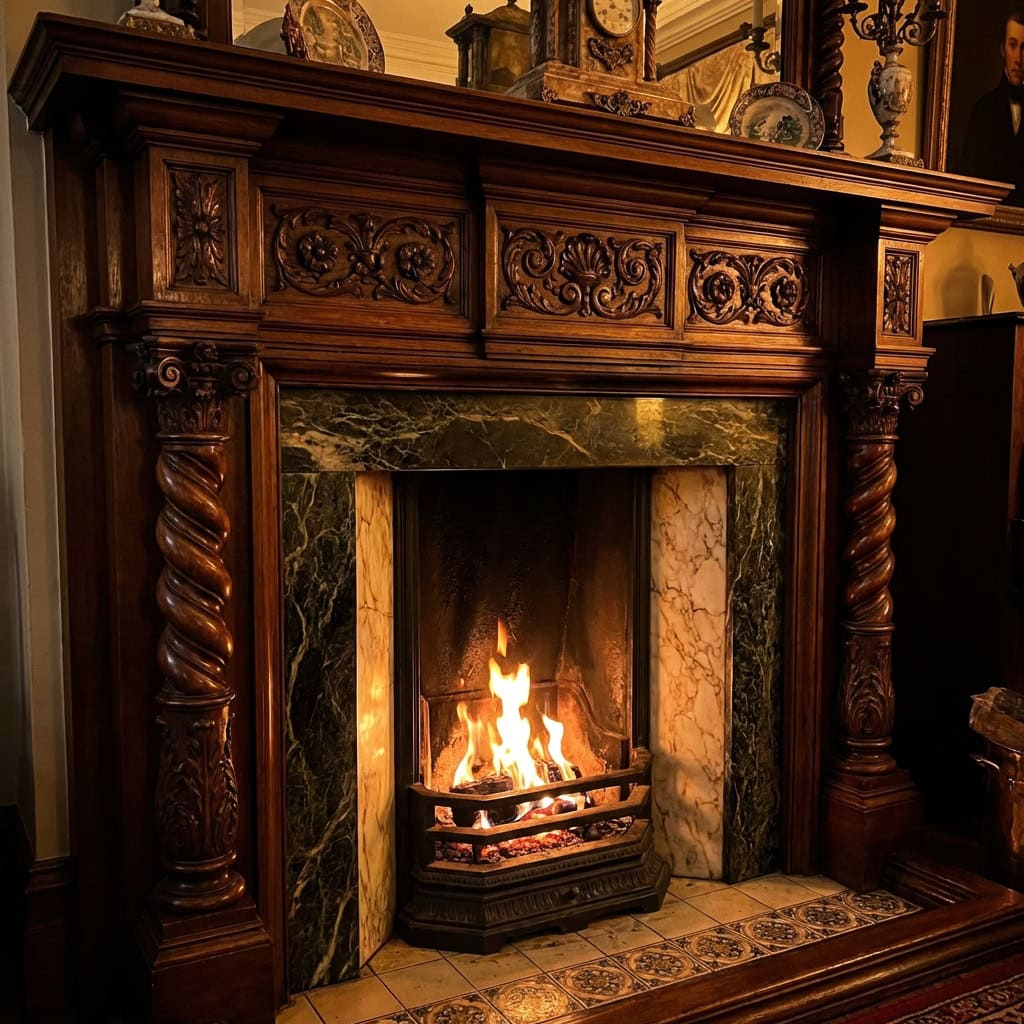
Then the Victorians came along and turned the fireplace mantel into a showpiece.
We’re talking elaborately carved surrounds in walnut and mahogany. Columns, scrollwork, corbels — the works.
Some of these mantels are so detailed they could qualify as standalone furniture.
The good news?
Many of these mantels have been rescued from old houses over the years.
You can find them in architectural salvage shops and antique stores — and they make an incredible centerpiece in any home.
5. Staircases & Banisters
A staircase in an old house isn’t just a way to get upstairs. It’s a statement.
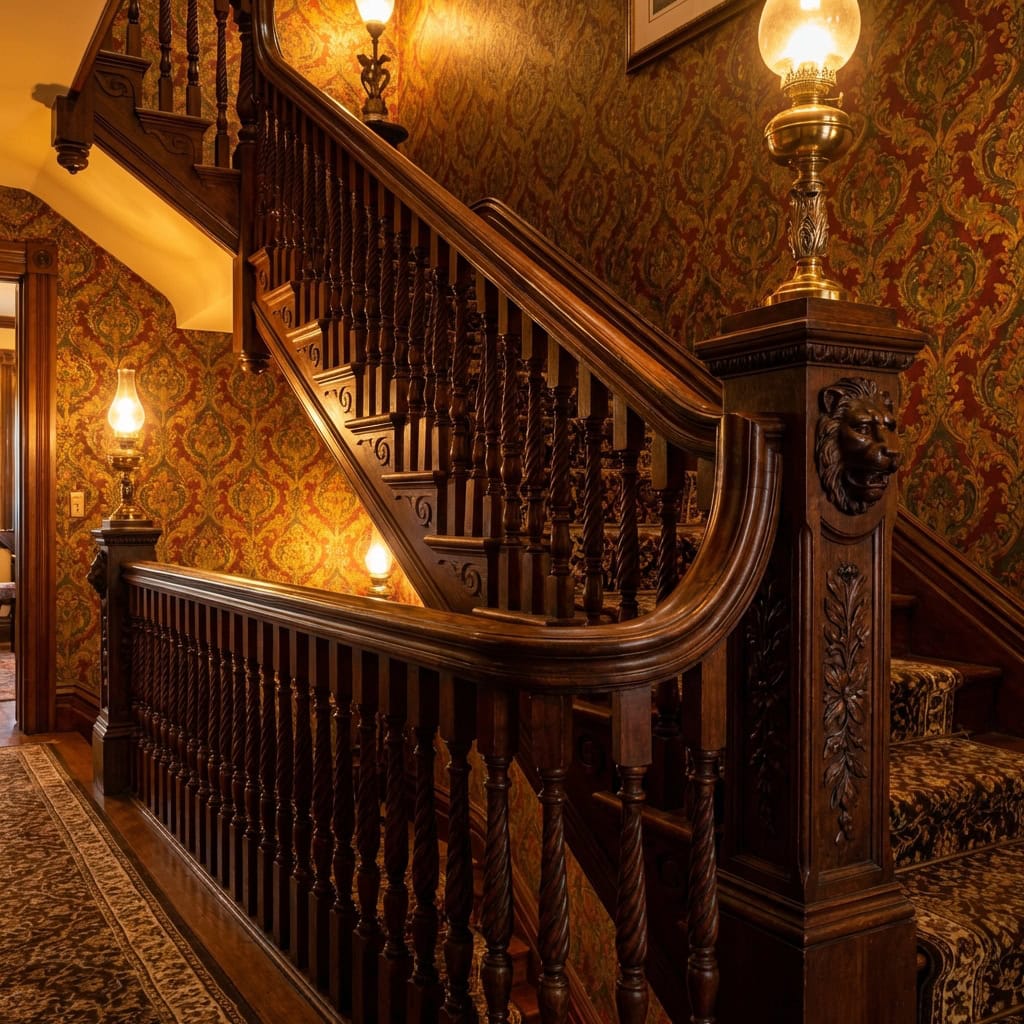
Victorian staircases especially are just something else.
Every spindle was turned on a lathe. The newel posts were hand-carved.
The handrails were shaped to fit your hand perfectly.
Even in simpler homes, the staircase got special treatment.
You might find a primitive painted banister with a quirky curve to it, or worn treads that show exactly where generations of feet landed on each step.
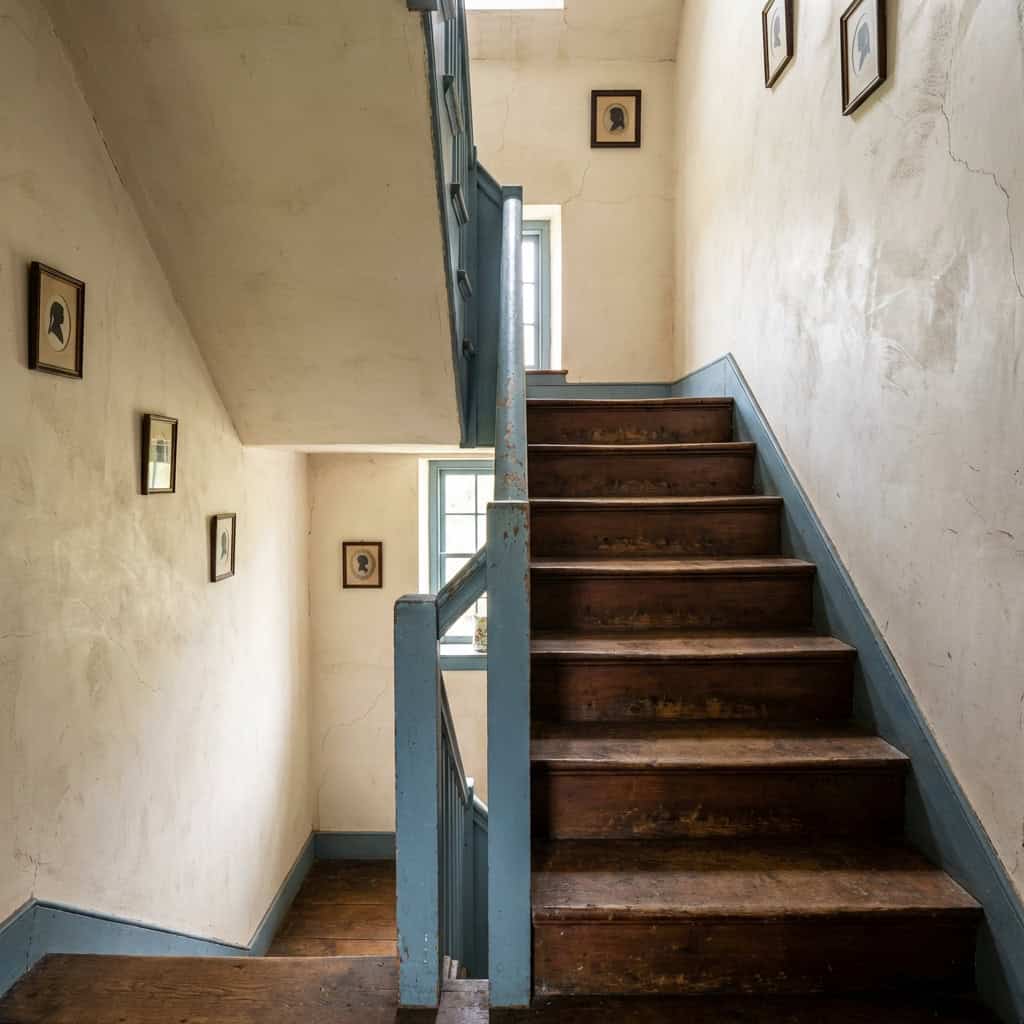
Those wear patterns are one of my favorite things about old houses.
Every groove tells you something about the people who lived there.
6. Doors That Actually Feel Like Doors
Here’s something you notice immediately in an old house — the doors have weight.
We’re so used to hollow-core doors in modern homes that we forget what a real door feels like.
In an old house, every door is solid wood with raised or recessed panels, and they close with a satisfying thud.
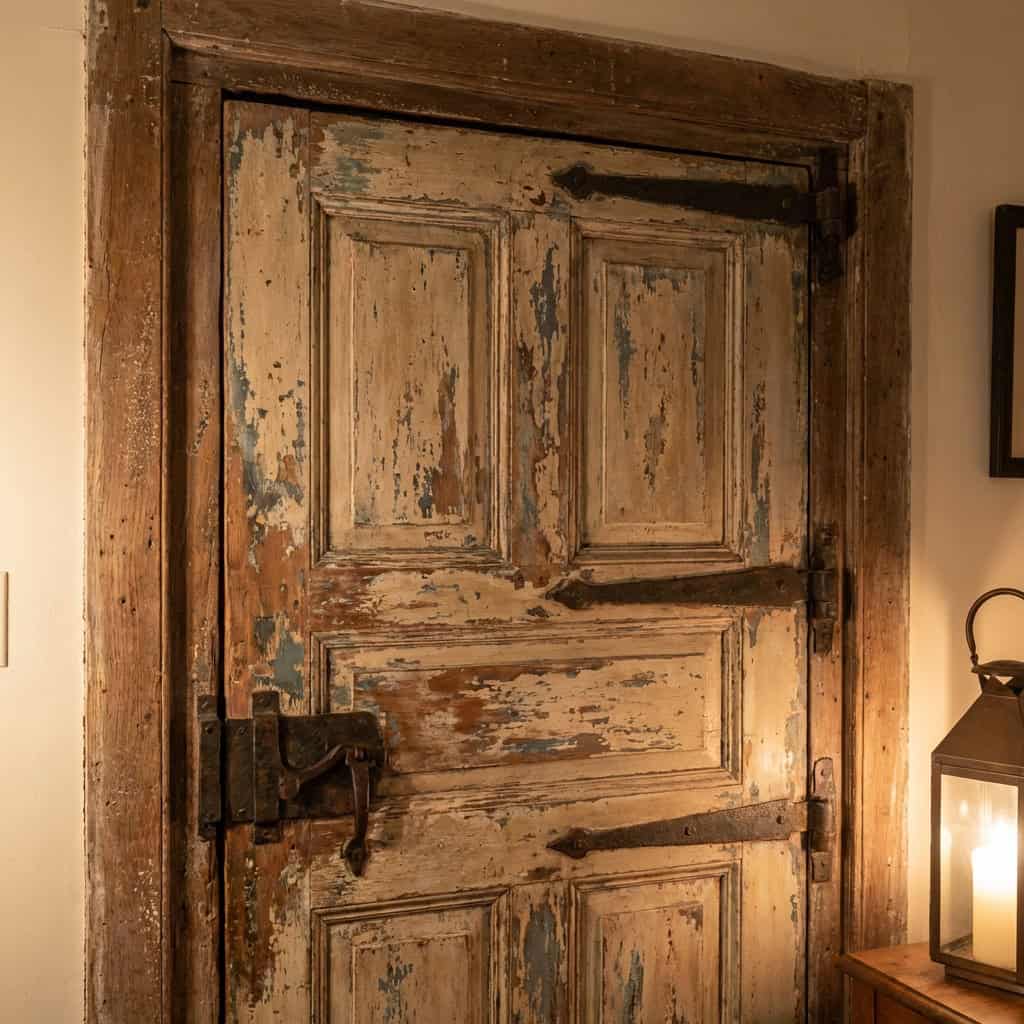
And the variety! Colonial homes had simple four or six-panel doors.
Victorians went for taller doors with arched tops and more elaborate panel configurations.
Farmhouses often featured Dutch doors — split horizontally so you could open the top half for a breeze while keeping the bottom closed.
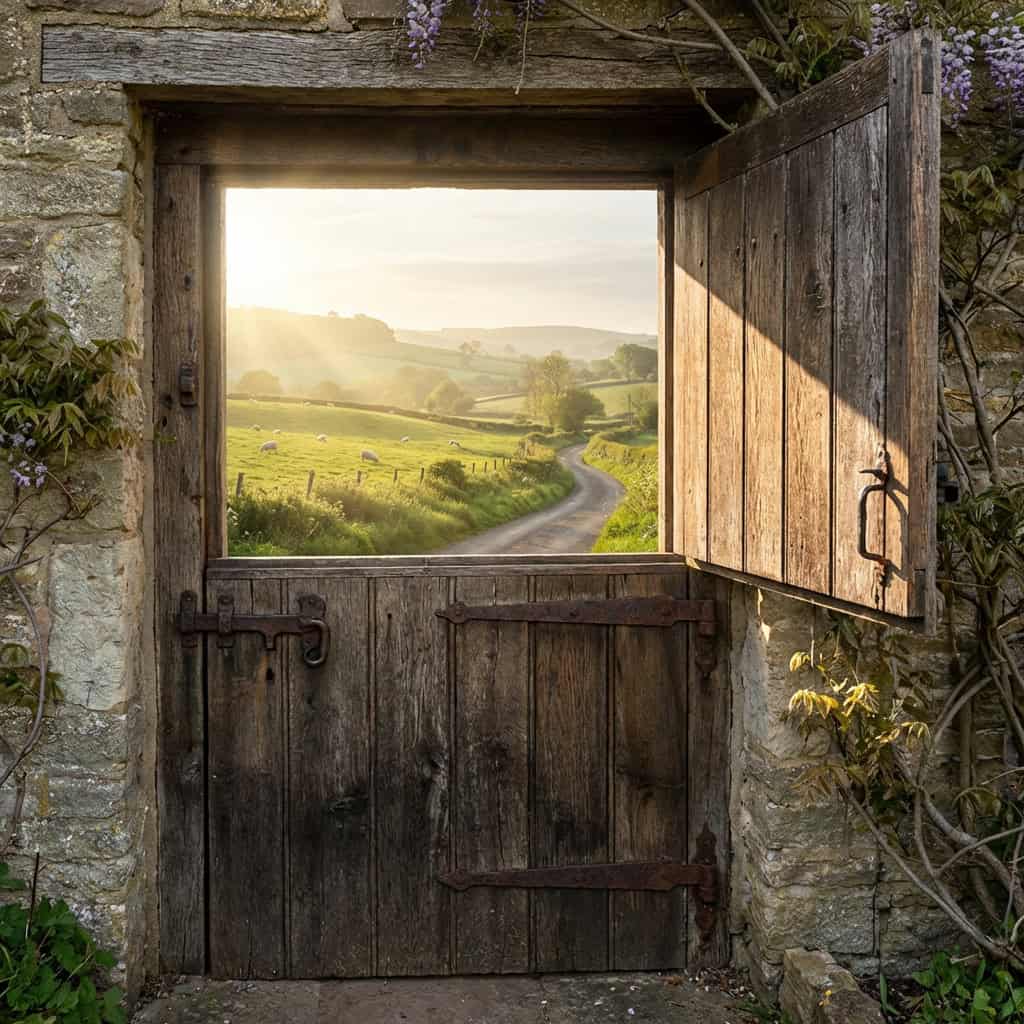
Every single one of these was made from solid stock.
No particle board.
No veneer.
Just real wood, real joinery, and hardware that was built to last.
7. Wainscoting & Wall Paneling
Old homes didn’t just leave the walls bare and call it a day.
Wainscoting — those beautiful wood panels covering the lower portion of a wall — was both practical and gorgeous.
It protected plaster walls from chair backs and everyday wear while adding a layer of warmth and texture to every room.
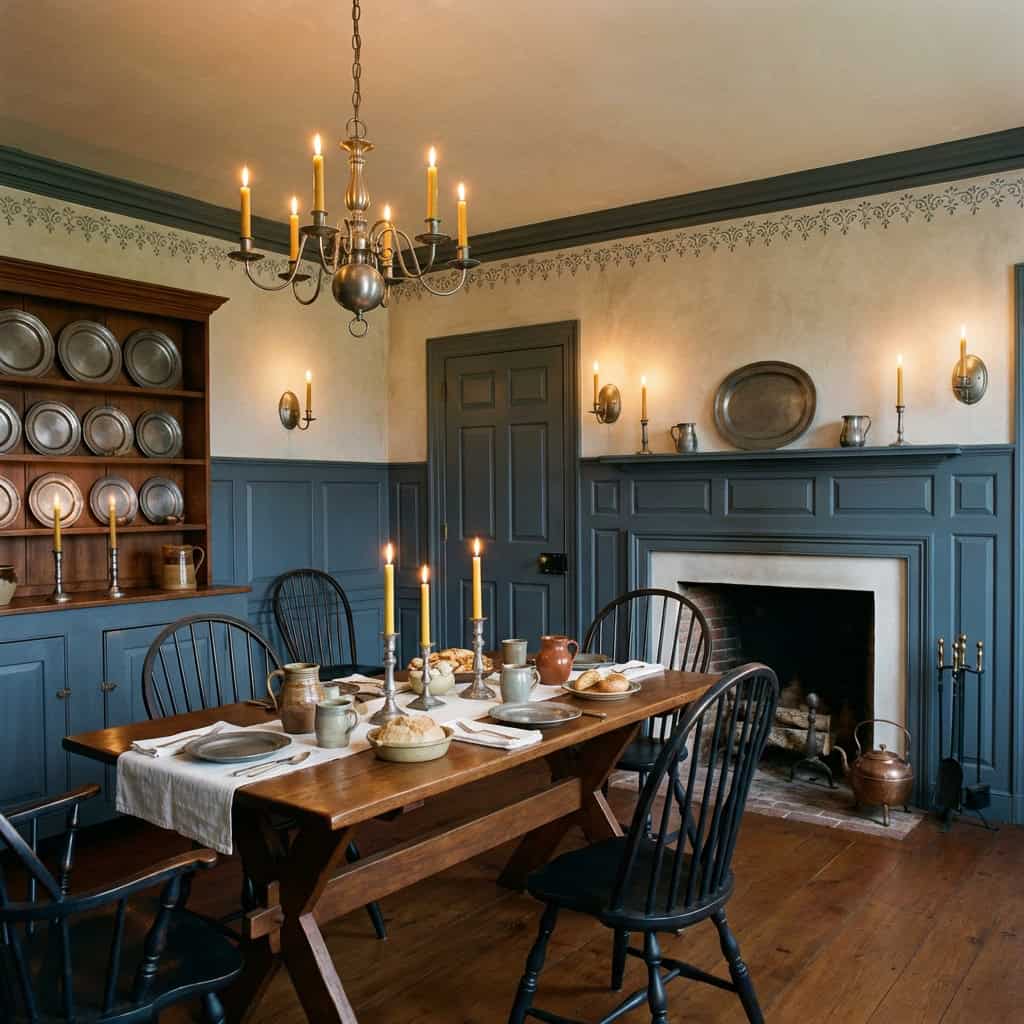
You’ll find different styles depending on the era. Colonial homes favored raised panel wainscoting.
Victorians went for beadboard.
Craftsman homes used flat panel or board-and-batten styles.
But here’s what they all have in common — they were milled and installed by hand, and they completely transform the feel of a room.
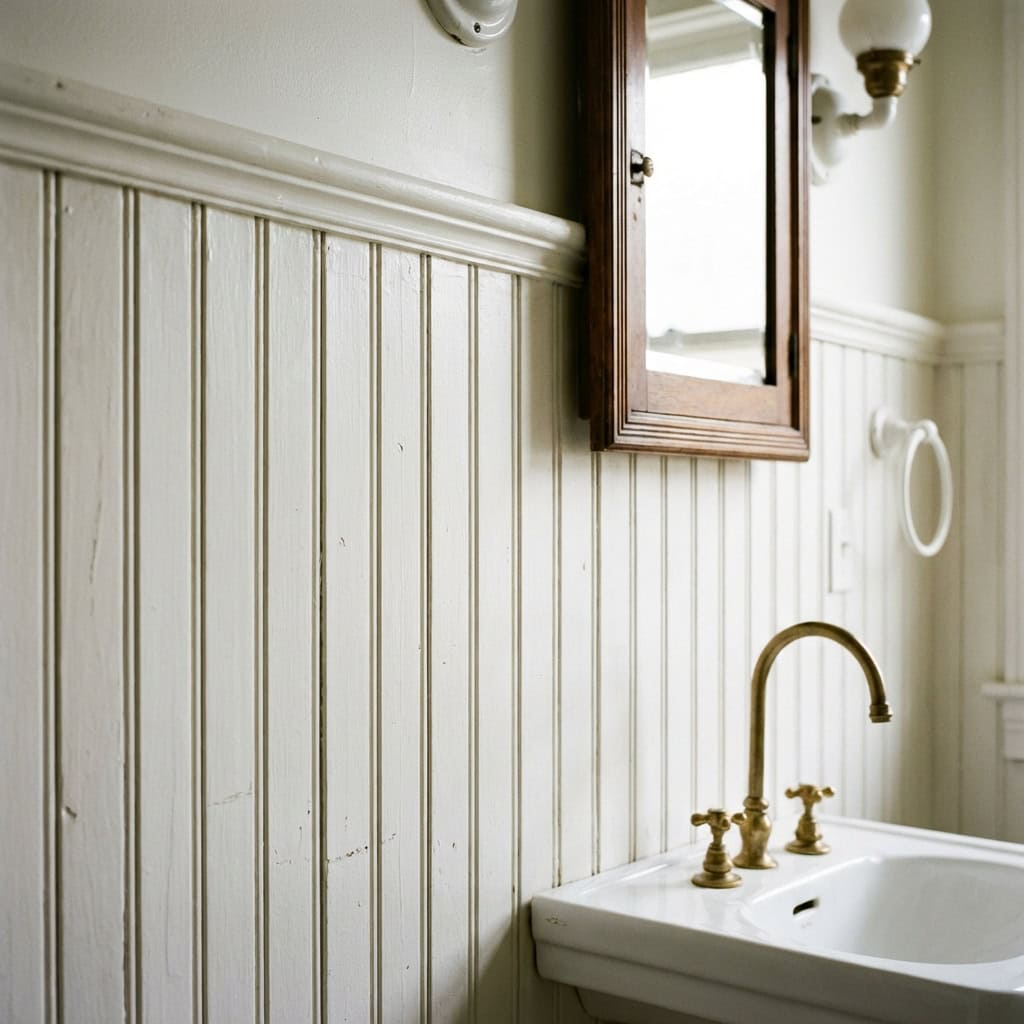
If you’ve ever walked into a room with good wainscoting, you know.
It just feels finished in a way that drywall alone never will.
8. Built-In Cabinetry & Cupboards
This might be my favorite woodworking feature in old homes.
Before IKEA and modular kitchen cabinets, homes had built-ins — and they were works of art.
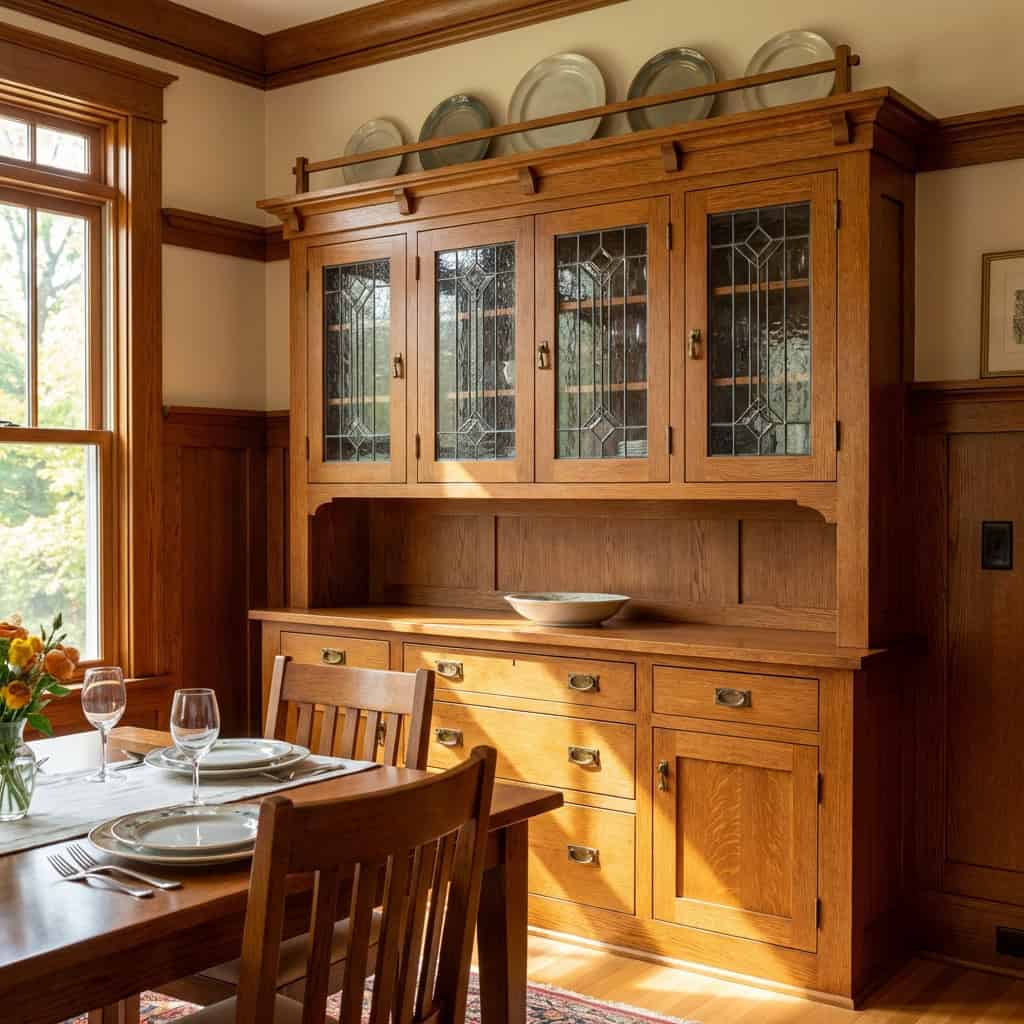
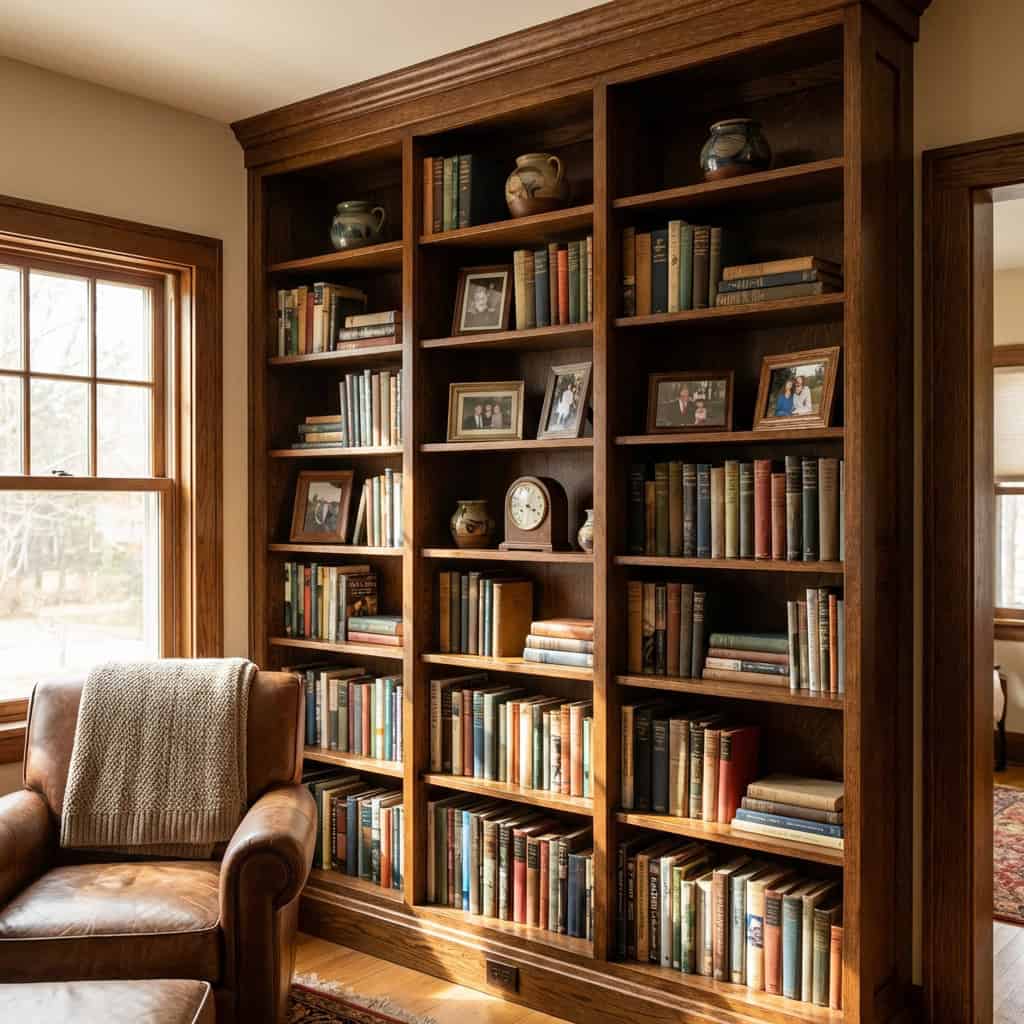
Craftsman homes are famous for this. Built-in bookcases flanking a fireplace.
Window seats with storage underneath. Dining room buffets with leaded glass doors.
These weren’t afterthoughts — they were designed into the floor plan from the start.
Older farmhouse kitchens took a different approach entirely.
Instead of fitted cabinets, you’d find standalone cupboards and hutches — unfitted kitchens with pieces that were practically furniture.
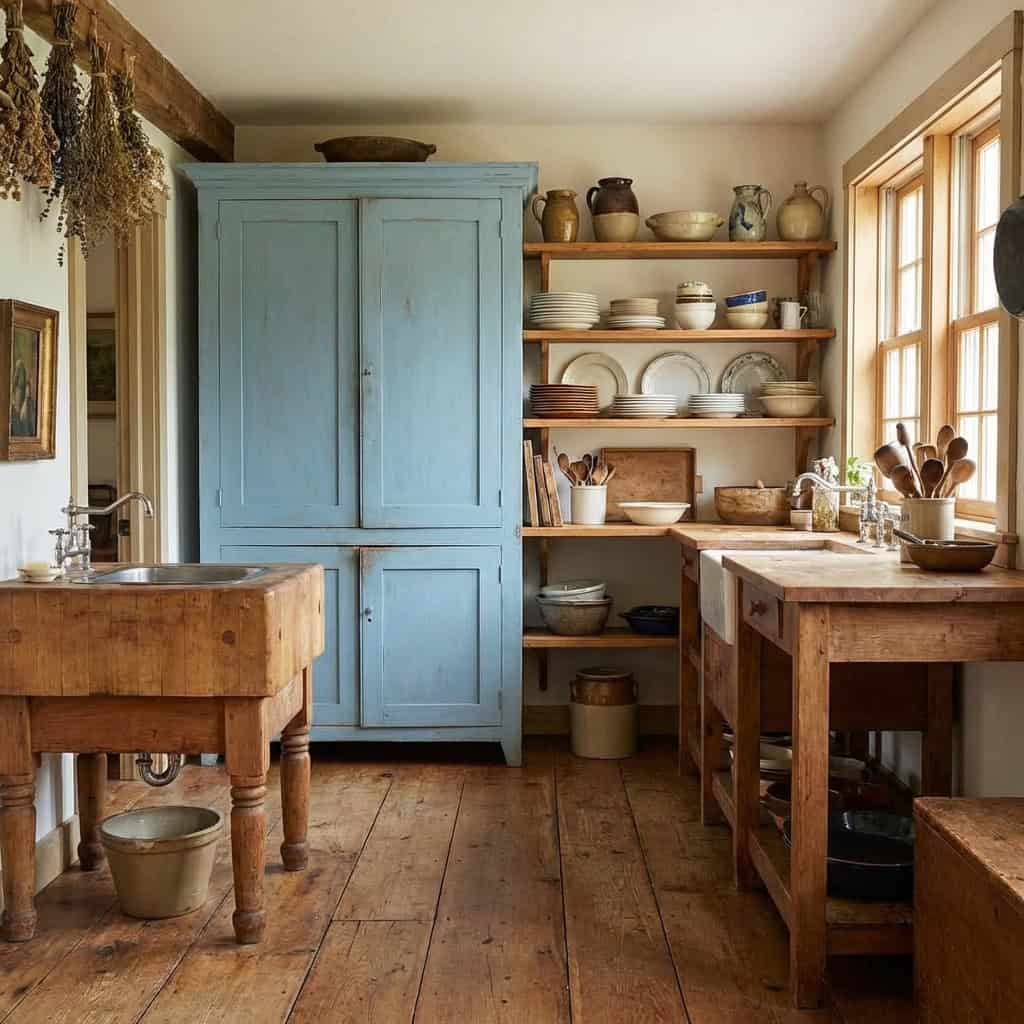
There’s a charm to these that modern cabinetry just can’t touch.
Each piece has its own personality.
9. Window Trim & Deep-Set Windows
Here’s a detail that’s easy to overlook but makes a huge difference.
The window trim in an old house is usually thick, substantial, and beautifully profiled.
It frames the window like a piece of art. Modern homes?
A thin strip of casing and you’re done.
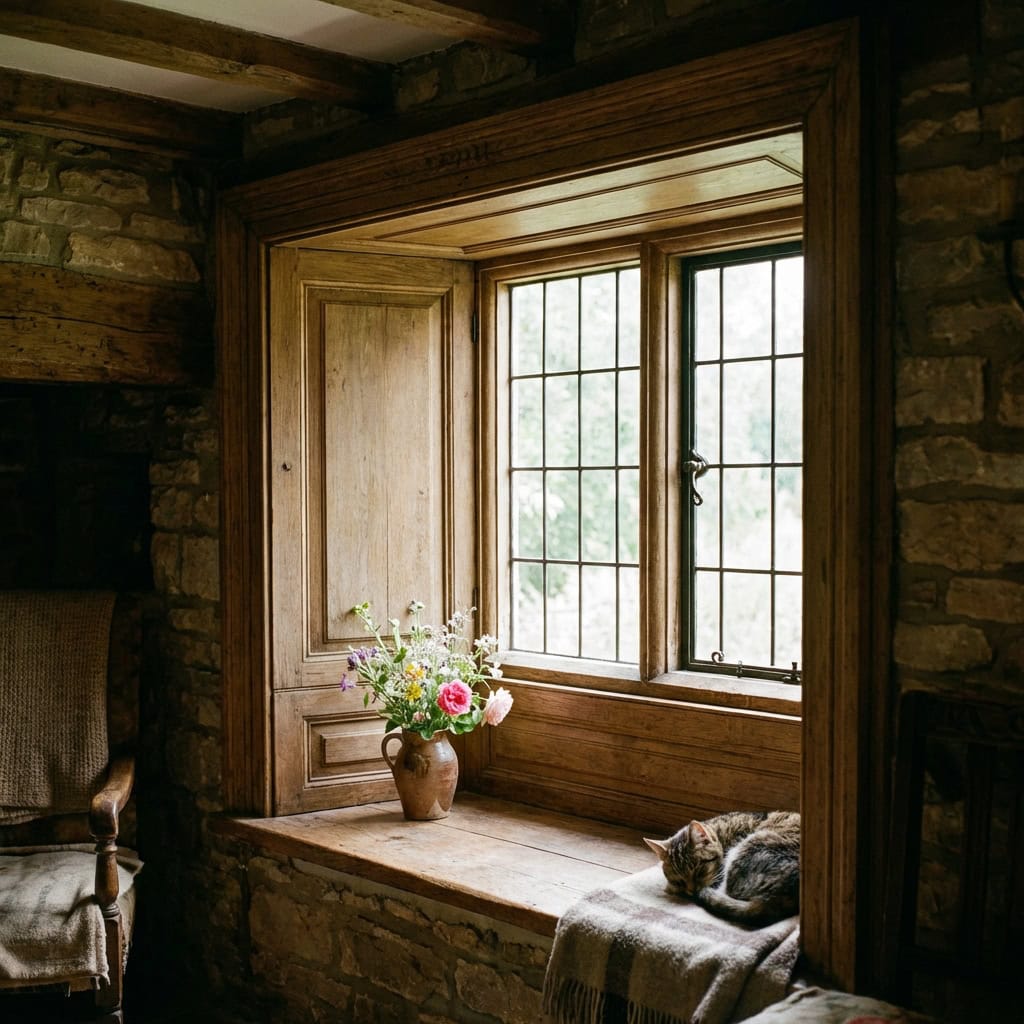
And those deep-set windows! In older homes with thick walls, the windows are recessed several inches, creating these beautiful little nooks.
Some are deep enough to use as a reading spot or display shelf.
You can’t look through one of these windows without wondering about the people who gazed through them before you.
A young girl watching the snow fall? A farmer checking the sky at dawn?
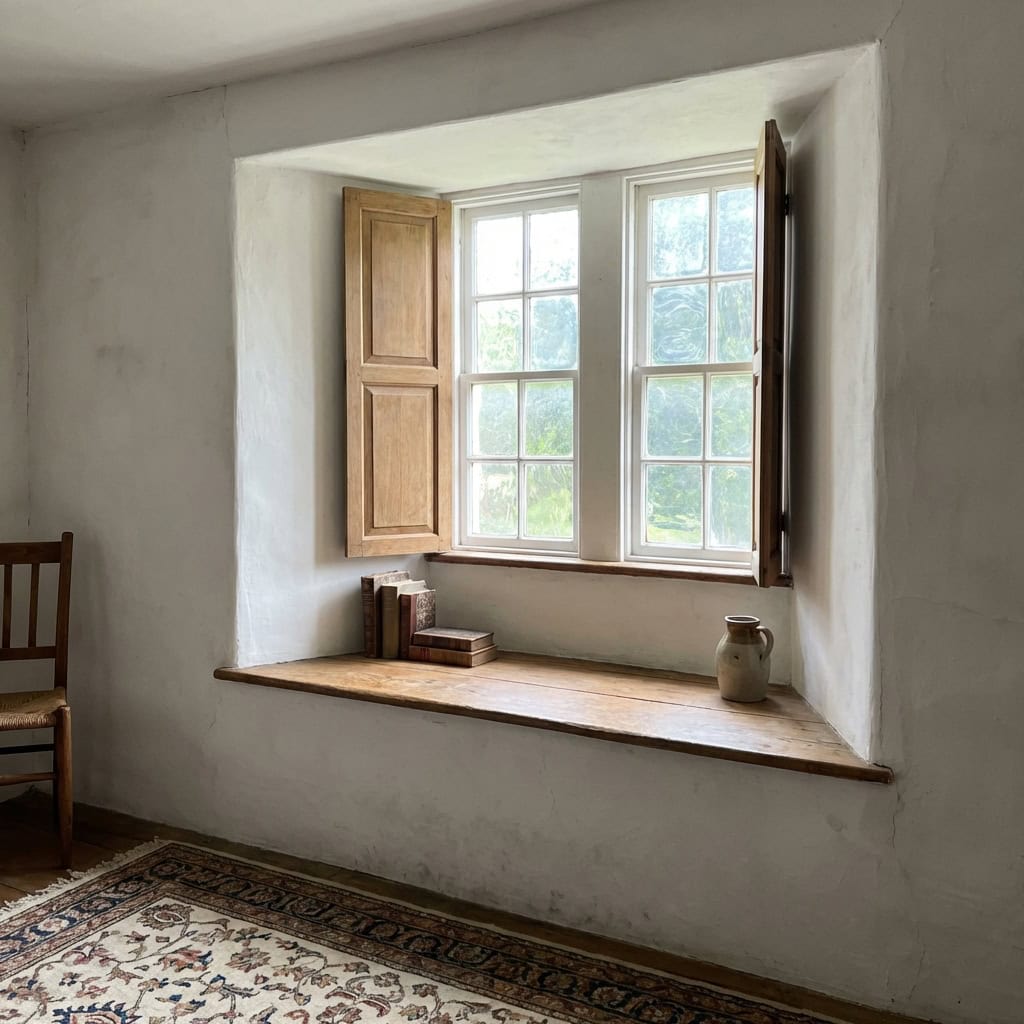
It’s those kinds of moments that give old houses their soul.
10. Transom Windows & Archways
Transom windows are one of those details that you don’t see much anymore — and it’s a shame.
These small windows above a door or main window were originally designed to let light and air flow between rooms.
But they’re also just plain beautiful.
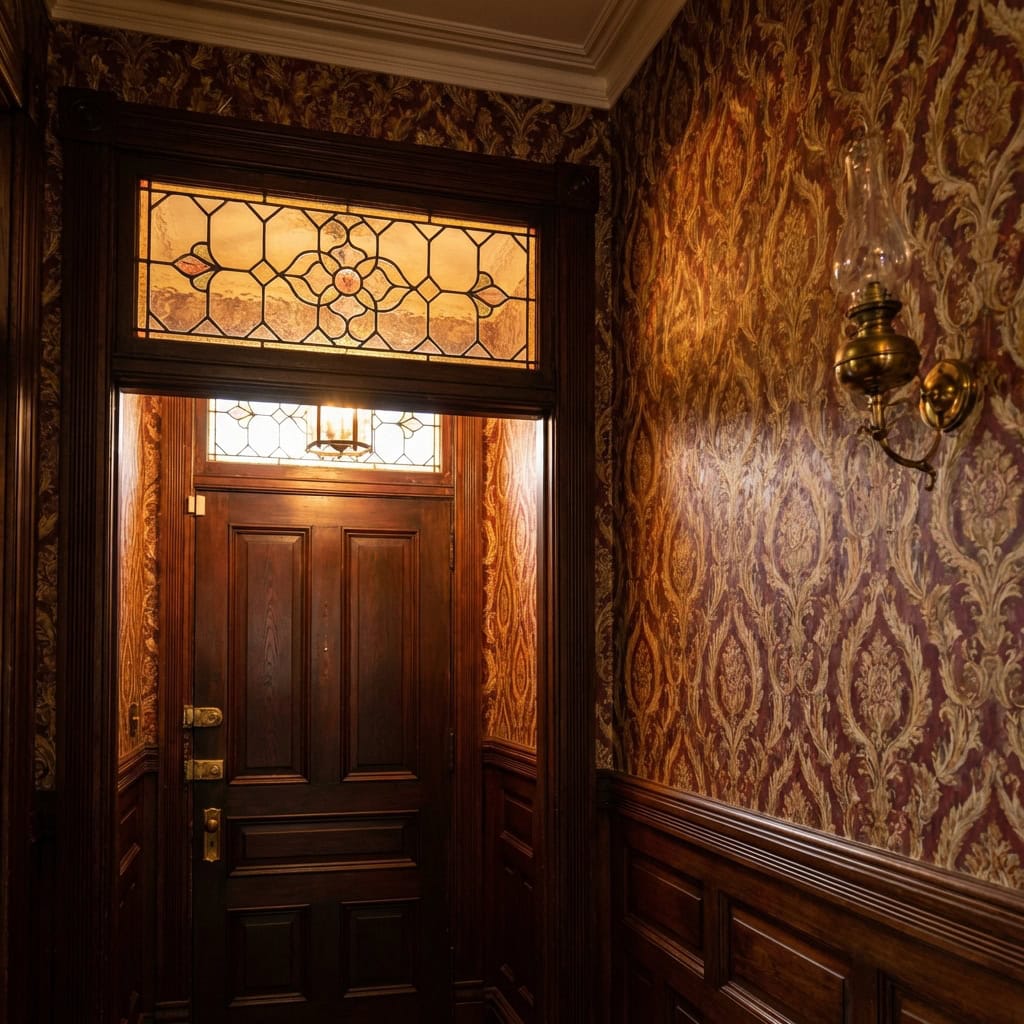
And arched doorways? Talk about a statement.
In older homes, you’ll find arched openings trimmed in thick, curved wood molding that had to be carefully shaped by hand — or later, steam-bent to follow the curve.
It’s the kind of detail that makes you pause in a doorway and look up.
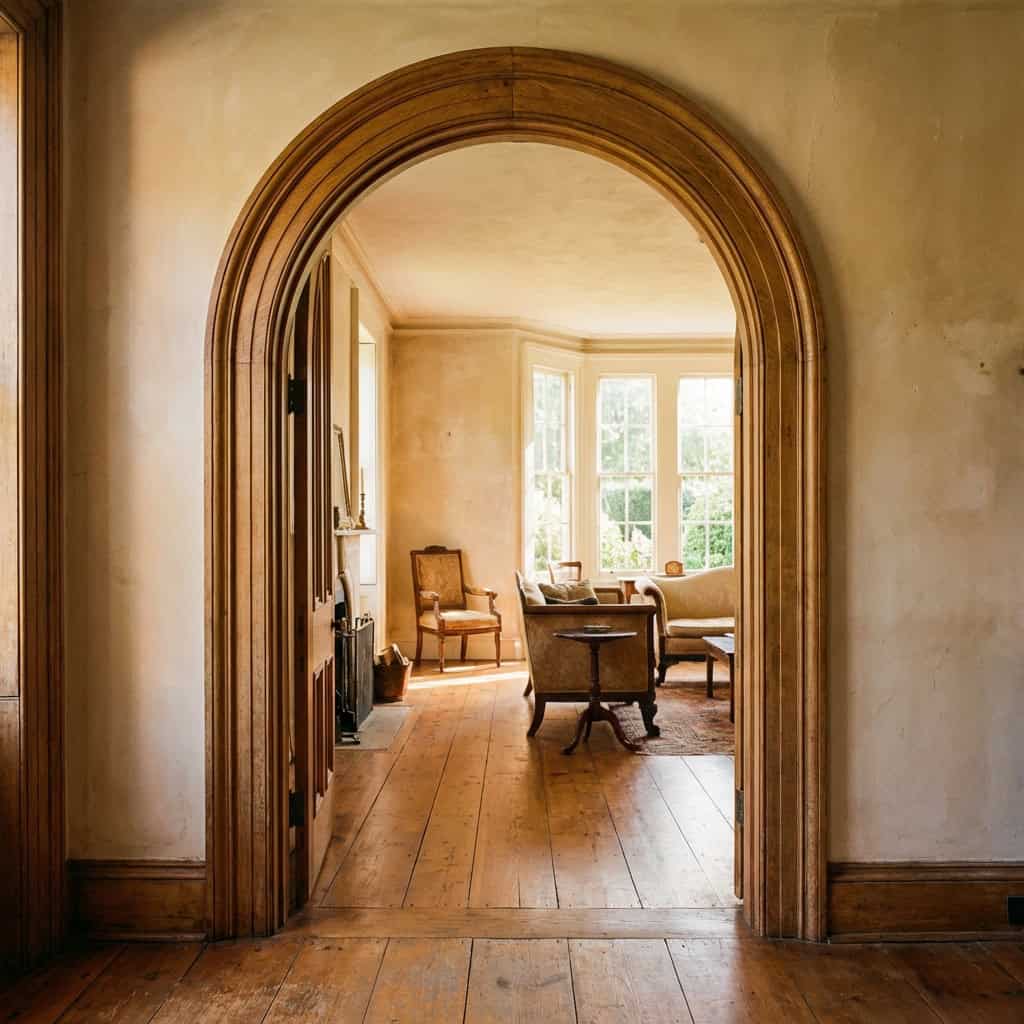
Modern builders rarely bother with archways because they’re more work.
But that extra effort is exactly what gives old homes their character.
11. Victorian Gingerbread & Exterior Trim
We can’t talk about old house woodworking without stepping outside.
Victorian homes are instantly recognizable from the street, and it’s almost entirely because of the woodwork.
That gorgeous gingerbread trim — the lacy, intricate patterns along the eaves, porches, and gable ends — was made possible by the scroll saw.
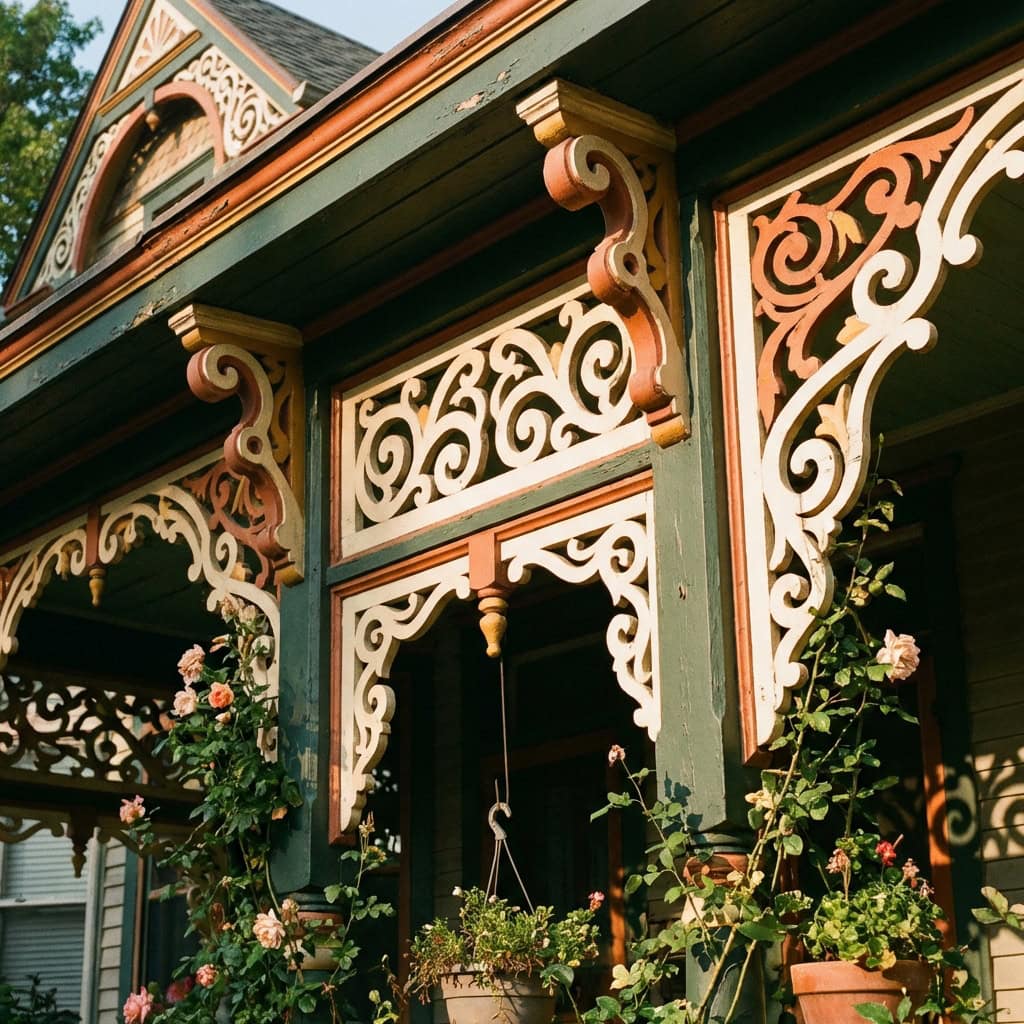
Before steam-powered machinery, this kind of detail would have taken ages to produce by hand.
But once the technology was there, builders went absolutely wild with it.
Spindlework porch railings. Decorative corbels.
Fan-shaped sunburst panels in the gable peaks.
Every element was cut from wood and assembled by hand.
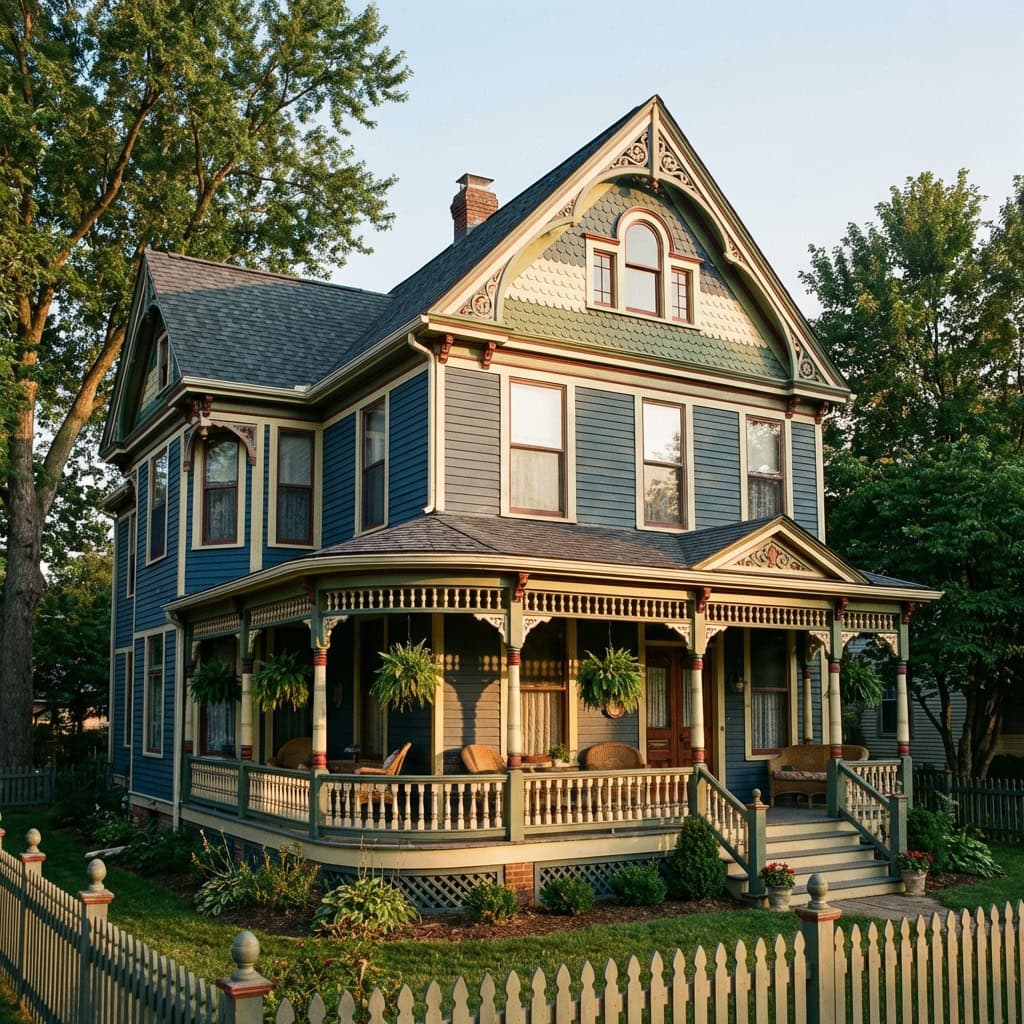
Even if the style feels over-the-top to some, you have to admire the craftsmanship. There’s nothing mass-produced about it.
12. The Craftsman Philosophy: Simple, Honest, Beautiful
I saved this one for last because it ties everything together.
By the early 1900s, people looked at all that Victorian ornamentation and said… enough.
The Craftsman movement was a return to simplicity. Let the wood be the star. Show the joinery. Use a finish that lets the grain shine through.
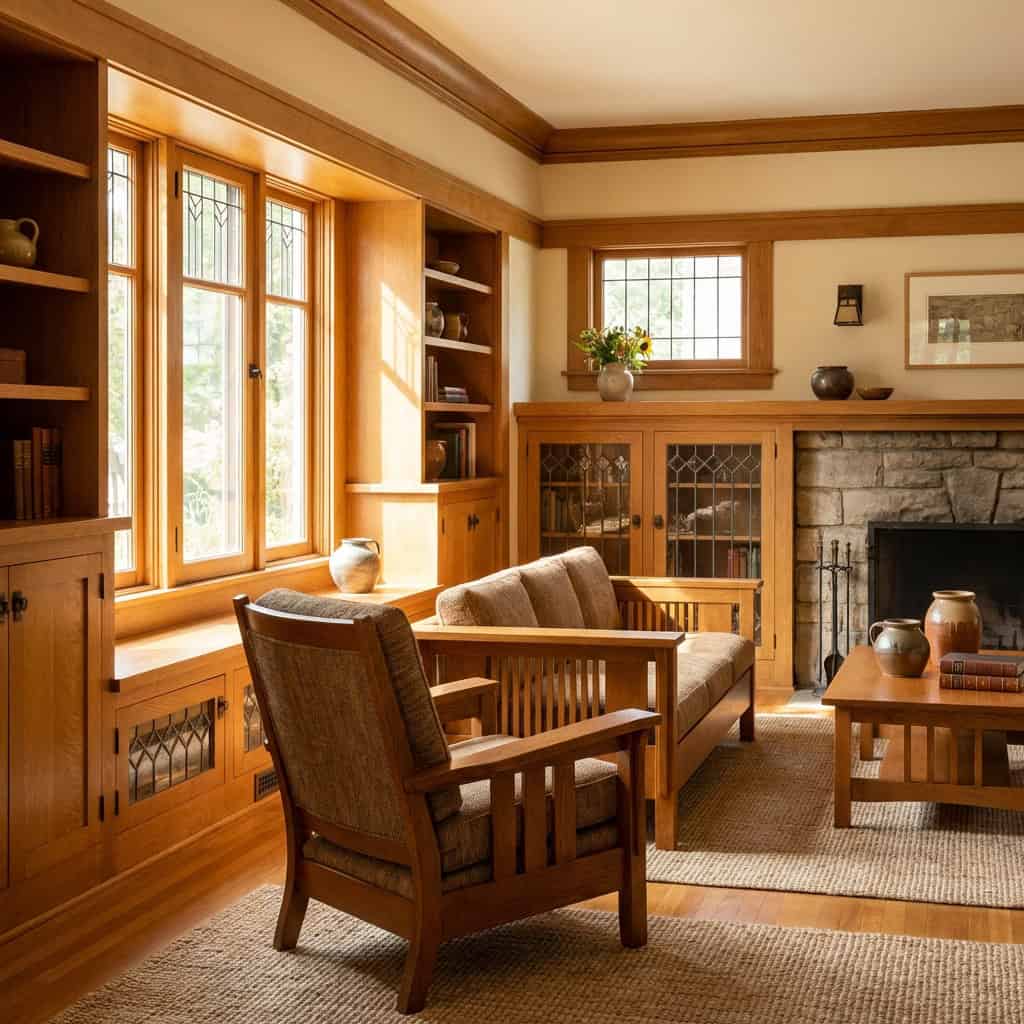
Quarter-sawn white oak was the wood of the Craftsman era.
That distinctive ray flake pattern, the stability, the warmth — it showed up everywhere.
Where Victorian builders painted and lacquered, Craftsman woodworkers used natural stains and hand-rubbed finishes.
That warm, amber patina you see on original Craftsman woodwork? That’s over a hundred years of a finish doing exactly what it was meant to do.
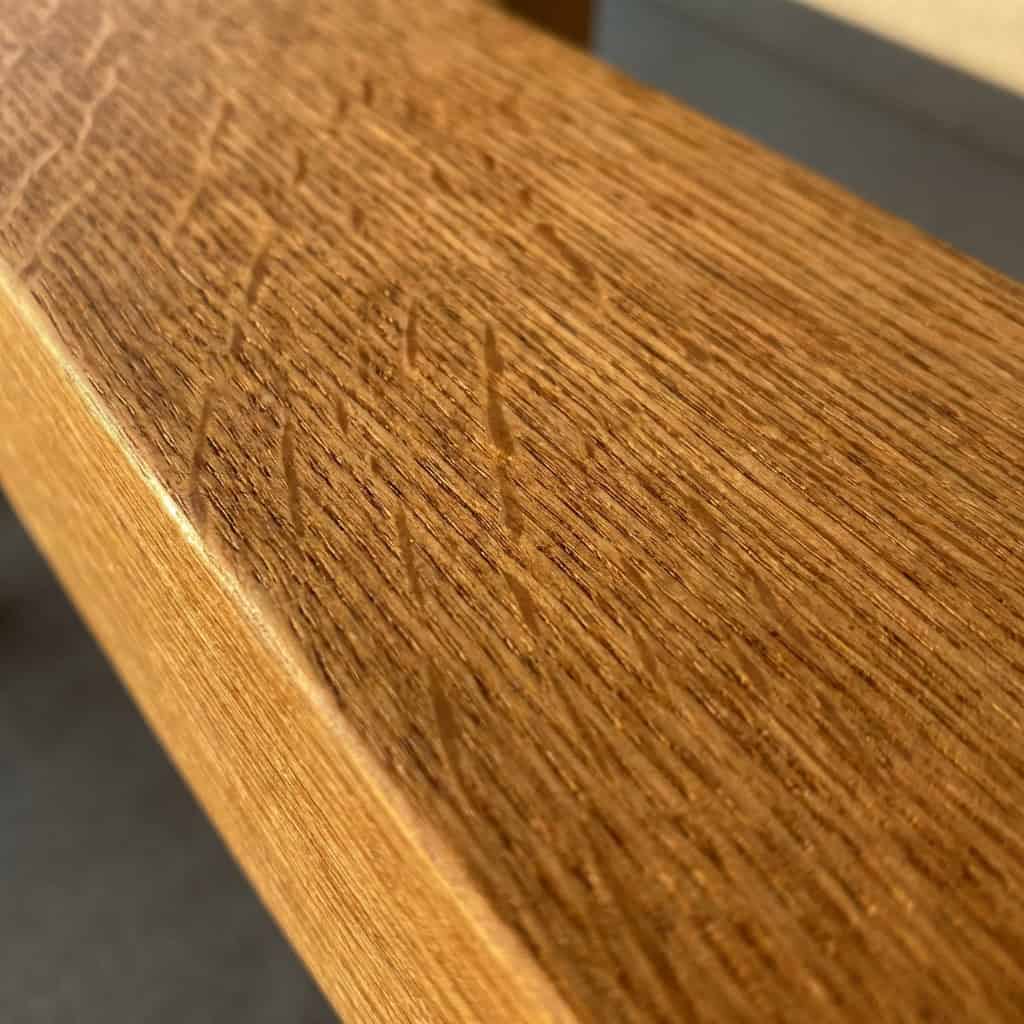
There’s a lesson in that for every woodworker: sometimes the simplest approach is the most beautiful.
What This Means for You
Here’s the beautiful part — and the reason I wanted to share all of this.
Every single technique that made those old homes feel so special is something you can do in your own shop today.
Hand-cut joinery. Thoughtful wood selection. Built-in cabinetry. A finish that lets the grain tell the story.
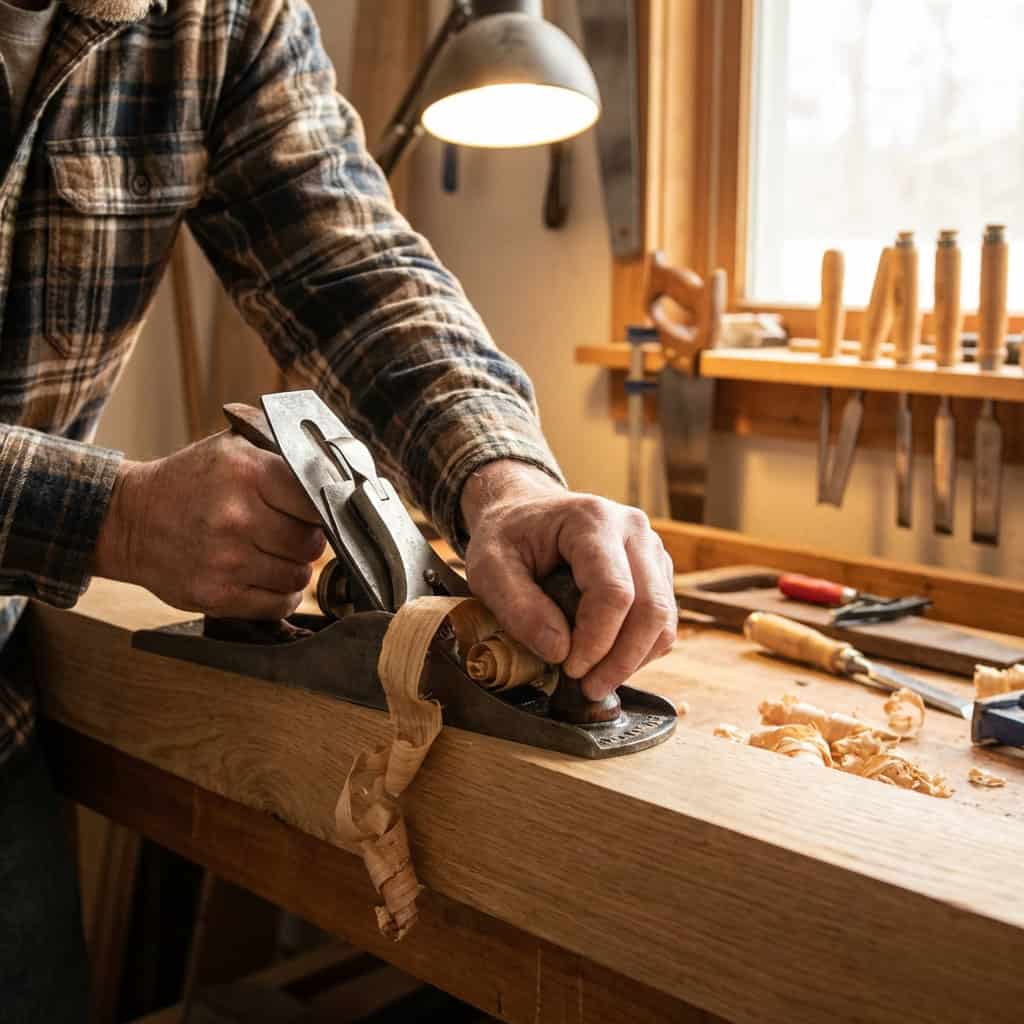
You don’t need a 200-year-old house to bring that kind of soul into your work.
You just need the same intention those old builders had: pick good wood, work it with care, and build something that’ll still feel solid and beautiful long after you’re gone.
That feeling you get when you walk into an old house?
You can build that into anything you make.
Pretty cool, right?