

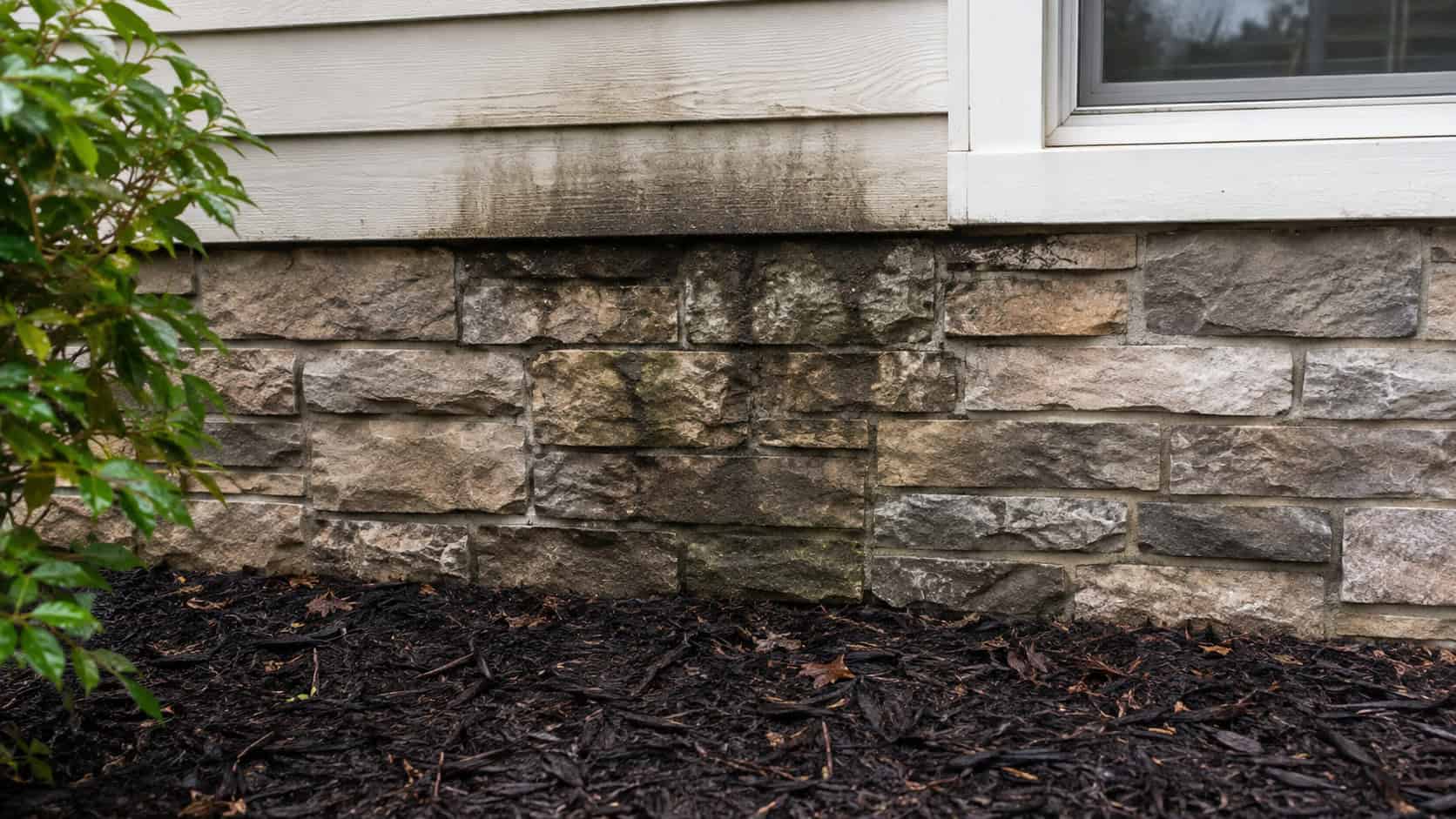
Siding is the single biggest surface on your house. It’s also the one most homeowners buy on price per square and a brochure photo.
Walk a neighborhood built in 1988 and you can read the mistakes from the sidewalk. Swollen butt joints. Chalky aluminum. A gable of faded scallops that no longer matches the wall below it.
None of that showed up on installation day. It showed up in year three, year five, year seven — right about when the warranty turned out to be prorated.
The pros who hang this stuff for a living choose differently on their own houses. Usually it’s not about a fancier product. It’s about the flashing, the gap, and the clearance to the dirt.
Here are 27 siding choices that come back to bite, and what gets installed instead.
1. Hardboard “Masonite” Lap Siding (and LP Inner-Seal)
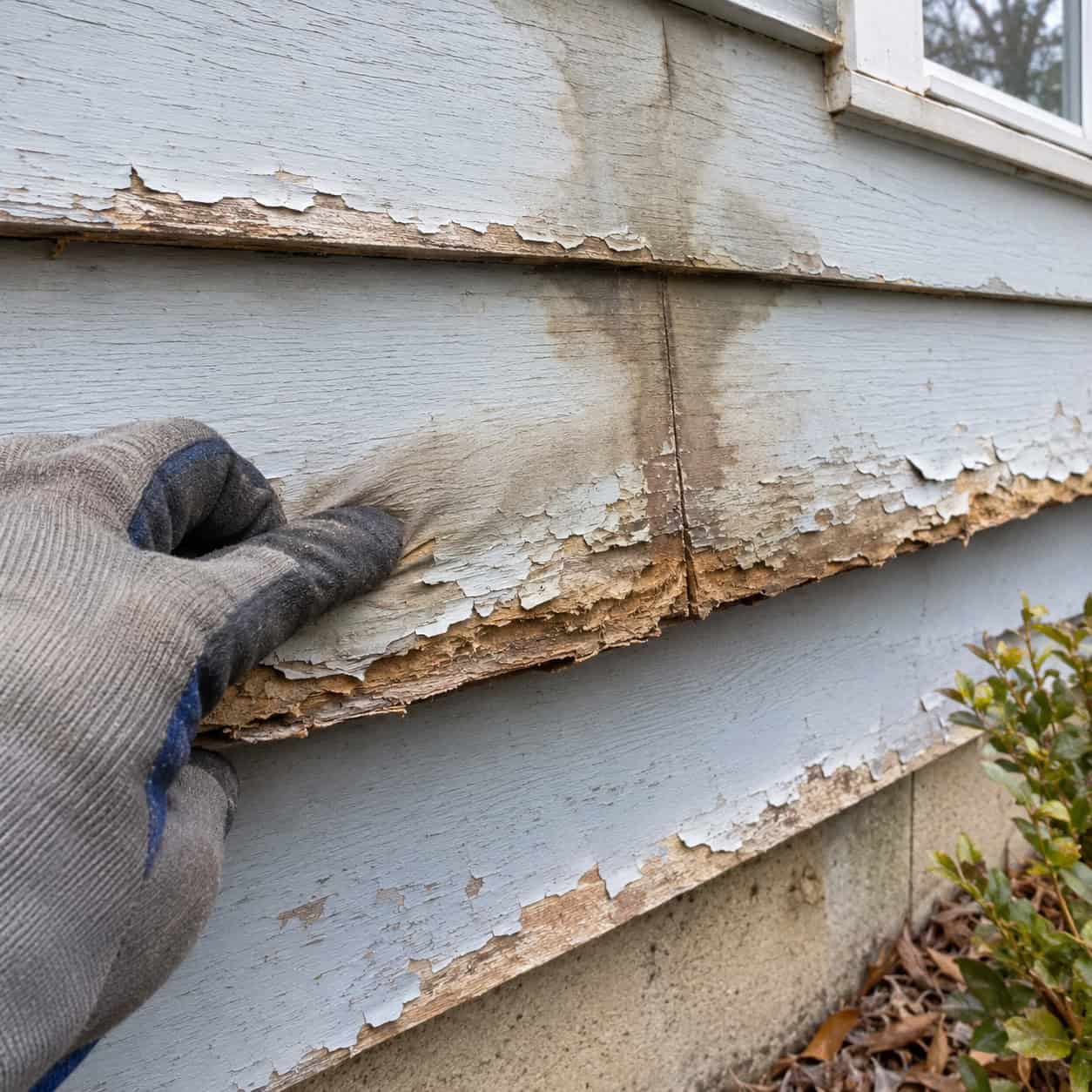
Pressed wood fiber sold as the siding that would never rot. It rotted.
Hardboard lap went up on millions of houses between roughly 1980 and 1996. Water found the unsealed butt joints and the cut field ends, the fiber swelled like a sponge, and the bottom edge of every course turned into a soft, mushroomed lip you can crush with a thumbnail.
An Alabama jury found Masonite’s hardboard siding defective in 1996 in a case that swept in homeowners nationwide, and Louisiana-Pacific’s OSB-based Inner-Seal product drew its own class action the year before. The Masonite litigation record is still the cleanest paper trail in American siding.
Don’t confuse it with today’s LP SmartSide. That’s a treated engineered product with a real track record, and plenty of pros hang it on their own walls. The 1980s stuff is a different animal entirely.
2. Builder-Grade .040 Vinyl

The thinnest vinyl on the rack has been the tract-housing default since the ’90s because it wins bids.
It rattles in a 30 mph wind. It oil-cans in August heat so the wall looks like a funhouse mirror at a low sun angle. Bump it with a ladder foot in January and it cracks instead of flexing.
Pros who like vinyl — and plenty do — buy heavier panel gauge with a deeper nail hem and a thicker locking leg. The upcharge per square is modest. The difference is a wall that looks fine at twenty-five years instead of embarrassing at five.
3. Re-Siding Over the Old Siding Instead of Tearing Off
This is the shortcut that hides every other problem on this list.
Going over the existing wall saves a full day of labor and a dumpster. The crew furs out, staples housewrap over the old clapboard, and hangs new panels. From the curb it looks like a new house.
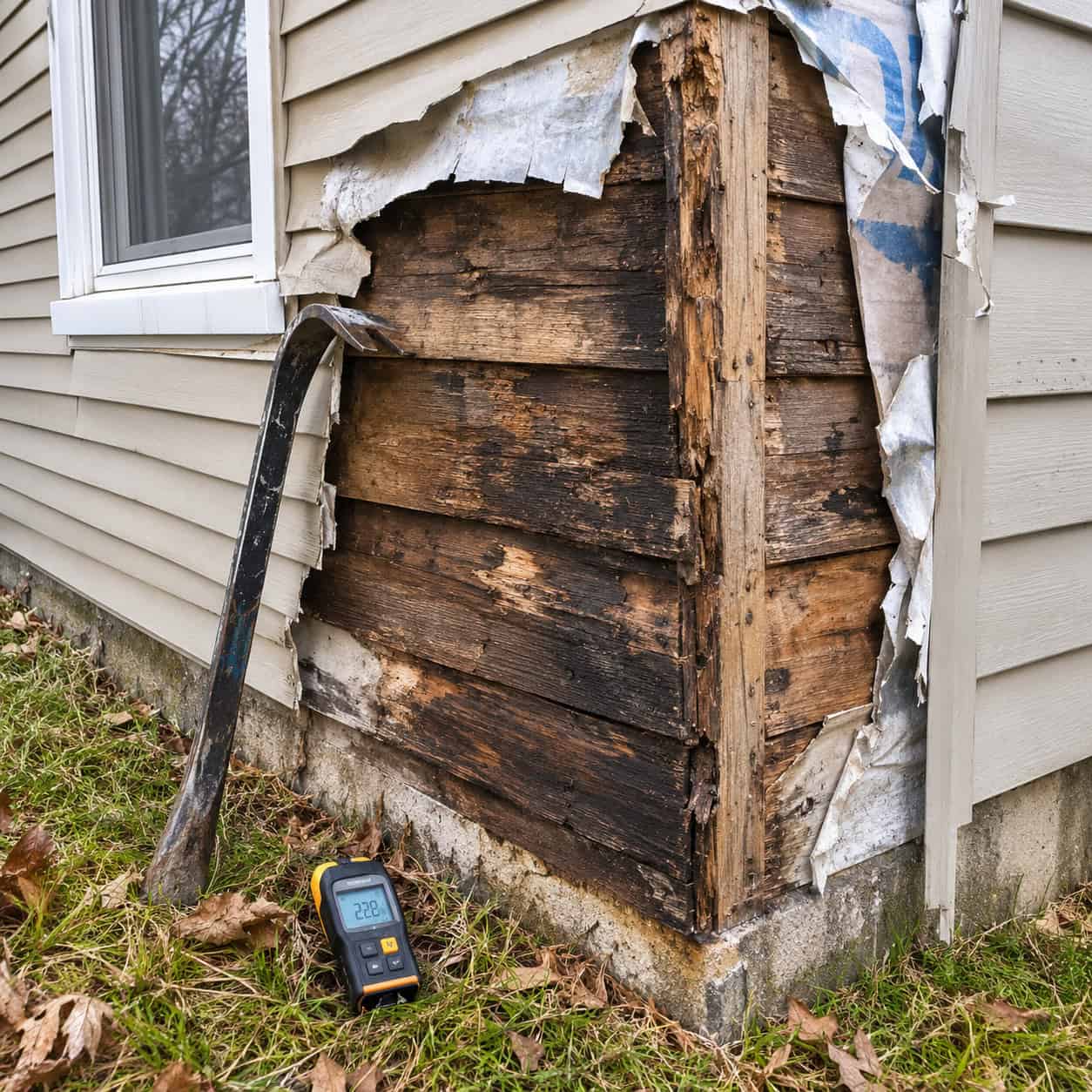
Behind it, the wall stopped drying outward. Restoration carpenters pulling vinyl off historic homes routinely find wet, spongy, black-stained clapboard underneath, with the sheathing going soft behind it — a point The Craftsman Blog has hammered for years. The old paint film plus the new plastic skin traps moisture between two impermeable layers.
Worse, nobody looked at the flashing. Window heads, door heads, deck ledgers, and band joists all got buried in their original condition, defects and all. The new siding doesn’t fix a reverse-lapped head flashing. It just makes it invisible for a decade.
If you bought a house with siding you suspect was installed over the original, check these before you spend a dollar on anything else:
- Pull the bottom course at one corner and look for dark staining or soft fiber on the original siding.
- Press hard on the sheathing below every window and at the band joist — any give means rot.
- Look for siding that sits unusually proud of the window and door trim, the tell of furring over an old wall.
- Check inside at the rim joist in the basement for water tracking or mineral staining.
- Run a moisture meter at the bottom of each wall on the weather side after a few wet days.
Tear-off costs more. It’s also the only way anyone finds out what’s actually going on. Pros tear off on their own houses every time.
4. Barrier EIFS (“Synthetic Stucco”)

Foam board, fiberglass mesh, base coat, acrylic finish. No drainage path whatsoever.
Barrier EIFS boomed on residential construction from the mid-1980s into the late ’90s because it looked like Mediterranean stucco at a fraction of the weight and labor. The system is genuinely watertight — as long as nothing ever cracks and every window is flashed perfectly.
Neither of those things happens. A hairline crack at a corner, an unflashed window head, a nail hole in the finish, and water gets in behind the foam. It cannot get out. The sheathing underneath goes to pulp while the exterior still looks brand new.
The crisis broke open in 1995 in New Hanover County, North Carolina, where inspectors found rot in a staggering share of EIFS-clad homes. Claims piled up. Some carriers stopped writing EIFS houses altogether, and the Insurance Journal coverage of the fallout is still worth reading before you make an offer on one.
The sick part is the diagnosis. You can’t see the damage. It takes invasive probe testing — drilling the finish at windows, penetrations, and the base of walls and reading moisture at the sheathing. A standard home inspection won’t catch it. Budget for an EIFS-specific inspection if you’re buying.
Drainable EIFS exists now, with a drainage plane and weeps behind the foam, and it works. But if the house went up between 1985 and 1999 with a stucco-looking skin that sounds hollow when you knock on it, assume barrier until proven otherwise.
5. Aluminum Siding

Rub your hand down a south wall of 1960s aluminum and it comes away dusty white. That’s the paint film breaking down — chalking, and it never stops.
It dents and remembers. A baseball, a hail event, a weed trimmer, a kid’s bike against the garage wall — every one of those leaves a permanent dimple, because aluminum doesn’t spring back.
It’s also loud. Hail on aluminum sounds like someone emptying a coffee can of marbles onto the roof.
Most readers over fifty grew up in a house wrapped in it. Almost nobody chooses it twice.
6. T1-11 Plywood and OSB Sheet Siding

T1-11 was a 1960s cost breakthrough: sheathing and siding in one 4×8 sheet, grooved to read as board-and-batten from the road.
It fails in three predictable places. The bottom edge, where cut end grain drinks splash-back. The grooves, where paint film is thinnest and water sits. And the horizontal joints between sheets, where almost nobody installed the required Z-flashing.
Once a plywood face checks or an OSB panel starts to delaminate, you’re done — there’s no filling it. JLC has walked through the repair options, and most of them end at “replace the sheet.”
It still has a place on a shed or a detached garage. On a house you plan to keep, it’s a maintenance treadmill.
7. Manufactured Stone Veneer Run Straight to the Ground
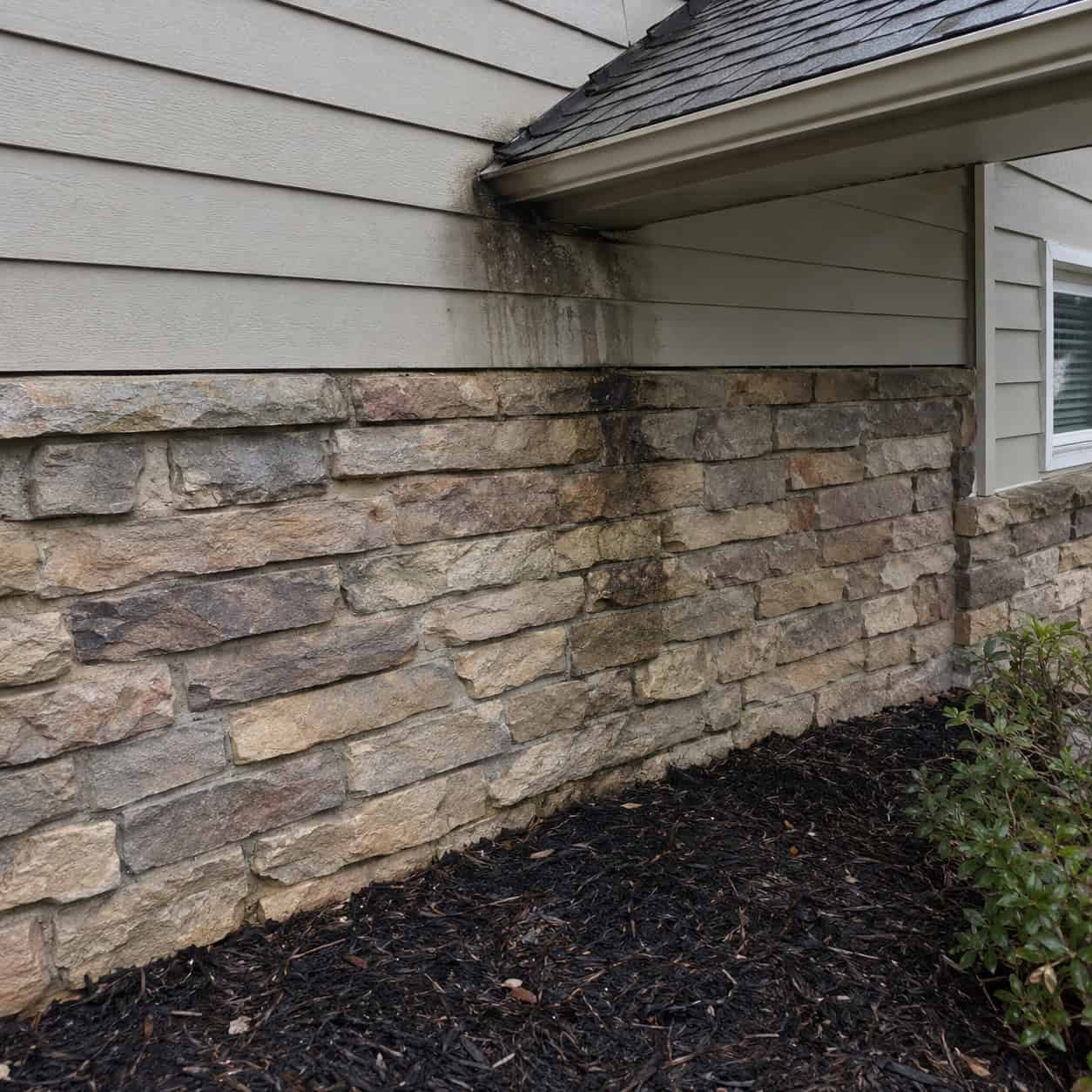
Adhered stone veneer went on half the houses built in the 2000s. Inspectors photograph the same four failures house after house.
No weep screed at the base. No kick-out flashing where a roof meets a wall. No casing bead at windows and doors. And the stone run right down into the mulch and soil instead of stopping with clearance.
Real masonry has an air space and weeps — water that gets behind the brick drains out the bottom. Adhered veneer has mortar bonded directly to lath over the drainage plane, so there’s nowhere for water to go but into the sheathing. Firms like ABI Home Services have documented the rot pattern repeatedly: stone looks perfect, OSB behind it is black.
The kick-out is the one that does the most damage fastest. Where a roof edge dies into a wall, you need a diverter kicking runoff out into the gutter. Leave it off and the whole roof’s water drains down inside the wall at one spot. That’s the corner where you find mushrooms.
What to look for from the ground: a visible metal weep screed with its drainage holes above grade and above any patio or walk, a sealant joint at windows rather than mortar jammed into the gap, and a real kick-out at every roof-to-wall intersection. If you can’t see daylight under the stone, something’s wrong.
8. Finger-Jointed Primed Pine Trim and Siding

Dead straight, cheap, factory-primed. Perfect on day one.
Then every glue joint in that board telegraphs through the paint as a faint diagonal line, and about two summers later the lines open up. South and west walls go first — the sun-and-rain exposure is brutal on butt-glued scarf joints.
Pros use finger-joint indoors and only indoors. Outside it’s clear cedar, solid cellular PVC, or fiber cement trim on anything that takes weather.
9. Deep-Tinted Dark Vinyl
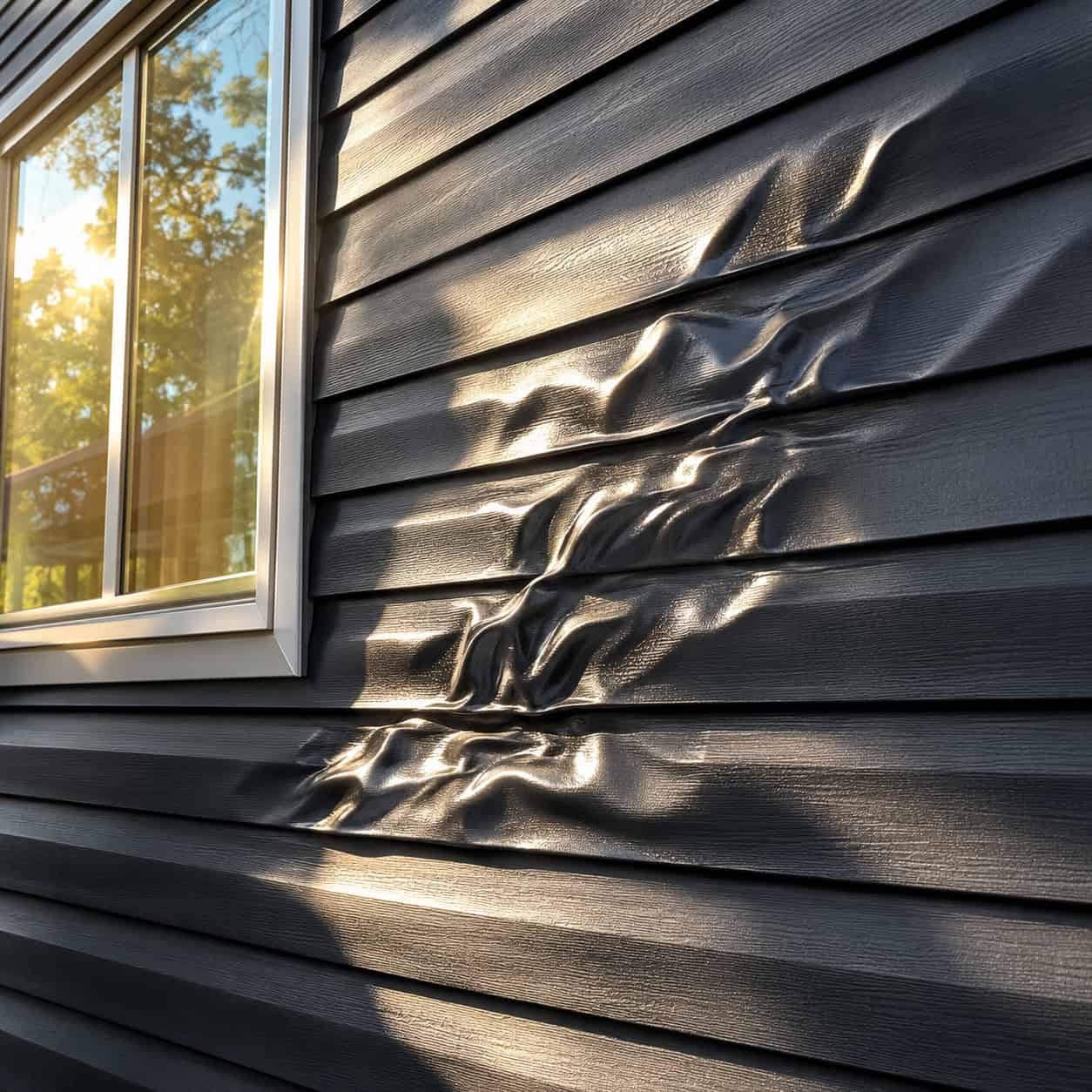
Dark vinyl became the look around 2012. Physics didn’t get the memo.
A black panel on a sun wall runs dramatically hotter than a beige one, which accelerates fade and distortion. Vinyl starts to soften around 165°F — well inside what a dark panel can reach in direct Texas or Arizona sun.
Then there’s the reflection problem. A low-E window on your house or your neighbor’s can concentrate sunlight into a beam measured above 200°F, laying a diagonal scar of melted, warped siding across your wall. GreenBuildingAdvisor documented the mechanism years ago, and both the window maker and the siding maker will tell you it’s the other guy’s problem.
Want dark? Hang steel or fiber cement and get a real color.
10. Leaving (or DIY-Ripping) Asbestos-Cement Shingle Siding

Those chalky gray shingles with the wavy bottom edge went up from the 1920s into the 1970s. They’re nearly indestructible — fireproof, rot-proof, insect-proof. That’s exactly why so many are still on houses a century later.
Intact, painted, undisturbed asbestos-cement shingles are not an emergency. The fibers are bound in cement. Left alone, they sit there doing their job.
The regret is the Saturday somebody decides to pull them off with a pry bar and a shop vac. Breaking, sanding, power-washing, or sawing them is what puts respirable fibers into the air — and into the soil around the foundation, where they stay.
Do this instead. Test before you touch: a certified lab will run a bulk sample for a modest fee. If it comes back positive and you want it gone, hire a licensed abatement contractor who will wet the material, hand-remove it intact, bag it, and manifest the disposal. That’s not a DIY category, and in most states it isn’t legal as one either.
The middle path a lot of pros take on their own houses: leave it, keep it painted, and furr out and side over it with a proper rainscreen so nothing gets broken. You lose the historic look. You keep your lungs and your topsoil.
Never pressure-wash it. Never dry-sand it before painting. Never let a roofing crew toss it in an open dumpster.
11. Foam-Backed “Insulated” Vinyl Sold on R-Value

The pitch is energy savings. The contoured EPS backer adds somewhere around R-2 to R-3 to a wall assembly.
Run the math. A few inches of blown cellulose across your attic floor buys more comfort for a fraction of the cost, because that’s where the heat is actually going.
The backer does make panels feel more solid and quiets the rattle, which is a legitimate upgrade. But it also locks you into one profile forever — a damaged panel ten years out needs the exact contoured match, and good luck. Buy it for the rigidity if you want. Don’t buy it for the R-value.
12. Cedar Shakes Nailed Straight to Housewrap
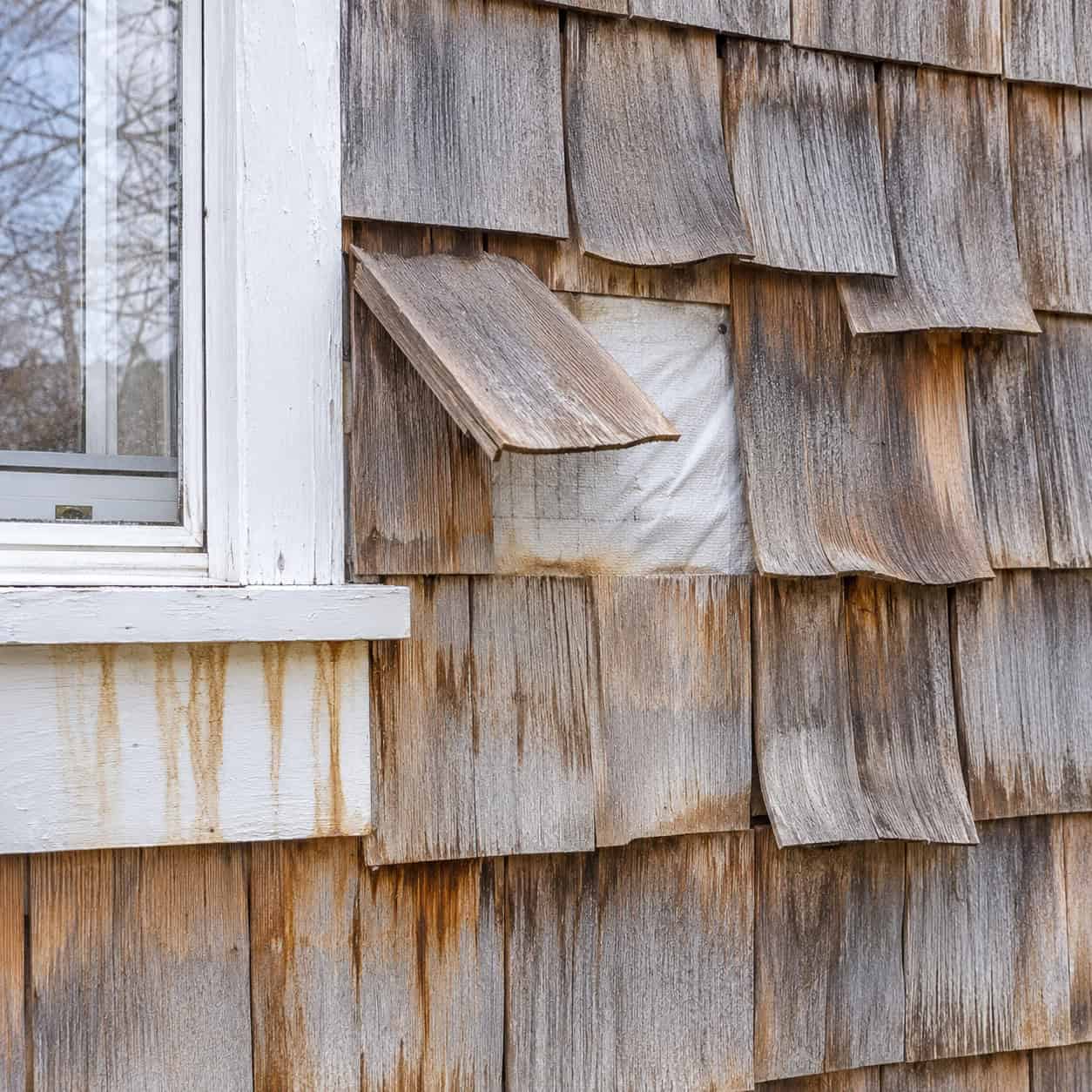
Wood has to dry from both faces. Nail shakes flat against housewrap and the back face never dries.
Within a handful of seasons you get cupping, curling at the butt, and brown tannin bleed streaking down whatever’s below. The finish fails on the backside first, where nobody looks, which is why the front looks fine right up until the shake splits.
The USDA Forest Products Laboratory has been explicit about this for decades — its Wood Siding: Installing, Finishing, Maintaining guidance treats back-priming and ventilation as basic requirements, not upgrades.
Furring strips or a plastic mesh rainscreen behind the course. Back-prime every piece. That’s the whole fix, and it costs almost nothing.
13. Using Caulk as the Waterproofing

Walk a modern fiber cement job and look at the butt joints. If they’re caulked tight with nothing behind them, that wall has a clock on it.
Caulk looks perfect for two summers. Then it loses adhesion on one side and the joint becomes a funnel pointed straight at the sheathing — worse than no caulk at all, because now water gets in and can’t get out.
Pros install a flashing strip behind every butt joint, leave the joint loose, and let the boards move. Here’s the difference in practice:
| Caulked Butt Joint | Flashed Butt Joint | |
|---|---|---|
| Water path | Into the sheathing | Drains to the course below |
| Movement | Restrained, then torn | Free to expand |
| Maintenance | Re-caulk every 3-5 years | None |
| Realistic lifespan | About 10 years | 40 years |
Same boards, same crew, same day. One detail decides which wall you’re looking at in 2060.
14. Insulbrick and Asphalt Faux-Brick Siding
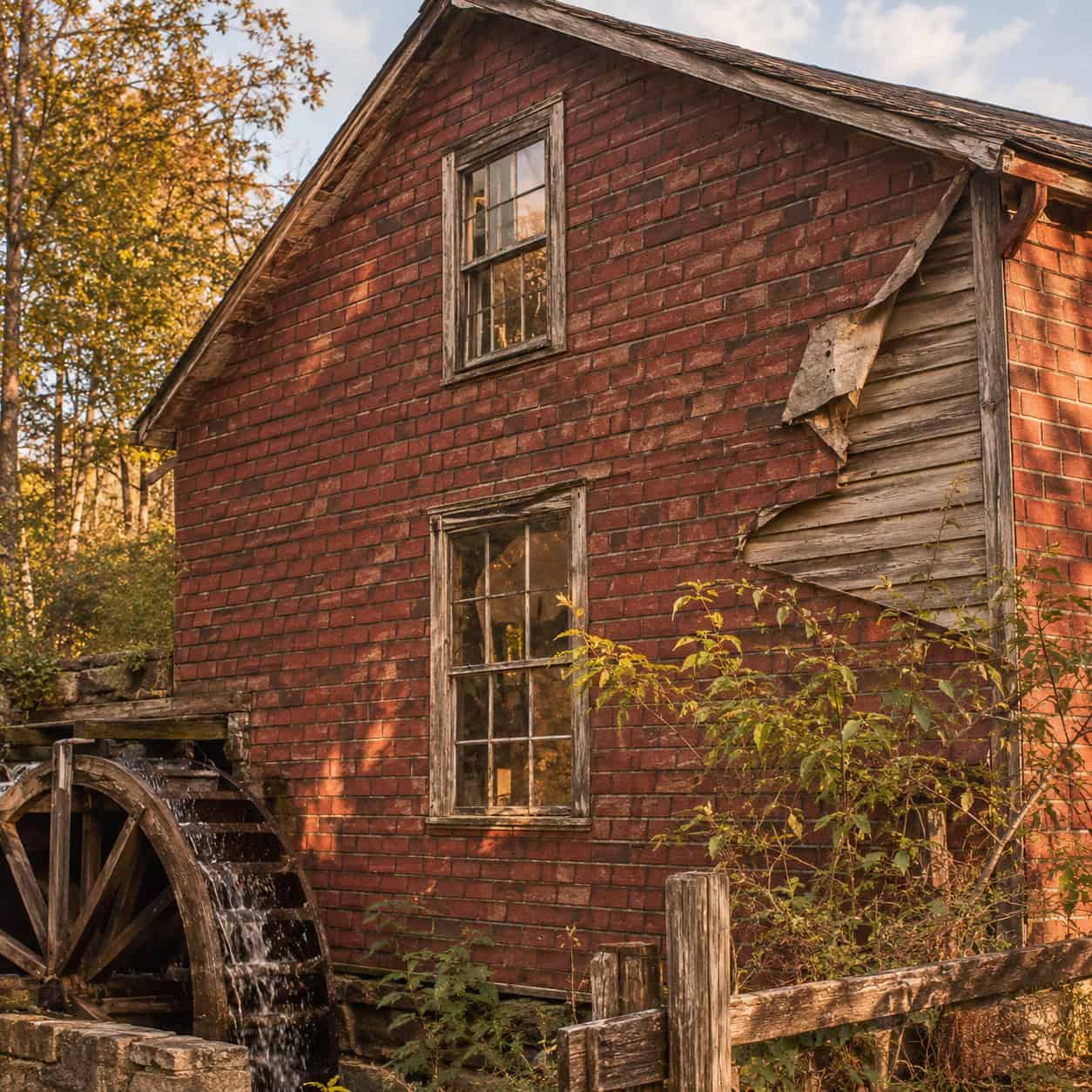
Rolled asphalt sheet, printed and embossed to look like red brick, nailed over the original clapboard. Depression-era and wartime cladding for people who couldn’t afford brick and couldn’t afford paint either.
You still see it on mill houses and farm outbuildings across the Rust Belt and Appalachia. Up close it fools nobody — the “bricks” repeat on a pattern and the corners are folded like wrapping paper.
Appraisers flag it. Some insurers ask about it, since it’s an asphalt product and burns. And underneath it, almost always, is original wood clapboard that’s been sitting in the dark for eighty years.
Sometimes that clapboard is in remarkable shape. Sometimes it isn’t. Nobody knows until a board comes off.
15. Siding That Touches the Ground
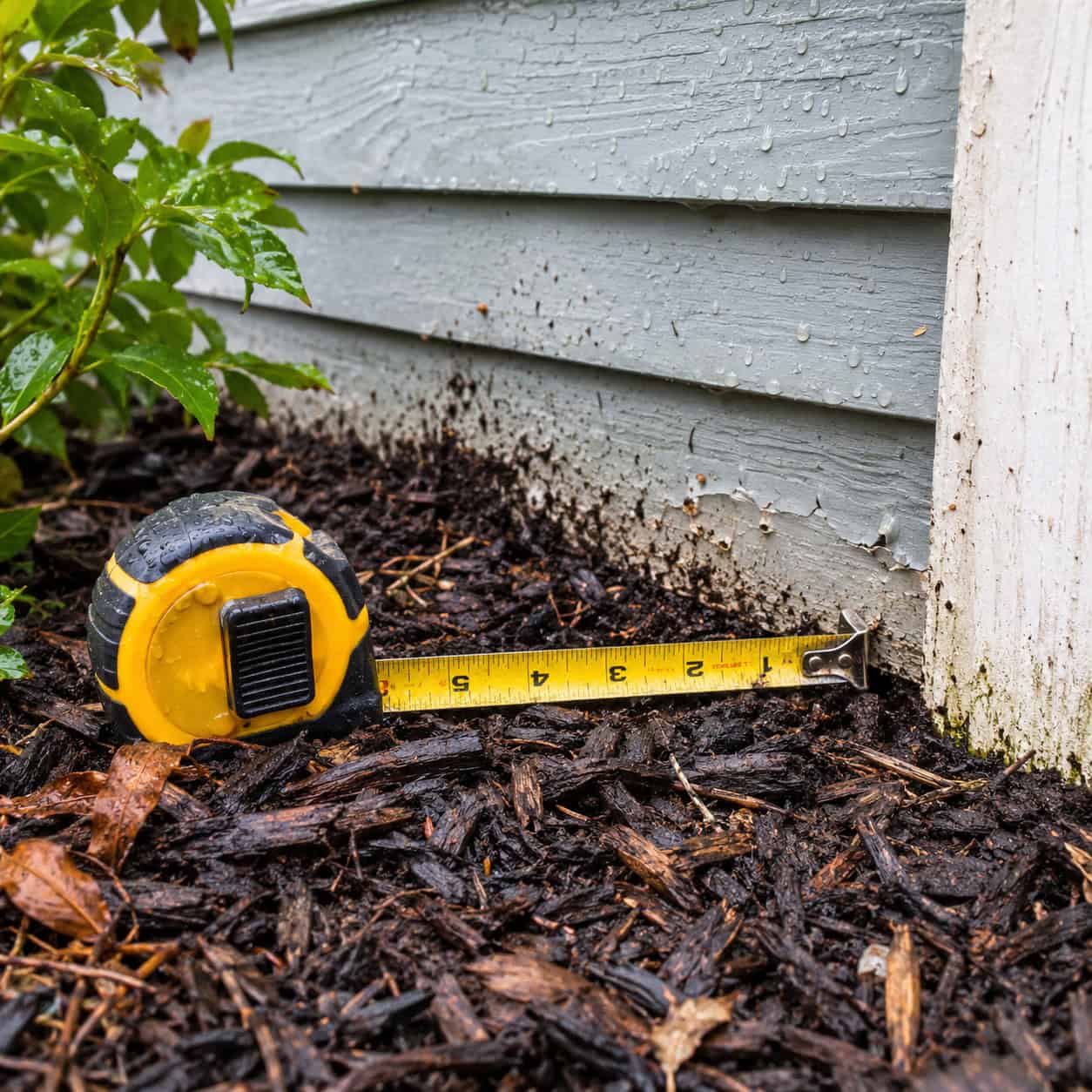
Every material on this list fails at the bottom course first, and the reason is always the same.
Rain hits the dirt, splashes back up loaded with soil, and soaks the lowest six inches a hundred times a year. Bury the siding in mulch and you add constant wicking on top of that.
The rule: six inches of clearance to soil, two inches to hard surfaces like a patio or walk. It’s in the code and in every manufacturer’s instructions.
It’s also the first thing that gets skipped when the grade is sloppy and the crew wants to stop cutting. Go look at your own house right now — it takes thirty seconds.
16. The Door-to-Door “Seamless Steel, Lifetime Warranty” Pitch

Seamless steel siding is a good product. Roll-formed on site, no butt joints, holds color, shrugs off hail.
The deal is the problem. The knock at the door, the two-hour kitchen-table presentation, and the number that drops forty percent if you sign tonight — that’s a sales model, not a bid.
Read the warranty before anything else. Most are prorated, so the “lifetime” coverage pays pennies at year fifteen. Many are non-transferable, so it dies the day you sell. And the in-house financing frequently carries a markup baked into the contract price rather than the rate.
Get two local bids on the same spec. If the door-to-door number still wins, sign it. It usually doesn’t.
17. Vinyl in Hail Country

In Nebraska, Kansas, Oklahoma, Colorado’s Front Range — the storm belt — vinyl behaves differently than it does in the brochure.
Cold vinyl doesn’t dent. It shatters. A 40°F spring hailstorm with 1.5-inch stones punches clean holes and cracks panels edge to edge, and the damage reads as a scatter of bright white stars across the wall.
Then the insurance math gets ugly. Your carrier writes a check for the damaged elevation only. You go to match the color and discover the line was discontinued in 2019, so now you’re arguing about whether a two-tone house constitutes a covered loss. Some policies have matching clauses. Many don’t.
Do that twice in eight years and you’re looking at a non-renewal letter.
Pros in those zip codes hang steel or fiber cement and stop thinking about siding. Several carriers will cut the premium for it. That discount compounds for as long as you own the house.
18. PVC and Cellular Composite Installed Tight
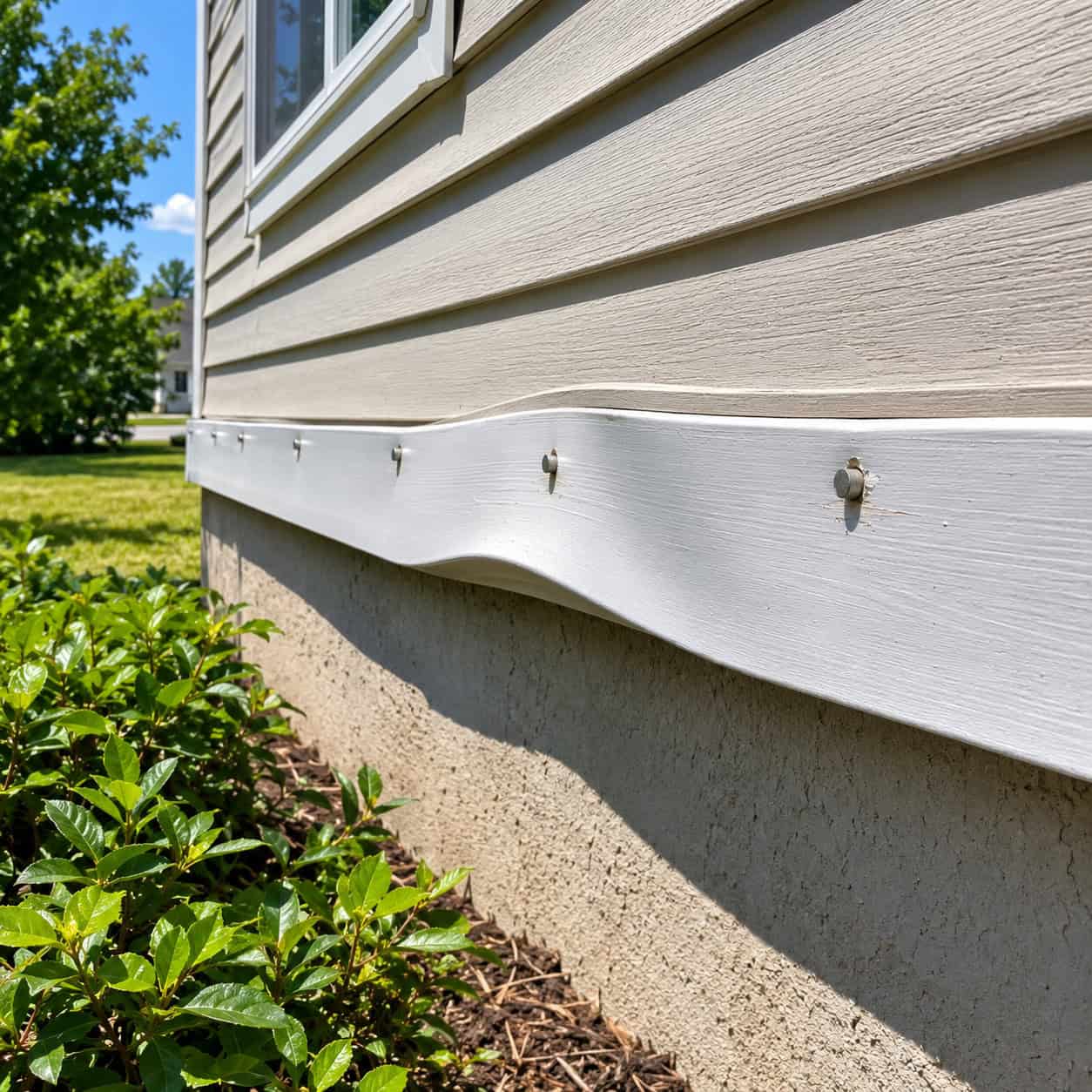
Cellular PVC moves. A 16-foot trim board can grow more than a quarter inch between a January night and a July afternoon.
Install it butted tight, with undersized fasteners or the wrong adhesive, and that movement has nowhere to go. By the second summer the run buckles into visible waves and the nails back out in a line.
The product didn’t fail. The install did. Gap per the manufacturer’s temperature chart, use PVC-specific cement on joints, fasten into framing with the right length, and the same board sits flat for thirty years.
19. Combustible Cladding in a Wildfire Zone
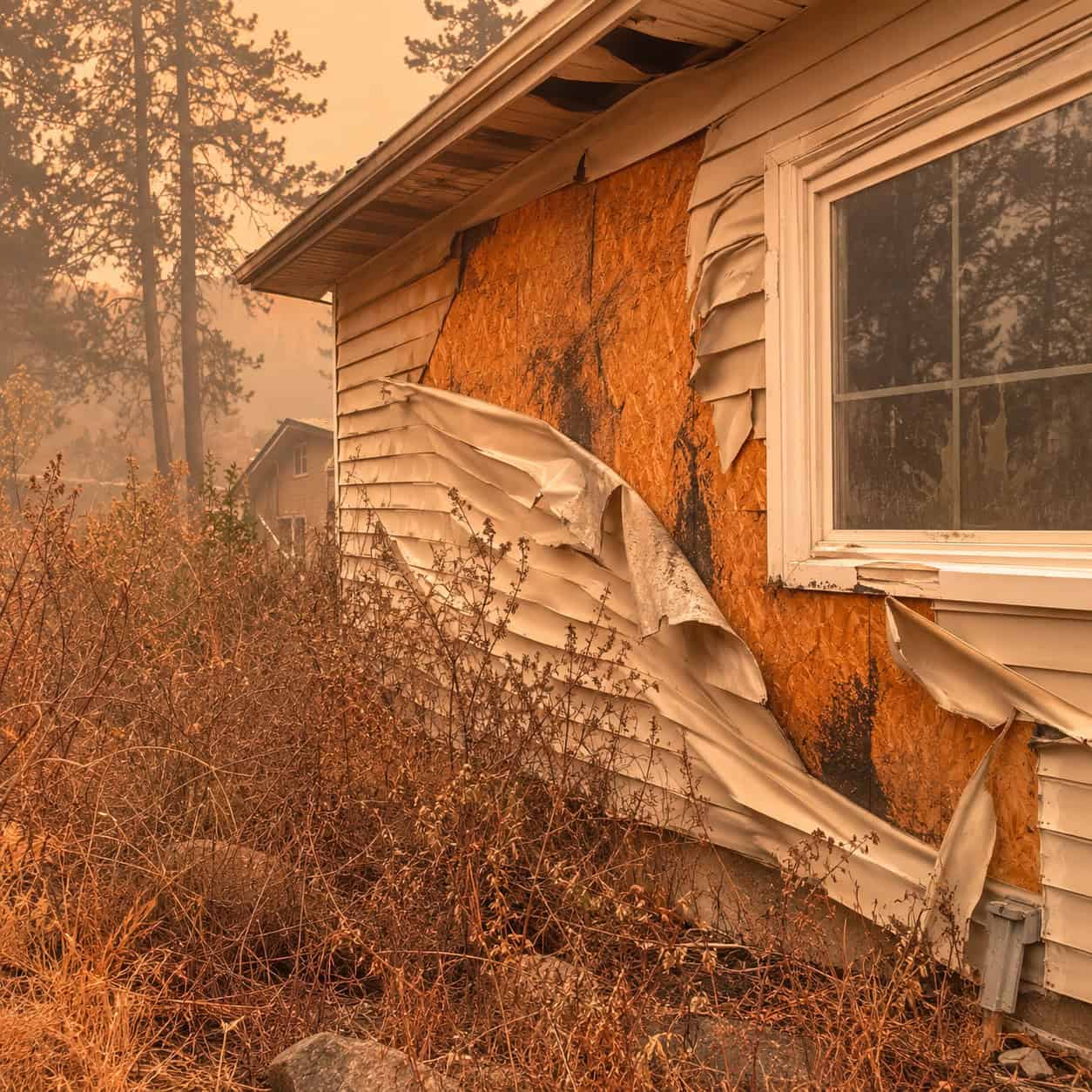
If you live in the wildland-urban interface, siding is a fire decision before it’s an aesthetic one.
Vinyl doesn’t need flame to fail. Radiant heat from a fire a hundred feet away softens it, and the panels sag and drop off the wall in sheets. That exposes bare OSB sheathing to the next wave of embers — and embers, not the flame front, are what destroy most houses in these events.
Untreated cedar shakes are worse. They’re kindling, cupped and checked and pre-split, with air gaps behind each course that draw embers in like a chimney.
California’s Chapter 7A requirements and the IBHS Wildfire Prepared Home standard both push the same direction: noncombustible or ignition-resistant wall assemblies, a clean five-foot zone at the foundation, and ember-resistant vents. Insurers in California, Colorado, and Oregon are now underwriting on exactly these details.
Fiber cement, stucco over a drainage plane, and steel are the three answers. Fiber cement is the value pick — it’s a cement board, it doesn’t burn, and it costs a fraction of what a non-renewal costs you.
The six inches at the bottom matters more here than anywhere. Noncombustible at grade, nothing stored against the wall, no mulch bed touching the cladding.
20. A Trim Package Drowning in J-Channel

You can spot a re-sided house from three doors down. It’s the windows.
Every opening reduced to a flat plastic U-channel, no casing, no sill, no depth. The window looks like it was punched into the wall rather than built into it.
That one detail is what makes a perfectly solid house read as cheap forever, and it’s permanent — you can’t add trim later without pulling siding.
Pros build real casing out of PVC or fiber cement, flash it, and run the siding to it. The material cost difference across a whole house is a few hundred dollars. The curb appeal difference is enormous, which is also why appraisers and designers notice it before anything else. Readers who care about this should also look at how trim and molding choices age over five years inside the house.
21. Skipping the Water-Resistive Barrier

Siding is a rain screen, not a seal. It sheds the bulk of the water and lets some through. Always has.
The water-resistive barrier behind it is the actual wall — the layer that takes whatever gets past the cladding and drains it back out. Purdue’s extension guidance on exterior finishes for wood treats that assembly as the foundation of the whole system.
Three versions of the same failure show up constantly behind failed siding: no wrap at all, wrap lapped backwards so the upper course tucks behind the lower, and wrap shredded by the siding crew and never patched.
It’s the most common hidden defect in the trade and the cheapest to get right. If anyone is siding your house, be there the day the wrap goes on.
22. Chasing the Matte-Black Farmhouse Trend
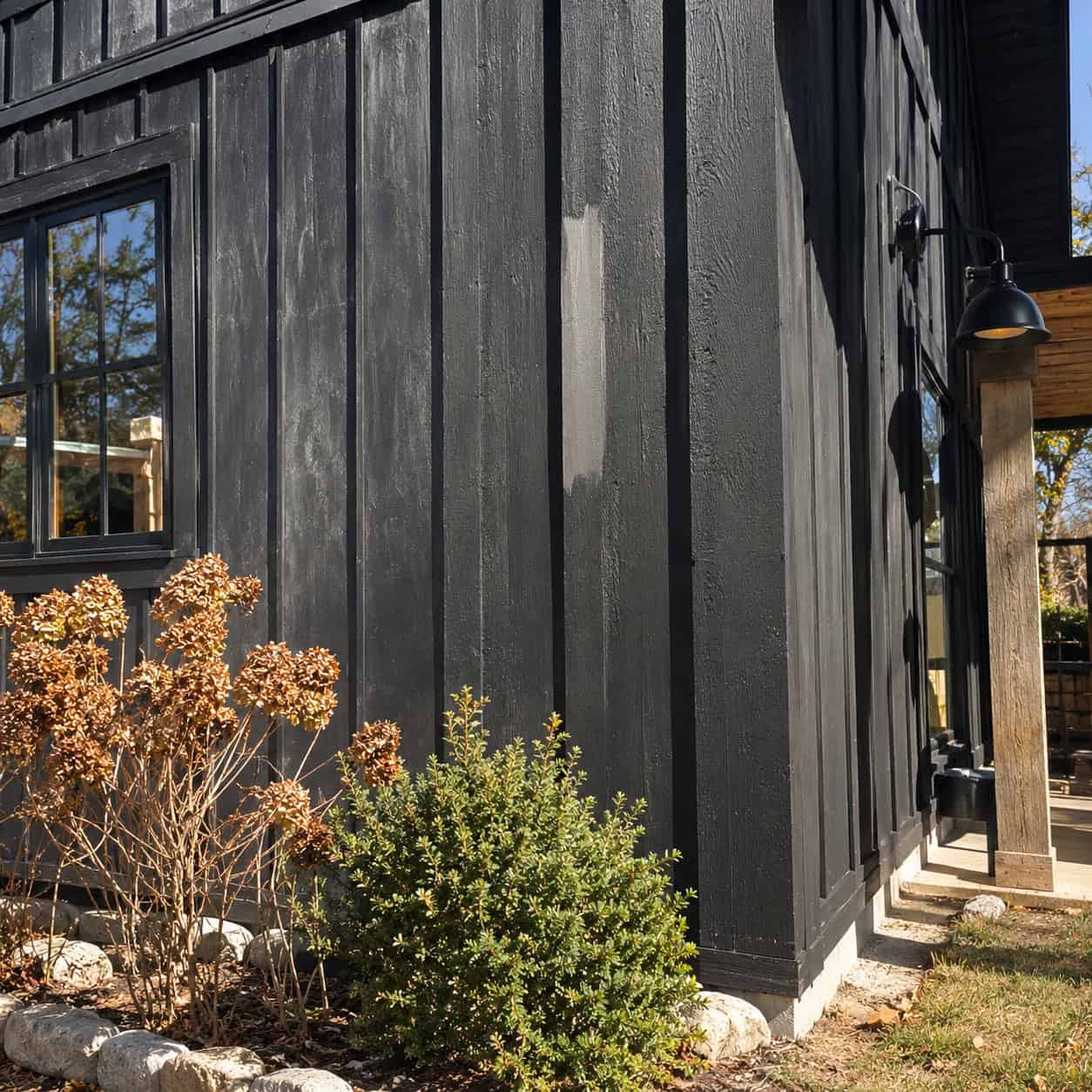
Black board-and-batten took over Instagram around 2016. It will date exactly as hard as almond vinyl did.
Beyond the trend risk, there’s the heat. A black field color on a west wall runs hot enough to accelerate fade, stress fasteners, and make every touch-up spot read as a different shade of black. Matte finishes show chalk and dust faster, too.
Pros keep the body of the house neutral and put the personality somewhere cheap to change. A front door. Shutters. A porch ceiling.
Repainting a door takes an afternoon. Re-siding a house takes a loan.
23. A Color Line With No Attic Stock

Manufacturers retire siding colors constantly. Your color will be gone before your warranty is.
Even if the SKU survives, it won’t match. Five years of UV on the wall shifts the panel enough that a fresh piece next to it reads as a patch from the street — same product, same color code, visibly different.
Buy one or two extra squares the day the order goes in. Stack them flat in the garage out of sunlight, with the lot number written on the back.
It’s the cheapest insurance policy in homebuilding and almost nobody buys it.
24. Aluminum-Wrapped Original Trim, Soffit, and Fascia

Here’s the one that hurts.
Carved brackets, beadboard porch ceilings, molded fascia with a real crown profile, cornice returns someone cut by hand in 1908 — all of it wrapped in bent coil stock by a crew with a brake truck, because the owner was promised maintenance-free.
The wrap doesn’t stop the rot. It hides it. Water gets behind the metal at a seam or a nail hole, sits against the wood, and keeps working in the dark where no one can see the paint bubble and sound the alarm. Strip a wrapped fascia on a 1920s house and you’ll often find the top third gone to punk.
And the details underneath are usually fine. Old-growth fir and cedar, tight-grained, with a hundred years left in it if someone would just scrape and paint. The Forest Products Lab’s Wood Handbook chapter on finishing lays out exactly how long a properly primed and painted exterior wood surface holds up — it’s a long time.
Pros who own old houses strip the aluminum, fix the wood, and paint it. It’s three weekends and it brings a house back from generic to unmistakable. Those architectural details nobody builds anymore are still under there on a lot of houses.
25. Vinyl Scallop and Shake Accent Panels
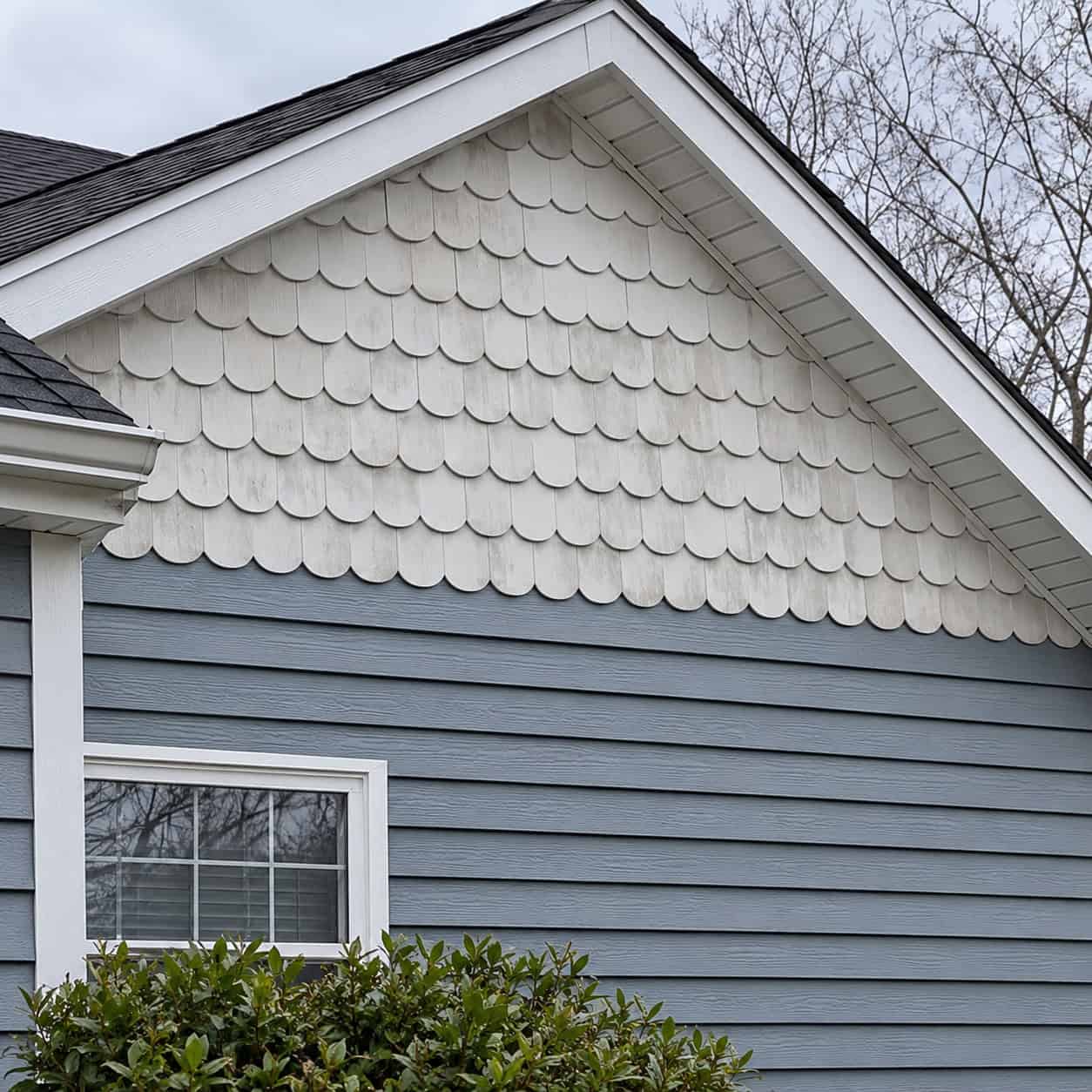
The gable decoration of 1995 to 2012. Scallops, staggered shake, fish scale — all molded vinyl, all in a color meant to match the field siding.
It matched for about four years. The accent panels have a different thickness, different pigment load, and a different exposure angle, so they fade on a different curve.
Now the gable is a slightly different beige than the wall below it, and there’s no fixing that short of replacing one or the other.
26. One-Coat Hardcoat Stucco on a Wood-Framed House
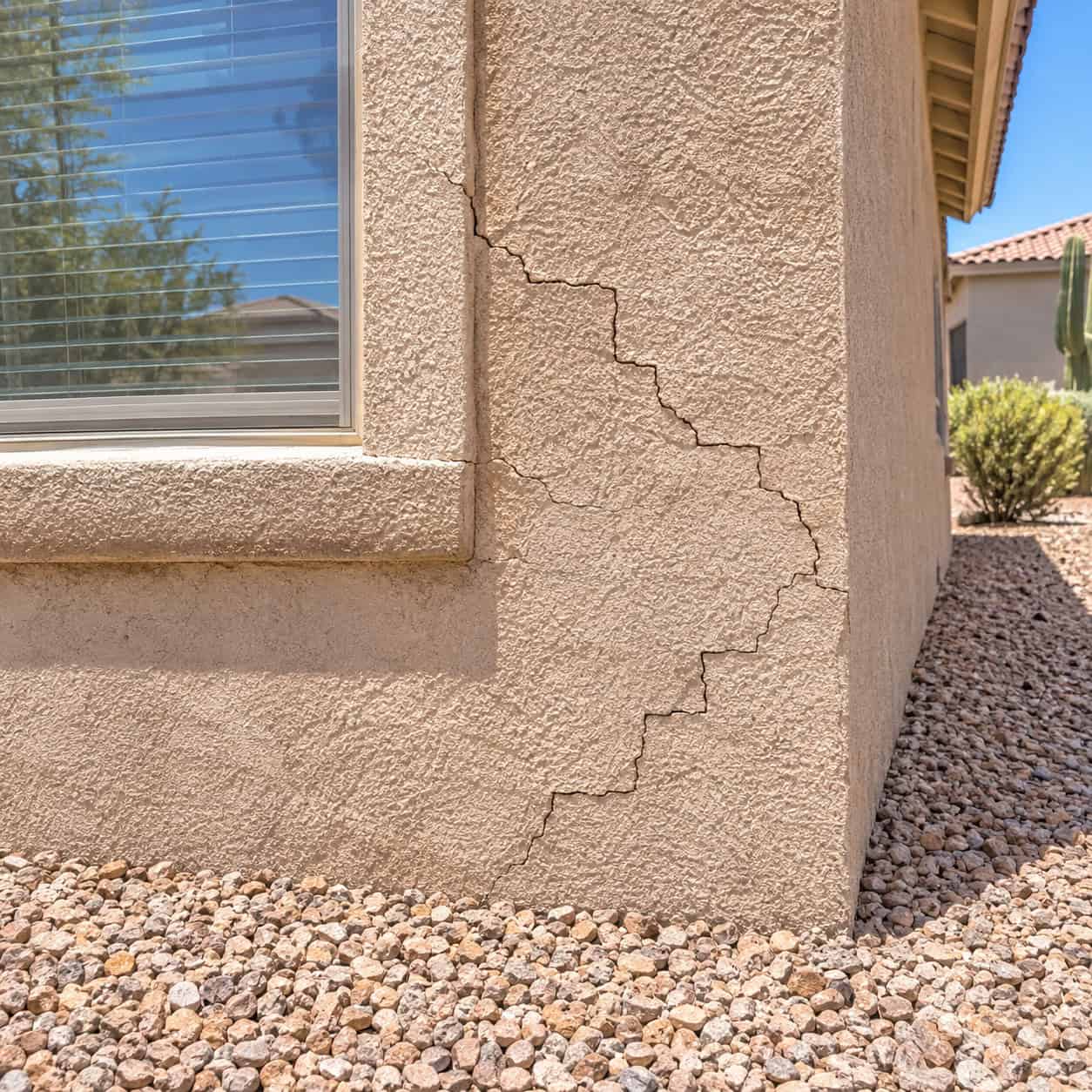
Not EIFS. Real portland cement stucco — applied thin, in one pass, over wood framing with no real drainage plane behind it.
Sun Belt builders poured it onto tens of thousands of houses in the 1990s and 2000s. Stucco cracks; that’s what cement does. Over a masonry wall it doesn’t matter much. Over OSB and studs, every crack is an entry point and there’s no weep screed, no drainage mat, no second layer of paper to carry the water back out.
Las Vegas and Phoenix construction-defect dockets filled up with these houses. Look for stair-step cracking at window corners, a base that dies into the dirt with no screed, and dark staining below weep points that don’t exist.
27. Cutting Fiber Cement Dry On Site

Fiber cement is one of the best things you can hang on a house. The dust it makes is crystalline silica.
Dry-cutting it with a circular saw puts respirable silica into the air at levels OSHA regulates hard on commercial jobs — and that same cloud drifts across your yard, your open windows, and your kids’ sandbox when a crew does it in the driveway.
Score-and-snap for straight cuts. Shears for volume. If you must power-cut, use a dust-collecting saw with a HEPA vac and a polycrystalline-diamond blade, work outdoors downwind, and wear a fitted N95 at minimum.
Watch how your crew cuts it. A contractor doing it right on day one is telling you everything about the rest of the install.
Almost none of these are material failures. They’re detail failures — a missing flashing, a buried weep, a quarter inch of gap somebody didn’t leave.
Which means the expensive siding on a sloppy install loses to the mid-priced siding on a careful one, every single time. Spend the money on the crew, not the brochure.
Go stand at the corner of your house and look down the wall at a low angle. The wall will tell you what it needs.