

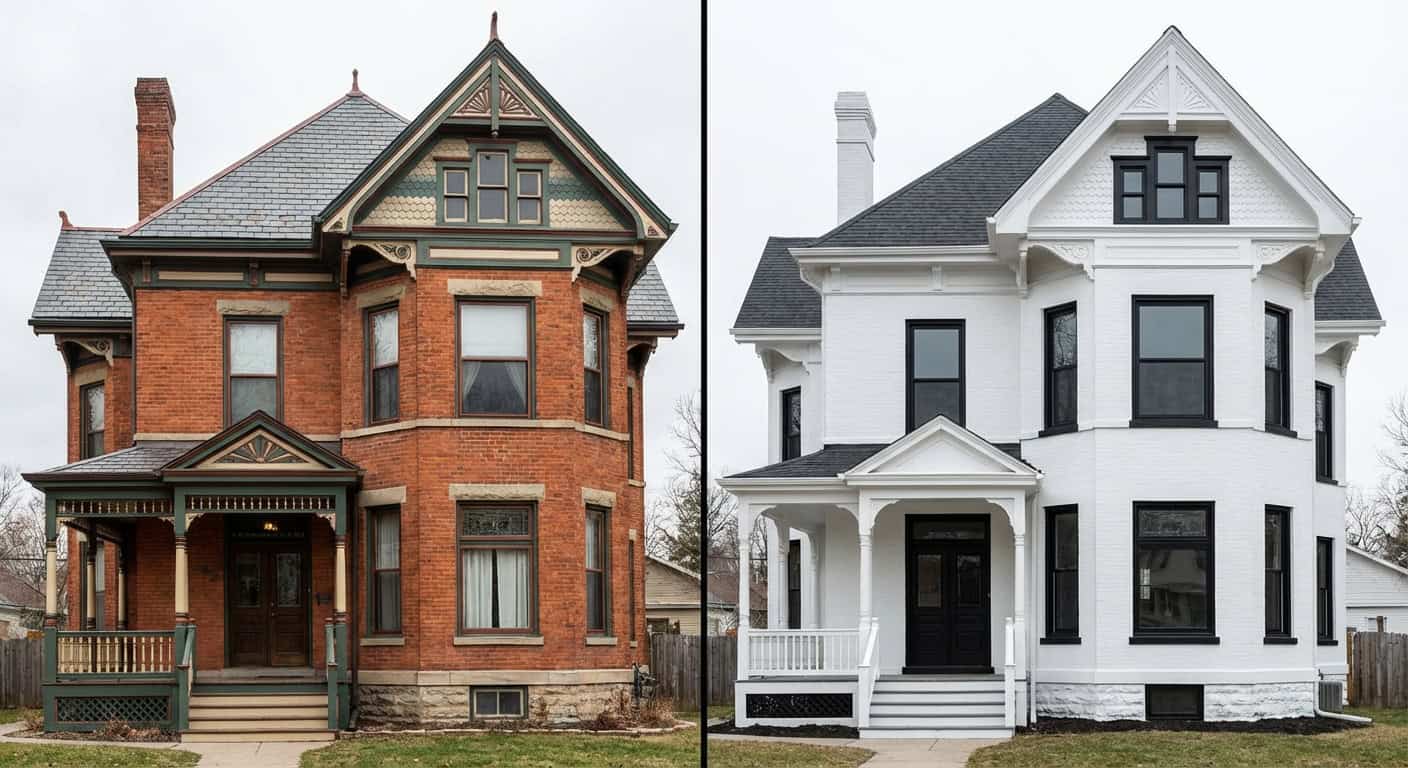
We all watch the renovation shows.
The host walks into a charming 1920s bungalow and says, “This feels dated.”
Then, in a 30-second montage, they rip out the walls, paint the brick white, and install gray plastic floors.
It looks “fresh” for about five minutes.
But to a true homebuyer or preservationist, they just destroyed the value of the house.
Historic homes are built with materials you literally cannot buy anymore: old-growth lumber, wavy glass, and handmade brick.
When you cover them up with trendy, cheap materials from a big-box store, you aren’t upgrading the house. You are downgrading it.
Here are 22 “improvements” that real estate agents secretly hate—and why you should put the sledgehammer down.
1. Painting Original Exterior Brick
This is the number one sin of modern flipping.
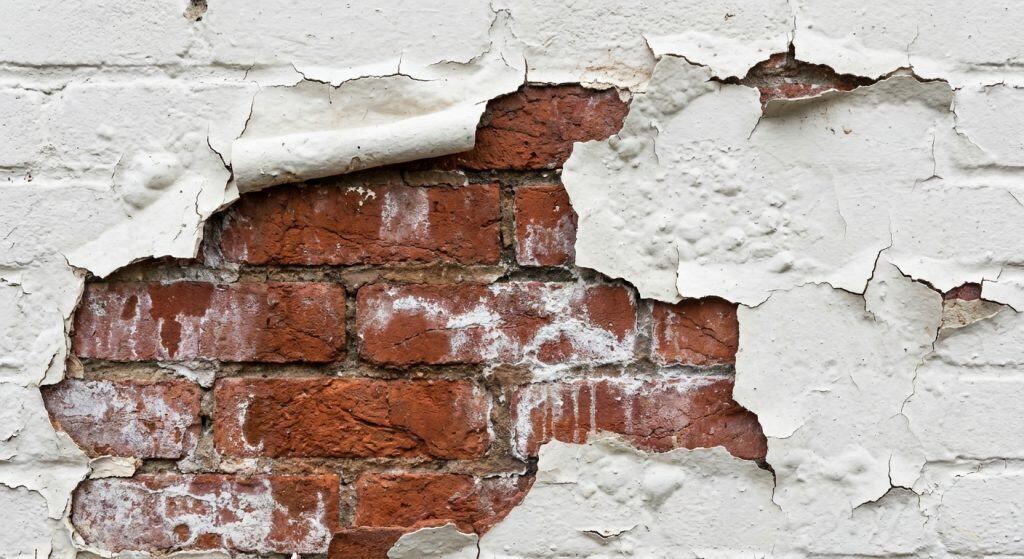
“Whitewashing” a brick house is a massive trend right now. It looks clean in photos.
But brick is a sponge. It needs to breathe.
When you coat it in latex paint, you trap moisture inside the brick. In freezing climates, that moisture expands and pops the face of the brick off (called “spalling”).
Once you paint brick, you have signed up for a lifetime of maintenance. You can never go back to the original without expensive chemical stripping.
The Fix: If the brick is dirty, power wash it gently. If you hate the color, use a mineral stain (limewash) that breathes, not paint.
2. Replacing Original Wood Windows with Vinyl
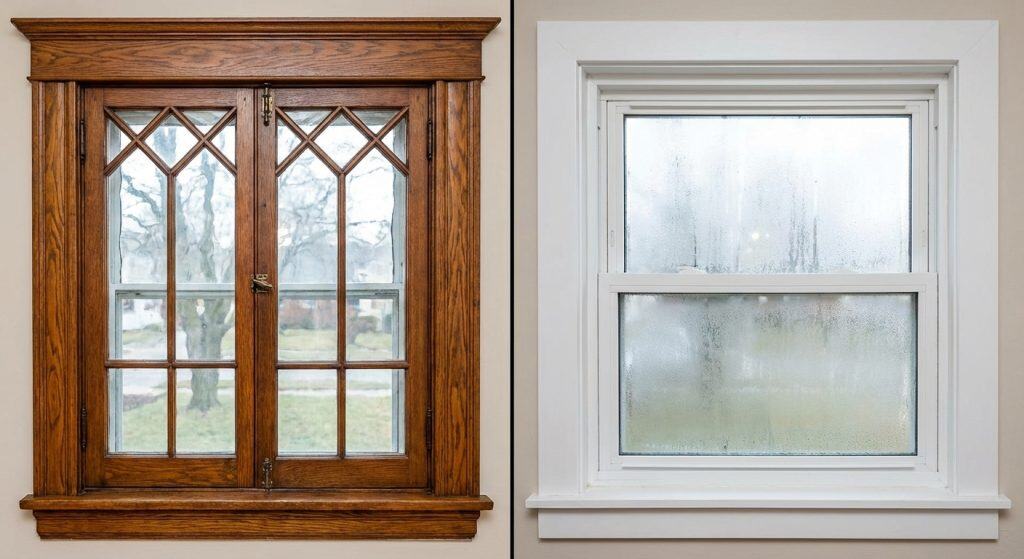
Window salesmen will tell you that your old wood windows are “energy vampires.”
They are lying.
A restored wood window with a good storm window is just as energy-efficient as a double-paned vinyl one.
The difference? The wood window has lasted 100 years and will last 100 more. The vinyl window has a lifespan of 15-20 years before the seal breaks and the glass fogs up.
Vinyl windows look like plastic because they are plastic. They lower the curb appeal instantly.
The Fix: Re-glaze and weatherstrip your old windows. It’s cheaper than buying new ones.
3. The “Open Concept” Demolition
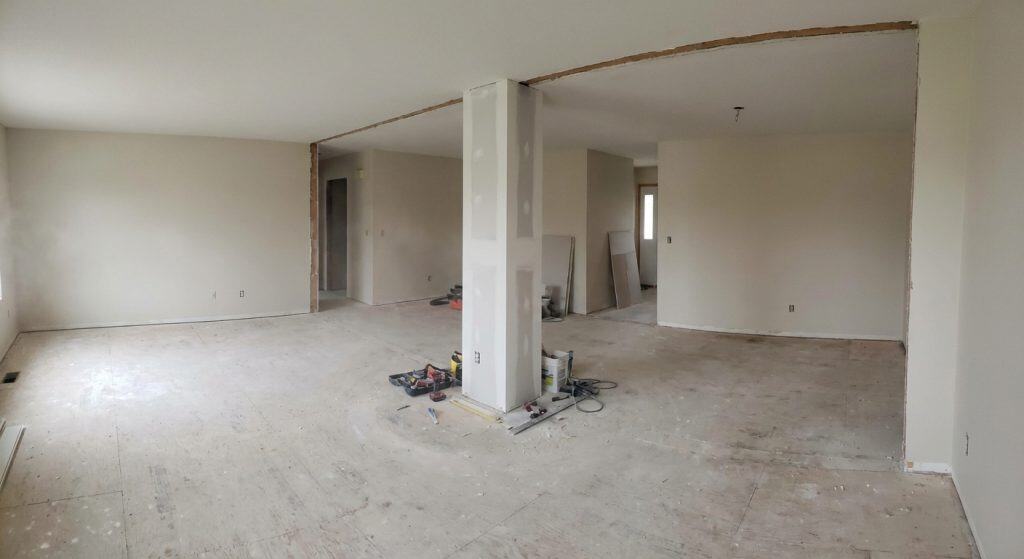
“Tear down this wall!” is the rallying cry of every flipper.
But people are starting to realize that Open Concept living is a nightmare.
When you remove the wall between the kitchen and the living room, you lose cabinet space. You lose privacy.
And worst of all? You lose noise control. The sound of the dishwasher and the blender drowns out the TV.
The Fix: Keep the cased openings. Wide doorways provide flow without sacrificing walls.
4. Painting Natural Gumwood or Oak Trim
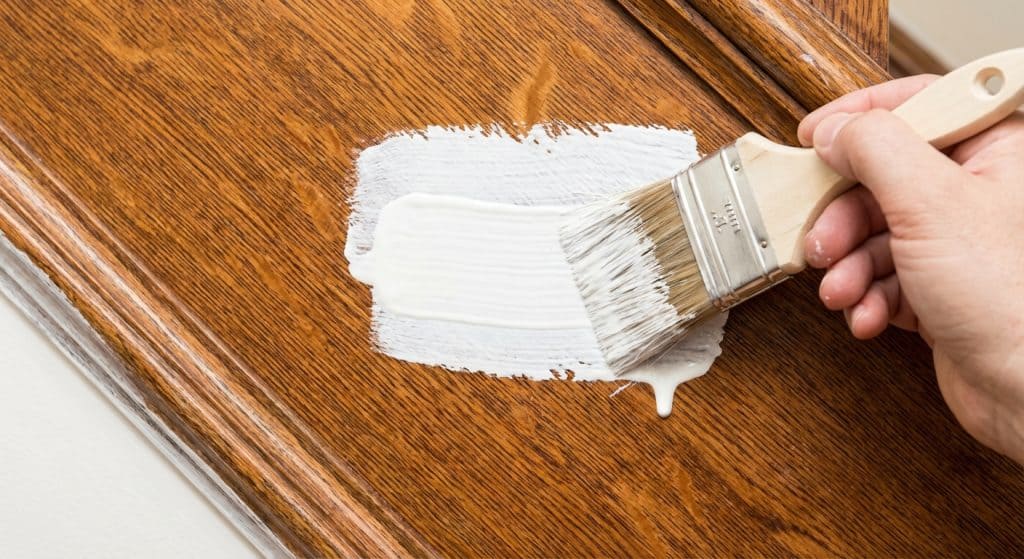
In the 1920s, unpainted “Gumwood” or quarter-sawn Oak trim was a status symbol. It adds warmth and character that drywall cannot match.
Painting it white makes the house look like a generic apartment rental.
Once that paint is in the grain, it is agonizingly difficult to remove.
The Fix: Clean the wood with oil soap. If you must brighten the room, paint the walls a lighter color, not the wood.
5. Installing “Millennial Gray” LVP Flooring
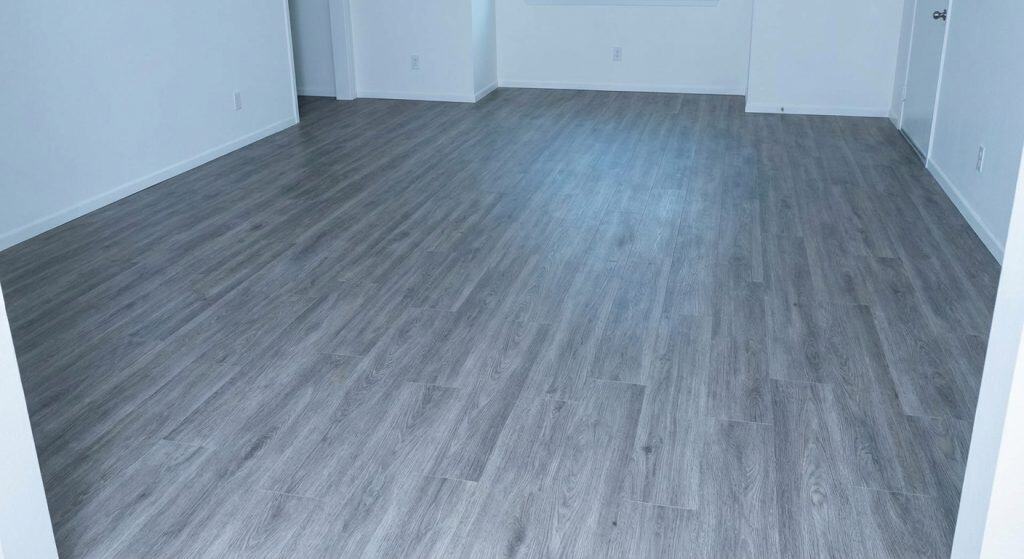
Luxury Vinyl Plank (LVP) is waterproof and cheap. That’s why flippers love it.
But covering original hardwood floors with gray plastic is a crime.
Gray flooring is a trend that is already dying. It makes a home feel cold, sterile, and dated to a specific 3-year window.
The Fix: Refinish the hardwood hidden under the carpet. If you need new floors, choose a warm, natural wood tone, not gray.
6. Removing the Bathtub for a “Luxury Shower”
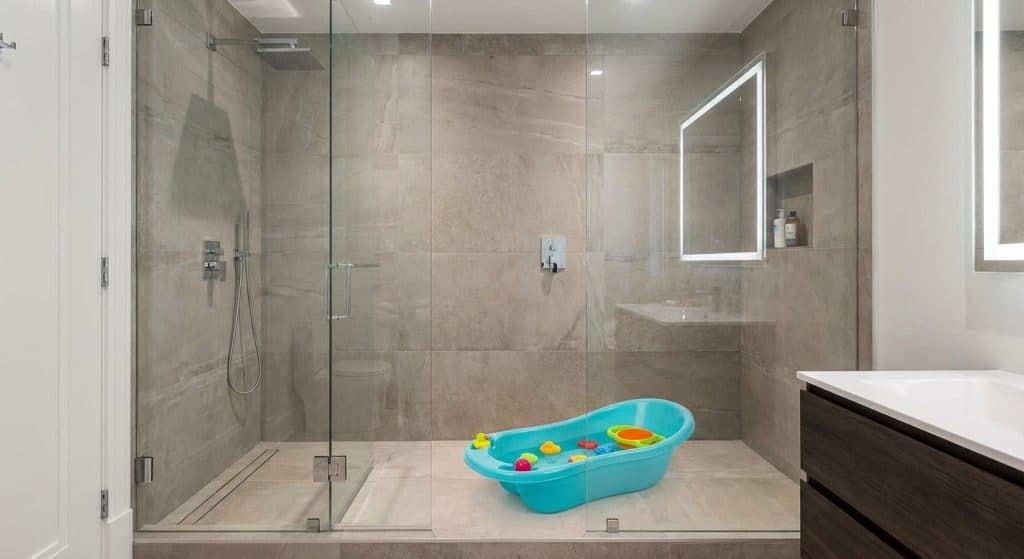
Big walk-in showers are sexy. But if you remove the only tub in the house, you have just alienated every buyer with small children.
You cannot wash a toddler in a walk-in shower.
The Fix: Keep at least one tub in the house (usually in the guest bath).
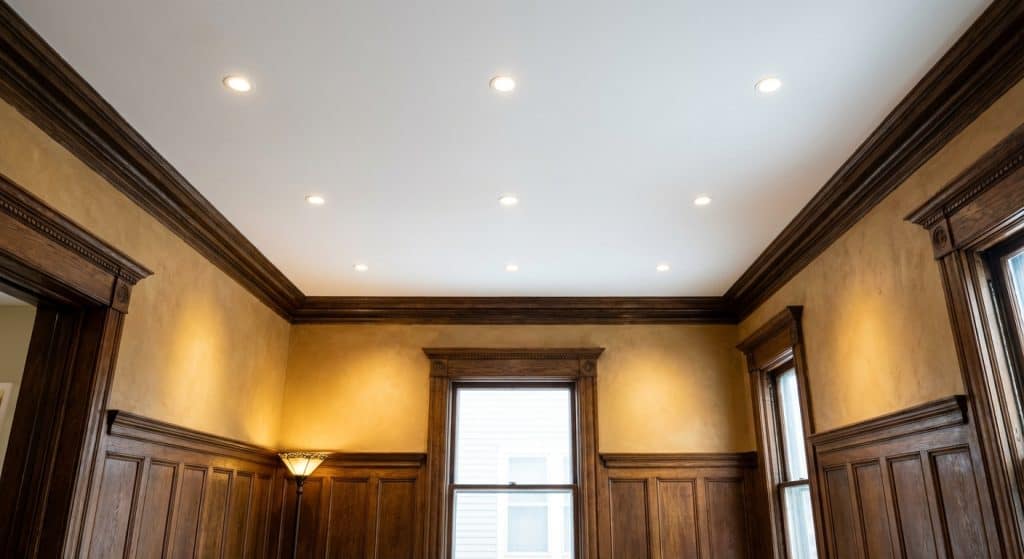
7. The “Swiss Cheese” Ceiling (Recessed Lighting)
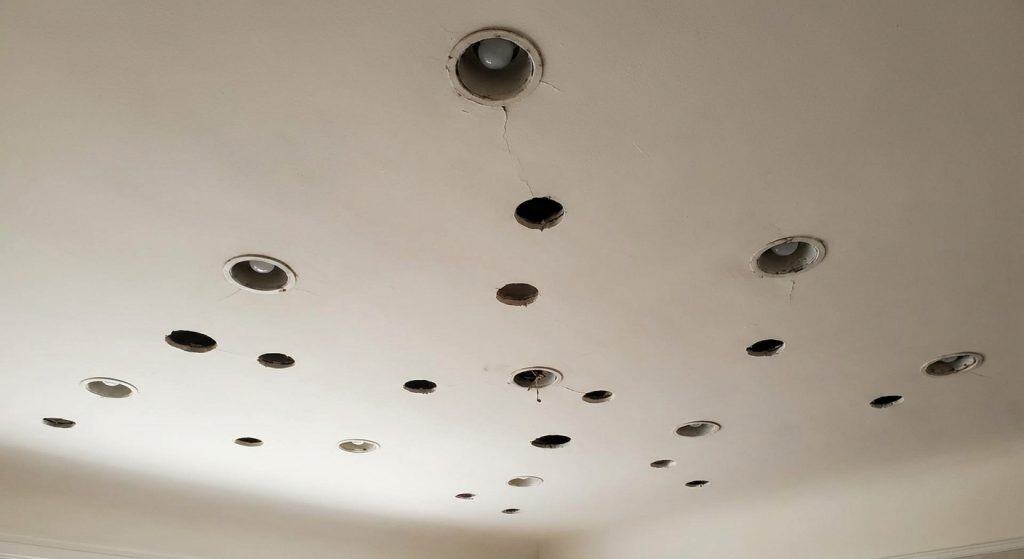
Lighting is important. But turning a historic plaster ceiling into an airport runway is not the answer.
Cutting holes for 20 recessed “can lights” destroys the integrity of the plaster and looks unmistakably modern in a bad way.
The Fix: Use floor lamps, sconces, and semi-flush mount fixtures that fit the period of the home.
8. Cheap Barn Doors
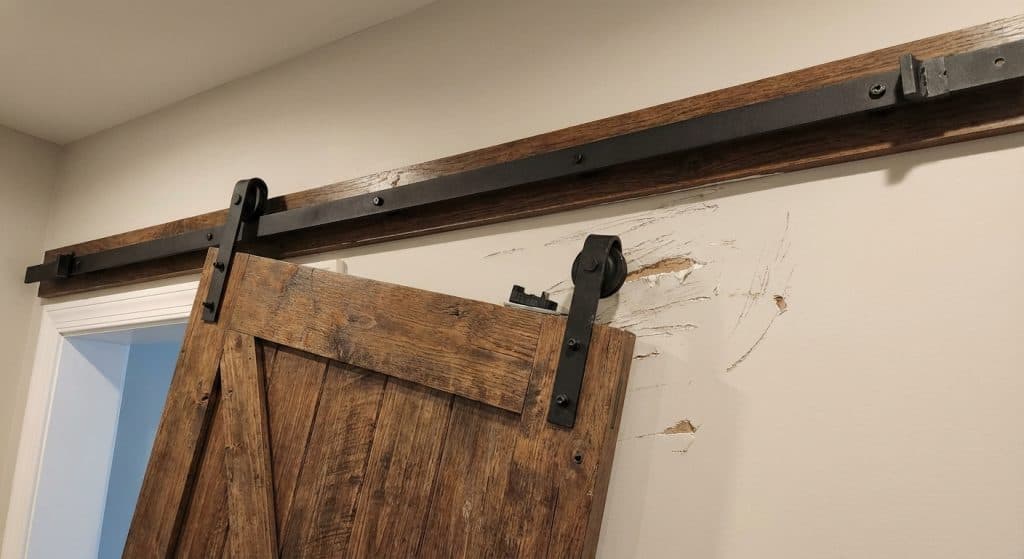
Barn doors belong on barns.
When used on a bathroom or bedroom, they provide zero sound privacy and block the light when they slide open.
They are a “Farmhouse” trend that looks ridiculous in a Victorian or Mid-Century home.
The Fix: Use a pocket door or a traditional hinged door.
9. Ripping Out “Dated” Built-Ins
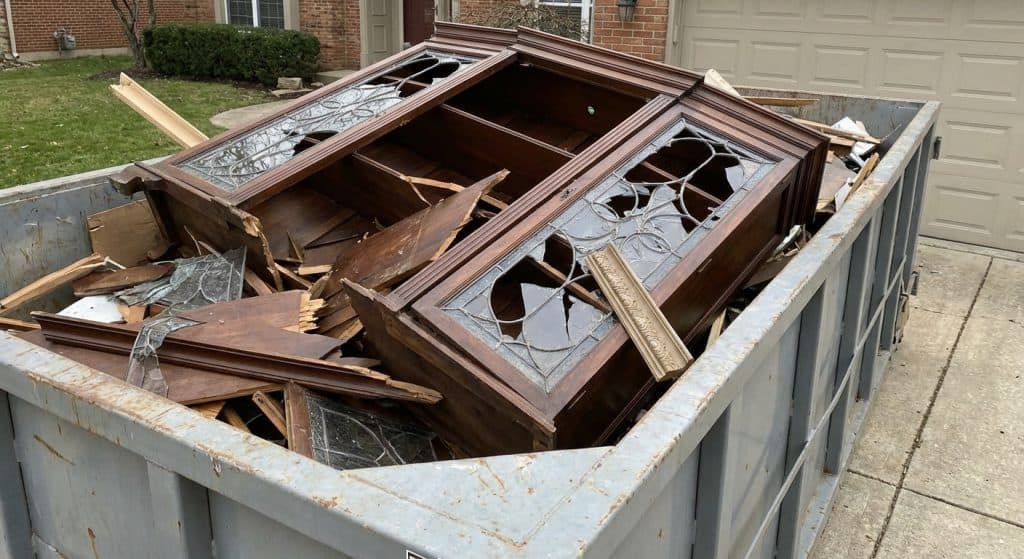
“I need more space!” says the homeowner, as they sledgehammer a built-in china cabinet.
They replace it with… a cheap particle-board shelf from IKEA.
Built-ins were custom-made for the house. They save space because you don’t need to buy furniture. Removing them strips the house of its soul.
The Fix: Paint the inside of the cabinet a fun color, but leave the structure alone.
10. Replacing Original Hardware
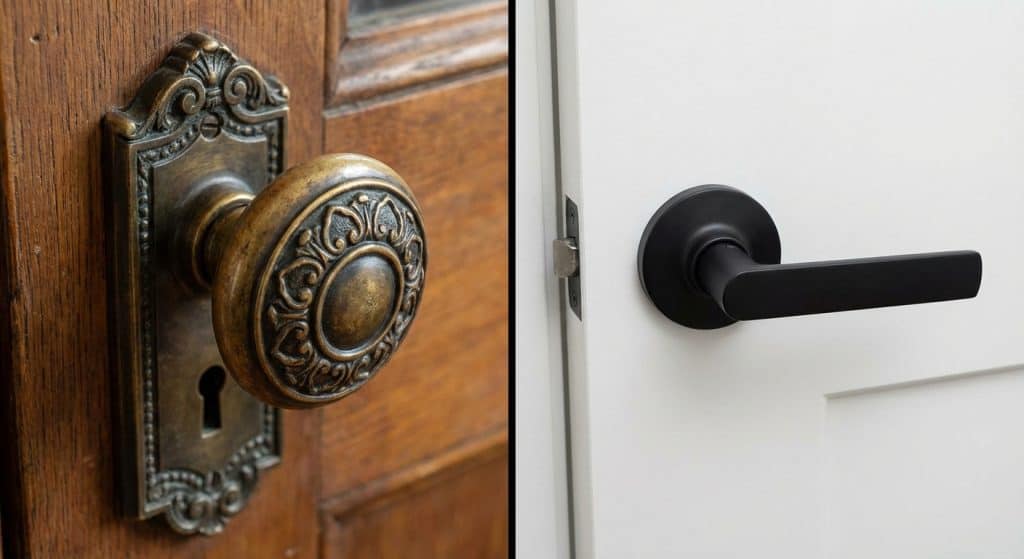
Those crystal knobs, brass hinges, and skeleton key locks are “jewelry” for the home.
Replacing them with lightweight, matte-black tubular latches makes the doors feel cheap and hollow.
The Fix: Clean the old brass in a crockpot with vinegar. It will shine like new.
11. Covering Clapboard with Vinyl Siding
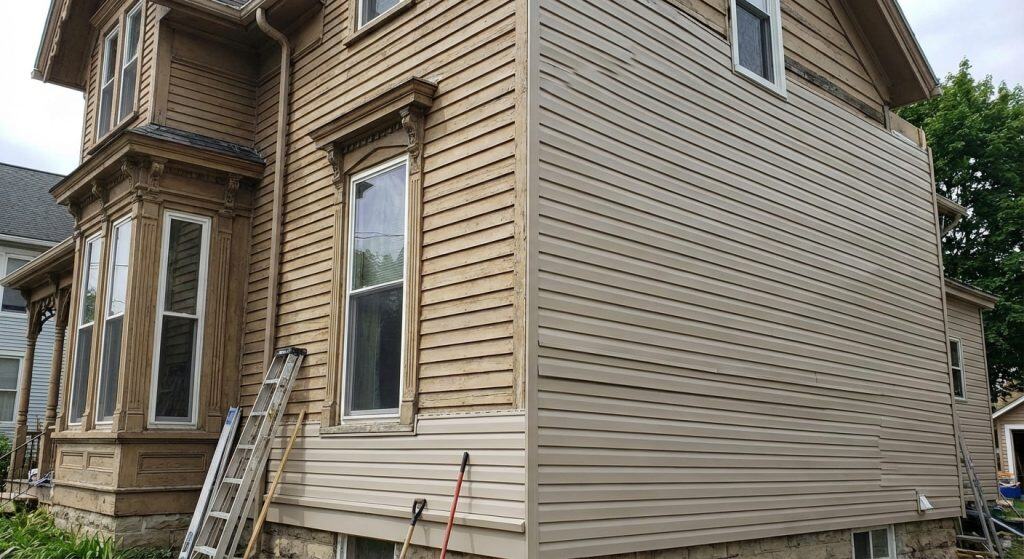
Vinyl siding is the “tupperware” of housing.
It traps moisture against the old wood sheathing, often leading to hidden rot and termites that you won’t see until the wall collapses.
It also flattens the details. You lose the shadow lines of the original siding and the depth of the window casings.
The Fix: Repair and paint the wood siding. It pays off in curb appeal.
12. Removing the Chimney
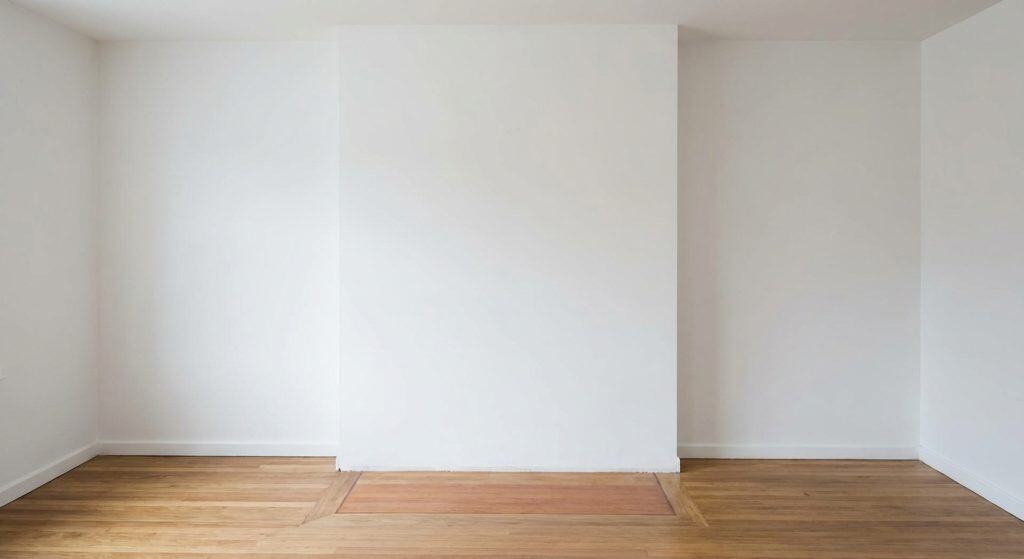
We get it. You don’t use the fireplace, and the chimney leaks.
But removing a chimney is structural surgery, and closing off a fireplace removes the focal point of the living room.
A house without a hearth feels like a waiting room.
The Fix: Cap the chimney to stop leaks, but keep the mantle and the firebox visual.
13. “Epoxy” Countertops
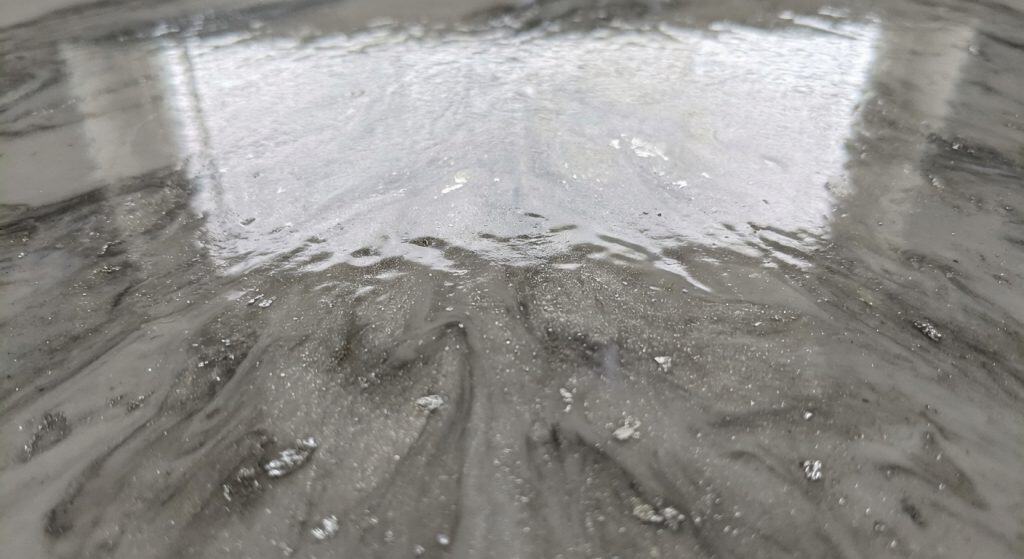
This is the “DIY Special.”
Pouring epoxy over laminate to make it look like marble never looks like marble. It looks like plastic that is trying too hard.
It scratches easily and creates an uneven surface.
The Fix: Save up for butcher block or quartz. Real materials always win.
14. Removing Plaster Walls for Drywall
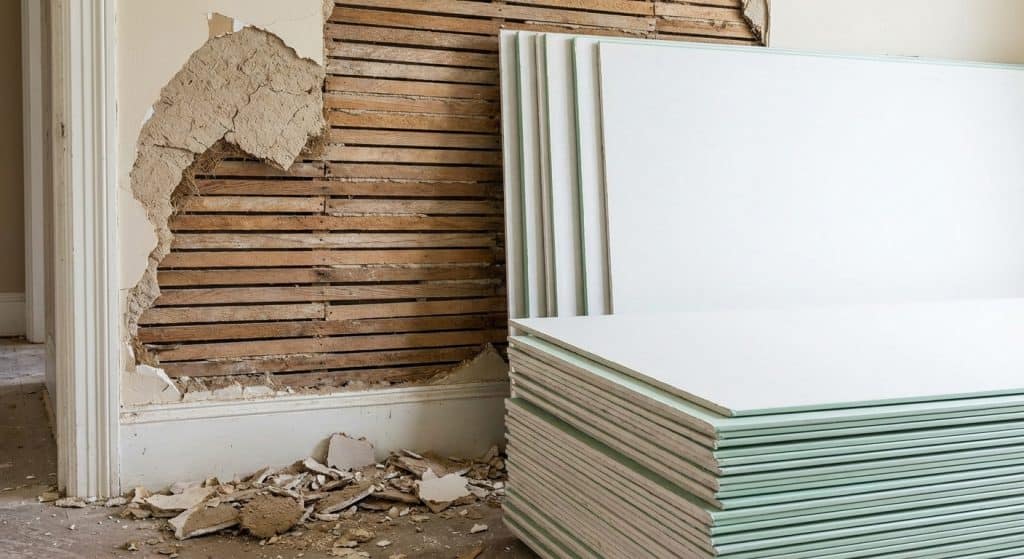
Contractors hate plaster because it is hard to fix. So they tell you to rip it all out.
Don’t.
Plaster is thicker, stronger, and more sound-proof than drywall. It insulates better and has a handcrafted texture that drywall lacks.
The Fix: Hire a plaster repair expert to fix the cracks using “plaster washers.”
15. The “Modern Farmhouse” Exterior Paint Job
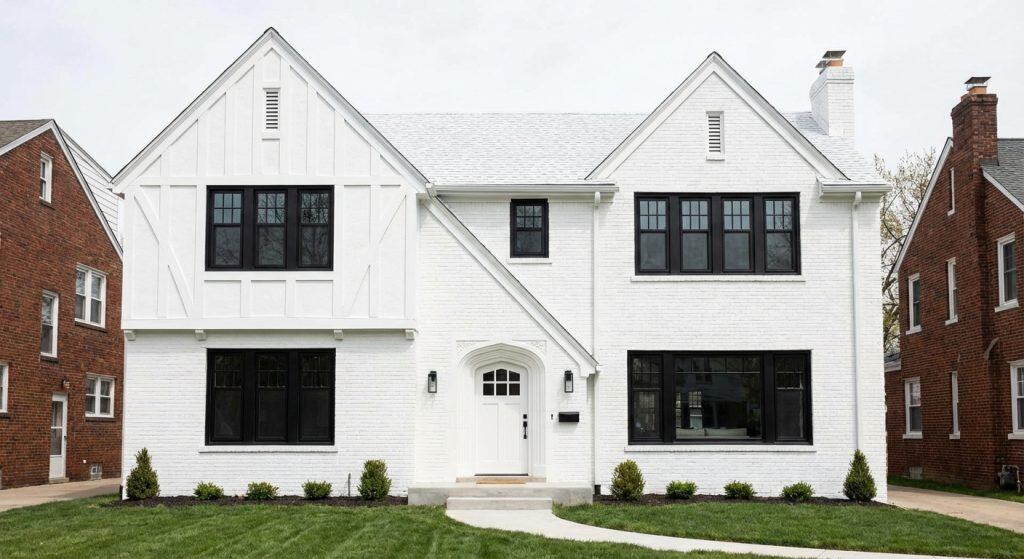
White siding with black windows looks great on a farm.
It looks terrible on a 1970s split-level or a 1920s Tudor.
Forcing every house style to wear the “Chip and Joanna” uniform makes the neighborhood look like a subdivision of clones.
The Fix: Respect the architectural style of the house. Tudors should be earthy. Victorians should be colorful.
16. Cutting Down Mature Trees
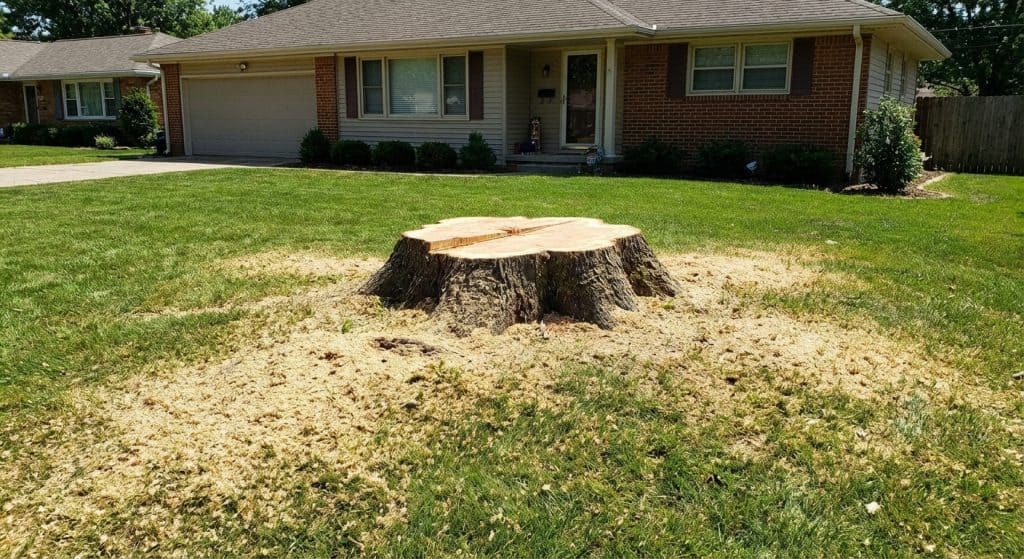
Flippers often cut down large trees to “open up the view” or protect the foundation.
But a mature Oak or Maple tree adds thousands of dollars in value to a property. It shades the house (lowering cooling bills) and provides privacy.
You cannot buy a 50-year-old tree at the nursery. Once it’s gone, it’s gone.
The Fix: Prune the tree; don’t remove it.
17. Converting the Garage into “Living Space”
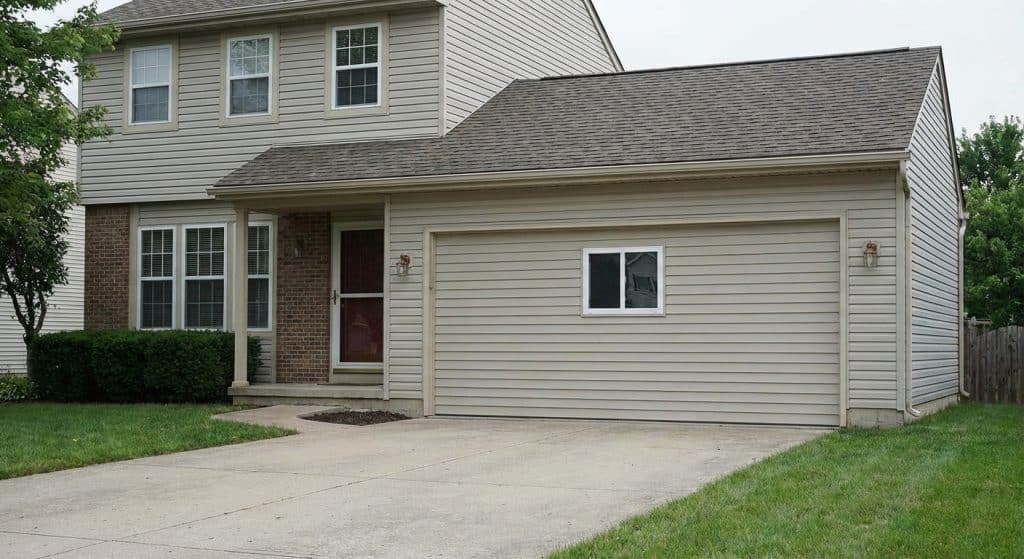
It seems like a cheap way to add square footage.
But you have just removed the place to park the car. In most suburbs, a garage is a requirement for buyers.
Furthermore, these conversions are usually cold, have concrete floors that sweat, and look like… well, a garage that someone is sleeping in.
The Fix: Finish the basement or build an addition properly. Leave the garage for the car.
18. Squaring Off Arched Openings
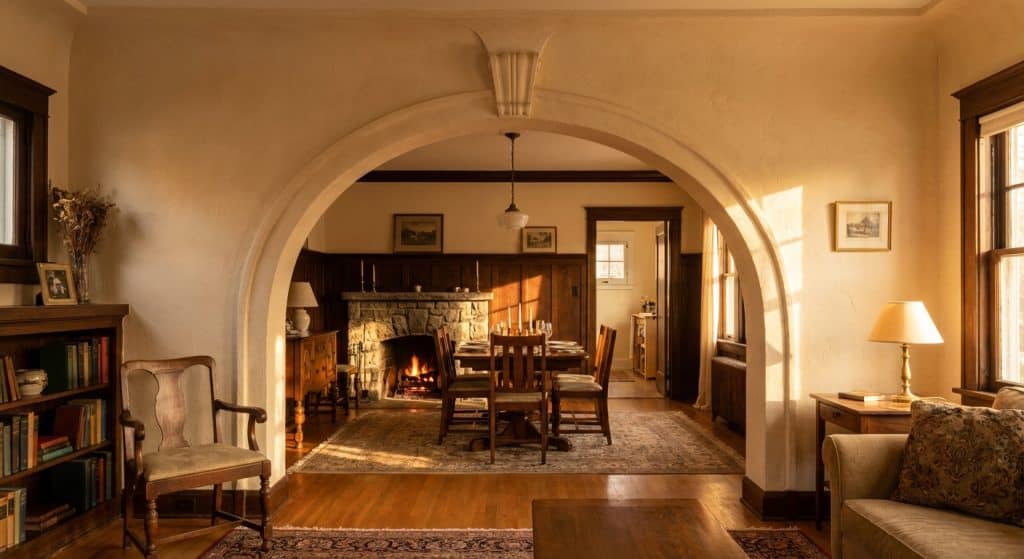
Old homes are full of curves.
Arched doorways. Vaulted openings between rooms. Rounded transitions where the dining room meets the hallway. These were not accidents. They were deliberate architectural choices that added grace and flow to a house.
Modern flippers hate them.
Arched framing is expensive to build, difficult to drywall, and impossible to fit with standard millwork. So the flipper solution is to rip the curve out and replace it with a flat, square drywall opening.
The result? A 1920s home with the soul of a 1990s apartment.
The Fix: Restore the arch. A skilled drywaller or plasterer can repair damaged curves without losing the original shape. The curve is the feature.
19. Erasing All the Color from the House
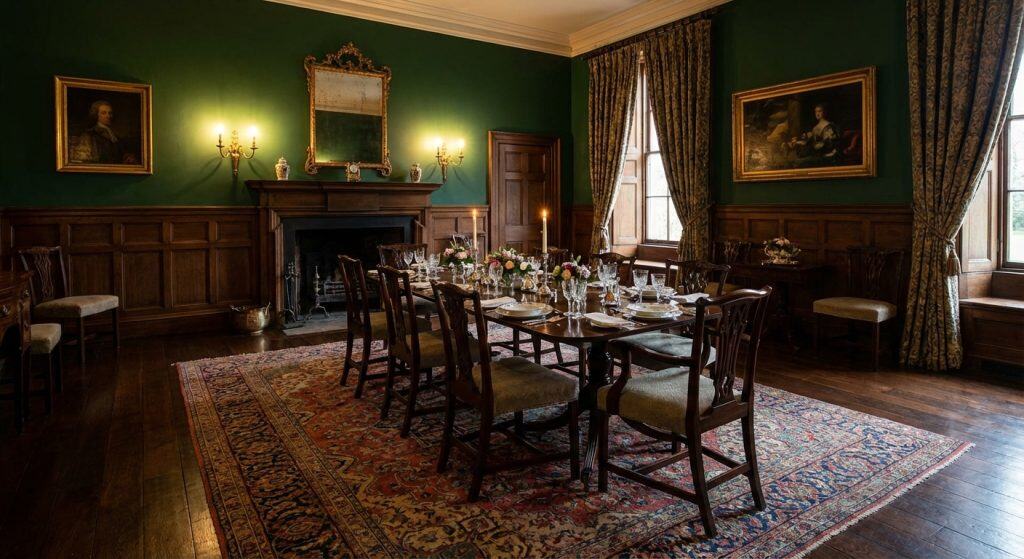
White walls. Gray floors. Beige cabinets. Black fixtures.
This is the “modern flip” color palette, and it is suffocating every historic home in America.
Older homes were built with color. Green walls in the dining room. Rose in the bedroom. Deep blue in the library. These colors were chosen to complement the woodwork, the light, and the original furniture.
Stripping all of that out and painting the whole interior “Agreeable Gray” does not make the house look modern. It makes the house look like a dentist’s office.
The Fix: Paint rooms with intentional, saturated colors. A historic home can handle them. A historic home was designed for them.
20. Painting Everything Black
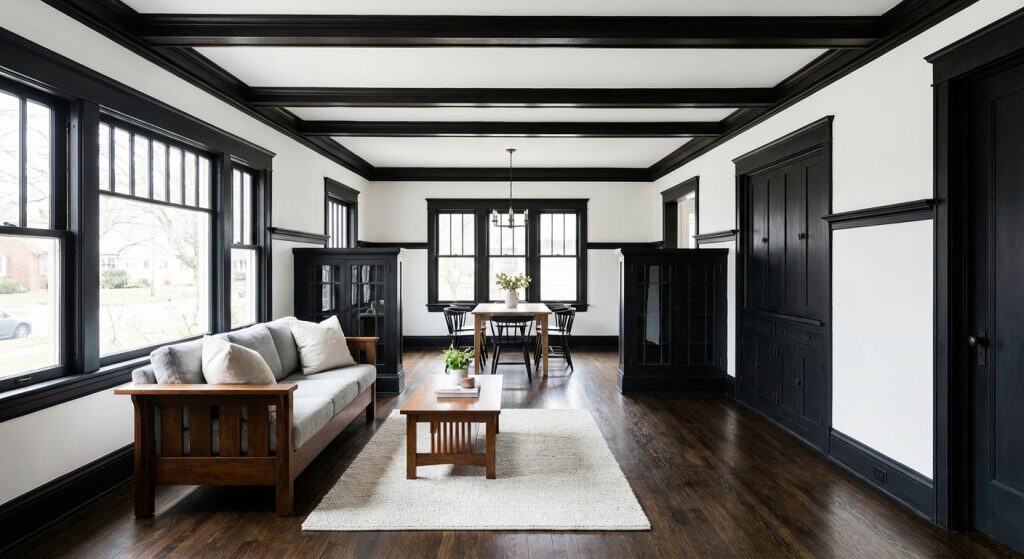
This is the newest “upgrade” that nobody is calling out yet.
Black trim. Black windows. Black cabinets. Black hardware. Black light fixtures.
It looks dramatic and modern in photos. For about 18 months.
But it is a trend, and like every trend before it, it will age badly. In five years, black windows on a 1920s bungalow will look exactly as awkward as polished brass fixtures looked in 1995.
The worst part? Black paint is hard to remove cleanly and almost impossible to paint over without multiple coats of primer.
The Fix: If you want contrast, use a dark bronze, iron, or charcoal instead of pure black. Those tones age gracefully. Pure black does not.
21. Removing the Butler’s Pantry and Breakfast Nook
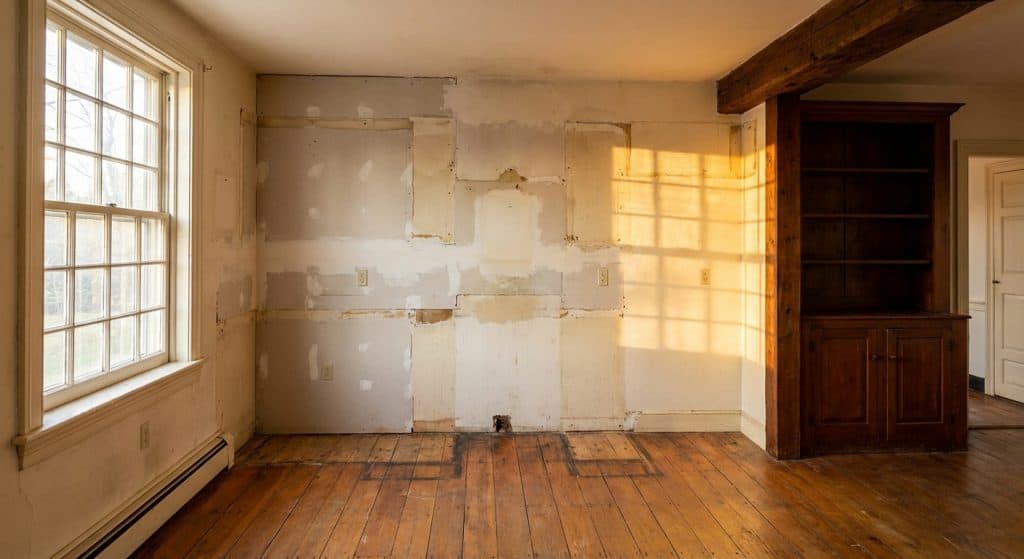
These were not extra rooms. They were architectural features.
The butler’s pantry was a transitional space between the dining room and the kitchen. A place for china, serving platters, linens, and plating meals out of sight of guests.
The breakfast nook was a small sunlit space off the kitchen for casual meals without setting the formal dining table.
Flippers rip both out to “open up” the kitchen. They replace them with a big empty island and a hole where the soul used to be.
The Fix: Keep them. Restore them. They add storage and charm that no modern kitchen can replicate.
22. Drywalling Over Ceiling Details
Coffered ceilings. Barrel vaults. Tin tile. Plaster medallions. Exposed beams.
These are the features that make you look up when you walk into a room.
Flippers smooth them over, drywall them flat, and install recessed lights in a perfect grid. The ceiling goes from being a statement to being a surface.
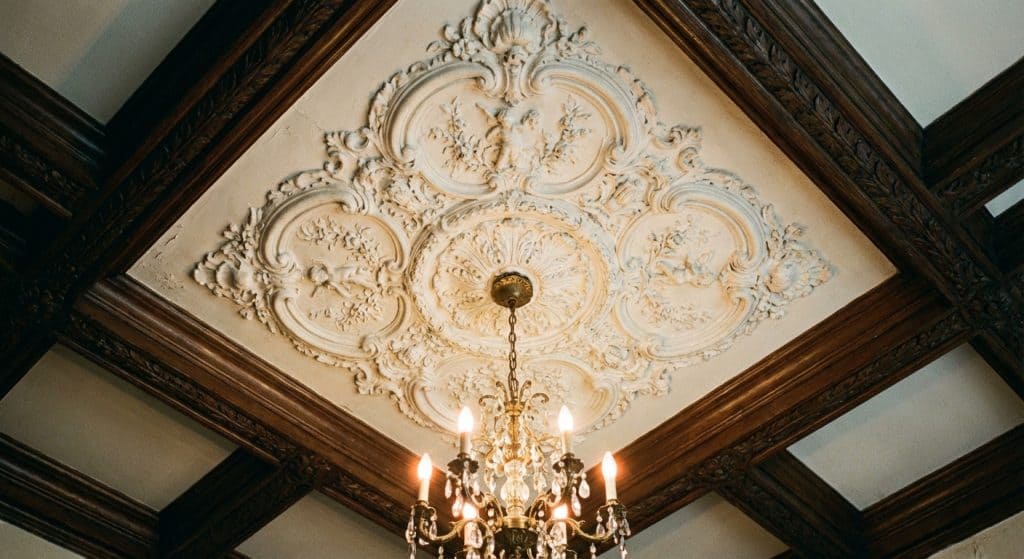
Ceiling details are one of the most expensive architectural features to recreate. A new coffered ceiling can run $10,000 to $30,000. The one you just covered was already there.
The Fix: Clean and restore the original. If it is damaged, hire a plaster specialist — not a contractor with a drywall crew.
Conclusion
It’s your house. You can do what you want.
But remember: you are just the custodian. The house was here before you, and it will be here after you.
Don’t be the person who stripped the soul out of a 100-year-old home just to follow a trend that will be embarrassing in 2030.
Keep it real. Keep it original.