

I am a woodworker.
But because I own a lot of tools, my friends and family just assume I am a general handyman.
They call me whenever a door squeaks, an appliance hums, or a sink won’t drain.
Because I do so many of these odd jobs, I see the exact same scenario play out all the time.
Something stops working perfectly, and their first instinct is to pull out the credit card and replace it.
We live in a disposable culture. It is incredibly easy to just buy a replacement.
But treating your house like a giant disposable product will drain your bank account.
Most of the time, the machine isn’t dead.
It is just dirty, unlubricated, or needs a $10 plastic part.
Before you spend $800 on a new appliance or hire a contractor, check this list.
Here are 15 things you are probably throwing away way too soon—and exactly how to fix them for pennies.
1. The “Dead” Garbage Disposal
Your garbage disposal suddenly stops making noise. It just hums, or worse, does absolutely nothing when you flip the switch.
Most people assume the motor burned out and start shopping for a $200 replacement.
But disposals have a built-in safety breaker that trips when they get jammed.
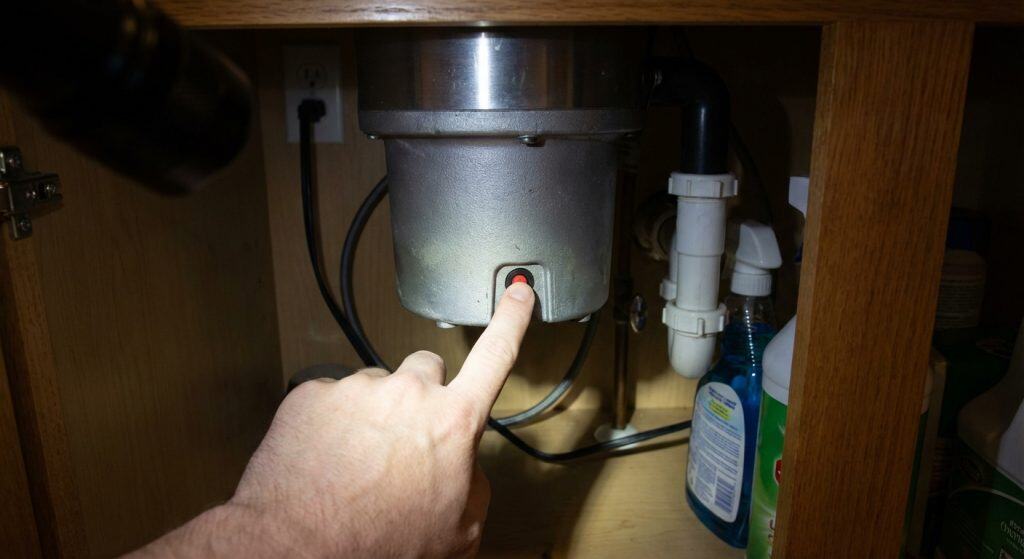
Look under the sink at the very bottom of the disposal unit. There is a small red button.
The Pro Tip: Push the red reset button. If it still hums, stick an Allen wrench into the center hole on the bottom and crank it to manually unjam the blades.
2. The Smelly Front-Load Washer
Your clothes are coming out smelling like a damp swamp, and the drum smells like mildew.
You try running bleach through it, but the smell comes right back. You assume the machine is just old and gross.
What you don’t realize is that front-load washers have a hidden trap door.
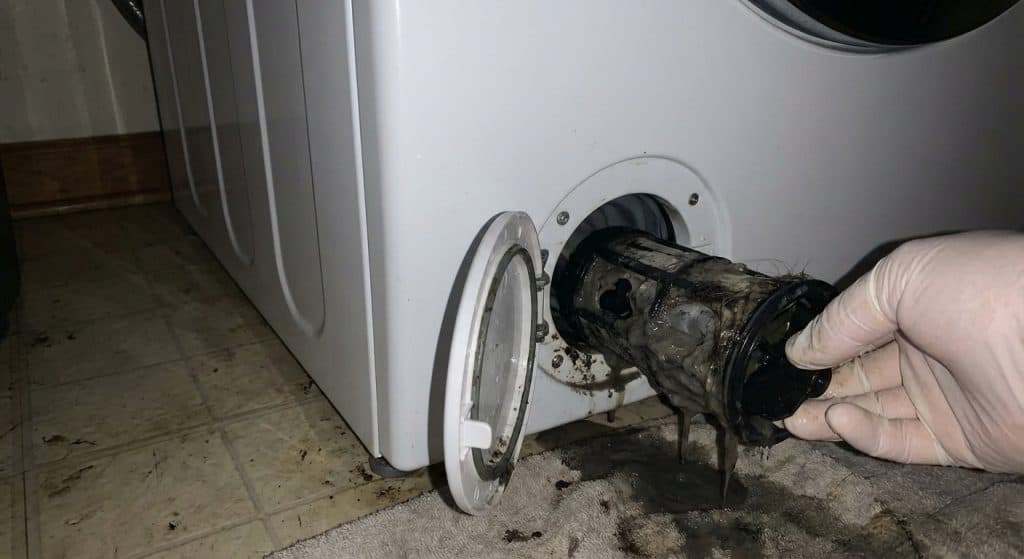
Usually located on the bottom front panel, there is a drain pump filter that catches hair, coins, and lint. If you don’t clean it, the water rots in there.
The Pro Tip: Open the access panel, place a towel down, and unscrew the filter. Clean out the sludge, and your washer will smell brand new.
3. The Weak Dishwasher
Your dishes are coming out with little specks of food stuck to them.
You switch detergent brands, but it doesn’t help. You think the water pump is dying.
It isn’t dying; it is choking.
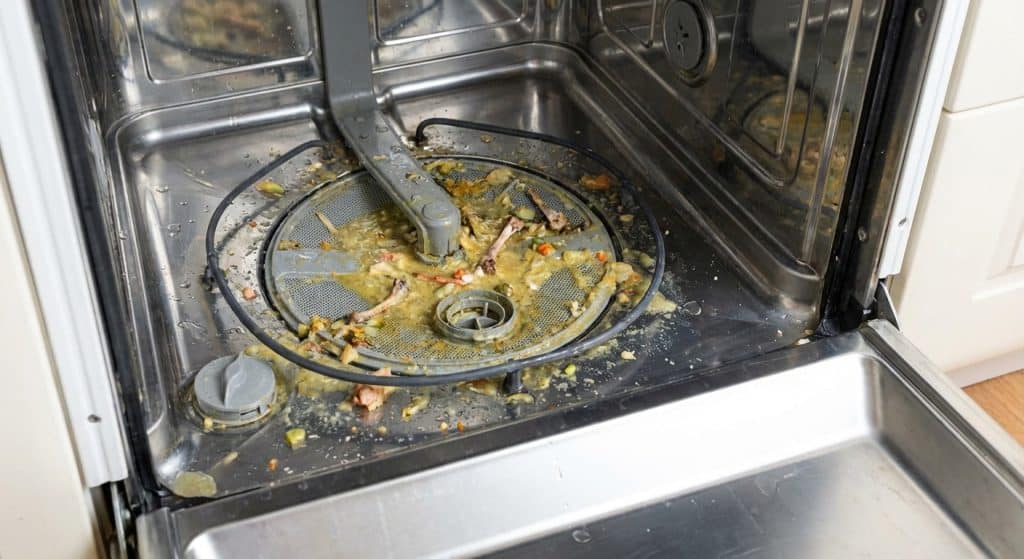
At the very bottom of the dishwasher, under the spray arm, there is a cylindrical plastic filter.
It is designed to catch chunks of food, and it gets clogged with grease and old labels from jars.
The Pro Tip: Twist the filter out, scrub it in the sink with hot water and dish soap, and your dishwasher will blast dishes clean again.
4. The “Failing” Refrigerator
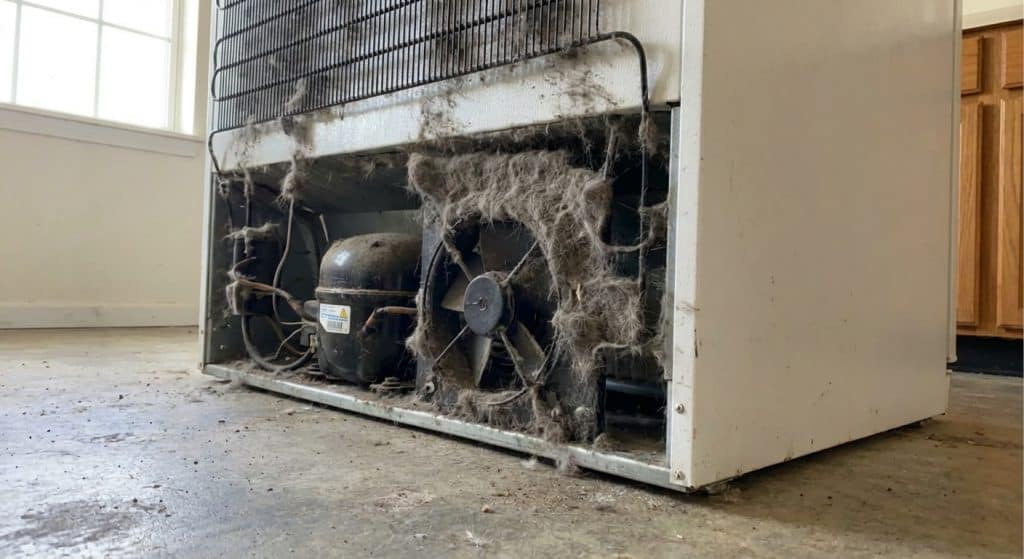
Your milk isn’t as cold as it used to be, and the fridge is constantly running.
You assume the freon is leaking or the compressor is shot.
But refrigerators need to breathe. The condenser coils (usually located at the very bottom or the back) release the heat.
If those coils are blanketed in a thick layer of dog hair and dust, the fridge will literally suffocate and overheat.
The Pro Tip: Unplug the fridge, remove the bottom grill, and vacuum the coils thoroughly with a brush attachment.
5. The Screeching Garage Door
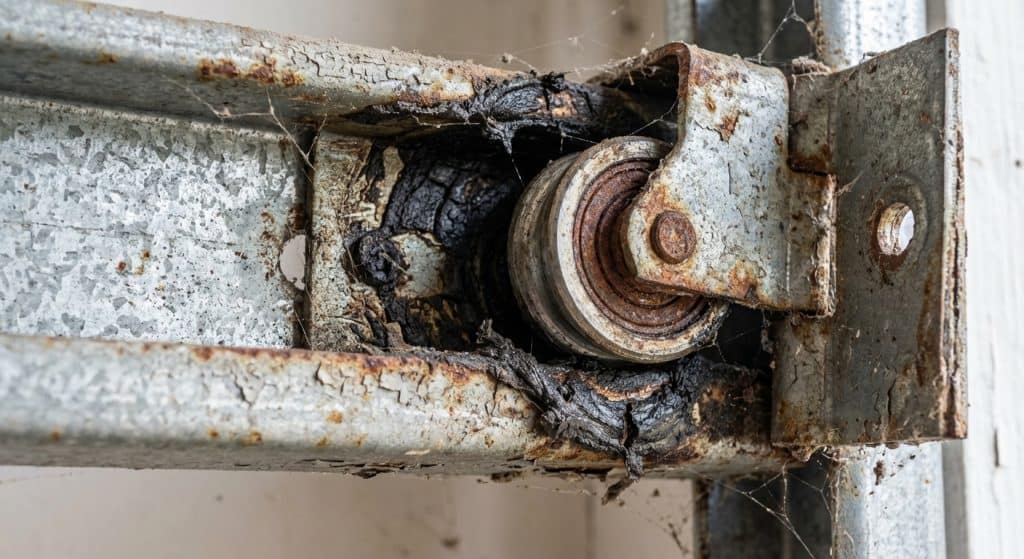
Your garage door sounds like a dying dinosaur every time it opens.
It groans, grinds, and wakes up the whole house. You think the expensive overhead motor is failing.
The motor is fine. The metal rollers and hinges are just bone dry and grinding metal-on-metal.
Do not use standard WD-40; it attracts dust and makes the problem worse.
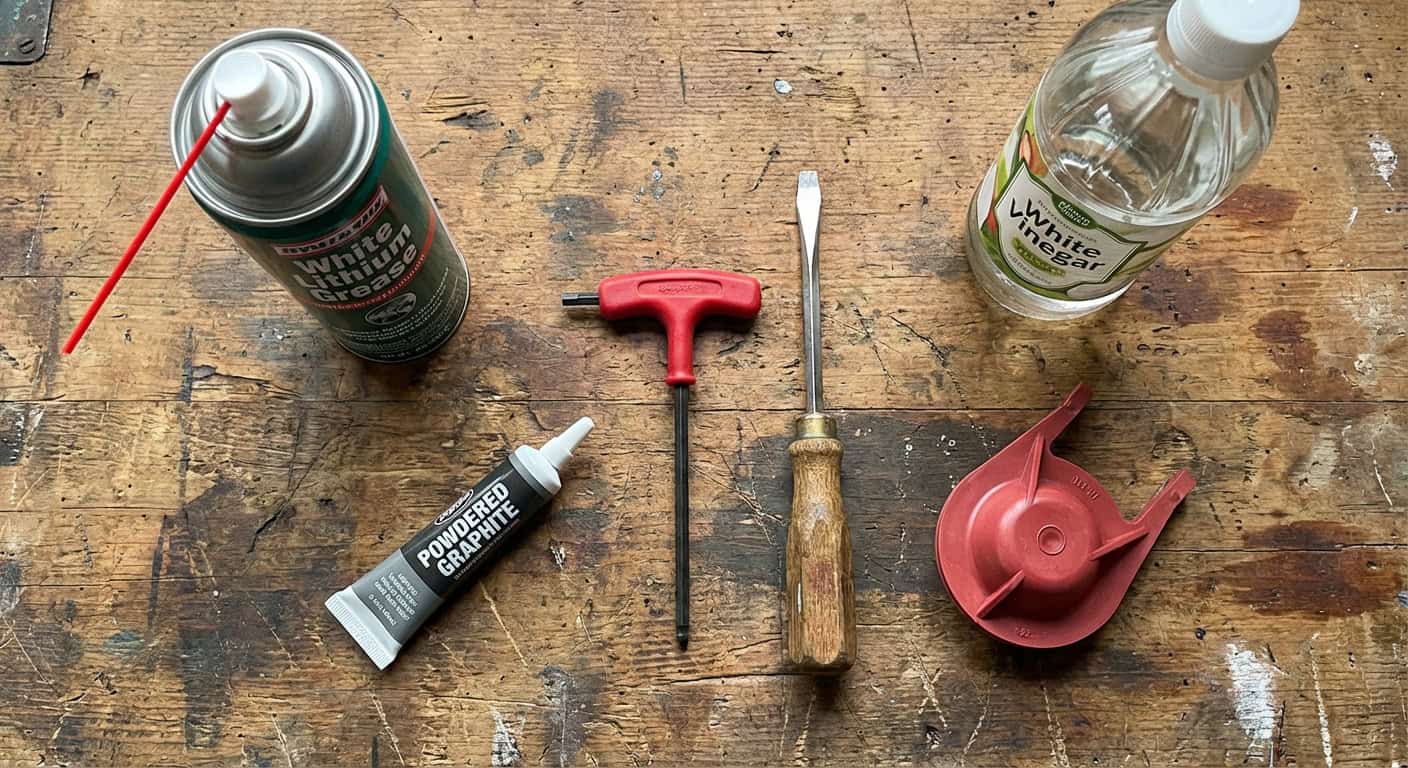
The Pro Tip: Spray a can of White Lithium Grease on every hinge, roller, and spring. It will instantly become whisper-quiet.
6. The Weak Showerhead
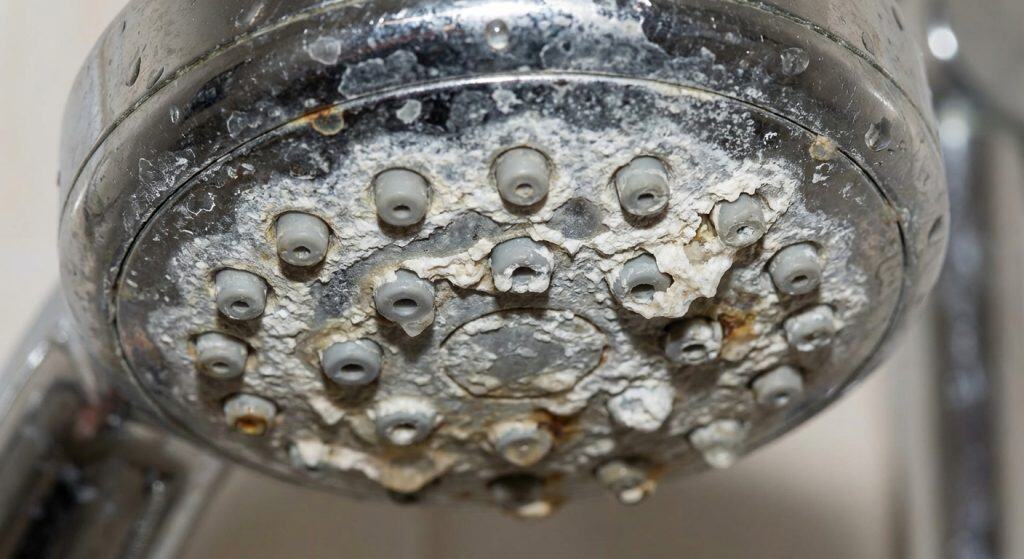
Your morning shower feels more like a weak drizzle.
You think your home’s water pressure is failing, or you need to buy a fancy new high-pressure showerhead.
Look closely at the little rubber nozzles on the showerhead. They are likely crusted in hard, white calcium buildup.
The water can’t get out because the holes are clogged with minerals.
The Pro Tip: Fill a plastic bag with white vinegar, tie it around the showerhead with a rubber band, and let it soak overnight. The scale will melt away.
7. Torn Window Screens
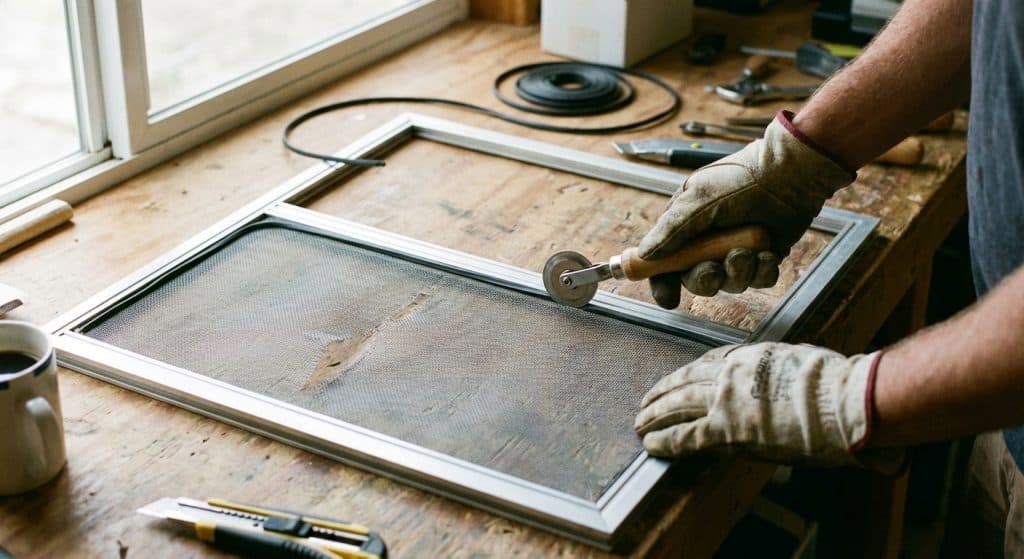
A bird flies into your screen, or your cat claws a hole in it.
Most people take the entire aluminum frame to a hardware store and pay $60+ for a custom replacement.
But the aluminum frame is perfectly fine. The mesh is just held in by a rubber cord called a “spline.”
The Pro Tip: Buy a $15 roll of screen mesh and a cheap “spline roller” tool. You can push new mesh into the old frame in 10 minutes on your kitchen table.
8. The Constantly Running Toilet
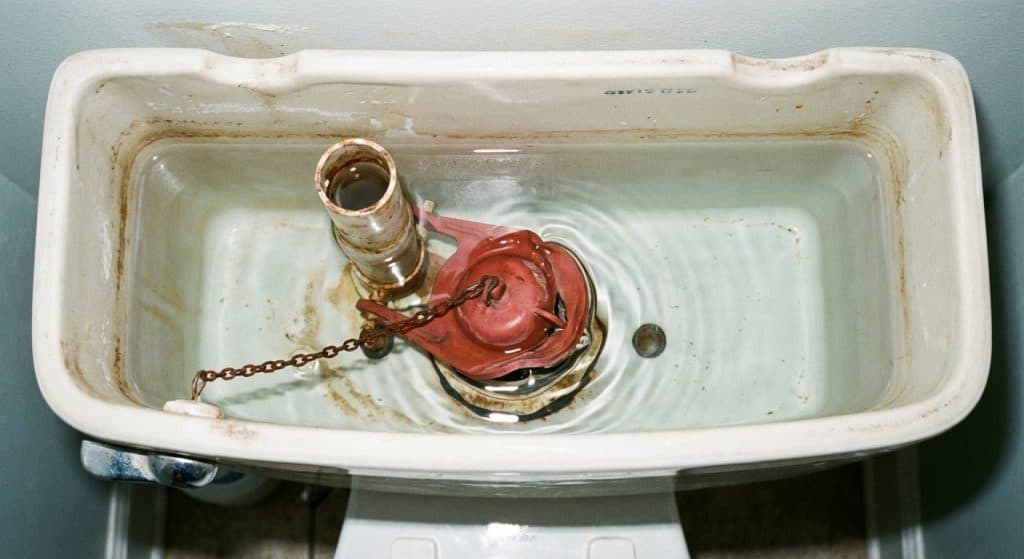
You hear water trickling into the toilet bowl all day and night.
You assume the entire plumbing mechanism inside the tank needs to be gutted and rebuilt.
90% of the time, the problem is just a tiny, warped piece of rubber at the bottom of the tank called the flapper.
Over time, chlorine in the water causes the rubber to warp, so it no longer creates a watertight seal.
The Pro Tip: Turn off the water, unhook the old $5 rubber flapper, and snap a new one into place. No tools required.
9. Drafty Windows
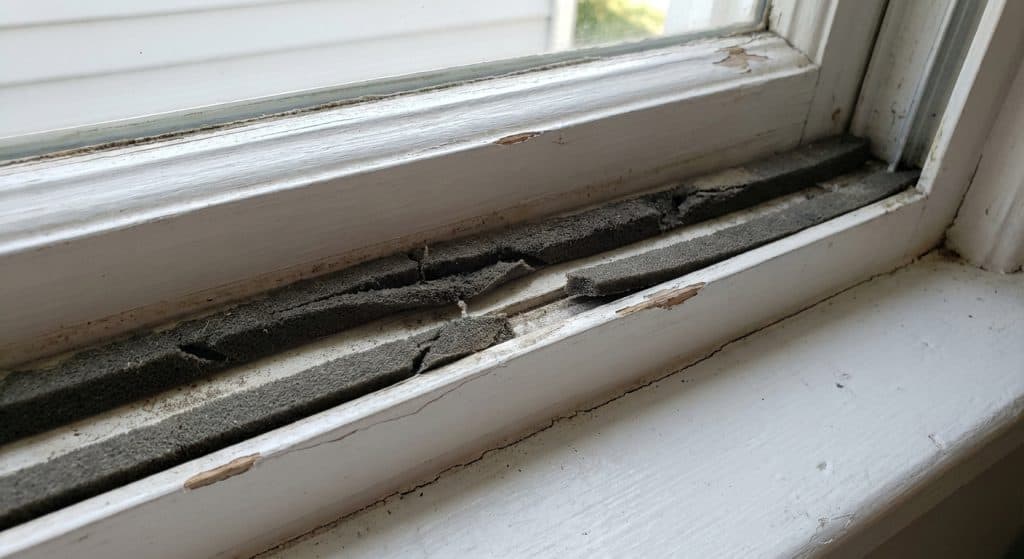
You can feel a cold breeze sitting next to your window in the winter.
Window companies will tell you that the seals have failed and you need to spend $15,000 on new double-hung windows.
But unless the wood is physically rotting, the glass is doing its job. The air is coming through the gaps where the window meets the frame.
The original weatherstripping has likely flattened out or dry-rotted.
The Pro Tip: Peel off the old weatherstripping and apply a new roll of self-adhesive foam or V-seal weatherstripping. It costs $10 per window.
10. The Sticky Deadbolt
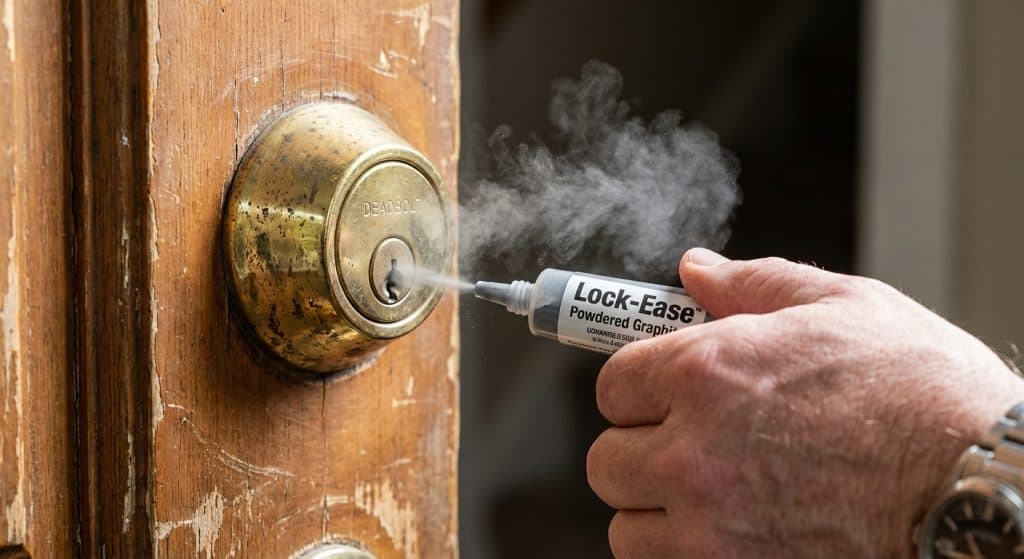
You have to jiggle your house key and shove your shoulder against the door just to turn the deadbolt.
You assume the internal lock cylinder is broken and you need to buy a new $150 lockset.
Locks are full of tiny metal pins. Over time, dust and metal shavings create friction inside the cylinder.
Never squirt liquid oil or WD-40 in a lock; it turns the dust into sticky mud.
The Pro Tip: Squirt a puff of dry Graphite Powder into the keyhole. Run your key in and out a few times. It will turn like butter.
11. Wobbly Ceiling Fans
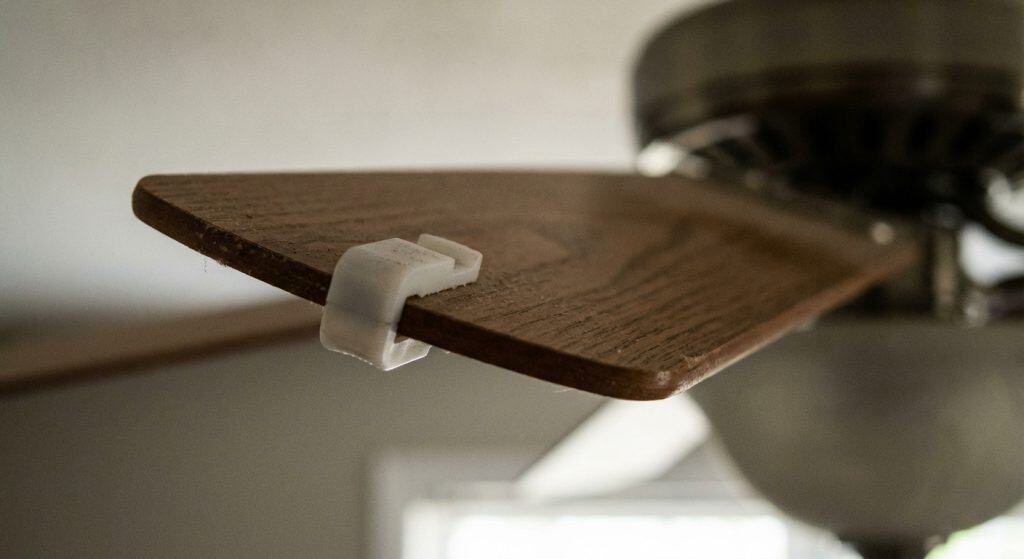
When you turn your ceiling fan on high, it shakes violently like it is going to fly off the ceiling.
You assume the motor bearings are shot and it’s time to throw the fixture in the trash.
It’s actually just an issue of weight distribution. One of the blades is slightly heavier or warped, throwing the whole spinning unit out of balance.
The Pro Tip: Buy a $5 ceiling fan balancing kit at the hardware store. It comes with a tiny plastic clip and stick-on weights to perfectly balance the blades.
12. Sagging Cabinet Doors
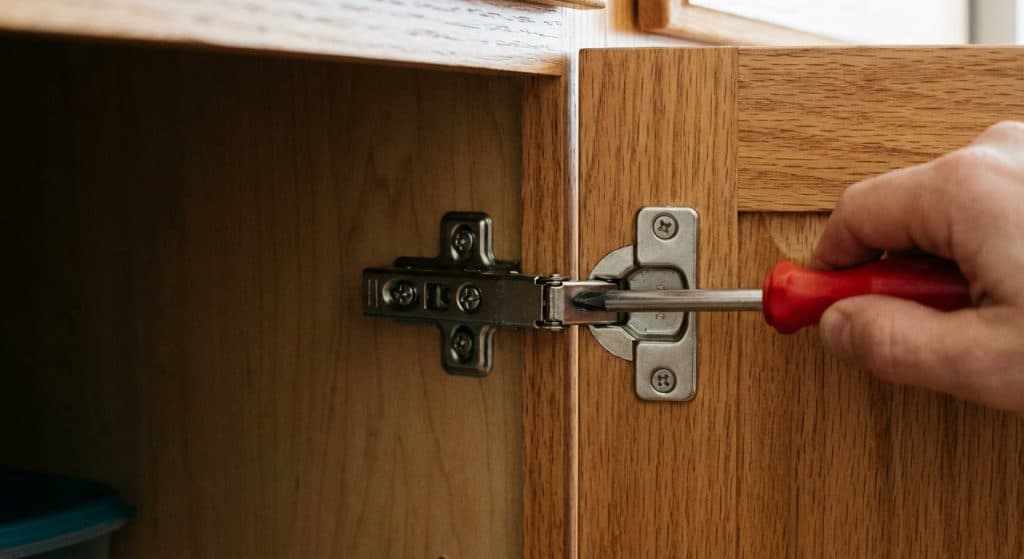
Your kitchen cabinet doors don’t line up anymore. They look crooked, or they rub against each other when you close them.
You think the hinges are bent and ruined.
Modern “European-style” cabinet hinges are highly adjustable. They have three separate screws that control the up/down, left/right, and in/out tilt of the door.
The Pro Tip: Grab a Phillips head screwdriver and slowly turn the adjustment screws on the hinge until the door aligns perfectly.
13. The Slow-Draining Bathroom Sink
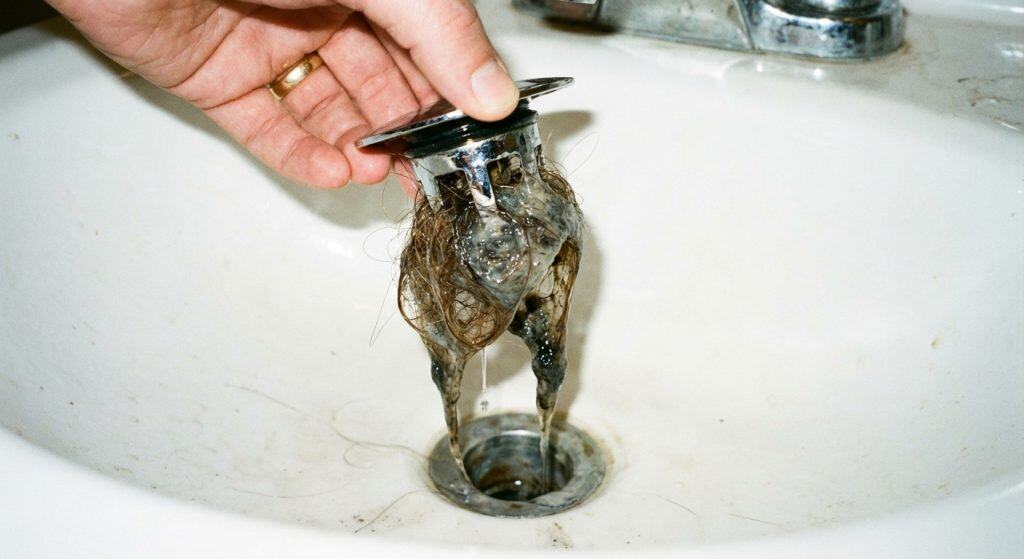
The water pools in your bathroom sink and takes five minutes to drain.
You pour a gallon of toxic Drano down the pipes, but a week later, it’s clogged again.
Drano burns a tiny hole through the blockage, but it leaves the root cause intact.
The culprit is a massive clump of hair and soap scum wrapped directly around the pop-up stopper mechanism right below the drain.
The Pro Tip: Look under the sink, unscrew the nut holding the horizontal rod, and pull the stopper straight up and out of the sink to clear the hairball.
14. Surface Scratches on Hardwood Floors
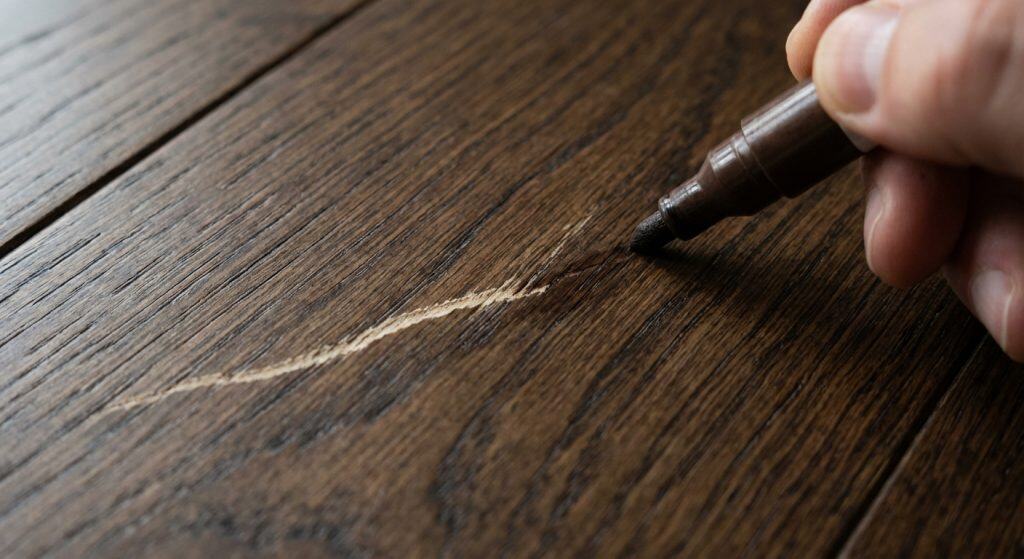
You drop a heavy object or drag a chair, leaving a visible, light-colored scratch on your dark hardwood floors.
You stare at it every day and think you have to hire a crew to sand and refinish the entire room.
If the scratch hasn’t gouged deeply into the raw wood, it is just a scratch in the clear polyurethane finish.
The Pro Tip: Buy a “Stain Marker” that matches your floor color. Color in the scratch, wipe the excess off with a rag, and it will virtually disappear.
15. The Squeaky Door Hinge
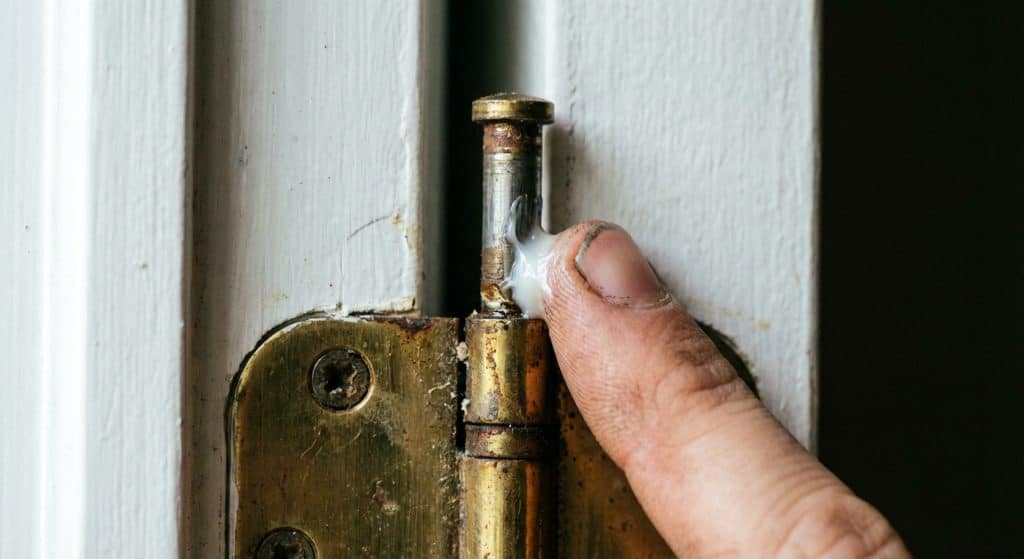
A bedroom door squeaks so loudly it wakes up the baby.
You squirt WD-40 on the outside of the hinge, but two weeks later, the squeak comes right back.
The friction is happening inside the metal barrel of the hinge, where the pin rubs against the metal plates. Spraying the outside does nothing.
The Pro Tip: Tap the hinge pin halfway out with a hammer and nail. Coat the pin in petroleum jelly or lithium grease, and tap it back in. It will never squeak again.