

The 1990s could not decide what they wanted to be.
One minute it was Tuscan vineyards and wrought iron. The next it was inflatable furniture and beaded doorways. Hunter green and burgundy on the walls. Sponge-painted everything. Potpourri on every flat surface.
The decade was a tug-of-war between the loud excess of the 1980s and the stripped-down minimalism that would take over in the 2000s. It landed somewhere in the middle — a chaotic, comfortable, deeply personal era of home design that somehow worked.
If you walked into an American home between 1990 and 1999, these 25 things were almost certainly there. Some of them are gone forever. Some are quietly making a comeback. And all of them will take you straight back.
How many do you remember?
1. The Overstuffed Chenille Sofa
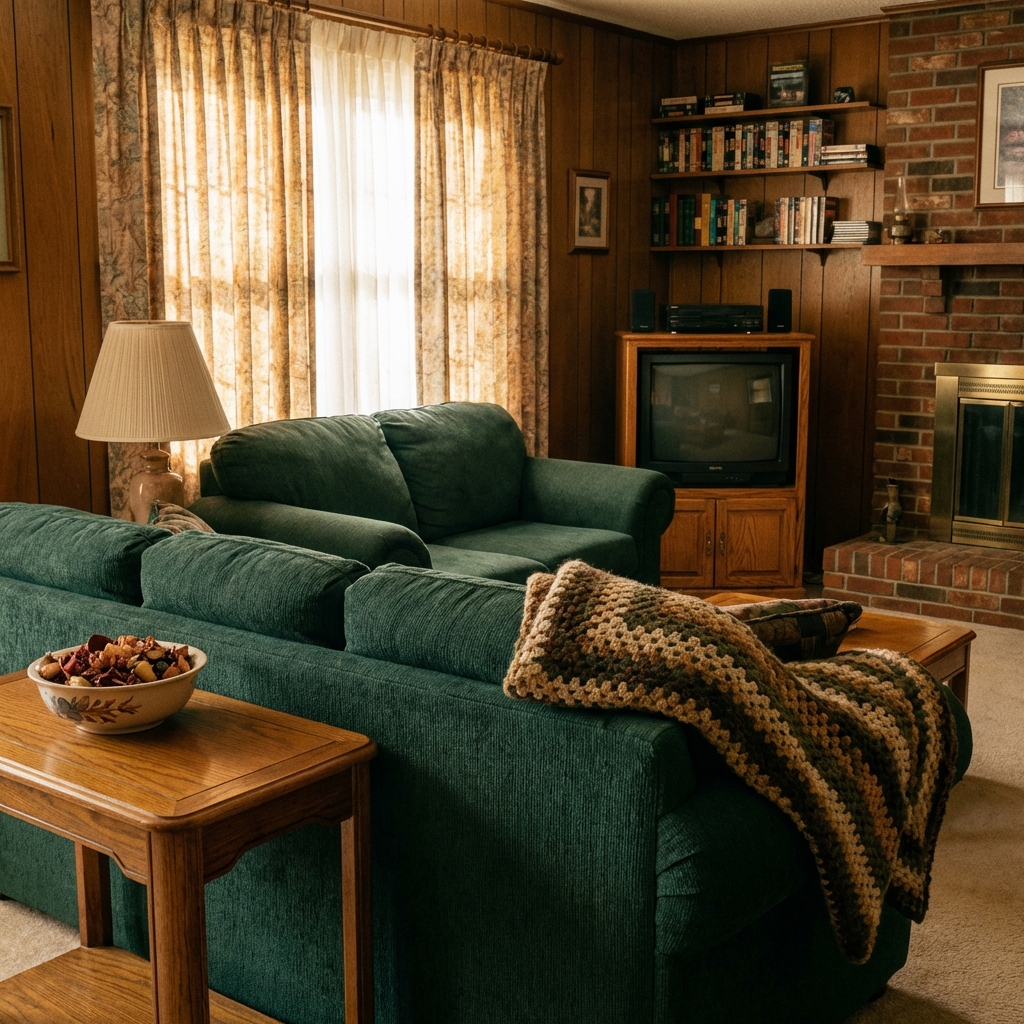
The 1990s sofa had one job: swallow you whole.
These were massive, deep, overstuffed couches upholstered in chenille, microfiber, or heavy textured fabric. They had rolled arms, oversized cushions, and enough throw pillows to build a fort.
You did not sit on a 90s sofa. You sank into it. And getting back out required a genuine physical effort.
They came in hunter green, burgundy, or dark blue — always solid colors, never patterned. And they were everywhere. Every living room, every family room, every finished basement.
The slim, low-profile couches that replaced them might look better on Instagram. But nothing since has been as comfortable.
2. The Big-Screen Rear Projection TV
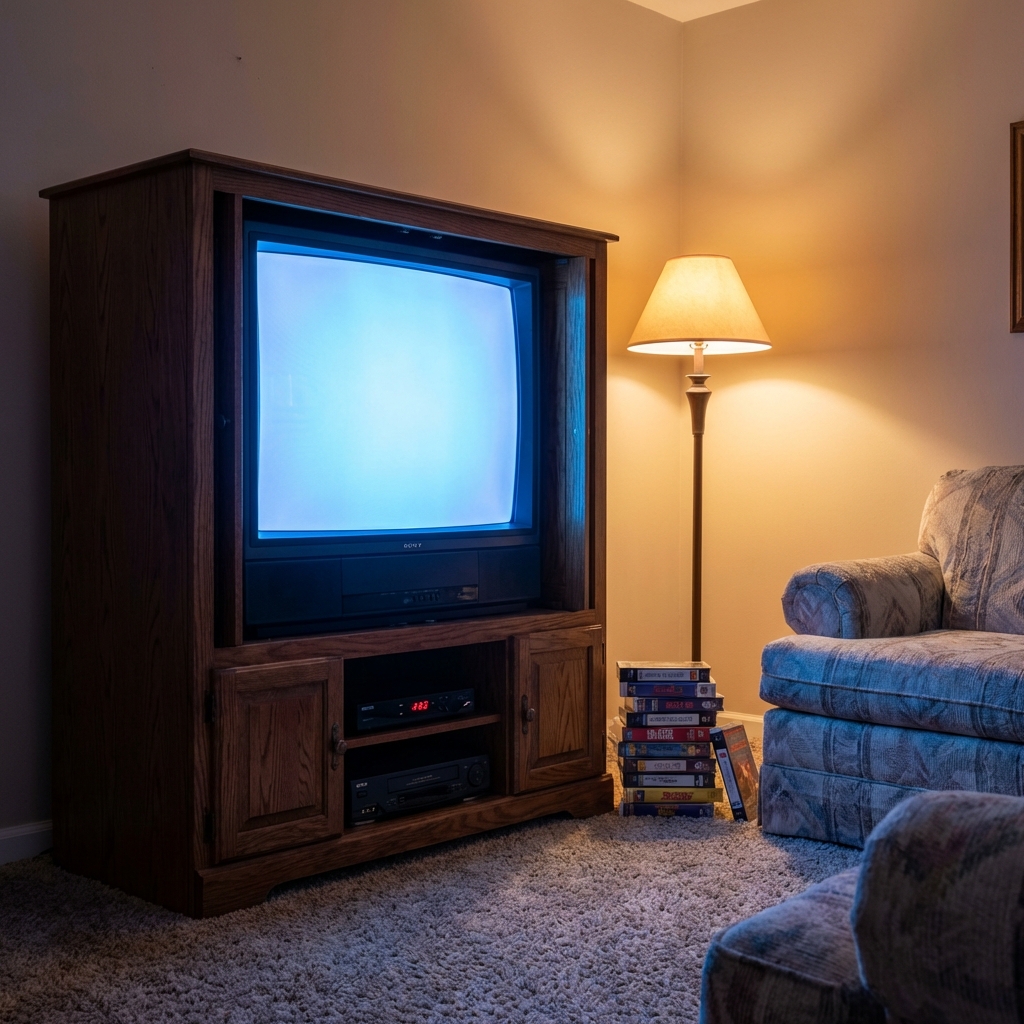
Before flat screens, the big-screen TV was a piece of furniture.
The rear projection TV sat on the floor, stood three to four feet tall, and had a screen that seemed impossibly large at the time — 50, 55, sometimes 60 inches. The picture quality was fuzzy by today’s standards, especially from the side. But straight on, it was a revelation.
It lived inside a massive cabinet, usually flanked by an entertainment center with shelves for the VCR, the cable box, and the growing DVD collection.
Watching the Super Bowl or a rented movie on the big screen was an event. You invited people over for it. The big-screen TV was the centerpiece of 90s family life.
3. Sponge-Painted Walls
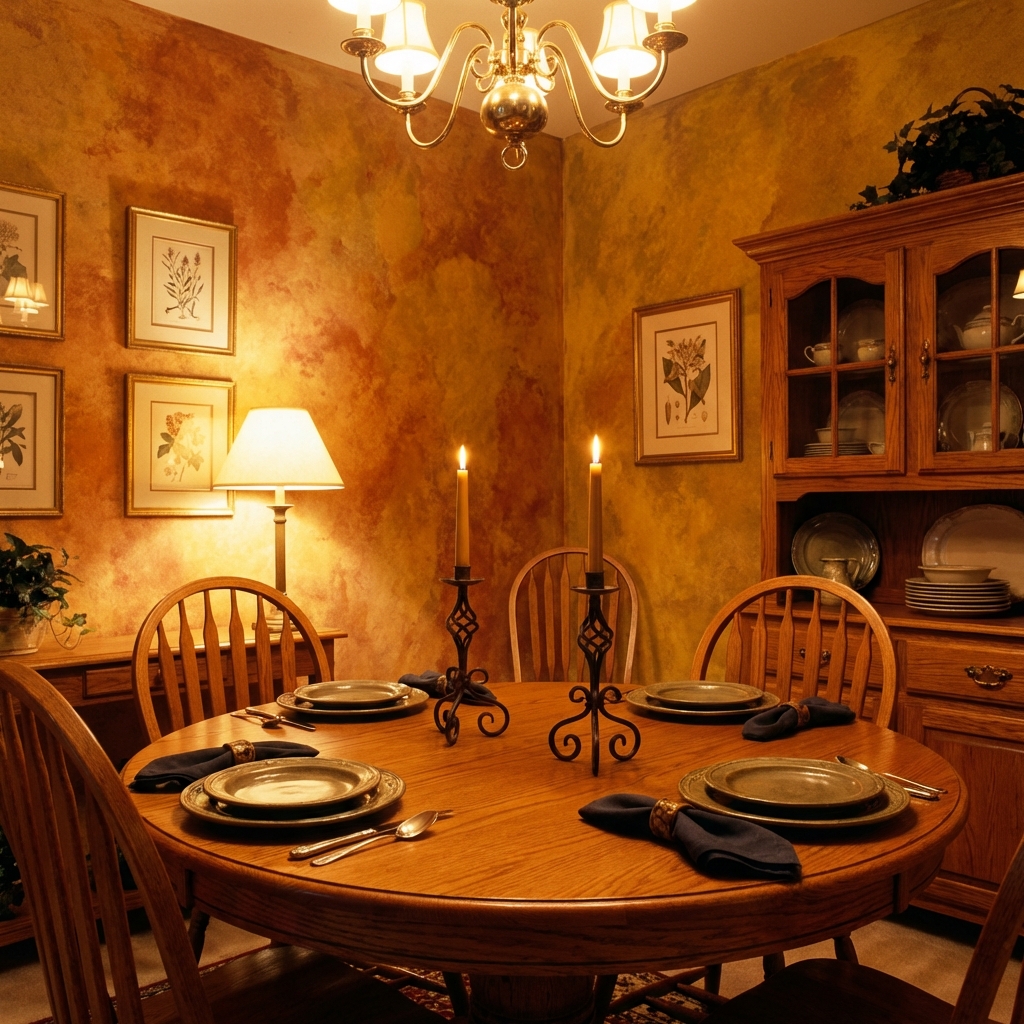
Somewhere around 1992, every homeowner in America bought a natural sea sponge and a second paint color.
Sponge painting was the DIY faux finish of the decade. You rolled a base coat on the wall, then dabbed a contrasting color with a sponge to create a soft, mottled texture. The result looked vaguely like old Italian plaster — if you squinted.
It was on every home improvement show. It was in every decorating magazine. And it was attempted in every guest bedroom, powder room, and dining room in the country.
Some people pulled it off beautifully. Others ended up with walls that looked like a kindergarten art project. There was no middle ground.
4. Hunter Green Everything
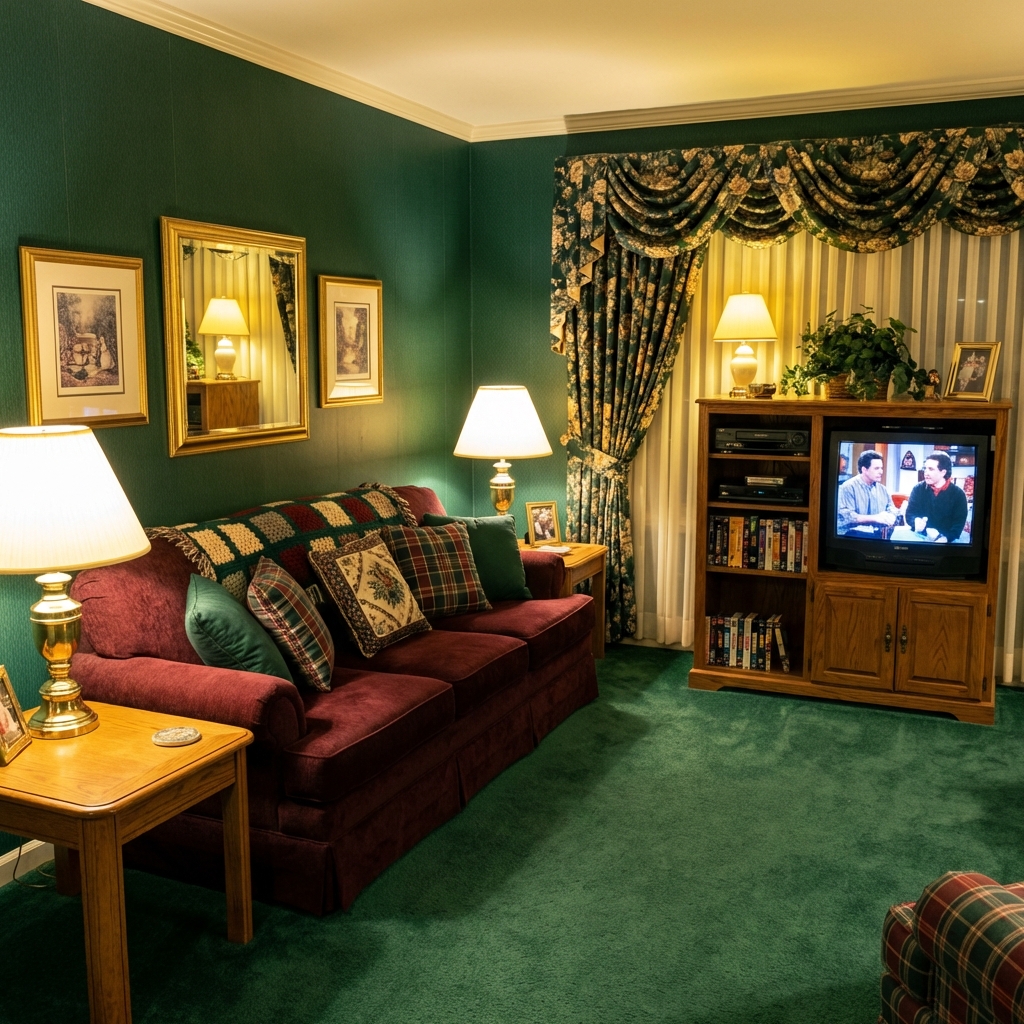
If the 1980s belonged to mauve, the 1990s belonged to hunter green.
It was on the walls. It was on the carpet. It was on the curtains. It was on the sofa. It was on the towels, the bedspread, the placemats, and the front door.
Usually paired with burgundy, gold, or cream, hunter green created a palette that was supposed to feel rich and traditional — like an English library or a country estate.
It worked. Until it did not. By 1999, the color felt heavy and dated, and the entire country pivoted to beige and khaki as fast as it could.
But for most of the decade, hunter green was the undisputed champion of American home color.
5. The Formal Living Room Nobody Used
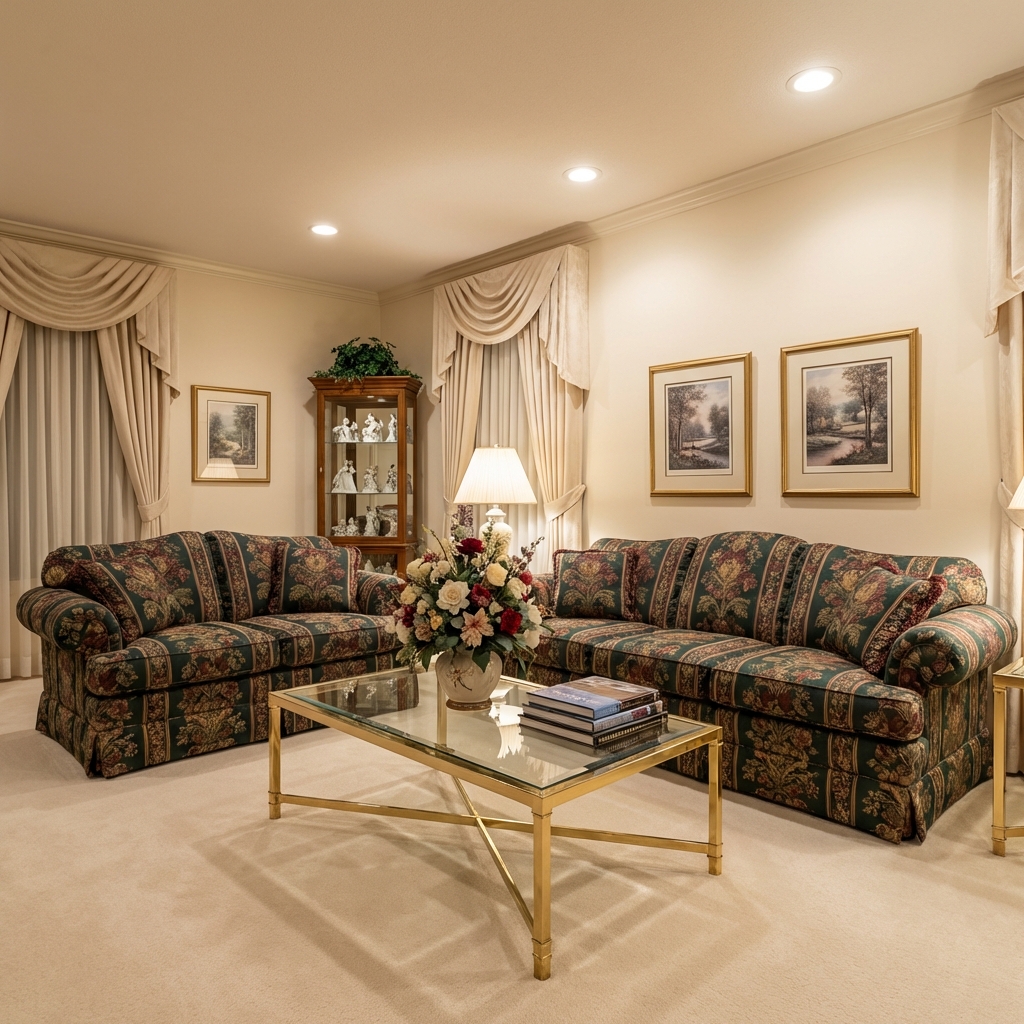
Every 1990s home that had more than one living space had The Room.
It was right off the front entryway. It had the nicest furniture in the house — usually a matching sofa and loveseat that still looked brand new because nobody was allowed to sit on them. A glass coffee table. Maybe a china cabinet. Definitely a silk flower arrangement.
It was reserved “for company.” But the company rarely came. And when they did, everyone ended up in the family room anyway.
Children were forbidden from entering. The dog was not allowed in. Even the adults walked through it quickly, like museum visitors who were not sure if they were allowed to touch anything.
It was the most expensive, most decorated, most perfectly maintained, and least used room in the entire house.
6. The Folding Screen Room Divider
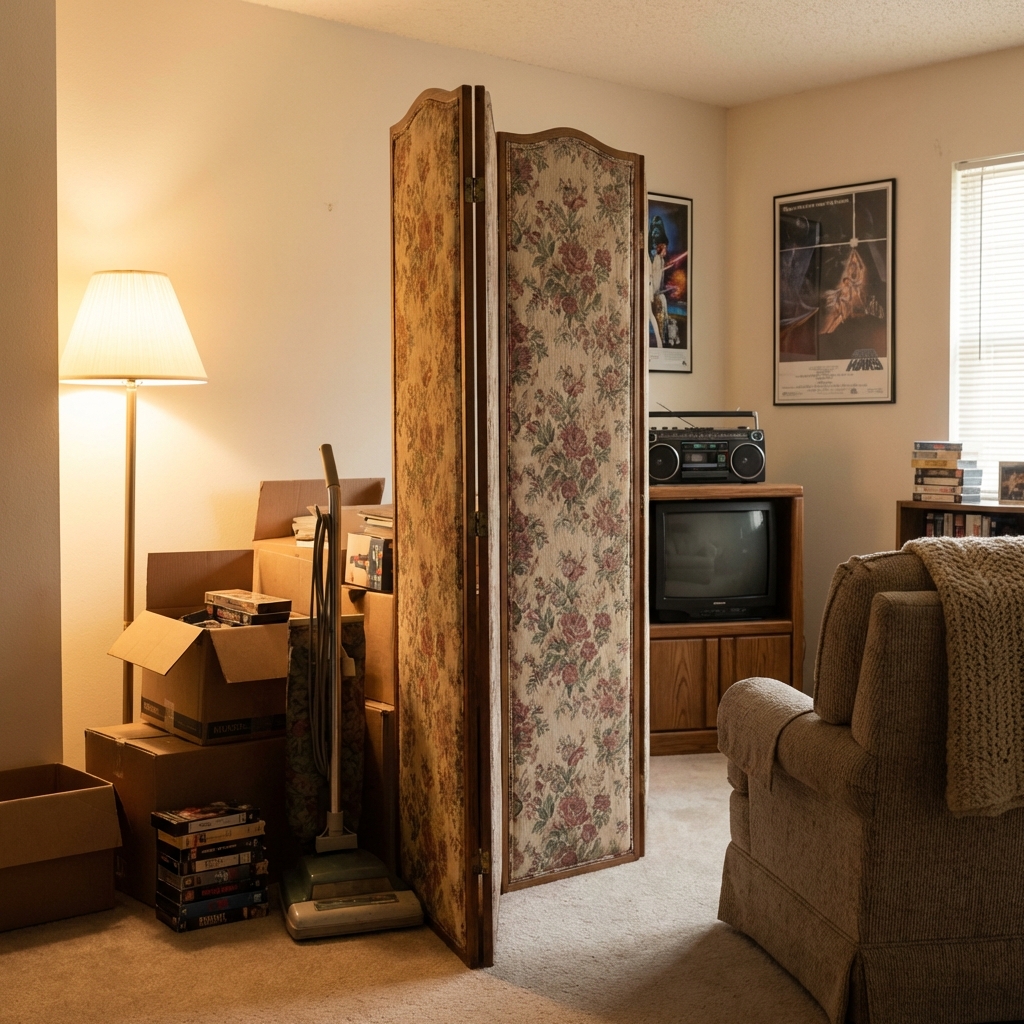
The folding screen was the 1990s’ answer to a room that needed to be two things at once.
These three-panel or four-panel screens — often made of wood, fabric, or rattan — showed up in bedrooms, living rooms, and studio apartments. They hid cluttered corners, separated sleeping areas from living areas, and added a touch of something vaguely exotic.
Some were plain and functional. Others were covered in toile, chinoiserie prints, or fabric that matched the curtains.
The TV show Friends probably did more to popularize the folding screen than any interior designer. Monica’s apartment had one. Suddenly everyone wanted one.
7. Candles and Candle Holders Everywhere
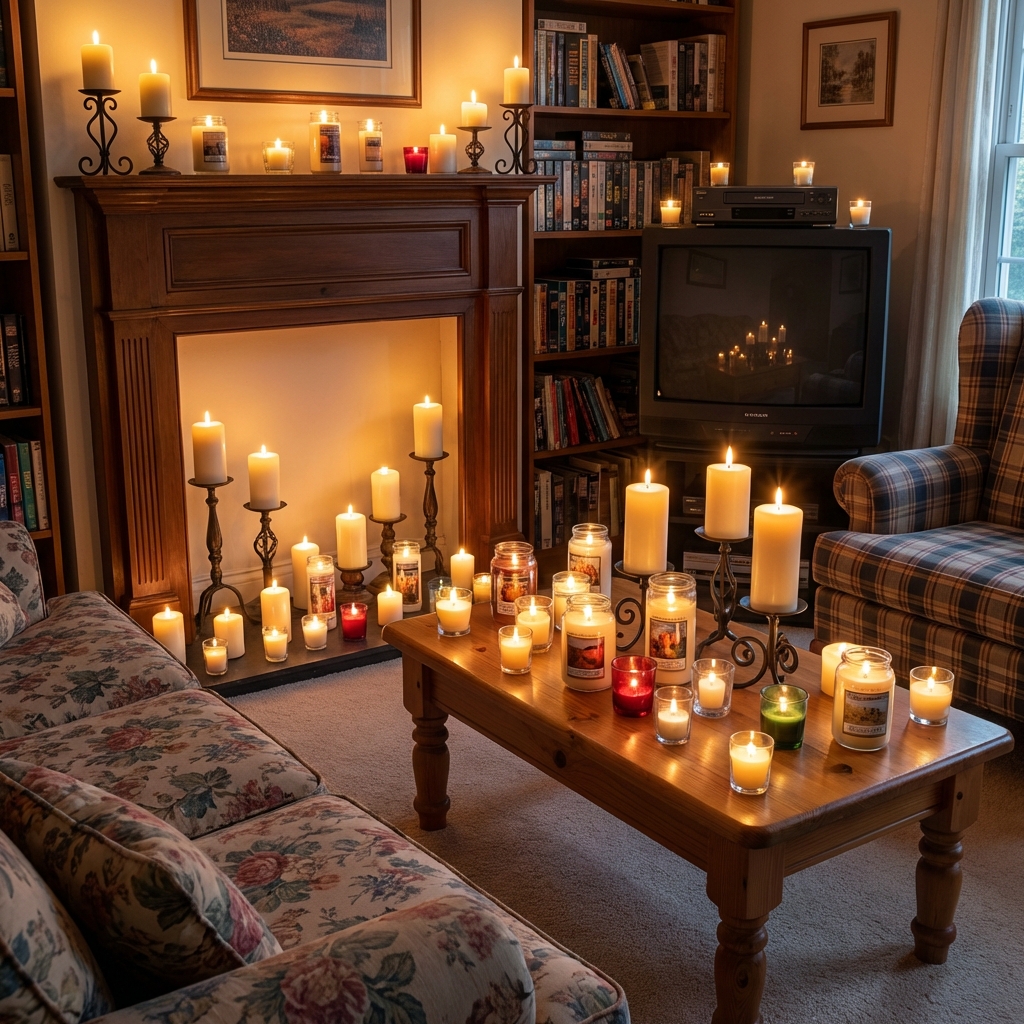
The 1990s were the decade that turned candles from emergency supplies into home decor.
Pillar candles on iron stands. Votive candles in glass holders lined up on the mantel. Taper candles in wrought iron candelabras. Jar candles from Yankee Candle on every bathroom counter.
The scents were specific to the era — vanilla, cinnamon, apple spice, and “fresh linen.” If you walked into a 90s home and it smelled like a bakery crossed with a spa, you had found the candle collection.
Bath & Body Works and Yankee Candle built empires during this decade. Every mall trip ended with a bag of candles. Every room had at least one burning at all times.
The obsession has never fully gone away. But the 90s were the golden age.
8. The Ceiling Fan in Every Room
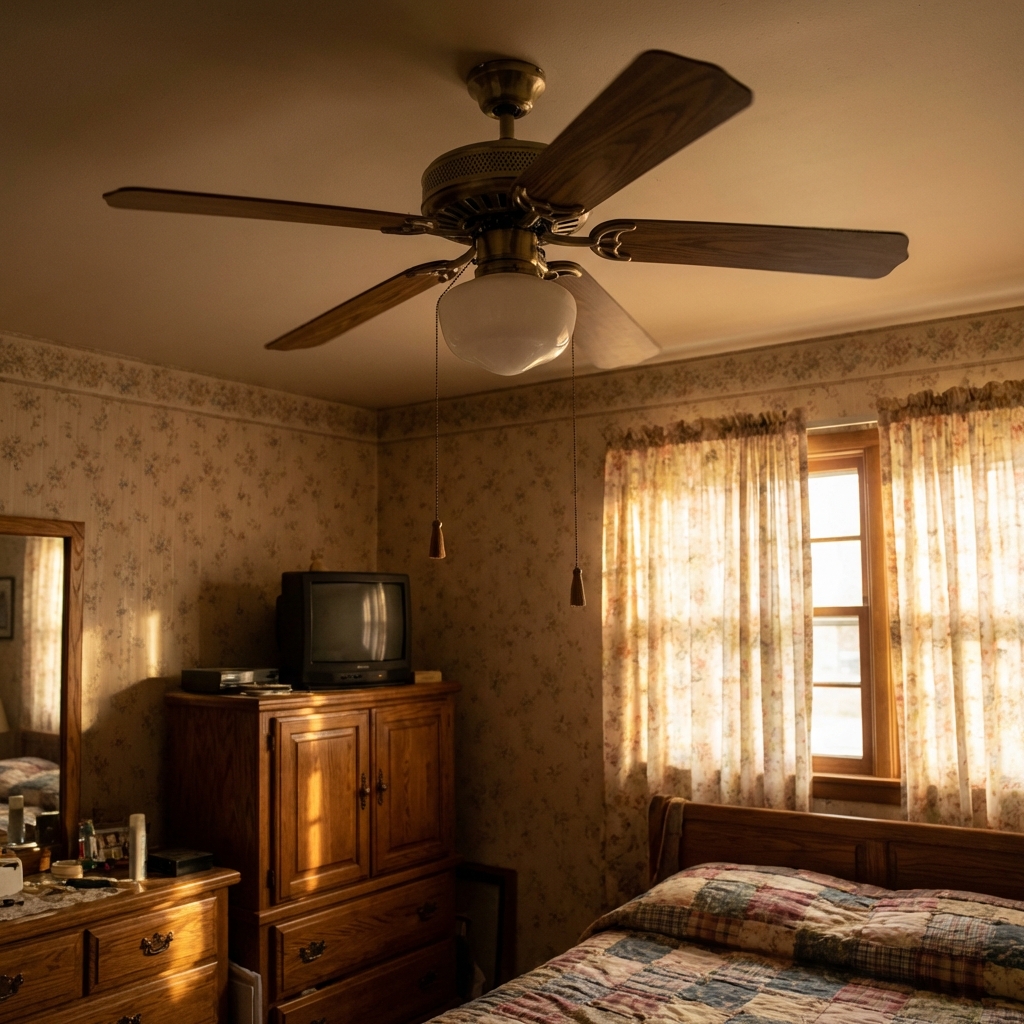
At some point in the early 1990s, someone decided that every room in every American home needed a ceiling fan.
Living room. Bedroom. Kitchen. Guest room. Sometimes even the bathroom.
The standard-issue 90s ceiling fan had five blades — usually fake wood — a pull chain, and a frosted glass light kit underneath. The fancier ones had three speeds and a reverse switch for winter.
They were practical. They were affordable. And they were relentless. You could not walk into a room in a 90s home without one spinning slowly overhead.
The trend has evolved — modern ceiling fans are sleeker and often bladeless — but the 90s version, with its fake wood blades and pull chain, is burned into a generation’s memory.
9. The Tuscan Kitchen
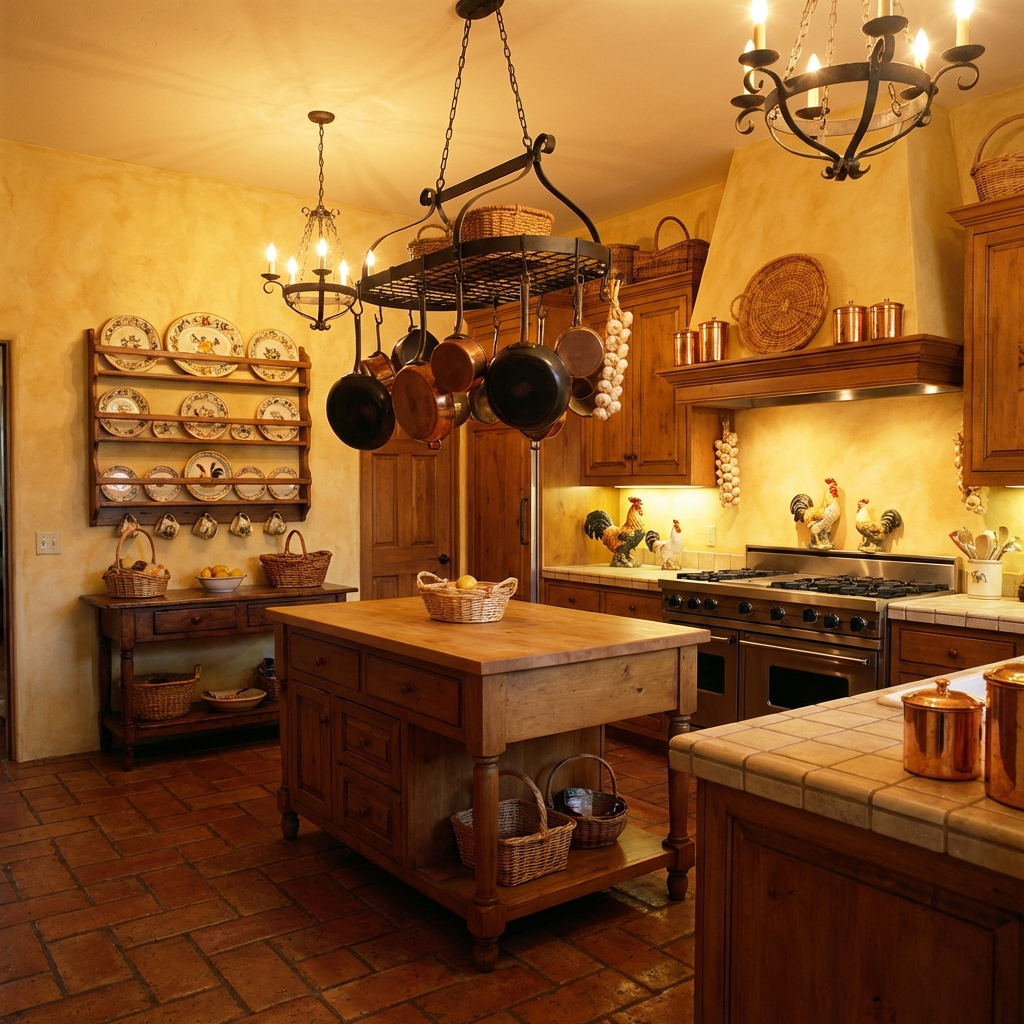
Somewhere around 1995, every kitchen in America wanted to be a villa in Tuscany.
Terracotta floor tiles. Wrought iron pot holders. Faux-finished walls in warm yellow or burnt sienna. Decorative plates displayed on plate rails. Roosters on the countertops. Olive oil bottles used as decor. Wrought iron scroll work on everything.
The Tuscan kitchen was warm, earthy, and heavy. It felt like you should be making pasta from scratch while drinking red wine at 2 PM on a Tuesday.
The all-white kitchen killed it in the 2010s. But the Tuscan kitchen had soul. It felt like a place where people actually cooked and lived, not a showroom.
10. White Appliances
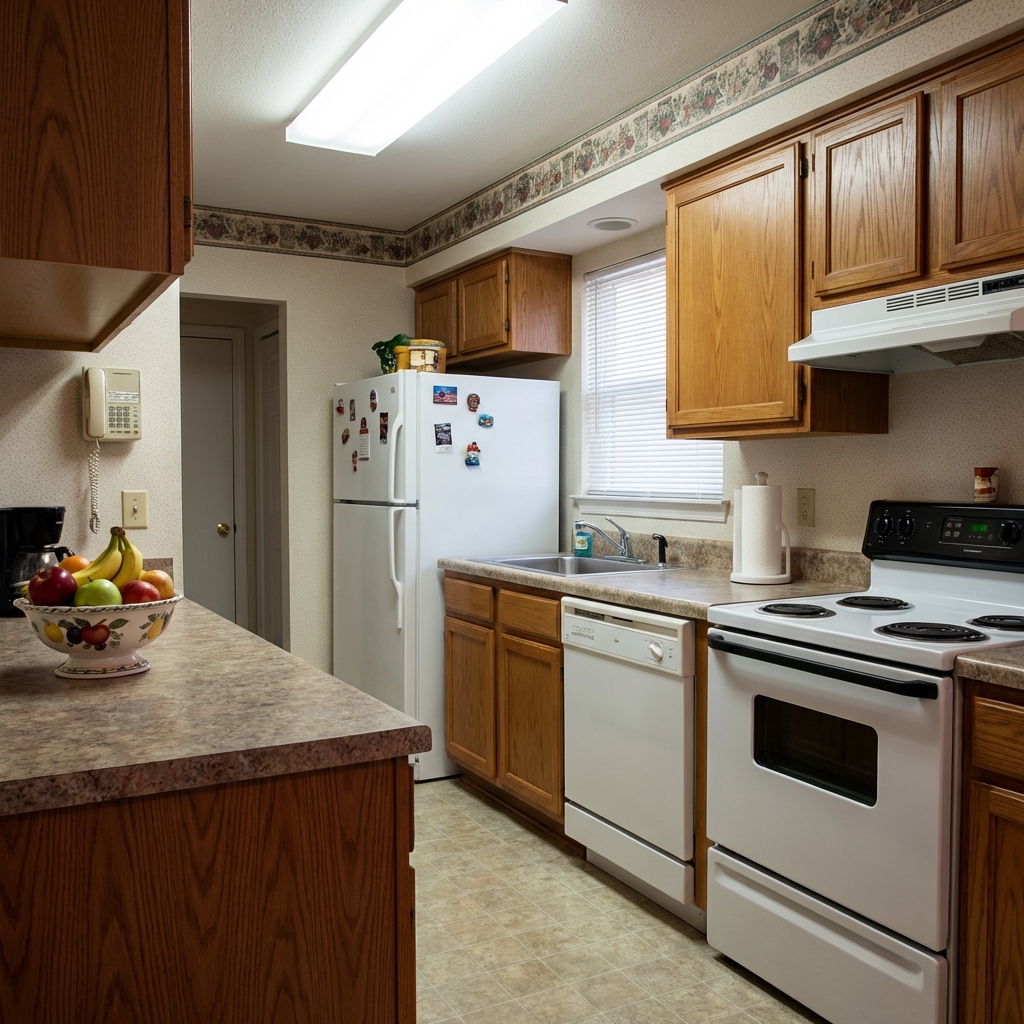
The almond appliances of the 1980s were out. White was in.
White refrigerators. White dishwashers. White ovens and ranges. White microwave ovens mounted over the stove.
The reasoning was that white looked clean, fresh, and modern — a sharp departure from the warm almond and harvest gold of the previous two decades.
White appliances dominated the entire decade and well into the early 2000s. Stainless steel would eventually dethrone them, and suddenly white appliances became the new symbol of a kitchen that had not been updated.
But for ten years, white was king.
11. Granite Countertops (The Beginning)
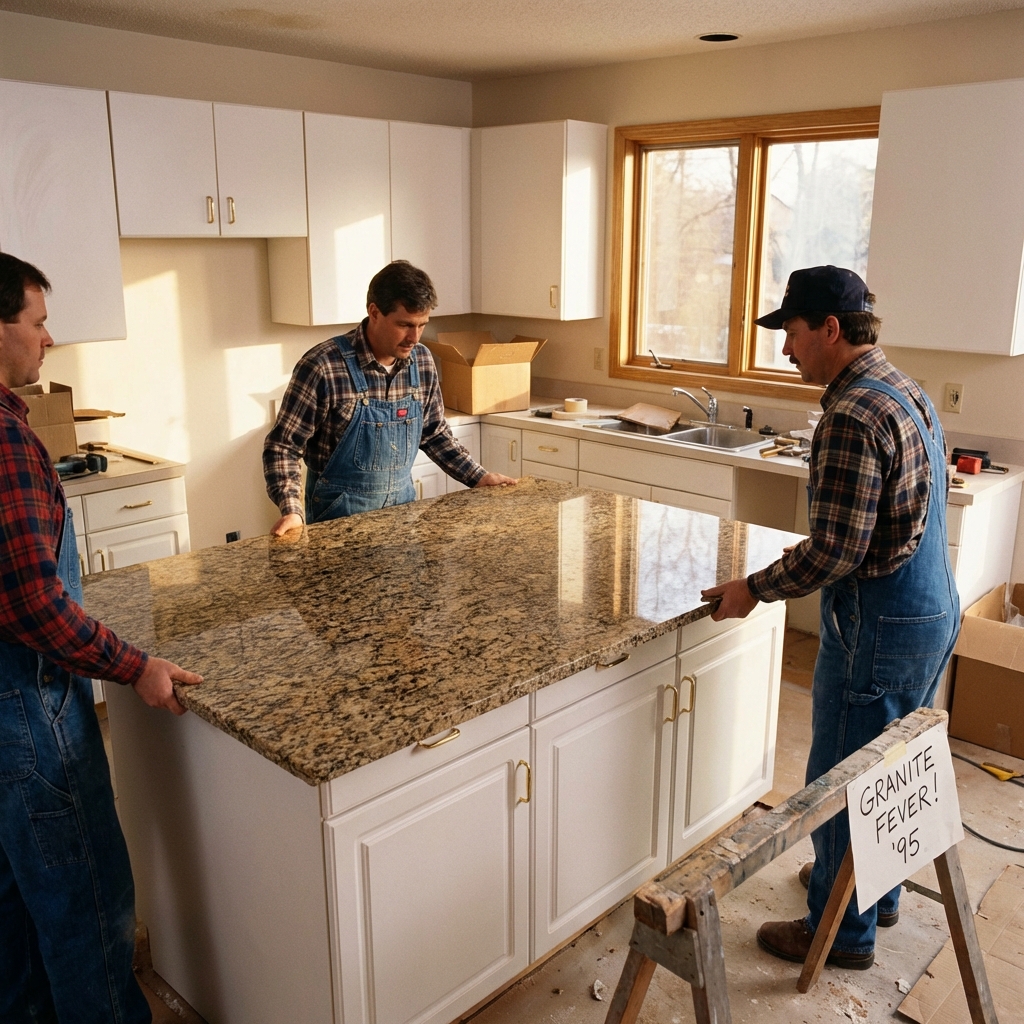
The 1990s did not invent granite countertops. But the 1990s made them a status symbol.
Before the decade, most kitchen countertops were laminate — Formica in some shade of speckled beige or butcher block. Granite was reserved for high-end custom kitchens.
Then the home renovation shows started. And suddenly, “we need to upgrade to granite” became the most common sentence in American home improvement.
By the late 90s, granite was no longer a luxury — it was an expectation. Every kitchen remodel, every new build, every real estate listing mentioned it.
The granite obsession that defined the 2000s started right here in the 1990s. It was the first time a countertop material became a cultural phenomenon.
12. The Pot Rack Hanging from the Ceiling
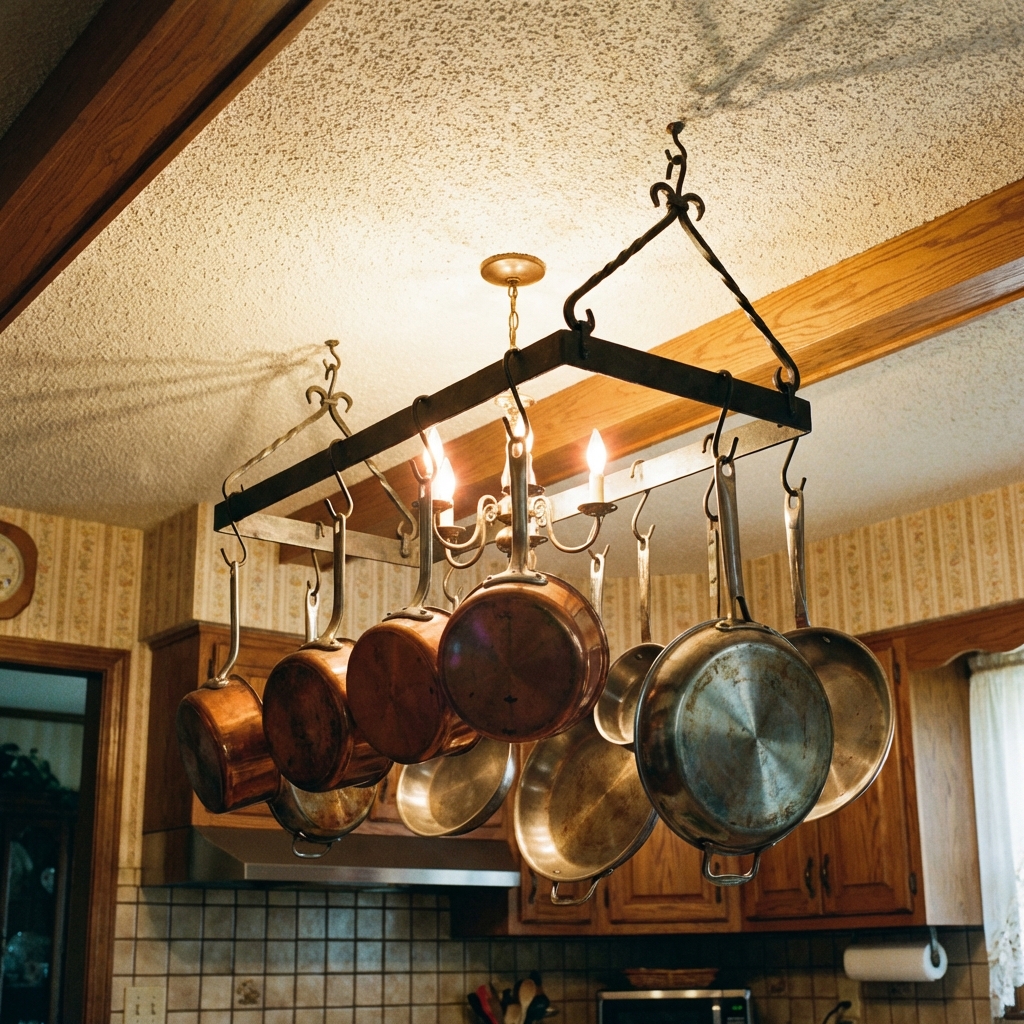
Nothing said “I am serious about cooking” in the 1990s like a wrought iron pot rack hanging over the kitchen island.
Copper-bottomed pots and cast iron skillets dangled overhead like a culinary chandelier. It was equal parts practical storage and visual statement.
The pot rack was inspired by professional restaurant kitchens and European farmhouses. It said “I watch Julia Child” and “I have been to Provence” — even if you had done neither.
The problem was that most people hung their pots, never used the ones on top, and spent years dusting them. But the pot rack looked incredible, and in the 90s kitchen, looking the part was half the battle.
13. Track Lighting
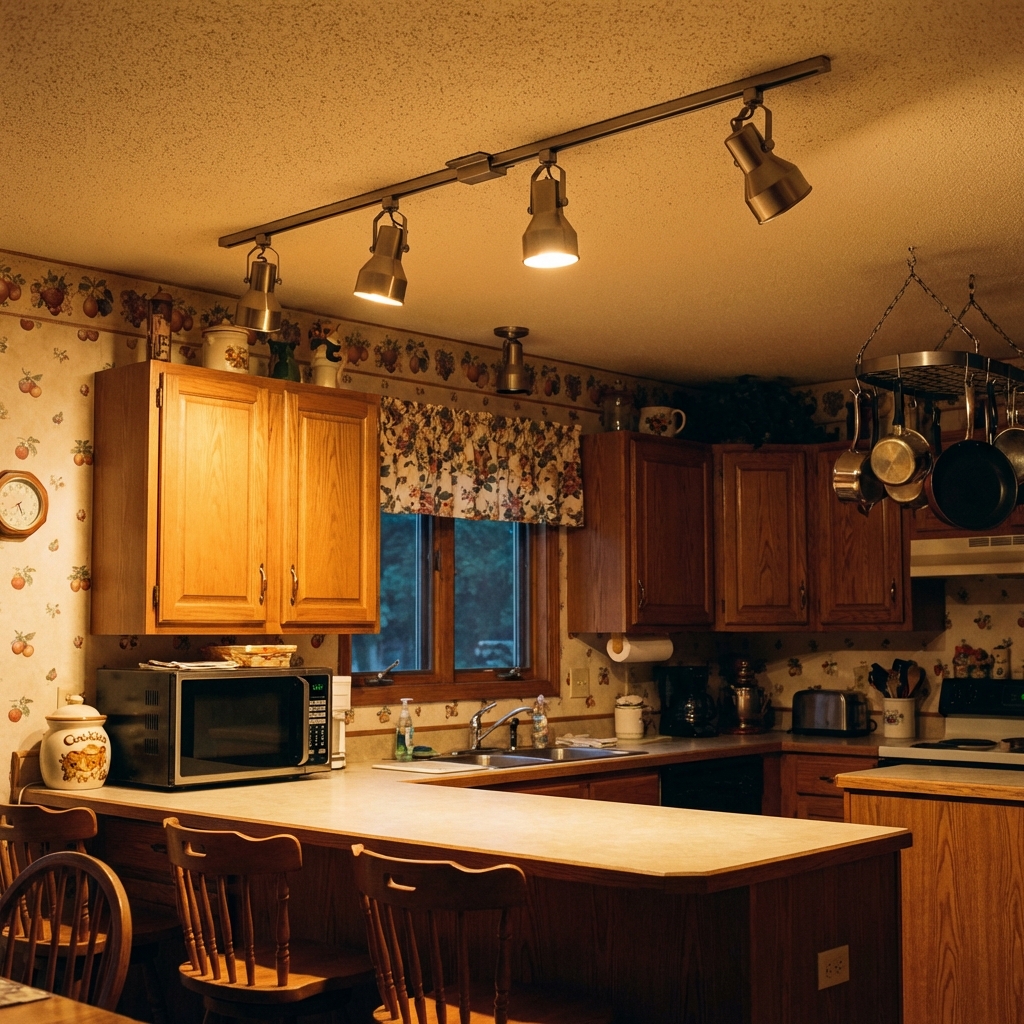
Those adjustable spotlights mounted on a ceiling rail were everywhere in the 1990s.
Track lighting showed up in kitchens, over breakfast bars, in hallways, and in any room that wanted to feel slightly more modern than a ceiling fan with a light kit.
The appeal was flexibility — you could aim each individual light head wherever you wanted, highlighting art, illuminating a countertop, or just pointing them all in the same direction because you installed them on a Saturday and never adjusted them again.
The standard 90s track light had a brushed nickel or white rail with three to five cone-shaped heads. Some people went with halogen bulbs for that bright, slightly blue, gallery-quality light.
Recessed lighting eventually replaced track lighting as the go-to modern choice. But for the 90s, those little adjustable spotlights were the height of sophistication.
14. The Pedestal Sink Comeback
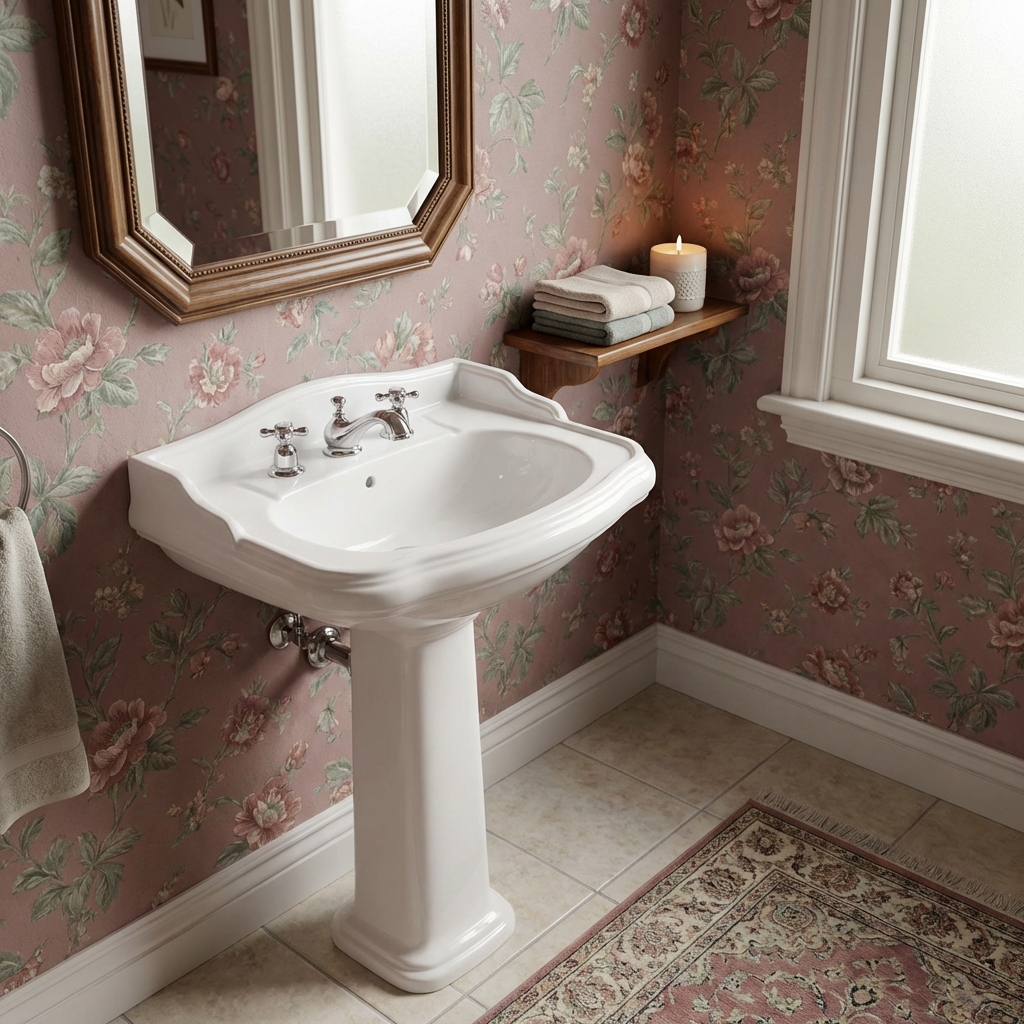
After decades of vanity cabinets with countertops, the 1990s brought back the pedestal sink.
It was part of a broader return to “traditional” bathroom design — white fixtures, subway tile, chrome hardware. The pedestal sink looked clean, classic, and elegant.
It also eliminated all of your under-sink storage, which most people did not think about until after it was installed.
The pedestal sink worked beautifully in powder rooms and half baths where storage was not a concern. In master bathrooms, it was a triumph of style over function that sent toiletries scattering to baskets, shelves, and any available surface.
15. Garden-Themed Bathroom Decor
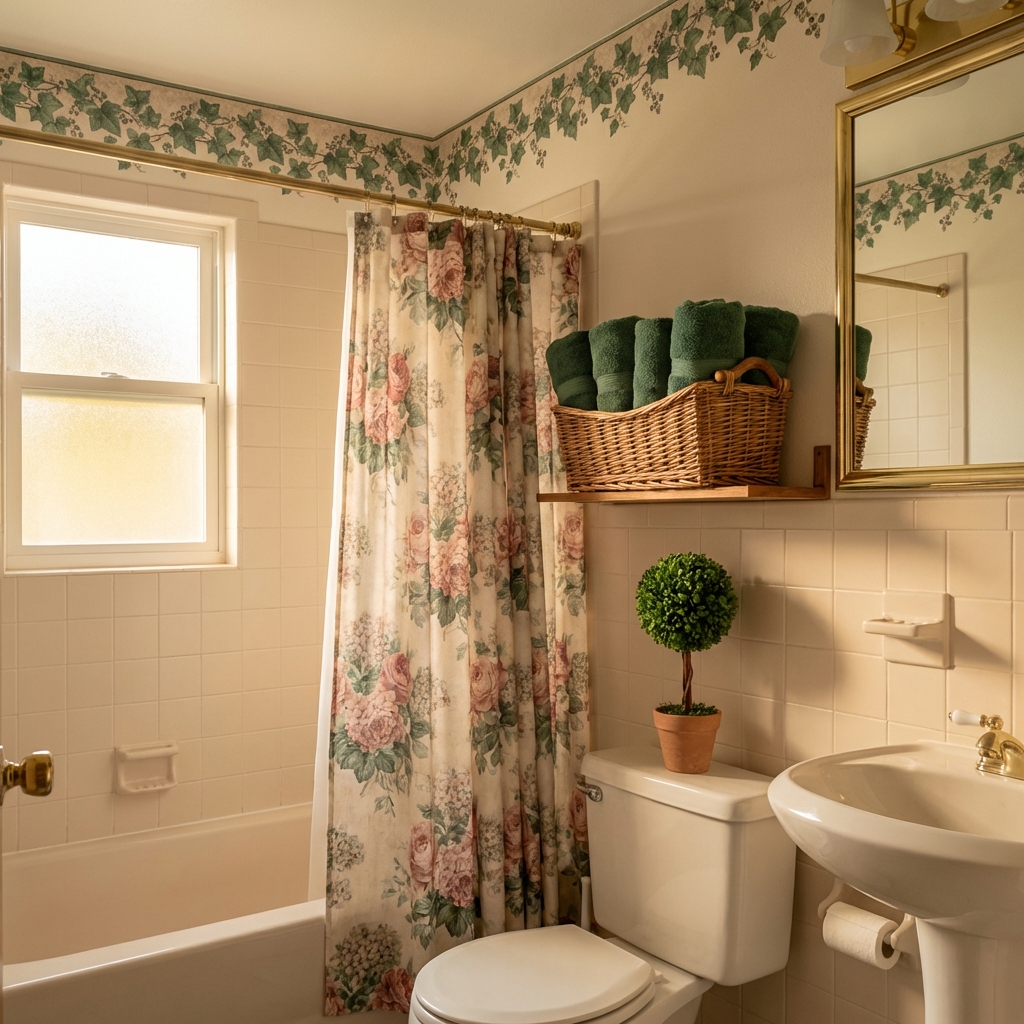
The 1990s bathroom was a greenhouse.
Ivy-patterned wallpaper borders. Faux topiary balls on the back of the toilet. Floral shower curtains. Leaf-shaped soap dishes. Wicker baskets holding rolled-up hand towels.
The garden theme extended to the towels (embroidered with vines), the bath mat (shaped like a leaf), and sometimes the toilet seat cover (please, no).
It was an attempt to make the most utilitarian room in the house feel natural and organic. It succeeded in making it feel like the bathroom at a bed and breakfast in Vermont.
The garden bathroom has been fully replaced by the gray-and-white spa bathroom. But anyone who visited a 90s powder room remembers the ivy.
16. Berber Carpet
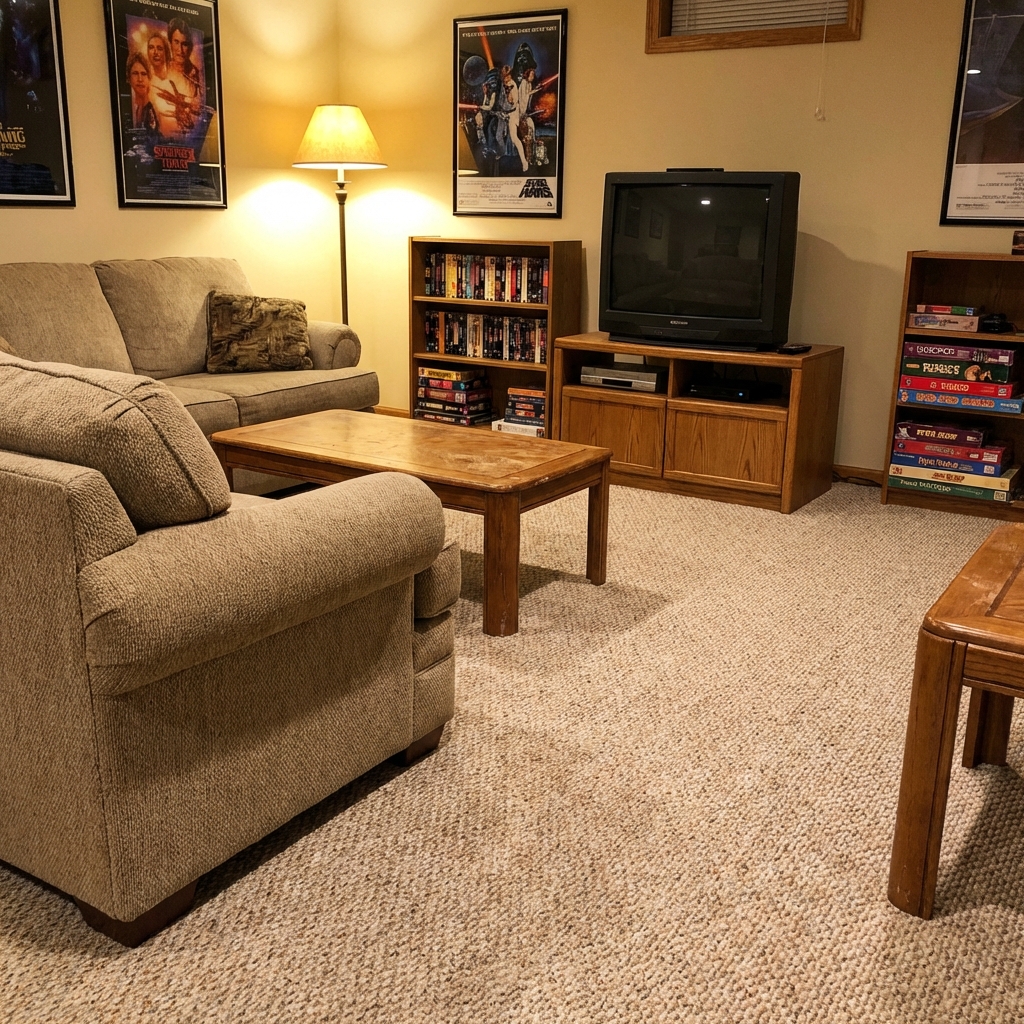
If your home had carpet in the 1990s — and almost every home did — there is a very good chance it was Berber.
Berber carpet had a distinctive looped texture and a flecked, oatmeal-colored pattern that hid dirt and stains better than anything else on the market. It came in neutral tones — beige, tan, light gray — and it was installed in bedrooms, basements, hallways, and family rooms across the country.
It was practical, durable, and inexpensive. It looked reasonably clean even when it was not. And it felt like walking on a sweater.
The downside was that the loops snagged easily — one pull from a pet claw or a piece of furniture and you had a run that could not be fixed. But Berber carpet was the flooring of the 90s the way mauve carpet was the flooring of the 80s.
17. The Inflatable Chair
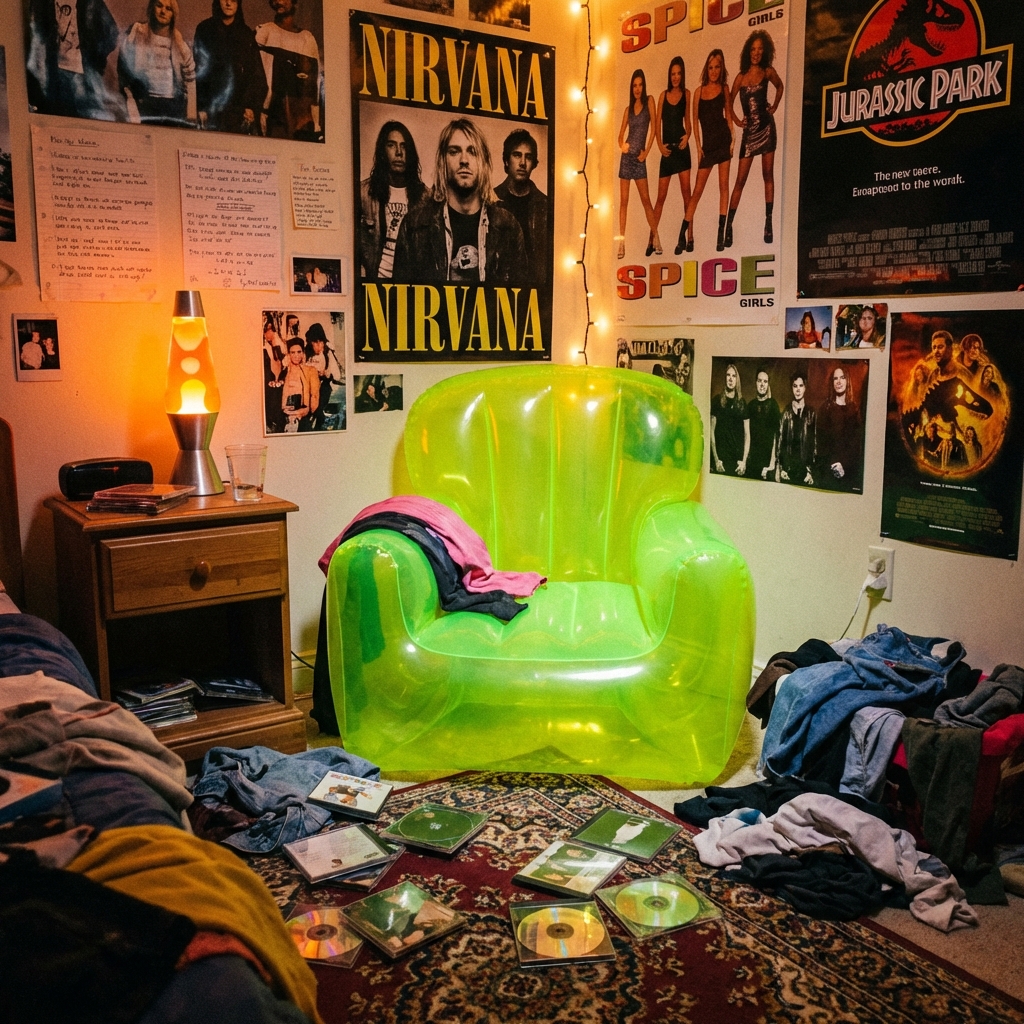
Every teenager in the late 1990s either owned an inflatable chair or desperately wanted one.
They were clear, or neon green, or electric blue. They were sold at Spencer’s, Target, and the Delia’s catalog. They cost about $20 and took ten minutes of lung power to inflate.
They were spectacularly uncomfortable. Your skin stuck to them in summer. They deflated slowly over time. And sitting down on one produced a sound that was deeply embarrassing in mixed company.
None of that mattered. They were cool. They were in every teen magazine. They were the furniture equivalent of a mood ring — completely useless, but you had to have one.
18. Beaded Curtain Doorways
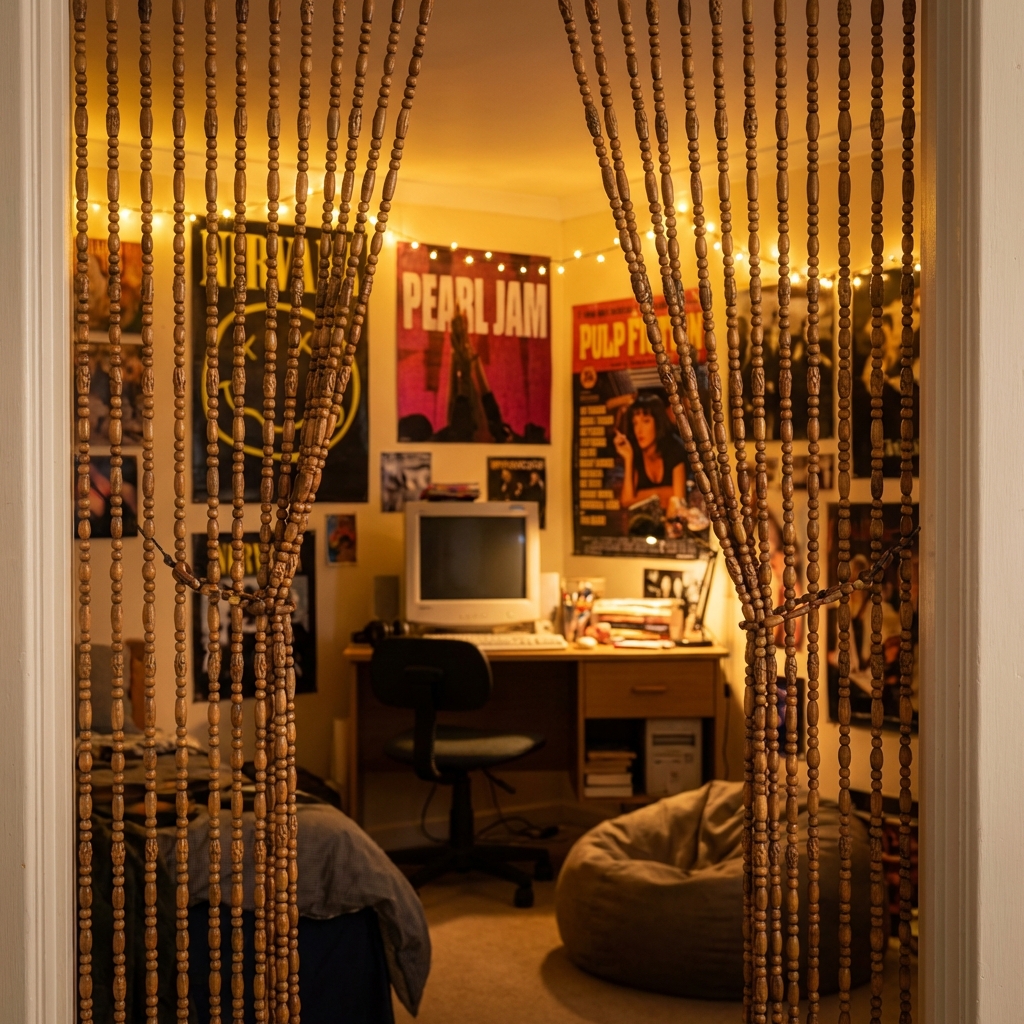
Instead of a door, you walked through a curtain of hanging beads.
Beaded curtains showed up in teenage bedrooms, dorm rooms, and the occasional adventurous adult living space throughout the 1990s. They came in wood, plastic, bamboo, and sometimes shells.
They provided zero privacy. They tangled in your hair. They made a clattering noise every time you walked through them. And the cat destroyed them within a week.
But they looked bohemian and free-spirited, which was the entire point. A beaded curtain said “I am creative and unconventional” — even if the room behind it was completely ordinary.
19. The Futon
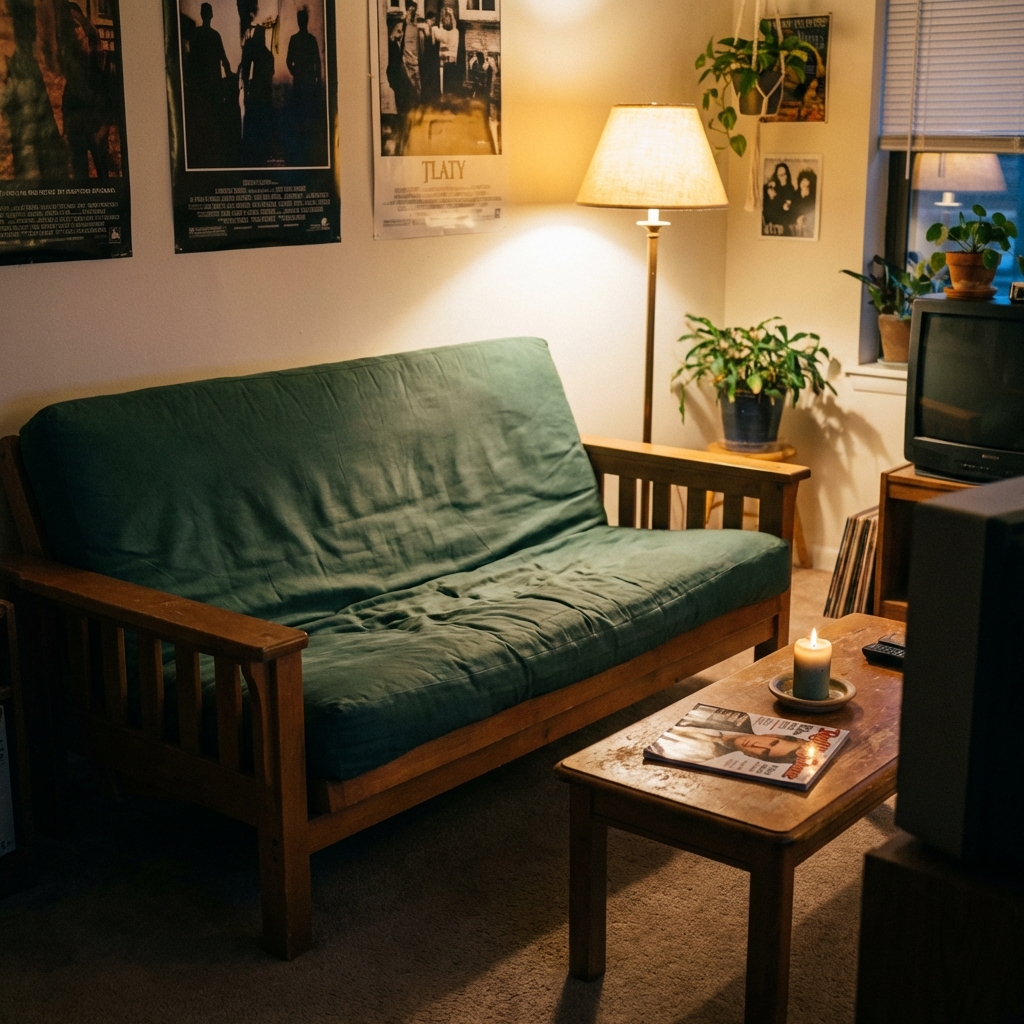
The futon was the ultimate dual-purpose piece of 1990s furniture.
During the day, it was a sofa — sort of. At night, you folded it flat and it became a bed — sort of. It was never particularly good at either job, but it did both, which was the appeal.
Every first apartment had one. Every college student owned one. Every spare room that needed to occasionally host a guest had a futon instead of a real guest bed.
The wooden frame creaked. The mattress was thin. The metal bar in the middle hit you in the spine at 3 AM. But the futon was affordable, portable, and solved a problem that every young person had — not enough space and not enough money for separate furniture.
20. Band and Movie Posters on Every Wall
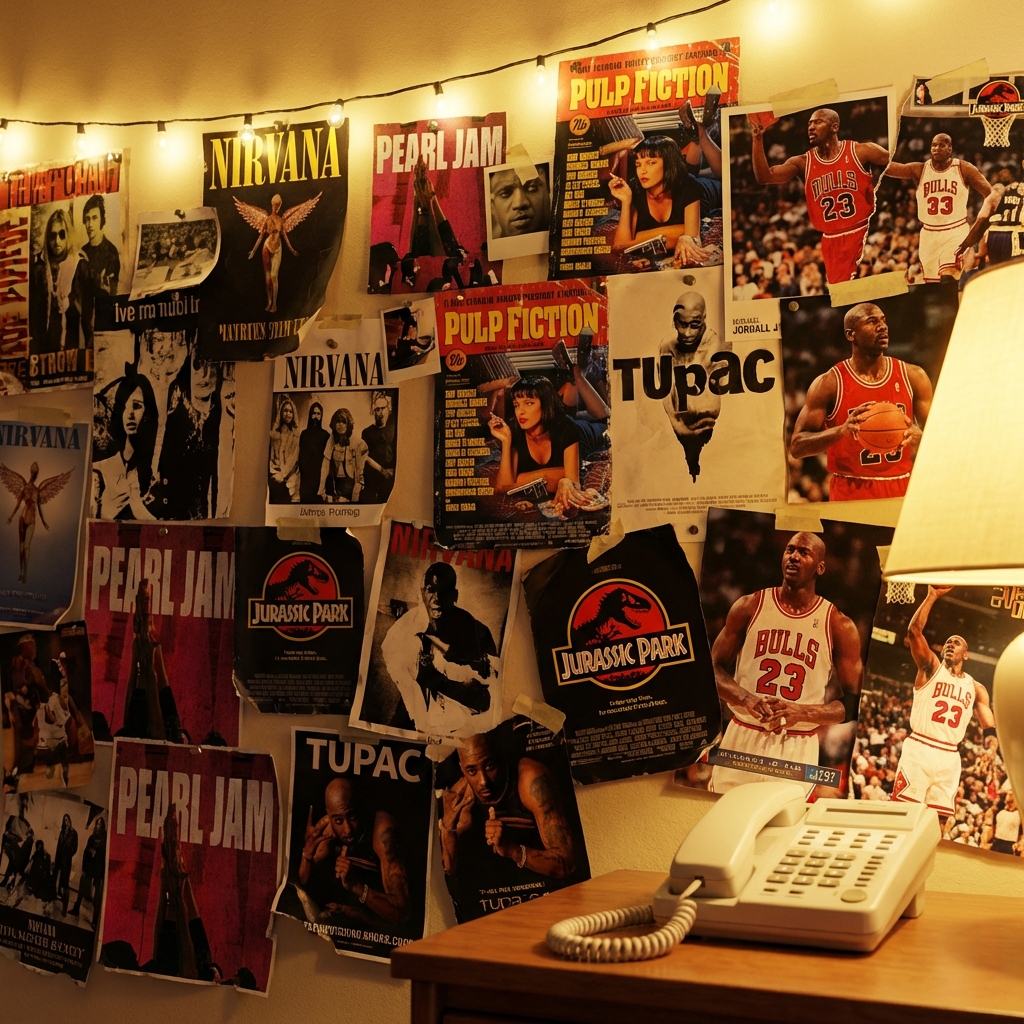
The walls of every 1990s teenager’s bedroom were covered.
Nirvana. Tupac. The Spice Girls. Titanic. Pulp Fiction. Michael Jordan. A blacklight poster of a mushroom. A Successories motivational poster stolen from a school hallway.
They were tacked up with thumbtacks or poster putty, slightly crooked, and layered on top of each other as tastes evolved. The bedroom wall was a living document of who you were — or who you wanted to be.
Parents hated them because of the holes in the wall. Kids loved them because the room finally felt like theirs.
No minimalist gallery wall of framed prints will ever carry the same personal weight as a bedroom wall covered in $5 posters from Sam Goody.
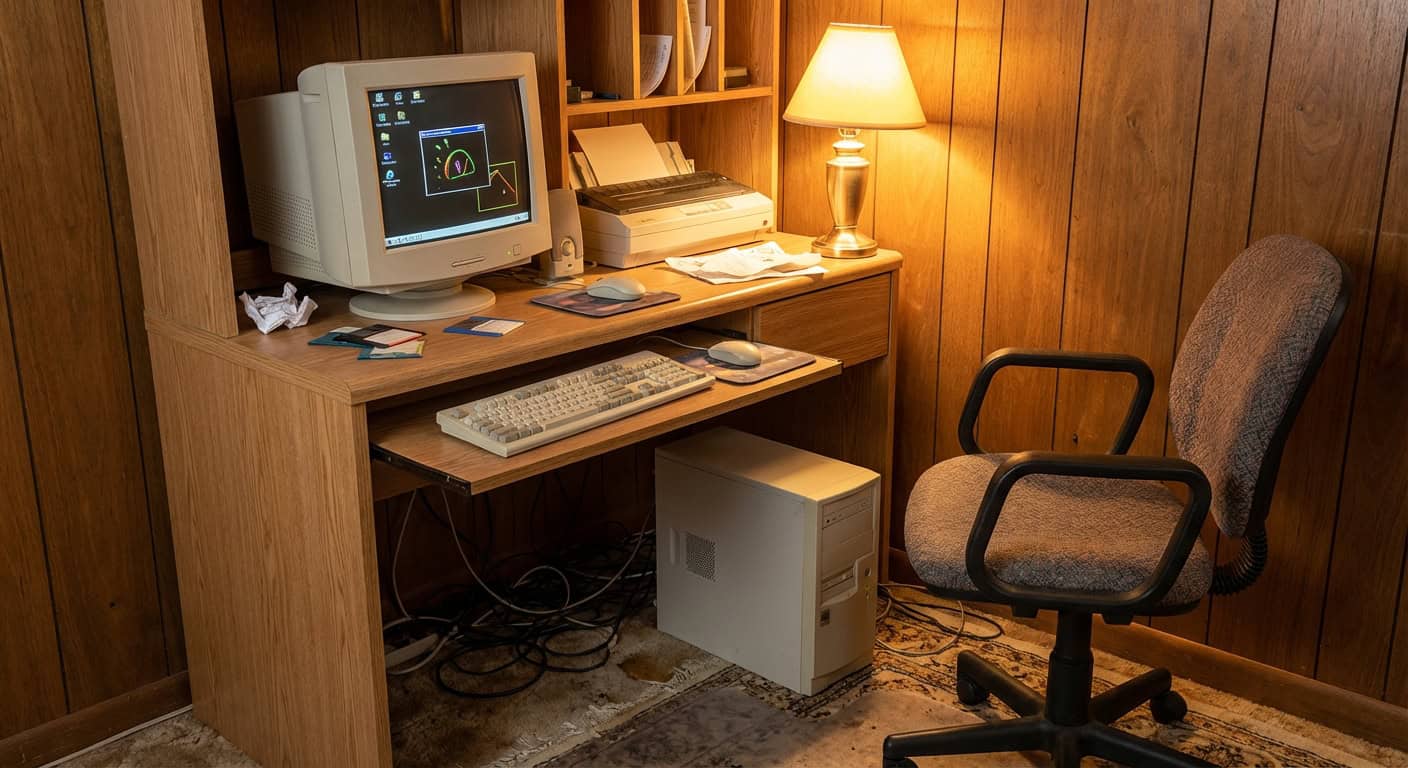
21. The Computer Desk Nook
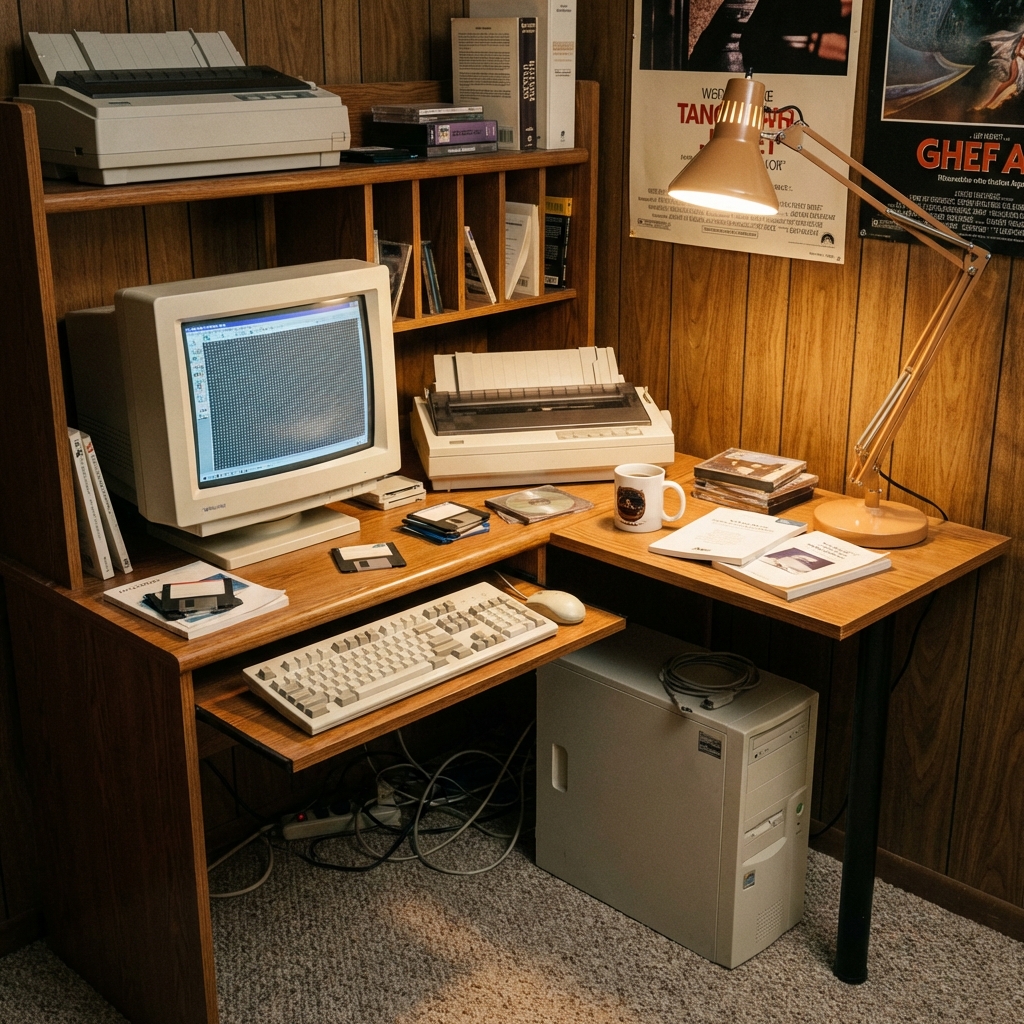
The 1990s created an entirely new piece of furniture: the computer desk.
It was usually a pressboard or particle board desk with a pull-out keyboard tray, a shelf for the tower, a hutch for the monitor, and a little cubby for the printer.
It lived in the corner of the den, the spare bedroom, or — if you were lucky — a dedicated “computer room” that the family shared.
The family gathered around it to check email, print MapQuest directions, wait 45 seconds for a webpage to load, and argue about who was tying up the phone line with dial-up internet.
The computer desk was the first home office. It was cramped, ugly, and revolutionary. Everything we do today on laptops and phones started at that little desk in the corner.
22. The Answering Machine
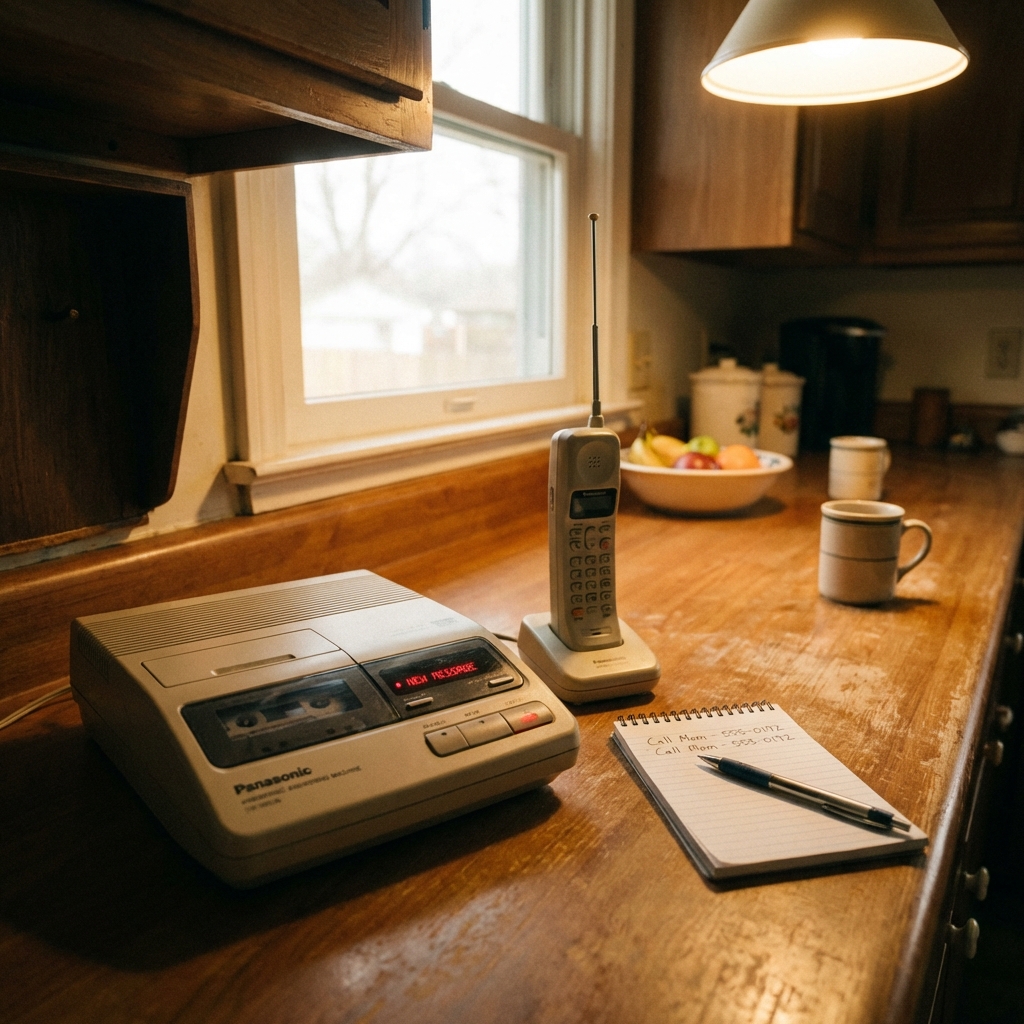
The blinking red light on the answering machine was the first thing you checked when you walked through the door.
Before voicemail existed on your phone, messages were recorded on a small machine that sat next to the cordless phone — usually on the kitchen counter or a hallway table. It had a tiny cassette tape inside and a robotic voice that announced “you have… three… new messages.”
Every household had a recorded greeting. Some were straightforward. Others were elaborate productions featuring the entire family, the dog barking, or a child reciting the phone number in a rehearsed monotone.
Screening calls was an art form. You stood next to the machine, listened to whoever was calling, and decided in real time whether to pick up. If it was your mom, you answered. If it was a telemarketer, you let it go.
The answering machine was a gatekeeper. It gave you control over your availability in a way that cell phones have completely destroyed.
23. The Cordless Phone on the Charger Base
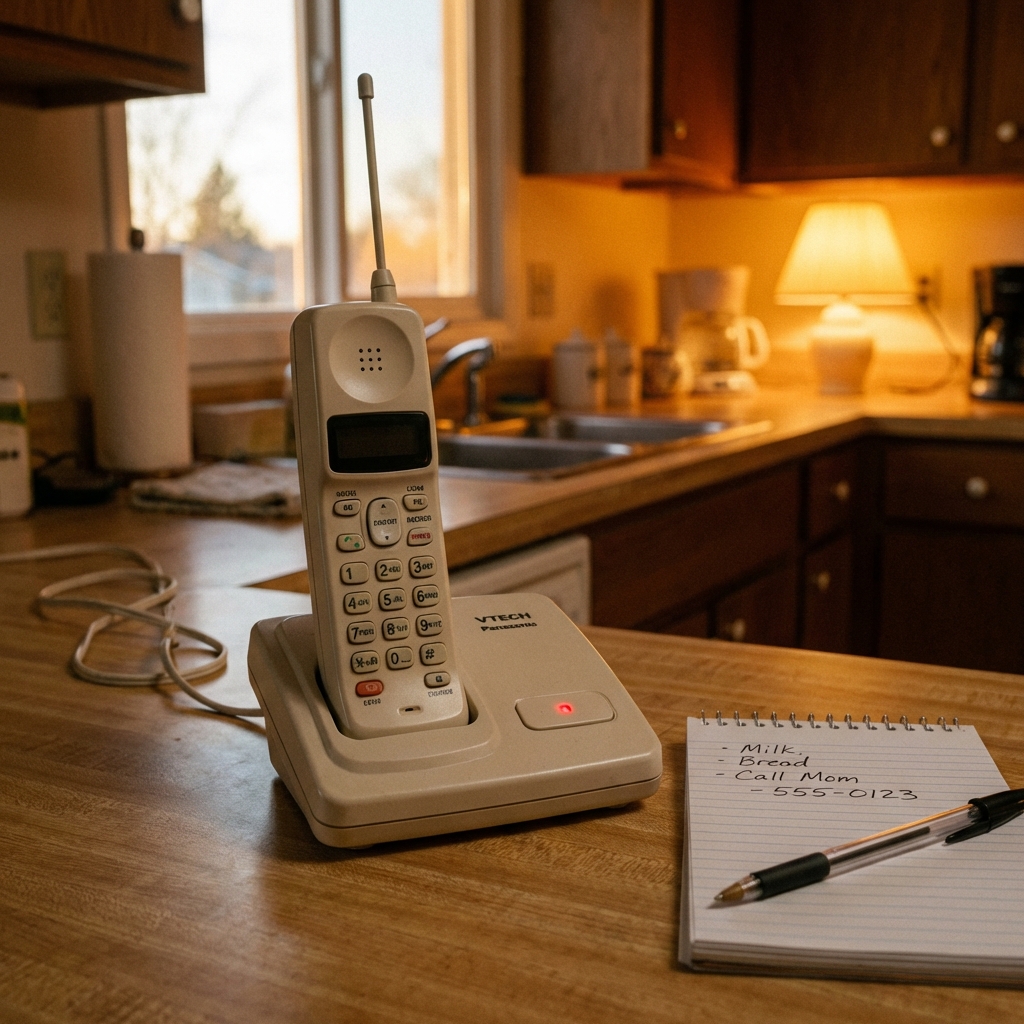
The cordless phone was freedom.
After decades of being tethered to the wall by a coiled cord, the cordless phone let you walk around the house while talking. You could pace the kitchen, wander into the backyard, or lock yourself in the bathroom for a private conversation.
The phone lived on a charger base — usually in the kitchen or the hallway — and the base station had a little red light that told you it was charging. If someone forgot to put the phone back on the base, it died. And then nobody could find it.
Every household had at least two handsets. Fancier families had three or four, with an intercom feature that nobody ever figured out how to use.
The cordless phone was the bridge between the wall phone and the cell phone. For one decade, it was the most important device in the house.
24. Shabby Chic and Distressed Furniture
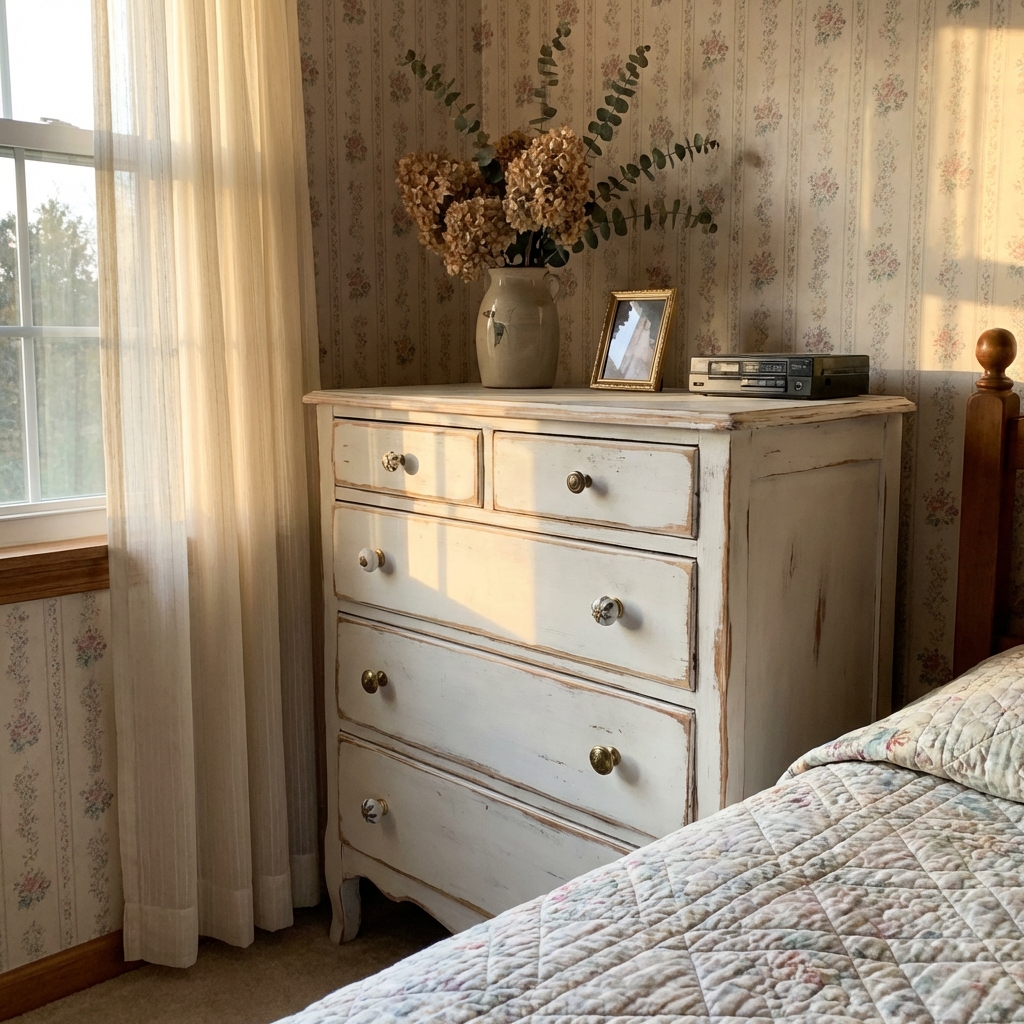
In the mid-1990s, a British designer named Rachel Ashwell opened a store called Shabby Chic and changed American home decor overnight.
Suddenly, furniture was supposed to look old. Dressers were painted white and then sanded down at the edges to reveal the wood underneath. Tables were “distressed” — intentionally scratched, dented, and worn to look like they had been in a farmhouse for a hundred years.
Flea market finds were celebrated. Vintage was in. A $20 nightstand from a garage sale, repainted and distressed, became more desirable than a new one from a furniture store.
The shabby chic era told people that imperfection was beautiful — that a chip in the paint or a scratch in the wood was character, not damage.
The farmhouse aesthetic that dominated the 2010s owes everything to this moment.
25. Potpourri in Every Room
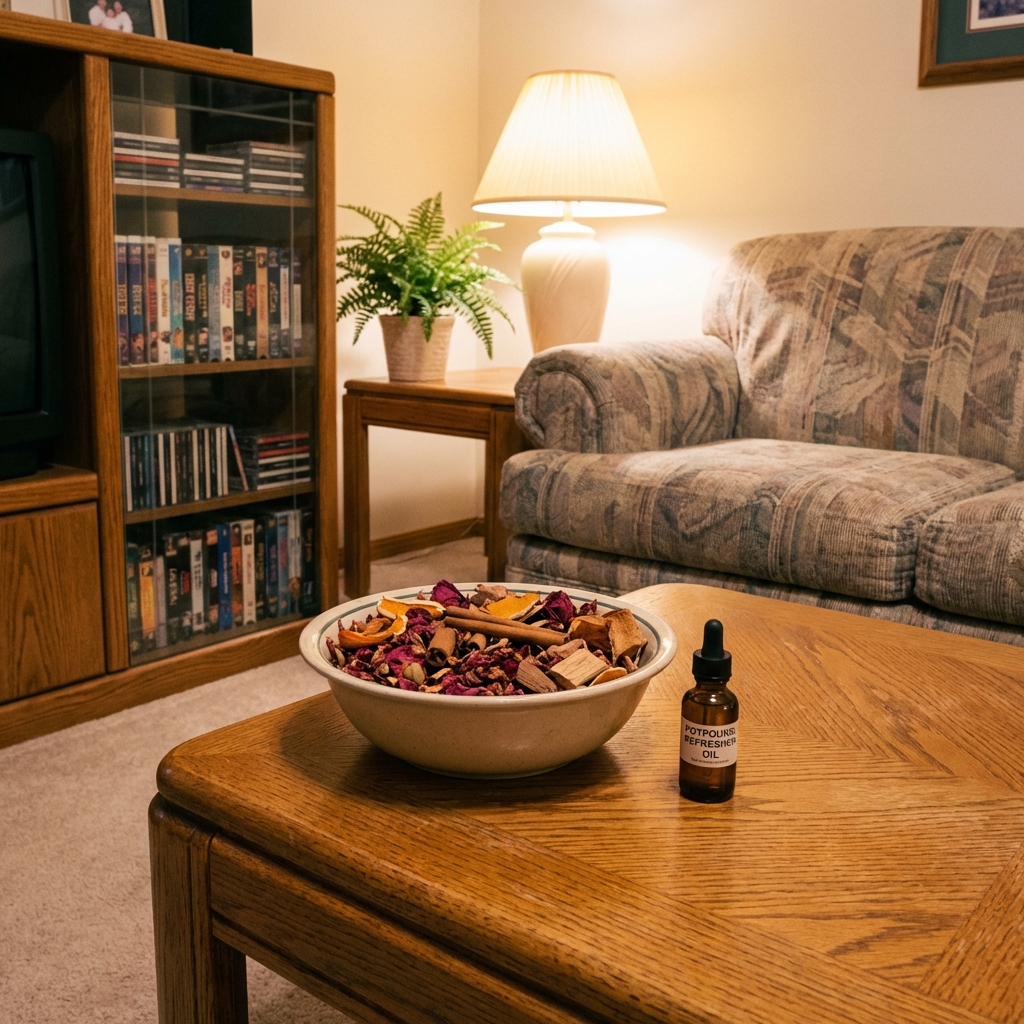
Walk into any 1990s home and the first thing that hit you was the smell.
Not candles. Not air freshener. Potpourri.
Small bowls and baskets of dried flower petals, wood shavings, bark, and spices sat on coffee tables, bathroom counters, entryway tables, and bedroom dressers. They were doused in fragrance oil — rose, lavender, cinnamon, or “country apple” — and refreshed periodically with more oil from a tiny dropper bottle.
Potpourri was sold at every gift shop, craft fair, home goods store, and mall kiosk in America. It came in cellophane bags tied with ribbon. It was the default hostess gift and the go-to stocking stuffer.
It collected dust. It faded. Cats ate it. Kids threw it. But for an entire decade, no American home smelled like an American home without a bowl of dried petals quietly scenting the room.
Conclusion
That is 25. How many did you have?
The 1990s were the last decade before everything went digital, went minimal, and went gray. It was the last time homes felt genuinely personal — a little messy, a little mismatched, a little overdecorated, and completely unafraid to commit to a color.
Hunter green walls. Sponge-painted dining rooms. A futon in the spare room. Potpourri on the coffee table. Nirvana on the bedroom wall. And a cordless phone that somebody left off the charger again.
It was not curated. It was not optimized. It was not designed for a camera.
It was just home.