

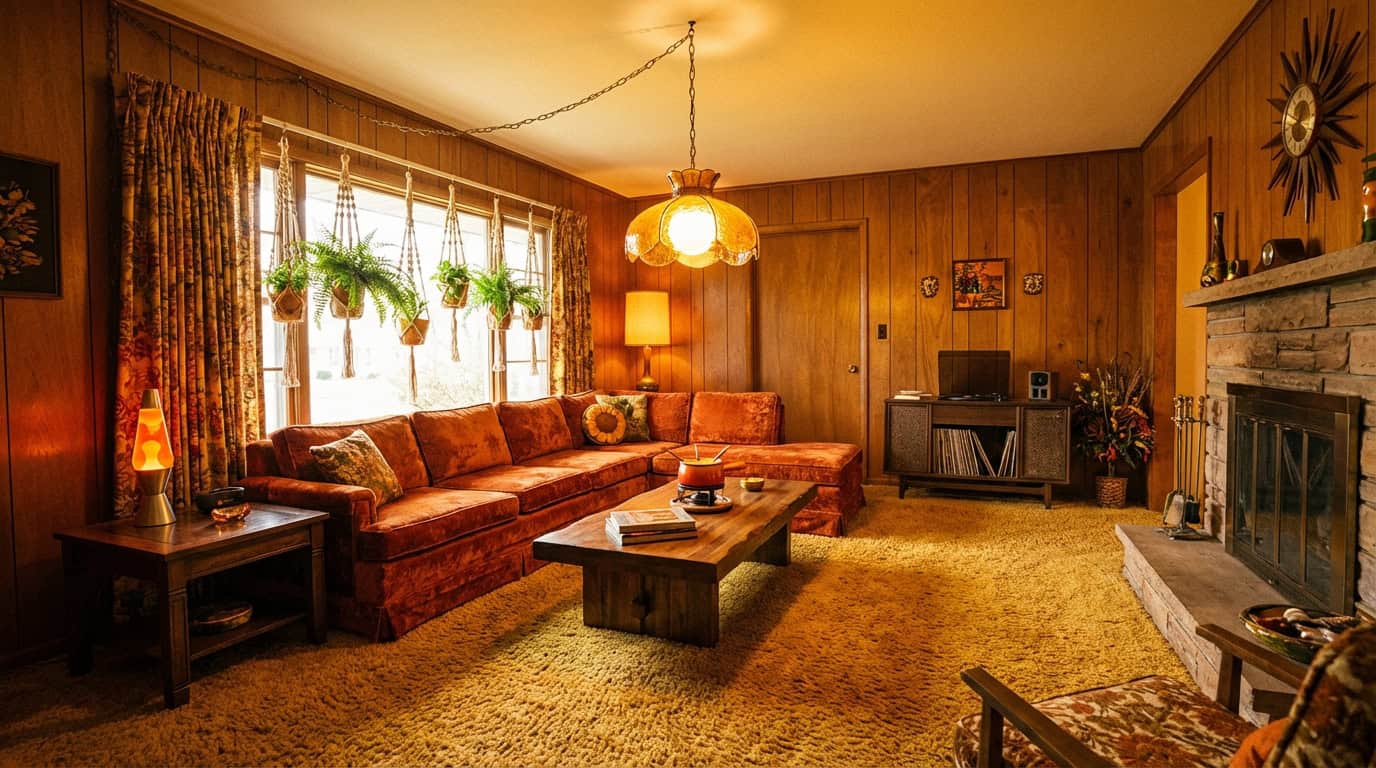
Walk into a house in 1974 and the first thing that hits you is the color.
Not bright color. Not pastel color. Earth color.
Burnt orange. Harvest gold. Avocado green. Chocolate brown. Every surface, every fabric, every appliance — dipped in some shade of the American landscape.
The 1970s home was warm. It was textured. It was shaggy underfoot and macramé overhead. It smelled like fondue and houseplants and the faint sweetness of a candle someone forgot to blow out.
If you spent any time inside an American home during that decade — as a kid dragging your feet across the carpet to shock your siblings, as a teenager raiding the basement fridge, as an adult hosting cocktail parties around a freestanding globe bar — these 25 things were in there.
Some of them were brilliant. Some of them were crimes against flooring. And all of them disappeared so completely that finding one in the wild now feels like discovering a fossil.
How many do you remember?
1. Shag Carpet
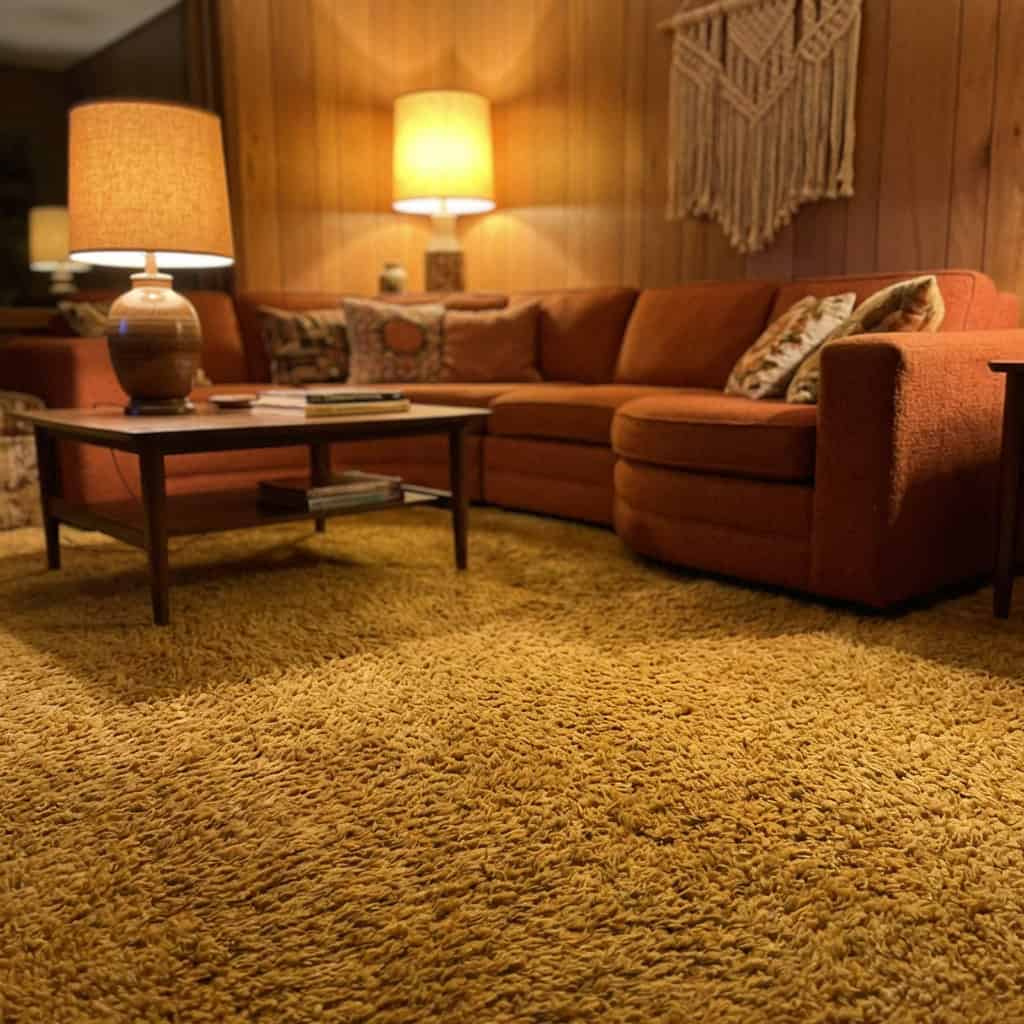
There is no 1970s without shag carpet. It is the decade’s signature, its calling card, its most divisive legacy.
The pile was thick — sometimes two or three inches deep. The colors ranged from harvest gold to avocado green to burnt orange to a brown that can only be described as “the color of a creek bed in October.”
Walking barefoot on fresh shag was like walking on a cloud. Walking barefoot on old shag was like walking through a terrarium.
It trapped everything — crumbs, coins, pet hair, small toys, mysteries you never wanted to solve. Vacuuming it was a cardio workout. And yet, for an entire decade, Americans could not get enough of it.
The shag rake — a wide-toothed tool used to groom the carpet like it was a golden retriever — was a real product that real people owned. That tells you everything you need to know.
2. Avocado Green Appliances
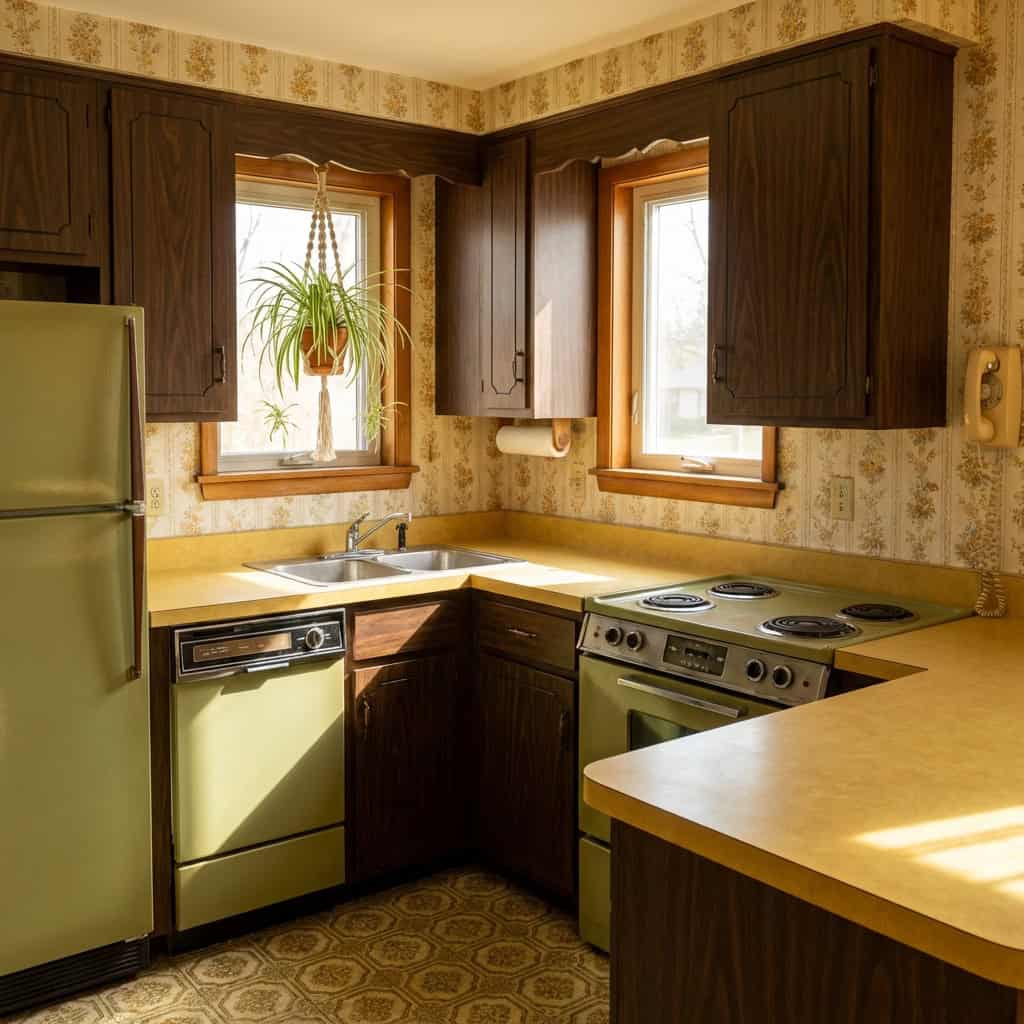
The refrigerator was avocado green. The stove was avocado green. The dishwasher was avocado green. The blender, the mixer, the can opener — avocado green.
It was not a subtle color. It was the deep, muted green of an avocado skin — and for about ten years, it was the only acceptable color for a kitchen appliance in America.
Paired with harvest gold countertops and dark wood cabinets, the avocado kitchen had a warmth that modern stainless steel will never replicate. It also had a specific quality that is hard to describe — it felt permanent. Like the kitchen had always been that color and always would be.
The avocado appliance became the single most mocked design choice of the 20th century. But those refrigerators ran for 30 years without a repair call, which is more than anyone can say about the smart fridge that needs a software update every six months.
3. Wood Paneling on Every Wall
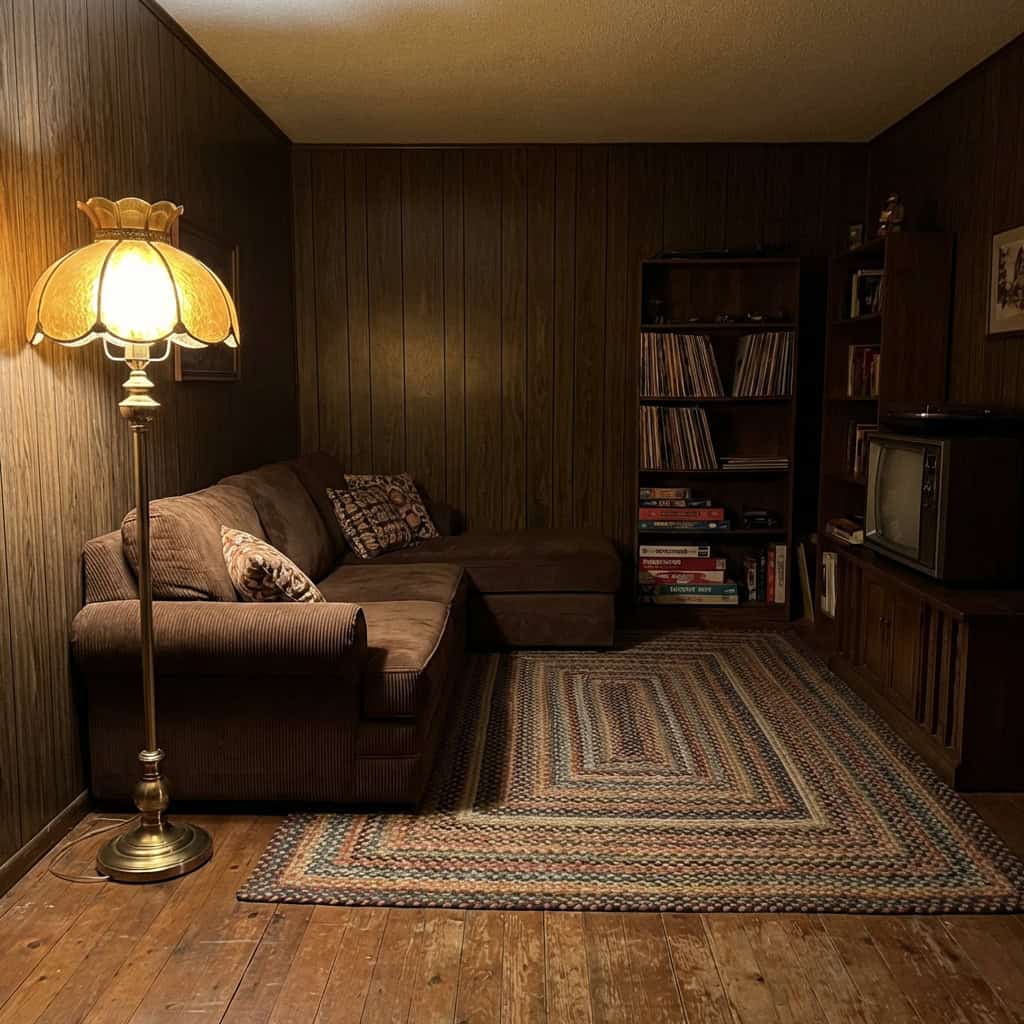
If the 1970s had a national building material, it was fake wood paneling.
Thin sheets of plywood or pressboard with a printed wood-grain veneer were nailed to walls in basements, dens, family rooms, bedrooms, and sometimes the entire house. The color ranged from honey pine to dark walnut, and the grooves between the panels gave every room the look of a hunting lodge.
It was cheap. It was fast. And it was everywhere.
Real wood paneling — tongue-and-groove pine or cedar — showed up in nicer homes. But the standard-issue 70s panel was the 4-by-8 sheet from the lumberyard, and you could panel an entire room in a Saturday afternoon.
The first thing every new homeowner did from about 1995 onward was rip it out. Or paint it white. Either way, the wood-paneled room became the ultimate “before” photo. But walking into a basement that still has it — with the amber glow of a single lamp hitting those grooves — there is a warmth there that drywall has never managed.
4. Harvest Gold
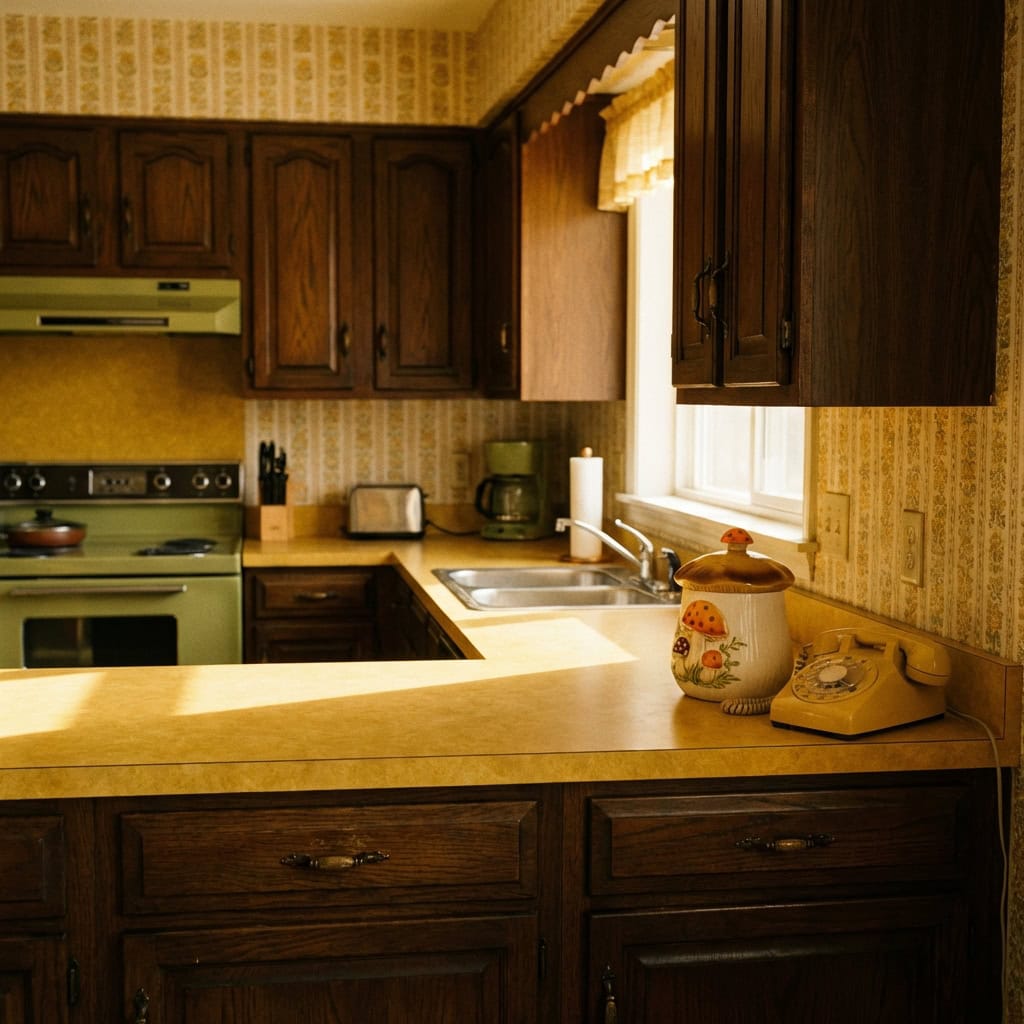
If avocado green was the queen of the 70s kitchen, harvest gold was the king.
That warm, buttery, mustard-adjacent yellow showed up on everything — appliances, countertops, bathroom tile, carpet, bedspreads, curtains, and towels. It was the optimistic partner to avocado’s earthiness.
A kitchen with avocado appliances and harvest gold countertops was the single most common color combination in America from about 1968 to 1982. If you grew up in that era, you could draw it from memory right now.
Harvest gold disappeared almost overnight in the early 1980s when almond and white took over. But it is making a quiet comeback in designer kitchens under fancier names like “saffron” and “tumeric.” The 70s knew what they liked. It just took everyone else 50 years to agree.
5. Macramé Plant Hangers and Wall Hangings
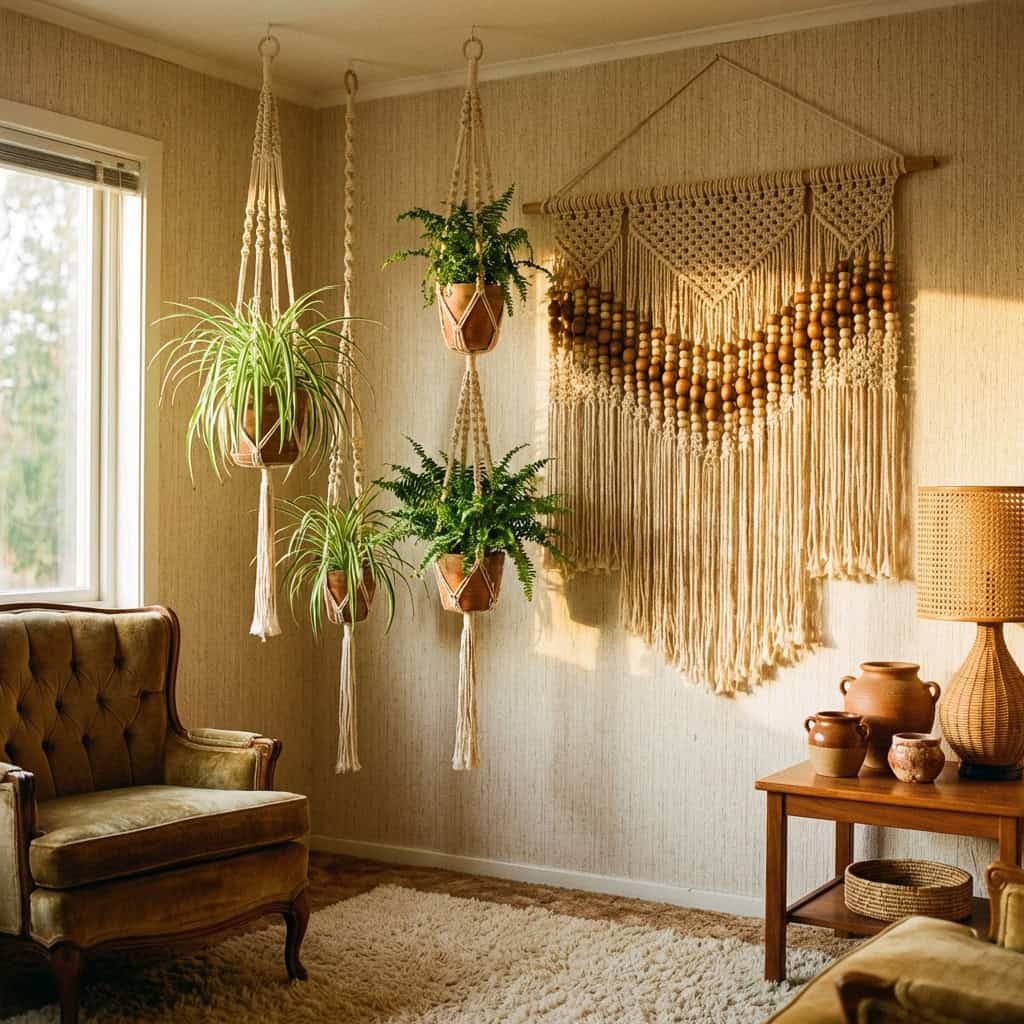
Every room in the 1970s home had something hanging from the ceiling or mounted on the wall that was made of knotted cord.
Macramé plant hangers held spider plants, ferns, and pothos in woven baskets that dangled at eye level. Macramé wall hangings — sometimes three or four feet wide — featured elaborate knot patterns, wooden beads, and long fringe that swayed in the breeze.
It was a craft that exploded in popularity. Bookstores had entire sections devoted to macramé pattern books. Craft nights were macramé nights. The hobby store aisle was an ocean of jute and hemp cord.
The combination of macramé and houseplants gave 70s rooms a bohemian, earthy, slightly wild quality that no other decade has replicated. The closest we have come is the houseplant revival of the 2020s — but without the knotted cord, it is not the same.
6. The Bean Bag Chair
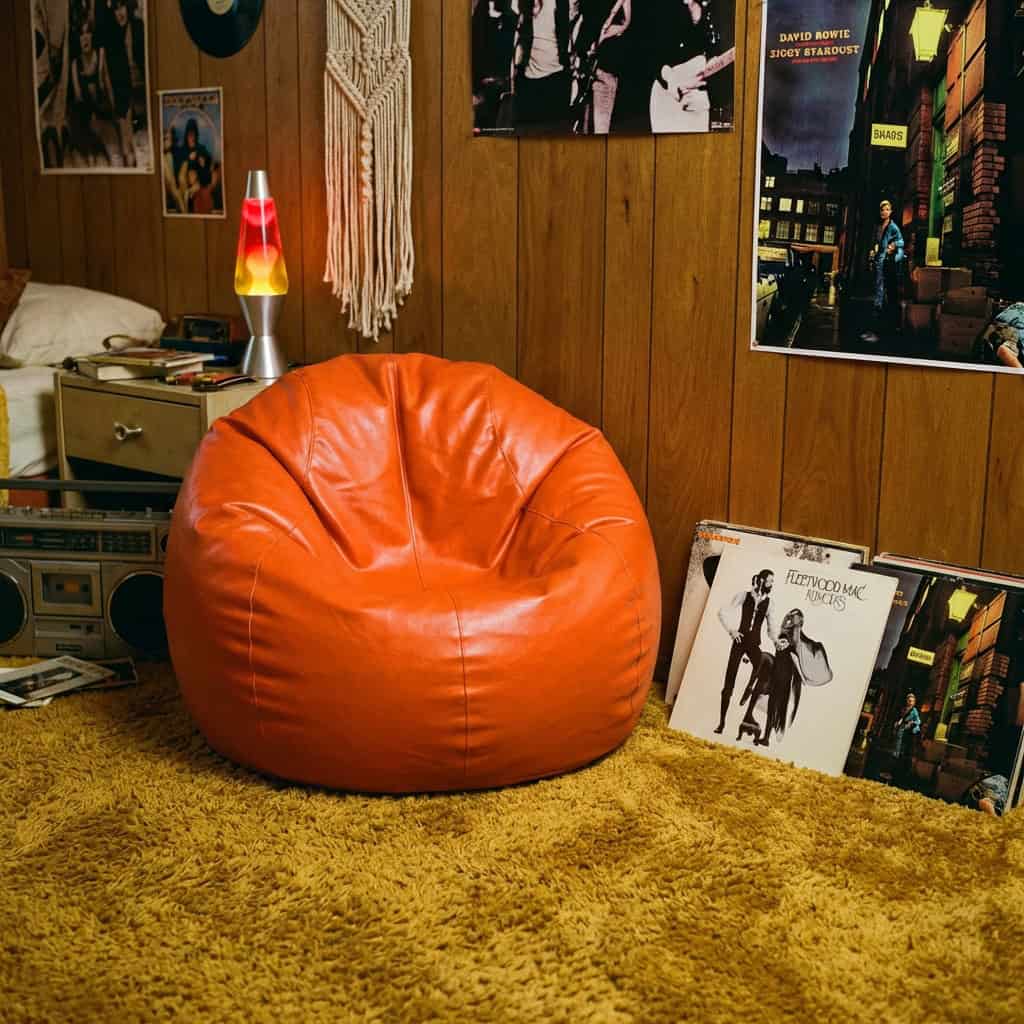
There was nothing else like it. You did not sit on a bean bag chair. You fell into it.
The bean bag was a vinyl or fabric sack filled with polystyrene beads that conformed to your body the moment you dropped into it. Kids loved them. Teenagers claimed them. Adults tolerated them.
They showed up in basements, bedrooms, dorm rooms, and the occasional living room of a particularly relaxed household. The colors were loud — orange, red, yellow, electric blue — and they made a distinctive crunching sound every time you shifted your weight.
The fatal flaw was the zipper. If it opened — and it always eventually opened — thousands of tiny white beads exploded across the room like a snowstorm, clung to everything with static electricity, and were still being found in carpet fibers years later.
But for the brief window when the bean bag was full, the zipper was intact, and the vinyl had not cracked — there was not a more comfortable seat in the house.
7. The Fondue Set
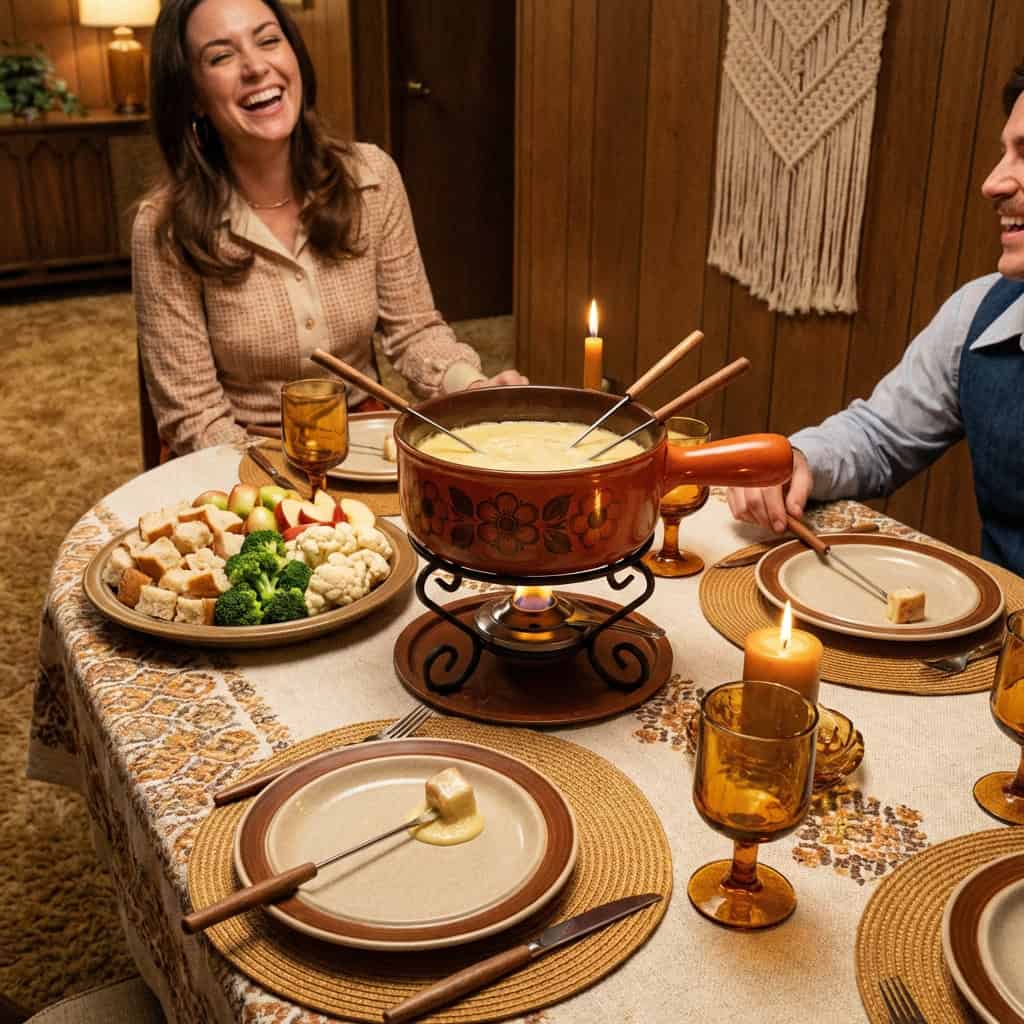
For approximately one decade, melting things and dipping other things into them was the pinnacle of American entertaining.
The fondue set sat on a stand with a small burner underneath. You melted cheese, chocolate, or oil, then used long forks to dip bread, fruit, or meat into the bubbling pot. It was interactive. It was social. It was an event.
Every wedding registry in the 1970s included a fondue set. Every dinner party featured one. Every kitchen cabinet had one shoved in the back by 1983.
The fondue set was peak 70s — communal, warm, slightly messy, and completely focused on gathering people around a shared experience. It faded not because it stopped being fun, but because the 1980s decided that individual plates were more sophisticated than a shared pot.
8. Bold Geometric and Floral Wallpaper
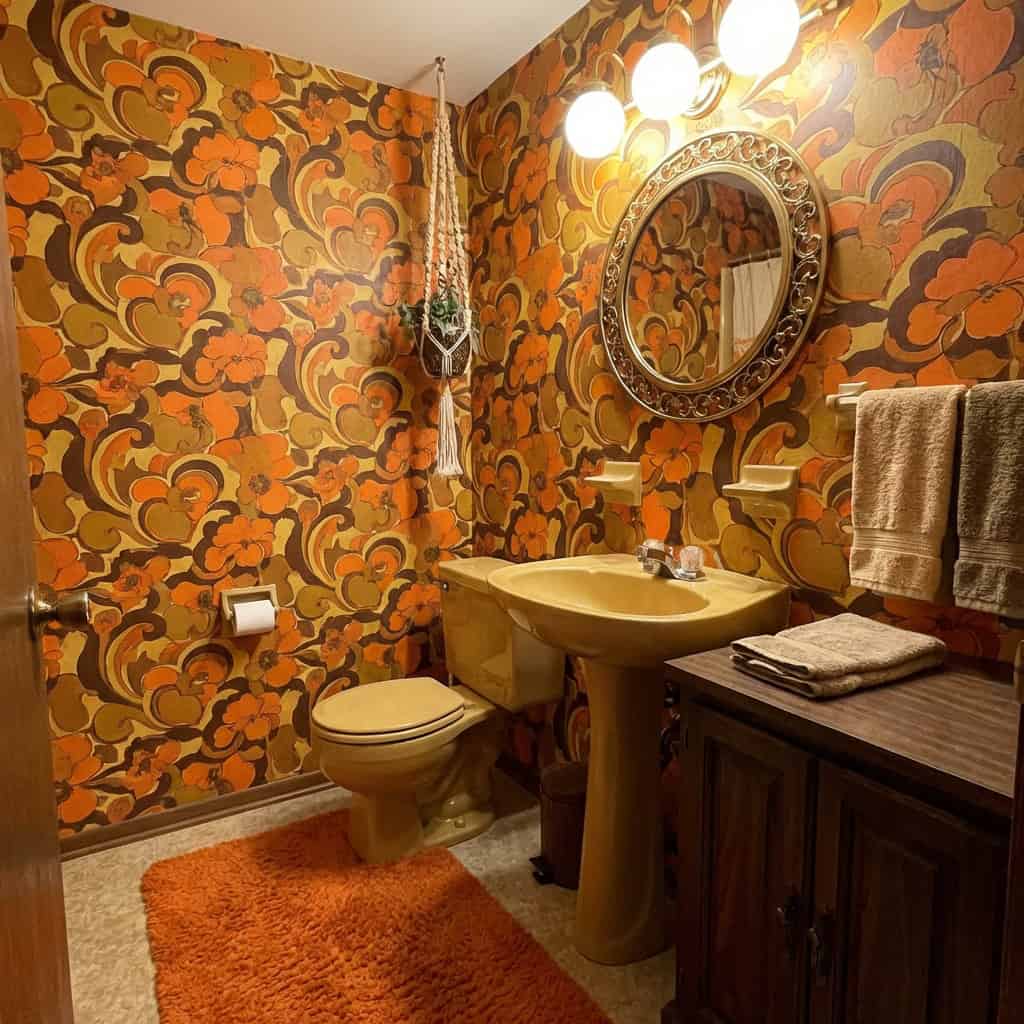
The 1970s did not do subtle wallpaper.
Every room had it. Kitchens had oversized flowers in orange and yellow. Bathrooms had geometric diamonds in brown and gold. Bedrooms had swirling paisley patterns. The powder room had something that looked like it was designed during a fever dream.
The patterns were large-scale — sometimes a single flower motif would span two feet across. The colors were the full 70s palette: avocado, harvest gold, burnt orange, chocolate, and rust.
Some homes went further. They wallpapered the ceiling. They wallpapered inside closets. They wallpapered the inside of kitchen cabinets.
The great wallpaper removal era of the late 1980s and 1990s was one of the largest home improvement movements in American history. Millions of homeowners spent hundreds of hours steaming, scraping, and cursing their way through layers of adhesive that seemed engineered to survive a nuclear blast.
9. The Burnt Orange and Brown Color Scheme
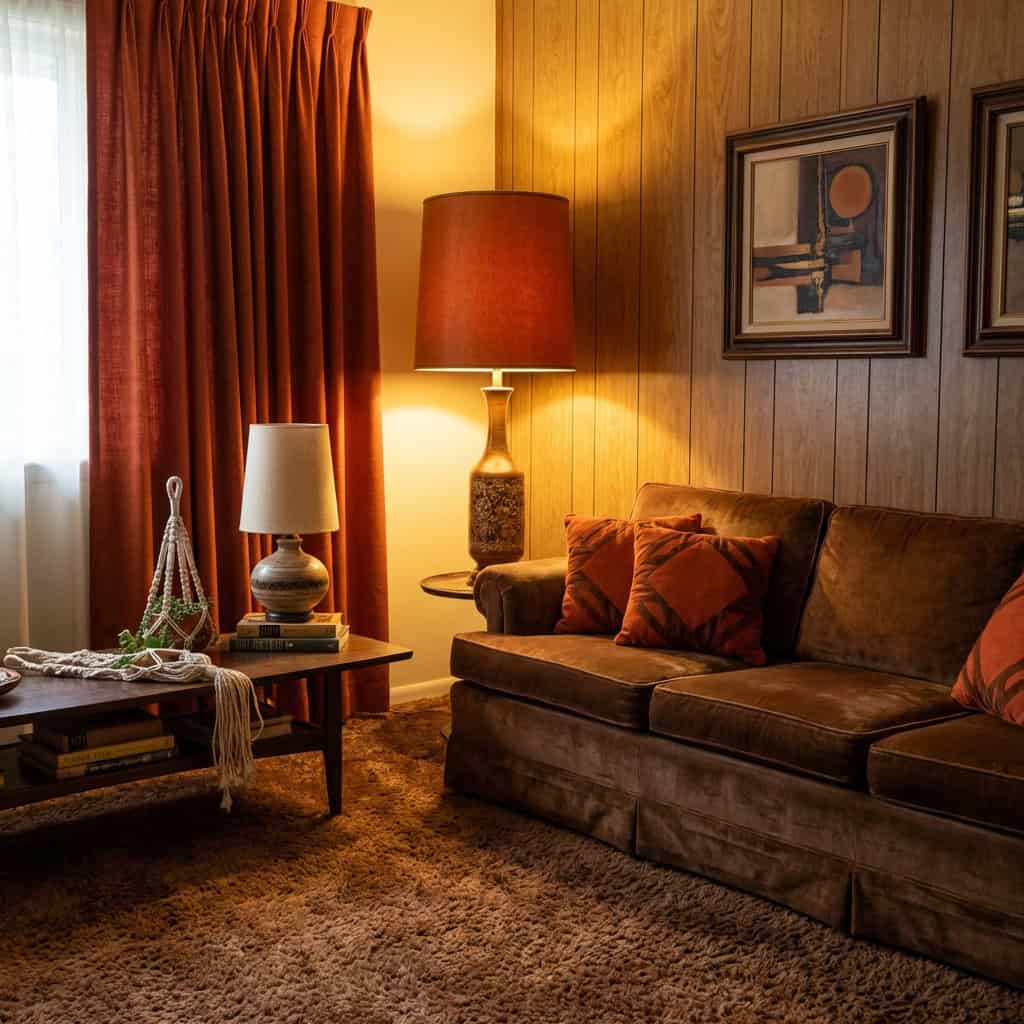
Avocado and harvest gold get all the attention, but the real workhorse palette of the 70s was burnt orange and brown.
It was on the sofa. It was on the curtains. It was on the bedspread. It was on the kitchen towels, the throw pillows, the area rug, and the accent wall.
Burnt orange paired with chocolate brown created a warmth that was almost cocoon-like. Sitting in a 70s living room with that color scheme felt like being inside a warm loaf of bread.
The combination survived well into the early 80s before being replaced by the mauve-and-teal explosion. But for its decade, burnt orange and brown was the undisputed champion of American living rooms.
10. Popcorn Ceilings
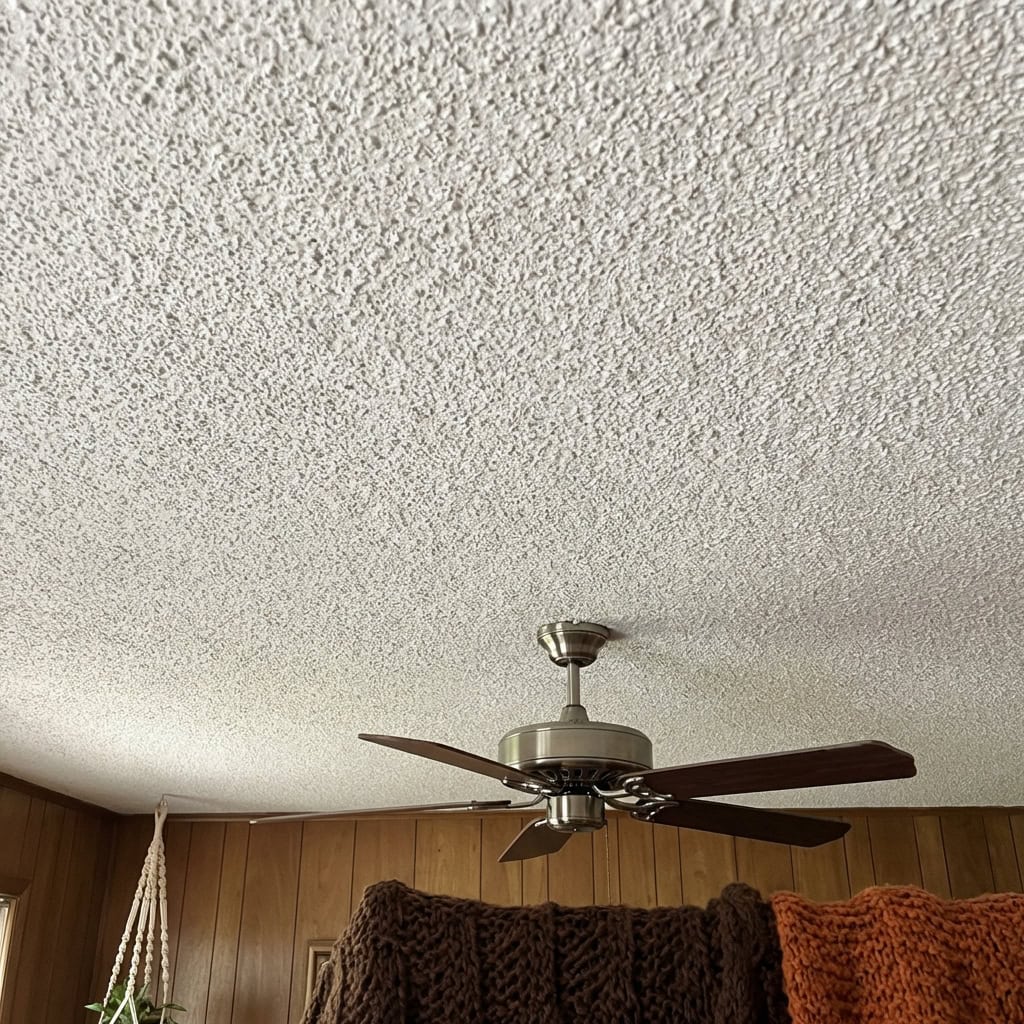
Look up in any house built between 1968 and 1985 and there is a very good chance you are staring at a popcorn ceiling.
That bumpy, textured, cottage-cheese-like surface was sprayed onto ceilings across America by the millions. It was fast to apply, cheap, and had the practical benefit of hiding imperfections in the drywall above.
It also absorbed sound, which the carpet and heavy drape crowd of the 70s appreciated.
The problem — besides the fact that it was spectacularly ugly — was that many popcorn ceilings applied before 1980 contained asbestos. Removing them became both an aesthetic project and a health hazard, which is a combination nobody wants.
Scraping a popcorn ceiling is one of the messiest, most tedious home improvement projects in existence. It involves plastic sheeting, spray bottles, a wide scraper, and a level of patience that most humans do not possess. And yet millions of homeowners have done it, one flake at a time.
11. The Hanging Swag Lamp
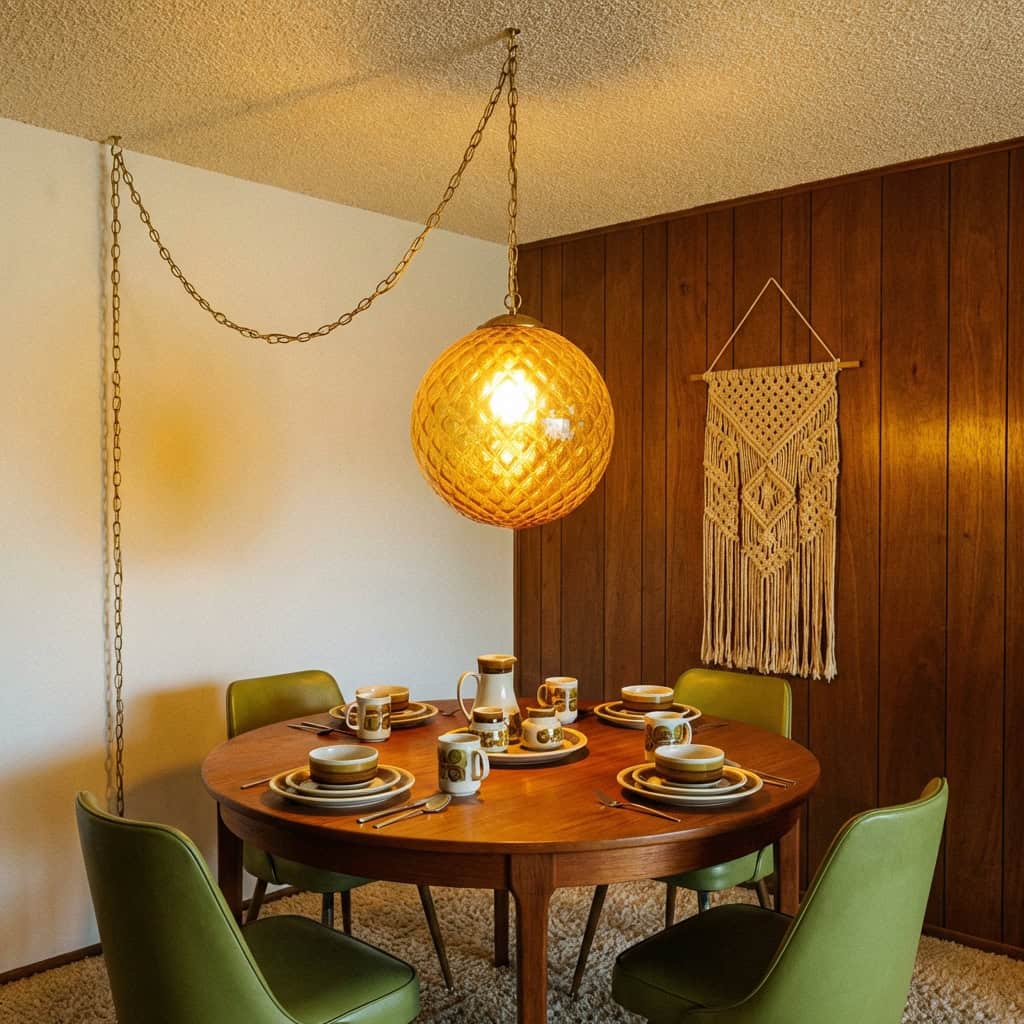
Before recessed lighting, before track lighting, the 70s had the swag lamp.
It hung from the ceiling on a chain — sometimes a very long chain — and plugged into a wall outlet via a cord that was draped across the ceiling and down the wall. It swayed. It dangled. It cast a warm, amber glow over the dining table or the conversation pit.
The shades were amber glass, smoked glass, or some kind of woven material. The chains were gold-toned. The overall effect was somewhere between “grandmother’s house” and “Mediterranean restaurant.”
The swag lamp was the lighting equivalent of a hammock — relaxed, low-key, and slightly impractical. It lived in dining rooms, bedrooms, and over breakfast nooks, gently swinging every time someone walked past.
12. Patterned Linoleum Kitchen Floors
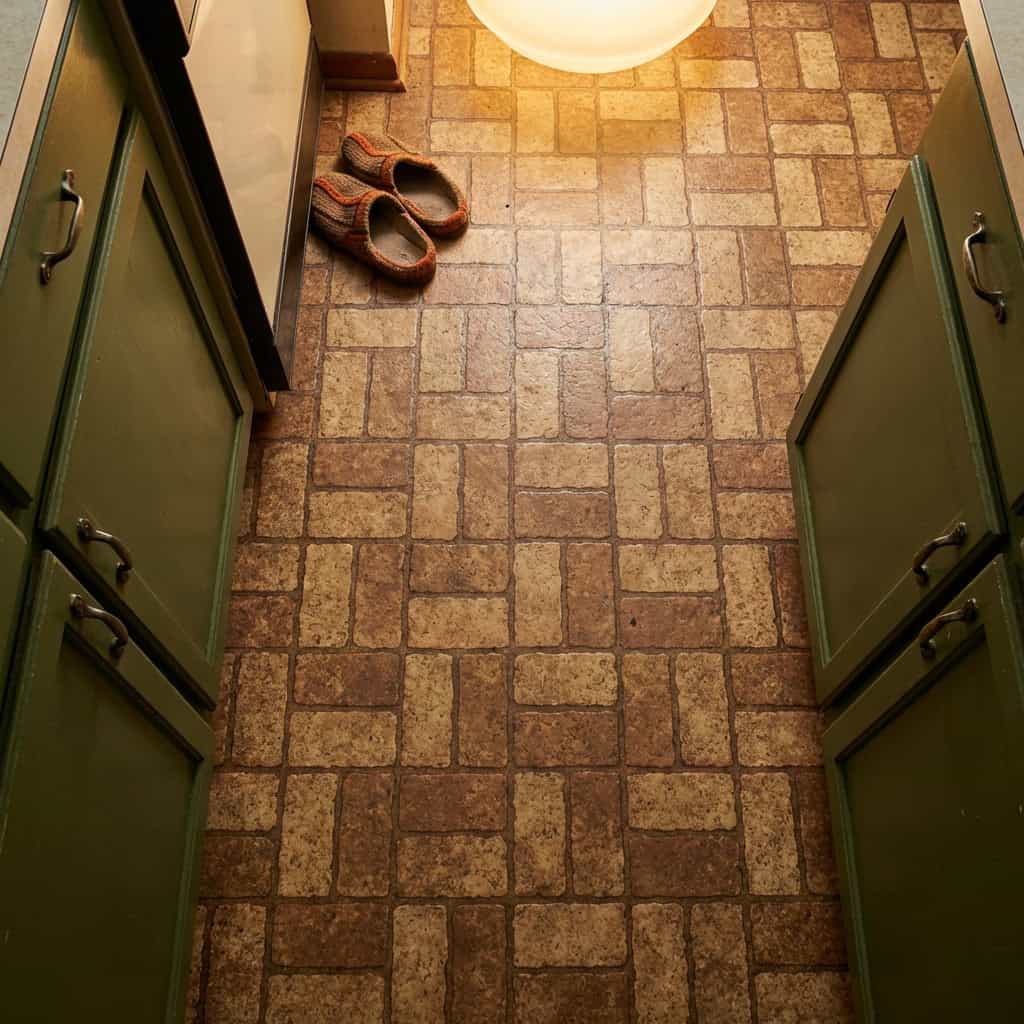
The kitchen floor in a 1970s home was not a quiet surface. It was a statement.
Patterned linoleum — sometimes called sheet vinyl — came in an astonishing variety of designs. Brick patterns. Cobblestone patterns. Geometric shapes in brown and orange. Faux tile in avocado and gold. Some patterns tried to look like something else entirely, like flagstone or terrazzo, and succeeded only in looking like patterned linoleum.
It was cheap, durable, and easy to clean — three qualities that made it the undisputed king of 70s kitchen flooring.
The edges curled. The seams separated. And after a decade of foot traffic, the pattern wore thin in front of the sink and the stove, leaving pale ghost paths that mapped the cook’s daily route.
13. The Wood-Paneled Basement Rec Room
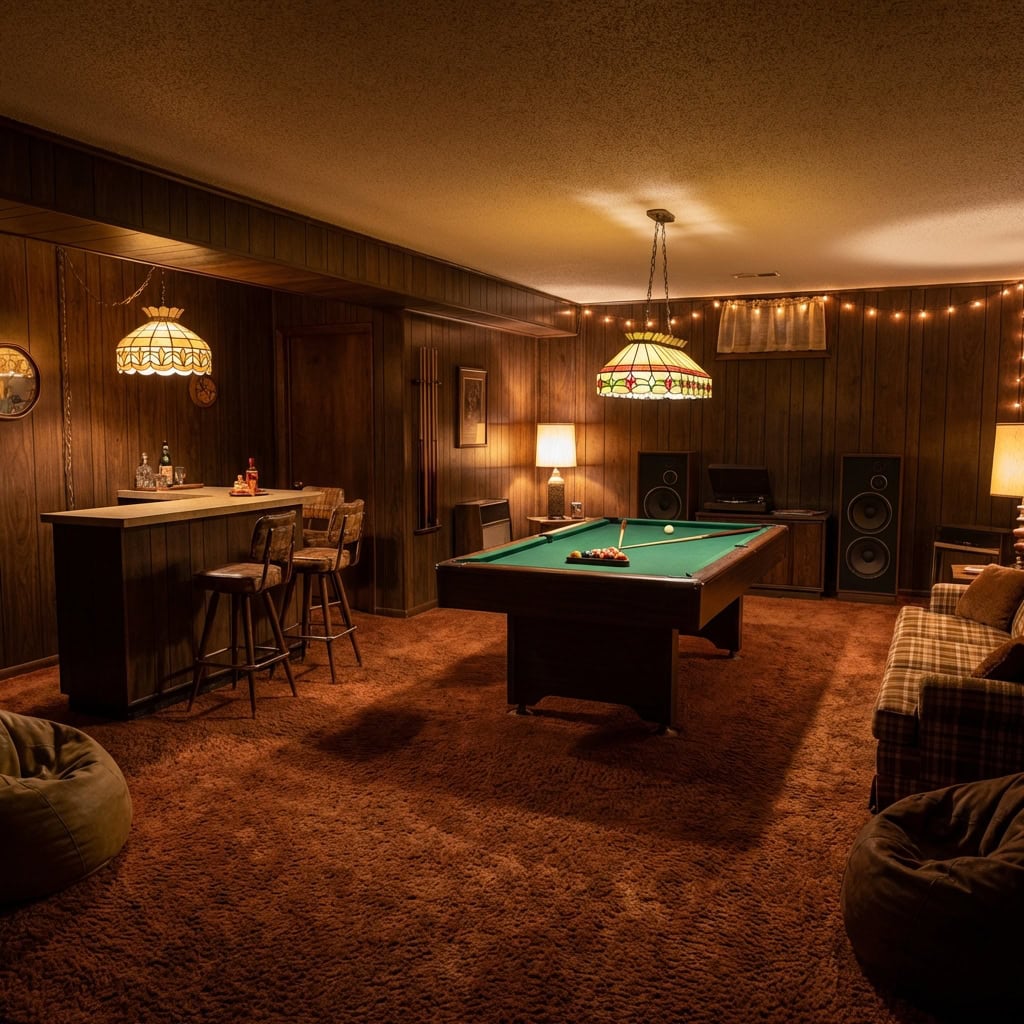
The finished basement was the 70s family’s second living room — and it had its own rules.
Down there, the wood paneling was darker. The carpet was thicker and wilder — sometimes orange, sometimes a deep rust. There was a bar in one corner, a pool table or ping-pong table in the center, and a television that was always slightly older than the one upstairs.
The rec room was where teenagers went after school. Where dads watched the game on Saturday. Where birthday parties happened and where card games went late into the night.
The ceiling was low — sometimes dropped tiles, sometimes exposed joists. The lighting was dim. And the whole space had a specific smell that was part carpet, part paneling, part something damp that nobody ever fully identified.
It was the best room in the house, and everyone knew it.
14. Plastic Slipcovers on the Good Furniture
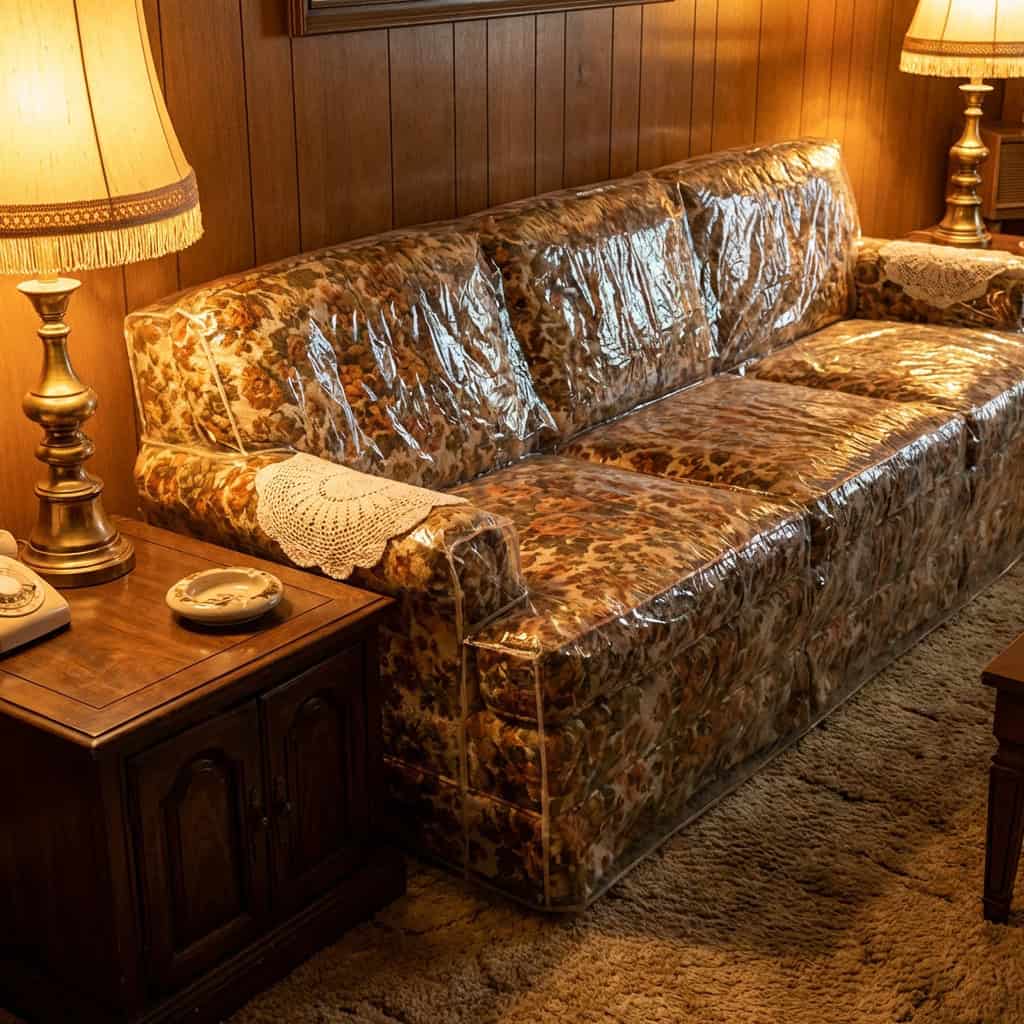
Somewhere in America right now, there is a sofa from 1973 in perfect condition because it spent its entire life under a sheet of clear plastic.
The plastic slipcover was a 70s institution — particularly in homes where the living room furniture was expensive and the family was not about to let children, pets, or guests ruin it. The plastic went over the sofa, the loveseat, and sometimes the dining room chairs.
It crinkled when you sat down. It stuck to your skin in summer. It made a sound like packing tape being pulled off a box every time you stood up.
And it worked. The furniture underneath stayed pristine for decades. The plastic took the abuse so the upholstery did not have to.
It was practical, deeply uncool, and absolutely everywhere. Your grandmother probably had it. Your aunt definitely had it. And the sofa underneath still looks brand new.
15. Rattan and Wicker Everything
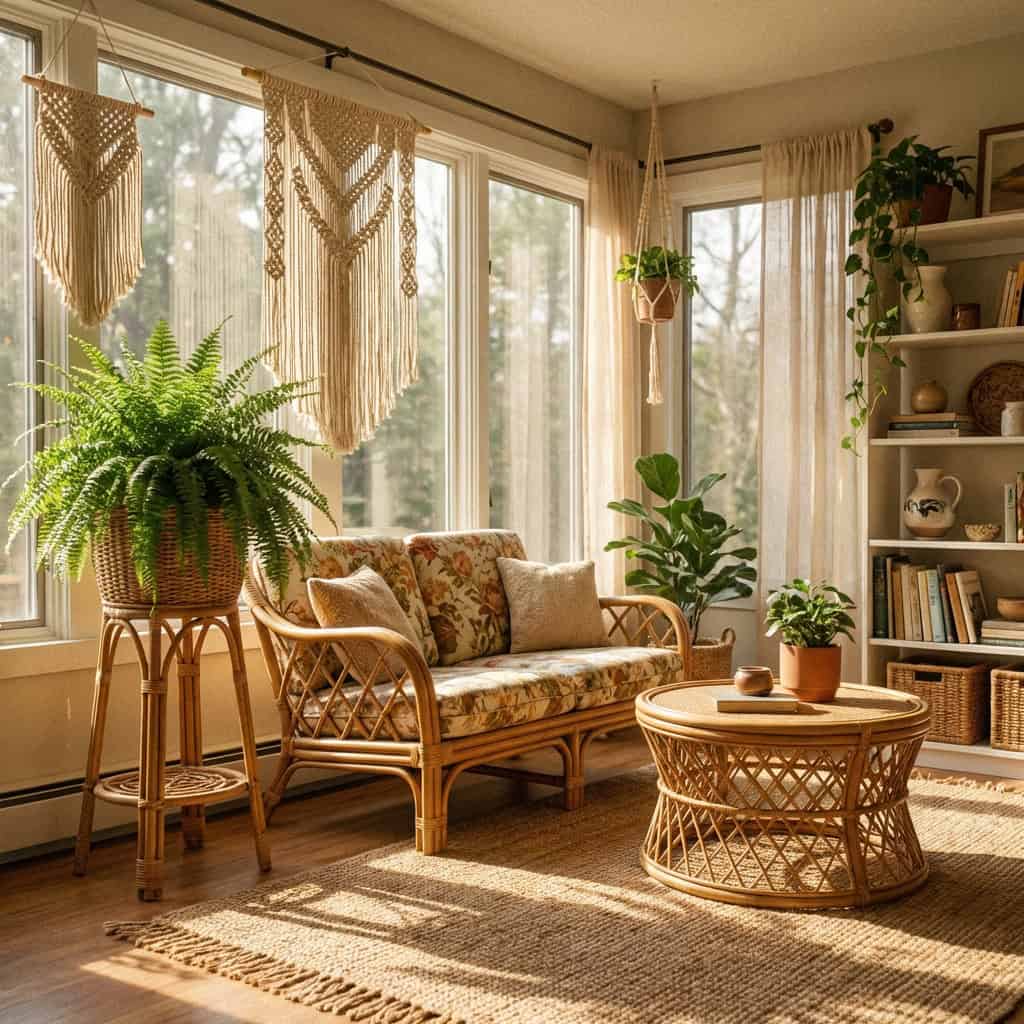
The 1970s had a love affair with woven natural materials that bordered on obsession.
Rattan chairs. Wicker baskets. Bamboo shelving. Rattan headboards. Wicker peacock chairs. Woven plant stands. If it could be made from a dried tropical plant, the 70s made it.
The look was supposed to feel natural, relaxed, and slightly exotic — like your living room was a porch in the tropics. Paired with the macramé and the hanging plants, the effect was a home that felt more like a greenhouse.
Wicker and rattan faded in the 80s when brass and glass took over, but they never fully disappeared. Every decade since has had a small rattan revival, and the 70s originals — if they survived — are now selling at vintage shops for prices that would have been unthinkable in 1975.
16. Hanging Plants in Every Room
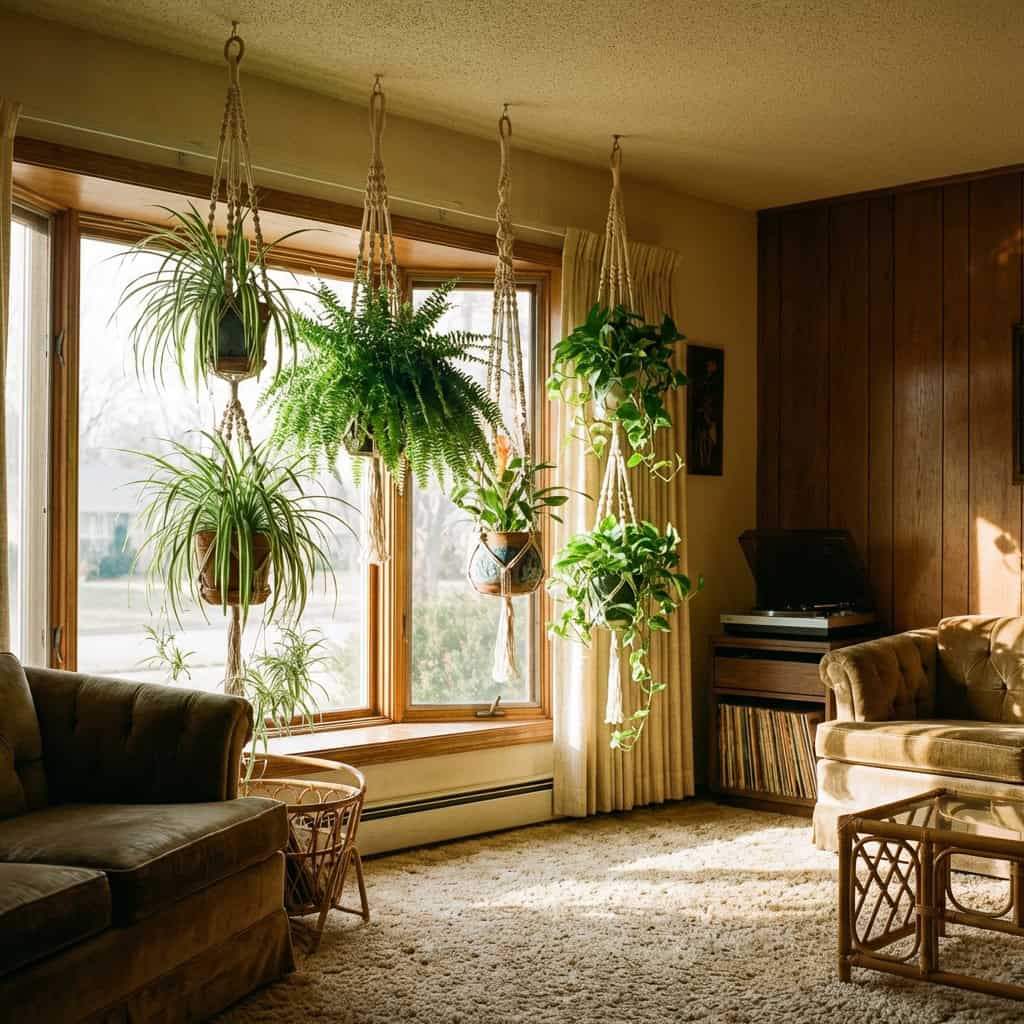
The 1970s American home had more plants than some botanical gardens.
Spider plants, Boston ferns, pothos, philodendrons, and Swedish ivy hung from ceiling hooks, sat on macramé shelves, and dangled from every available window frame. The kitchen had herbs on the sill. The bathroom had a fern on the toilet tank. The living room had a fiddle leaf fig in the corner before anyone on Instagram knew what a fiddle leaf fig was.
The houseplant boom of the 70s was connected to the environmental movement, the back-to-nature ethos, and the simple fact that plants made a wood-paneled, earth-toned room feel alive.
It was not unusual to walk into a home and count 15 or 20 plants. The people who kept them alive were quietly heroic. The people who killed them just bought more.
17. The Crushed Velvet Sofa
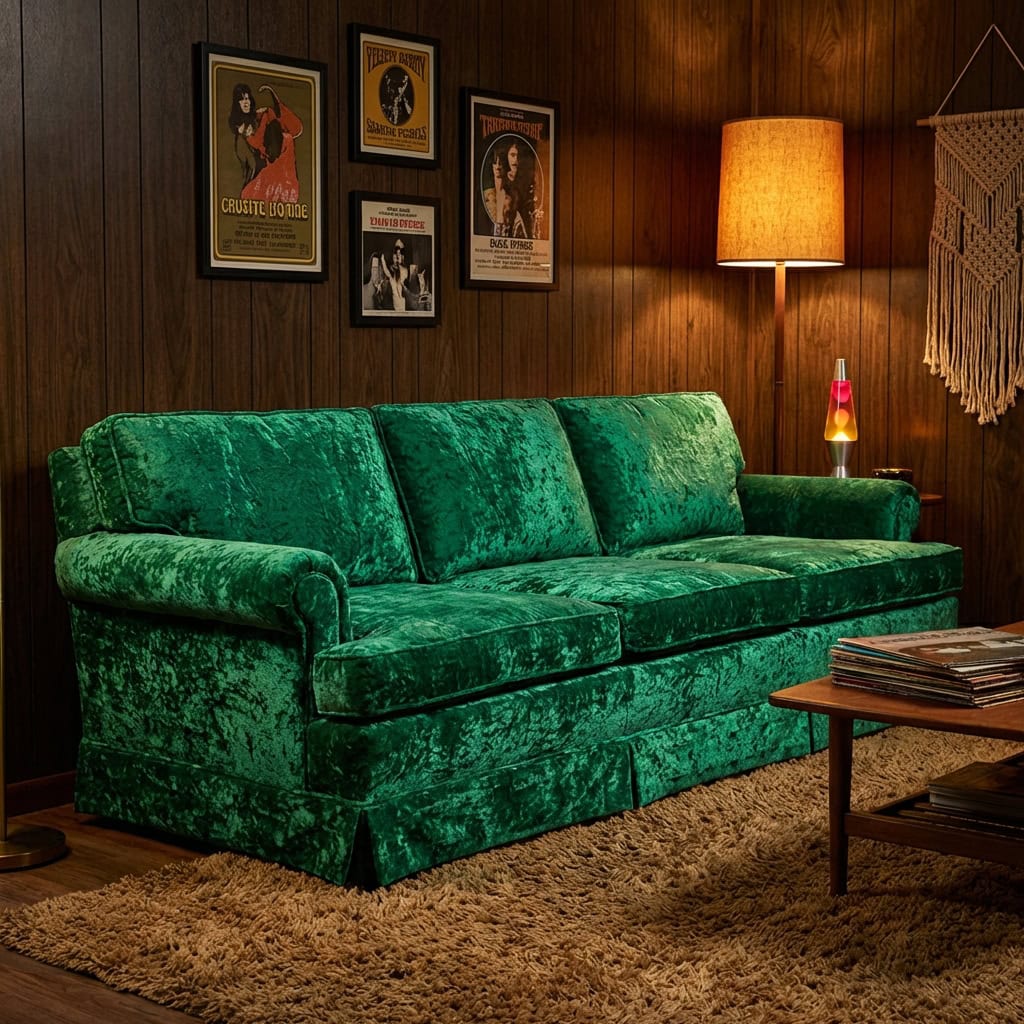
Not regular velvet. Crushed velvet.
The 70s sofa came in crushed velvet in deep jewel tones — emerald green, sapphire blue, burnt orange, and a red so dark it was almost maroon. The fabric had a sheen that changed depending on the angle, and it felt impossibly soft under your hand.
Crushed velvet was to the 70s what chenille was to the 90s — the fabric of the decade. It showed up on sofas, armchairs, bedspreads, throw pillows, and occasionally curtains.
It attracted lint like a magnet. It showed every handprint and seat impression. And it was completely, irresistibly luxurious.
Running your hand across a crushed velvet cushion — watching the nap change direction, the color shift from dark to light — was one of the small, tactile pleasures of 70s living that nothing has replaced.
18. The Matching Three-Piece Bathroom Rug Set
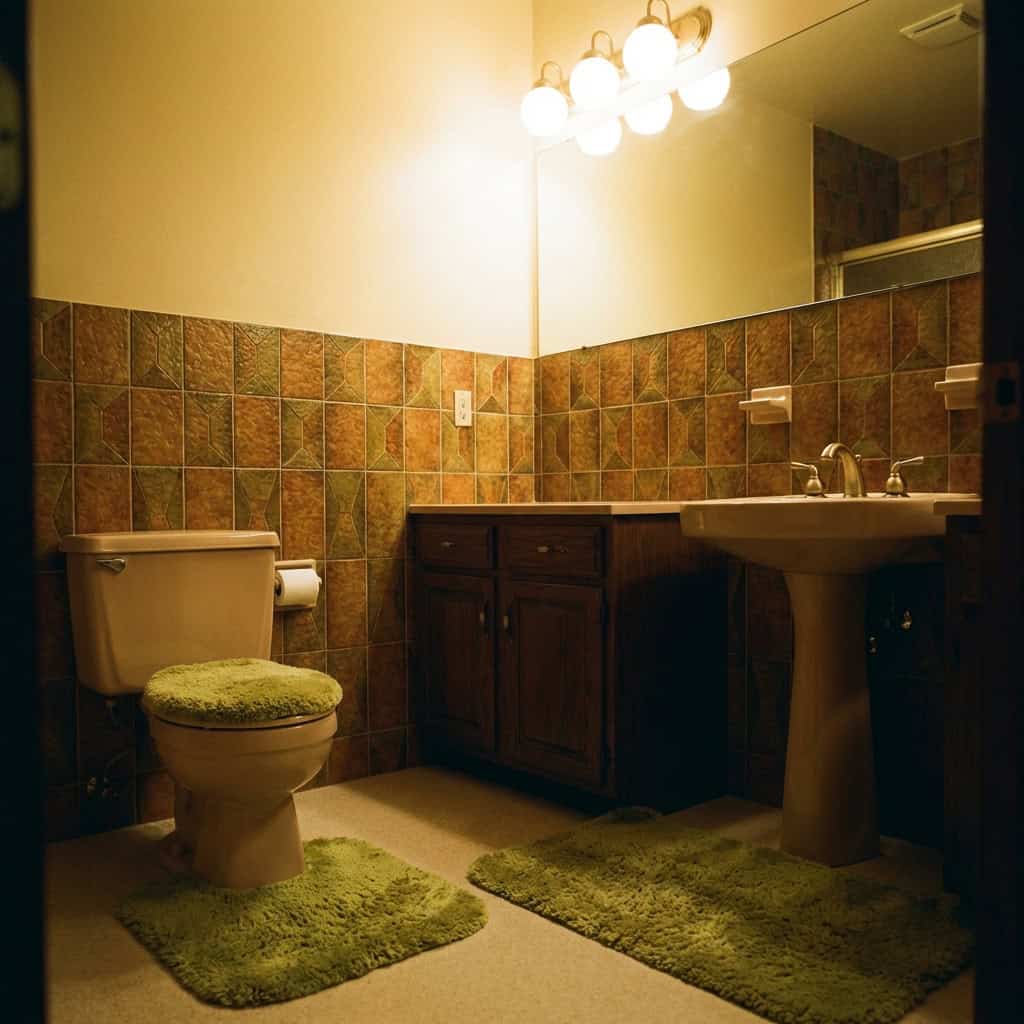
The toilet had a rug around the base. The toilet lid had a fuzzy cover. The floor had a contour mat. And they all matched.
The three-piece bathroom rug set was sold at every department store in America and came in every color the 70s loved — avocado, gold, brown, peach, and the occasional deep blue. Some sets added a fourth piece: a tank lid cover.
The lid cover served no practical purpose except to make the toilet look dressed. It also made the lid slippery, which caused it to slam shut at unexpected moments — a sound that echoed through 70s homes like a gunshot.
The matching rug set disappeared in the 90s when bathrooms went minimal and white. But for two decades, no bathroom was considered finished without one.
19. The Freestanding Globe Bar
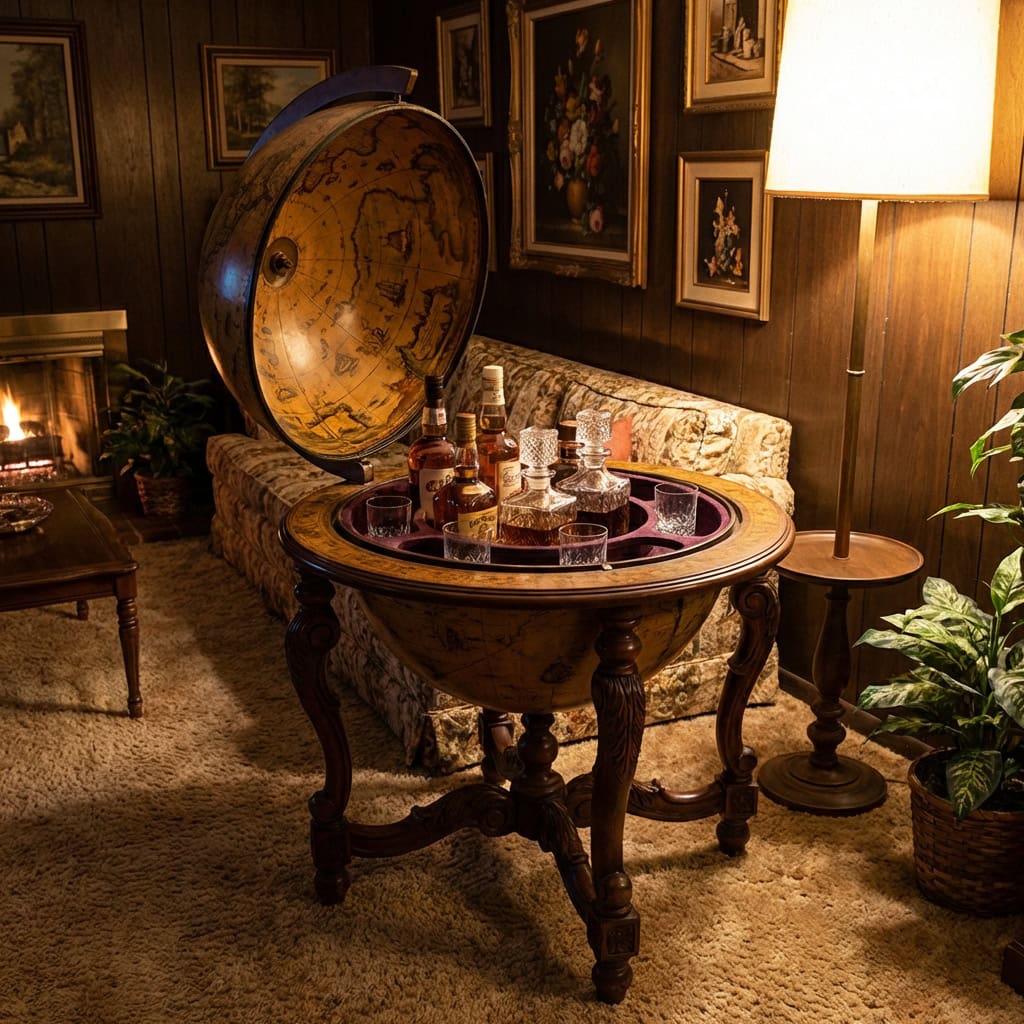
It looked like a globe. You opened it at the equator. Inside — bottles.
The freestanding globe bar was a piece of furniture that said “I am sophisticated” and “I like to drink” in equal measure. It stood on carved wooden legs, usually in the living room or den, and opened to reveal a miniature bar setup with space for bottles, glasses, and sometimes a small ice bucket.
It was decorative when closed and functional when open. Guests always wanted to look inside. Kids were told not to touch it.
The globe bar peaked in the 70s but had roots going back decades. By the 1980s, the built-in wet bar had replaced it. But the globe bar had something the wet bar never did — a sense of theater. Opening it was a performance. The party started the moment someone lifted the Northern Hemisphere.
20. The Lava Lamp
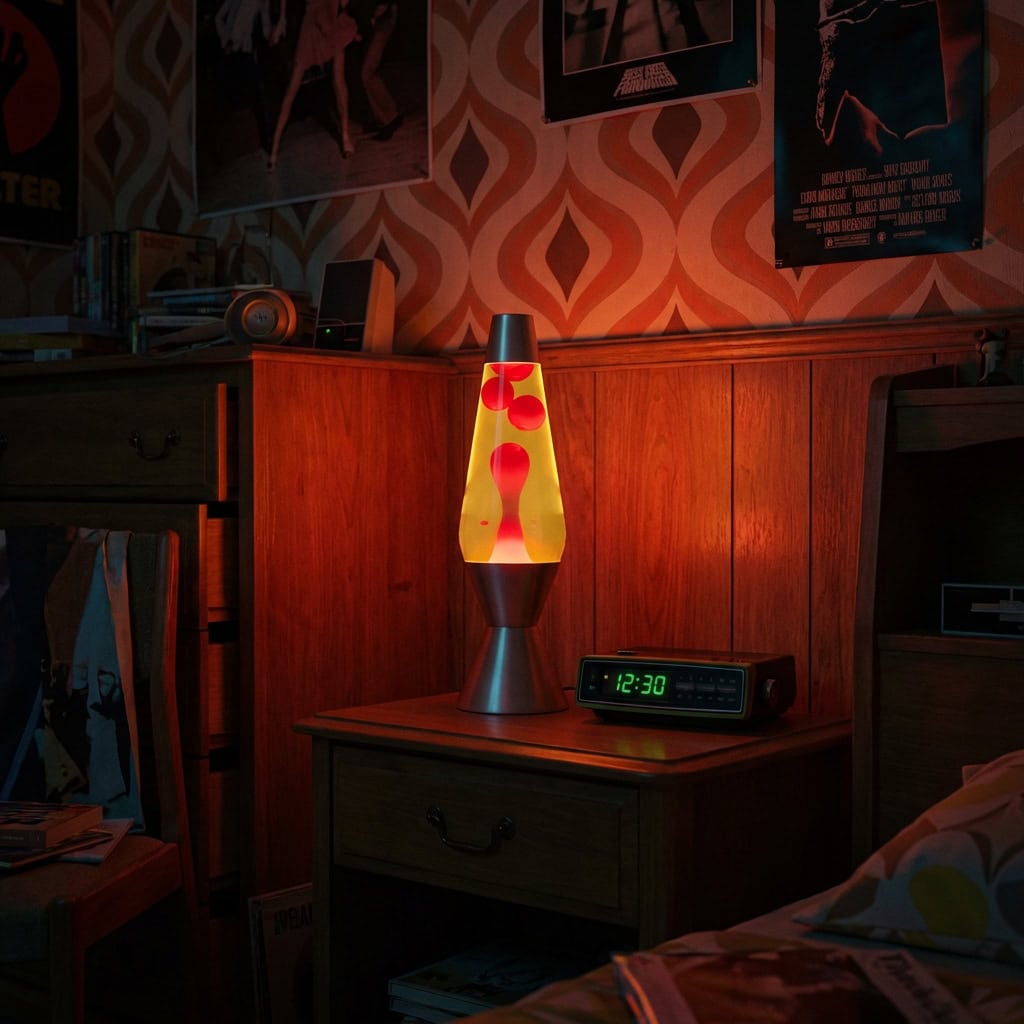
It was invented in the 1960s, but the lava lamp became a true household staple in the 70s.
A glass cylinder filled with wax and liquid, heated by a light bulb in the base. The wax melted, rose in slow, blobby shapes, cooled, and sank again. Over and over. Endlessly.
You could stare at a lava lamp for an hour and not get bored. It was the original screensaver — mesmerizing, purposeless, and oddly calming.
Lava lamps showed up in bedrooms, dens, and any room that wanted to feel slightly countercultural. They came in every color combination — red and yellow, blue and green, purple and orange.
They generated almost no useful light. They were not good at anything except being themselves. And that was more than enough.
21. Earth-Tone Bathroom Tile
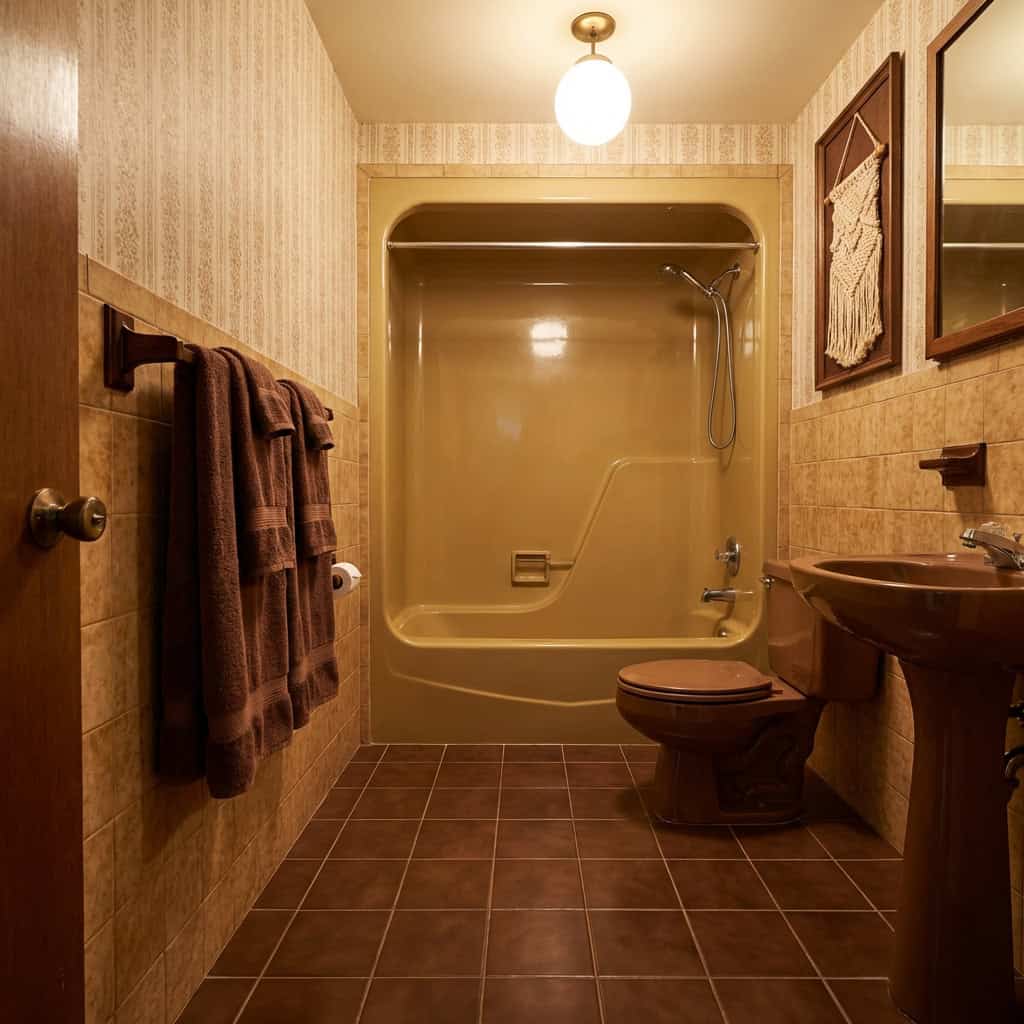
The 1970s bathroom was not white. It was brown. Or gold. Or orange. Or some combination of all three.
Floor tiles, wall tiles, bathtub surrounds, and shower enclosures came in earth tones that matched the rest of the house. Chocolate brown was the most common, followed by a warm tan, a muted gold, and the occasional rust.
Some bathrooms went all-in with a single color. Others mixed tones — brown floor tiles with gold wall tiles and an orange accent stripe. The grout was always a slightly different shade, which gave the whole room a textured, layered look.
The earth-tone bathroom was warm and cozy in a way that the modern white-and-gray spa bathroom has never managed. But remodeling one meant ripping out every surface, because you could not find replacement tiles in “1974 brown” at any store in America.
22. The Wood-Burning Stove
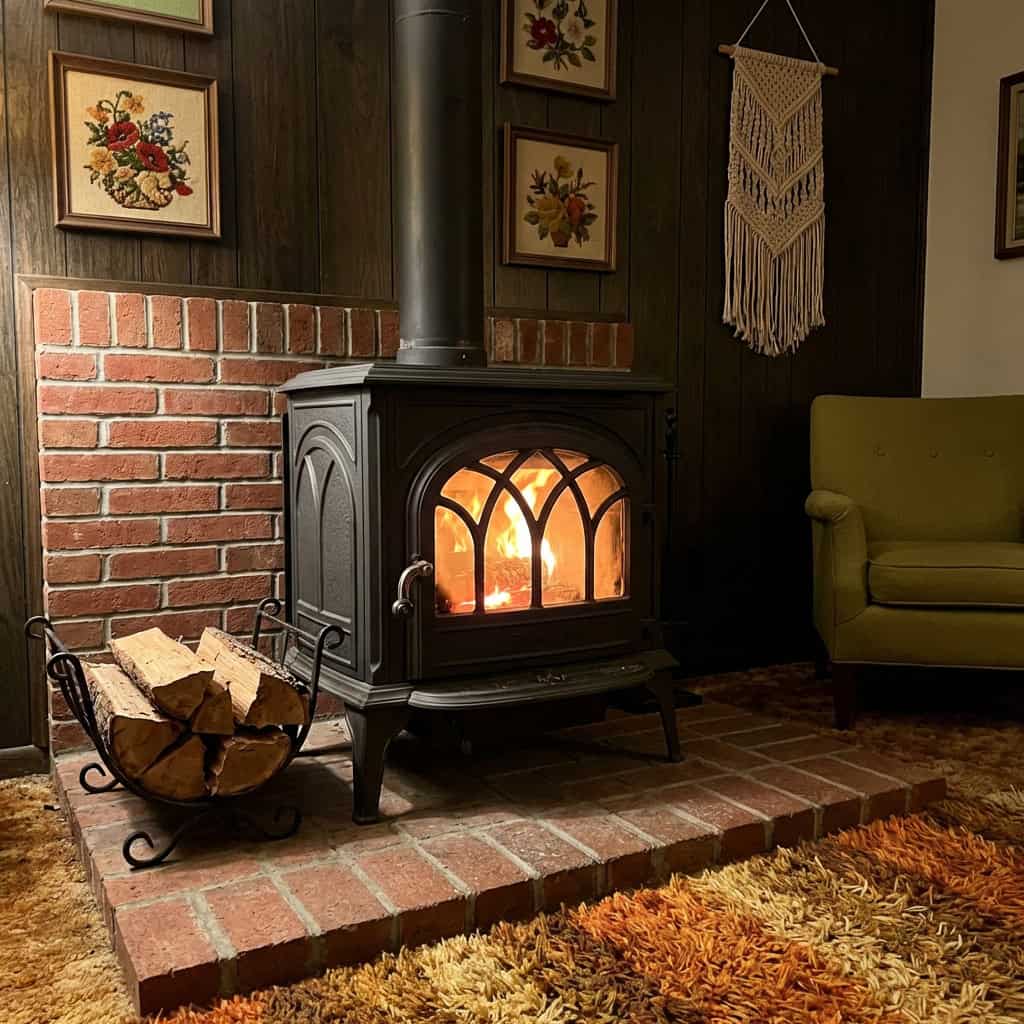
Not every 70s home had a fireplace. But a surprising number of them had a wood-burning stove — or a Franklin stove — sitting on a brick or stone hearth in the living room or den.
The energy crisis of the mid-1970s drove millions of homeowners to install wood-burning stoves as an alternative heat source. The stoves were cast iron, heavy as a car engine, and radiated heat that could warm an entire floor of the house.
The ritual was specific — haul the wood, stack it by the door, crumple newspaper, arrange kindling, light the fire, adjust the damper. It was a skill that separated the adults from the kids.
The smell of a wood fire drifting through a house on a January evening is one of those sensory memories that never fades. Central heating does the job more efficiently, but it does not do it better.
23. The Hi-Fi Turntable with Massive Floor Speakers
Music in the 1970s was not background noise. It was the main event.
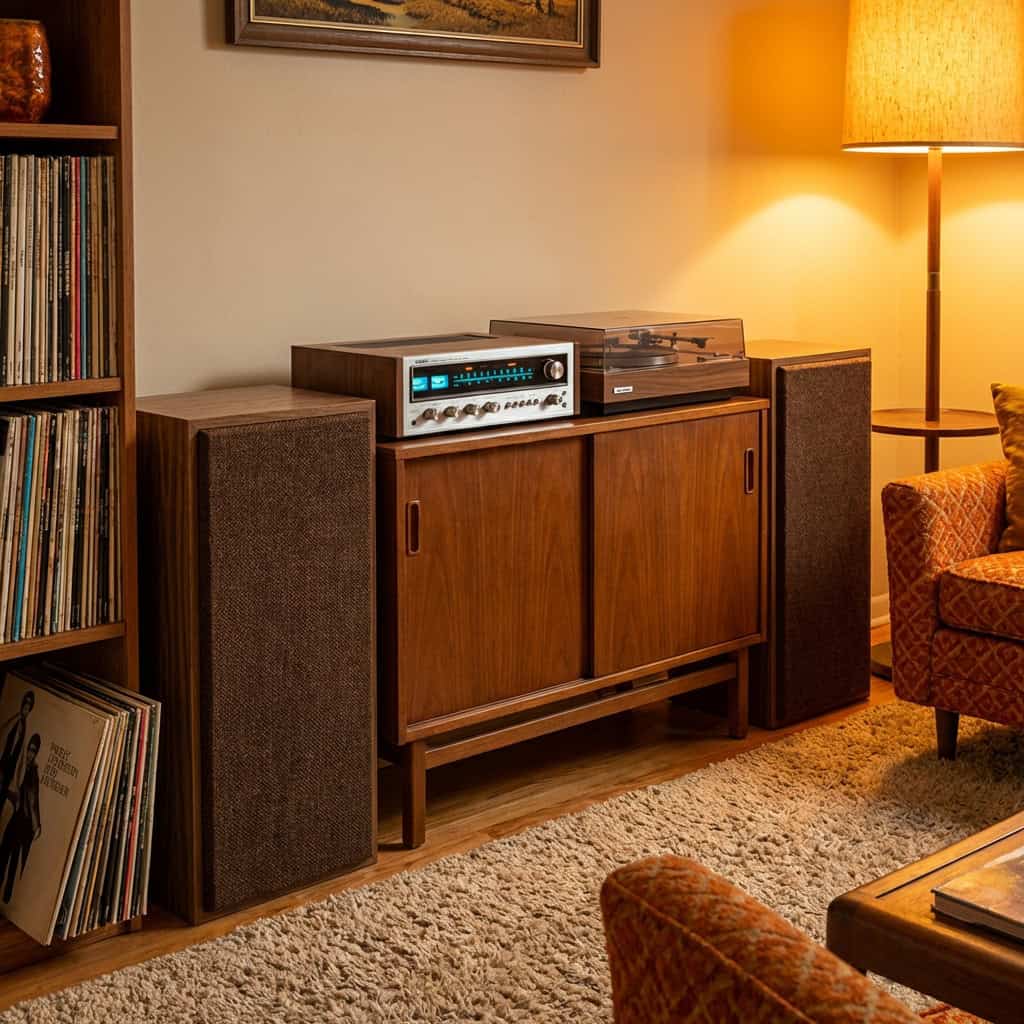
The hi-fi stereo system sat in the living room or the den — a turntable on top, a receiver with glowing dials below, and a pair of floor-standing speakers that were the size of small bookshelves. The speakers were covered in wood-grain veneer and brown fabric, and they pumped out sound that you felt in your chest.
Albums were stacked on a shelf nearby — the Beatles, Fleetwood Mac, the Eagles, Led Zeppelin, Stevie Wonder. Pulling a record from its sleeve, placing it on the turntable, and dropping the needle was a ritual that carried more weight than pressing play on a phone ever will.
The speakers stayed in the same spot for years. Sometimes decades. The dust settled into the fabric grills. The needle wore down. The turntable hummed. And the music filled the room the way music is supposed to — from the floor up.
24. The Velvet Painting
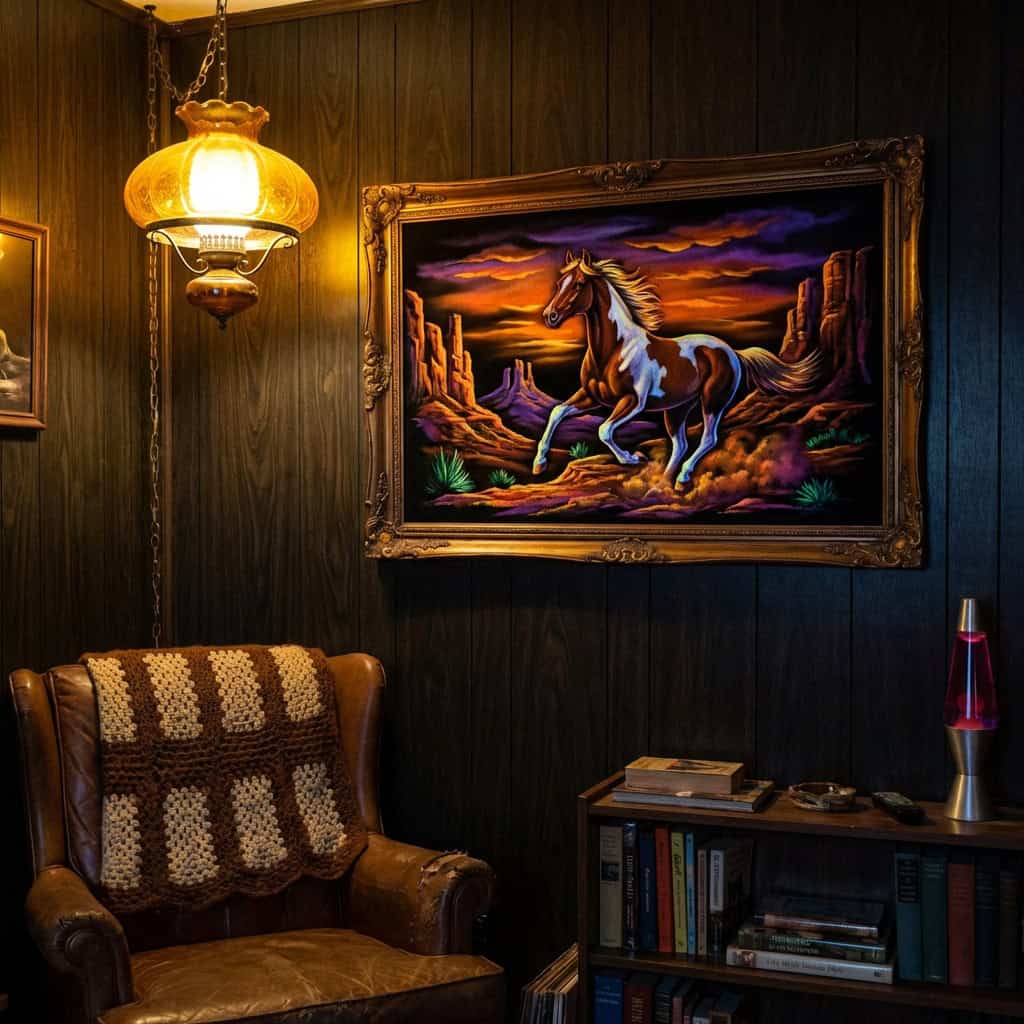
It hung on the wall of the den, the basement, or the spare bedroom — a painting on black velvet that glowed under the right light.
Elvis. A matador. Dogs playing poker. A sad clown. A wild horse running through a canyon. A big-eyed child staring into your soul.
Velvet paintings were sold at flea markets, swap meets, roadside stands, and the occasional mall kiosk. They cost almost nothing, which was part of the appeal. They were art for people who did not care what art critics thought.
The black velvet background made the colors pop in a way that regular canvas could not match. Under a swag lamp or a blacklight, a velvet painting looked almost luminous.
They were kitsch. They were lowbrow. They were proudly, unapologetically tacky. And they were hanging in millions of American homes — right next to the macramé wall hanging and across from the wood paneling.
25. The Peacock Chair
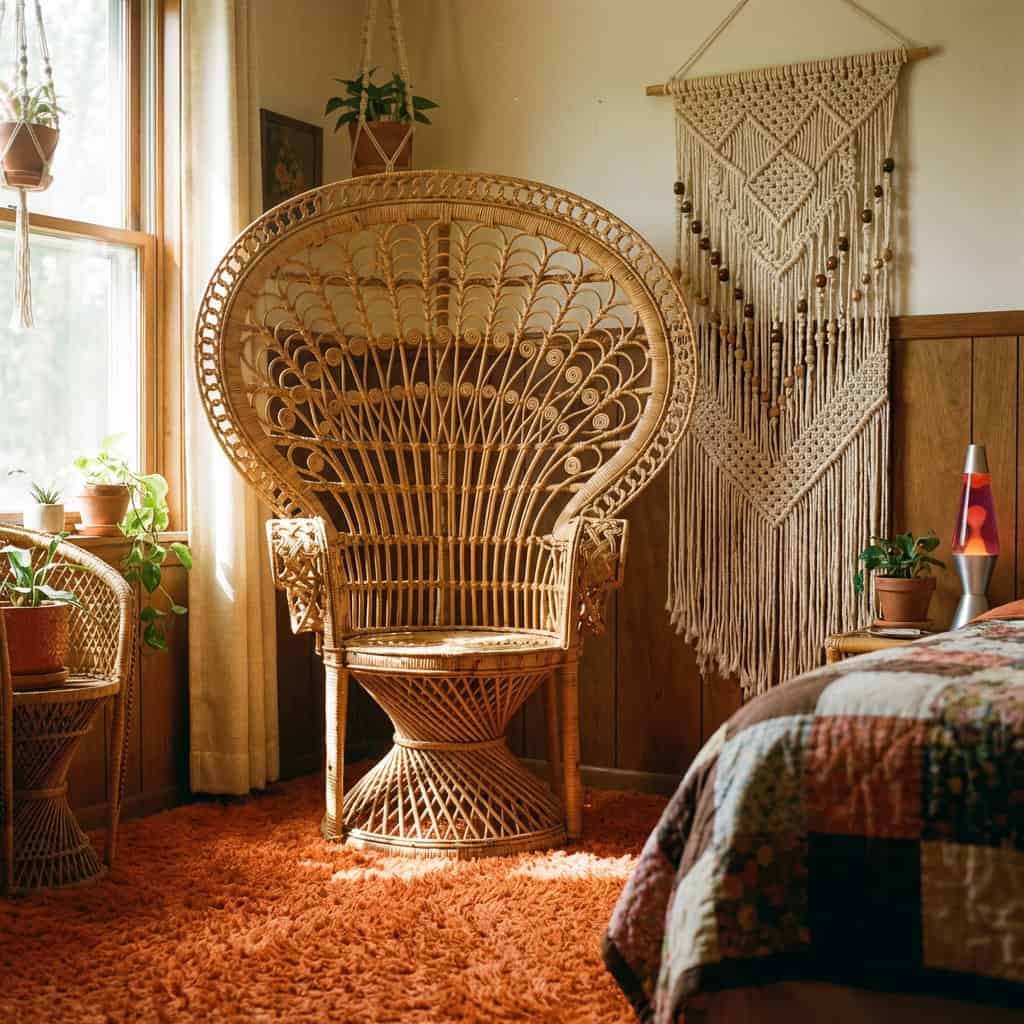
Every 70s home that aspired to any level of bohemian style had a peacock chair — that oversized, fan-backed wicker throne that made whoever sat in it look like royalty.
The chair was enormous. The woven rattan back fanned out two or three feet above the sitter’s head, creating a dramatic silhouette that was half furniture, half sculpture.
It showed up in bedrooms, sunrooms, and corners of the living room. Photographers loved it — senior portraits, family photos, and album covers all featured the peacock chair. It was the most photographed piece of furniture of the decade.
The peacock chair was not particularly comfortable. The wicker creaked. The fan back served no practical purpose. But sitting in one made you feel like you were in a different world — somewhere warmer, slower, and more interesting than your suburban living room.
It was the 70s in a single chair.
Conclusion
That is 25. How many did you have?
If you grew up in the 1970s, you probably checked off at least 18 of these without thinking. If your parents owned a home during the decade, the number might be closer to 22.
The 70s get a bad reputation. The shag carpet. The avocado appliances. The wood paneling. Everyone makes the same jokes.
But here is what nobody says — the 1970s home was warm. Physically warm, emotionally warm, and visually warm. Every color, every texture, every material was chosen to make a room feel like a place you wanted to stay.
The beige-and-gray era that followed spent 40 years trying to erase the 70s from every American home. And it succeeded. But ask anyone who grew up in one — who sat on the shag carpet listening to records through those massive speakers, who ate fondue on a Saturday night, who fell asleep in a bean bag chair in the wood-paneled basement — and they will tell you something the design magazines never will.
It felt like home.