

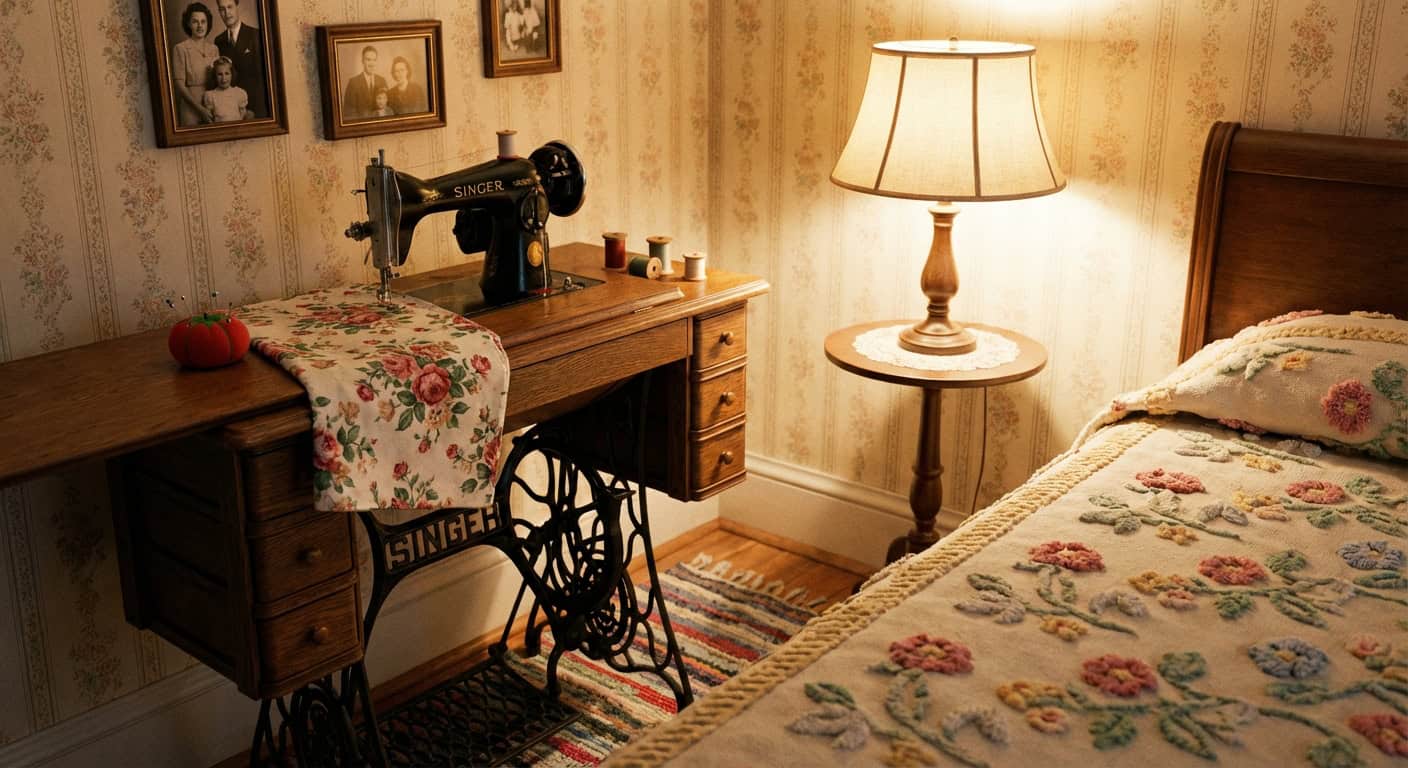
You did not grow up in a 1940s home. But you visited one.
Every Sunday. Every holiday. Every summer week when your parents dropped you off and your grandmother met you at the screen door — the one that slammed shut behind you no matter how many times she told you not to let it slam.
The house smelled like coffee and bread and something floral that you could never quite place. The furniture was dark and heavy. The radio was on in the living room. There were doilies on everything.
Nothing in that house had been updated since Truman was president, and your grandmother saw absolutely no reason to change that. The icebox worked. The clothesline worked. The cast-iron skillet worked. Why fix what was not broken?
If you ever spent time in a home that was built or furnished in the 1940s — and most of us did, because our grandparents held onto everything — these 25 things were in it. Some of them are gone forever. Some of them are making quiet comebacks. And all of them will take you straight back to a house that smelled like home before you even knew what that word meant.
1. The Radio as the Living Room Centerpiece
Before television, the radio was everything.
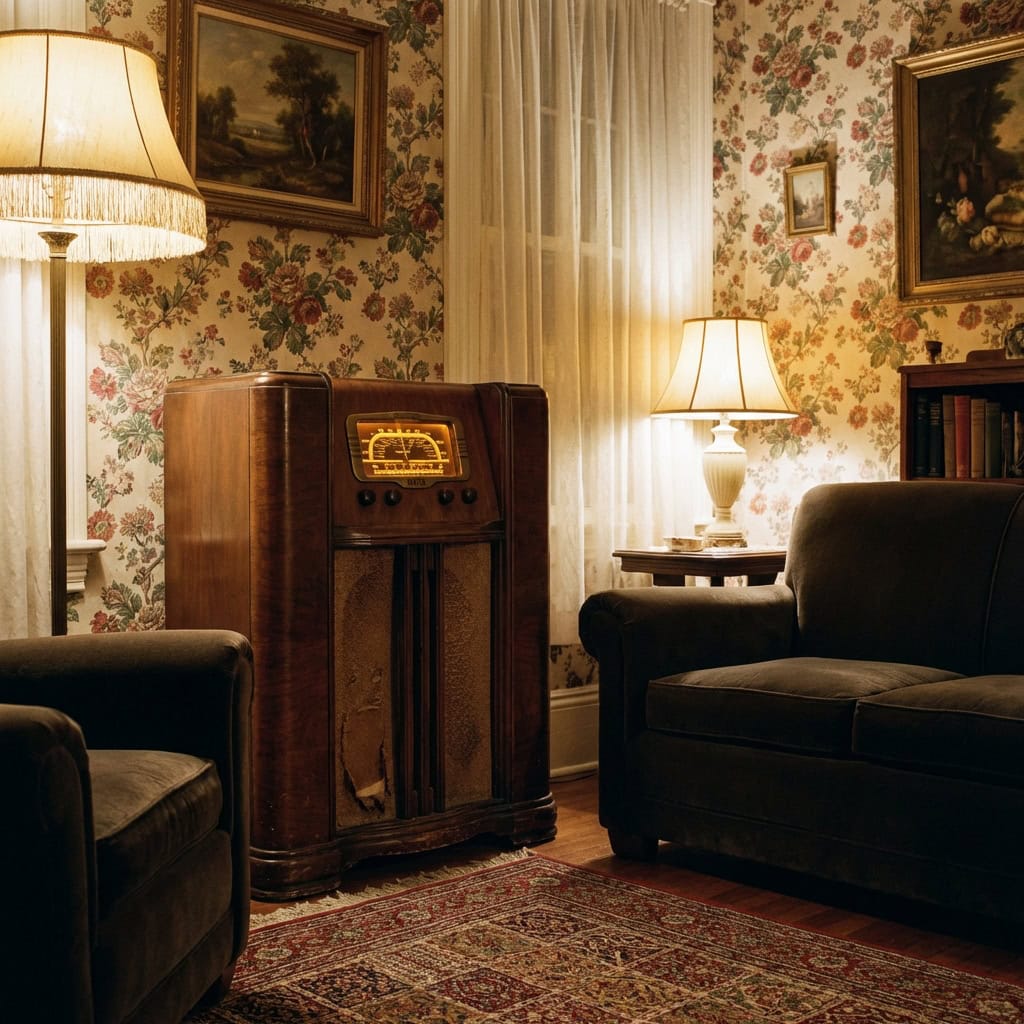
It sat in the living room — a floor-standing wooden cabinet with a glowing amber dial and a fabric-covered speaker — and the entire family gathered around it the way families would later gather around the TV.
News came through it. Music came through it. Comedy shows, soap operas, mystery serials, and baseball games came through it. Franklin Roosevelt spoke directly to the nation through it. The radio was not entertainment. It was the family’s connection to the entire world outside the front door.
The evening ritual was specific. Dinner was finished. Dishes were done. The family sat in the living room, and someone turned the dial until the program came in clear. Then everyone listened — together, in the same room, to the same thing.
Television replaced the radio almost completely by the late 1950s. But in the 1940s, that wooden cabinet with the warm glow was the most important piece of furniture in the house.
2. Floral Wallpaper in Every Room
The 1940s home was papered. Not just one room — every room.
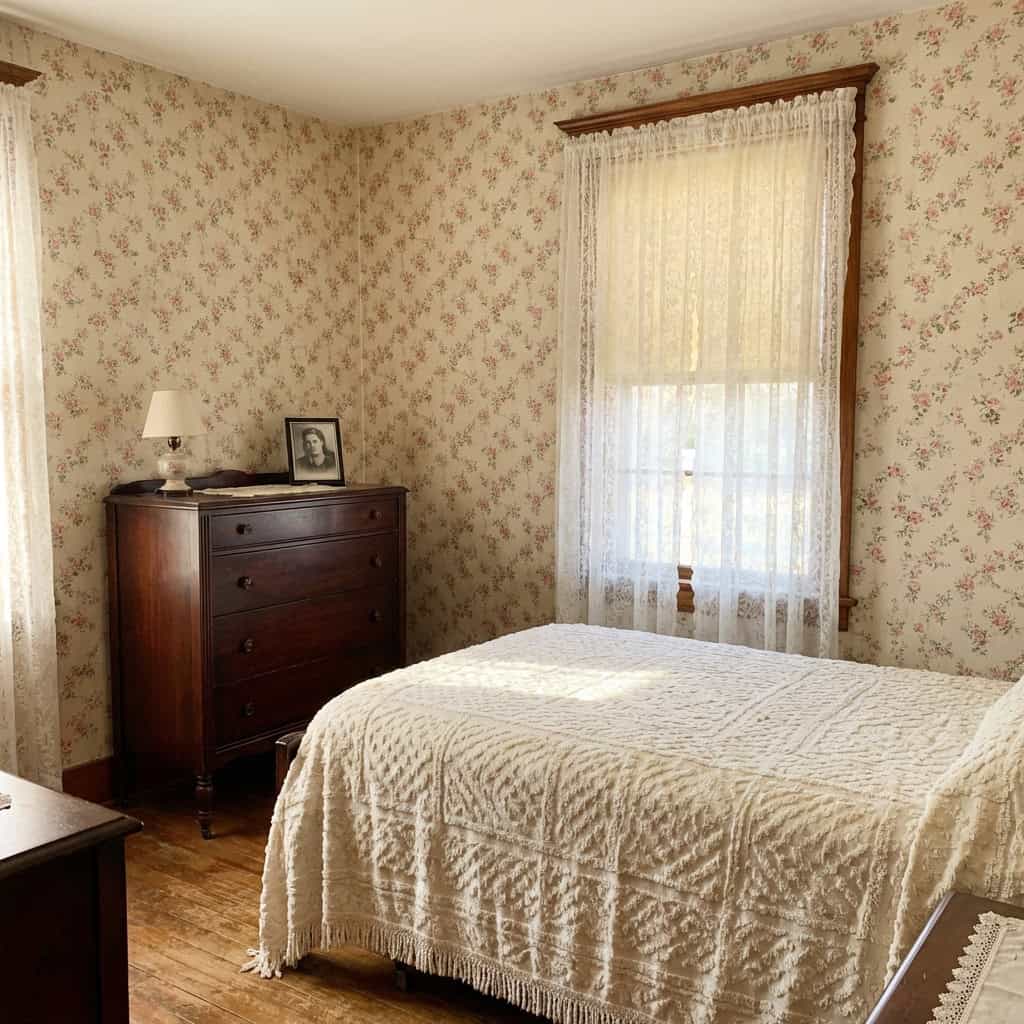
The living room had one pattern. The kitchen had another. Each bedroom had its own. The bathroom, the hallway, the dining room — all wallpapered, all different, and all floral.
Roses. Violets. Morning glories. Dainty repeating bouquets on soft backgrounds of cream, pale blue, or butter yellow. The patterns were sweet, feminine, and everywhere.
The wallpaper gave the home a warmth and softness that paint alone could not achieve. It also covered a multitude of sins — cracked plaster, uneven walls, patched repairs that were easier to hide than fix.
Removing 1940s wallpaper is one of the more humbling home improvement experiences available. Multiple layers, applied with paste that has had 80 years to bond with the plaster, do not come off easily. Many homeowners have simply papered over it, adding another layer to the archaeological record of the house.
3. The Victory Garden

The 1940s backyard was not decorative. It was productive.
During World War II, the government encouraged every American household to plant a Victory Garden — a vegetable garden that would supplement the family’s food supply while commercial agriculture was diverted to feed the troops. By 1944, an estimated 20 million Victory Gardens were producing roughly 40 percent of the nation’s vegetables.
Tomatoes, beans, carrots, lettuce, peas, and squash grew in neat rows in backyards, side yards, and even window boxes. Families who had never gardened before learned to plant, weed, harvest, and preserve.
The Victory Garden was patriotism you could eat. It was a tangible, daily contribution to the war effort that gave families a sense of purpose during years of uncertainty and sacrifice.
Many families kept gardening long after the war ended. The habit stuck. The knowledge passed down. And the backyard vegetable garden that exists in American homes today traces a direct line back to the Victory Garden of the 1940s.
4. Dark Wood Furniture Everywhere
The 1940s living room was heavy.
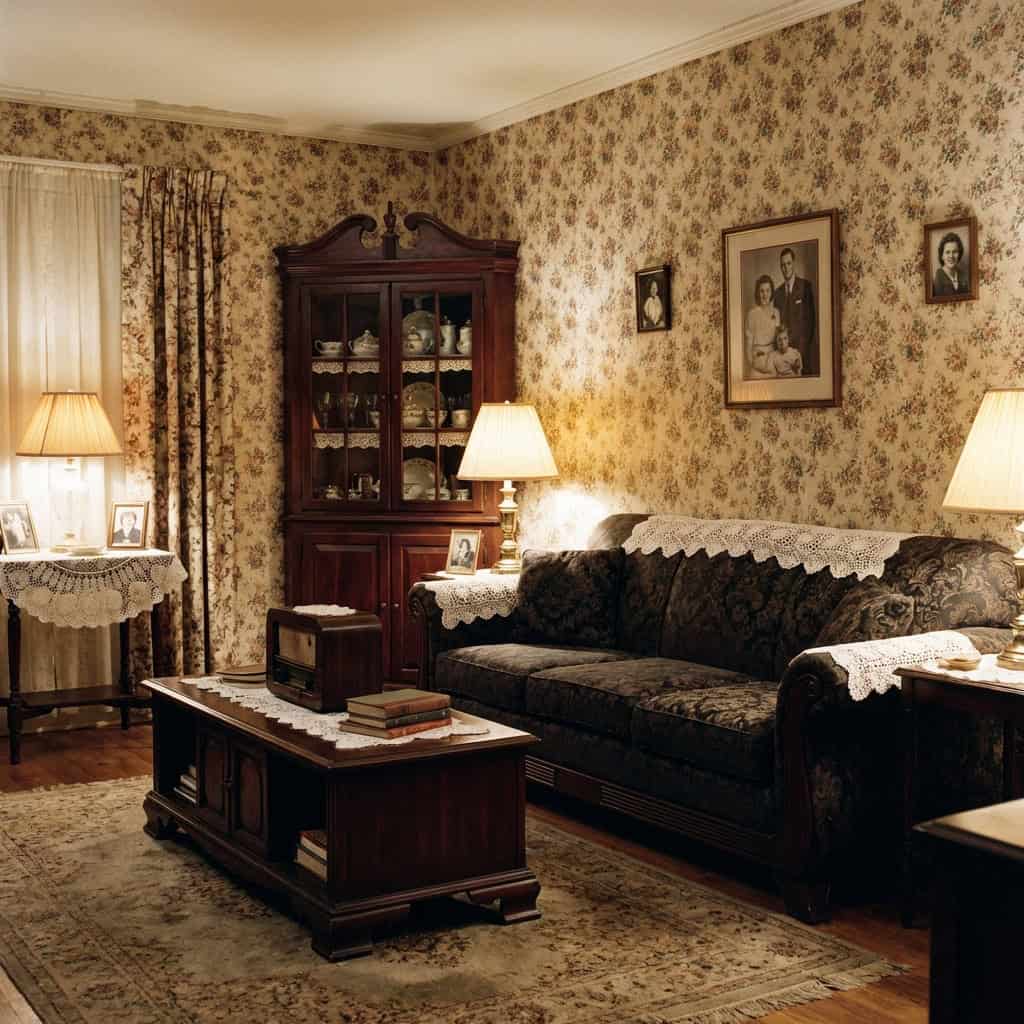
Sofas and armchairs were upholstered in dark fabrics and built on dark wood frames. Coffee tables, end tables, bookcases, and dining sets were mahogany, walnut, or dark maple. China cabinets were enormous. Dressers were solid enough to stop a truck.
The furniture was a mix of styles — some Colonial Revival, some Streamline Moderne, some simply traditional pieces that families had owned for decades and saw no reason to replace. Dark wood was the default. Light wood, bright colors, and the tapered legs of mid-century modern were still years away.
The weight was not just visual. A 1940s mahogany dining table could weigh 200 pounds. A dresser might take three men to move. This furniture was built to stay in one place for a lifetime, and much of it did exactly that.
The irony is that the dark, heavy furniture the 1950s generation rushed to replace is now the furniture that collectors and antique dealers prize the most.
5. The Icebox
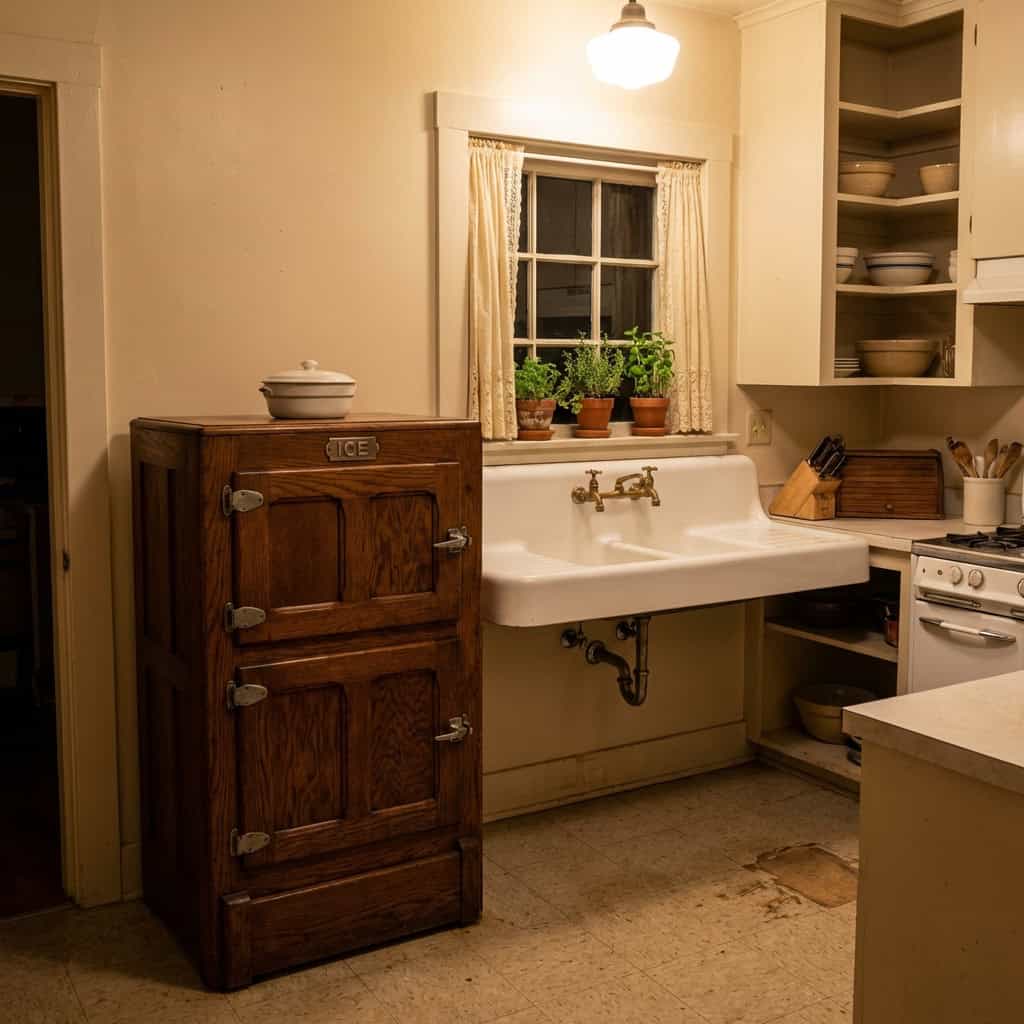
The electric refrigerator existed in the 1940s, but not every home had one yet.
Many families — especially in rural areas and older urban neighborhoods — still used an icebox. A wooden or metal cabinet, insulated with cork or sawdust, with a compartment on top for a large block of ice that kept the food below cool.
The iceman delivered blocks of ice on a regular schedule — pulling up in a truck, carrying the block with iron tongs, and sliding it into the top compartment while meltwater dripped into a drip pan underneath. Emptying the drip pan before it overflowed was a daily chore that nobody enjoyed.
The icebox kept food cool but not cold. Milk had to be used quickly. Meat had to be cooked the day it was bought. The concept of keeping leftovers for a week was not realistic.
The transition from icebox to electric refrigerator happened throughout the 1940s and 1950s, and it was one of the most consequential upgrades in the history of the American kitchen. But the word “icebox” survived in common speech for decades after the last one was unplugged.
6. Lace Curtains and Doilies on Every Surface
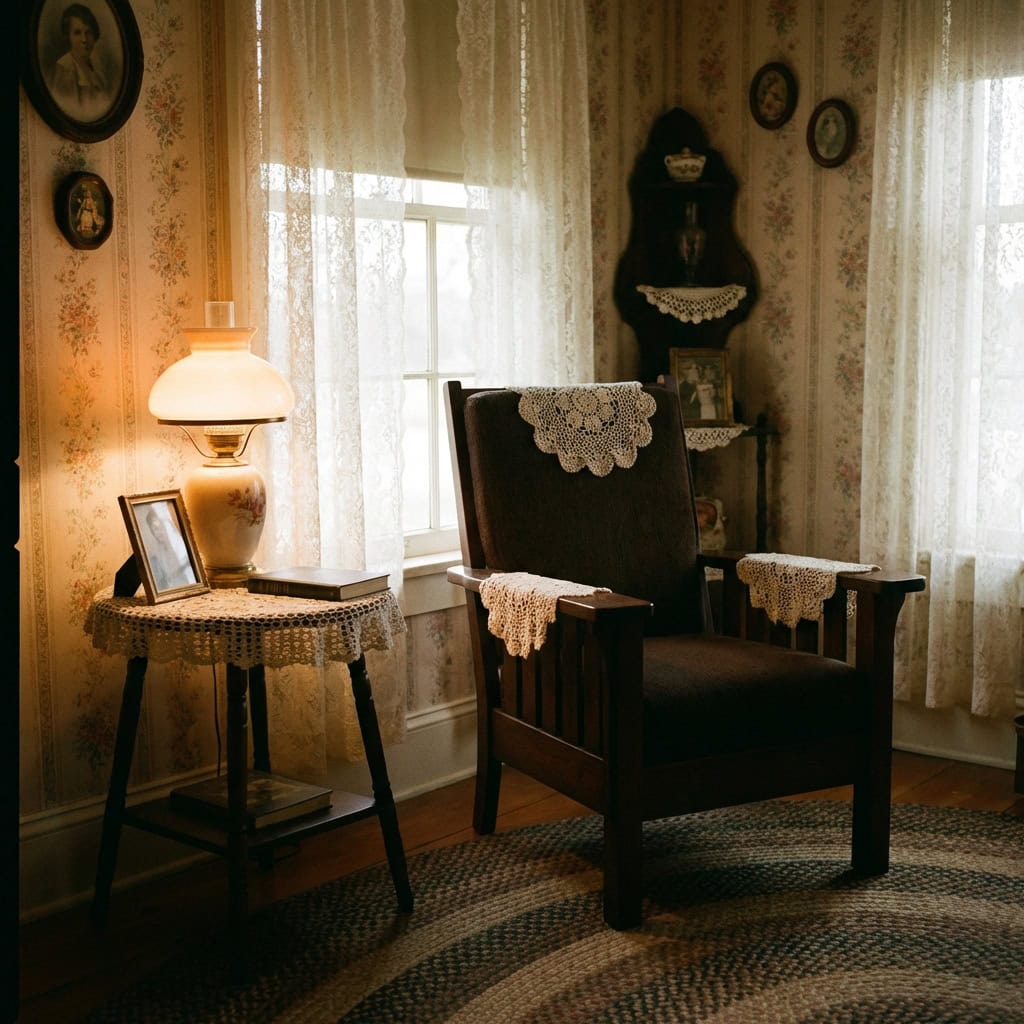
The 1940s home was covered in lace.
Lace curtains hung in every window — usually white or cream, with intricate patterns that filtered the light and gave every room a soft, diffused glow. They were washed, starched, and re-hung regularly, and the process of stretching them on curtain stretchers to dry without shrinking was a household ritual that required precision and patience.
Doilies — small, round or oval pieces of crocheted or lace fabric — sat on every flat surface. The arm of every chair. The back of every sofa. The top of every end table, dresser, nightstand, and radio cabinet. Their purpose was to protect the furniture from wear and oil, but they also gave the home a handmade, cared-for quality that no store-bought decoration could replicate.
Many of those doilies were made by hand — by the woman of the house, her mother, or her grandmother. They were practical objects that were also acts of craft, passed down and repurposed for generations.
7. The Clawfoot Bathtub
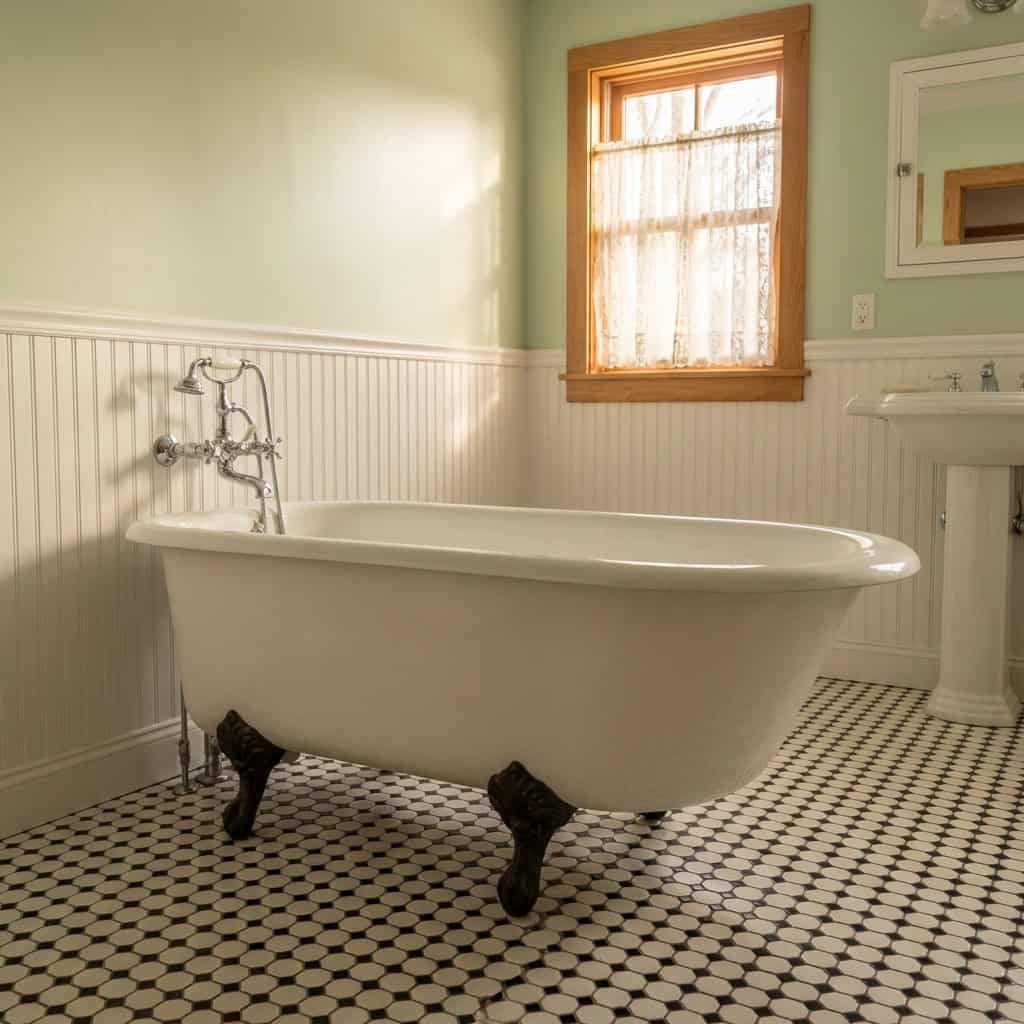
The bathtub in a 1940s bathroom did not sit against the wall. It stood on four cast-iron feet — shaped like claws gripping a ball — in the middle of the room or against the wall with space visible underneath.
The clawfoot tub was deep, heavy, and held more hot water than any modern built-in bathtub. Getting in required a step up. Getting out required a hand on the rim. And lying in one, with hot water up to your chin, was an experience that modern flat-bottomed tubs have never matched.
The exterior was usually painted white, though some were left as bare cast iron. The faucet and handles were chrome or nickel, and the drain plug was a rubber stopper on a chain.
Clawfoot tubs were removed from millions of American bathrooms during the renovation waves of the 60s, 70s, and 80s — replaced by built-in tubs that were easier to install and surround with tile.
The ones that survived are now among the most coveted fixtures in home design. A refinished clawfoot tub in a modern bathroom is considered the ultimate blend of vintage character and functional luxury.
8. The Party Line Telephone
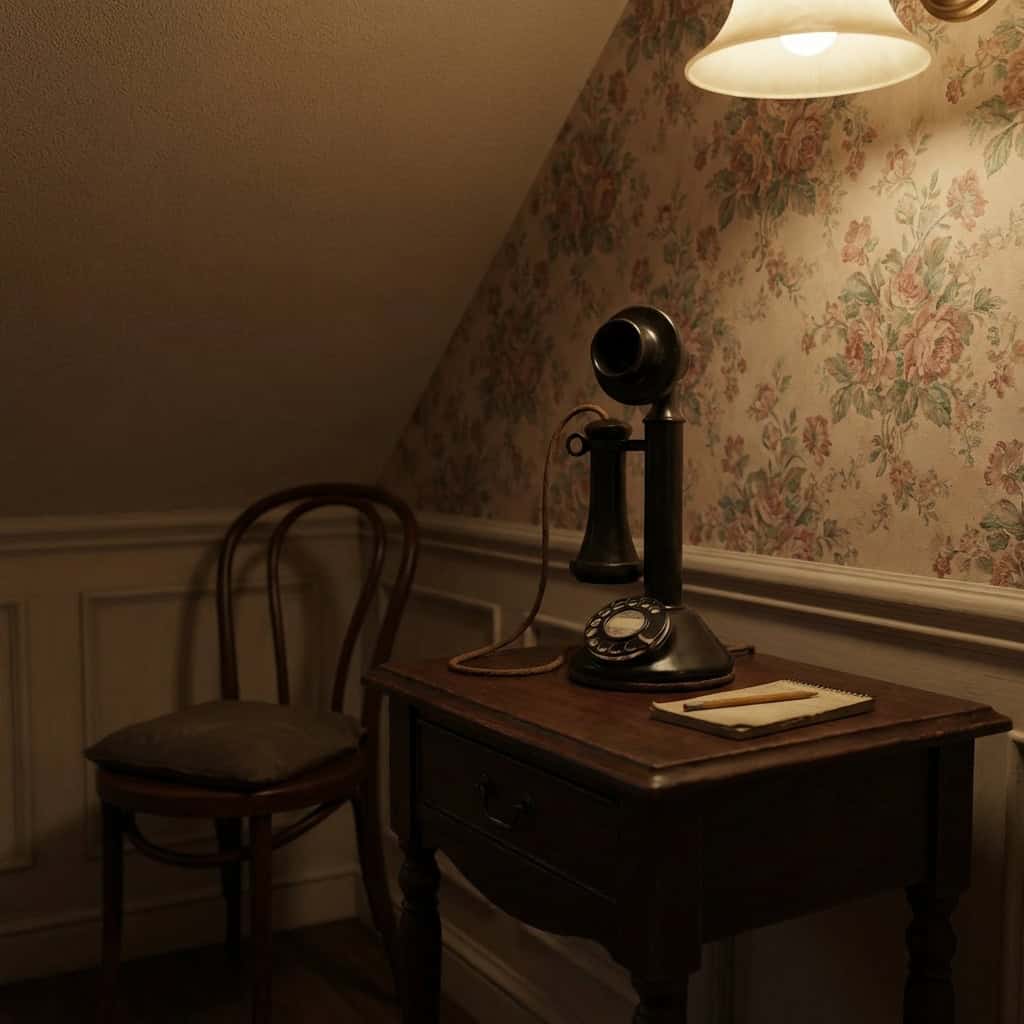
Before every family had a private telephone line, many shared one with their neighbors.
The party line was a single telephone circuit shared by two, four, or sometimes eight households. When you picked up the phone, there was a chance someone else on the line was already talking. Etiquette demanded that you hang up and try again later. Reality meant that some people listened.
Each household on the party line had a distinctive ring — two short rings, one long ring, three short rings — so you knew when the call was for you. Picking up on someone else’s ring was technically rude but universally practiced.
The party line meant that privacy was an illusion. Your neighbors could hear your conversations, and you could hear theirs. Gossip traveled at the speed of a lifted receiver.
Private lines gradually replaced party lines through the 1950s and 60s, but in the 1940s, the party line was how much of rural and small-town America communicated — for better and for worse.
9. The Milk Delivery Box
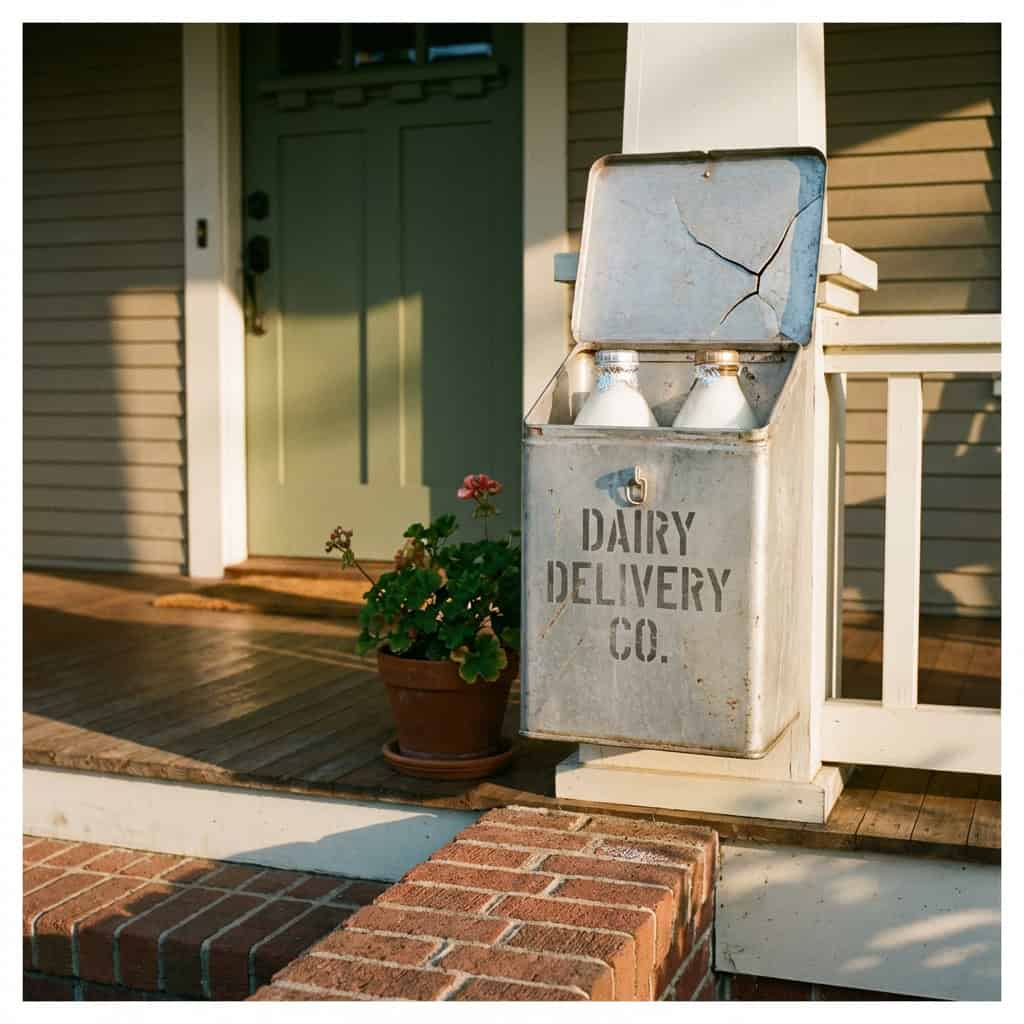
Before you drove to the store for milk, the milk drove to you.
The milkman delivered glass bottles of fresh milk to the front door or side porch on a regular schedule — usually every other day. The bottles went into a small metal or wooden box mounted near the door, insulated just enough to keep the milk cool until someone brought it inside.
Empty bottles were left in the box for the milkman to collect, rinse, and refill. It was one of the earliest recycling systems in American life, and it worked flawlessly for decades.
The milk box was a fixture of the 1940s home exterior. It sat by the front door like a tiny mailbox for dairy — a daily reminder that someone else was helping keep your family fed.
Home milk delivery declined through the 1950s and 60s as supermarkets expanded and refrigerators improved. But the milkman’s early morning route — the clink of glass bottles, the creak of the box lid — is one of the sounds that anyone who lived through it never forgot.
10. The Clothesline
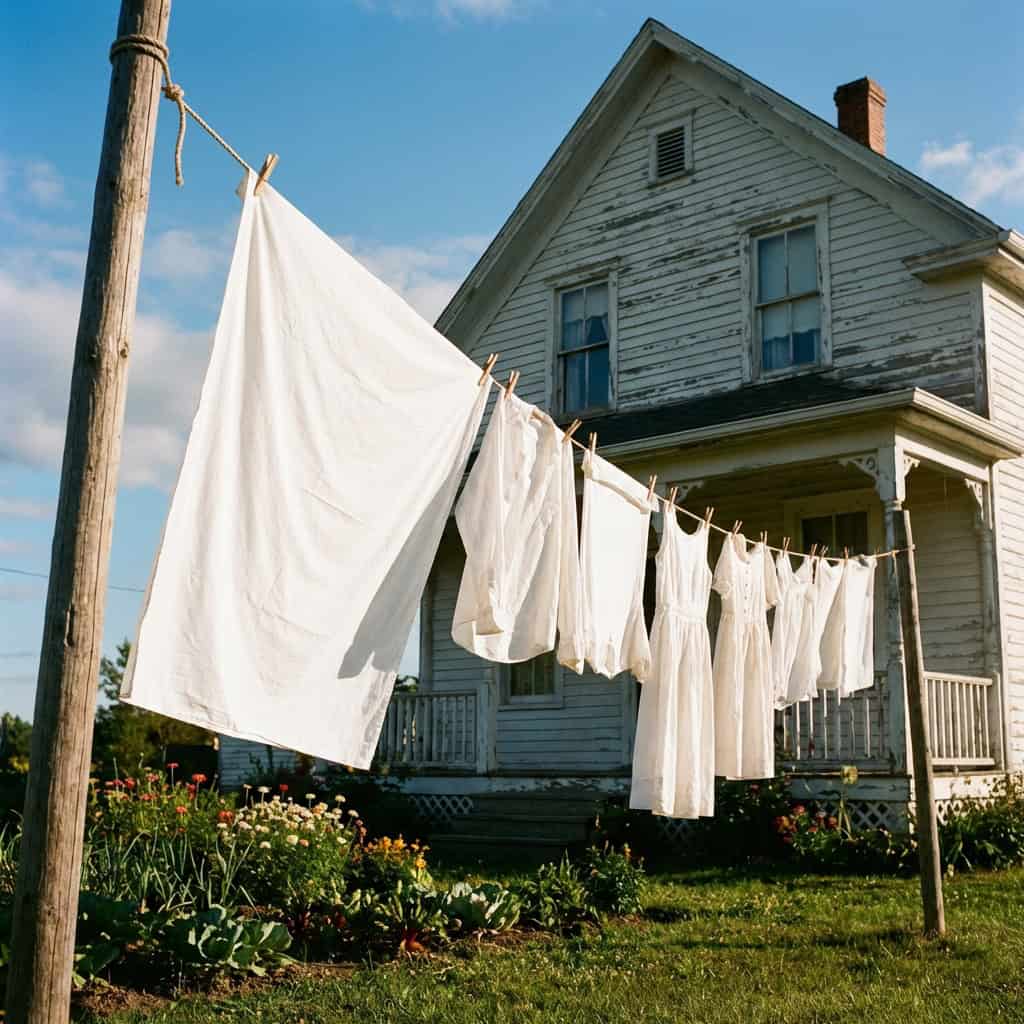
The 1940s home did not have a dryer. It had a backyard and some rope.
The clothesline — two poles with a line of cotton or wire strung between them — was where every piece of laundry in the house went to dry. Sheets, shirts, pants, socks, towels, and undergarments were pinned to the line and left in the sun and wind until dry.
Laundry day — which was usually Monday, because the 1940s household ran on a schedule — meant washing in the morning and hanging by late morning so everything would be dry by afternoon.
The smell of line-dried laundry is one of the most universally loved scents in American domestic life. Fabric softener and dryer sheets have tried to replicate it for decades and have never come close.
The clothesline disappeared from suburban America as dryers became standard and homeowners’ associations began banning them. But the image of white sheets billowing on a line against a blue sky remains one of the most evocative images of mid-century American home life.
11. Linoleum Floors with Inlaid Patterns
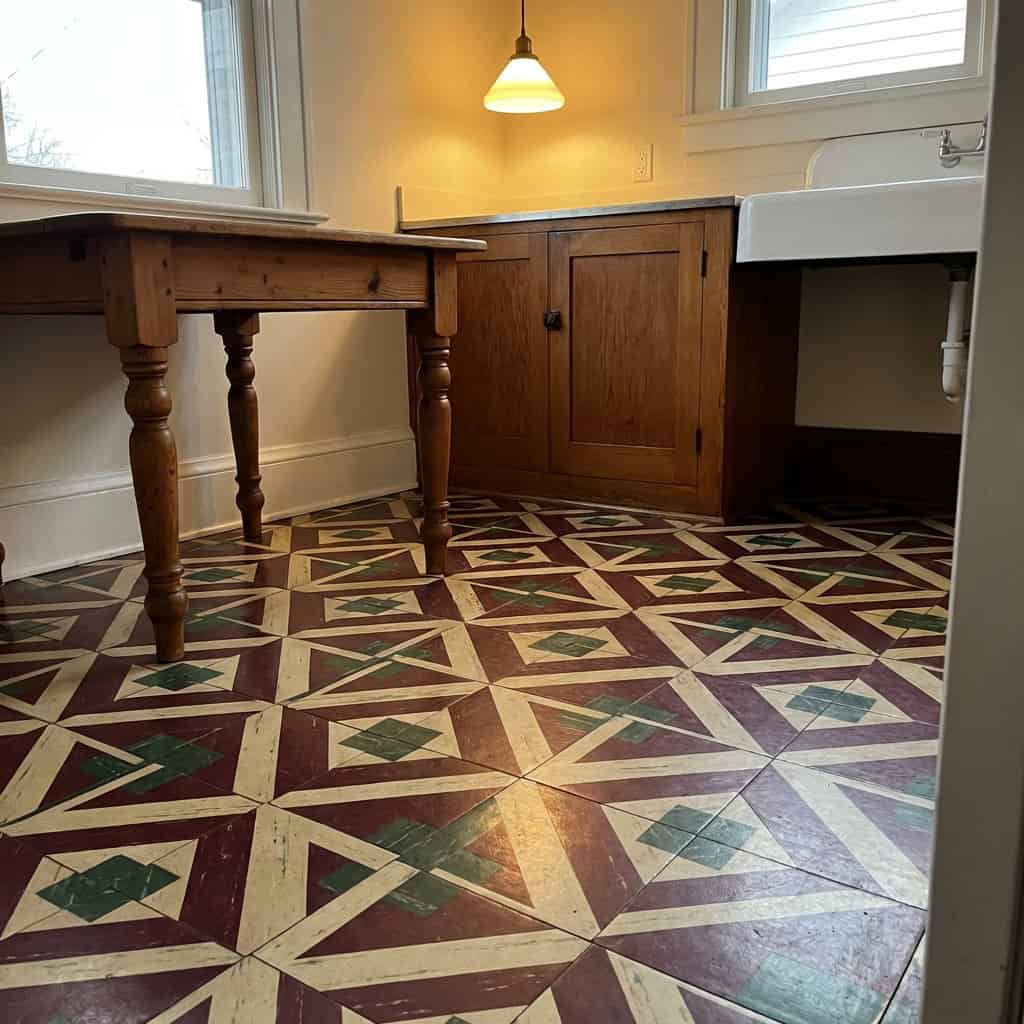
The 1940s kitchen floor was not plain. It was a designed surface — and it was tougher than it looked.
Inlaid linoleum — not the printed sheet vinyl that came later — had the pattern built into the material itself, which meant it did not wear off with foot traffic. The designs were geometric, floral, or marbled, in rich colors that included deep red, forest green, cream, and black.
Armstrong was the dominant manufacturer, and their 1940s catalogs show floors that were treated as seriously as any other surface in the home. The patterns were coordinated with the kitchen’s color scheme, and a well-laid linoleum floor gave the room a finished, polished look.
The inlaid linoleum of the 1940s was a different product entirely from the cheap vinyl that replaced it. It was made from natural materials — linseed oil, cork dust, and wood flour — and it lasted for decades. Some original 1940s linoleum floors are still in service today, worn at the edges but fundamentally intact.
12. The Front Porch Swing
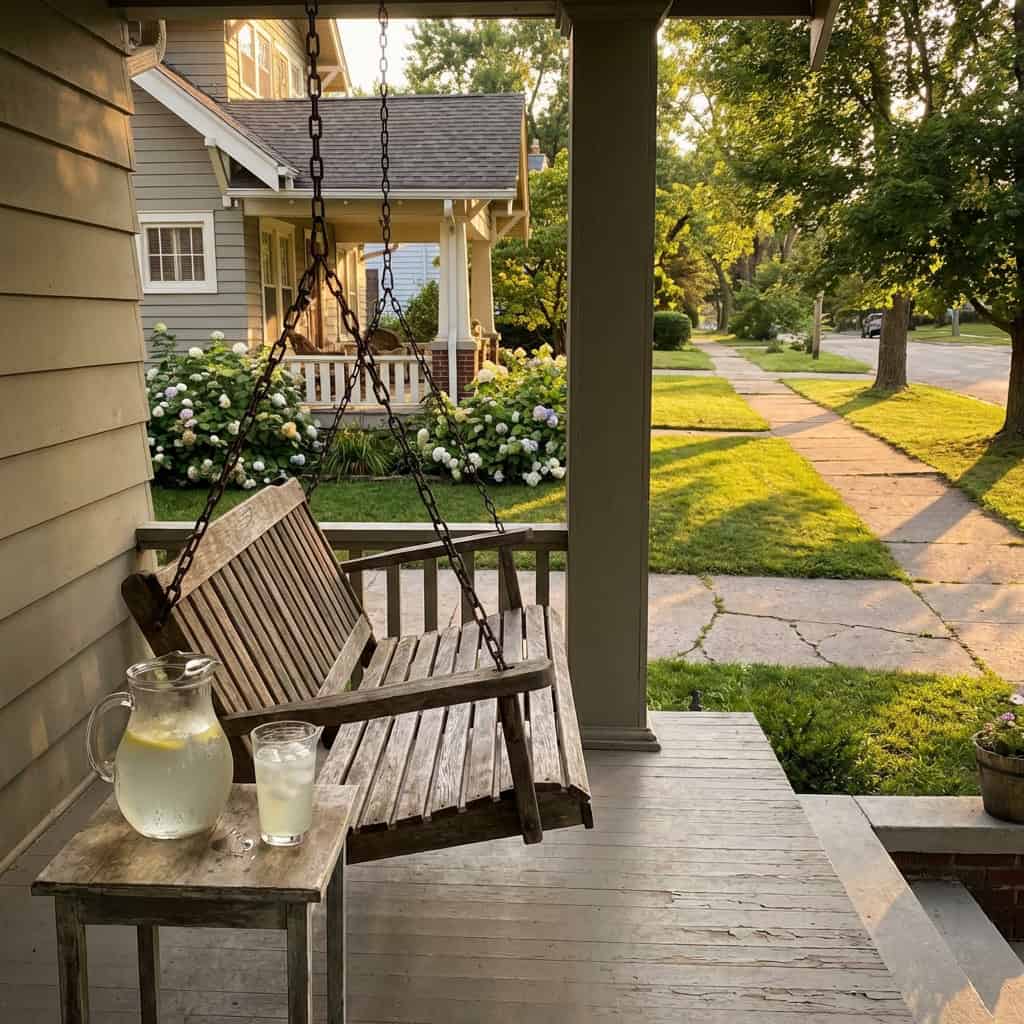
The front porch of the 1940s home was not a pass-through. It was a room.
And the swing was its best piece of furniture.
A wooden bench seat suspended from the porch ceiling by chains, the porch swing moved in a slow, gentle arc that set the rhythm for an evening. Back and forth. Back and forth. The creak of the chains. The sound of crickets.
The front porch swing was where the day ended. After dinner, after dishes, the family moved to the porch. Neighbors walked by and stopped to talk. Kids caught lightning bugs in the yard. The swing moved, and time slowed down.
Air conditioning killed the front porch. Once you could cool the inside of the house, there was no reason to sit outside in the heat. The porch became a pass-through, then a decoration, then an afterthought.
But the swing — and the evening ritual it represented — was the centerpiece of a social life that happened between houses, not inside them.
13. The Coal Furnace and Coal Chute
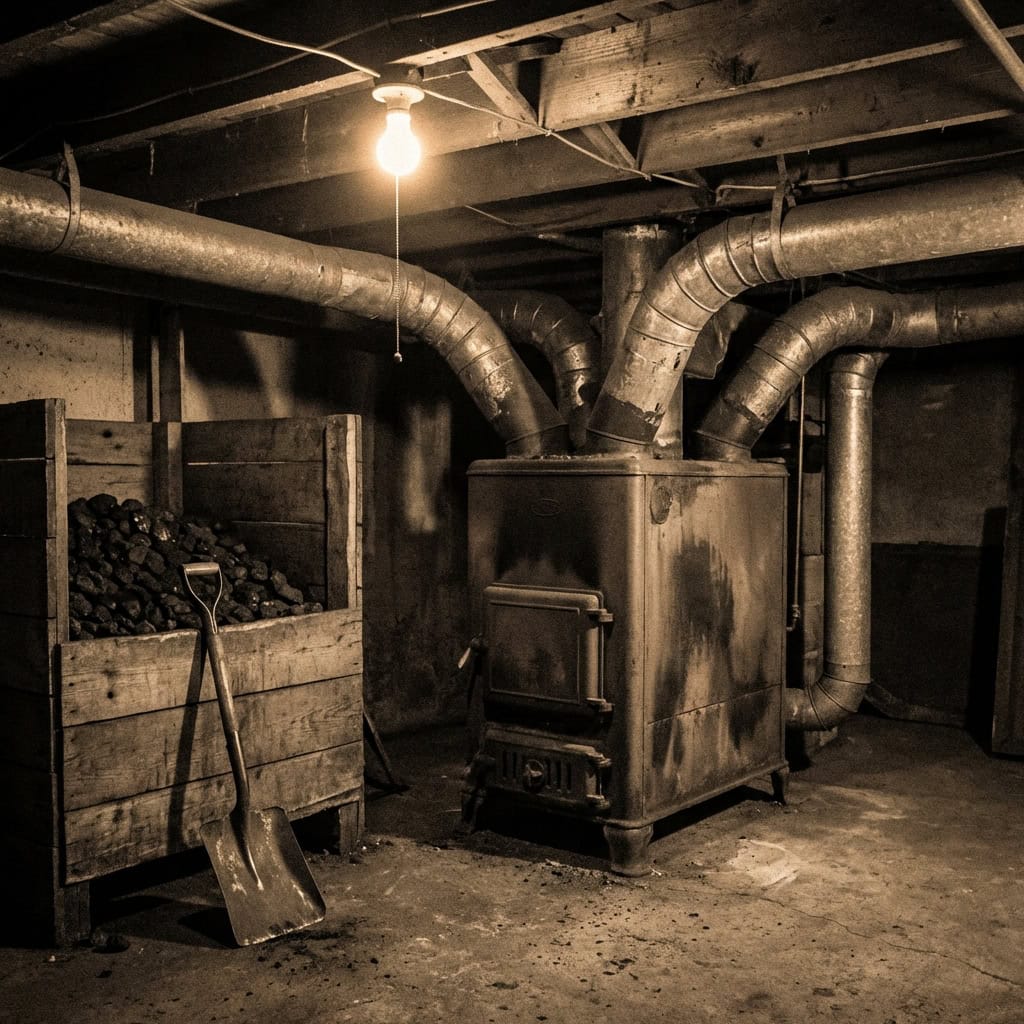
Before gas and oil, the 1940s home was heated by coal.
The coal furnace sat in the basement — a massive, octopus-armed iron beast with ductwork radiating in every direction. It required daily attention. Someone — usually dad or the oldest child — went to the basement every morning to shovel coal into the firebox, shake the grates to clear the ash, and carry the ash bucket outside.
Coal was delivered by truck, poured through a small chute window in the foundation wall directly into a coal bin in the basement. The coal chute — a small metal door on the outside of the house at ground level — is still visible on many older homes, even though it has not been opened in 60 years.
The coal furnace was dirty, labor-intensive, and required constant management. The switch to gas and oil heating in the late 1940s and 1950s was one of the most celebrated home upgrades of the century.
But the coal bin, the coal chute, and the ash bucket were part of a daily routine that every member of the household understood. Heating the home was not invisible. It was a job.
14. The Kitchen Pantry
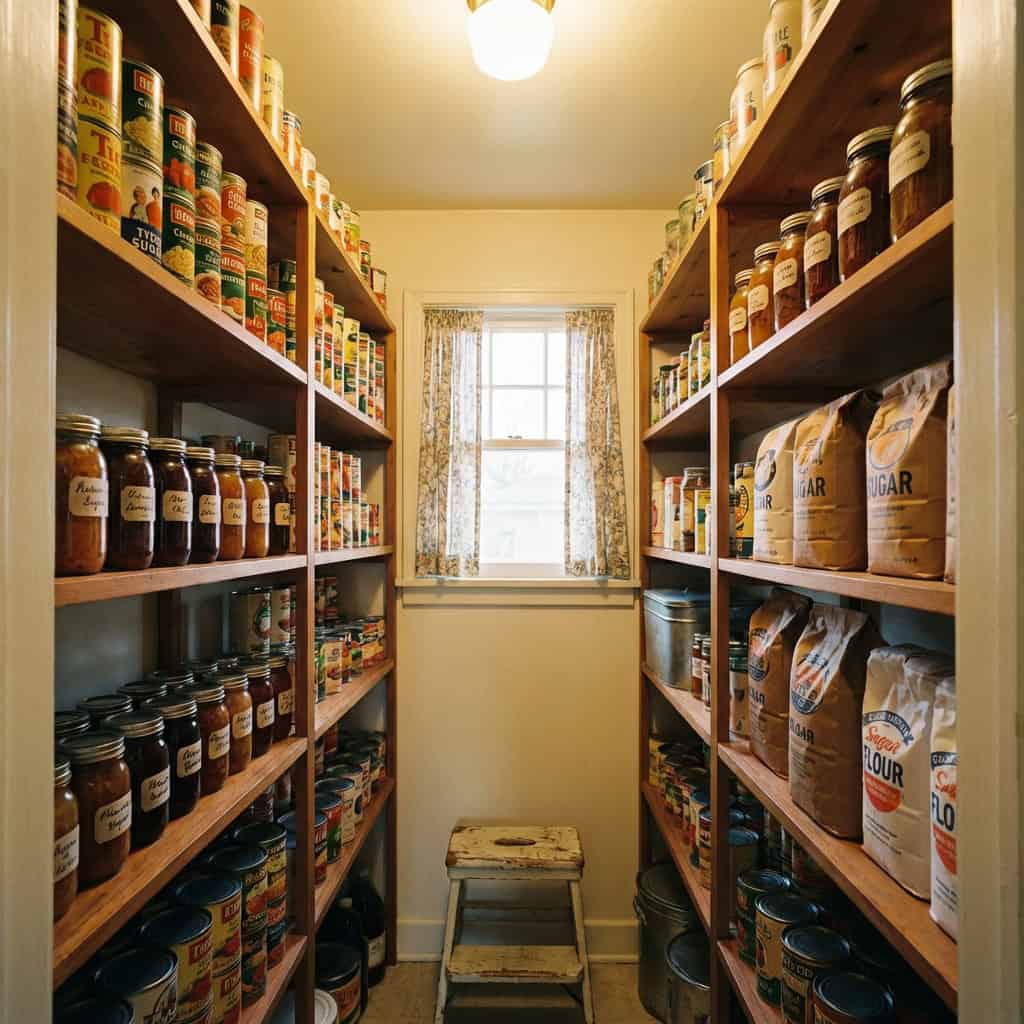
Before the modern kitchen had wall-to-wall cabinets, the 1940s kitchen had a pantry.
It was a small room — sometimes barely wider than a closet — just off the kitchen, lined with shelves from floor to ceiling. Canned goods, flour, sugar, spices, jars of preserves, baking supplies, and dry goods were stored in an organized system that the woman of the house could navigate with her eyes closed.
Some pantries had a small counter for prep work. Some had a built-in flour bin with a sifter. Some had a window for ventilation to keep the space cool.
The walk-in pantry disappeared in the 1950s and 60s as kitchens got larger and built-in cabinets became the standard. For decades, the pantry was considered outdated and unnecessary.
Now, of course, the walk-in pantry is one of the most requested features in new home construction. It took 70 years, but the 1940s kitchen had it right the first time.
15. Chenille Bedspreads
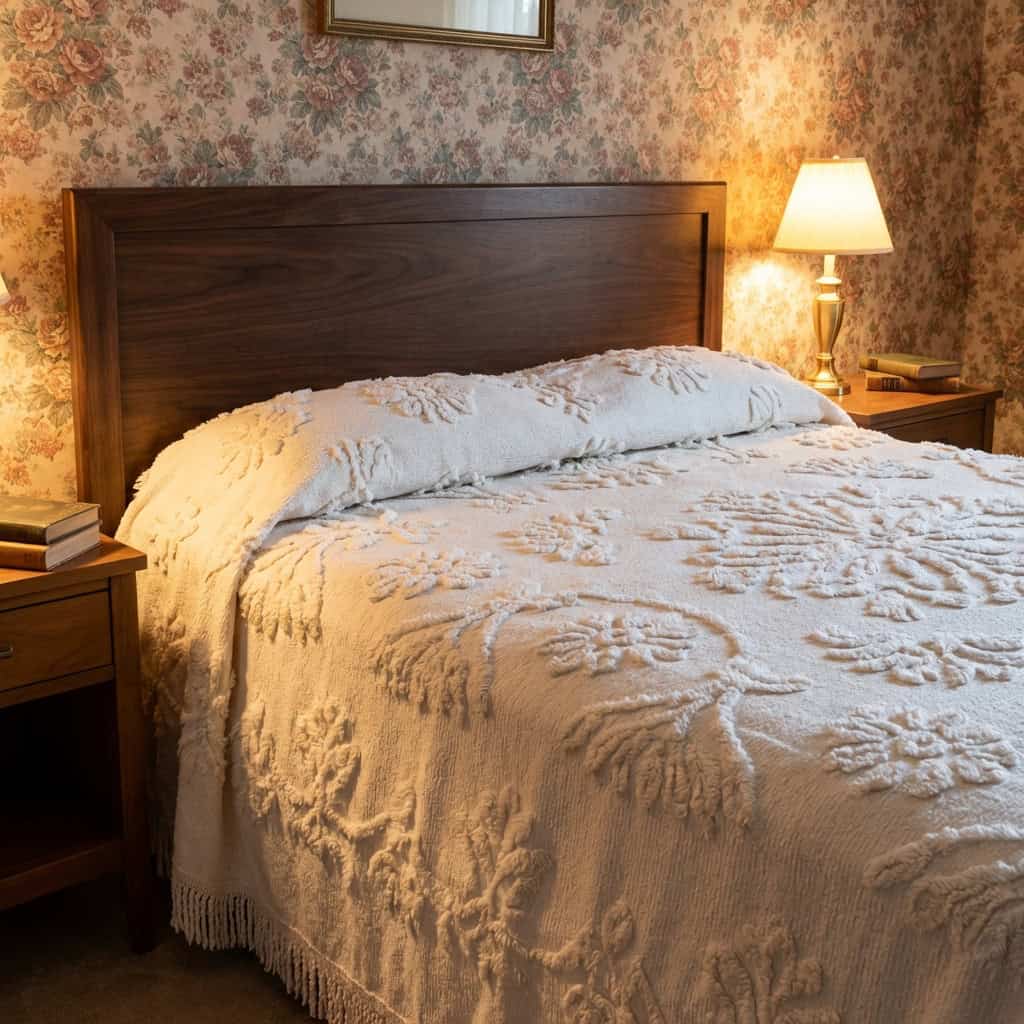
The bedspread in the 1940s home was not flat. It was tufted.
Chenille bedspreads — cotton spreads covered in raised, velvety tufts of thread that formed patterns of flowers, peacocks, or geometric designs — covered beds in virtually every American home during the decade.
They were soft, washable, and gave the bed a finished, made-up look that was considered essential. A bed without a chenille spread was not a made bed.
The most common colors were white, pale pink, pale blue, and cream. The tufted patterns stood out against the background like low-relief sculpture, and running your hand across the bumpy surface was one of those small sensory pleasures that anyone who slept under one remembers.
Chenille bedspreads were so ubiquitous in the American South that towns along highways in Georgia and the Carolinas became famous for selling them from clotheslines and roadside stands — the original American craft economy.
16. The Sewing Machine in the Corner
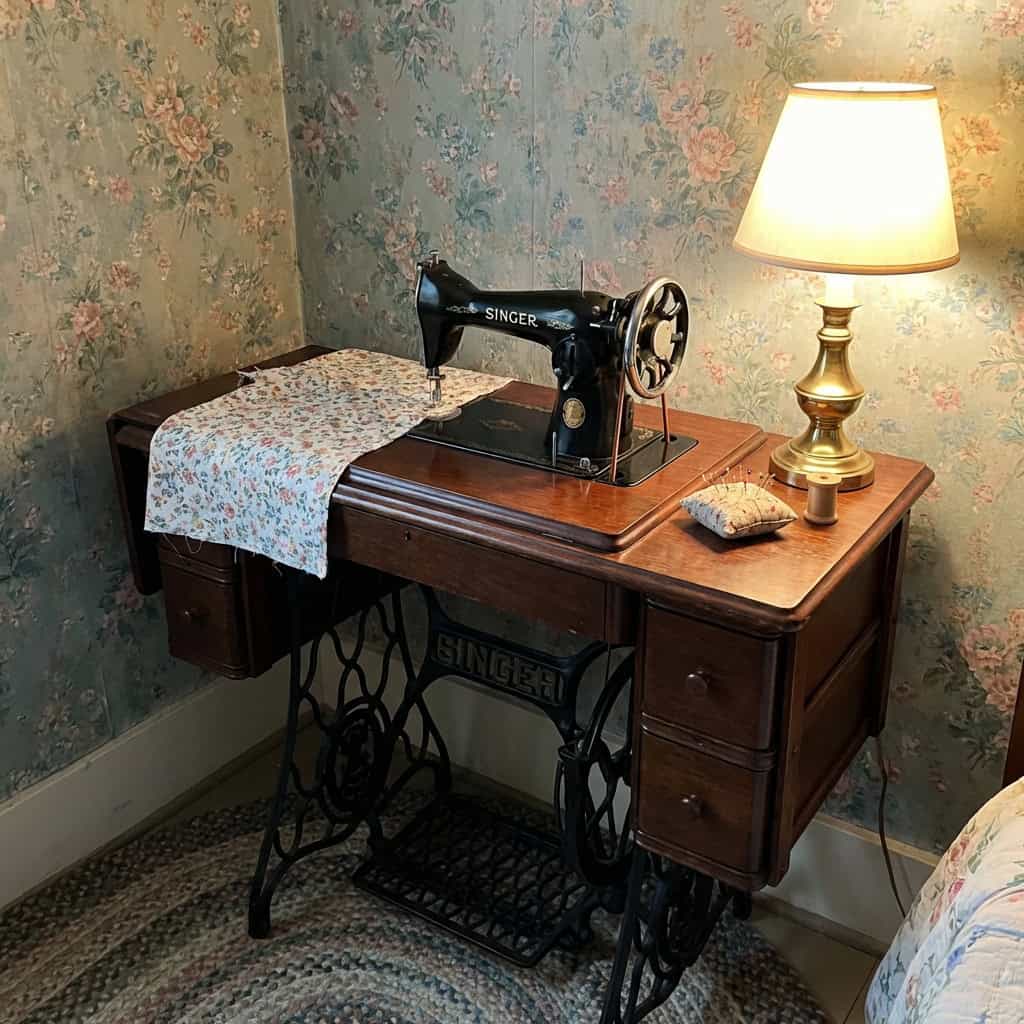
The sewing machine was not a hobby tool in the 1940s. It was essential equipment.
Clothing was made at home, altered at home, and repaired at home. A dress that tore was mended. A child’s pants that were outgrown were taken apart and reassembled into something smaller for the next child. Curtains, tablecloths, and quilts were sewn from fabric and feed sacks.
The sewing machine — usually a Singer, usually in a wooden cabinet with a foot-powered treadle or an electric motor — sat in a corner of the bedroom, the living room, or a spare room. It was always out, always accessible, and always in use.
Wartime rationing made the sewing machine even more important. With fabric and clothing in limited supply, the ability to make and mend at home was not optional — it was survival.
The sewing machine moved from the living room to the craft room to the closet as ready-made clothing became cheap and abundant. But in the 1940s, it was as important to the household as the stove.
17. The Vanity Table
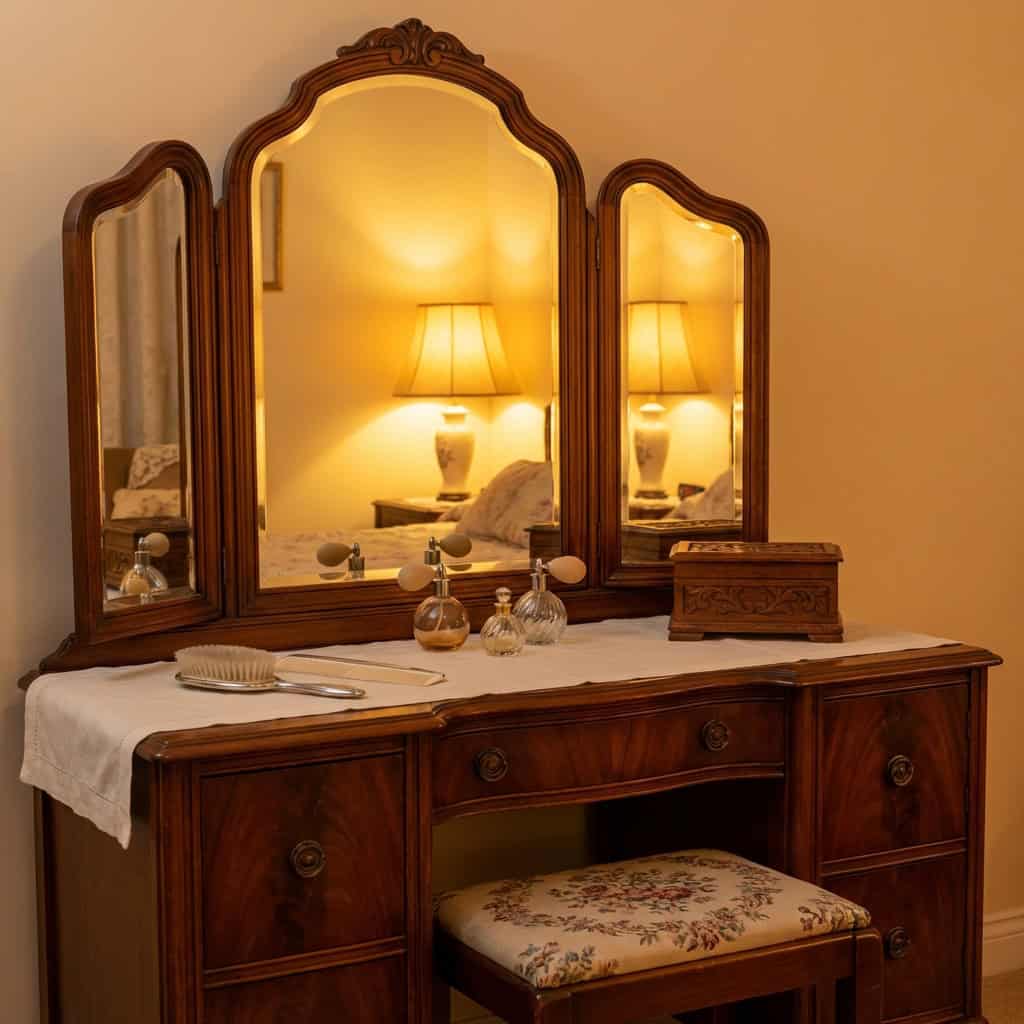
The bedroom in the 1940s home had a piece of furniture that no longer exists in most American homes — the vanity table.
A small table or desk with a large mirror attached, sometimes with two hinged side mirrors that folded in, the vanity was where the woman of the house sat every morning and evening. A bench or a small upholstered stool tucked underneath.
The surface held a brush and comb set, a hand mirror, a powder box, perfume bottles, and a jewelry box. Everything was arranged with care. The vanity was personal, private, and treated with respect.
Hollywood glamour drove the vanity’s popularity in the 1940s. The silver screen showed women sitting at dressing tables in silk robes, and the image was aspirational — even in a modest home, the vanity brought a small piece of that elegance into the bedroom.
The vanity disappeared when bathroom counters got bigger and closets got their own mirrors. But the ritual of sitting down at a dedicated table, in your own space, to take care of yourself — that was something the 1940s understood and modern homes have lost.
18. Hooked Rugs
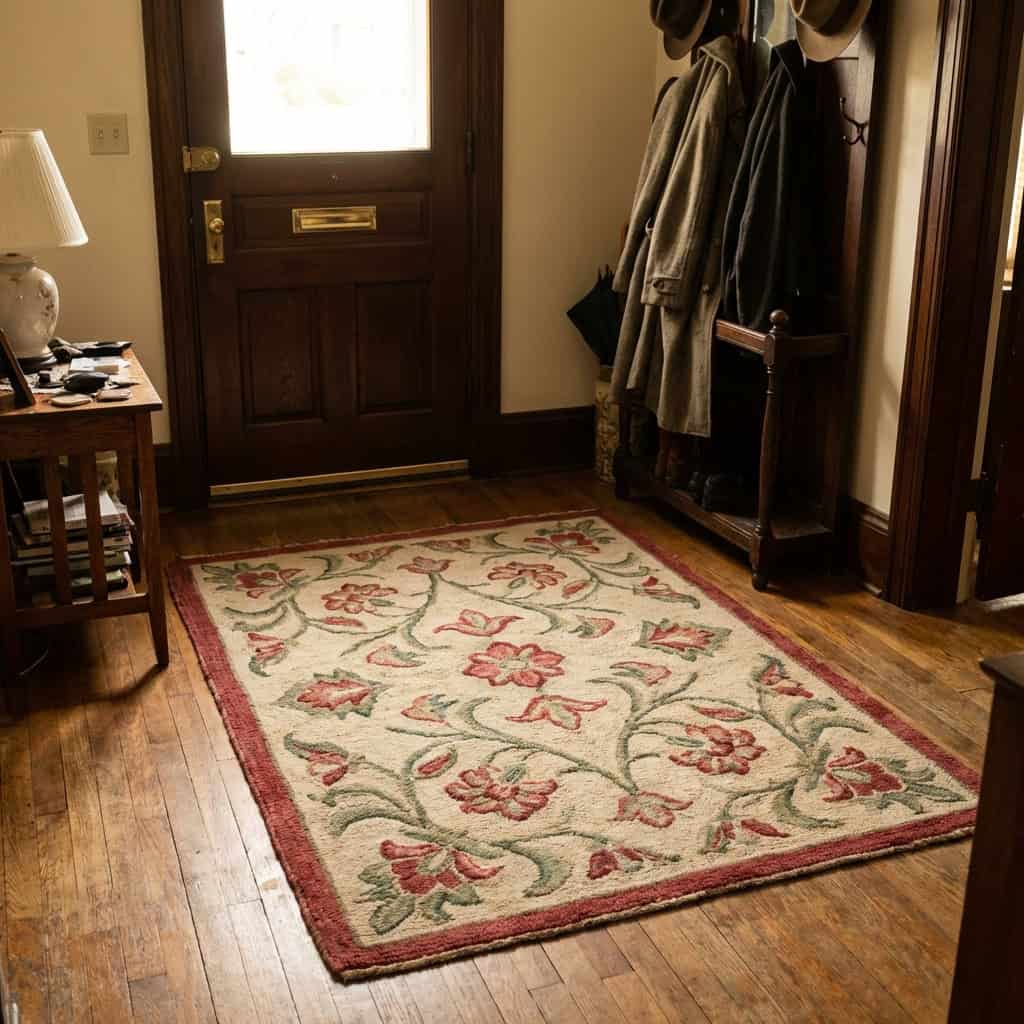
The floors of the 1940s home were hardwood — and the rugs on top of them were made by hand.
Hooked rugs were crafted by pulling strips of fabric or yarn through a burlap backing to create thick, textured patterns. Flowers, animals, geometric designs, and seasonal scenes were the most common subjects. Every rug was unique.
They sat in entryways, beside beds, in front of the kitchen sink, and in the living room. They were warm underfoot, absorbed sound, and gave each room a handmade quality that factory-produced rugs could not match.
Making hooked rugs was a common home craft — something done in the evening while listening to the radio, or in groups where women gathered to work and talk. The materials were often recycled — old clothing and fabric scraps cut into strips and given a new life as a rug.
A good hooked rug lasted for decades. The ones that survived are now collected as folk art, and a well-preserved 1940s hooked rug can sell for more than a modern designer rug.
19. The Wringer Washing Machine
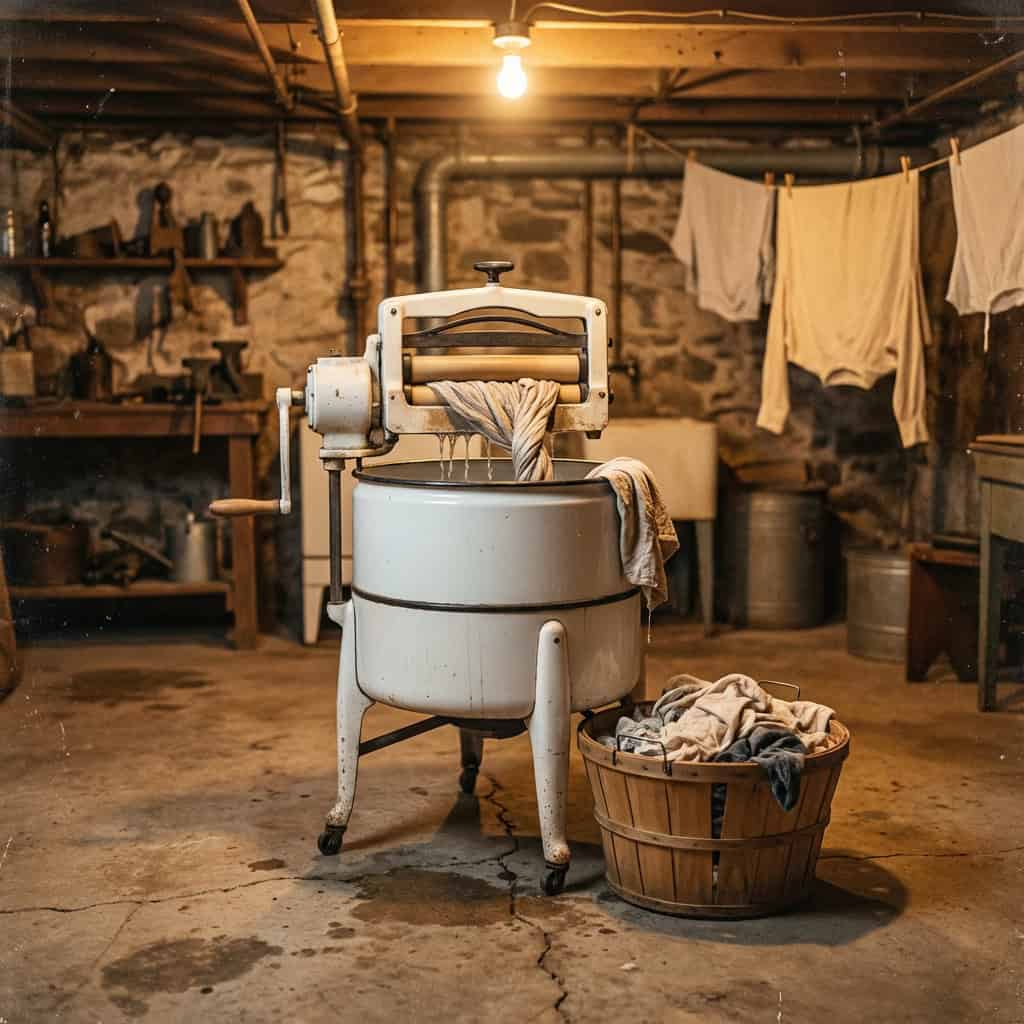
Before the automatic washer, there was the wringer — and the wringer was an ordeal.
The wringer washing machine had a tub that agitated the clothes in hot water and soap, and a set of rubber rollers on top that you fed each piece of clothing through by hand. The rollers squeezed out the water, and the clothing dropped into a basket or a rinse tub on the other side.
Every piece of laundry went through the wringer individually. Sheets, shirts, pants, towels — one at a time, fed carefully between the rollers while turning a crank or pressing a lever.
The wringer was dangerous. Fingers, hands, and sleeves got caught in the rollers regularly. Children were warned to stay away from it. The phrase “put through the wringer” — meaning to endure a difficult experience — comes directly from this machine, and it was not a metaphor to anyone who used one.
The automatic washer made the wringer obsolete by the mid-1950s, and the relief was universal. No one mourned the wringer. But everyone who used one remembered it — and appreciated the automatic washer in a way that no one who grew up with one ever could.
20. The Breadbox on the Counter
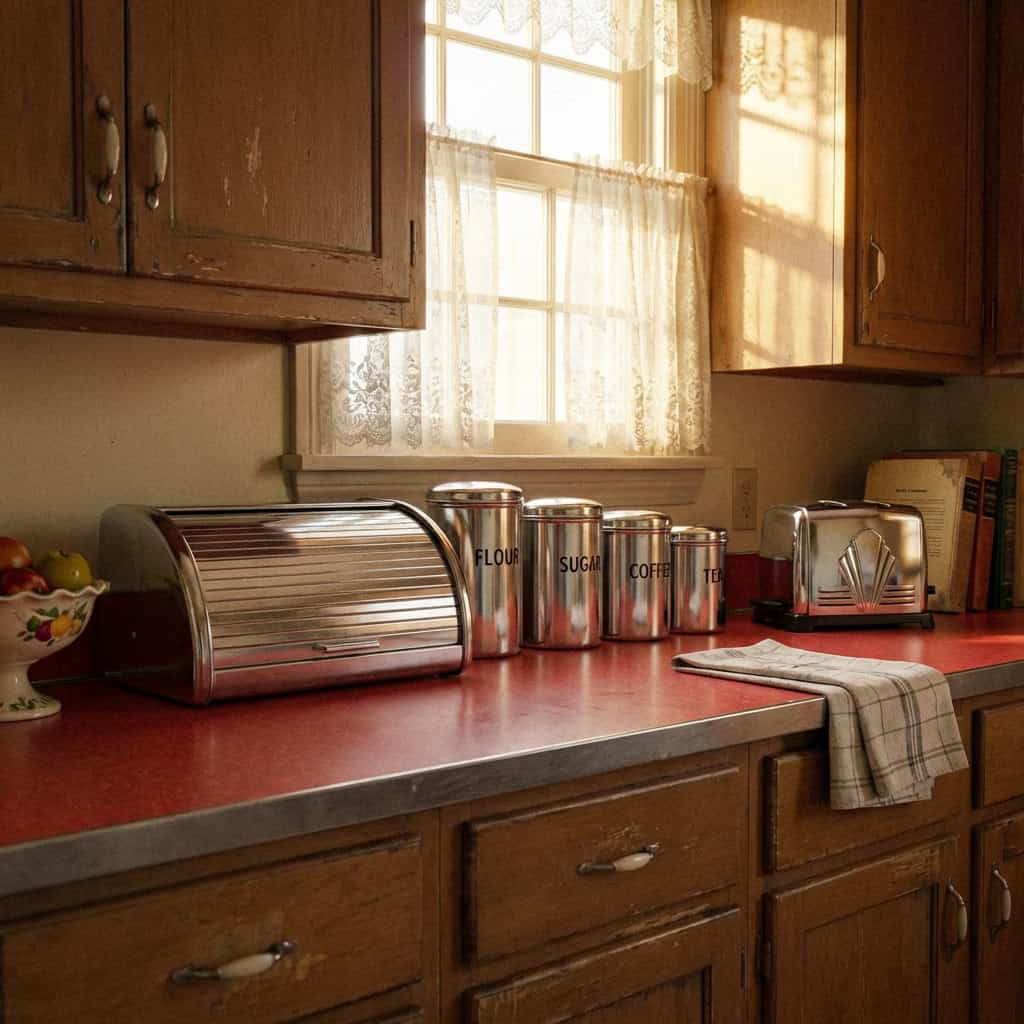
Every 1940s kitchen counter had a breadbox — a small, enclosed metal or wooden container with a roll-top or hinged lid that held the family’s bread.
Bread was bought or baked fresh and needed protection from air and moisture to stay soft. The breadbox was the solution — a simple, elegant container that kept bread fresh for days without refrigeration.
It sat on the counter next to the canisters for flour, sugar, and coffee, and it was opened and closed multiple times a day. Breakfast toast, lunchtime sandwiches, and dinner rolls all came from the breadbox.
The breadbox shrank and eventually disappeared as sliced bread in plastic bags became the standard and refrigerators got larger. But the breadbox served a real purpose, and the families that used them knew exactly how many days a loaf would last inside one.
21. Metal Ice Cube Trays with the Pull Lever
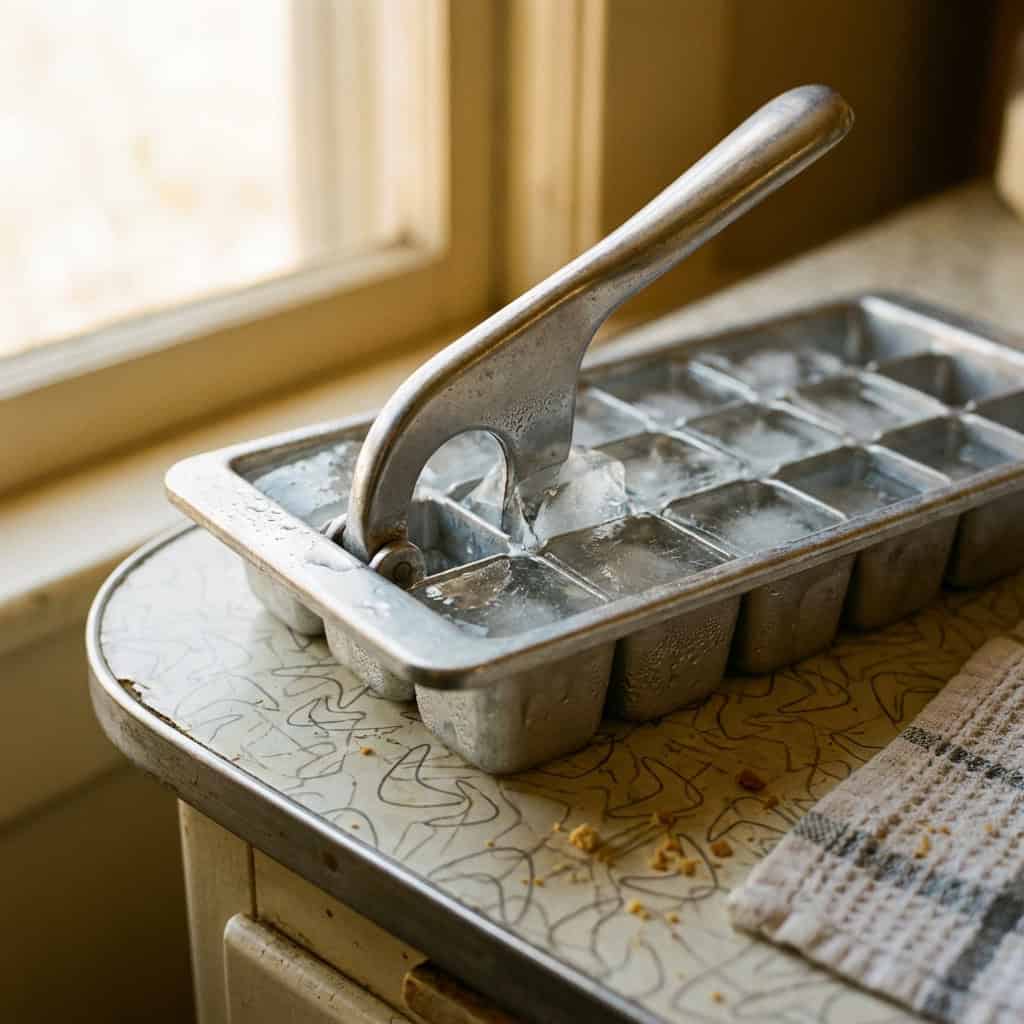
Before the automatic ice maker, there was the metal ice cube tray — and using it was a two-handed operation.
The tray was made of aluminum, divided into sections by a metal grid. You filled it with water, placed it in the freezer, and waited. When you needed ice, you pulled a lever on top of the tray that twisted the grid and cracked the cubes loose from the metal.
The lever required genuine grip strength. The tray stuck to your wet fingers in the cold. And if the cubes were not fully frozen, pulling the lever sent a wave of ice water across the counter.
But when it worked — when the cubes cracked free in a satisfying row of perfect blocks — there was a mechanical pleasure to it that the automatic ice maker has never replicated.
The metal ice cube tray was in every freezer in America for decades. It was replaced by the plastic twist tray and eventually by the automatic ice maker, but anyone who grew up with the metal tray remembers the sound of that lever and the cold sting of aluminum on wet fingers.
22. The Carpet Sweeper
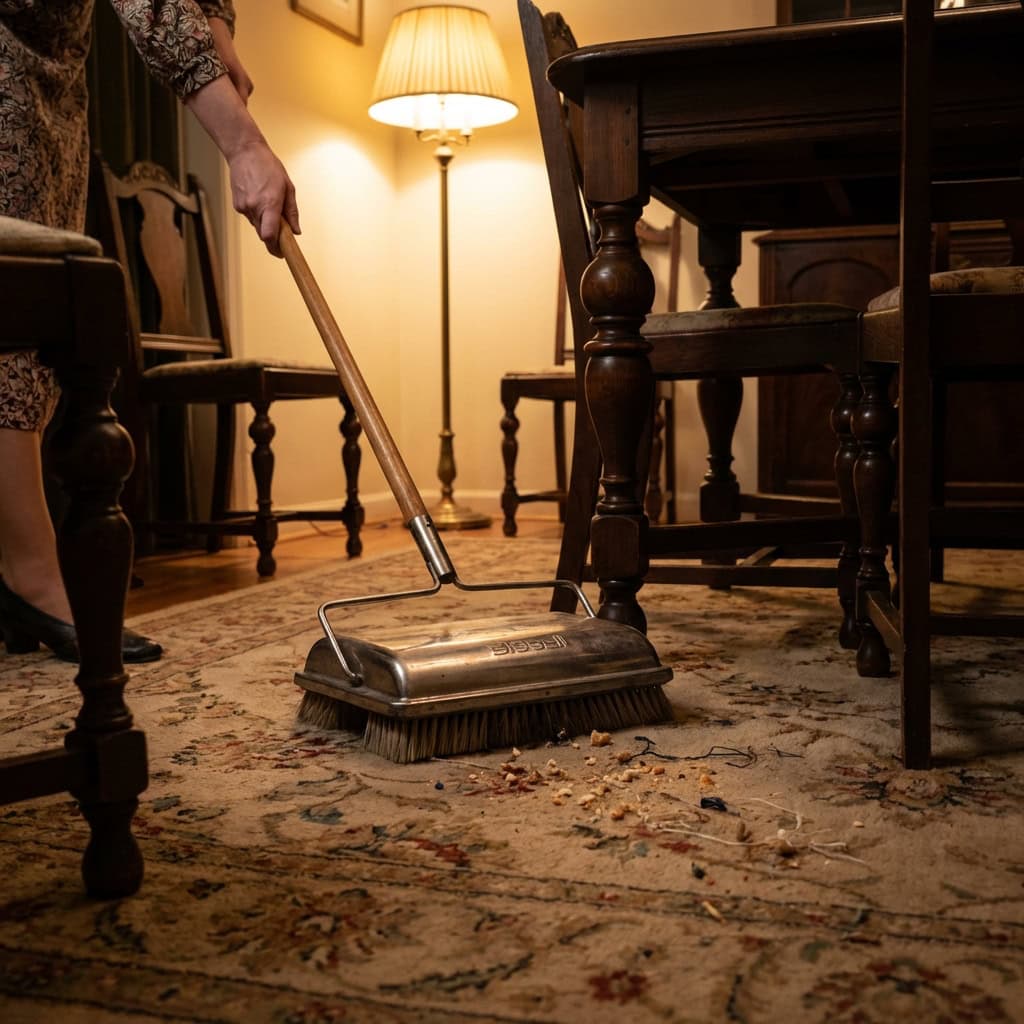
Before the electric vacuum cleaner was in every home, the 1940s household had a carpet sweeper.
It was a simple, non-electric device — a low, flat box on wheels with rotating brushes inside that picked up crumbs, dust, and debris as you pushed it across the floor. No cord. No motor. No noise. Just a quiet whirring sound as the brushes spun.
The Bissell carpet sweeper was the most common brand, and it lived in the front closet or the pantry, always within reach for a quick pass after meals or before company arrived.
The carpet sweeper was not as powerful as a vacuum. It could not deep-clean a carpet or pull dirt from the pile. But for daily maintenance — the crumbs under the dining table, the dust on the hallway runner — it was fast, quiet, and effective.
Electric vacuums eventually replaced the carpet sweeper in most homes, but the sweeper persisted at grandma’s house for decades, because it worked, it was quiet, and she saw no reason to change.
23. The Cast-Iron Skillet
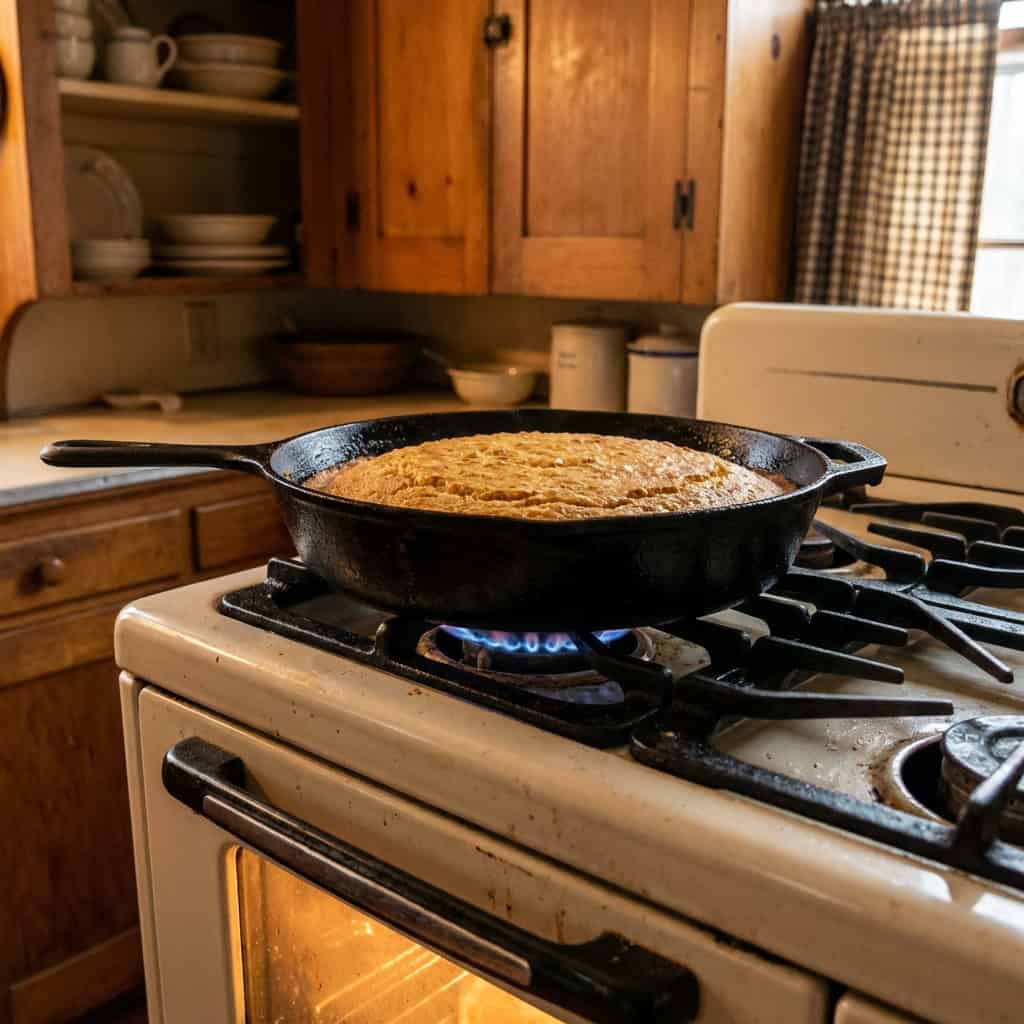
The 1940s kitchen did not have a collection of pans. It had one — and it did everything.
The cast-iron skillet was the most important cooking vessel in the house. Eggs in the morning. Cornbread at lunch. Fried chicken at dinner. It went from stovetop to oven and back, and it was never — ever — washed with soap.
It was seasoned by decades of use. The cooking surface was black, smooth, and naturally non-stick in a way that no Teflon coating has ever matched. Food tasted different in it — better, deeper, more connected to the meals that came before.
The skillet was passed down. From mother to daughter, from grandmother to grandchild. It was not just a pan. It was a family heirloom that happened to cook dinner every night.
Cast iron has had a major revival in recent years, and new skillets sell for prices that would have baffled a 1940s housewife. But the ones that have been in continuous use since the 1940s — seasoned by 80 years of cooking — are the ones that every collector and every cook wants most.
24. The Rug Beater
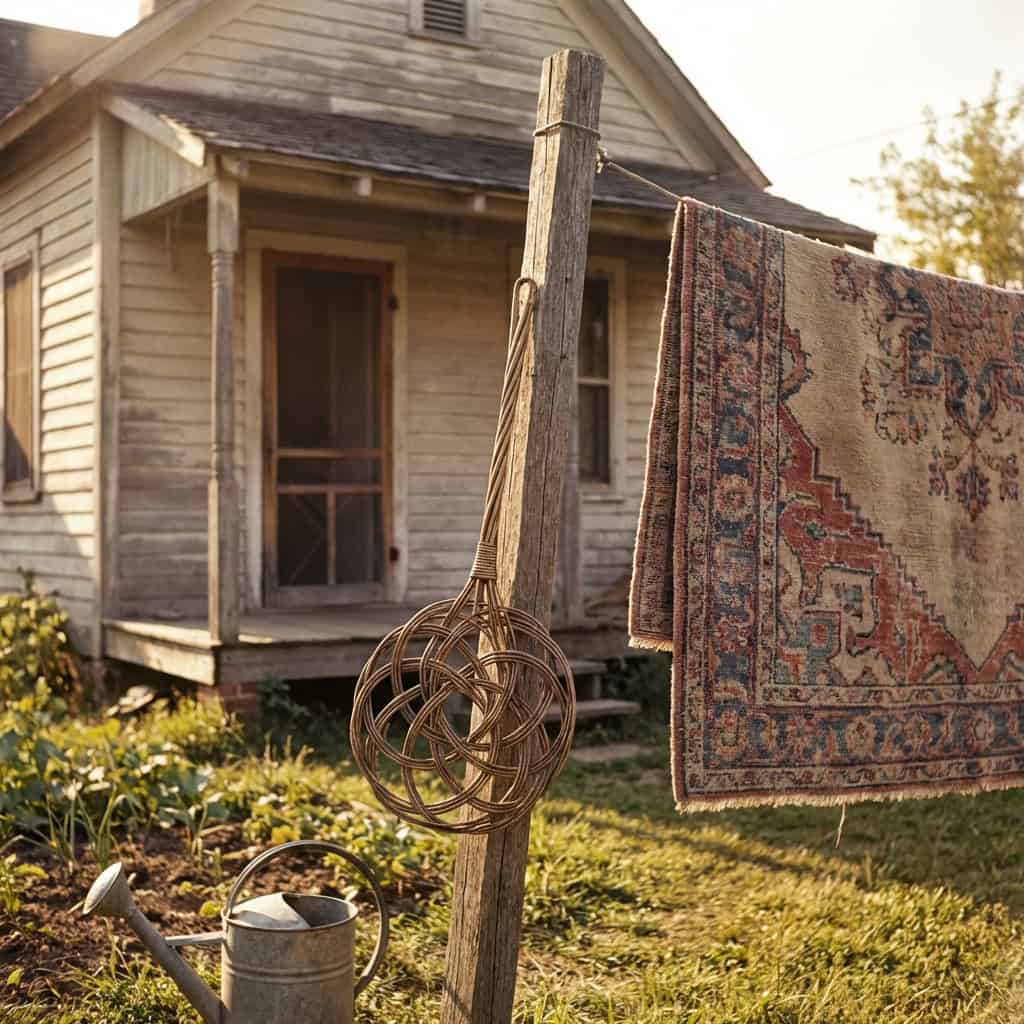
Before the vacuum cleaner, there was a more direct approach to cleaning a rug — you took it outside and hit it.
The rug beater was a flat, paddle-shaped tool made of woven wire, rattan, or wood. You draped the rug over a clothesline or a porch railing, and you beat it. Hard. Repeatedly. Dust, dirt, and debris flew out of the rug in visible clouds.
It was physical labor. It was loud. And it was deeply satisfying in a way that pressing a button on a vacuum cleaner has never been.
Rug beating was a weekly chore — usually done on the same day as laundry, because the rugs were already outside and the clothesline was occupied anyway. The whole neighborhood could hear it, and the rhythm of a rug beater on a Saturday morning was part of the soundtrack of 1940s domestic life.
The vacuum cleaner made the rug beater obsolete, but not before it gave a generation of homemakers an exceptionally effective workout and a legitimate outlet for any frustrations they might have been carrying.
25. The Screen Door That Slammed Shut
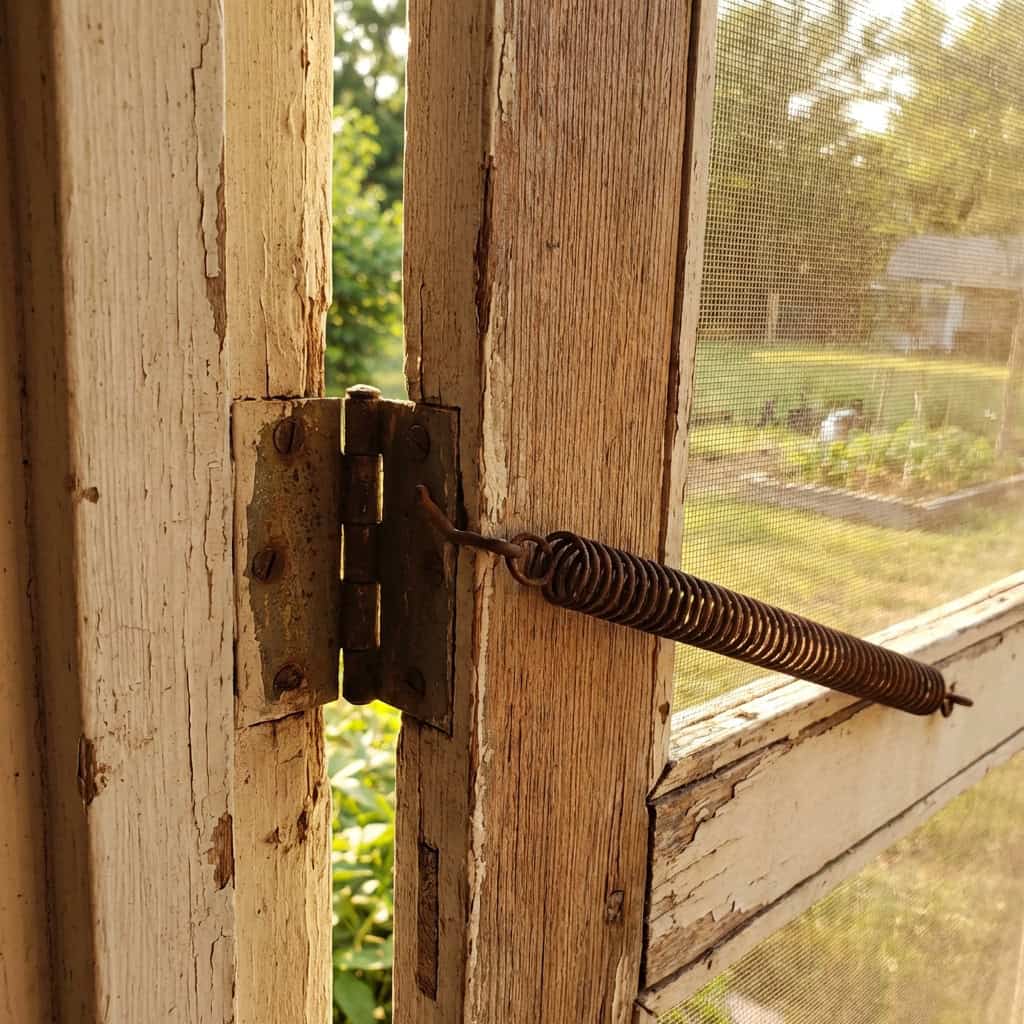
Every 1940s home had a screen door. And every screen door slammed.
It was a wooden frame with a mesh screen, mounted on spring hinges that pulled it shut the moment you let go. The slam was loud, sharp, and unmistakable — a sound that announced every arrival and every departure.
Children were told a thousand times not to let the screen door slam. They let it slam a thousand and one times.
The screen door served a vital purpose — it let air flow through the house while keeping insects out. In the decades before air conditioning, the screen door was the only thing standing between a cool evening breeze and a kitchen full of flies.
But the screen door was more than a piece of hardware. It was a sound. The sound of summer. The sound of kids running in and out. The sound of a grandmother’s house — that sharp, wooden crack followed by the rattle of the spring, echoing through a home that was never fully closed to the outside world.
It is the sound that everyone remembers. And no modern storm door, with its pneumatic closer and its quiet latch, has ever made anything close to it.
Conclusion
That is 25. How many were still at your grandparents’ house?
If the answer is more than 15, your grandparents were holding the line. They kept the radio even after they got a television. They kept the clothesline even after they got a dryer. They kept the cast-iron skillet even after someone gave them a non-stick pan for Christmas.
They kept those things because they worked. Because they were built to last. And because the 1940s taught a generation that you do not throw away something that still does its job.
The 1940s home was not designed. It was assembled — carefully, modestly, and with materials that were often scarce. It was a home shaped by war, by rationing, by the knowledge that nothing was guaranteed and nothing should be wasted.
It was small. It was simple. It smelled like coffee and bread and line-dried linen.
And if you close your eyes, you can still hear that screen door slam.