

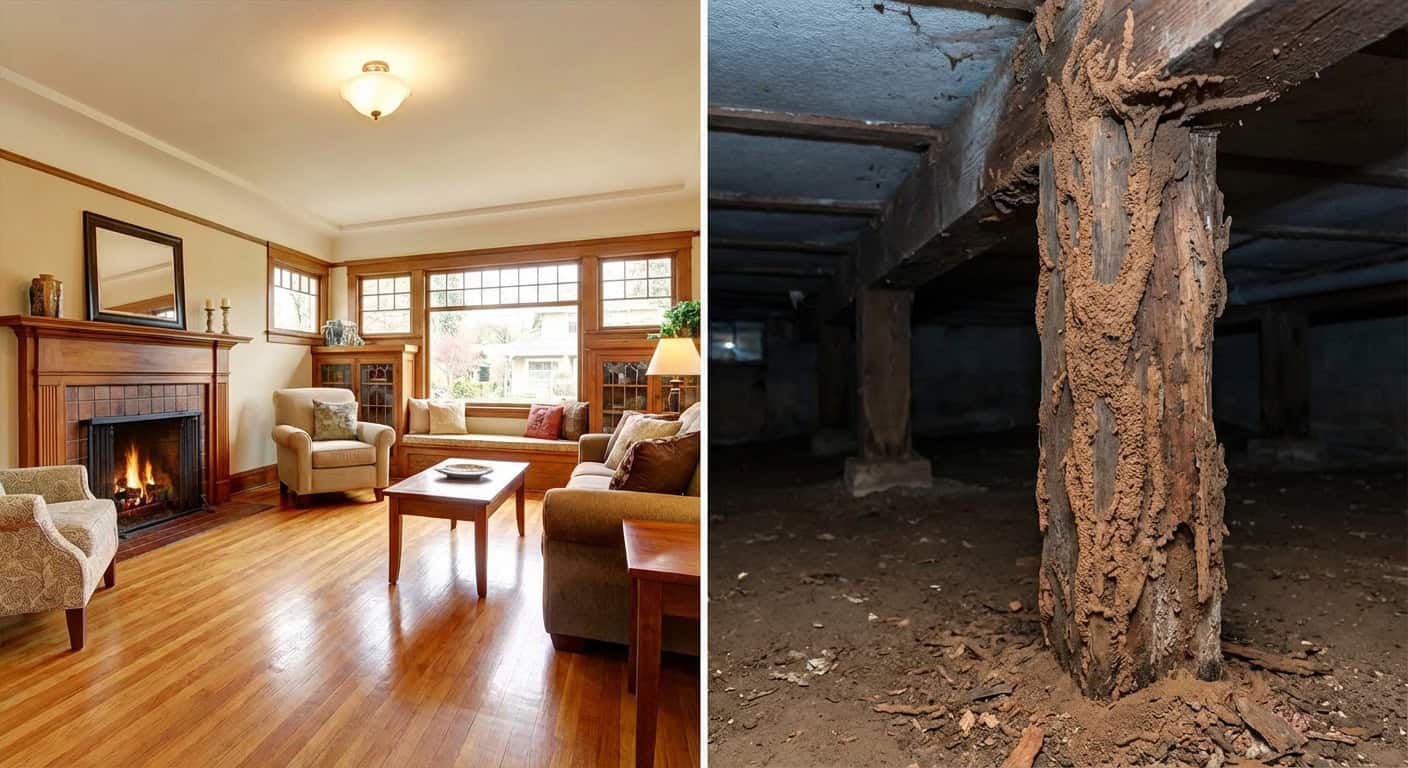
We all fall in love with the “charm.”
The high ceilings, the crown molding, the original hardwood floors… it feels like a fairy tale.
But in the real estate world, “charming” often translates to “expensive.”
Older homes (especially those built before 1980) play by a different set of rules.
While they were built with better wood, they were also built with outdated safety standards.
If you don’t know what you are looking for, you could be buying a Money Pit that will drain your savings account within the first year.
Here are 25 red flags—from the roof to the basement—that you need to spot before you make an offer.
AI Disclosure: I sometimes use AI tools to help generate images and assist with drafting and editing content. I review and refine everything before publishing.
1. Fresh Paint in the Basement
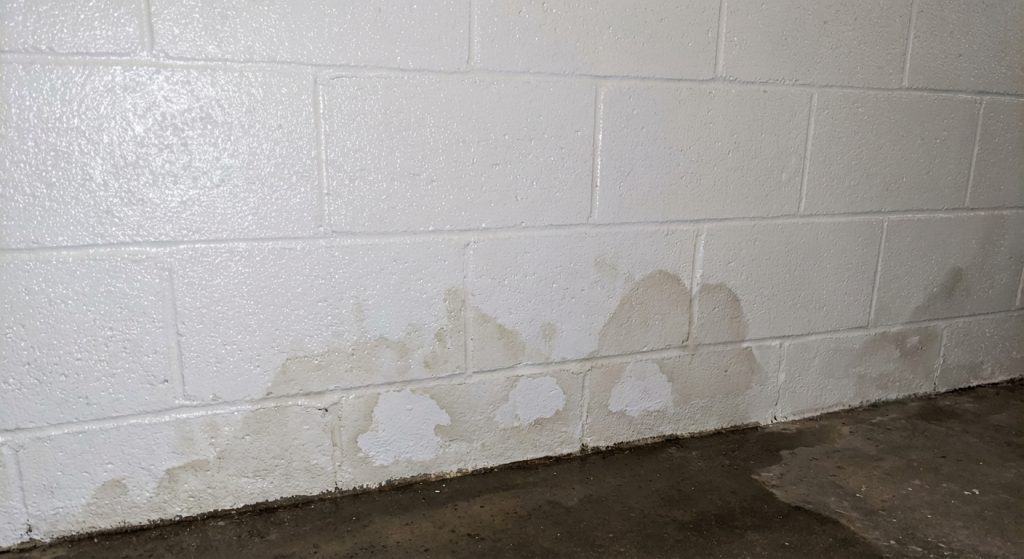
You walk downstairs and the basement walls are painted sparkling white.
It looks clean. It feels “finished.”
But often, that fresh coat of thick masonry paint is a mask.
Concrete needs to breathe.
When flippers coat damp walls in latex or “DryLok,” they trap the moisture inside the block.
Eventually, the water pressure builds up behind the paint.
This causes the concrete to crumble (spall) from the inside out.
The Bottom Line: Use a moisture meter on the walls. If the needle jumps, the paint is hiding a flood.
2. The “Lipstick on a Pig” Flip
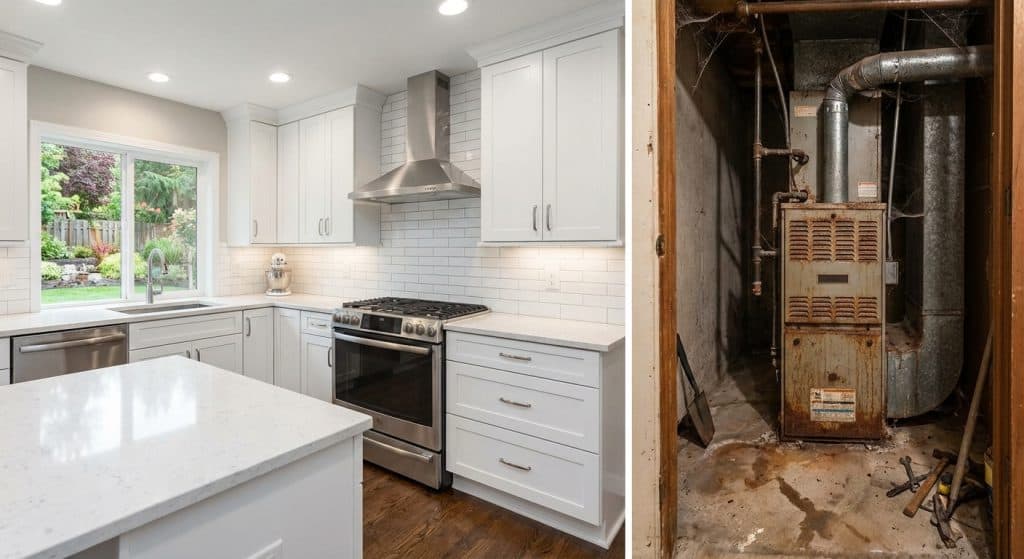
We’ve all seen it: brand new grey luxury vinyl plank floors and white subway tile.
It looks like HGTV.
But look closer at the things that aren’t pretty.
If the house has a brand new kitchen but the furnace is from 1988, you have a problem.
The flipper spent 100% of the budget on what you see, and $0 on what makes the house run.
The Bottom Line: Ignore the backsplash and inspect the mechanicals twice as hard.
3. Ivy Growing on Brick
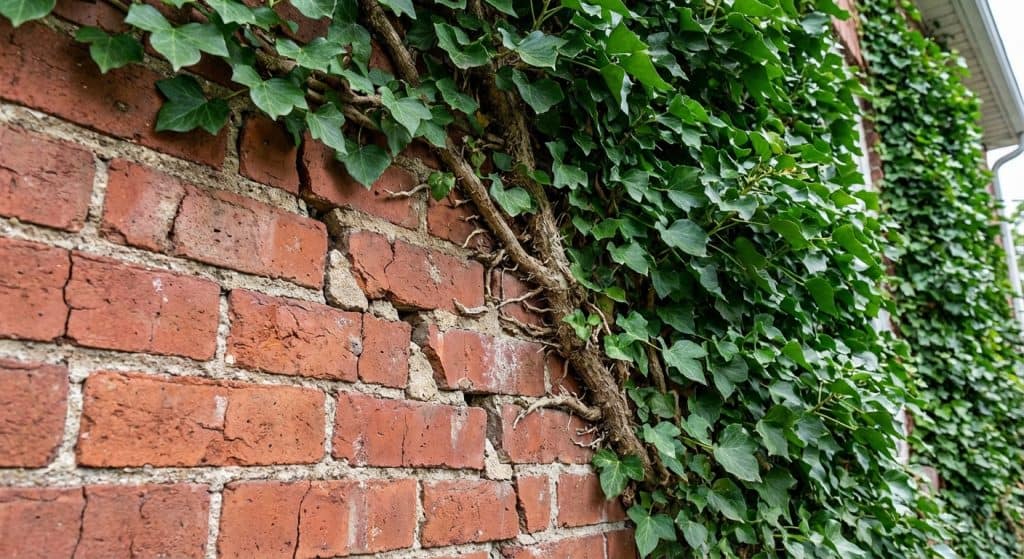
It looks romantic, like an old university building.
But English Ivy is a parasite.
Those vines aren’t just clinging to the surface; their roots dig deep into the mortar joints seeking moisture.
Over time, they crumble the masonry and create highways for water and bugs to enter your walls.
Removing it is a nightmare—it often rips the face of the brick right off.
The Bottom Line: Check for loose mortar and budget thousands for repointing.
4. Horizontal Foundation Cracks
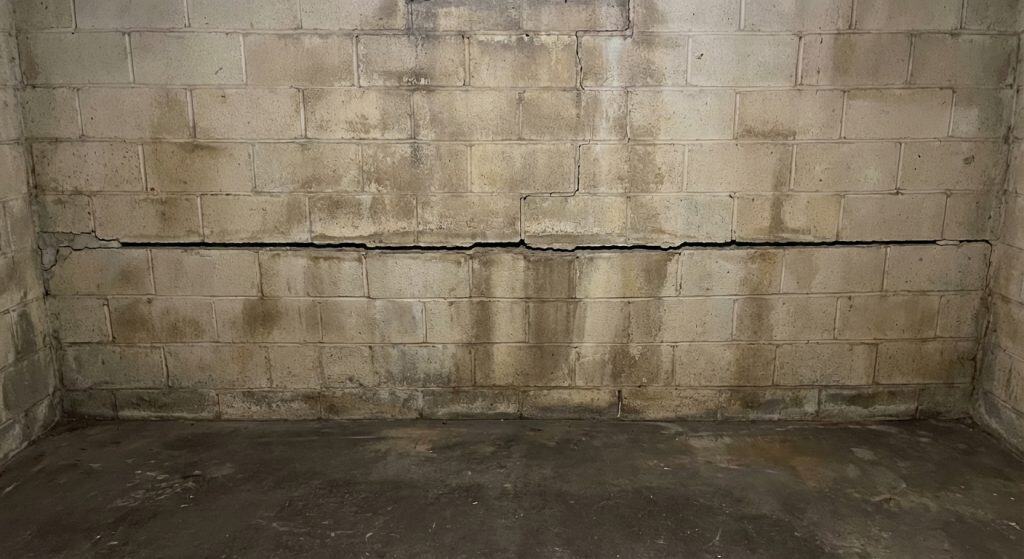
Every old house has cracks. Vertical ones are usually just from settling.
But a horizontal crack running along a basement wall? That is a scream for help.
It means the wet soil outside is literally crushing your basement walls inward.
The wall is buckling under the pressure.
You can’t just patch this with mortar. You often have to excavate the entire yard to fix it.
The Bottom Line: Hire a structural engineer immediately or walk away.
5. The “Swayback” Roof
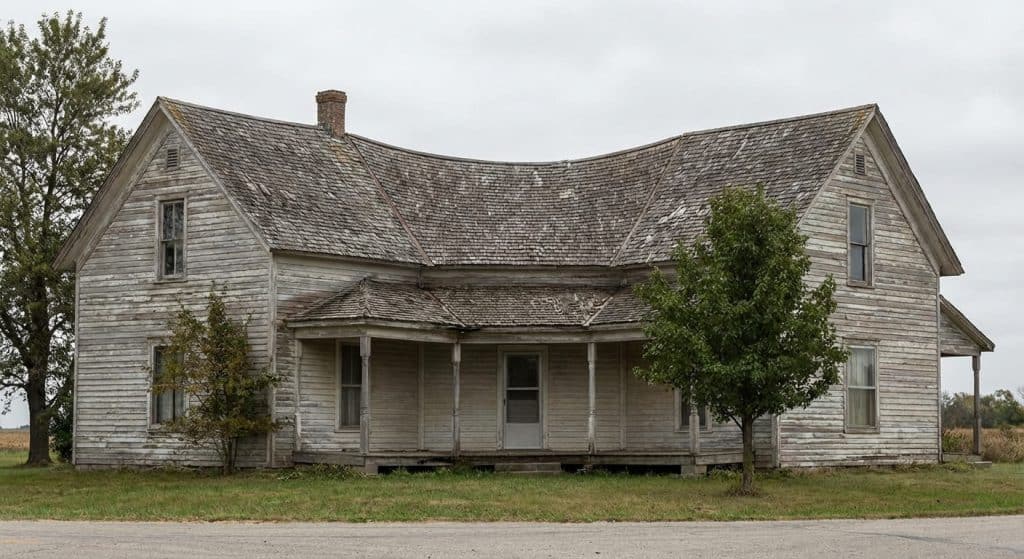
Stand across the street and look at the ridge line of the roof.
It should be straight as an arrow.
If it sags in the middle like an old horse, you have a structural failure.
This usually means the rafters are spreading apart or the sheathing has rotted away.
This isn’t just a “new shingles” job. It is major carpentry surgery.
The Bottom Line: Do not make an offer without a roofing contractor’s estimate.
6. Sloping Floors (The Marble Test)
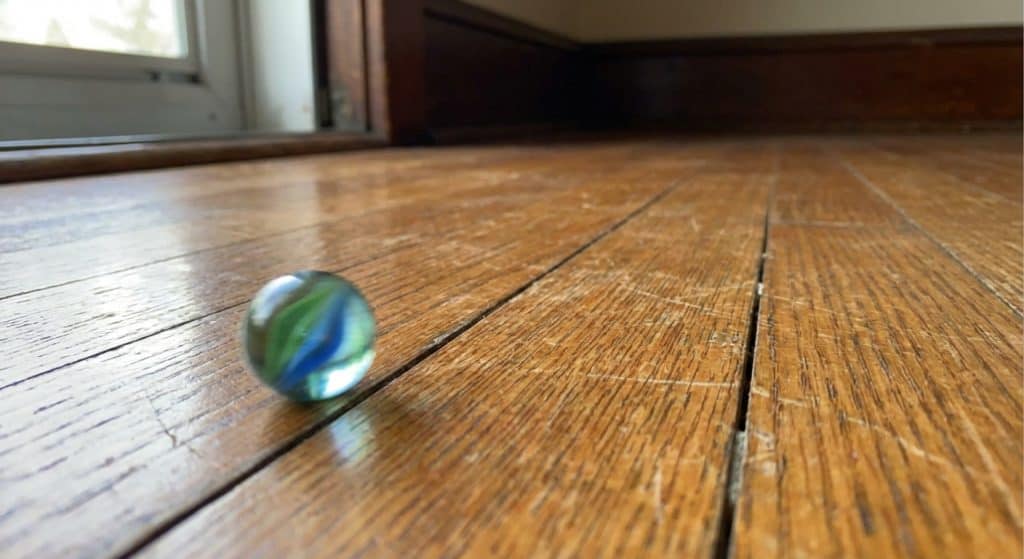
Bring a marble to the open house and place it on the floor.
If it rolls aggressively to one corner, you have a problem.
Real estate agents call it “character.” Engineers call it “differential settlement.”
It usually indicates a rotted floor joist or a main support column that is sinking into the earth.
The Bottom Line: If the slope is visible to the naked eye, the repair bill will be visible in your bank account.
7. “Foggy” Windows
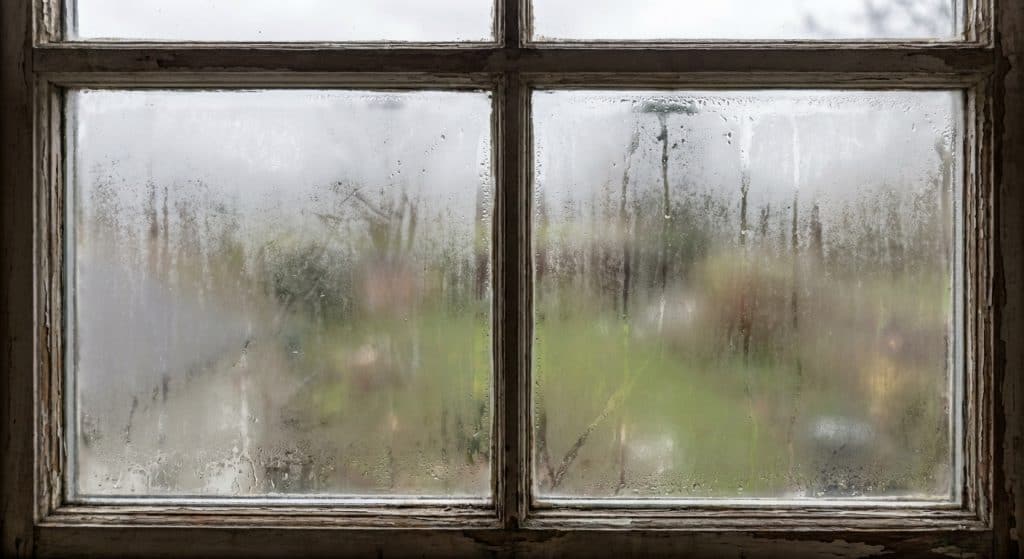
Look closely at the double-pane windows.
Is there condensation or a “milky” look trapped between the glass panes?
That means the thermal seal has failed.
The insulating gas has leaked out, and now the window provides about as much insulation as a sheet of paper.
You can’t wipe the fog off because it’s inside the glass.
The Bottom Line: You will have to replace the glass units or the entire window.
8. Popcorn Ceilings (Pre-1980)
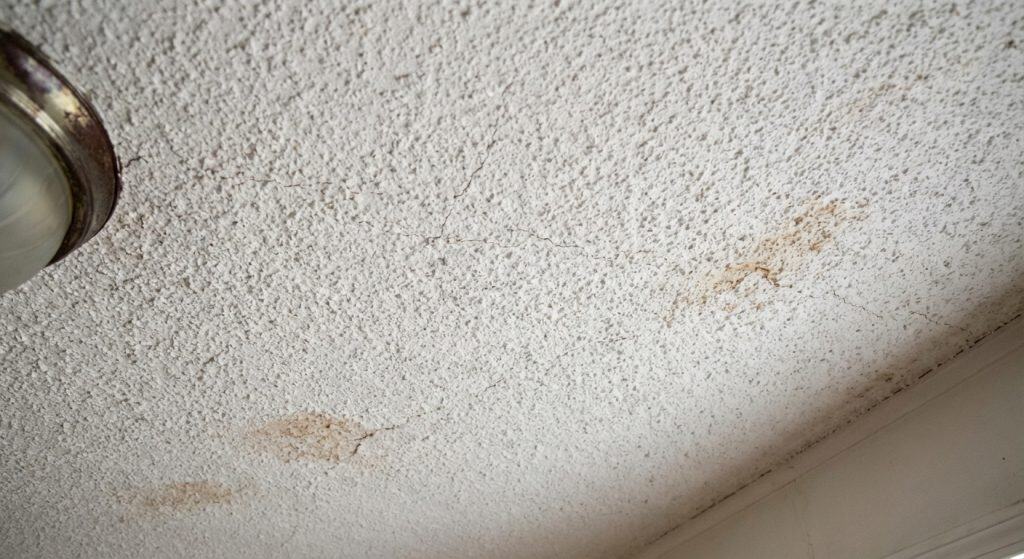
That textured acoustic ceiling isn’t just ugly.
If it was applied before 1980, there is a very high chance it contains asbestos.
As long as it isn’t disturbed, it’s safe.
But the moment you try to scrape it off or cut a hole for a light fixture, you release toxic dust.
The Bottom Line: Do not try to DIY this removal. Test it first.
9. Grading Sloping Towards the House
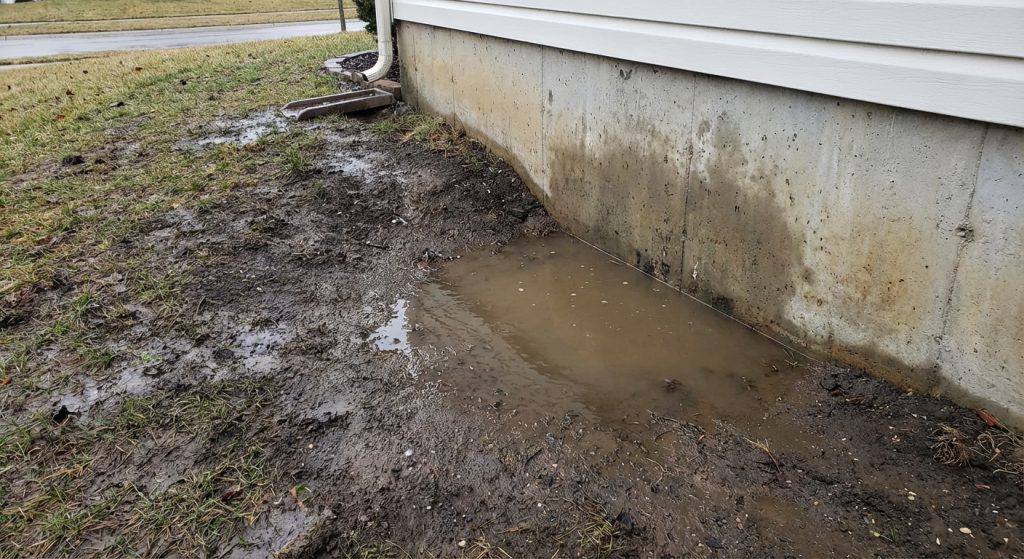
Go outside and look at the dirt right next to the foundation.
It should slope away from the house.
If the ground slopes towards the house, you have a funnel.
Every time it rains, that water is directed straight into your basement foundation.
It is the number one cause of wet basements, and it is shockingly common.
The Bottom Line: You will need to bring in truckloads of dirt to regrade the yard.
10. Sticking Doors and Windows
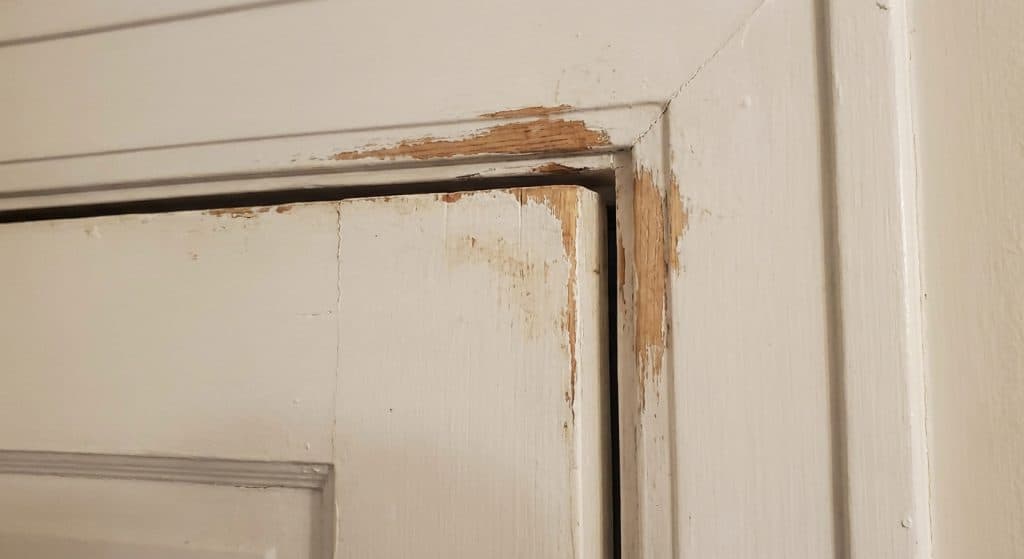
If the bedroom door rubs against the frame or won’t latch, it’s rarely just “humidity.”
It is usually the first sign of foundation movement.
When the foundation shifts, the house twists.
This throws the door frames out of square, causing them to bind and stick.
The Bottom Line: Check the foundation corners near the sticking door for cracks.
11. 2-Prong Outlets
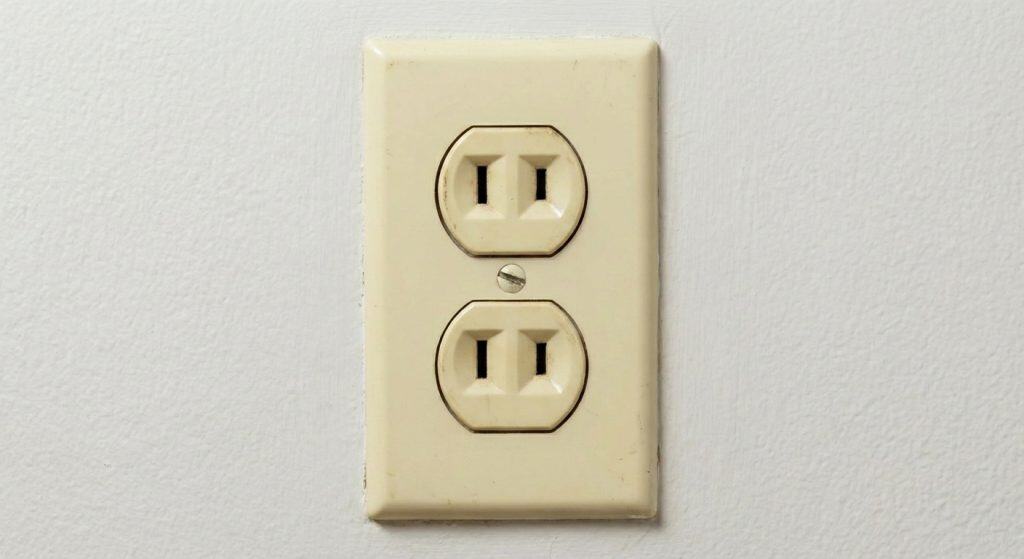
Look at the wall outlets. Do they have two holes or three?
Two holes mean the system is ungrounded.
You cannot safely plug in computers, TVs, or modern appliances without a ground wire.
Using “cheater plugs” (adapters) doesn’t fix the safety hazard; it just bypasses it.
The Bottom Line: You will need to upgrade the electrical panel and pull new wire to the outlets.
12. Multiple Layers of Shingles
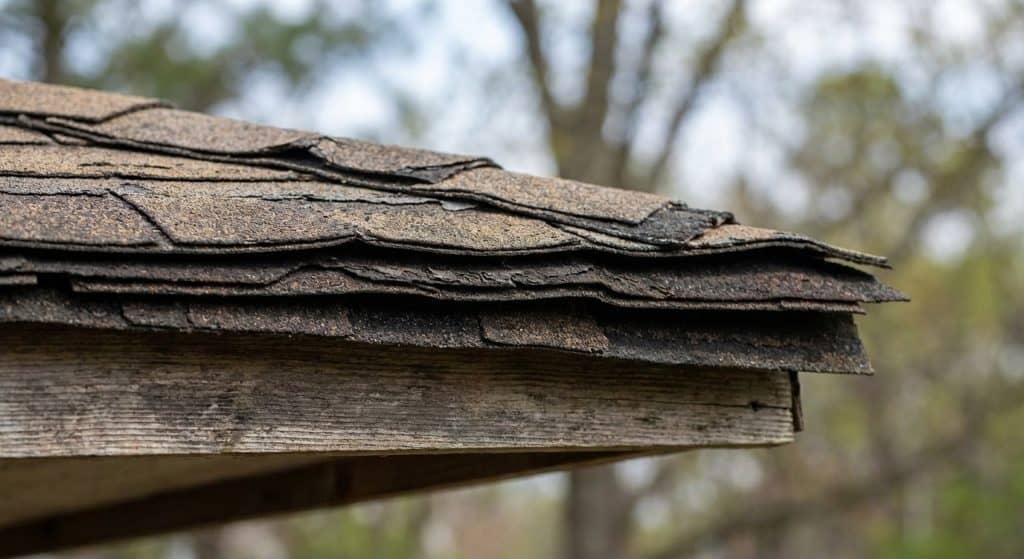
Ask how many layers are on the roof.
Building code usually allows two layers, but three is a disaster.
It adds thousands of pounds of extra weight to the structure.
Worse, it acts as a heat trap that “cooks” the shingles from the bottom up, shortening their lifespan.
The Bottom Line: When you replace this roof, you will pay double for the demolition labor.
13. DIY Plumbing (SharkBites)
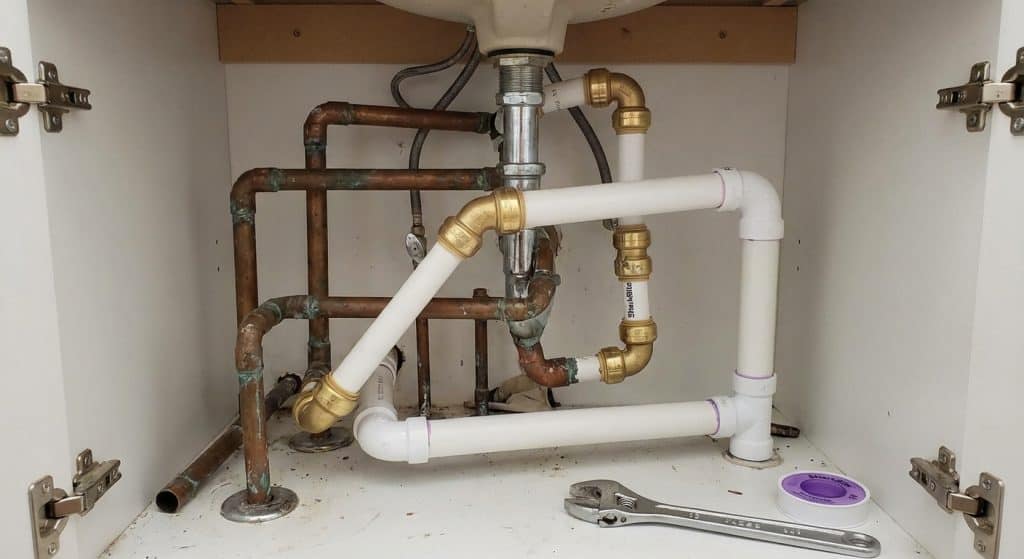
Look under the sinks.
If you see a mix of copper, PVC, and those bright brass push-to-connect fittings (“SharkBites”) everywhere, be careful.
SharkBites are fine for a quick fix, but seeing them everywhere means an amateur did the plumbing.
If they cut corners here, they likely cut them behind the walls where you can’t see.
The Bottom Line: Hire a plumber to inspect the entire system for leaks.
14. Tile Installed Over Wood Rot
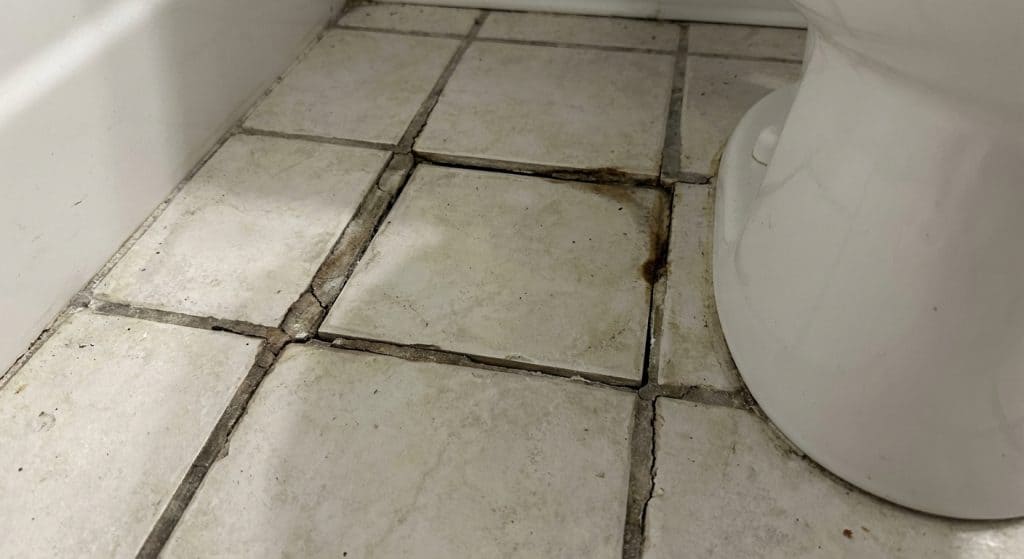
In the bathroom, step on the tiles near the toilet.
Do they feel spongy? Does the grout crack every time you fix it?
This usually means the toilet has been leaking for years.
The plywood subfloor is rotted out, and someone just tiled right over the soft wood.
The Bottom Line: Expect to rip up the floor and replace the subfloor structure.
15. Mud Tubes on the Foundation
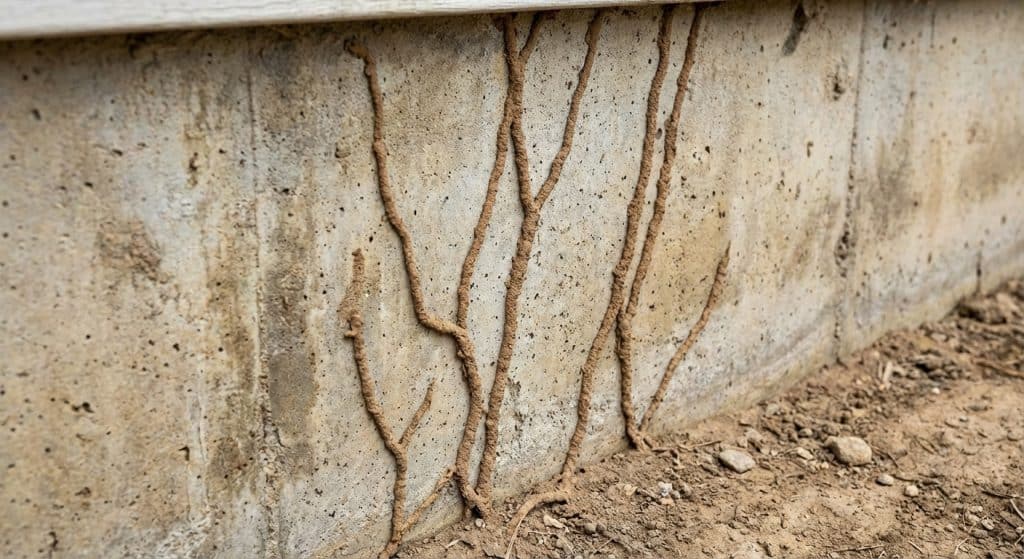
Walk around the exterior concrete foundation walls.
Do you see little brown veins that look like dried mud running up the wall?
Those are termite tunnels.
Termites have soft bodies and can’t be exposed to air, so they build these tubes to travel from the ground to your wood framing.
The Bottom Line: Even if you don’t see bugs, they are eating the house. Call a pest control expert.
16. Knob and Tube Wiring
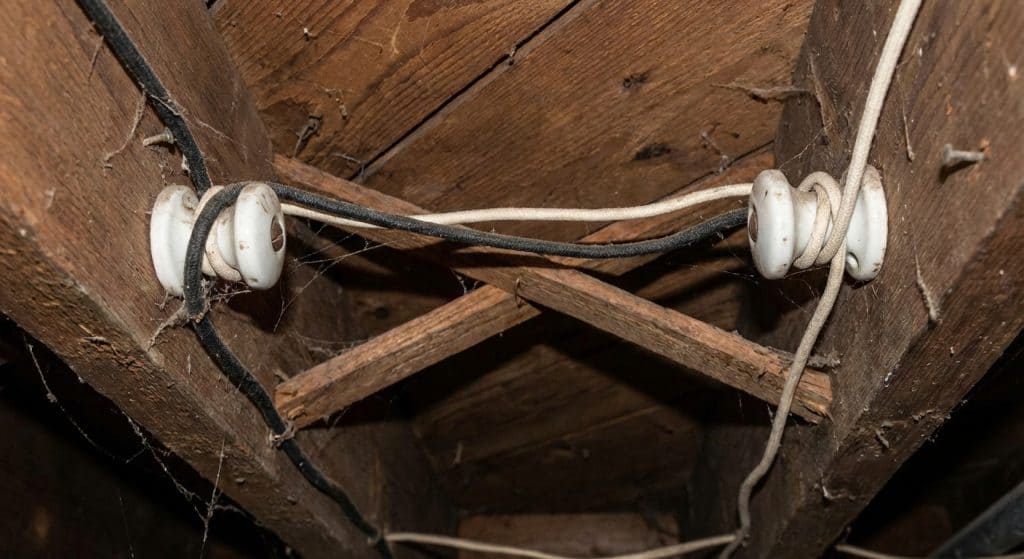
If the house was built before 1950, look up at the basement ceiling.
If you see white ceramic knobs with cloth-covered wires running through them, you have a problem.
This is the original wiring of the home. The insulation is brittle and cracks off, leaving exposed live wires.
Most insurance companies will simply refuse to insure a home with active Knob and Tube.
The Bottom Line: Demand a $15,000 – $20,000 credit for a full rewire.
17. Aluminum Wiring
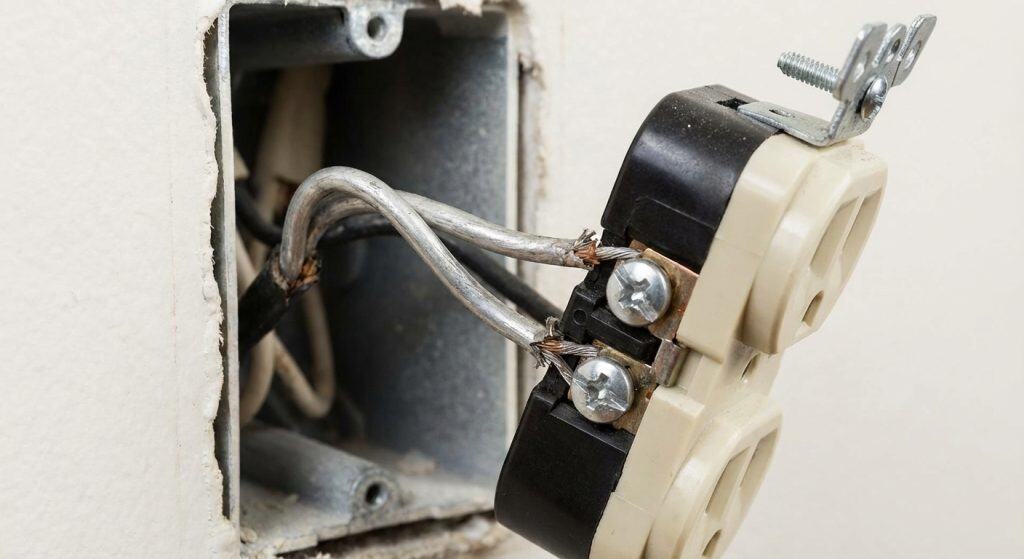
In the late 60s and early 70s, copper prices spiked, so builders used aluminum wiring.
The problem is that aluminum expands and contracts with heat much more than copper.
This movement loosens the connections at every outlet and switch, creating sparks.
It is a leading cause of electrical fires behind the walls.
The Bottom Line: Ensure the system has been “pig-tailed” with copper connectors by a pro.
18. Galvanized Steel Plumbing
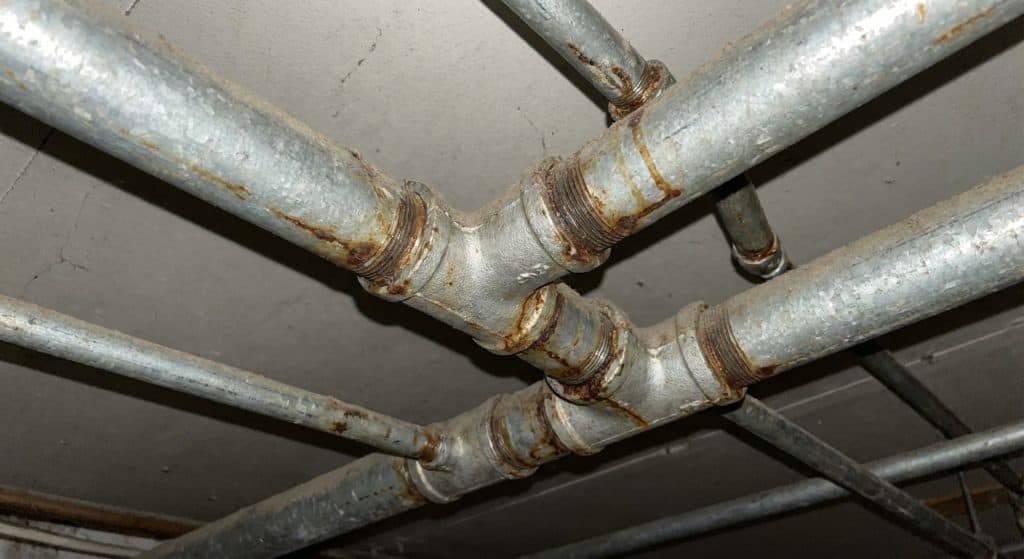
Turn on the hot water tap. Does the pressure look low?
Homes built before 1960 often use galvanized steel pipes.
They rust from the inside out.
The pipe might look fine on the outside, but the inside is choked with rust scale, restricting water flow to a trickle.
The Bottom Line: Budget for a whole-house re-pipe (approx. $10k+).
19. The Cast Iron Stack
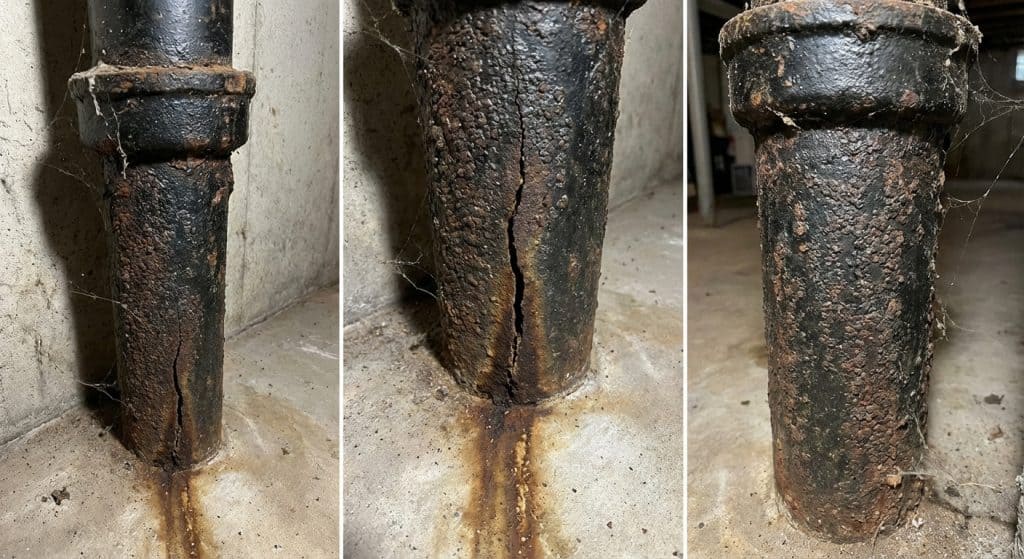
In the basement, look for the big black waste pipe (the “stack”).
If it looks scaly, rusty, or has a vertical crack, beware.
Cast iron pipes have a lifespan of about 80-100 years.
They rust from the inside. When the bottom finally rusts out, you have raw sewage leaking into your walls or under your slab.
The Bottom Line: Ask for a sewer camera inspection to check the condition.
20. Buried Oil Tanks
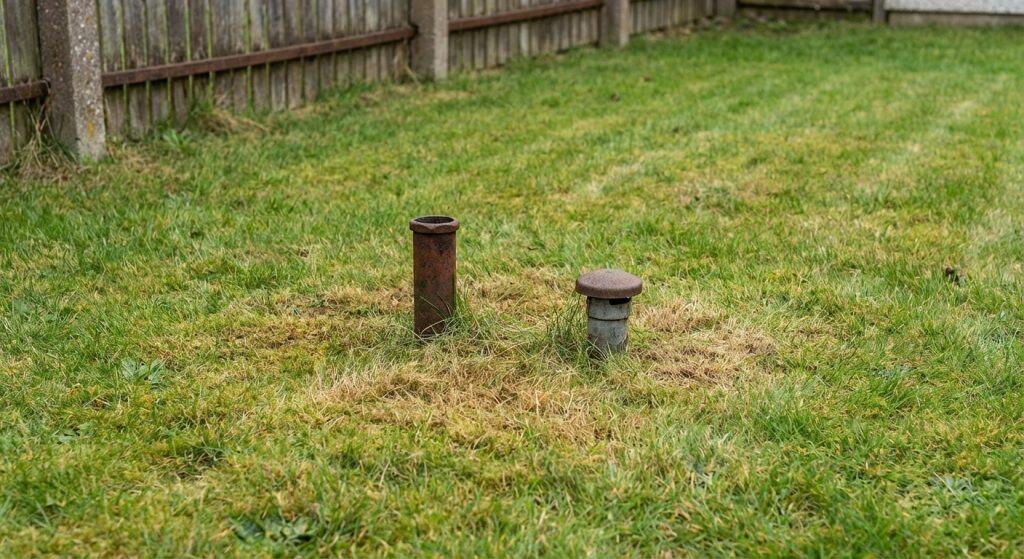
If the house is from the 1940s or 50s but now has gas heat, you have to ask: “Where is the old oil tank?”
If it was buried in the yard and never removed, it eventually rusts and leaks oil into the soil.
You could be liable for a massive environmental cleanup bill that costs more than the house.
The Bottom Line: Demand soil testing before closing.
21. Sump Pump Running Constantly
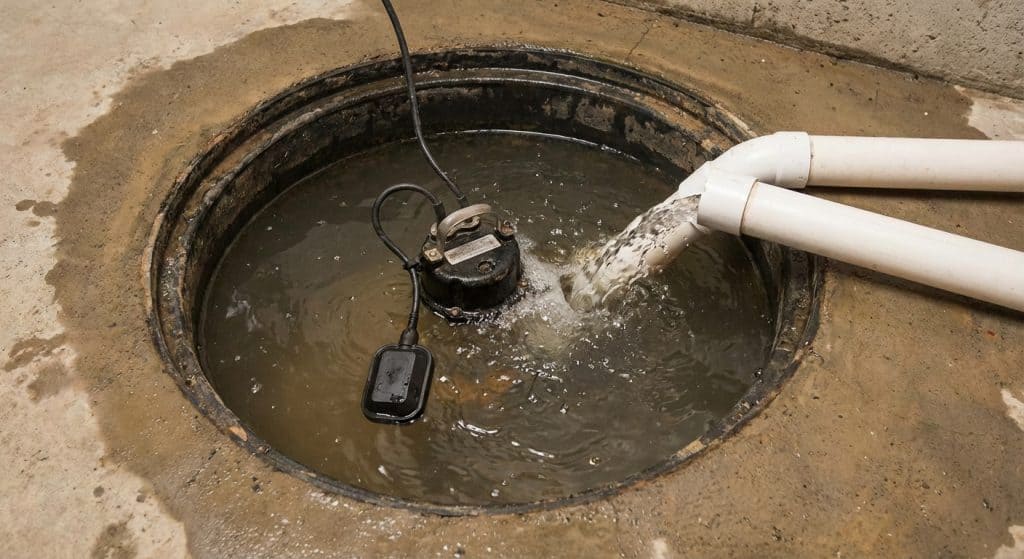
If it’s a dry day and the sump pump is kicking on every 5 minutes, run.
This means the house was built on a high water table.
The pump is the only thing stopping your basement from becoming a swimming pool.
If the power goes out during a storm, you flood immediately.
The Bottom Line: This house has chronic water issues that will never go away.
22. Spray Foam Hiding Joists
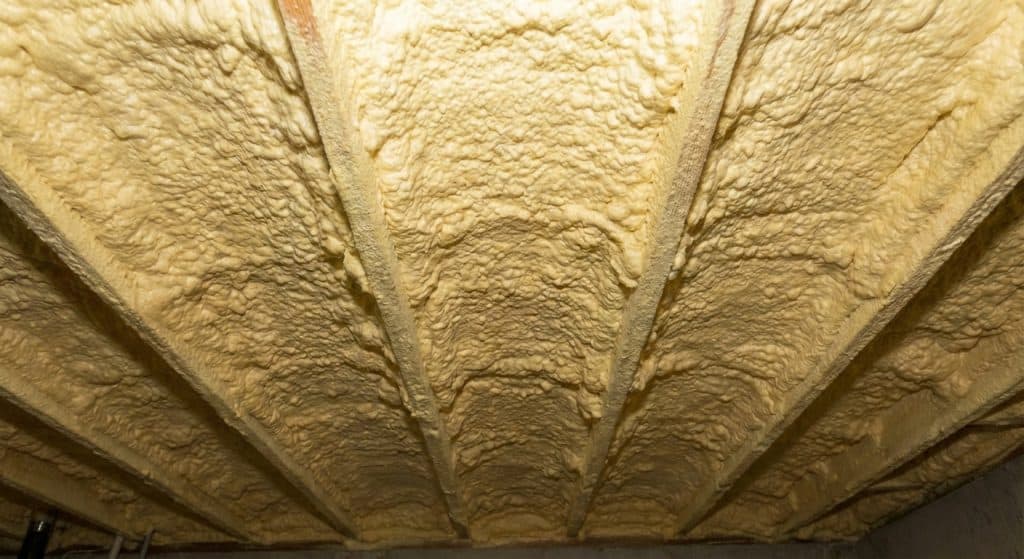
If you go into the basement and the entire ceiling is coated in thick spray foam, ask why.
While it’s great insulation, shady flippers use it as a mask.
They spray it over rotted floor joists, termite damage, or knob and tube wiring to hide it from inspectors.
Once it’s sprayed, you can’t inspect the structure without cutting it away.
The Bottom Line: Ask for documentation or photos of what lies beneath.
23. Chimney Separation
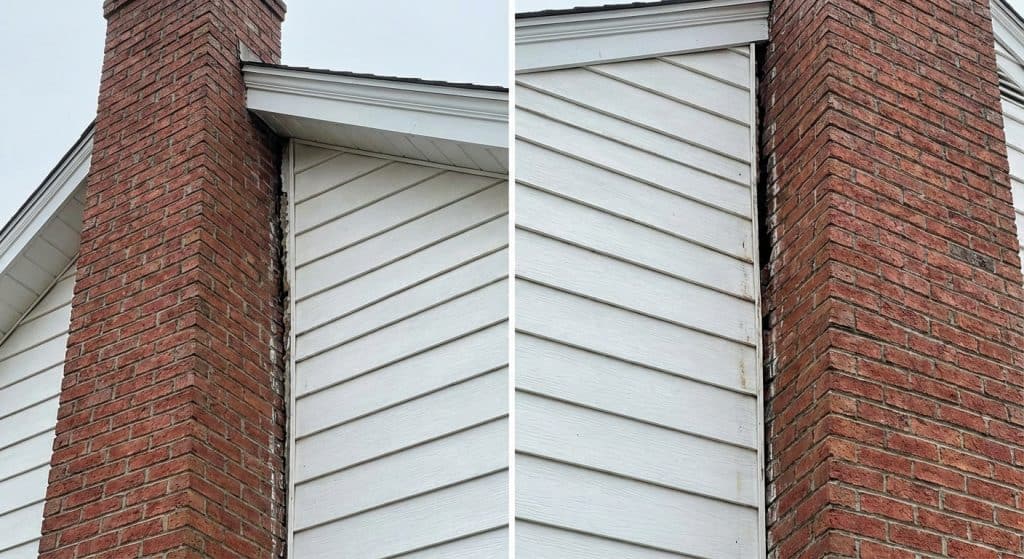
Look at where the brick chimney meets the side of the house.
Is there a gap? Is the chimney leaning away?
This implies the chimney foundation is sinking independently of the house foundation.
Straping it back to the house isn’t a permanent fix; the footing has failed.
The Bottom Line: Underpinning a chimney costs thousands of dollars.
24. Polybutylene Pipes
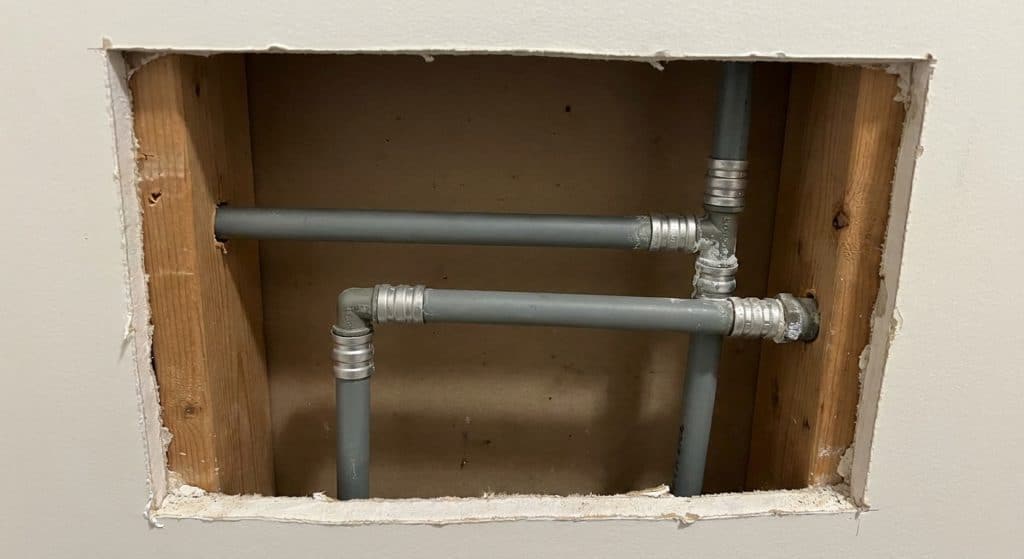
Used from 1978 to 1995, these grey plastic pipes are famous for bursting.
The chlorine in city water eats away the pipe from the inside.
They fail without warning, flooding entire homes.
There was a massive class-action lawsuit about this, and many insurers won’t touch them.
The Bottom Line: Plan on an immediate plumbing replacement.
25. No Attic Ventilation
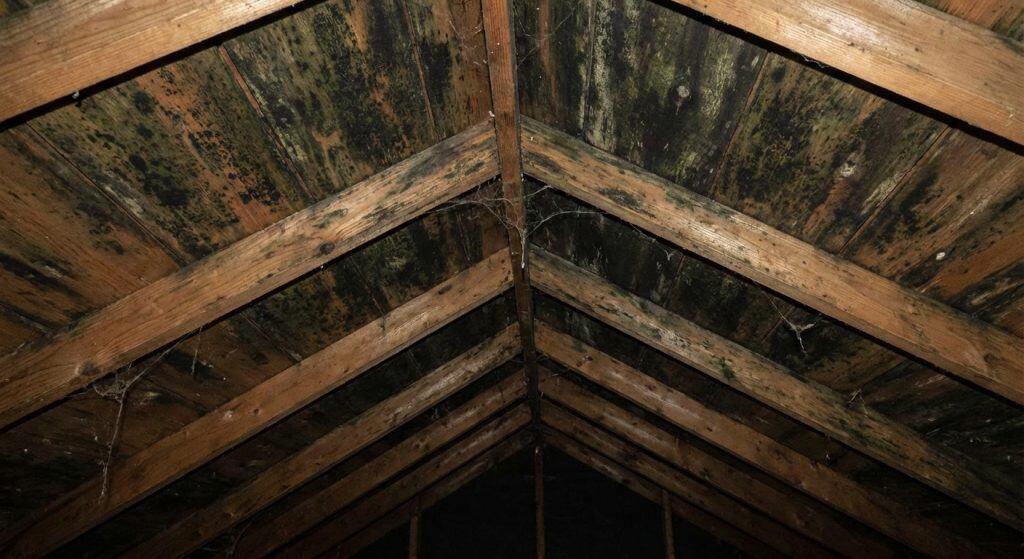
Pop your head in the attic on a warm day. Is it stiflingly hot?
If there are no soffit vents or ridge vents, the heat gets trapped.
This cooks the shingles from the bottom up, cutting their lifespan in half.
In the winter, this trapped heat causes ice dams that destroy your gutters.
The Bottom Line: You will need to install roof vents immediately.
Conclusion
Don’t let the “charm” blind you.
Buying an older home is a business transaction, not a romance novel.
Hire a certified inspector, and if you see these red flags, don’t be afraid to walk away.
There is always another house—one that won’t require a second mortgage just to keep it standing.