

Walk into your grandparents’ house and every room had a purpose. Every piece of furniture had a name. And every name came with a story that nobody tells anymore.
These were not pieces you ordered online and assembled with an Allen wrench on a Sunday afternoon. They were built by people who expected them to outlast the person buying them.
Solid wood. Real joinery. Hardware that could survive a century of daily use.
But somewhere between then and now, entire categories of furniture simply vanished. Not because they stopped working — but because the way we live changed, and nobody bothered to keep making the things that used to matter.
Some of these you will remember instantly. Others you have not thought about in decades.
Here are 25 pieces of furniture your grandparents had that you will never see in a store again.
1. The Dry Sink
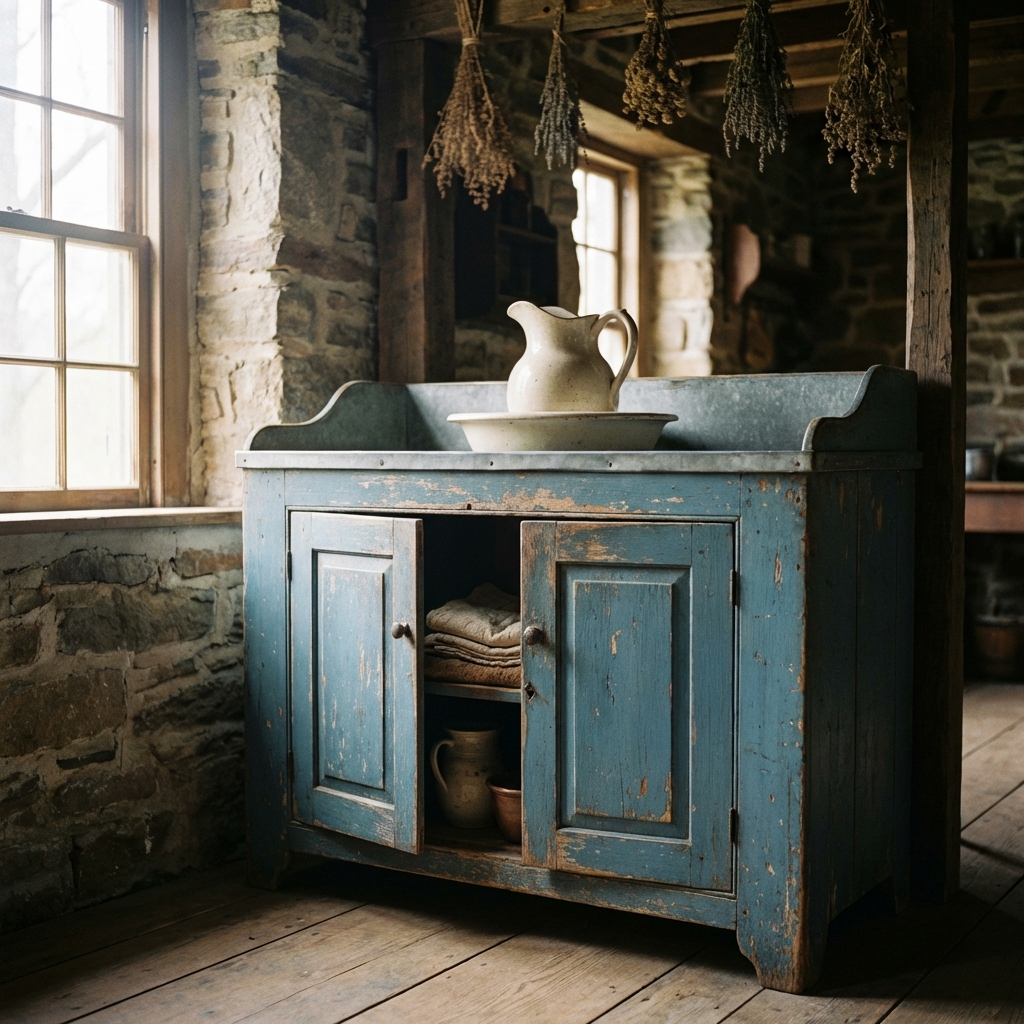
Before indoor plumbing, every kitchen needed a place to wash. The dry sink was it.
It was a low, sturdy cabinet — usually pine or poplar — with a shallow, recessed basin carved or built into the top. A pitcher of water and a washbasin sat inside the recess, and the basin’s raised edges kept water from running onto the floor.
Below the basin, a cabinet with simple doors held cleaning supplies, soap, and rags. Some had a shelf underneath. Most were painted — often blue, green, or red — and the paint wore through in all the places where hands touched every day.
Once running water came to the kitchen, the dry sink had no reason to exist. But as a piece of practical, handmade American furniture, it was one of the most honest things ever built.
2. The Curio Cabinet
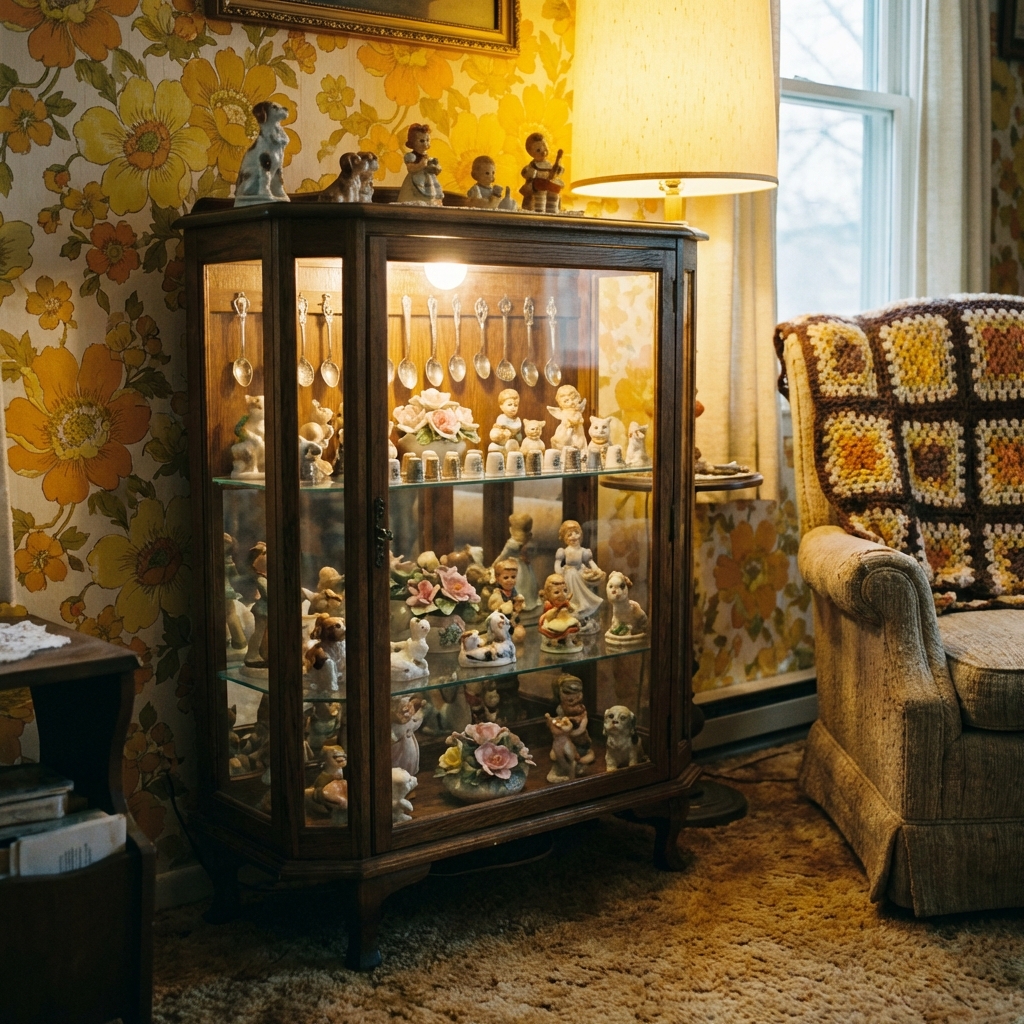
The china cabinet held the dishes. The curio cabinet held everything else.
It was smaller than a china cabinet — usually about five feet tall — with glass on all four sides and a light inside. Some had mirrored backs that made the tiny shelves look twice as deep. It existed for one purpose — to display the small, precious things your grandmother spent a lifetime collecting.
Thimbles. Figurines. Souvenir spoons. Crystal bells from every state she visited. A tiny porcelain shoe from a trip to Williamsburg.
Nothing inside had any real monetary value. But every single piece had a story, and the curio cabinet was the museum that held them all.
3. The Highboy
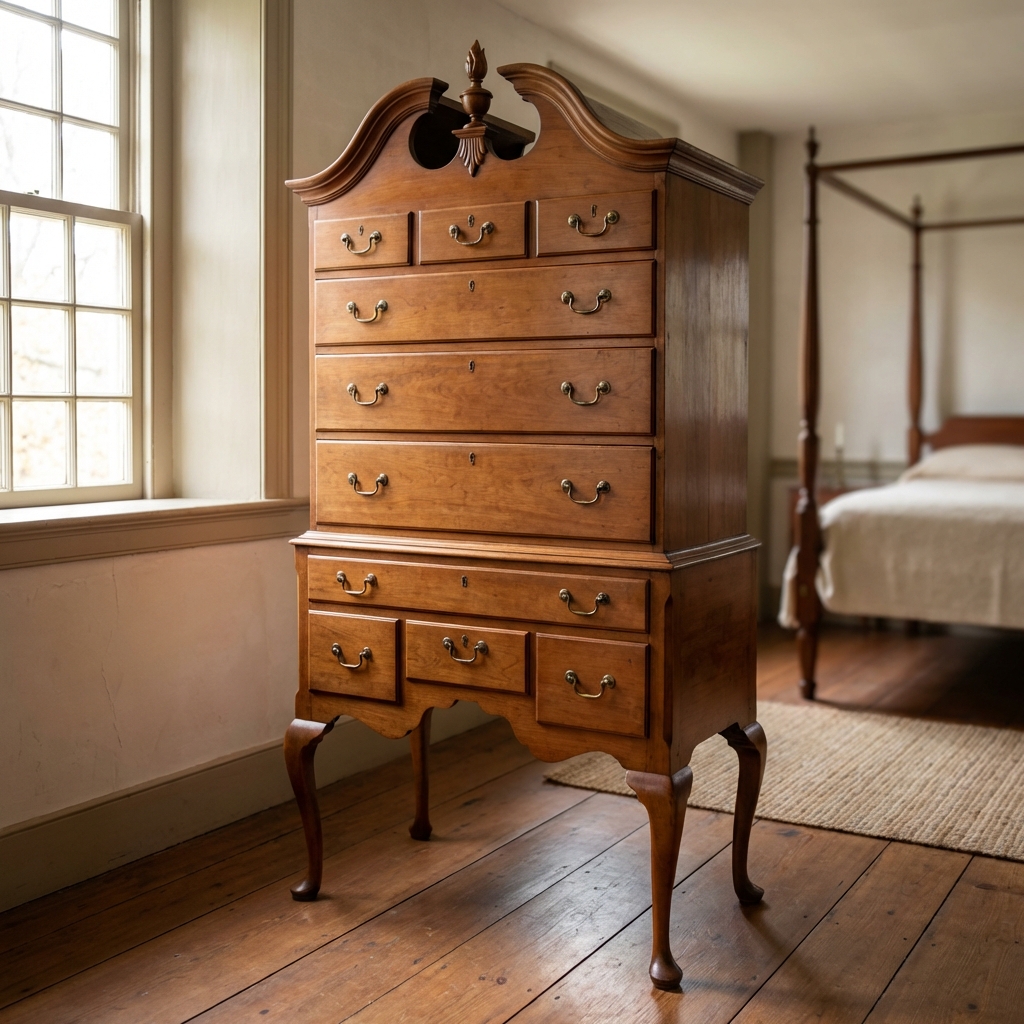
If you have ever seen a tall chest of drawers standing on elegantly curved legs and thought it looked like a piece of furniture wearing high heels, you have seen a highboy.
This was one of the signature pieces of American colonial furniture — a two-part chest with a lower section of legs and one or two drawers, and an upper section stacked with four to six more drawers, often crowned with a carved bonnet or broken pediment at the top.
The best highboys were made of solid cherry, walnut, or mahogany, with hand-cut dovetail joints and brass pulls that were cast individually. They were the tallest, most impressive piece of bedroom furniture in the house.
Modern dressers are wide and low. The highboy was the opposite — it used vertical space in small bedrooms with low square footage, and it looked magnificent doing it.
4. The Lowboy
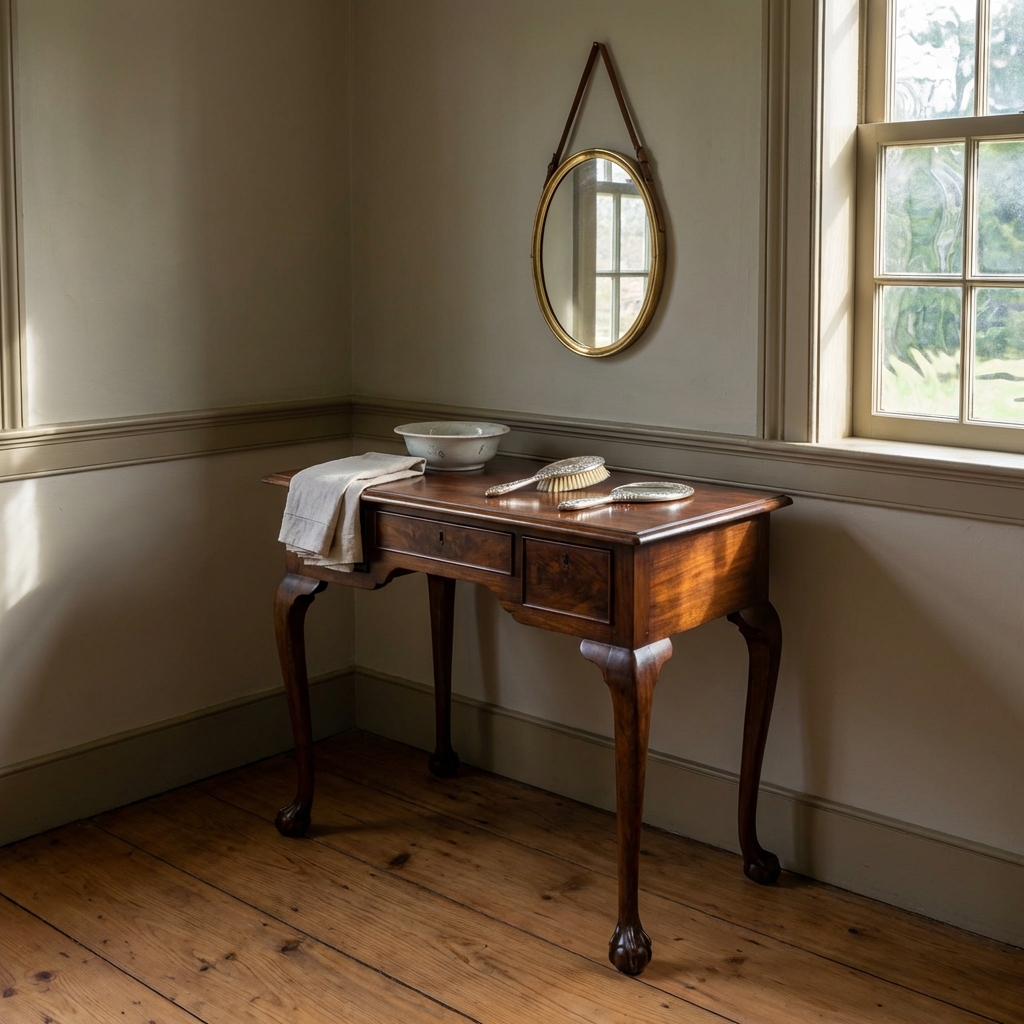
Where the highboy stored your clothes, the lowboy was where you got ready for the day.
It was essentially a small dressing table — about three feet high, with one long drawer across the top and two or three smaller drawers below, all resting on graceful cabriole legs with pad or ball-and-claw feet.
A mirror hung on the wall above it. A hairbrush, a comb, and a hand mirror sat on top. It was the personal grooming station of every well-appointed colonial bedroom.
The lowboy was never large. It was never flashy. But the proportions were so carefully balanced that even an empty one looked like a piece of art.
5. The Boston Rocker
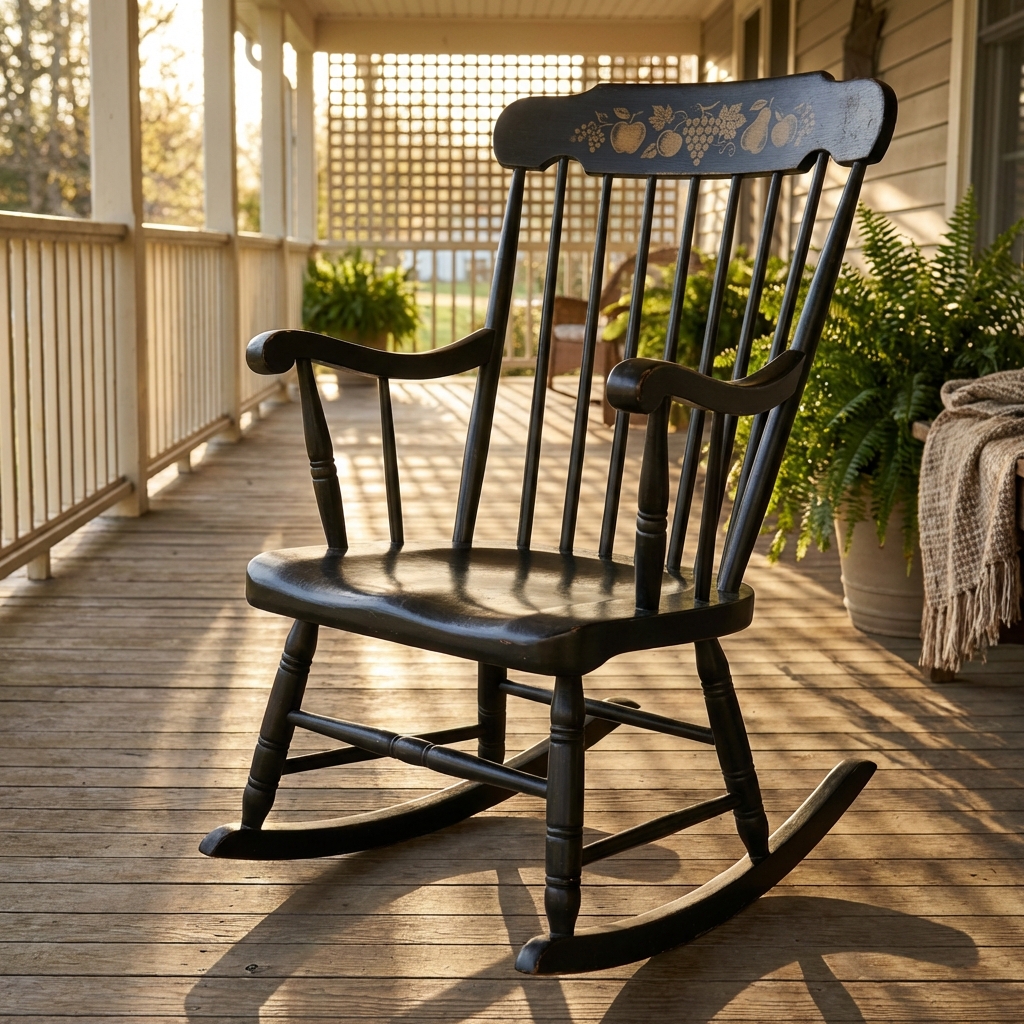
Every American rocking chair traces its lineage back to this one.
The Boston rocker appeared in the early 1800s and became the most popular chair in America almost immediately. It had a tall, curved back with wide slats or spindles, a deep scooped seat that rolled up in the front, and heavy curved rockers on the bottom.
Most were painted black and decorated with gold stenciling — fruit, flowers, or landscapes — applied by hand on the crest rail. They were produced by the thousands and sold at prices almost anyone could afford.
Your grandmother’s front porch probably had one. Your great-grandmother’s parlor definitely did. The Boston rocker was not fancy. It was simply the most comfortable seat in the house, and it was everywhere.
6. The Davenport Desk
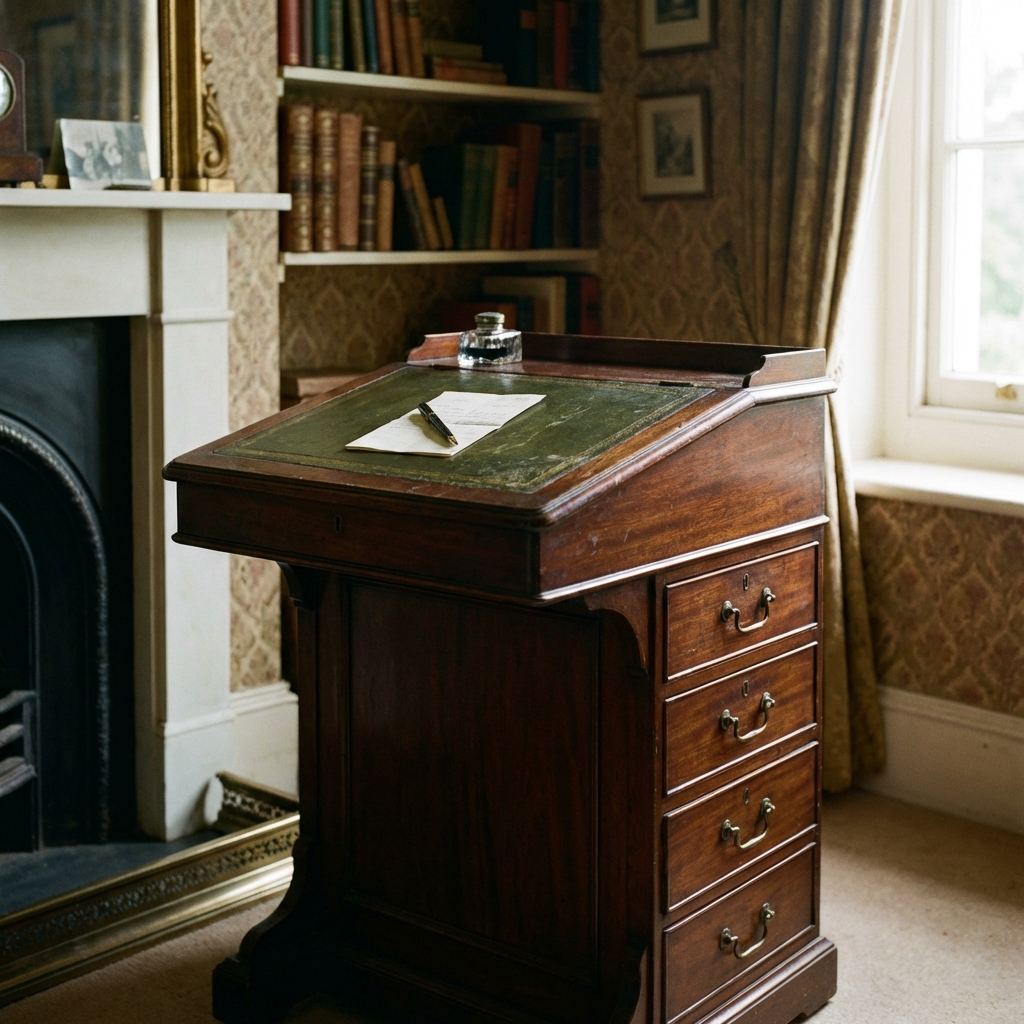
Not to be confused with the sofa — the Davenport desk was something else entirely.
It was a small, compact writing desk with a slanted top that lifted on hinges, drawers running down one side (sometimes both), and a flat or slightly recessed top surface just large enough for a sheet of paper, a pen, and an inkwell.
The Davenport was designed for tight spaces. It could tuck into a corner, sit beside a window, or stand against a narrow wall in a hallway. Despite its small footprint, the interior was surprisingly organized — tiny compartments, pigeonholes, and a leather writing surface hidden under the lid.
It was the apartment desk before apartments existed. Nobody makes them anymore because nobody writes letters anymore. But the design was brilliant.
7. The Icebox
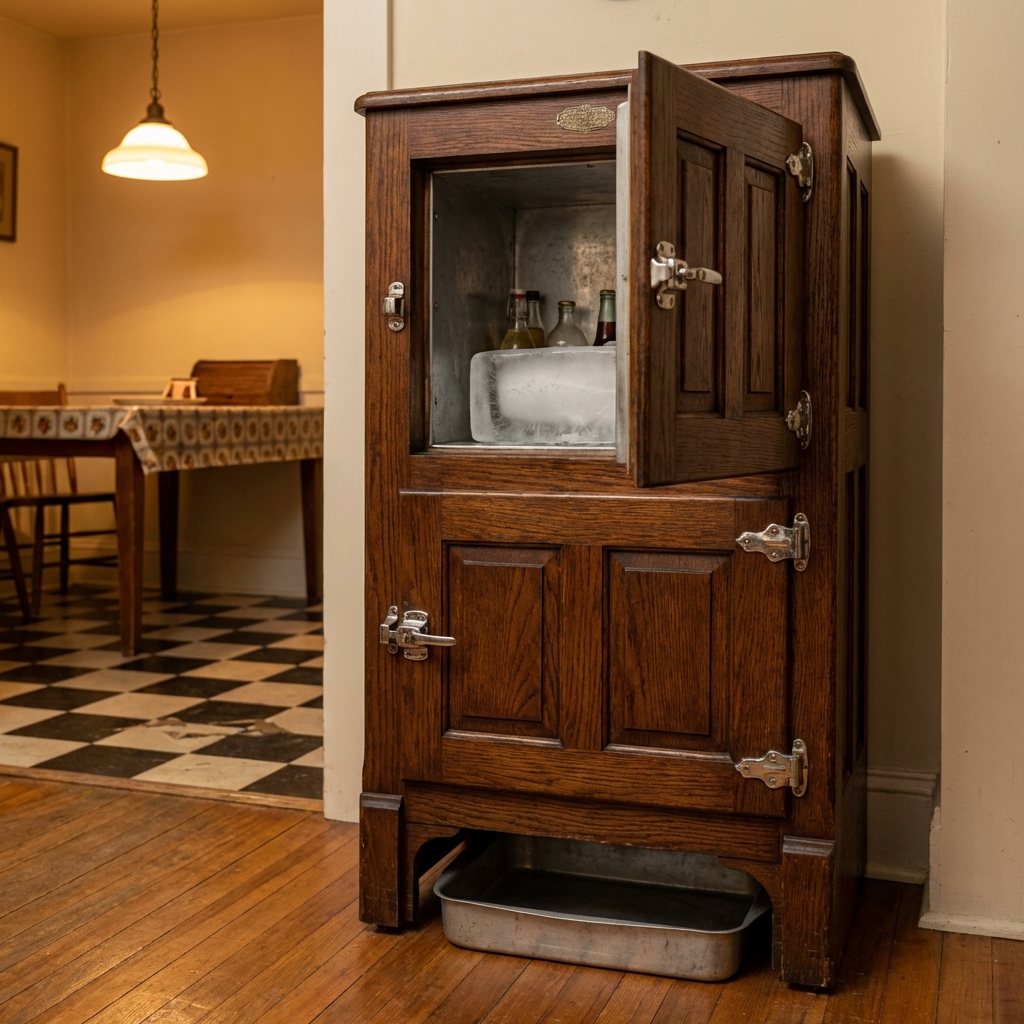
Before electric refrigerators, there was the icebox — and it was furniture.
The outside was solid oak, usually with brass or nickel-plated hardware and a rich, warm finish that matched the rest of the kitchen. Inside, it was lined with zinc, tin, or galvanized metal and insulated with sawdust, charcoal, or cork packed between the walls.
A block of ice sat in the upper compartment. Cold air sank down over the food stored below. A drip pan at the bottom caught the meltwater — and somebody in the house always forgot to empty it.
The iceman came once or twice a week, hauling massive blocks with iron tongs. Kids followed the delivery wagon in summer, grabbing chips of ice off the back. The electric refrigerator killed the icebox by the 1940s, but the craftsmanship of those oak cabinets has never been matched by anything with a compressor.
8. The Settee
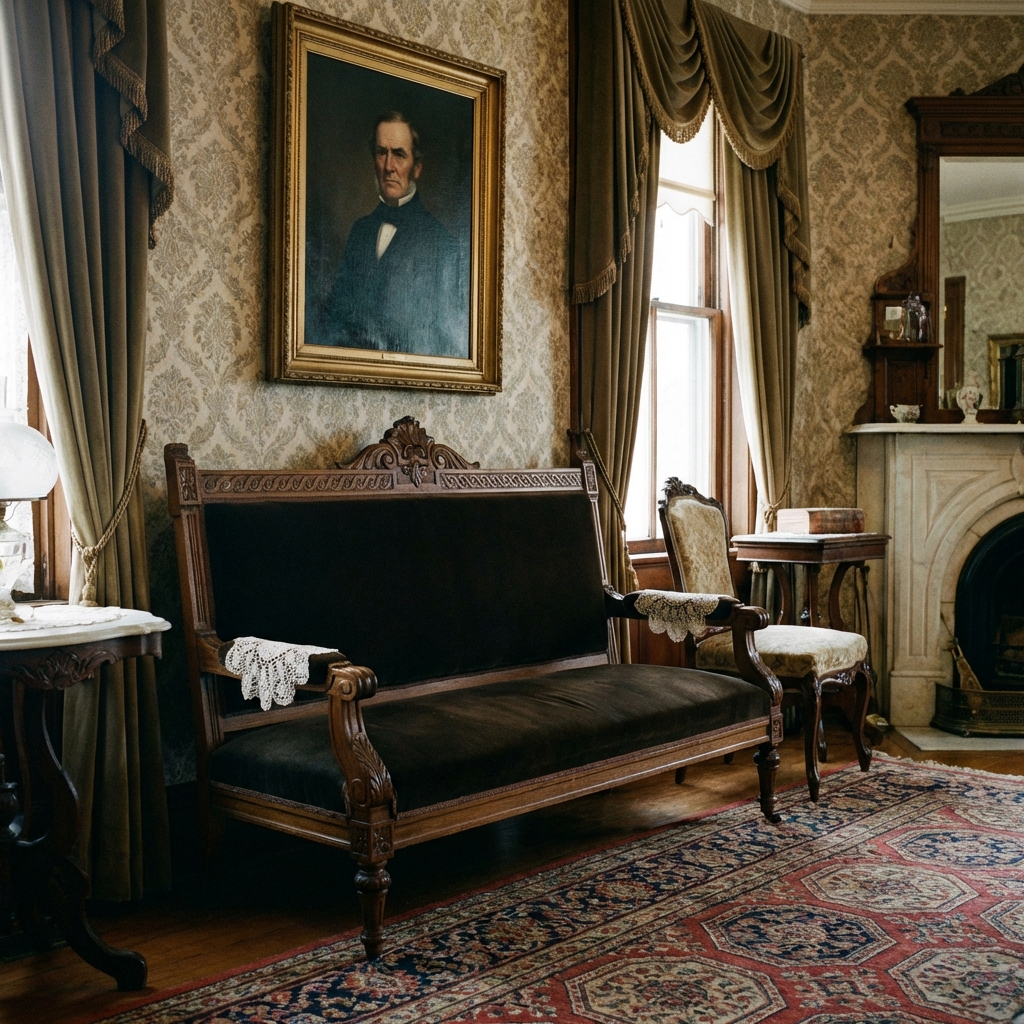
The settee was the sofa’s uptight older sister.
It was a small, stiff, two-person bench — usually with a carved wooden frame, a straight back, and thin upholstered cushions that offered approximately zero comfort. It lived in the front parlor, which was the room reserved for guests and formal occasions.
Nobody relaxed on a settee. You perched. You sat with your back straight and your hands in your lap while making polite conversation with the minister’s wife.
The settee was never about comfort. It was about appearances. And when American homes stopped having formal parlors, the settee lost its stage.
9. The Tilt-Top Tea Table
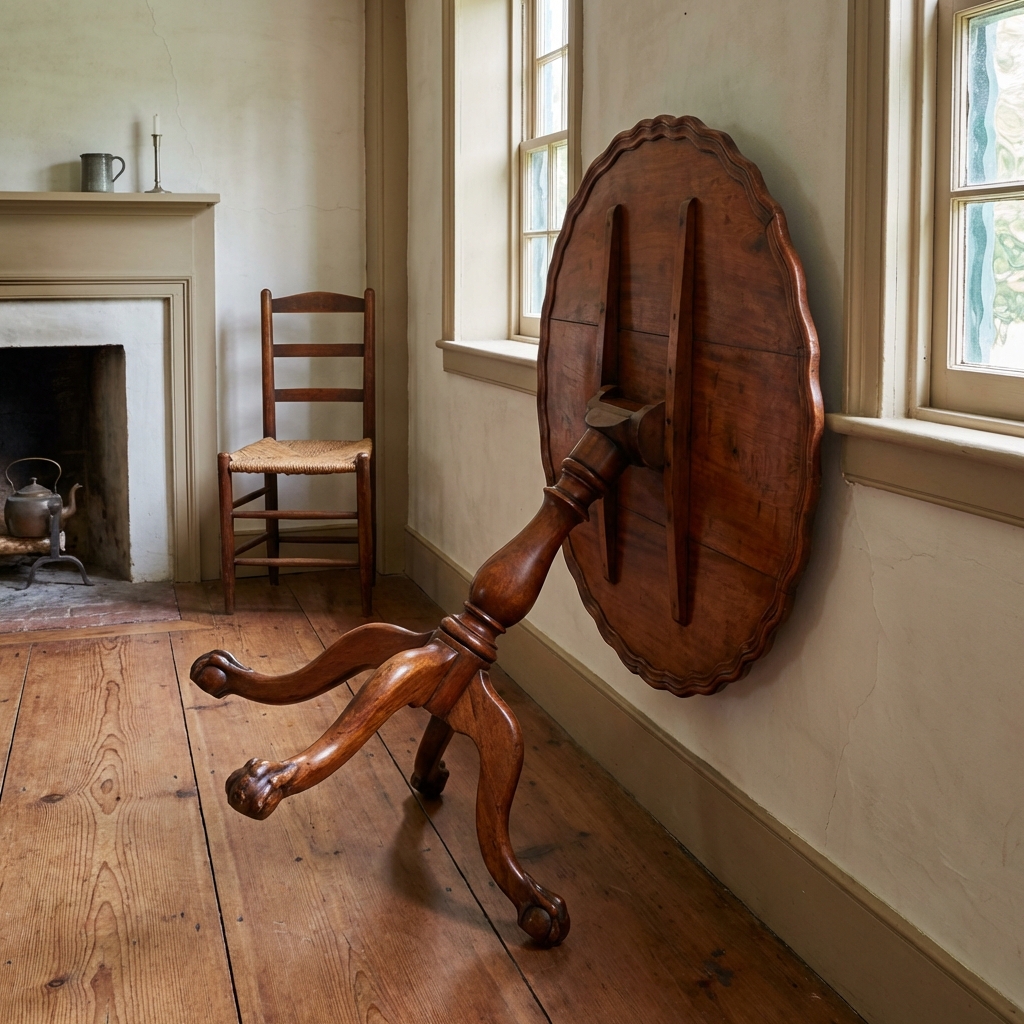
This might be the most clever piece of furniture on this entire list.
It was a small, round table — usually 24 to 30 inches across — mounted on a turned pedestal with three curved legs. The top was attached with a special hinge mechanism called a birdcage that allowed it to tilt from horizontal to completely vertical.
When you needed a table for tea, cards, or a lamp, the top was flat. When you were done, you tilted it upright and pushed the whole thing flat against the wall, freeing up the entire floor space.
In an era when rooms were small and furniture was heavy, this was pure genius. And the craftsmanship on the turned pedestals and carved pie-crust edges of the best examples is some of the finest woodworking in American furniture history.
10. The Fern Stand
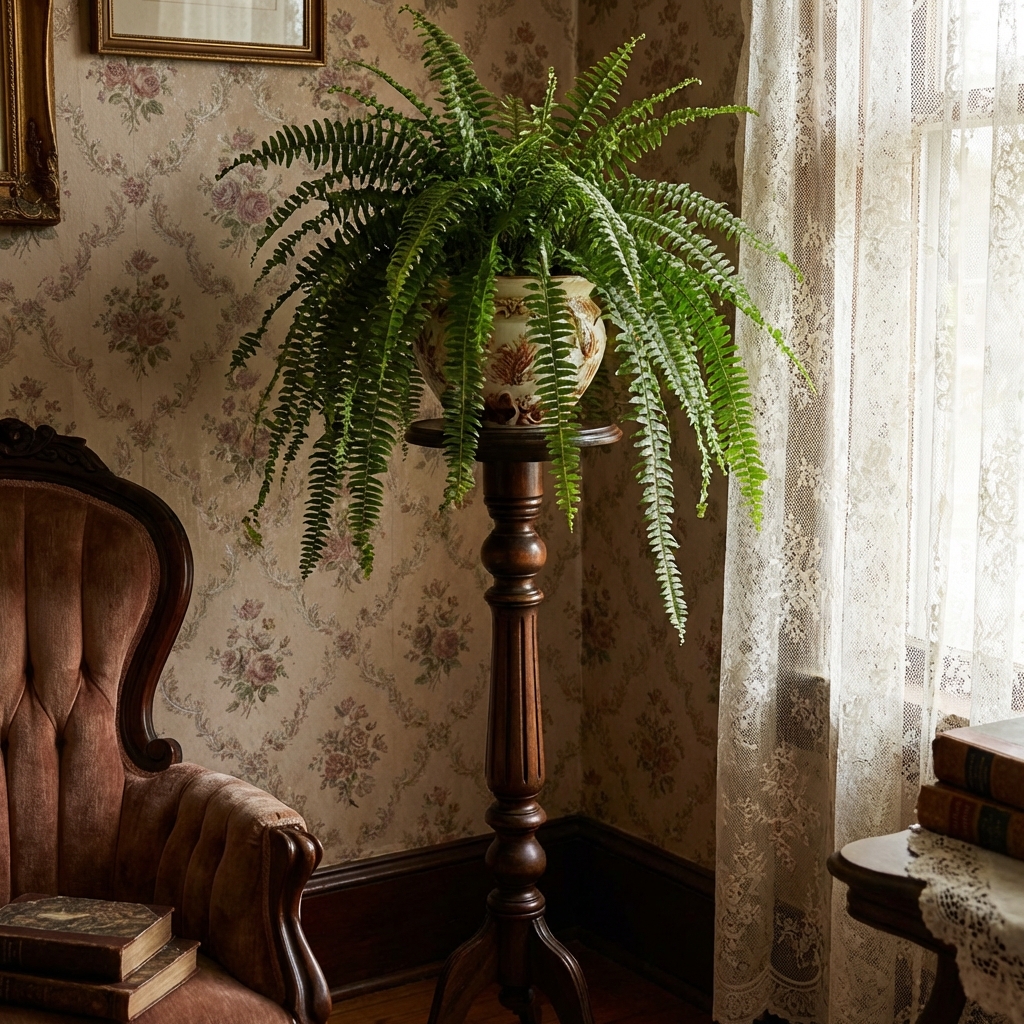
The Victorians were obsessed with houseplants. And the fern was their favorite.
The fern stand was a tall, narrow pedestal — usually 30 to 40 inches high — topped with a small flat or slightly recessed platform just large enough to hold a single potted fern. Some were turned from a single piece of wood. Others were more elaborate, with carved details, tripod bases, or decorative brackets.
They stood in corners, beside doorways, and in front of parlor windows, giving ferns the elevation and light they needed. In a Victorian home, a room without a fern stand felt incomplete.
When the fern craze faded and houseplant culture moved on, the fern stand became just another thing at the estate sale. But plant parents today would find them very useful — if they knew what they were looking at.
11. The Dressing Screen
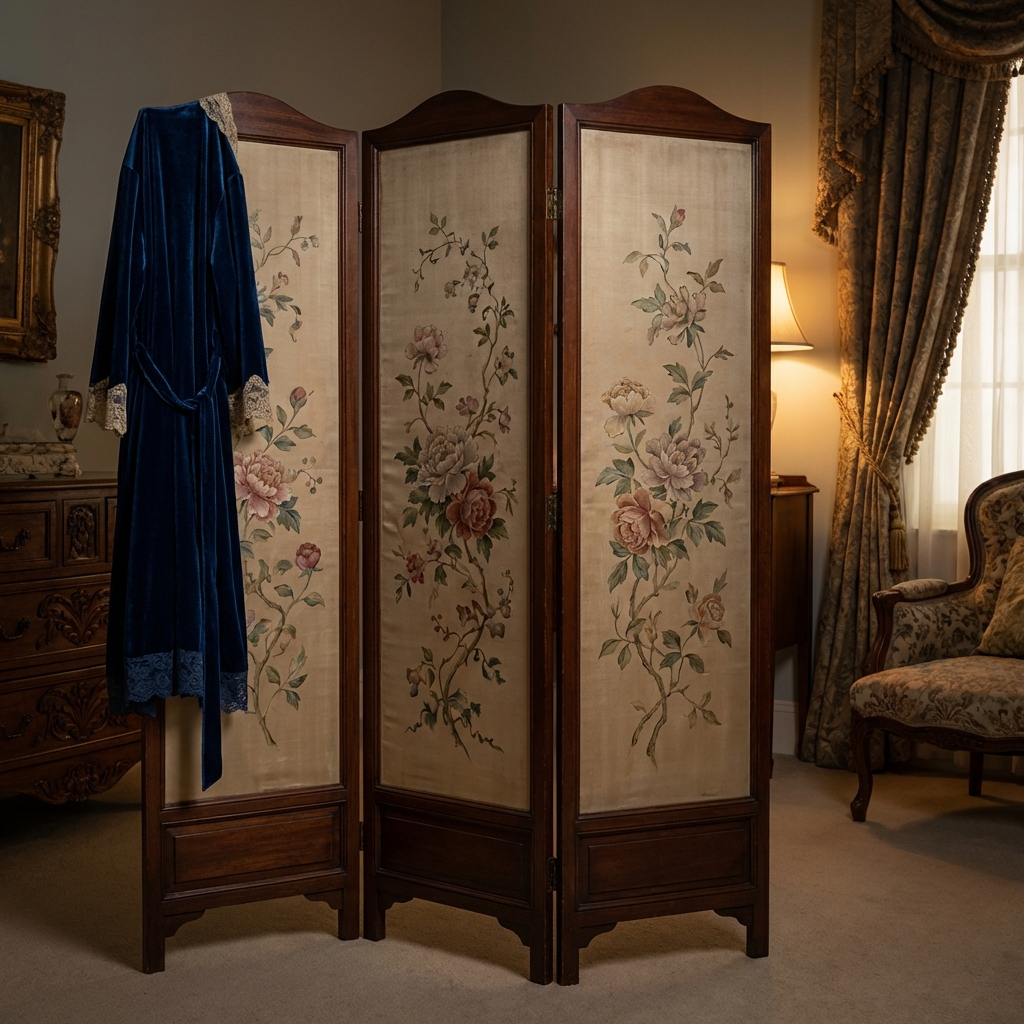
Before walk-in closets and en-suite bathrooms, you changed clothes behind a dressing screen.
It was a freestanding, folding panel — usually three or four panels hinged together — that stood in the corner of the bedroom. You stepped behind it, changed, and stepped back out. Simple as that.
The panels themselves ranged from plain fabric-covered frames to elaborately decorated works of art. Some were covered in silk, needlepoint, or hand-painted scenes. Others were lacquered in the Japanese or Chinese style, which was wildly fashionable in the 18th and 19th centuries.
The dressing screen was one of the most elegant solutions to a basic human need — privacy in a shared space. Modern homes solved the problem with drywall. The dressing screen solved it with beauty.
12. The Jelly Cupboard
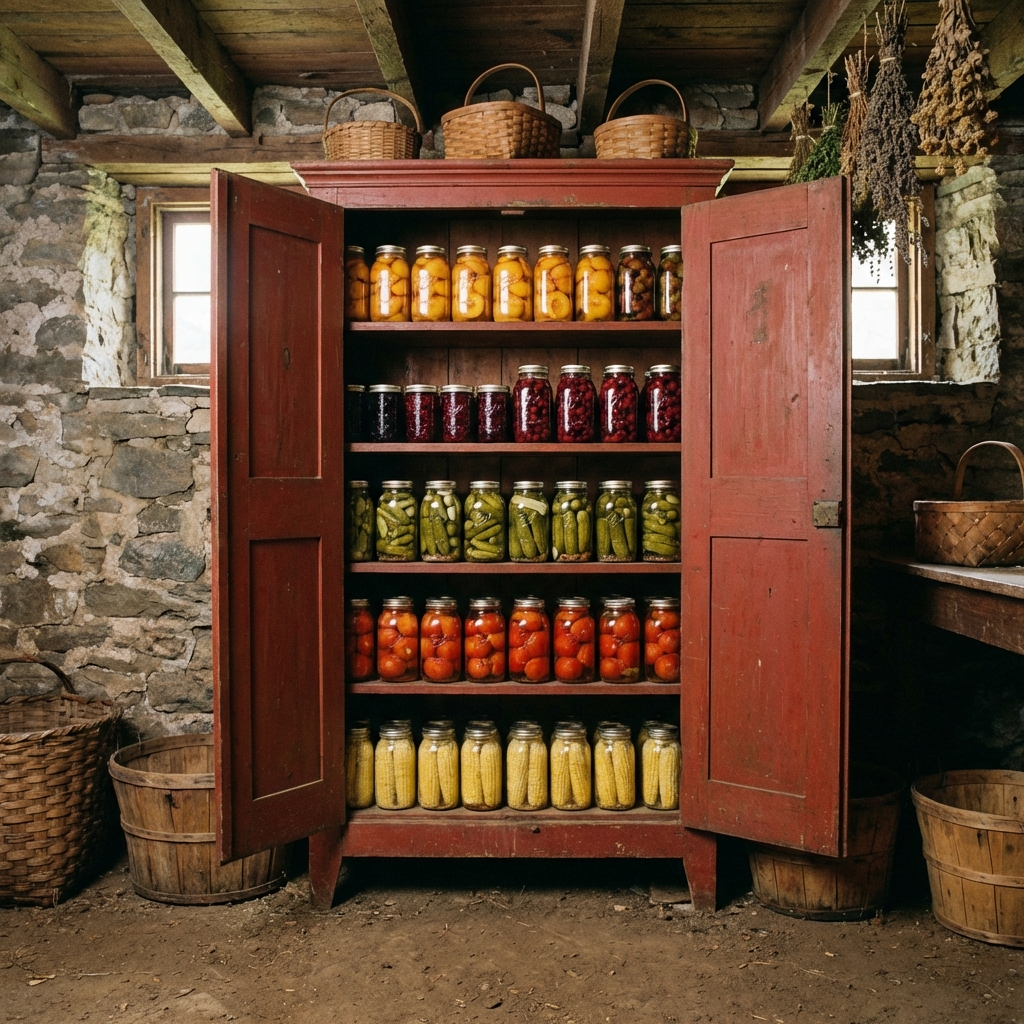
In the days before supermarkets, families put up their own food. And they needed somewhere to store it.
The jelly cupboard was a simple, tall, narrow cabinet — usually built from pine, poplar, or cherry — with one or two solid doors on the front and several deep shelves inside. It stood in the kitchen, the pantry, or the cellar, and it held jars of homemade jam, jelly, pickles, preserves, and canned vegetables.
There was nothing fancy about a jelly cupboard. No glass doors. No decorative carvings. Just solid wood, simple hardware, and shelves deep enough to hold Mason jars three rows deep.
They are now highly collectible pieces of American country furniture, and the ones with original paint finishes — the more worn, the better — command the highest prices.
13. The Piano Stool
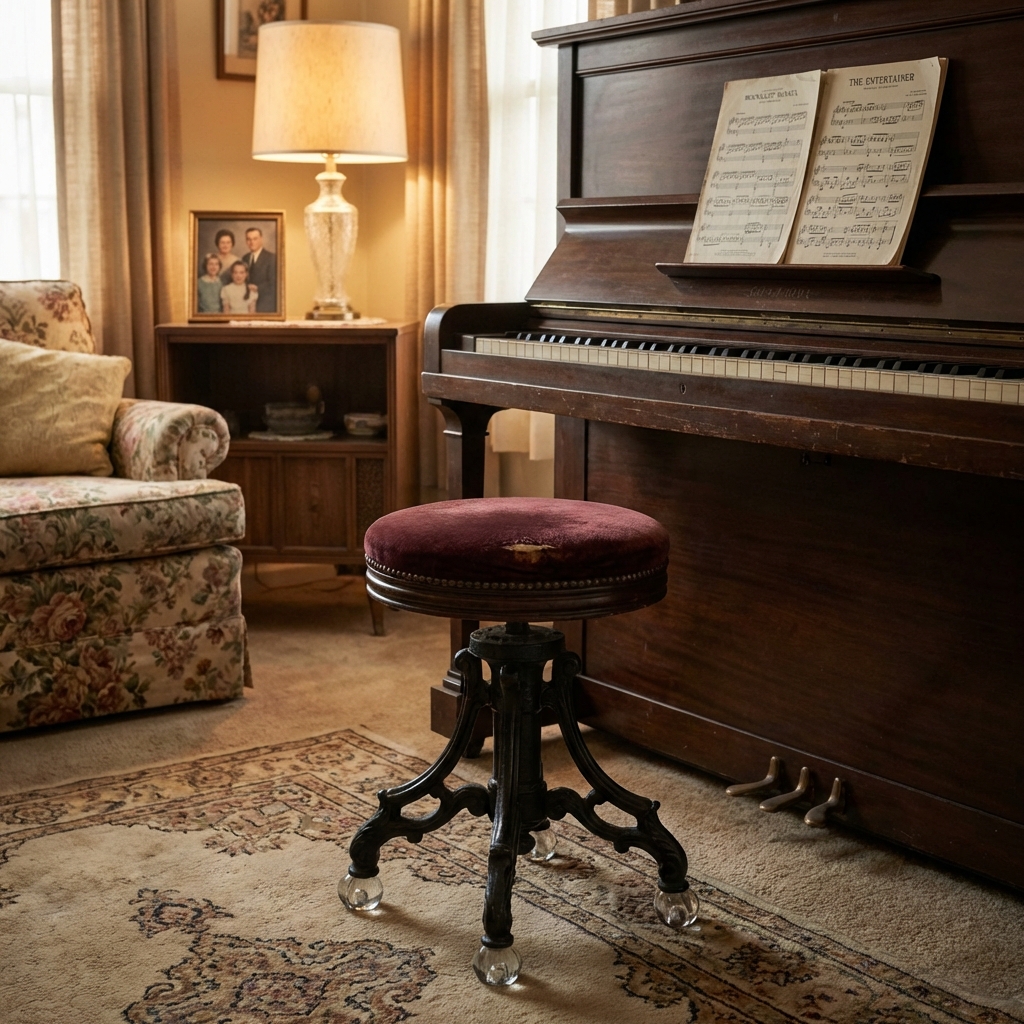
If you grew up in a house with a piano, you know this stool. And you definitely spun on it when your parents were not looking.
It was a round, upholstered seat mounted on a cast-iron screw mechanism that allowed it to spin freely and adjust up or down by turning the seat. The base usually had three or four legs, and the best ones had glass ball-and-claw feet that looked like an eagle’s talons gripping a crystal ball.
Some had a hinged lid that opened to reveal a small compartment for storing sheet music. The upholstery ranged from simple velvet to needlepoint covers stitched by someone in the family.
When families stopped buying pianos, the piano stool became obsolete. But as a piece of mechanical furniture design — a smoothly adjustable, infinitely spinning seat — it was ahead of its time.
14. The Cellarette
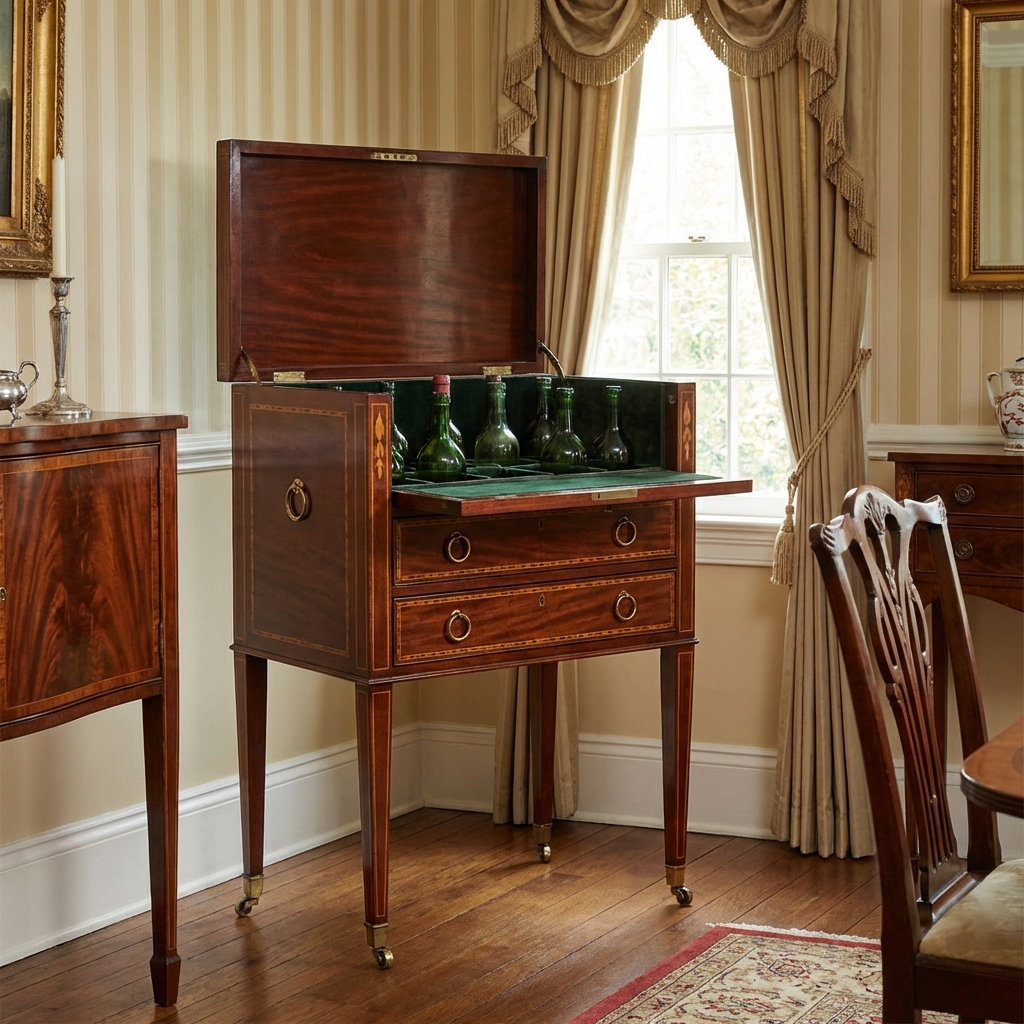
Your grandparents did not have a bar cart. They had a cellarette.
It was a small, dedicated cabinet — usually on legs or a stand — designed specifically to store bottles of wine and liquor. The interior was often divided into compartments sized for individual bottles, and some were lined with zinc or lead to keep the contents cool.
Cellarettes ranged from simple country pieces to elaborate Hepplewhite or Sheraton designs with inlaid wood, tapered legs, and brass fittings. Some were octagonal. Some were urn-shaped. All were locked with a key — because alcohol was expensive, and servants had access to the house.
The built-in wet bar and the liquor store killed the cellarette. But as a piece of dedicated, purpose-built furniture, it had more character than any open shelving unit ever will.
15. The Shaving Stand
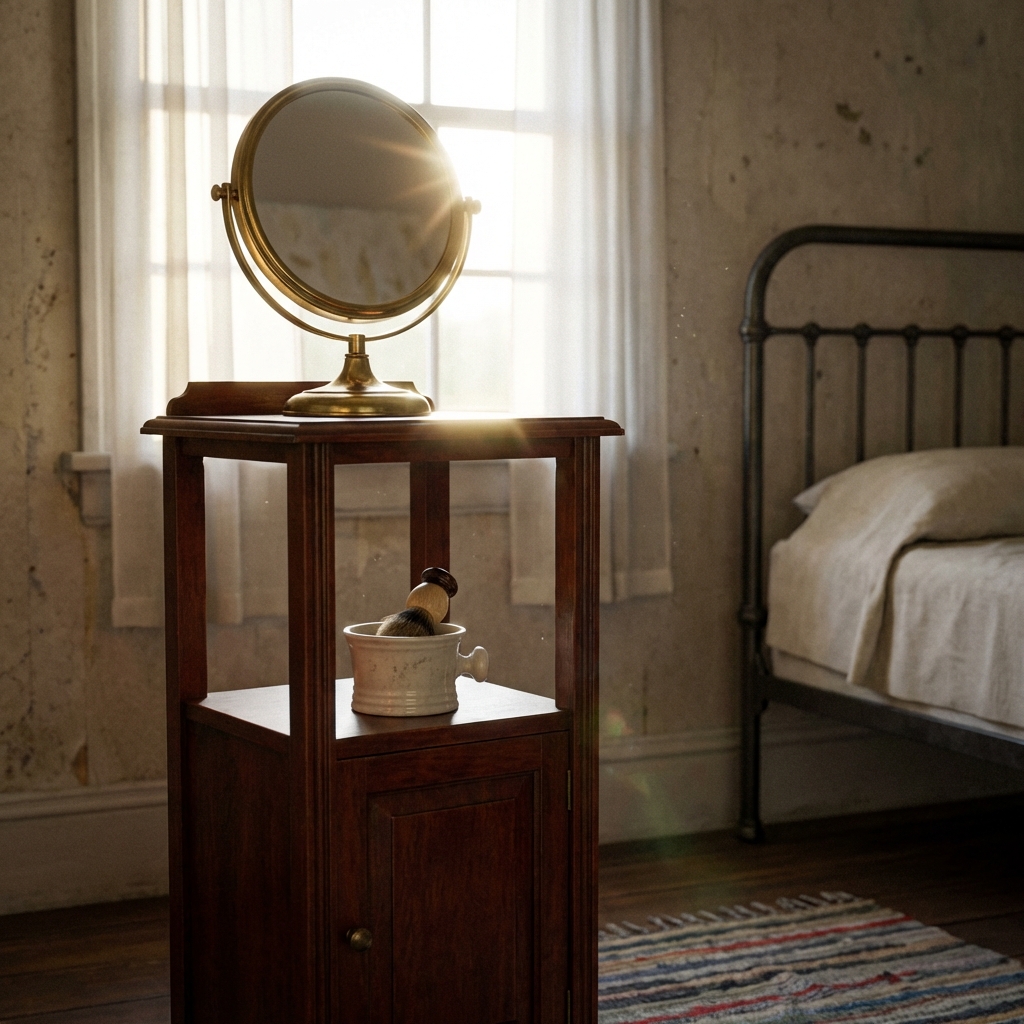
Every morning, your grandfather stood in front of one of these.
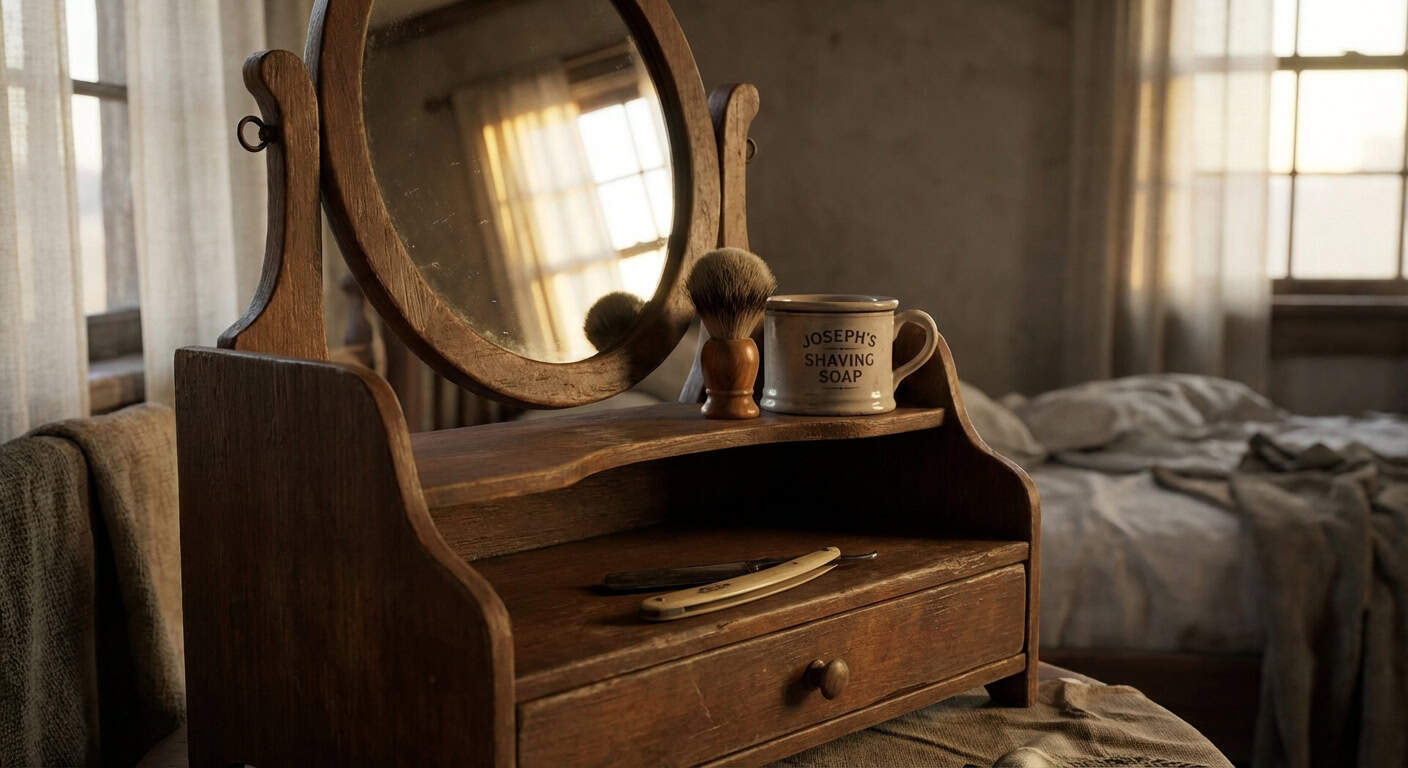
It was a small, pedestal-mounted stand — usually about chest height — with a round tilting mirror on top, a small shelf below the mirror for the shaving mug and brush, and sometimes a tiny drawer for the razor and strop.
The best shaving stands were made of mahogany or walnut with a turned pedestal and tripod base. The mirror swiveled on small brass pivots so it could be angled to catch the light from the bedroom window.
Modern bathrooms with their wall-mounted mirrors and built-in medicine cabinets replaced the shaving stand entirely. But there was something deliberate about standing at a piece of furniture dedicated to one daily ritual. It turned a chore into a routine.
16. The Deacon’s Bench
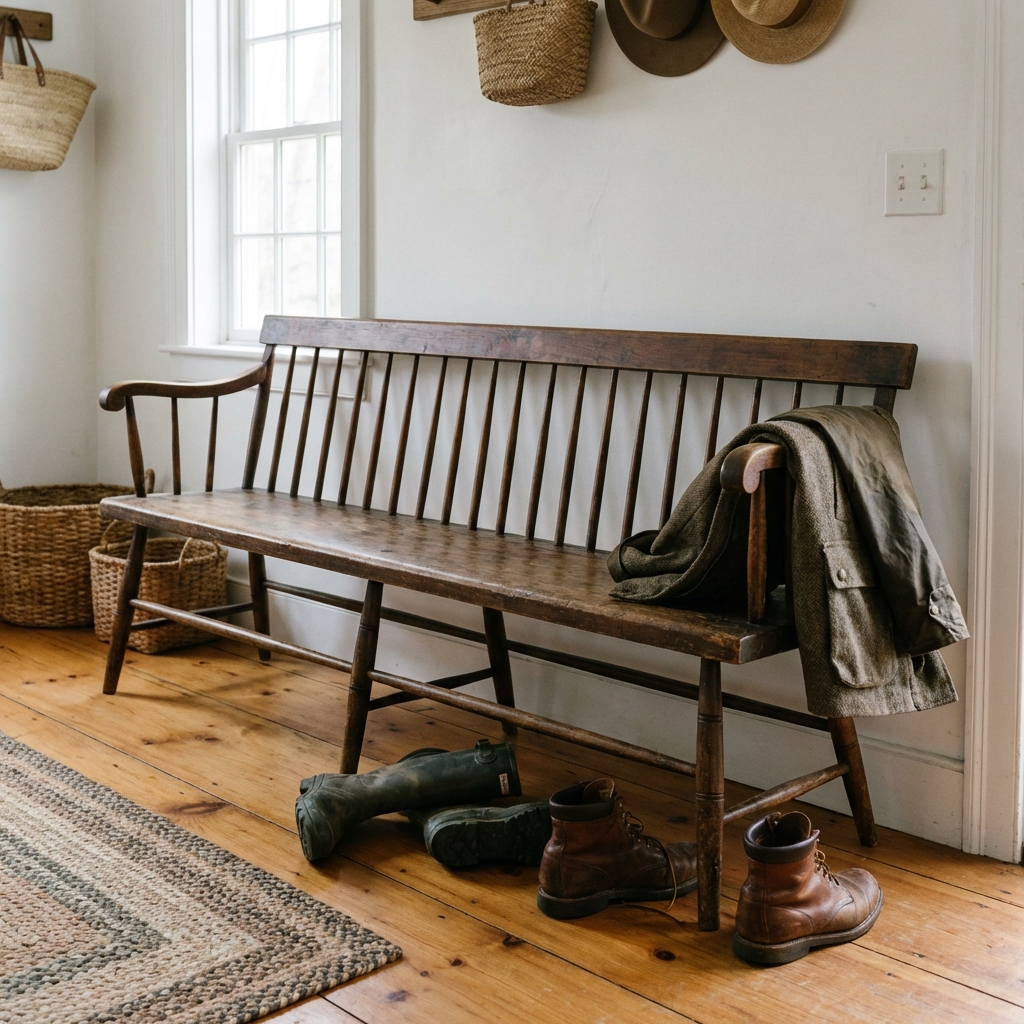
This bench started in church. It ended up in every American hallway.
The deacon’s bench — sometimes called a meetinghouse bench — was a long, solid wooden bench with a contoured back made of wide planks or spindles. It was originally built for the deacons who sat at the front of New England churches and meetinghouses.
But the design was so simple, so sturdy, and so useful that it migrated into American homes. It sat in entryways, on porches, in mudrooms, and along hallway walls. You put your shoes on there. You waited for rides there. Groceries got set down there before being put away.
It was the most unpretentious, hardworking piece of furniture in the house. No cushion. No upholstery. Just solid wood and honest construction. And it held up for generations.
17. The Card Table
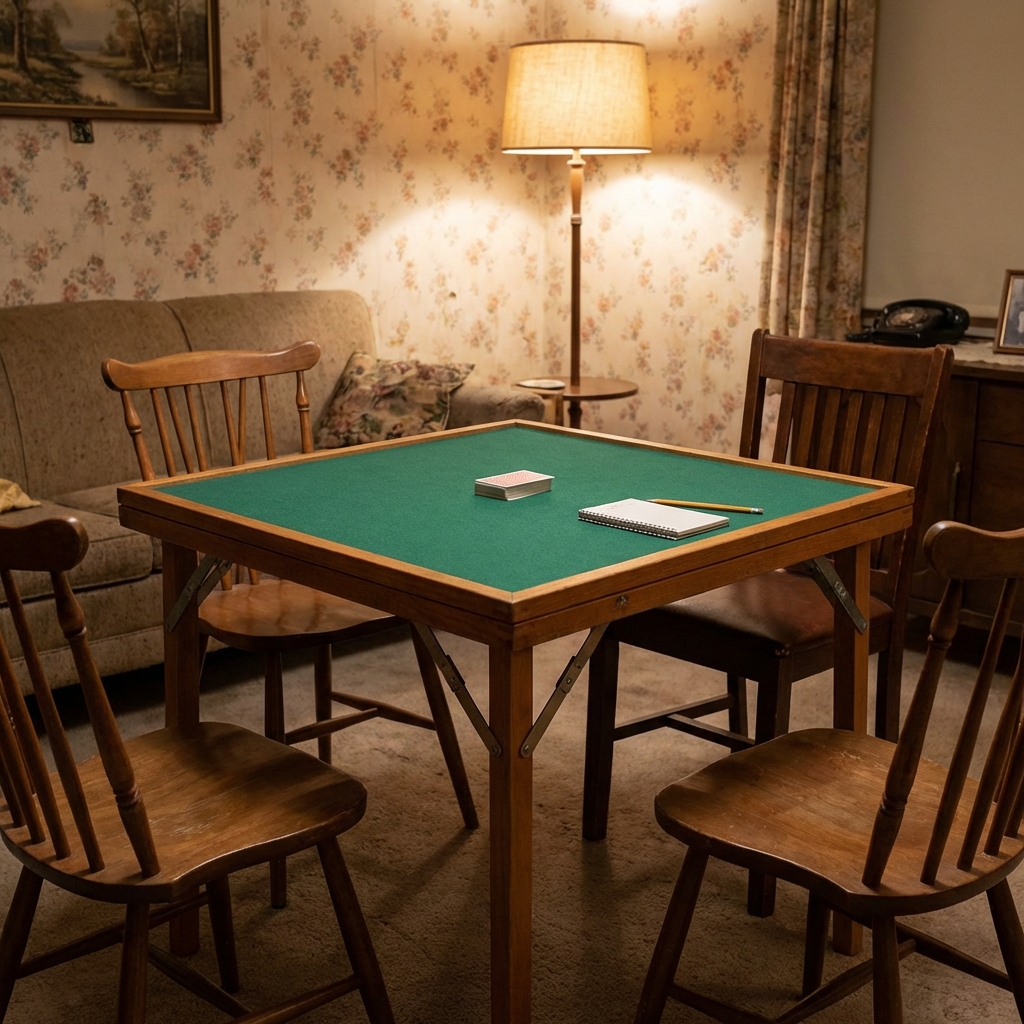
Before television, Americans played cards. And they had a table built specifically for it.
The card table was a folding or flip-top table — usually square — with a playing surface covered in green felt or baize. When folded, it stood as a narrow side table against the wall. When opened, four legs supported a full-size playing surface for bridge, poker, canasta, or whatever the game of the week was.
The hinges were smooth. The felt was glued tight. And many had small, round depressions at each corner to hold a drink or a stack of chips.
Bridge nights, poker games, and canasta clubs were social institutions for decades. The card table was the furniture that made them possible. When those traditions faded, the table folded up one last time.
18. The Breakfront
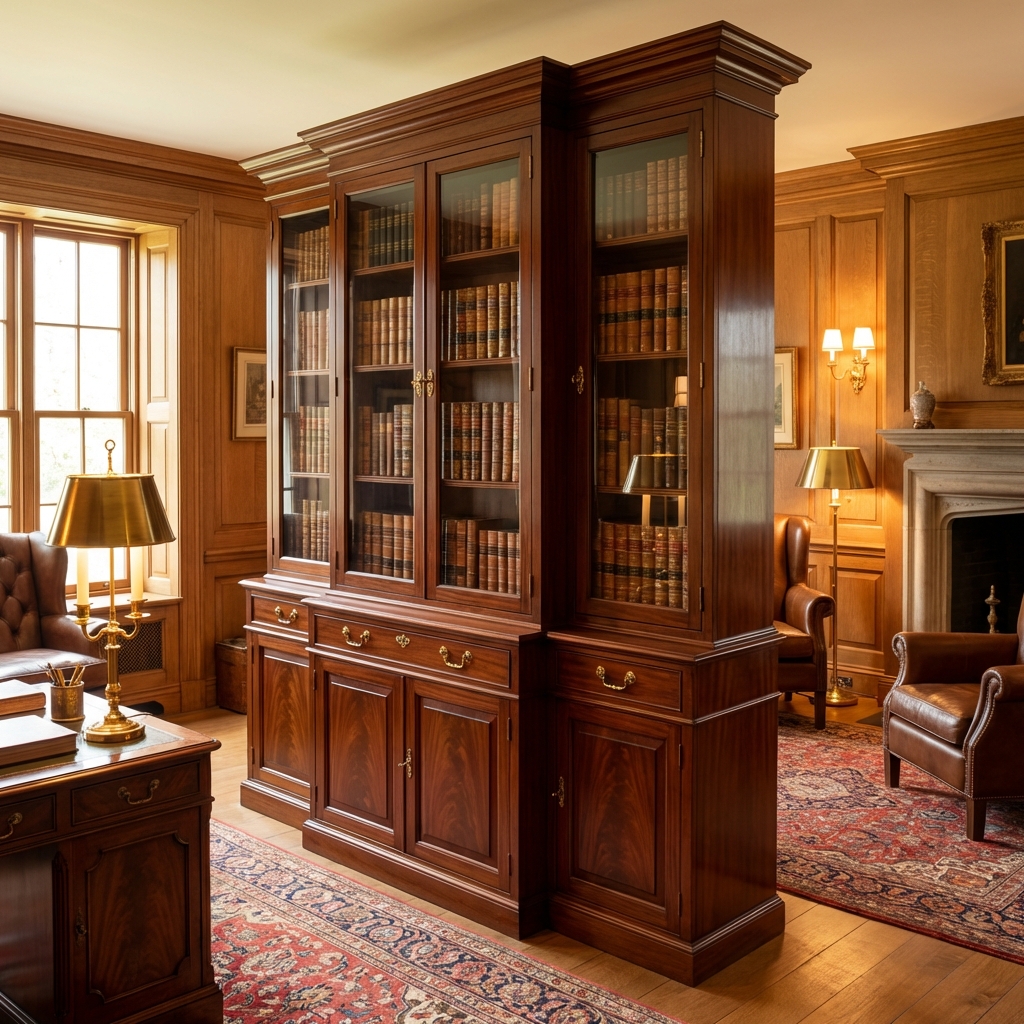
If the china cabinet was the showpiece of the dining room, the breakfront was the showpiece of the study.
It was a massive piece of furniture — often seven or eight feet wide and just as tall — with glass-doored upper cabinets for displaying books, a flat writing surface or set of drawers in the middle, and solid-doored lower cabinets for storage.
The name comes from the design — the center section “breaks” forward slightly from the two flanking sections, creating a subtle three-dimensional profile that keeps the piece from looking like a flat wall of wood.
Breakfronts were status furniture. They said you had enough books to need a dedicated piece of furniture to hold them, and enough taste to display them behind glass. When home libraries disappeared from floor plans, the breakfront went with them.
19. The Corner Cabinet
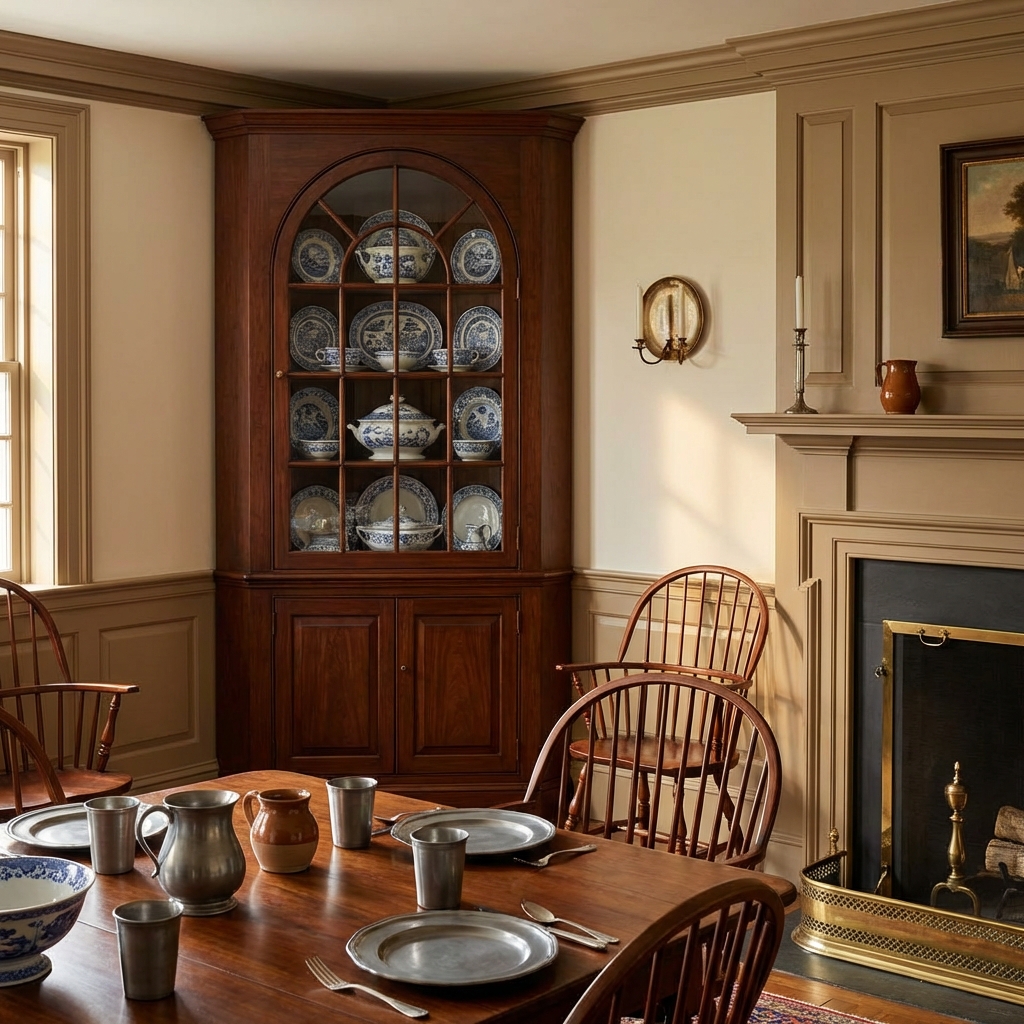
Every dining room used to have dead space in at least one corner. The corner cabinet was built to fill it.
It was a tall, triangular cabinet designed to fit flush against two walls. The upper section usually had a single curved glass door — sometimes with a beautiful arched top — that displayed plates, glassware, or decorative objects. The lower section had solid doors for storage.
Corner cabinets were sometimes built into the wall as part of the house itself. Others were freestanding furniture pieces that simply looked built-in because the fit was so precise.
Open-concept floor plans killed the corner cabinet. When dining rooms lost their walls, they lost their corners — and the elegant, space-efficient cabinet that used to fill them.
20. The Spinet Piano
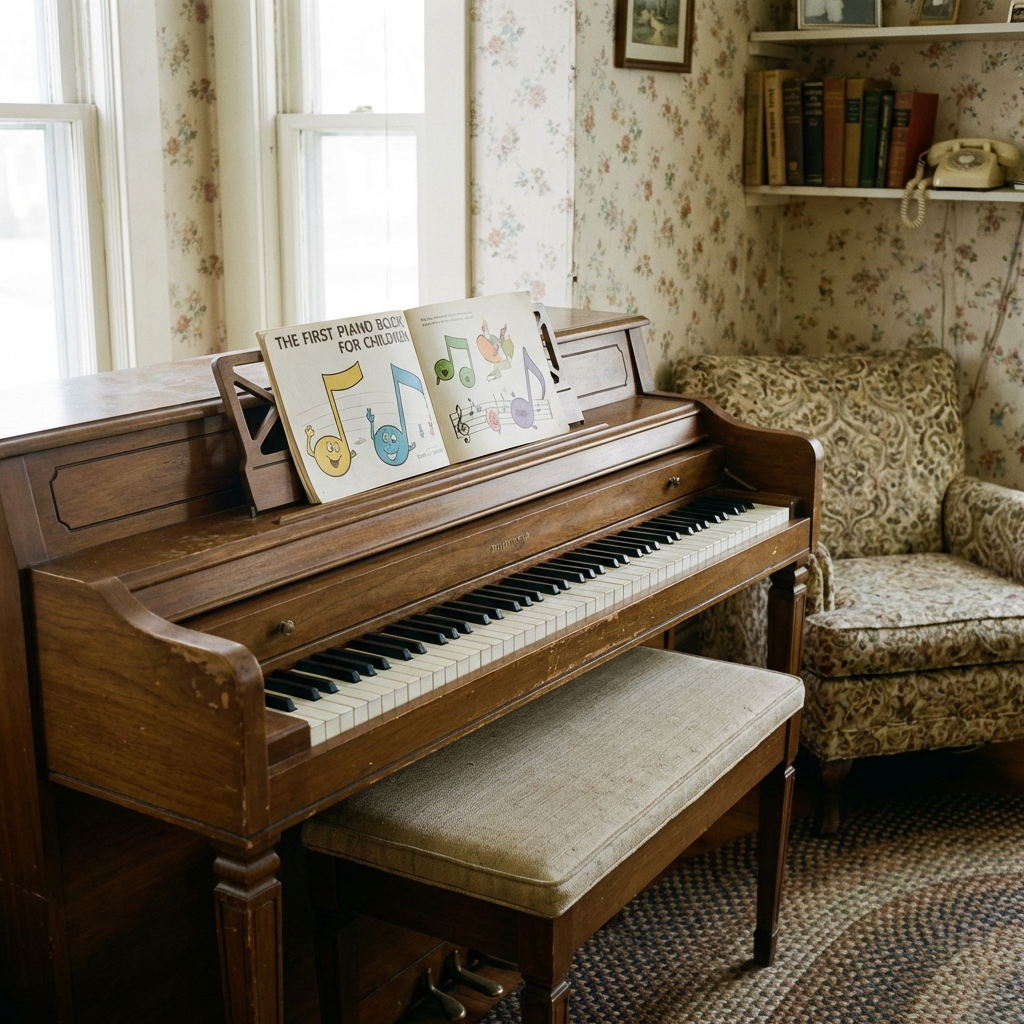
Not every family could afford — or fit — a full upright piano. But almost every family wanted one.
The spinet was the answer. It was a small, compact upright piano — usually about 36 to 40 inches tall — designed to fit against a wall in a modest-sized parlor or living room. The action was simplified and the strings were shorter, which made the tone thinner than a full upright, but it was affordable and it fit in the house.
Spinets were mass-produced from the 1930s through the 1970s, and for millions of American children, this was the instrument on which they learned to play — or, more accurately, were forced to practice.
Digital keyboards and changing priorities killed the spinet. But the memory of sitting on that bench, counting beats, and sneaking glances at the clock is universal.
21. The Needlepoint Footstool
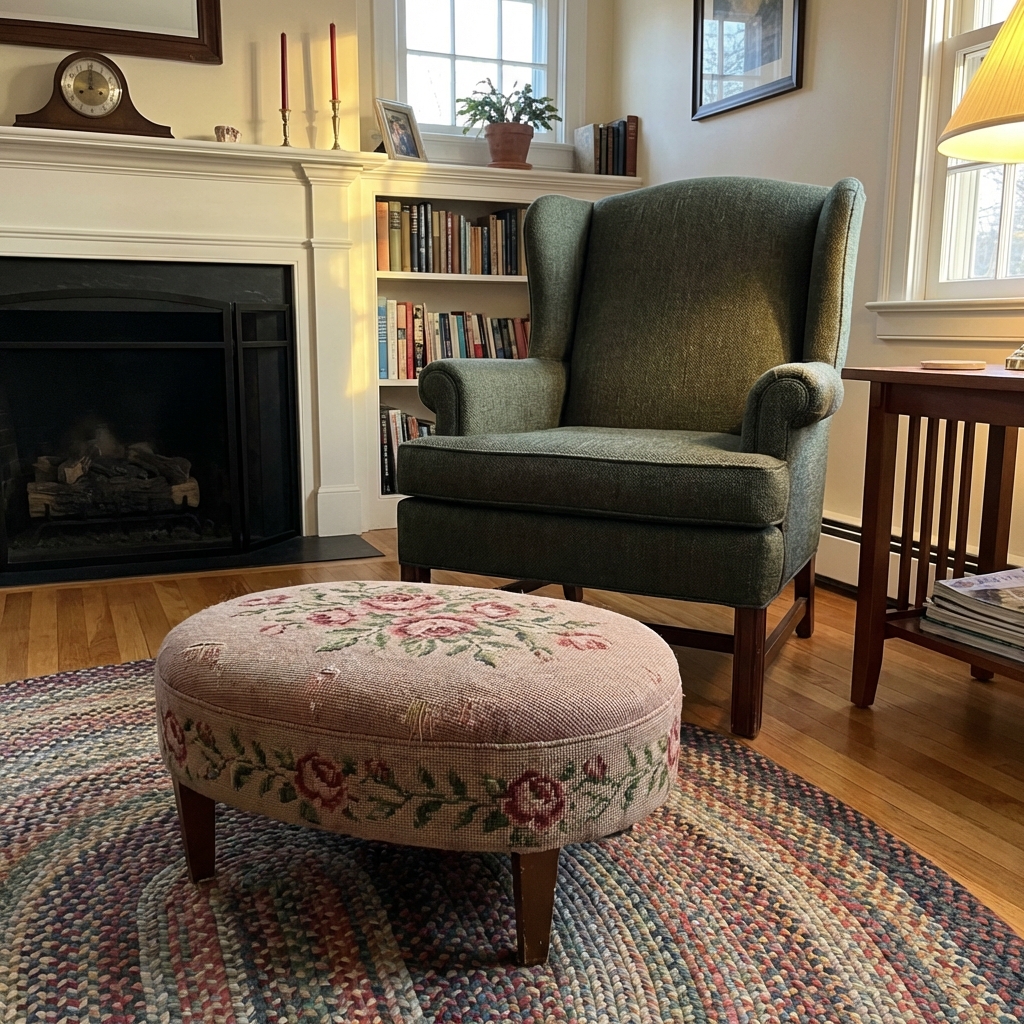
It was small. It was handmade. And it meant more than any piece of furniture ten times its size.
The needlepoint footstool was a low, padded ottoman — usually about 12 inches square — covered in a needlepoint or cross-stitch design that someone in the family stitched by hand over the course of weeks or months. Roses were the most popular design. Birds, houses, and geometric patterns were common too.
The wooden frame was simple — sometimes carved, sometimes plain — because the fabric was the point. It was a handmade gift that combined patience, skill, and love in a way that nothing from a factory ever could.
These footstools turn up at estate sales constantly. Most people walk right past them. They should not.
22. The Hutch
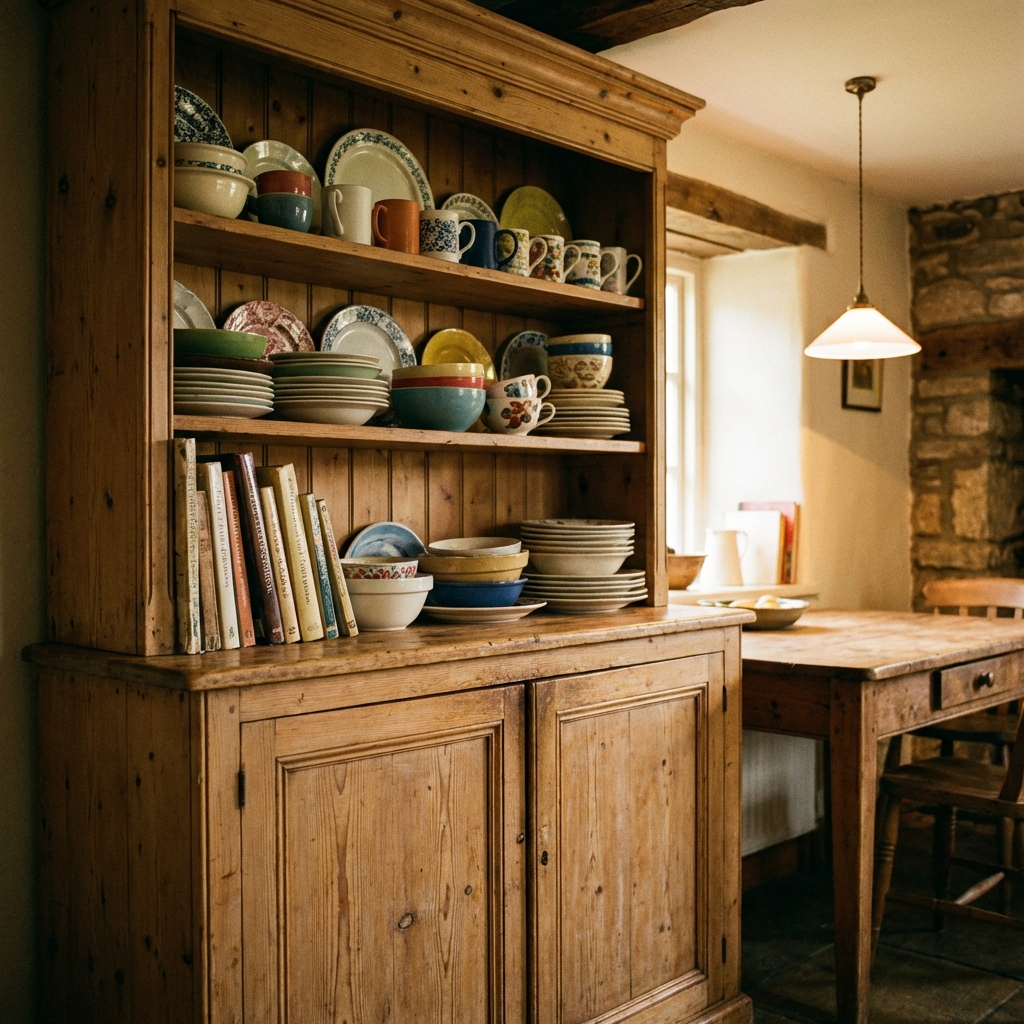
The hutch was the kitchen equivalent of the china cabinet — except it was not for show. It was for everyday life.
It was a two-piece cabinet, usually built from pine or oak. The bottom half had solid doors and drawers for storing tablecloths, napkins, serving utensils, and kitchen odds and ends. The top half had open shelves — sometimes with plate grooves cut into them — where the everyday dishes, cups, and bowls lived in plain sight.
The hutch was practical, accessible, and warm. You grabbed what you needed for dinner without opening a single door. Everything was right there.
Modern kitchens replaced the hutch with upper cabinets. The dishes disappeared behind flat, uniform doors. The kitchen got cleaner and more efficient — but it lost something human.
23. The Dumbwaiter Table
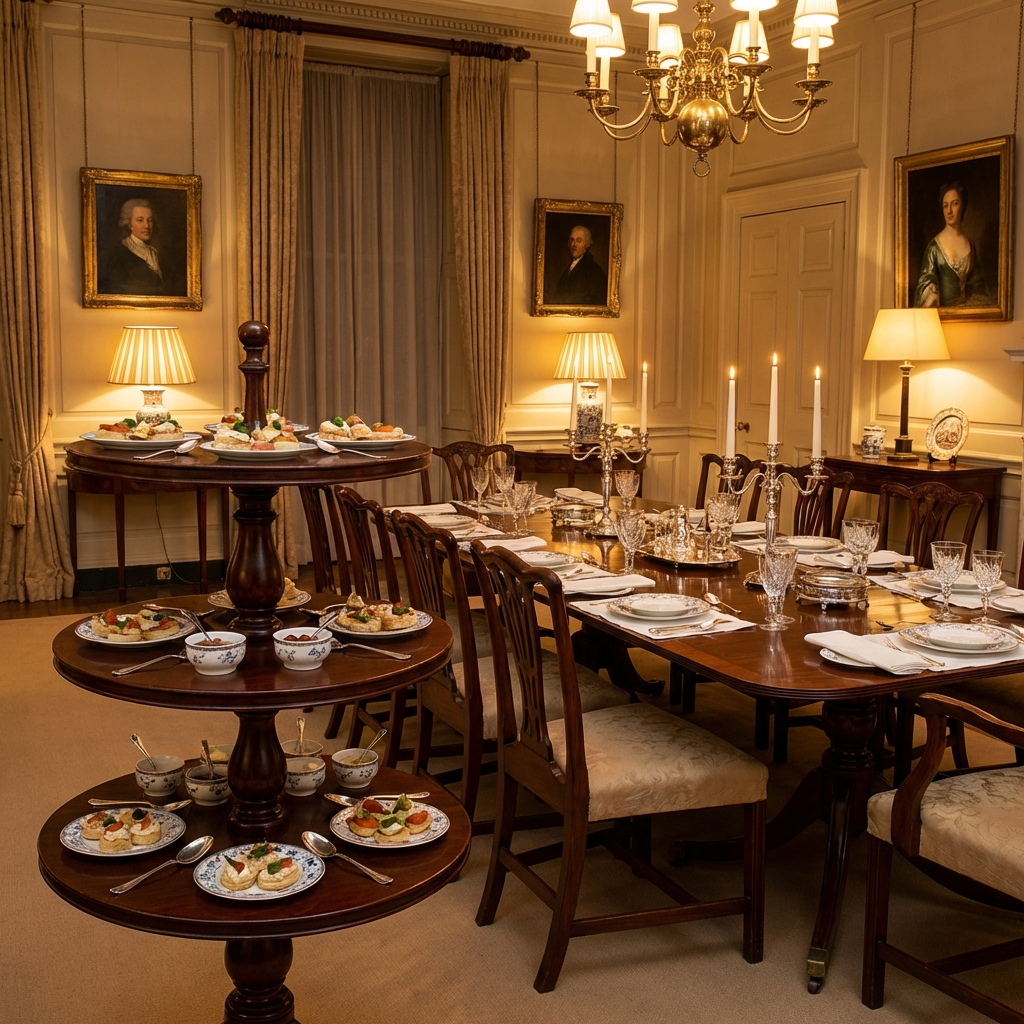
This has nothing to do with an elevator.
The dumbwaiter table was a small, three-tiered rotating stand — usually about three feet tall — with round or oval shelves stacked vertically on a central pedestal. Each tier held food, drinks, or condiments, and the whole thing could be placed next to the dining table so guests could help themselves without asking a servant to pass anything.
It was, quite literally, a silent waiter — hence the name.
Some were simple turned-wood pieces. Others were elegant, with carved pedestals, brass fittings, and shelves edged with small galleries to keep plates from sliding off. They were common in Georgian and Federal-era American homes.
The concept is brilliant, and it is surprising nobody has revived it for modern dinner parties.
24. The Magazine Rack
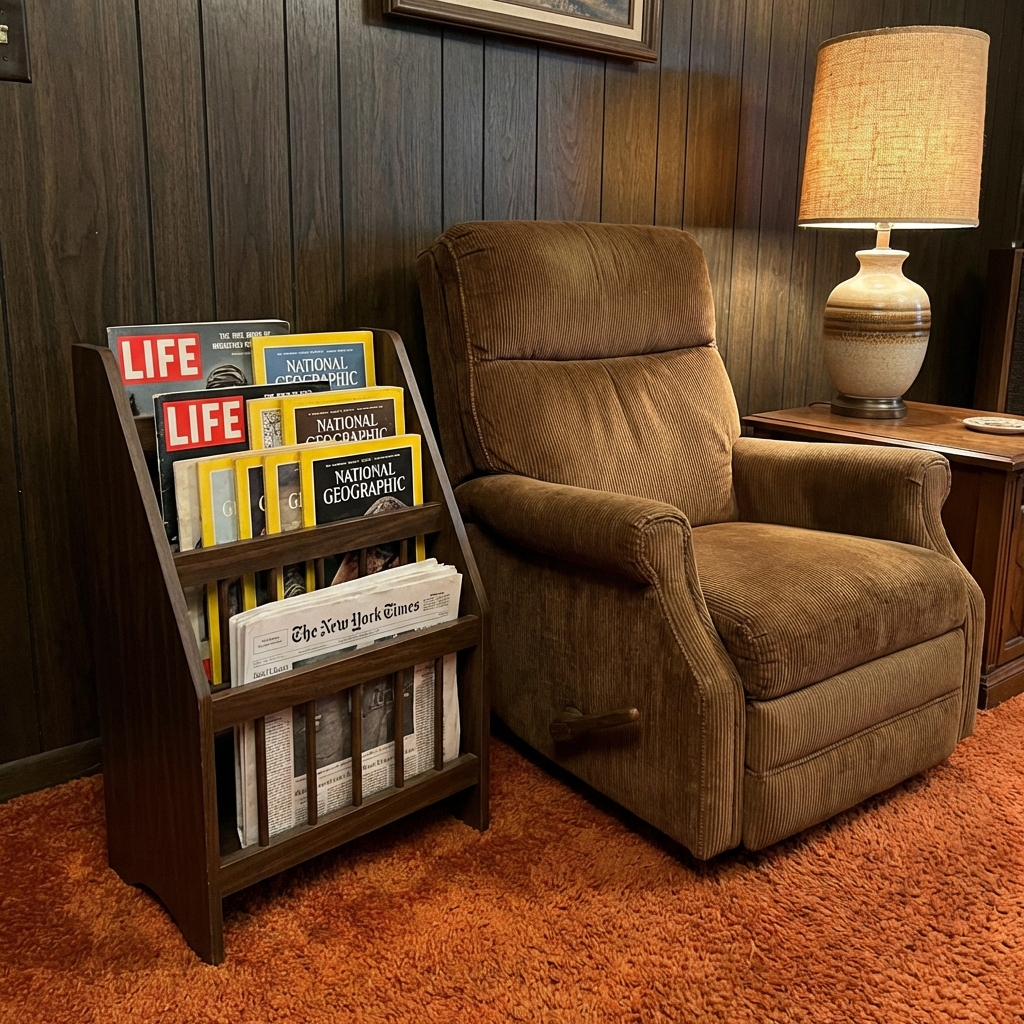
Before smartphones, the magazine rack was the entertainment center of the living room.
It was a floor-standing or wall-mounted wooden rack — usually about 18 inches tall with multiple vertical slots or a single open trough — designed to hold newspapers, magazines, and catalogs. It sat beside the favorite chair, next to the sofa, or in the bathroom.
Reader’s Digest. National Geographic. TV Guide. The Sunday paper. The Sears catalog. Everything lived in the magazine rack, slightly crumpled and perpetually overstuffed.
The magazine rack was never considered “real” furniture. But it was in every single American home for the better part of a century. And the moment print media started dying, so did the need for something to hold it.
25. The Cobbler’s Bench Coffee Table
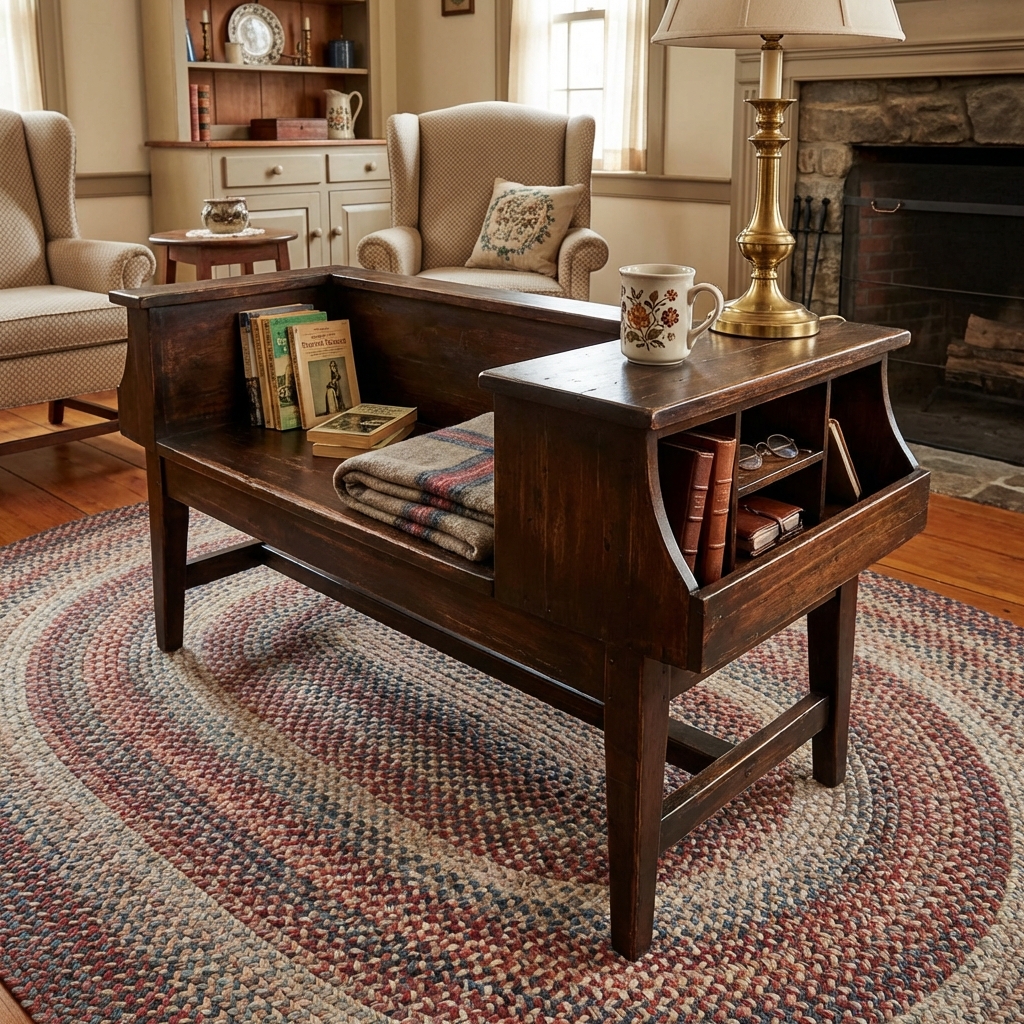
This is one of the strangest pieces of furniture that ever became popular — and for about 20 years, it was everywhere.
The cobbler’s bench coffee table was a reproduction — or sometimes a genuine antique — of the bench that a shoemaker sat on to repair shoes. It was low and long, with a sunken seat in the middle, a raised work area at one end with small compartments for tools and supplies, and sometimes a leather or wood surface on the other end.
In the 1950s, 60s, and 70s, furniture manufacturers started selling reproductions as coffee tables. They were rustic, they were unusual, and they fit the colonial and Early American decorating style that was hugely popular at the time.
They fell out of fashion hard in the 1980s when sleek, modern furniture took over. But if you grew up in a house with one, you remember it — and you probably remember being told not to put your feet on it.
Conclusion
Every piece on this list had a job. A real, specific, everyday job.
The jelly cupboard held the food your family preserved with their own hands. The shaving stand held the mirror your grandfather looked into every morning. The needlepoint footstool held the work of someone who spent months stitching something beautiful for no reason other than love.
We did not just lose furniture. We lost the rituals that went with it. The card games. The letter writing. The daily shave at a dedicated stand. The slow, deliberate way people used to move through their homes.
The furniture your grandparents had was not just built to last. It was built for a life that moved at a different speed.
And that might be the thing we miss most of all.