

Walk into any furniture store today and everything looks the same.
Flat-pack particle board. Allen wrench assembly. Furniture designed to last exactly long enough for you to get tired of it.
But walk into your grandparents’ house — or any American home built before 1970 — and the furniture told a different story. Every piece had weight. Every piece had a purpose. And every piece was built to be handed down, not thrown away.
These were not decorations. They were tools for living.
Somewhere along the way, we stopped making them. We traded craftsmanship for convenience, solid wood for engineered board, and heirloom quality for next-day shipping.
Here are 25 pieces of furniture that used to be in every American home — and why we desperately miss them.
1. The Console Stereo Cabinet
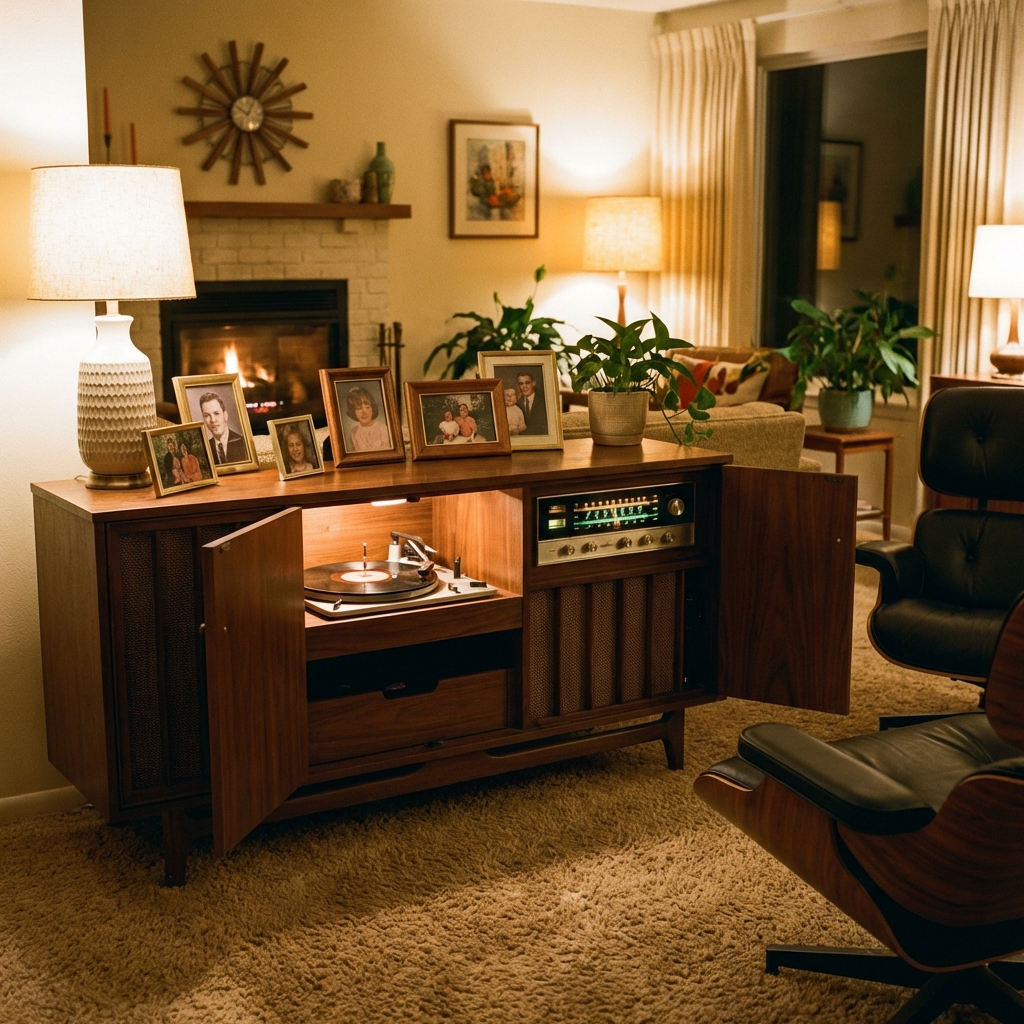
This was the centerpiece of the living room before the flat screen took over.
A massive piece of furniture — usually four to six feet long — made of solid walnut, mahogany, or oak. Inside, it housed a turntable, an AM/FM radio, and sometimes an 8-track or cassette player. The speakers were built into the cabinet behind fabric-covered panels.
It was not just an appliance. It was furniture. People polished it. They placed family photos on top of it. It anchored the entire room.
Today, a Bluetooth speaker the size of a coffee mug replaced the whole thing. We gained convenience. We lost a beautiful piece of woodworking that was built to last 50 years.
2. The Secretary Desk
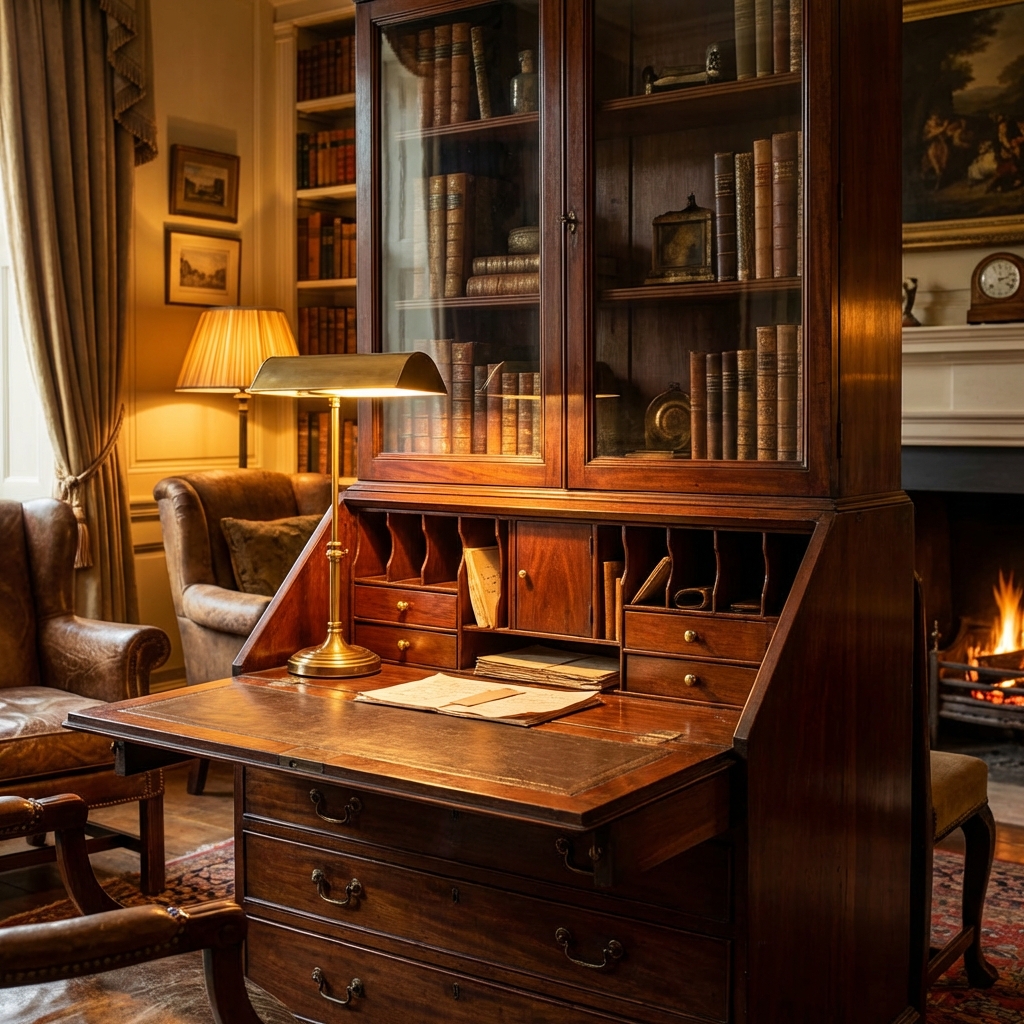
If you have ever been in an antique shop, you have seen one. A tall, elegant piece with a bookcase on top, a fold-down writing surface in the middle, and drawers on the bottom.
The secretary desk was the home office before home offices existed. You wrote letters on it. You paid bills at it. You kept important papers in its small, organized cubbyholes and tiny drawers.
Every inch was designed with intention. The fold-down desk closed to hide the clutter. The bookcase displayed your most valued books behind glass doors. And the whole thing stood against a wall and took up less space than a modern desk and bookshelf combined.
We replaced it with a laptop on the kitchen counter.
3. The Cedar Hope Chest
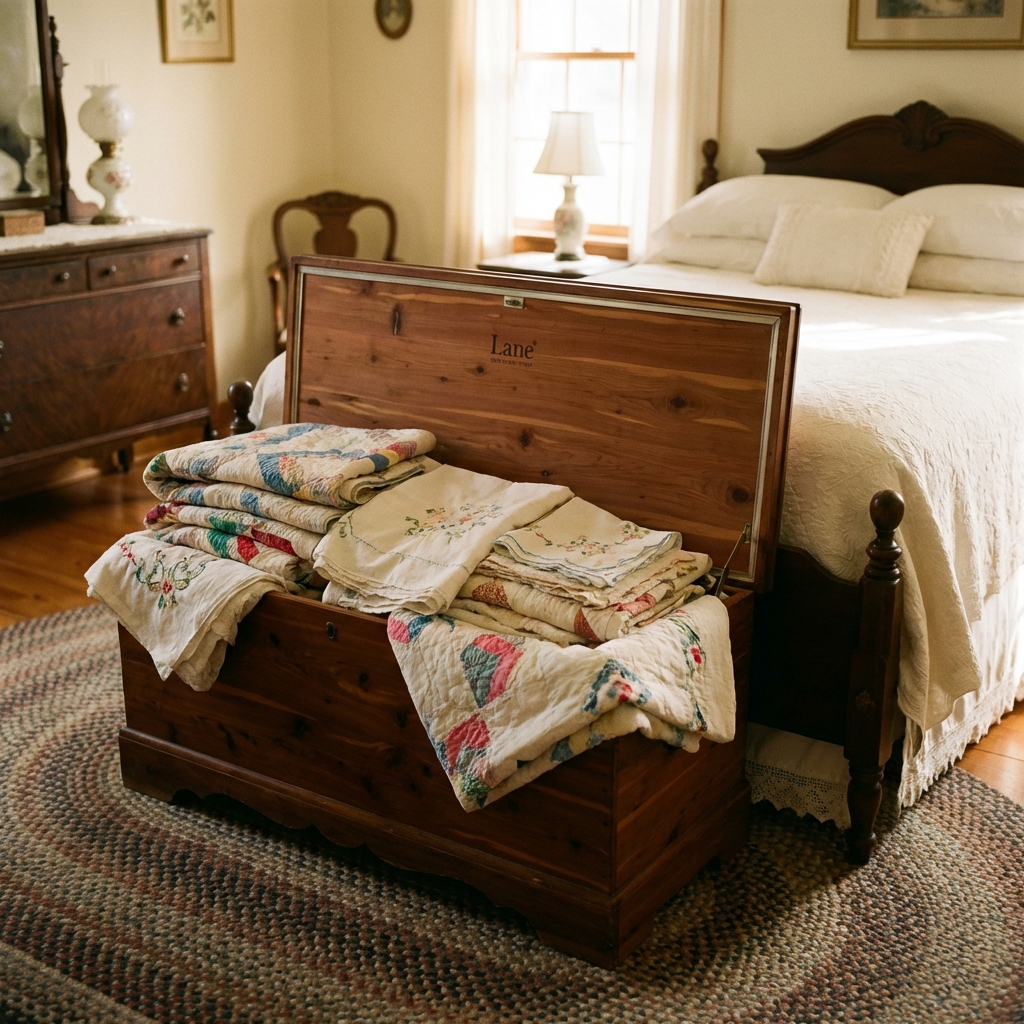
Every young woman in America used to receive a hope chest — usually at age 16 or 18 — and she would spend years filling it with linens, quilts, and household items in preparation for marriage.
These chests were almost always made of solid cedar, which naturally repels moths and insects. The aroma of opening one was unmistakable — that sweet, sharp cedar scent that immediately takes you back to your grandmother’s bedroom.
Lane was the most famous manufacturer, and a Lane cedar chest was a rite of passage for an entire generation of American women.
They are still made in small numbers today, but the tradition of gifting one has almost completely disappeared.
4. The Grandfather Clock
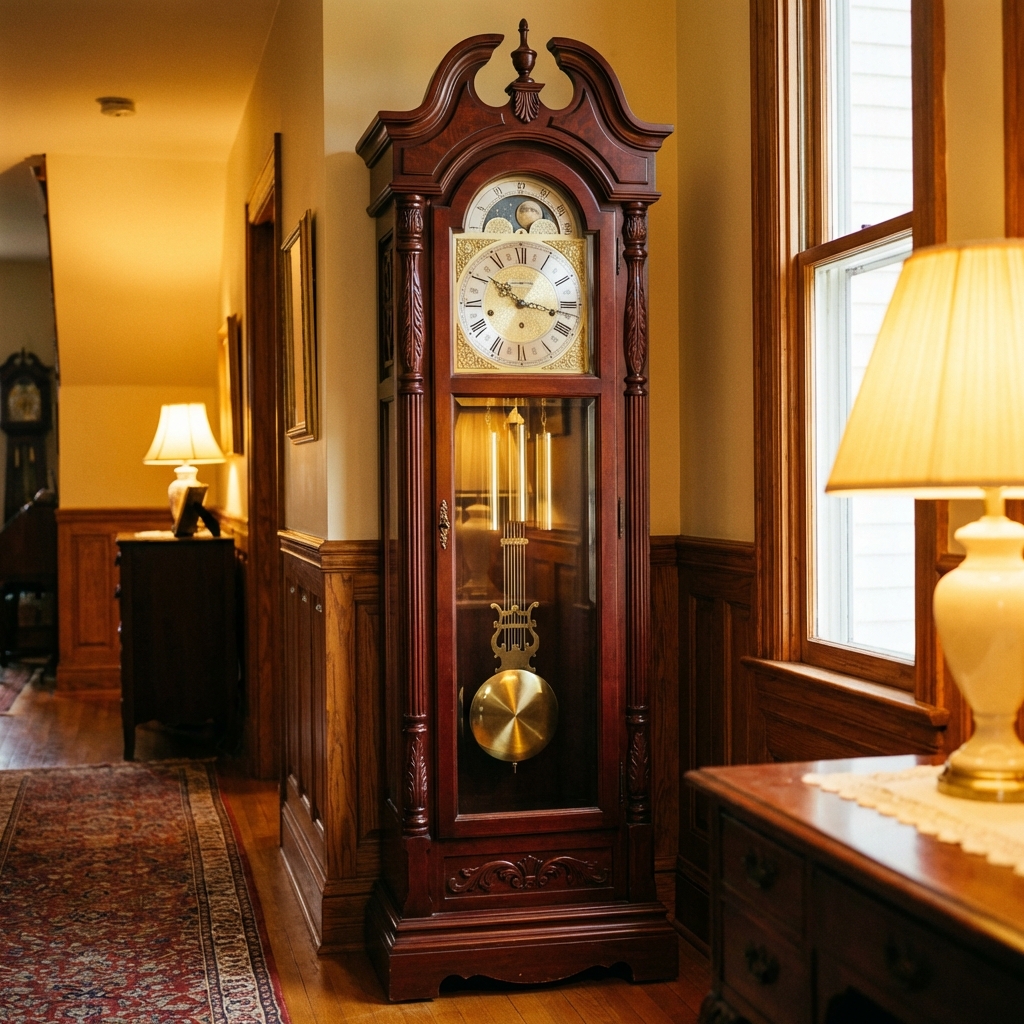
There was a time when the steady tick-tock of a grandfather clock was the heartbeat of the house.
These tall, stately pendulum clocks stood six to eight feet tall in the hallway or living room. They were made of solid hardwood — cherry, walnut, oak, or mahogany — with hand-finished cases and brass movements that were engineered to keep accurate time for generations.
Every 30 minutes, the chime rang through the house. At midnight, you counted twelve deep bongs from your bed. It was the sound of home.
Now we glance at our phones. The grandfather clock was not just a timepiece. It was furniture, art, and engineering rolled into one.
5. The China Cabinet
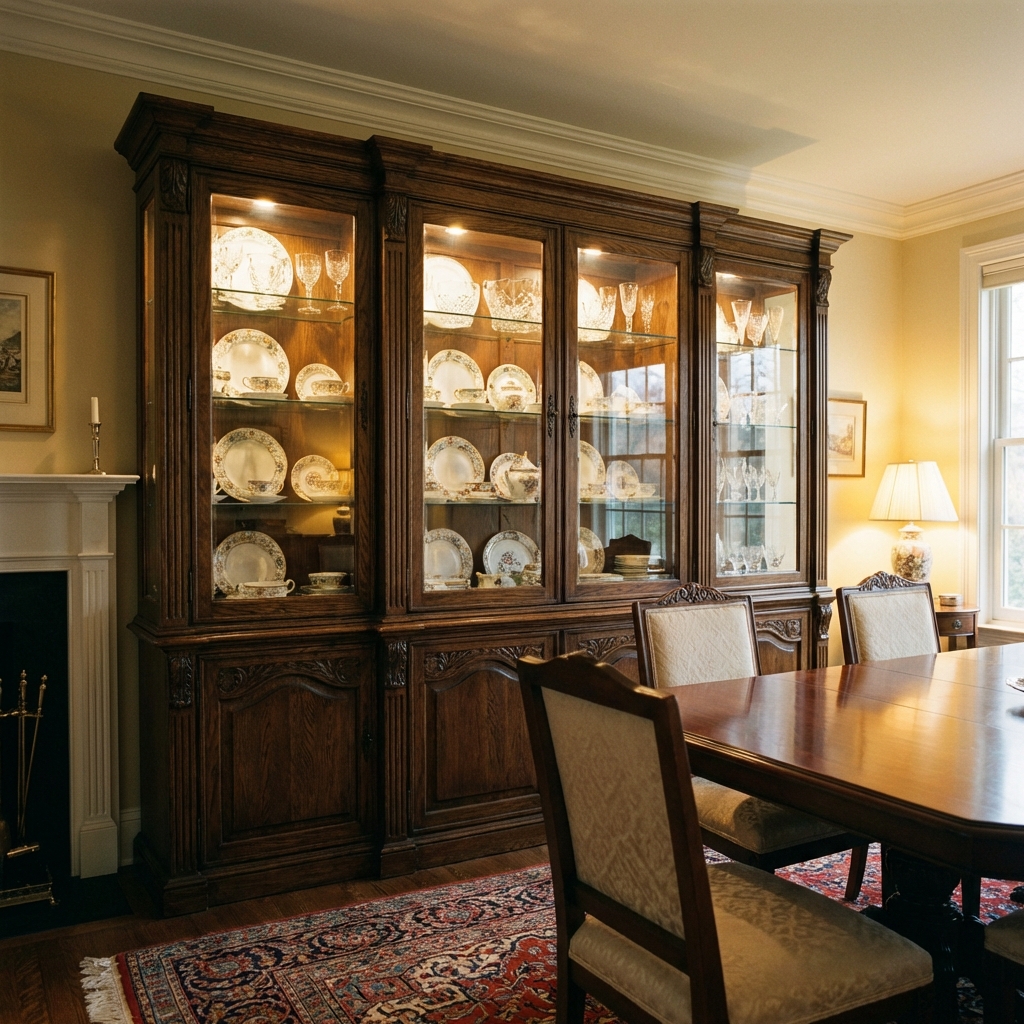
Every dining room had one. A tall, glass-fronted cabinet where the “good china” lived — the dishes that only came out for Thanksgiving, Christmas, and maybe Easter.
China cabinets were substantial pieces of furniture, often six feet tall with curved glass doors, interior lighting, and adjustable glass shelves. They were built from solid hardwoods and designed to be the showpiece of the dining room.
Today, young homeowners are not inheriting fine china. Open-concept floor plans have eliminated formal dining rooms entirely. And the cabinets themselves — even beautiful, well-made ones — are being sold at estate sales for a fraction of what they are worth.
6. The Telephone Table (Gossip Bench)
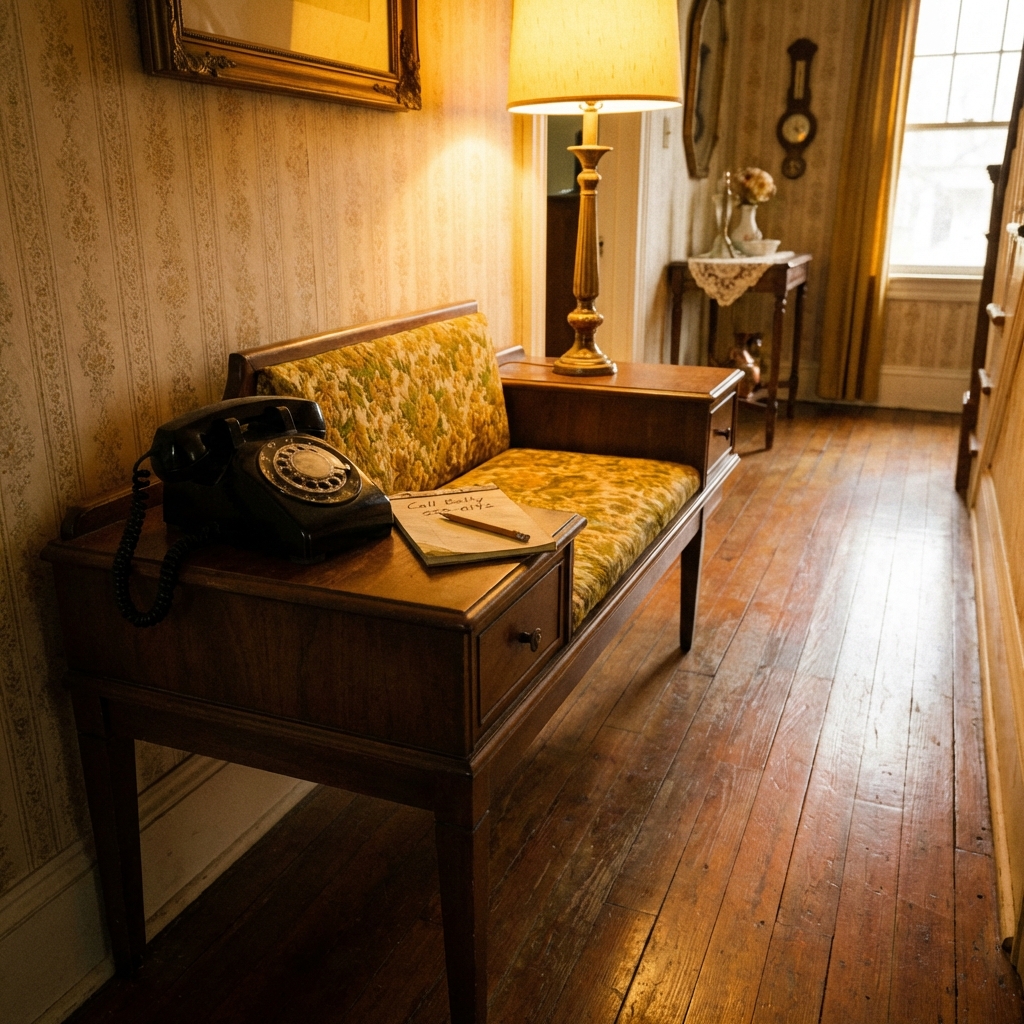
Before cell phones, before cordless phones, before even long phone cords, the telephone lived in one spot. And that spot had its own piece of furniture.
The telephone table — affectionately called the “gossip bench” — was a small combination of a chair and a side table, designed to hold the phone, a notepad, and a pen. You sat down, dialed the rotary phone, and had your conversation.
Some were simple. Others were beautifully crafted with turned legs, upholstered seats, and small drawers for the phone book.
The entire concept of sitting in one specific place to make a phone call feels like ancient history now.
7. The Sewing Cabinet
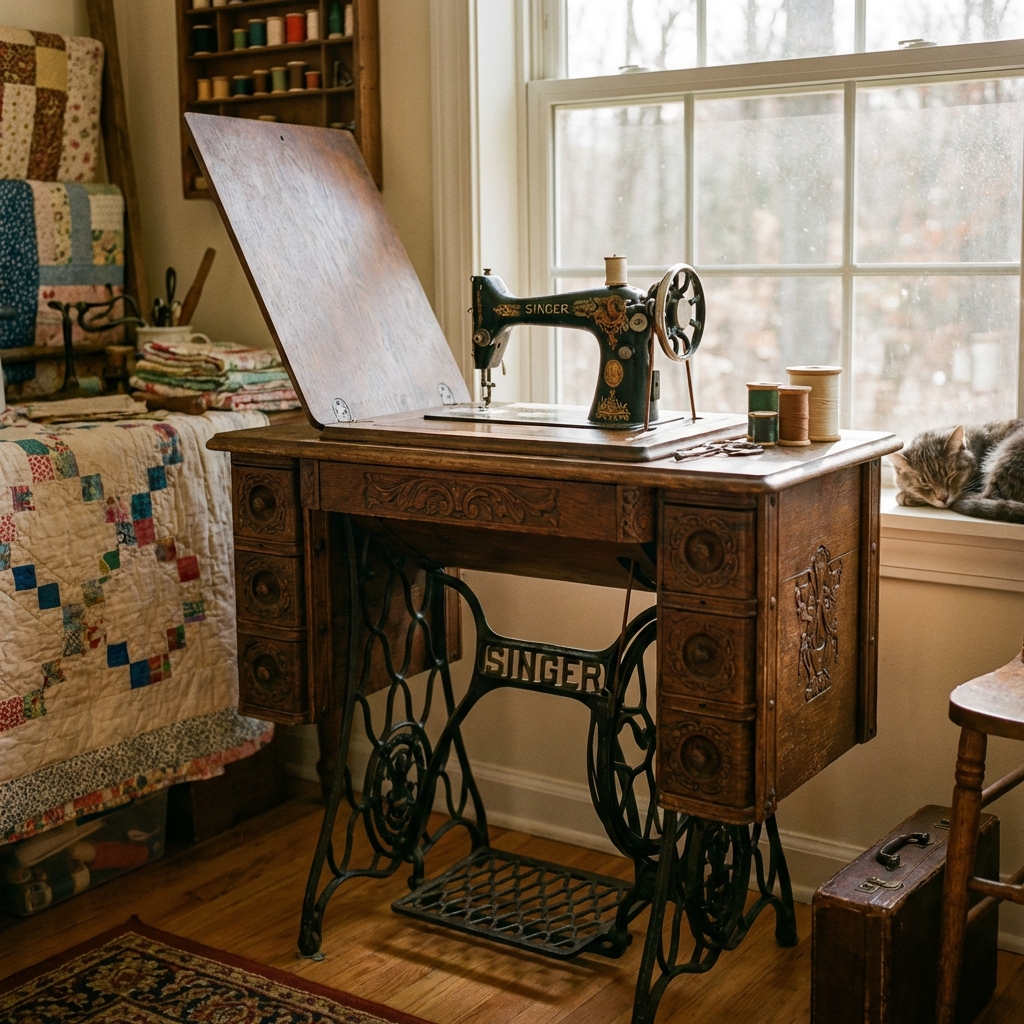
Open the top of this modest little cabinet, and a cast-iron Singer sewing machine rose up from inside on a mechanical hinge.
Close it, and the machine disappeared, leaving behind what looked like a simple, elegant side table.
These cabinets were ingenious. They were designed to let the sewing machine be used at a comfortable working height and then hidden away completely when the work was done. The woodwork on the cabinets themselves was often beautiful — solid hardwood with decorative legs and smooth, polished tops.
Millions of American women made their family’s clothing on these machines. The cabinet was a workshop disguised as furniture.
8. The Vanity Table
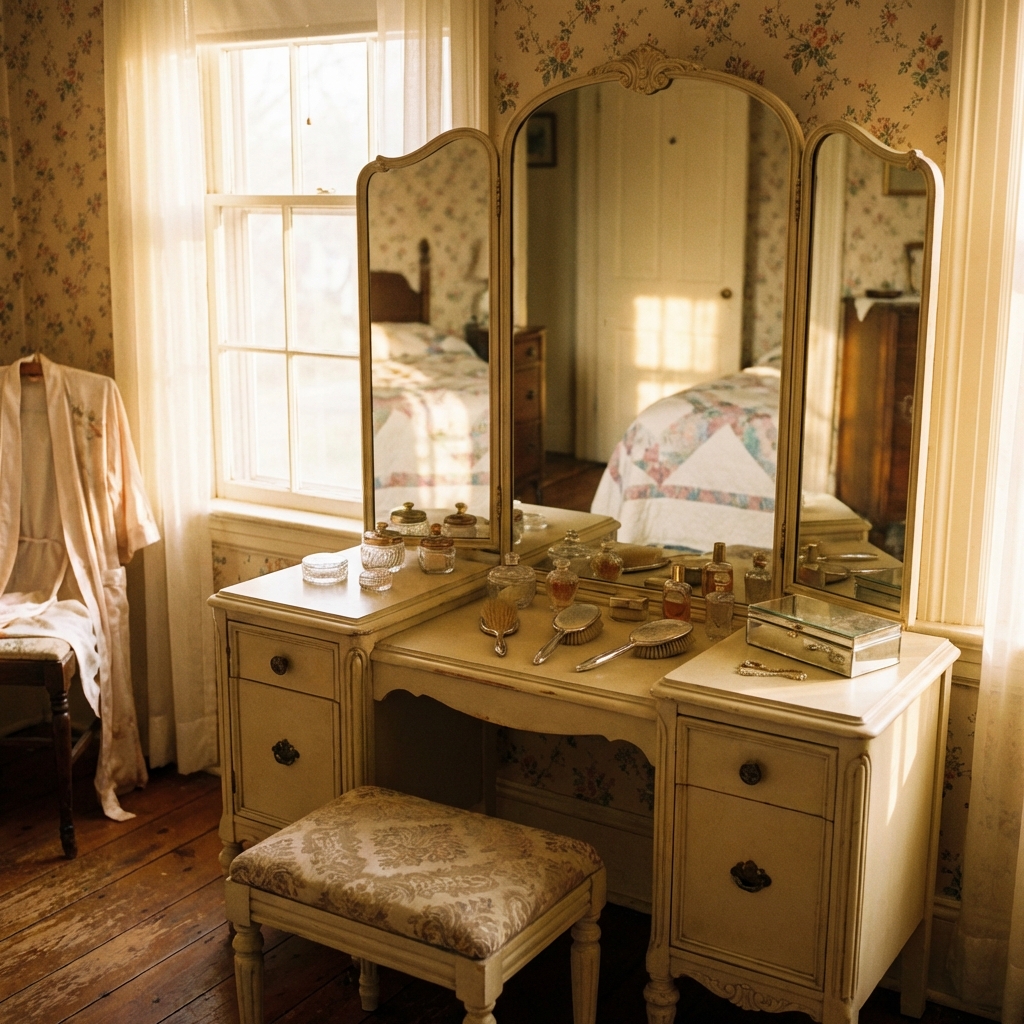
Every woman’s bedroom used to have one. A low table with a large mirror, a cushioned stool, and small drawers for cosmetics, jewelry, and grooming supplies.
The vanity was a personal space — a place to sit, prepare for the day, and have a quiet moment before the household woke up.
Some were simple and functional. Others were ornate, with tri-fold mirrors, carved details, and matching stools upholstered in velvet or brocade.
Modern bathrooms with large mirrors and built-in storage have mostly replaced them. But a vanity table had a warmth and intimacy that a bathroom countertop never will.
9. The Hall Tree
Before mudrooms and coat closets, there was the hall tree.
This single piece of furniture handled everything you needed when walking in or out of the house. It had hooks for coats and hats, a mirror for a last-minute check, a small bench or seat with storage underneath, and an umbrella stand at the base.
Some were massive, ornate Victorian showpieces with carved wood and beveled mirrors. Others were simpler Arts and Crafts or Mission-style designs in quarter-sawn oak.
Modern homes with their tiny entryways and builder-grade closets could really use one of these again.
10. The Rolltop Desk
The rolltop desk was the ultimate home workspace.
A large, heavy desk with a curved, slatted cover that rolled down to hide everything inside. When open, it revealed a world of small cubbyholes, drawers, and compartments — each one designed for a specific type of document, tool, or supply.
At the end of the day, you rolled the top down, turned the key, and everything was locked away and out of sight. No mess. No clutter. No reminder of work until you were ready.
These desks were almost always built from solid oak and could easily weigh over 200 pounds. A good one was built to last a century, and many have.
11. The Four-Poster Bed
Before bed frames became metal rails hidden under mattresses, beds were furniture.
A four-poster bed was a statement piece — four tall, turned or carved posts rising from each corner, often connected by a canopy frame at the top. They were built from solid cherry, mahogany, walnut, or maple, and they were built to last forever.
The posts were often the most beautiful woodworking in the entire house. Spiral turnings, fluted columns, acorn finials — each one handcrafted by someone who considered the bed the most important piece of furniture in the home.
Today, platform beds and upholstered headboards dominate. The craftsmanship of a solid wood four-poster has all but vanished from mainstream furniture.
12. The Pie Safe
Before refrigeration, how did you keep a fresh pie from being devoured by flies and mice while it cooled?
You put it in a pie safe.
These were simple, practical cabinets — usually pine or poplar — with shelves inside and doors made of punched tin panels. The tiny holes in the tin allowed air to circulate and cool the food while keeping pests out.
The punched tin patterns themselves became folk art. Stars, eagles, geometric designs, and floral patterns were punched into the tin by hand, making each pie safe unique.
They are now some of the most collectible pieces of American country furniture.
13. The Platform Rocker
Before the La-Z-Boy recliner, the platform rocker was the most comfortable seat in the house.
It looked like a traditional upholstered rocking chair, but instead of curved rockers on the floor, it sat on a spring-loaded platform base that allowed it to rock smoothly without moving across the floor or catching on rugs.
These were the chairs grandparents sat in every evening. They were solidly built, deeply comfortable, and upholstered in fabrics that could survive decades of daily use.
You rarely see them anymore. The recliner replaced them entirely, trading gentle rocking for mechanical footrests and cup holders.
14. The Sideboard
The sideboard — sometimes called a buffet — was the workhorse of the dining room.
It was a long, low cabinet that sat against the wall and served as both storage and serving surface. The top was used to lay out food during meals. The cabinets and drawers below stored table linens, serving utensils, candlesticks, and everything else the dining room needed.
The best sideboards were gorgeous pieces of furniture — solid hardwood with carved details, brass hardware, and a mirror or hutch top that made the dining room feel grand.
As formal dining rooms have disappeared from American home design, so has the sideboard.
15. The Drop-Leaf Table
In an era when homes were smaller and every square foot mattered, the drop-leaf table was a brilliant solution.
It was a table with hinged sides that could be folded down when not in use, reducing it to a narrow console that fit against a wall. When company came, you raised the leaves, pulled the table to the center of the room, and suddenly had a full dining table.
The engineering was elegant. Gate-leg or swing-leg mechanisms supported the leaves, and the whole thing folded and unfolded in seconds.
This is furniture designed by people who understood how real life works — sometimes you need a big table, and sometimes you need the floor space more.
16. The Blanket Chest
Sitting at the foot of the bed, the blanket chest served double duty — storage and seating.
It was a simple, solid wood chest — often cedar-lined — where extra quilts, blankets, and pillows were stored. In the winter, you opened it to pull out another layer. In the summer, it held the heavy bedding you did not need.
Many were handmade. They were one of the most common first woodworking projects for a new husband or father. A blanket chest was personal — often one of the few pieces of furniture in the home that someone in the family actually built with their own hands.
17. The Chifforobe
Before every bedroom had a walk-in closet, you needed a chifforobe.
This was a hybrid piece — part wardrobe, part chest of drawers. One side had a tall compartment with a hanging rod for clothes. The other side had drawers for folded items. It was essentially an entire closet built into a single freestanding piece of furniture.
If you have read “To Kill a Mockingbird,” you know the chifforobe — it is central to one of the most famous scenes in American literature.
Older homes with tiny closets — or no closets at all — depended entirely on chifforobes and armoires for clothing storage. Modern closet design made them unnecessary, but the craftsmanship of a solid wood chifforobe puts any builder-grade closet system to shame.
18. The Washstand
Before indoor plumbing brought running water to every bathroom, you washed your face and hands at the washstand.
It was a small table or cabinet that held a pitcher of water and a washbasin on top, with a towel bar on the side and a small shelf or cabinet below for soap and other grooming supplies.
Washstands ranged from simple pine country pieces to elaborate marble-topped Victorian designs with carved backsplashes and tiled surfaces.
Indoor plumbing killed the washstand entirely. But as a piece of furniture design, it was beautifully proportioned and incredibly practical for its time.
19. The Library Table
Not a desk. Not a dining table. A library table.
These were large, heavy, flat-topped tables — usually rectangular or oval — designed specifically for reading, writing, and study. They were built from solid hardwood, often with thick turned legs and one or two shallow drawers.
They were the centerpiece of a home’s study or library, and they were built to hold the weight of heavy books and the wear of daily use for generations.
The concept of a dedicated reading table has essentially vanished from American homes. We read on couches now, with phones, not books.
20. The Smoking Stand
In an era when nearly every American man smoked, the smoking stand was as common as a coffee table.
It was a small, pedestal-style table designed to hold everything a smoker needed — an ashtray on top, a humidor for cigars, a small drawer for matches or a lighter, and sometimes a pipe rack.
They were often beautifully made, with turned posts, brass fittings, and rich wood finishes. They sat next to the favorite chair and served as a small personal station.
As smoking declined in American culture, the smoking stand became completely obsolete. They are now curiosity pieces at antique shops, and most people under 50 have never seen one.
21. The Fainting Couch
The fainting couch — or chaise longue — was a staple of Victorian and Edwardian parlors.
It was a small, asymmetrical sofa with one raised end (like a built-in pillow) and one low or open end. Legend has it they were designed for corseted women who might feel faint, though in reality they were simply elegant lounging furniture.
They were often elaborately carved with rolled arms, tufted upholstery, and cabriole legs. They looked like something out of a movie — and in fact, they became iconic as the stereotypical “therapist’s couch.”
Modern furniture favors deep, oversized sectionals. The graceful proportions of a fainting couch feel like they belong to another century — because they do.
22. The Sheet Music Cabinet
Before recorded music, families made their own. And every household with a piano or pump organ needed somewhere to store the sheet music.
The sheet music cabinet was a small, narrow cabinet — usually about waist height — with multiple shallow shelves or slots designed specifically for organizing sheet music.
They were often simple but well-made, with attractive hardware and a polished finish that matched the piano nearby.
Recorded music, then radio, then streaming killed the need for sheet music in the home. These cabinets are now repurposed as accent furniture or magazine holders by people who have no idea what they were originally designed for.
23. The Umbrella Stand
Every front hallway used to have one. A tall, narrow vessel — ceramic, brass, cast iron, or carved wood — designed to hold wet umbrellas upright by the door.
It sounds like a small thing, but it was a piece of everyday domestic infrastructure. People walked more. They carried umbrellas daily. And having a dedicated, attractive place to put them was considered essential.
Some umbrella stands were works of art — hand-painted porcelain, Art Nouveau metalwork, or carved mahogany with brass drip trays.
Today, we toss a wet umbrella in the back of the car and forget about it.
24. The Valet Chair
Also called a clothes valet or suit butler, this was a gentleman’s bedroom staple.
It looked like a chair with an unusually high back, but it was actually a system. The high back had a hanger-shaped top for draping a suit jacket. A horizontal bar held trousers. A small tray or catchall on the seat held a wallet, watch, keys, and loose change. And sometimes a small shelf or rack held shoes.
It was a single piece of furniture designed to organize everything a man needed for the next morning — laid out and ready.
In an era when men wore suits to work every day, this was not a luxury. It was essential.
25. The TV Dinner Tray Set
Not technically “fine furniture,” but these folding tray tables were in virtually every American home from the 1950s through the 1980s.
They were lightweight wooden or metal folding tables — often sold in sets of four with a matching stand — designed to hold a dinner plate and drink while you ate in front of the television.
They marked a massive cultural shift. For the first time, the family was eating outside the dining room. The TV tray was the physical embodiment of that change.
The best ones were made of solid wood with decorative painted tops. The cheap ones were stamped metal with images of flowers or landscapes.
Either way, they symbolize a specific era of American home life that is never coming back.
Conclusion
Look at this list and you will notice something.
Almost none of these pieces were replaced by something better. They were replaced by something cheaper, something smaller, or something that simply was not needed anymore because the way we live changed.
We do not write letters anymore, so we do not need a secretary desk. We do not store fine china, so we do not need a china cabinet. We do not make phone calls from one spot, so we do not need a gossip bench.
But the craftsmanship that went into these pieces — the solid wood, the hand-cut joinery, the thoughtful design — that is what we truly lost.
The furniture in your grandparents’ house was not just functional. It was built by people who assumed you would keep it forever.
And most of the time, they were right.