


Walk into a new build today, and you are standing in a painted cardboard box.
The walls are thin. The windows are sealed shut. If the power goes out, the house becomes unlivable in hours.
Now, walk into an American home built in 1920.
You aren’t just looking at “vintage charm.” You are looking at a machine designed for survival.
Before air conditioning and cheap electricity, a house had to work for a living.
It had to keep food cold without a fridge. It had to keep the bedroom cool in a July heatwave without a fan. It had to manage waste, storage, and heating using nothing but physics and smart engineering.
Walk through an old home today, and you’ll see strange little doors in the walls, mysterious chutes in the basement, and vents that don’t make sense to modern eyes.
We think they are quirks. They were actually genius solutions to problems we have forgotten how to solve.
Here are 25 architectural secrets of the American home that prove our grandparents were smarter than modern builders.
1. The Medicine Cabinet Razor Slot
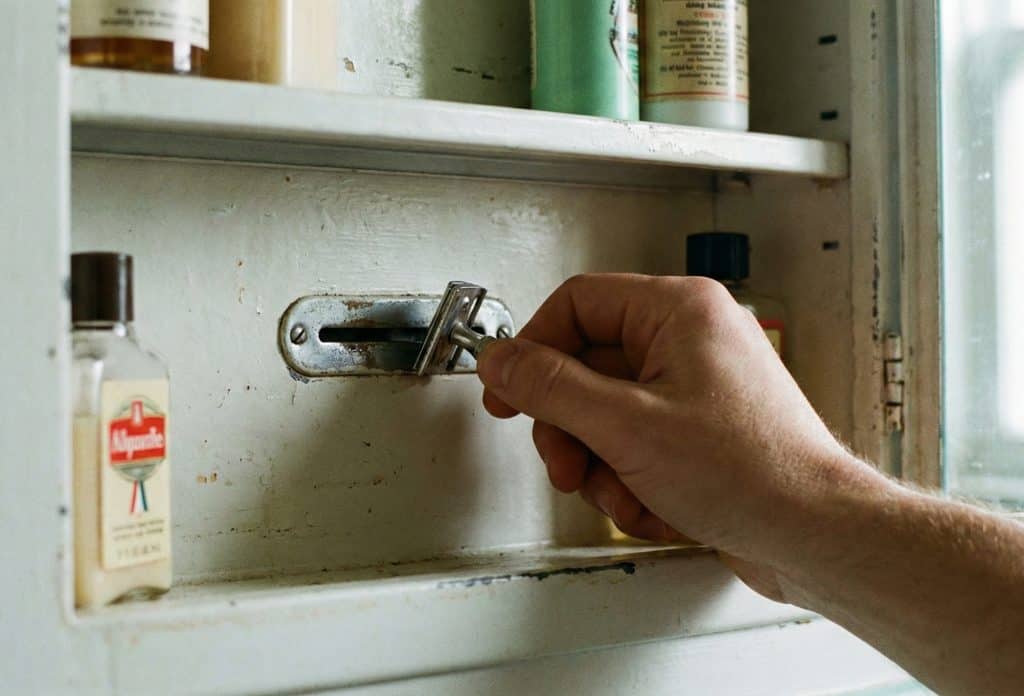
If you live in a home built before 1960, go to the bathroom and look inside the medicine cabinet.
In the back, you might see a tiny horizontal slit. It looks like a coin slot for a piggy bank.
It wasn’t for money. It was for trash.
Before disposable plastic razors, men used safety razors. When the double-edged steel blade got dull, you didn’t throw it in the trash can where it would slice the garbage man’s hand.
You pushed it through the slot. The blades fell into the hollow space between the wall studs.
If you demo a bathroom in an old house today, you will often find a pile of 500 rusty razor blades inside the wall—a sharp little time capsule left by the previous owner.
2. The “Milk Door”
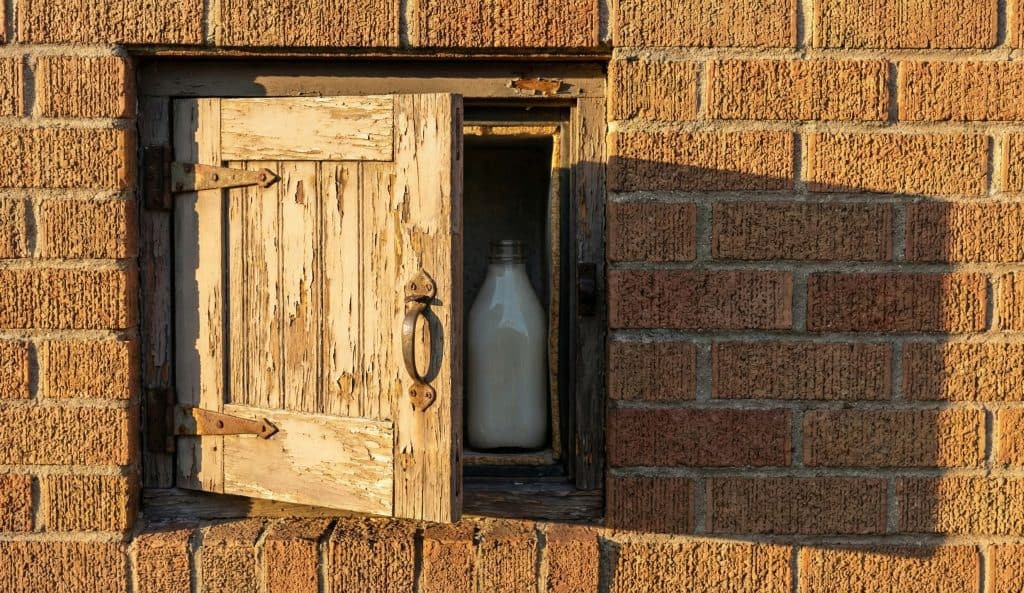
Walk around the side of a 1920s house, and you might find a strange wooden door set into the brick.
It’s about knee-high and too small for a human.
This was the Amazon Prime of its day.
The milkman didn’t just leave bottles on the porch to freeze in winter or spoil in summer. He opened this exterior door and placed the milk inside an insulated box within the wall.
You opened a matching door on the inside of the house to retrieve it.
It was secure, temperature-controlled, and brilliant. Today, we just let package thieves steal our deliveries from the mat.
3. The “California Cooler” (Vented Pantry)
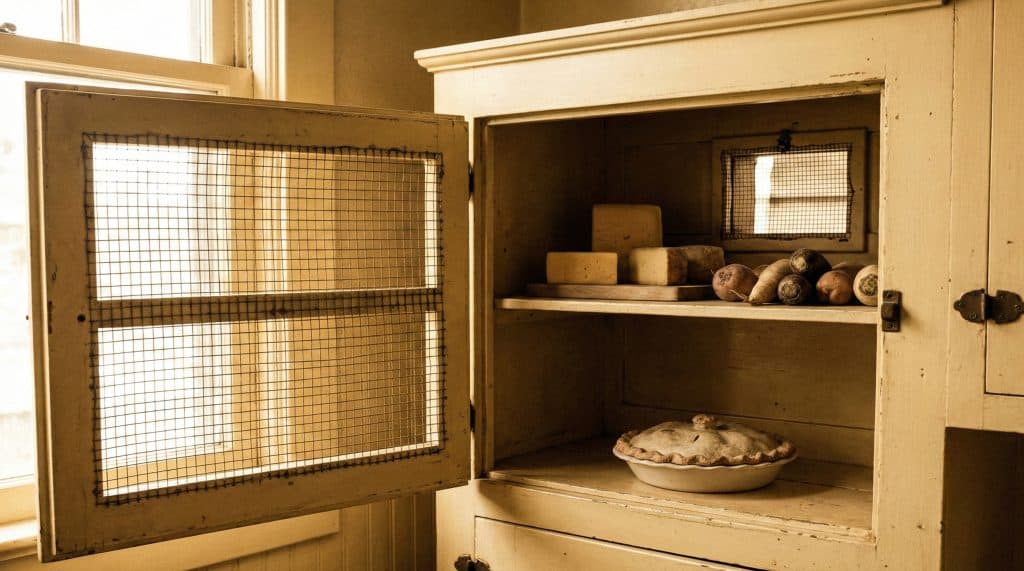
Modern fridges are massive energy hogs. But in the 1920s, the pantry was the fridge.
Look at the cabinetry in an old kitchen. If you see a cupboard with wire mesh shelves and a vent to the outside, you’ve found a “California Cooler.”
It used simple thermodynamics.
The vents pulled cool air from the shady side of the house up through the wire shelves, creating a constant draft.
It kept cheese, vegetables, and pies cool 24/7 without using a single watt of electricity.
4. The Coal Chute
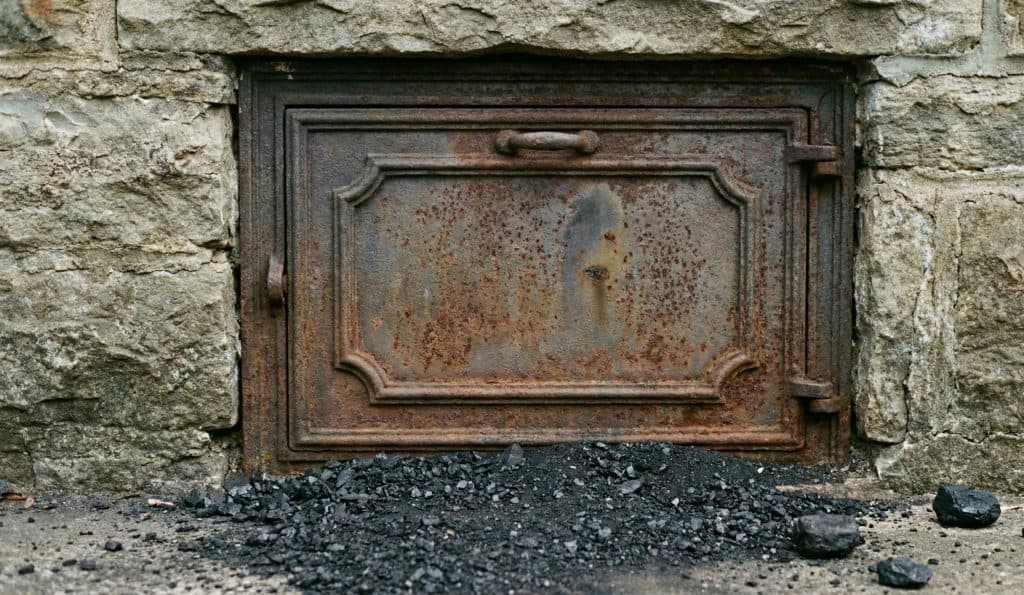
If you look at the foundation of an older home, you’ll often see a small, heavy cast-iron door rusting near the ground.
This was the lifeline of the house.
Before natural gas pipelines or electric heat pumps, a truck would pull up to your house, extend a metal slide, and dump a ton of anthracite coal directly through this chute into a bin in your basement.
It was dirty, loud work.
But that little iron door represents a time when heating a home meant manual labor, not just adjusting a Nest thermostat on your phone.
5. Transom Windows
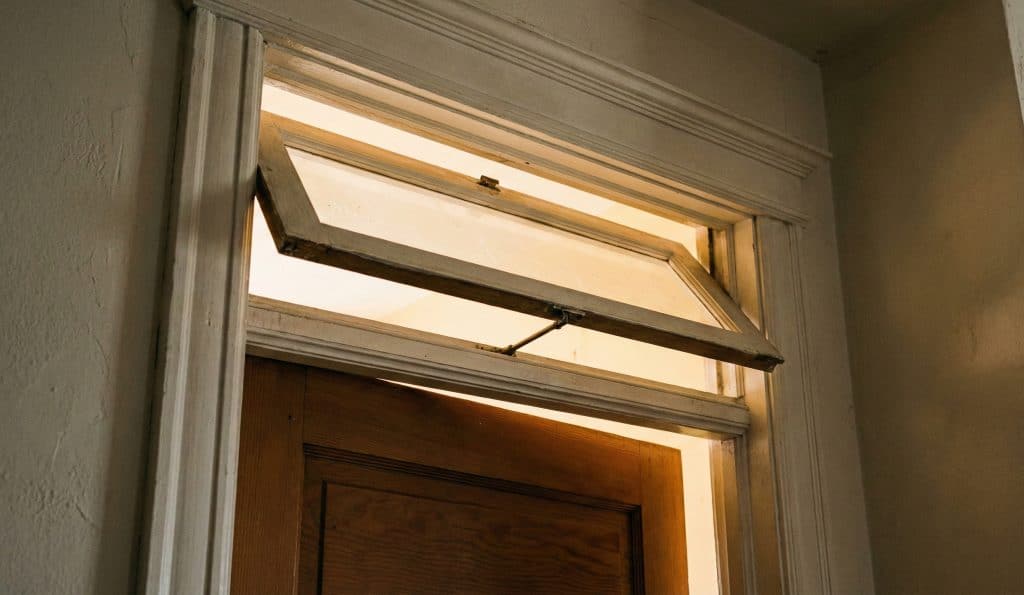
Walk into an old schoolhouse or a pre-war home, and look above the doors.
That rectangular window isn’t just there to look pretty. It’s a climate control system.
Heat rises. By opening the “transom” (the hinged window above the door) and closing the door below, you allowed the hot air trapped at the ceiling to escape into the hallway.
Combined with an open window, it created a cross-breeze that sucked heat out of the room.
We replaced this genius physics with loud, expensive AC units.
6. The Speaking Tube
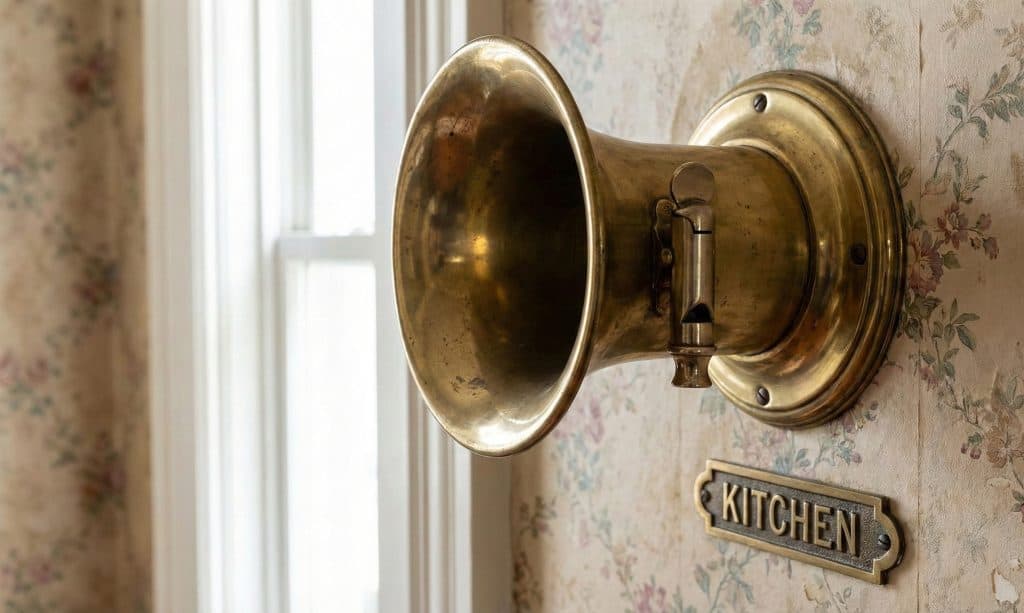
Before intercoms and Alexa, there was the speaking tube.
In larger homes, metal pipes ran through the walls from the front door down to the kitchen.
You didn’t need Wi-Fi.
You simply uncorked the tube, blew into it to whistle at the other end, and shouted your message.
Instant communication with zero static and zero batteries to replace.
7. The Boot Scraper
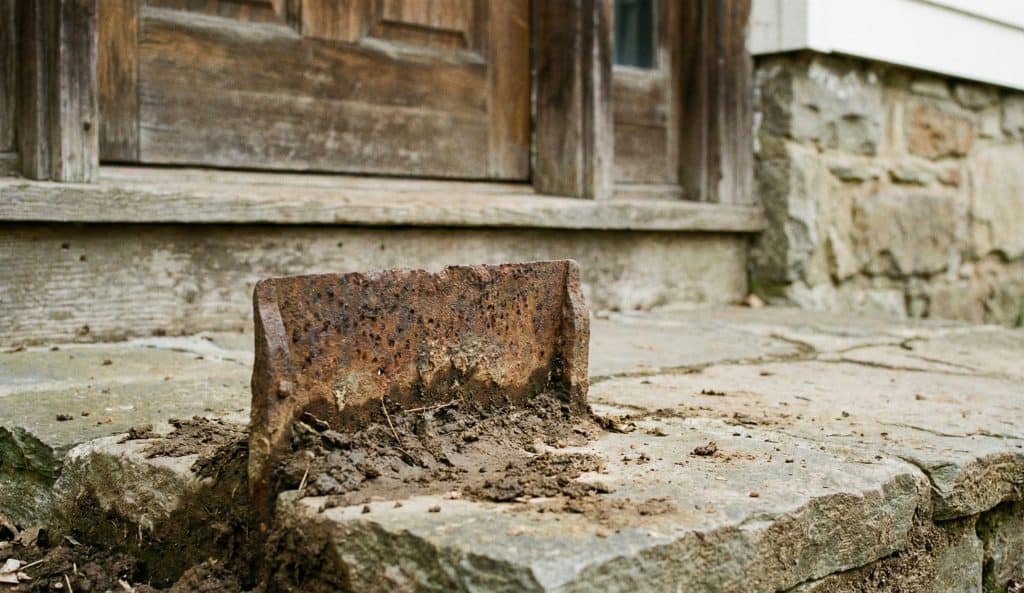
Look at the concrete or stone steps leading up to an old front porch.
You might see a blade of rusted iron embedded right into the masonry.
In 1920, paved roads were rare. Mud was a fact of life.
You didn’t track the outside world onto your wife’s rug. You scraped the heavy muck off your soles on this iron blade before you ever touched the doorknob.
8. Pocket Doors
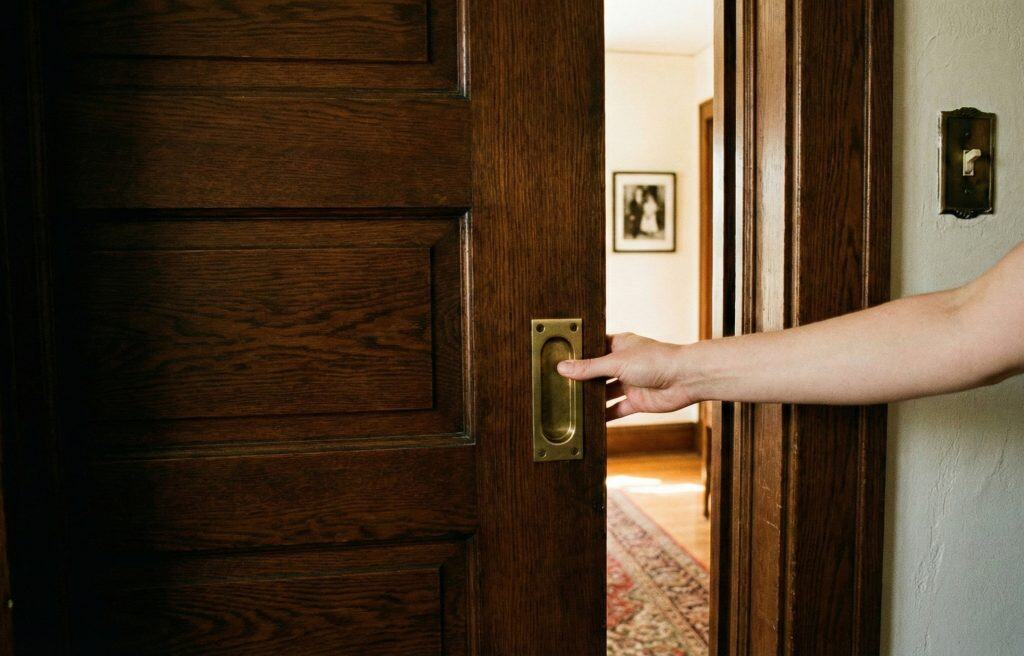
Modern builders hate pocket doors. They are hard to frame, and they require precision.
So they replaced them with cheap swinging doors that eat up floor space.
Old timers knew better. By sliding the door directly into the wall cavity, they could open up two rooms into one giant hall.
It was “open concept” long before HGTV invented the term.
9. The Phone Niche
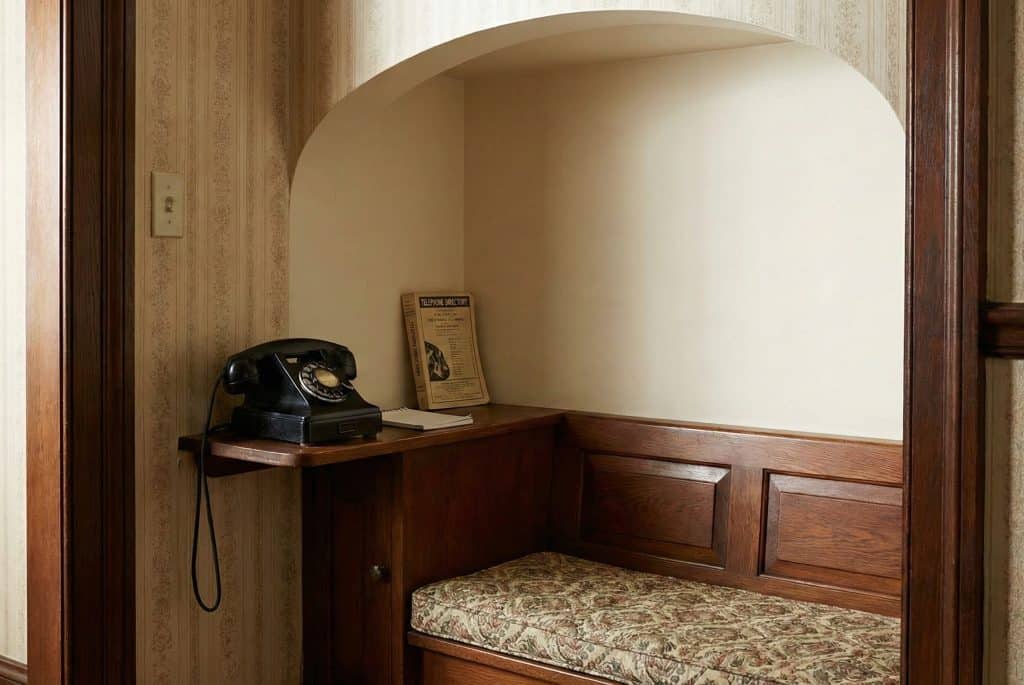
Today, we carry phones in our pockets. In 1930, the phone was a piece of heavy furniture.
The house had a shrine for it.
You’ll often find a charming arched alcove in the hallway of old homes. This was the “Phone Niche.”
It was centrally located so everyone could hear the ring. And it often had a seat, because a long distance call was an event, not a casual chat.
10. The Sleeping Porch
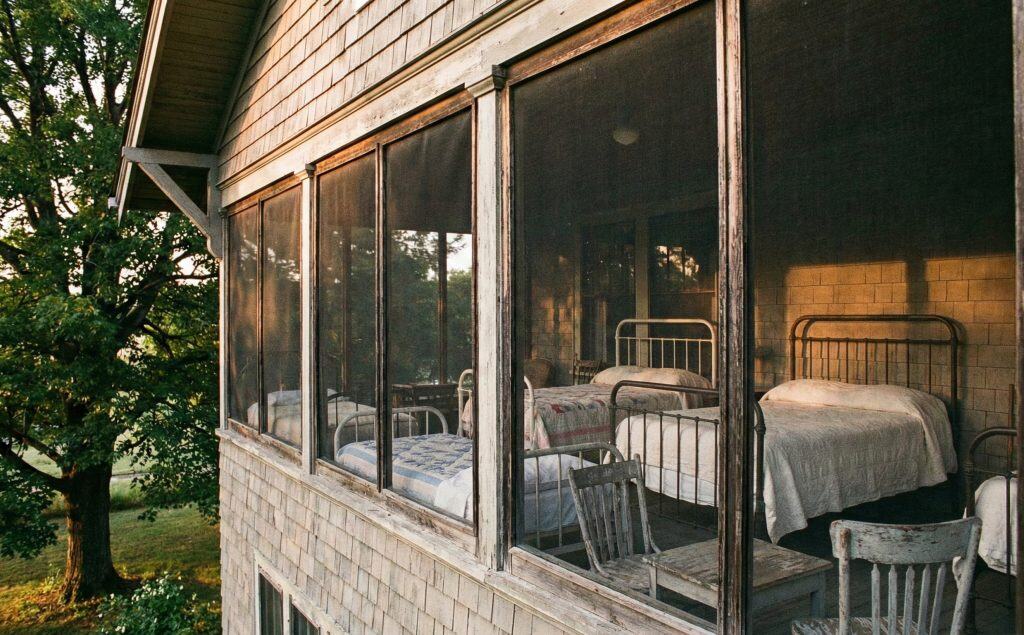
Before AC, a second-story bedroom in August was an oven.
The solution was the “Sleeping Porch.”
A screened-in deck usually connected to the bedrooms. On hot nights, the whole family would drag their mattresses out there to sleep.
It wasn’t camping; it was survival.
11. The Root Cellar
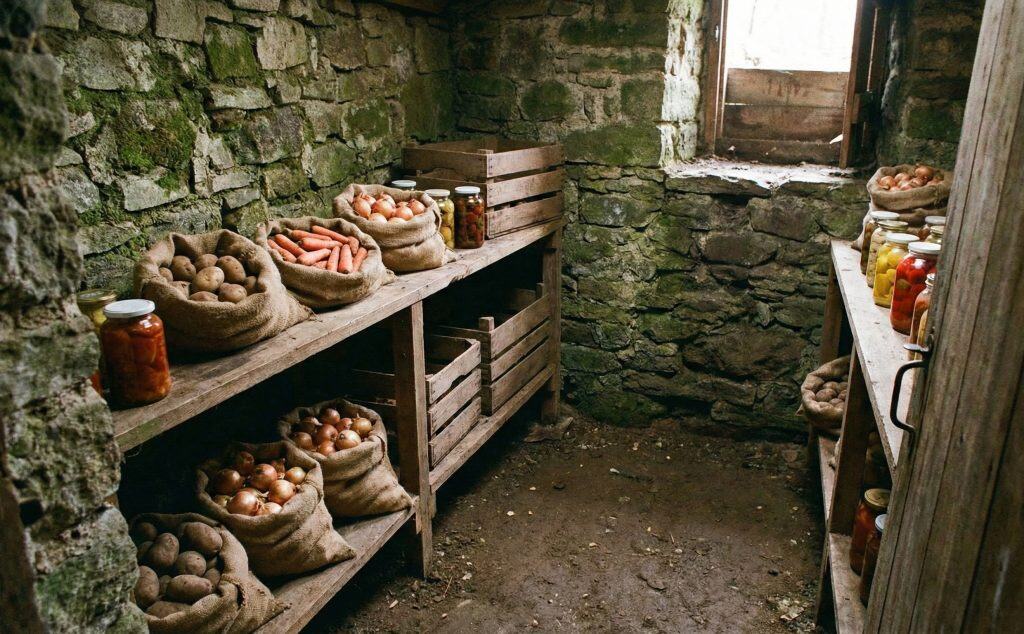
Long before massive electric refrigerators, we used the earth.
Dug deep into the ground, the root cellar stayed a constant, cool temperature year-round.
It kept potatoes, carrots, and onions fresh from October until April.
No electricity required—just the insulating power of soil.
12. Built-in Ironing Boards
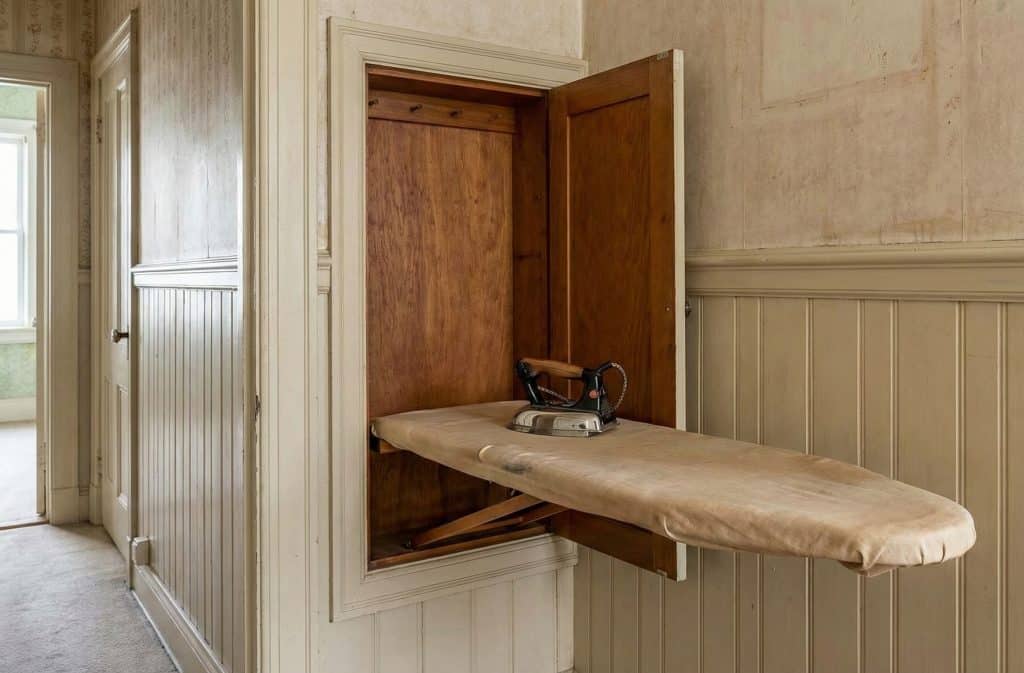
Ironing used to be a daily chore, not a once-a-year event.
Instead of wrestling with a clumsy metal stand, old houses had ironing boards hidden behind a discreet narrow door.
Open the door, fold it down, get to work.
When you were done, it vanished into the wall.
13. Picture Rails
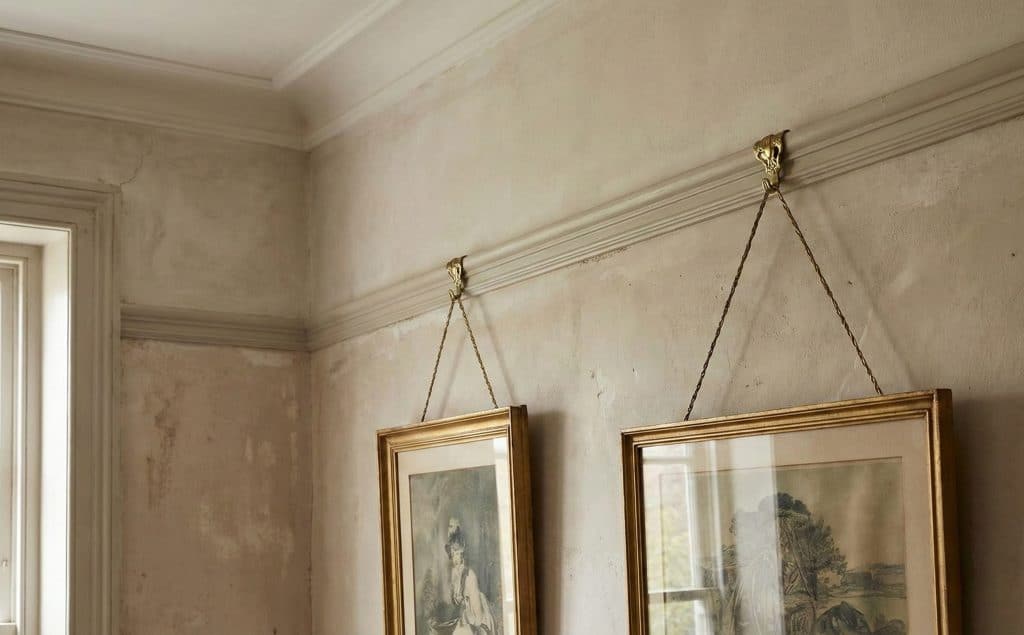
Walk into a room with plaster walls, and look about a foot below the ceiling.
That strip of molding isn’t just decoration.
Plaster is brittle. If you hammer a nail into it, it cracks.
That molding is a “Picture Rail.” You used hooks and wire to hang your art, letting you move pictures around without destroying the wall.
14. The Dumbwaiter
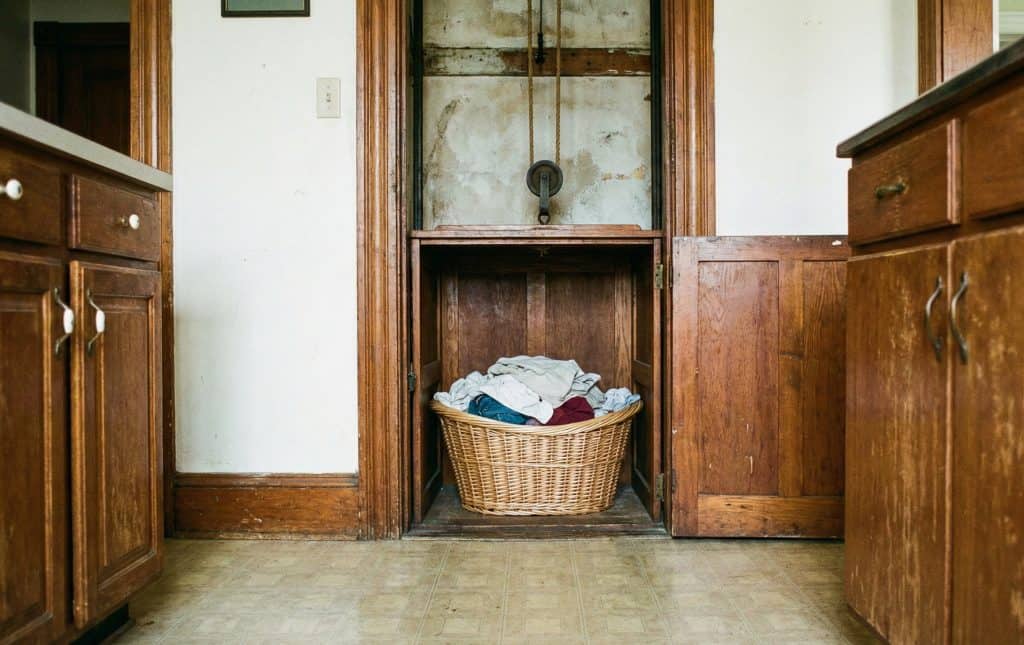
Carrying a laundry basket or firewood up two flights of stairs is backbreaking work.
Many multi-story old homes had a dumbwaiter.
A small manual elevator operated by a rope and pulley system.
It moved heavy goods from the basement to the kitchen. It was the ultimate labor-saving device.
15. The Vestibule
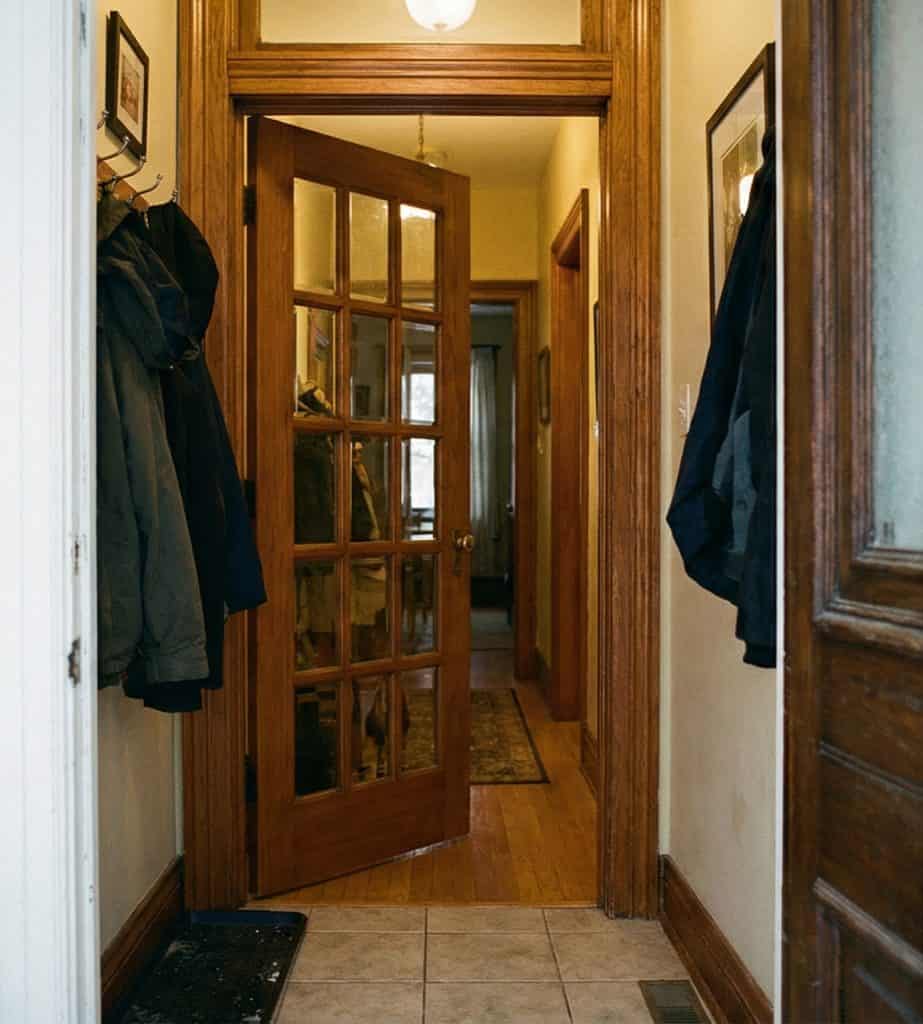
Open a modern front door, and a blast of winter air rushes into your living room.
Old houses had an “airlock” called a vestibule.
You walked in, closed the heavy front door behind you, and stamped the snow off your boots.
Only then did you open the inner door. It kept the heat in and the draft out.
16. Double-Hung Windows
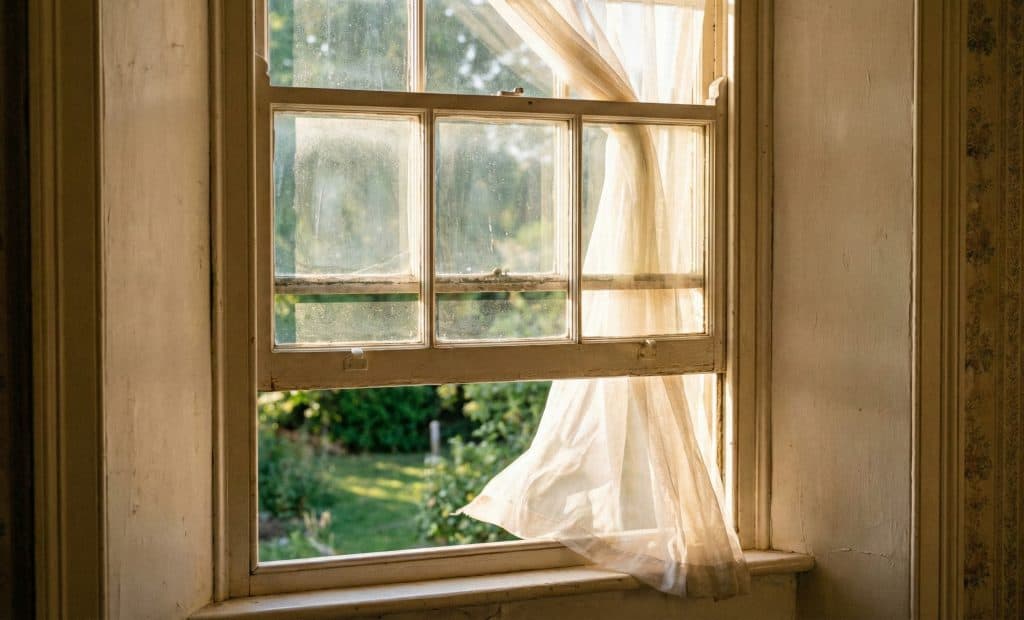
Most modern windows just slide side-to-side. Vintage “Double-Hung” windows were designed for physics.
You were supposed to open the bottom sash and the top sash.
Cool air would be sucked in the bottom, pushing the hot air out the top.
It created a natural convection current that cooled the room without a fan.
17. Skeleton Key Locks
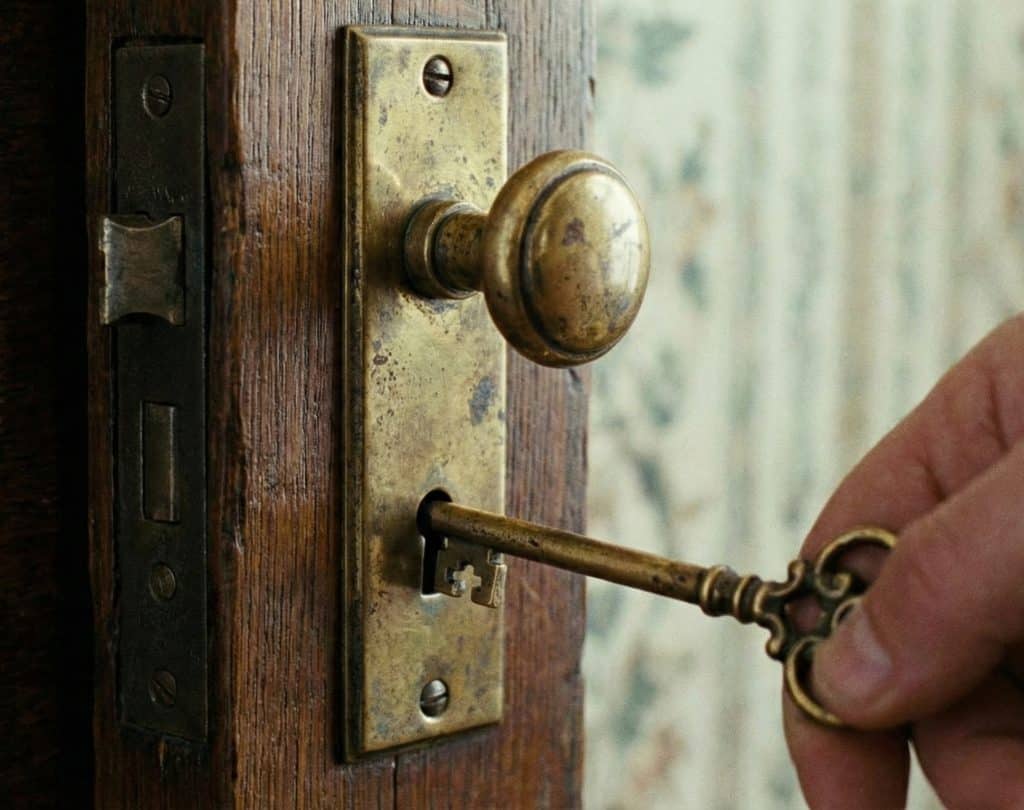
Modern door knobs are flimsy tubular mechanisms.
Old doors used “Mortise Locks”—heavy iron boxes set deep into the wood.
They were operated by “skeleton keys.” While they look simple, the mechanisms were robust and easily repairable.
A 100-year-old mortise lock usually just needs a drop of oil. A modern lock needs to be thrown in the trash.
18. Push-Button Switches
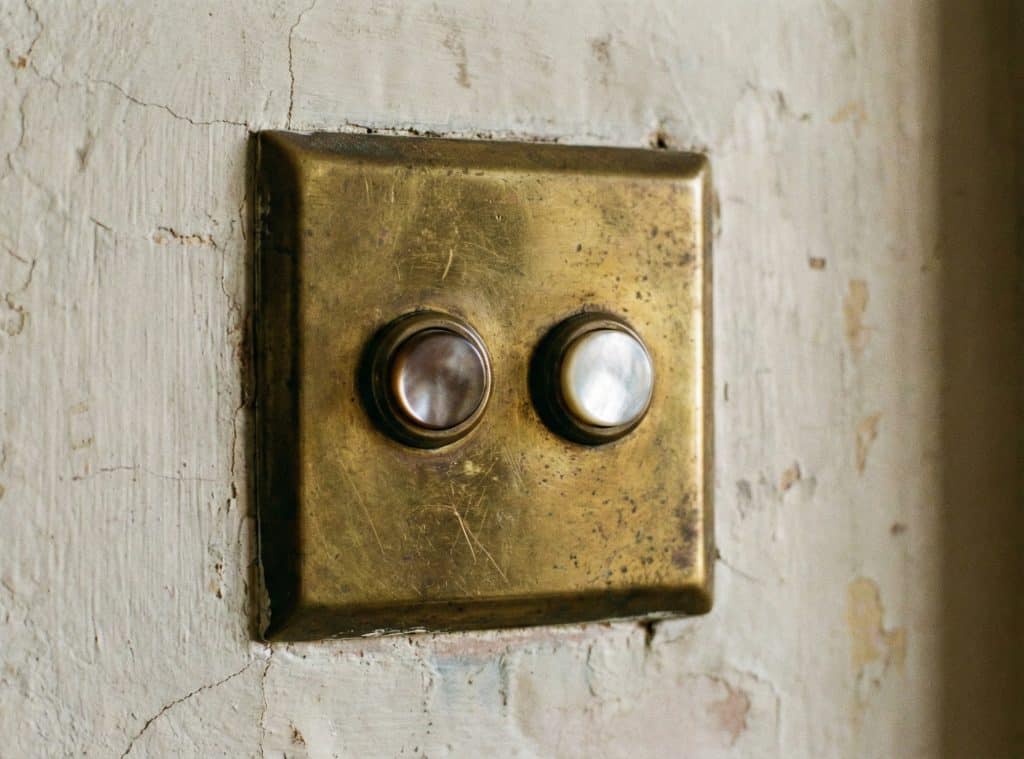
If you see two mother-of-pearl buttons on the wall, don’t replace them.
Push-button switches had a satisfying, solid “click” that you can’t find today.
They were built with heavy copper contacts that rarely failed.
People pay a fortune today to put these back into their homes.
19. The Whole House Fan
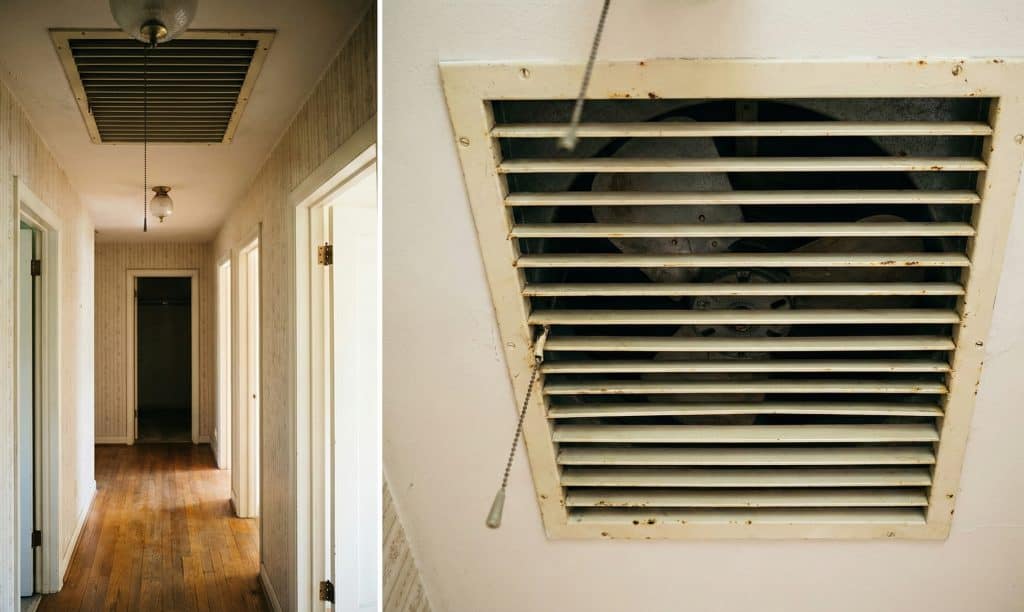
Go into the hallway of a 1950s ranch, and you might see a massive metal grate in the ceiling.
Turn it on, and it sounds like a jet engine.
This is the “Whole House Fan.” It sucks every cubic inch of hot air out of the house and blasts it into the attic.
It cools a house faster than any AC unit ever could.
20. Under-Eave Storage
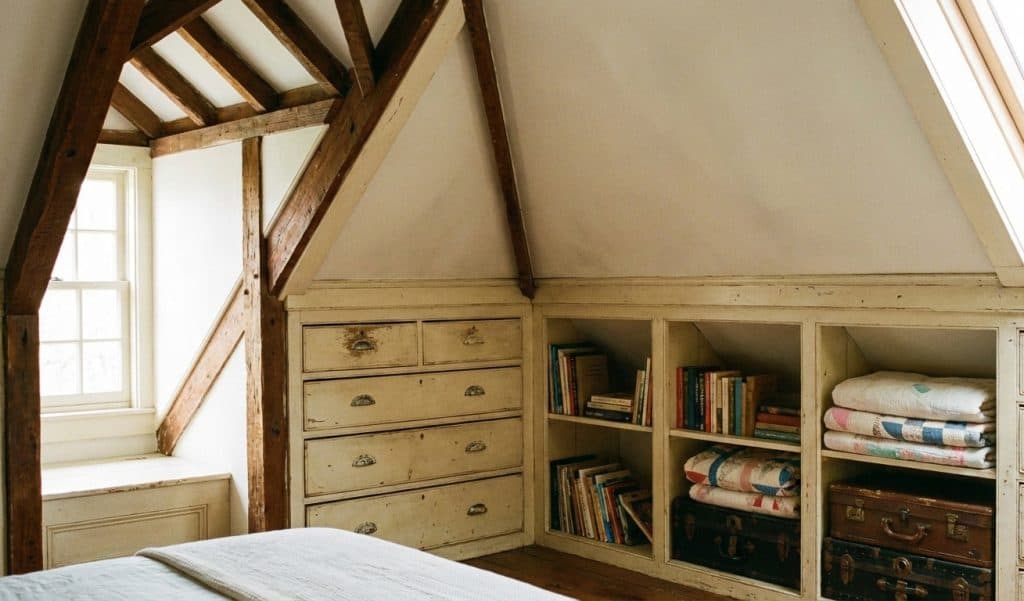
In a story-and-a-half house, the sloped roof creates awkward, short spaces near the walls.
Modern builders seal this off with drywall.
Old builders turned it into drawers and cubbies.
They wasted not a single inch of cubic space.
21. The Pull-Out Breadboard
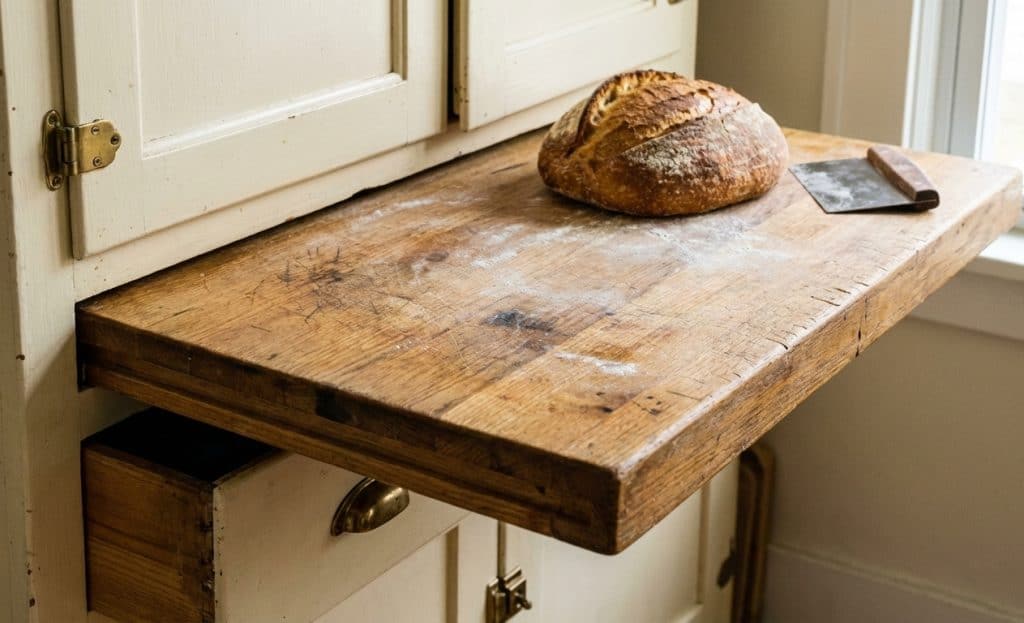
Look closely at the cabinetry in an old kitchen.
There is often a flat wooden board that slides out right above the drawers.
This wasn’t just for cutting bread. It was a massive workspace for kneading dough or clamping a meat grinder.
When you were done, you scraped it clean and slid it away.
22. Cast Iron Drains
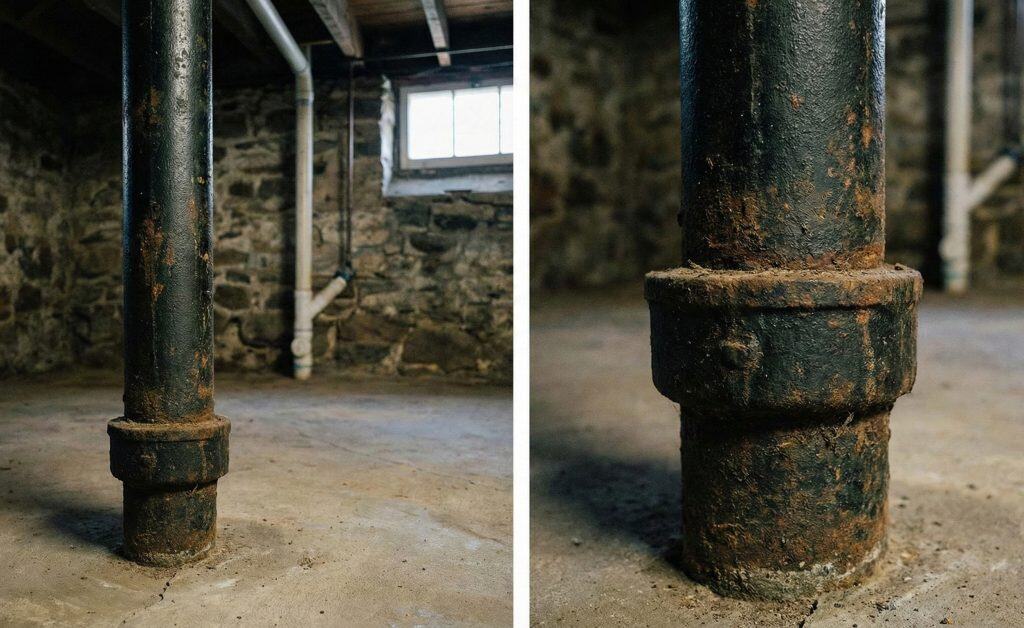
Flush a toilet in a modern house with PVC pipes, and everyone in the living room hears the water rushing down the walls.
Old houses used cast iron plumbing.
The metal is so dense and heavy that it is completely silent.
You never knew when someone was using the bathroom upstairs.
23. Operable Shutters
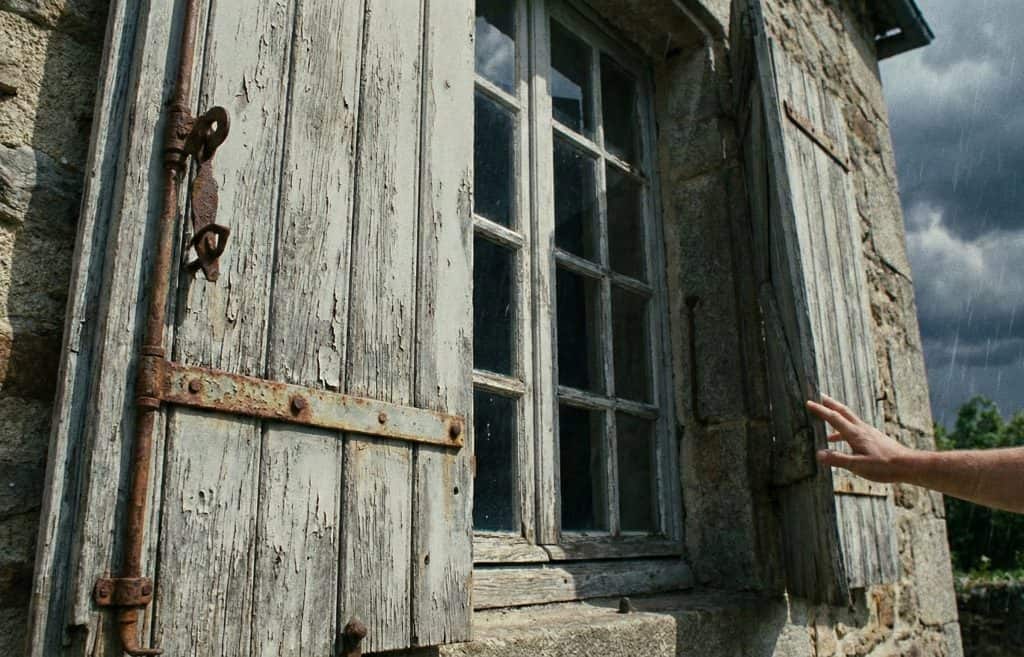
Today, shutters are just plastic rectangles screwed to the siding. They don’t even reach the window if you try to close them.
Originally, shutters were armor.
They closed tight over the glass to protect the home from hurricanes, blizzards, and baking sun.
They were the first line of defense for the home.
24. The Laundry Chute
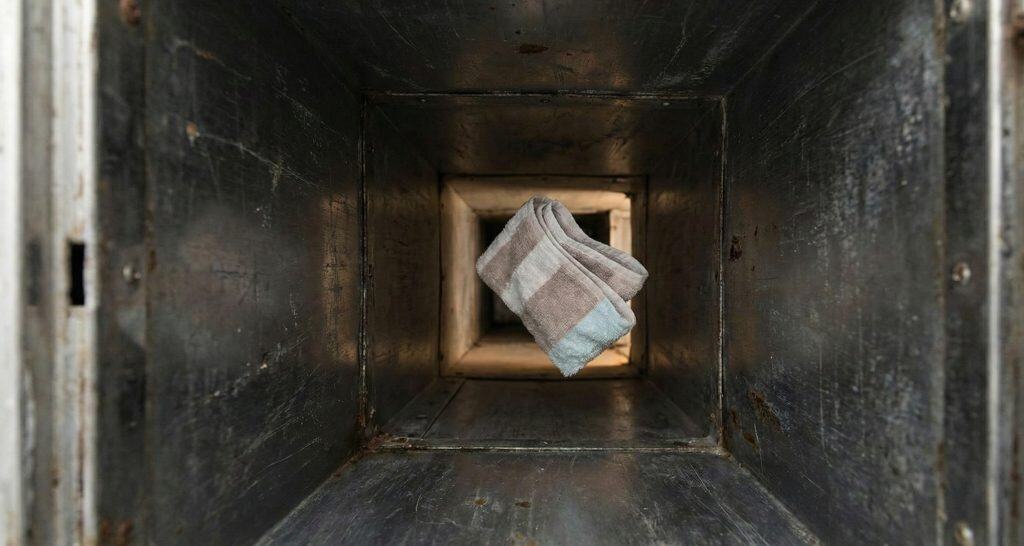
Why carry a hamper down the stairs when gravity is free?
The laundry chute was a simple metal-lined shaft that ran from the bathroom directly to the basement.
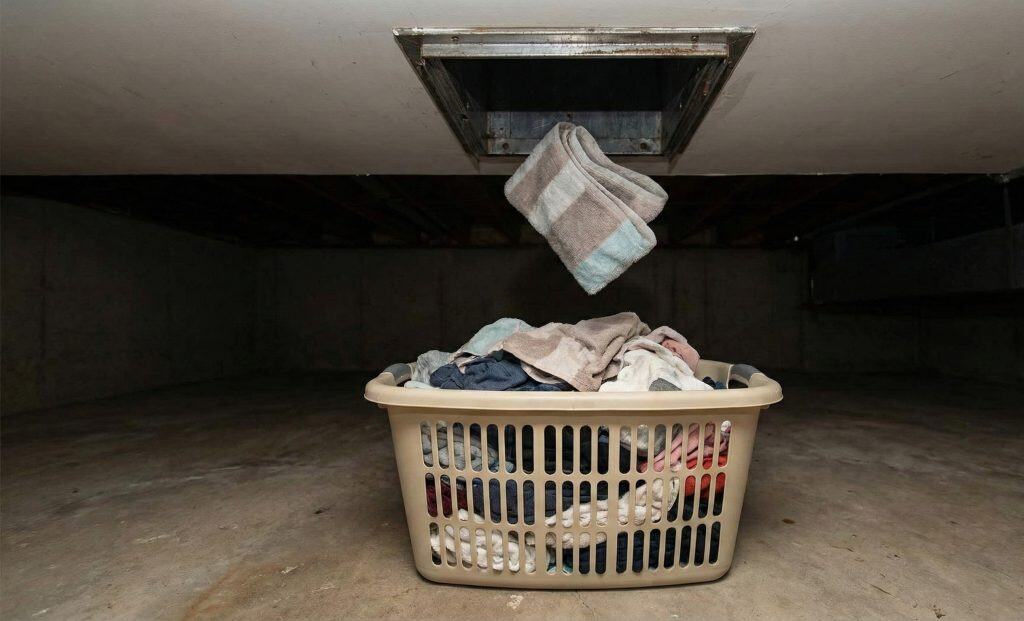
It kept dirty clothes out of sight and off the floor instantly.
25. Old Growth Lumber
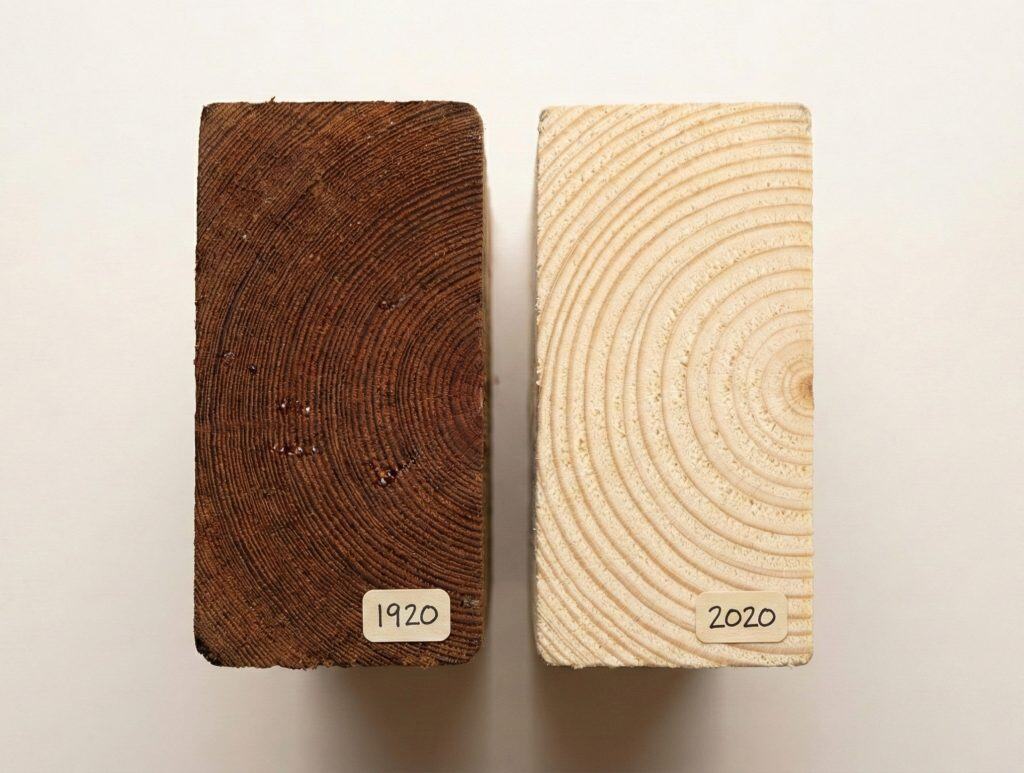
The biggest secret of an old house isn’t visible at all. It’s inside the walls.
If you cut into a 2×4 from 1920, you will smell the resin. The wood is dark red and heavy as stone.
It was cut from “Old Growth” forests. The rings are tight and dense.
Modern lumber is farmed quickly and is soft and full of air. That’s why a 100-year-old house stands straight, while a new house sags.
They quite literally don’t make them like they used to.
Conclusion
We look at these features today and call them “obsolete.”
We rip out the phone niches. We paint over the vents. We drywall over the storage.
But when the power goes out, or the AC breaks, or the plastic handle snaps off your new door, you realize something.
These weren’t just quirks. They were independence.
A house that cools itself, preserves its own food, and helps you work isn’t old-fashioned.
It’s the smartest technology we ever owned.