

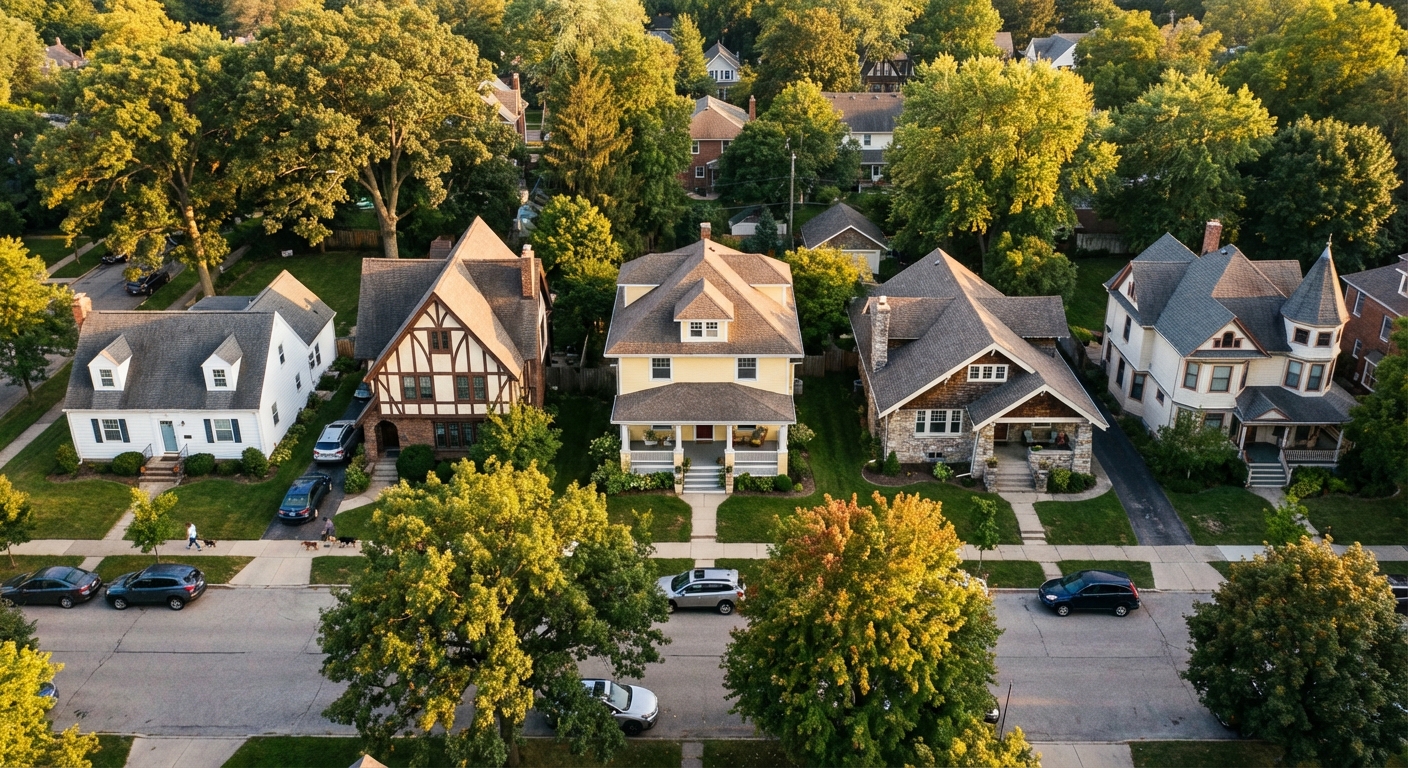
You have driven past them a thousand times. The one with the columns. The one with the dark beams and stucco. The boxy one on the corner that just looks — old.
Every neighborhood in America is a quiet museum of architectural history, and most of us walk through it without knowing a single label. We point at houses and say things like “that old-fashioned one” or “the one that looks like a cottage” and leave it at that.
The truth is, almost every house you see was built in a specific style with a specific name — and most of those names have been around for a hundred years or more. Some of them you have probably heard. Others might surprise you.
Here are 25 house styles you see in every American neighborhood — and what they are actually called.
1. Cape Cod
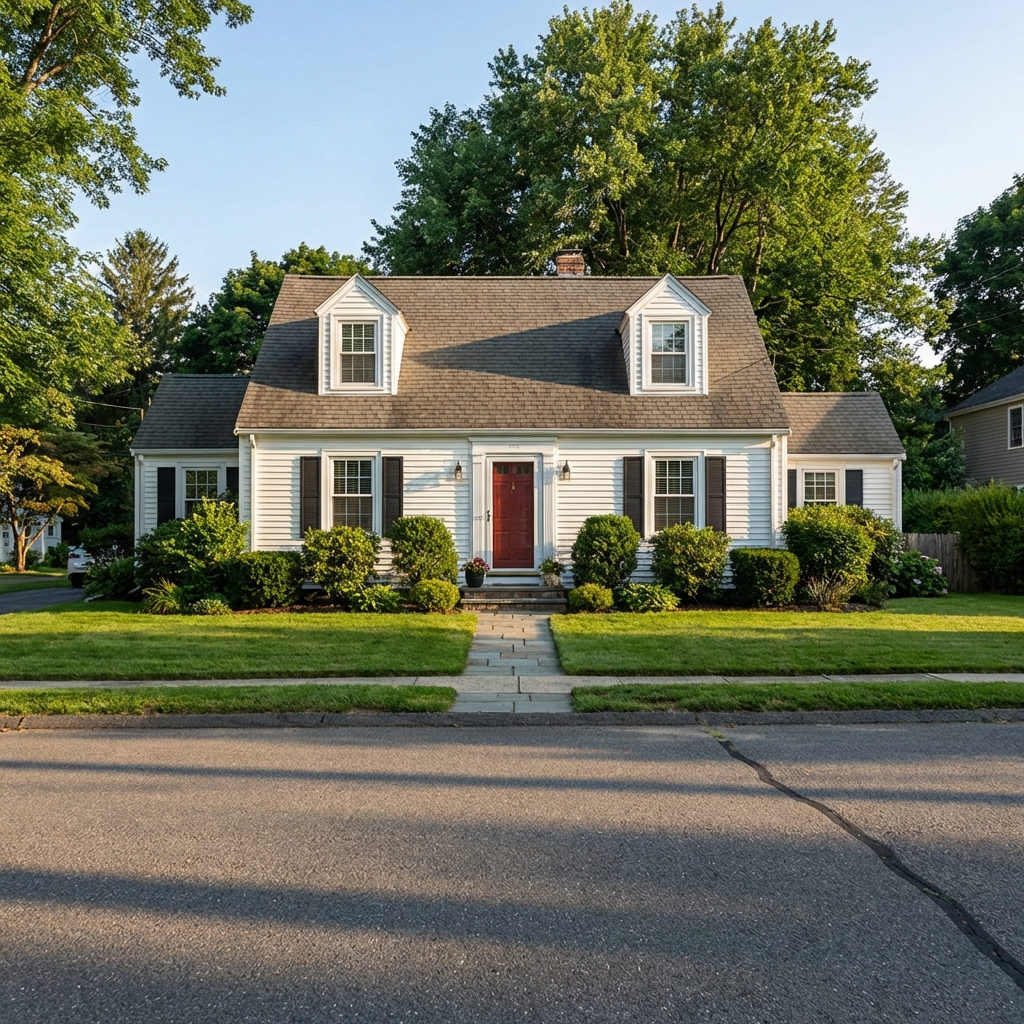
This is the little house that built the suburbs. A story and a half tall, with a steep gabled roof, a center front door, and dormers poking out of the second floor. Simple. Symmetrical. No frills.
Cape Cods date back to the 1600s in New England, where settlers built them low and tight to survive brutal coastal winters. The big central chimney heated the whole house, and the steep roof shed snow before it could pile up and cause problems.
The style mostly disappeared for a century before architect Royal Barry Wills brought it back in the 1920s. Then World War II happened, soldiers came home, and America needed cheap housing in a hurry. The Cape Cod was the answer. Levittown was full of them.
If you grew up in a post-war suburb anywhere in the country, you have lived in one, lived near one, or trick-or-treated at one. Most people just call it “a cute little house.” Now you know its name.
2. Colonial Revival
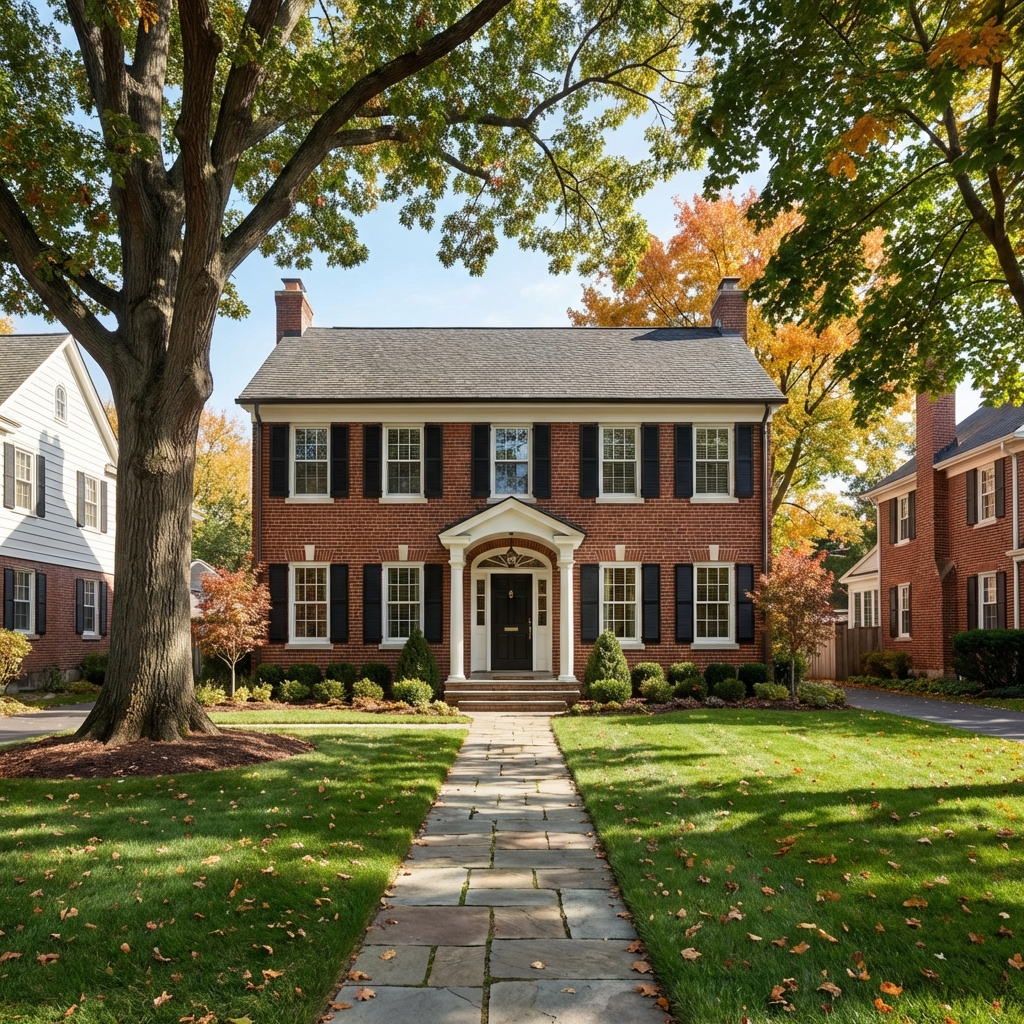
This is the house everyone calls “traditional” without thinking about it. Two stories, symmetrical front, center door, shuttered windows, and a general air of looking like it has always been there.
Colonial Revival is not actually colonial. It is a revival — a late 1800s and early 1900s reimagining of what the original colonial homes looked like, cleaned up and standardized for the modern era. The style exploded after the 1876 Centennial Exposition in Philadelphia made Americans nostalgic for their architectural roots.
What you are really looking at when you see one is a greatest-hits album of early American architecture — a little Georgian here, a little Federal there, a dash of Dutch Colonial influence. Builders pulled from all of it and created something that just felt American.
Colonial Revivals are everywhere. They dominated construction from about 1880 through the 1950s, and builders never really stopped building them. Drive through any established suburb and you will see a dozen before you reach the grocery store.
3. Craftsman Bungalow
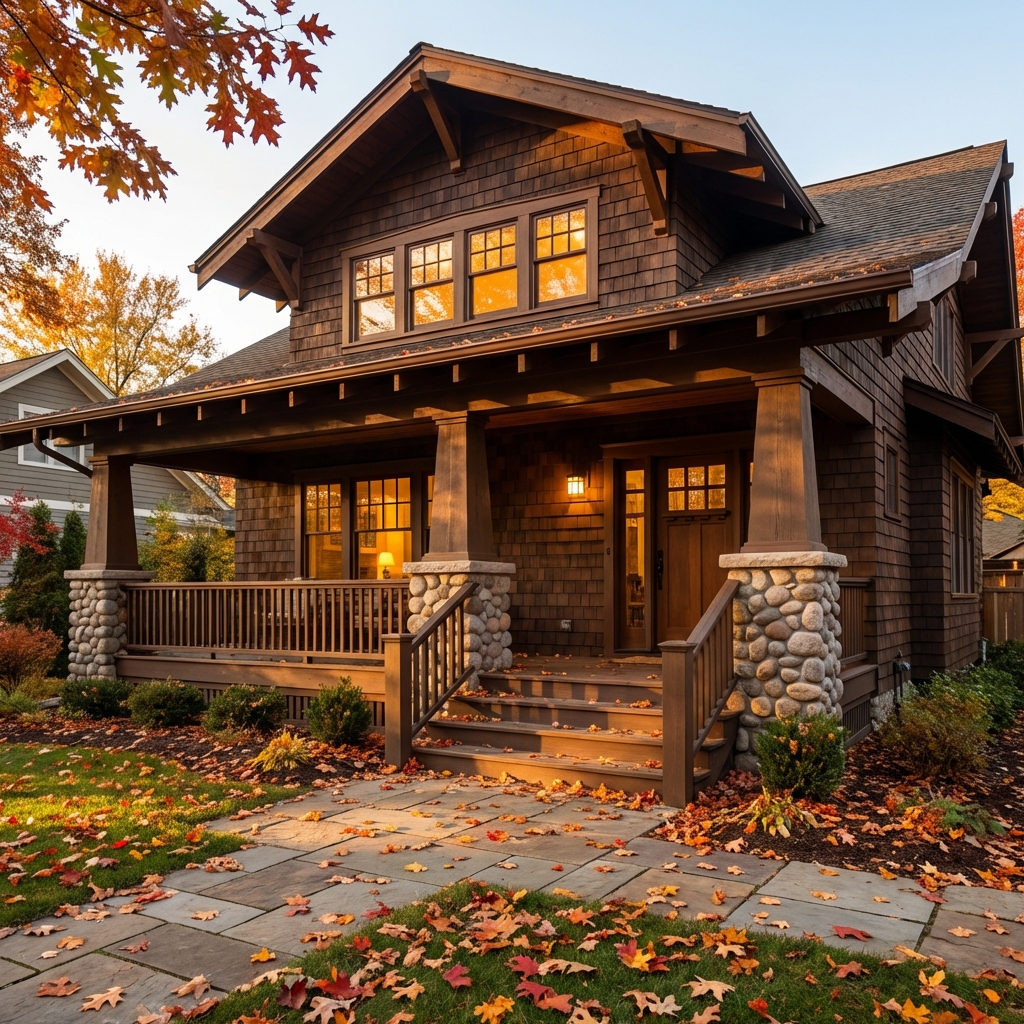
The low-slung one with the wide front porch, tapered columns sitting on stone or brick bases, and deep overhanging eaves. If the house looks like it is hugging the ground, it is probably a Craftsman.
The style came out of the Arts and Crafts movement around 1905 and was meant to be the anti-Victorian — honest materials, visible craftsmanship, no unnecessary decoration. Everything structural was on display. Exposed rafter tails. Knee braces under the gables. Thick porch columns that got wider as they went down.
Craftsman Bungalows were sold through pattern books and mail-order catalogs — including Sears, Roebuck and Co. — which is why they ended up in every state. They were affordable, practical, and looked good doing it. California adopted them as a religion, but you will find them from Portland to Pittsburgh.
The telltale sign is the front porch. If the porch feels like it is part of the house rather than tacked onto it — and if the columns have that distinctive taper — you are looking at a Craftsman.
4. Tudor Revival
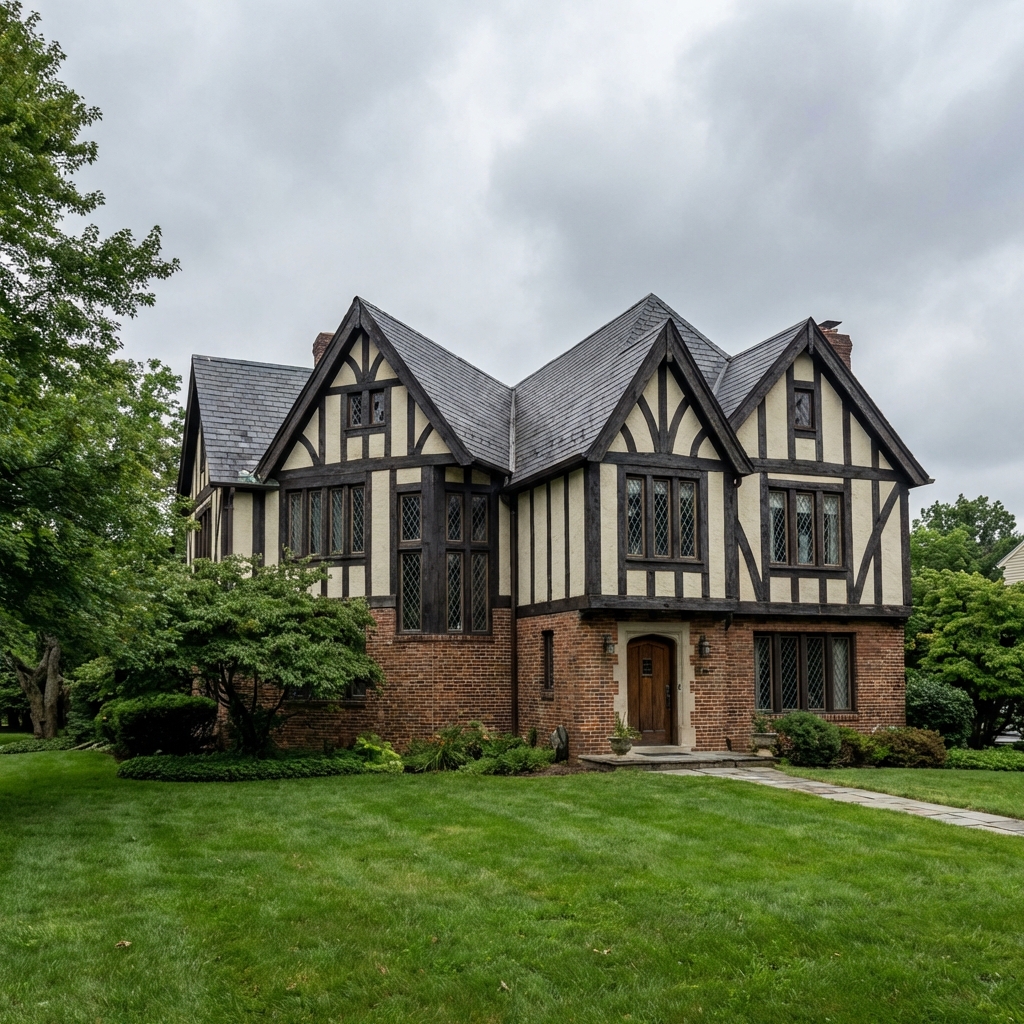
The storybook one. Steep, crossed gables. Dark decorative timber beams against white or cream stucco — the pattern the English call “half-timbered.” Tall, narrow windows, often with diamond-shaped panes. Sometimes a rounded front door that looks like it belongs in a fairy tale.
Tudor Revival homes were not actually built in the Tudor period. They are an early 20th-century American interpretation of medieval English architecture, and they were wildly popular between about 1920 and 1940. The style worked for everything from grand estates to modest suburban homes — the “Stockbroker’s Tudor” was a whole category unto itself.
The dead giveaway is that half-timbering. If a house looks like it wandered out of the English countryside and landed in Ohio, it is a Tudor Revival. The style fell off sharply after World War II when builders shifted to simpler, cheaper designs. But the ones that were built are unmistakable, and they are everywhere in older suburbs and established neighborhoods.
5. Victorian (Queen Anne)
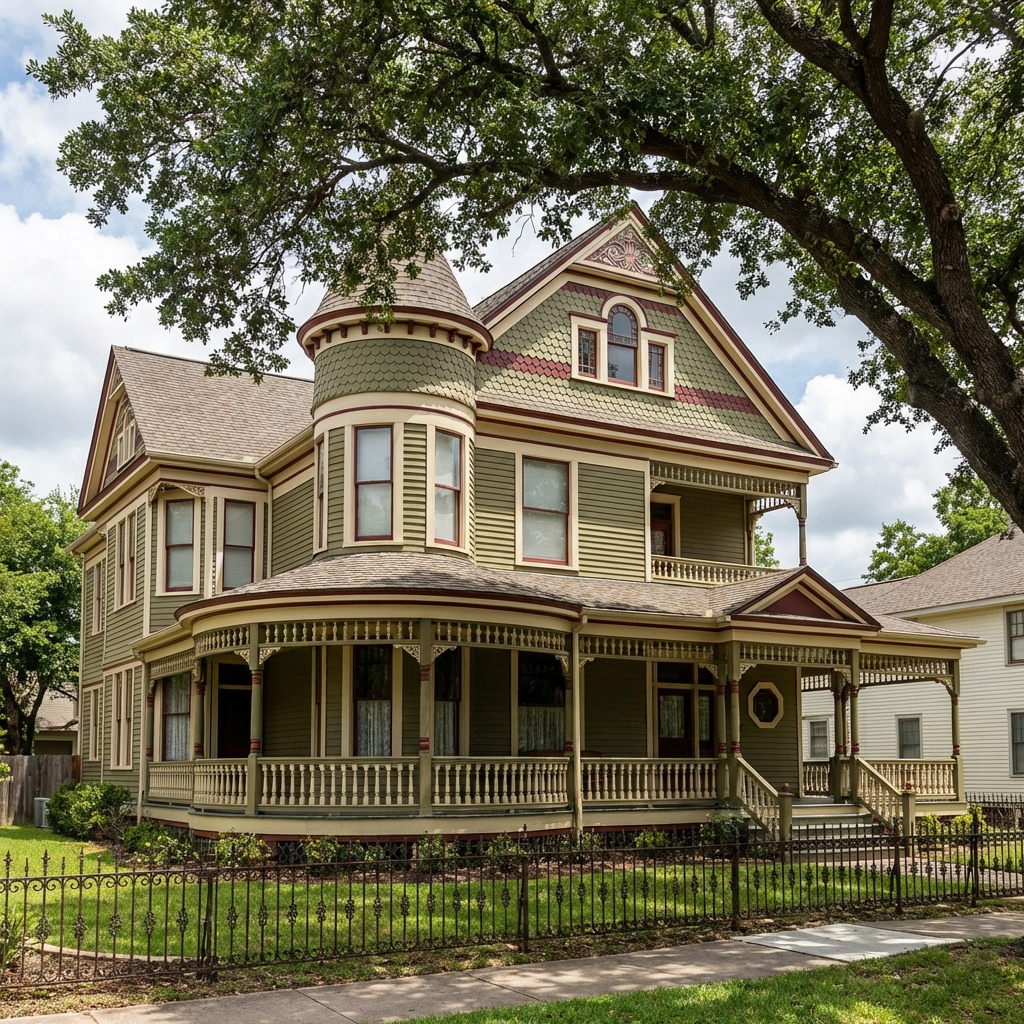
This is the big one. The ornate, unapologetically decorative house with the wrap-around porch, the turret on the corner, and more paint colors than anyone thought necessary. When people say “Victorian,” they almost always mean Queen Anne.
Queen Anne homes were popular from about 1880 to 1910, and they were designed to show off. Irregular rooflines. Bay windows. Spindle-work porches. Fish-scale shingles mixed with clapboard mixed with stonework — sometimes all on the same house. The philosophy was “more is more,” and architects meant it.
The name comes from Queen Anne of England, though the style has virtually nothing to do with anything she would have recognized. American architects borrowed the name and then did whatever they wanted with it.
You know these houses when you see them. They are the grand dames of every old downtown district, the ones that got converted into bed-and-breakfasts or carved up into apartments. A lot of them got painted in wild multi-color schemes during the “Painted Ladies” craze of the 1960s and 70s, and some of them still wear those colors today.
6. Foursquare
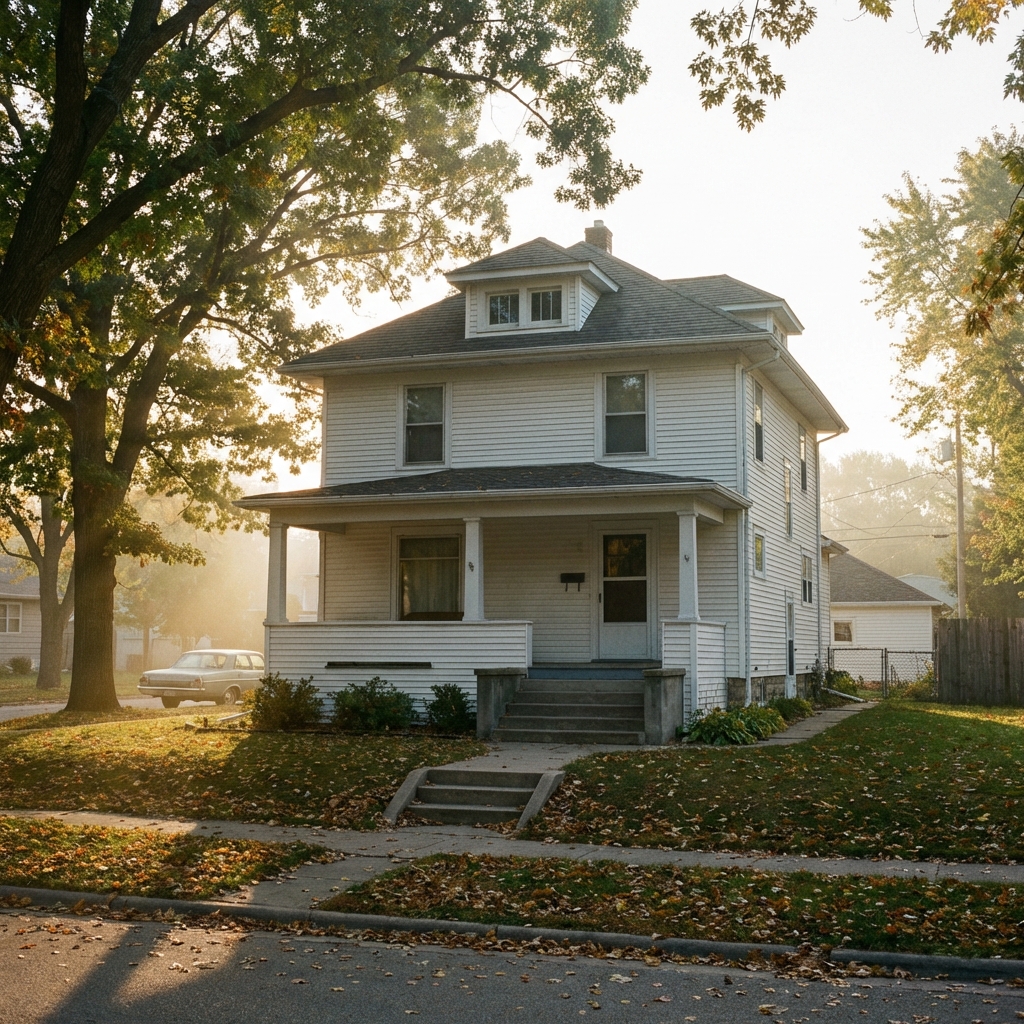
The boxy two-story with the hipped roof that everyone just calls “an old house.” Four rooms on the first floor, four rooms on the second floor, a big front porch, and very little in the way of fuss.
The American Foursquare was the common-sense house of the early 1900s. It was a reaction to the Victorian excess that came before it — practical, affordable, and easy to build. Pattern books and mail-order catalogs made it available to anyone, and it became one of the most popular house types in America from about 1895 to 1930.
The Foursquare borrowed ideas from everywhere. Some have Prairie-style horizontal banding. Some have Craftsman-style porches. Some have Colonial Revival details. The form stayed the same — that simple, boxy, two-and-a-half-story shape with the hipped roof — but the decorative wrapper changed depending on the neighborhood and the builder.
If you live in a Midwestern town or an older streetcar suburb, you have walked past hundreds of these. They are the reliable, no-nonsense houses that fill the blocks between the fancy Victorians and the post-war Capes.
7. Dutch Colonial
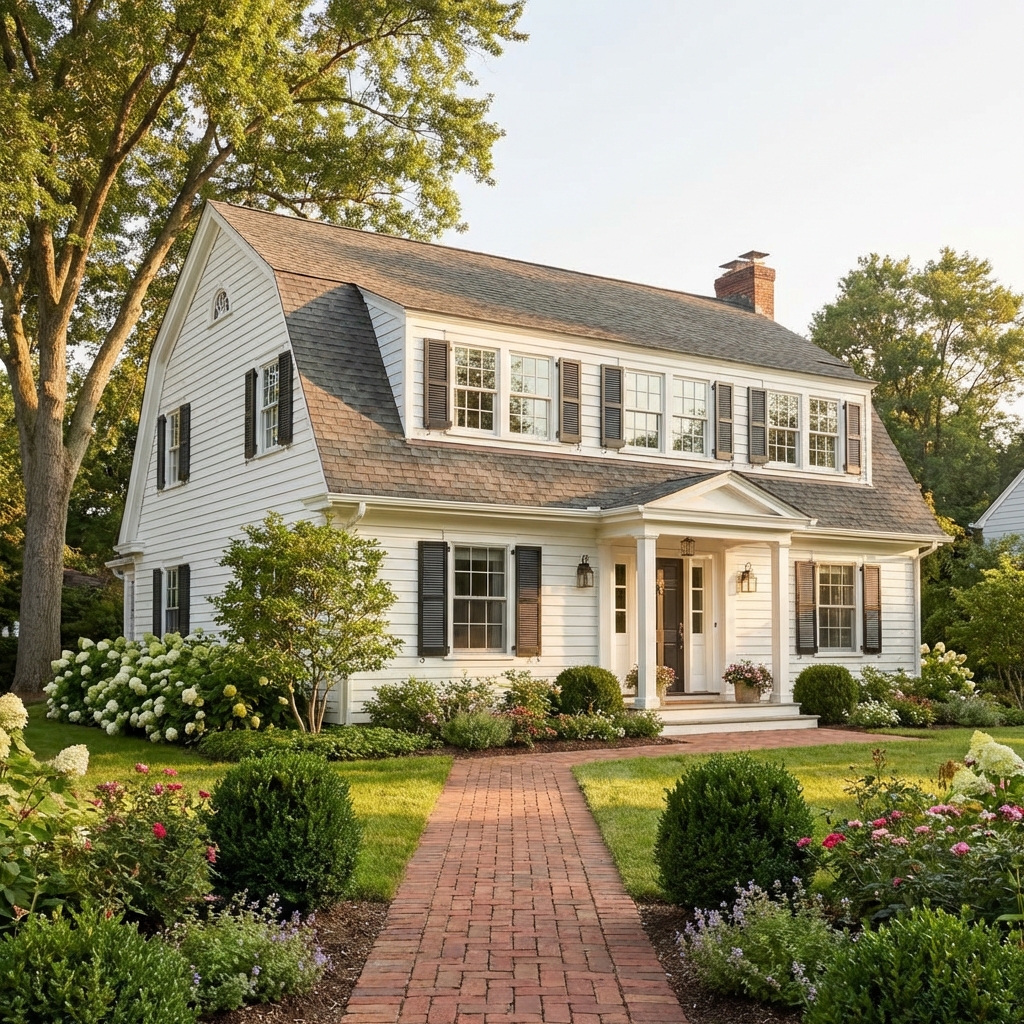
The one with the gambrel roof — that distinctive double-sloped roofline that looks like someone put a barn roof on a house. Two steep sides near the top, then a gentler slope that flares outward near the eaves.
Dutch Colonials have been around in some form since the 1600s, when Dutch settlers in New York and New Jersey built stone houses with this roof style. But the version most people recognize today is the Dutch Colonial Revival, which was popular from about 1900 to 1940.
The gambrel roof is not just decorative. It creates significantly more usable space on the second floor than a standard gabled roof, which made these homes popular with growing families who wanted more room without a bigger footprint. A lot of them also feature a long shed dormer across the front or back that opens up the upstairs even further.
People sometimes confuse Dutch Colonials with barns, which is understandable — the roofline is the same. But if you see that gambrel shape on a house with dormer windows and a front porch, you are looking at a Dutch Colonial, and now you can say so with confidence.
8. Mid-Century Modern
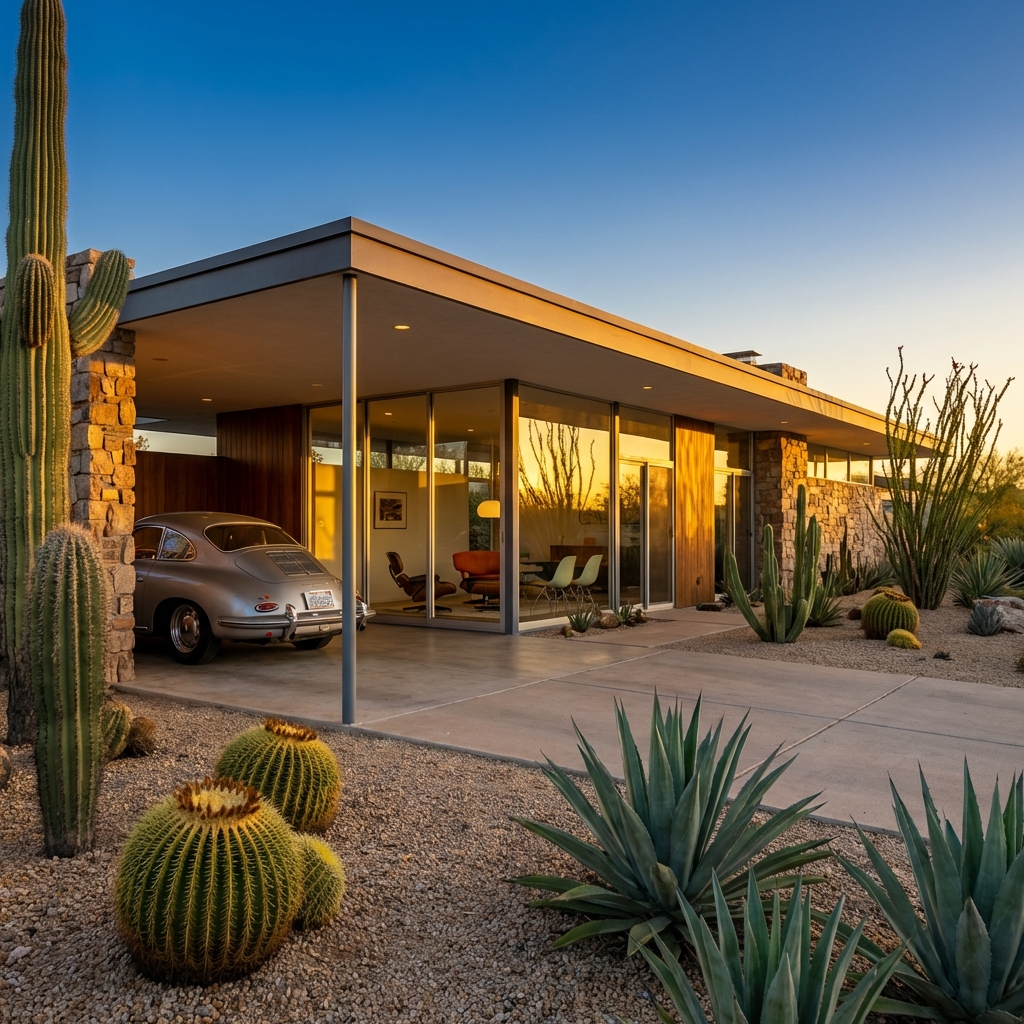
The flat-roofed one with the giant windows, the clean lines, and the carport instead of a garage. If the house looks like it belongs in a magazine from 1958, you have found a Mid-Century Modern.
The style dominated residential architecture from the mid-1940s through the late 1960s. Architects like Richard Neutra, Joseph Eichler, and the firm of Buff, Straub and Hensman built homes that emphasized the connection between indoor and outdoor living — open floor plans, walls of glass, and low-slung profiles that hugged the landscape.
Mid-Century Moderns were built everywhere, but they thrive in warm climates where all that glass makes sense. California, Arizona, and Palm Springs are the spiritual homes of the style, but you will find pockets of them in suburbs across the country.
The style has had a massive revival in popularity over the last twenty years. What was once considered dated — the sunken living room, the stone feature wall, the post-and-beam ceiling — is now highly sought after. If you spot one in the wild that has not been renovated, somebody is probably already making an offer on it.
9. Federal
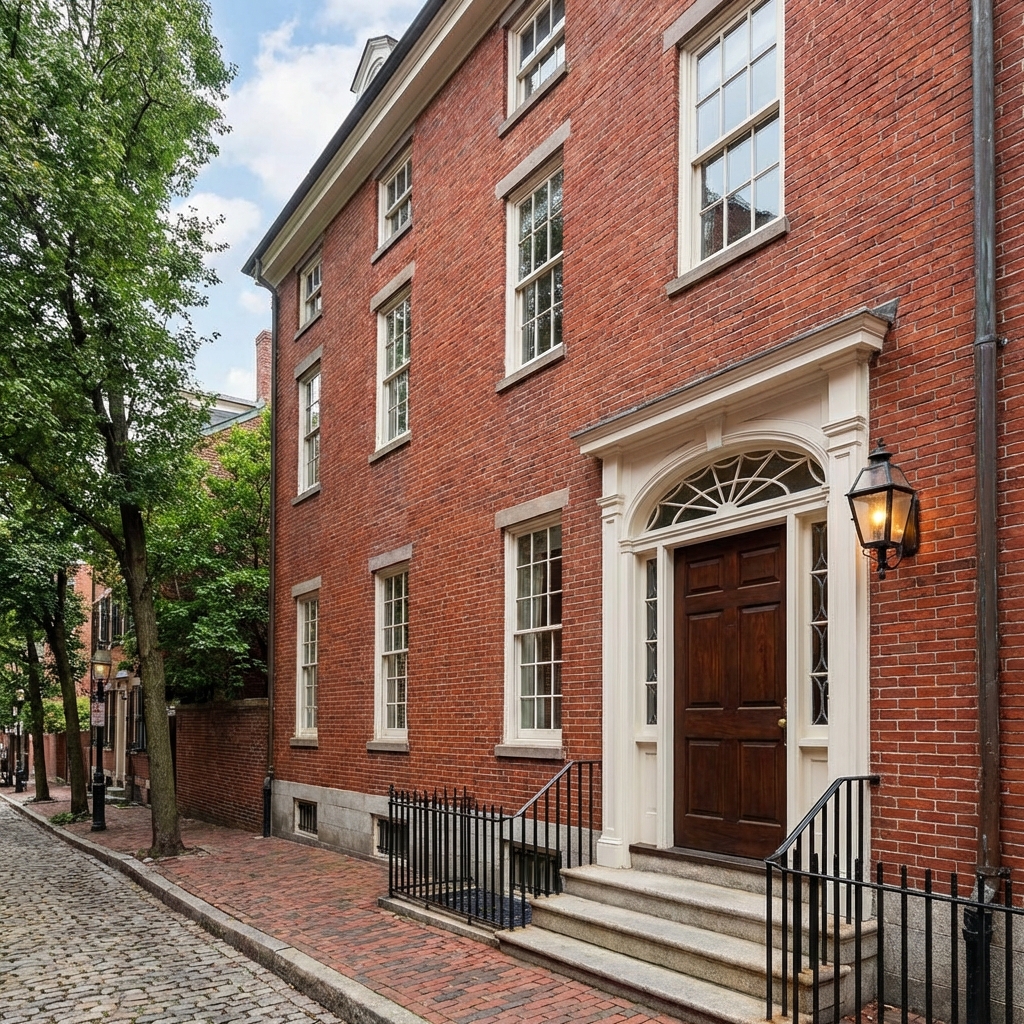
The elegant brick one with the fanlight over the front door. If a house looks like it was designed by someone who had just returned from a trip to ancient Rome and wanted to keep things tasteful, it is probably a Federal.
Federal style was the architecture of the new American republic, popular from about 1780 to 1840. It took the symmetry and formality of the earlier Georgian style and made it lighter and more refined. Think elliptical fanlights, delicate moldings, slim columns, and a general sense of restrained sophistication.
The biggest names in early American architecture worked in this style — Charles Bulfinch in Boston, Samuel McIntire in Salem. Federal homes line the streets of old East Coast cities and towns, especially in New England and the Mid-Atlantic. The brick is the first thing you notice. The fanlight is the second.
Federal homes are sometimes confused with Georgian, which is fair — they are closely related. The easiest way to tell them apart is the level of delicacy. Georgian homes are heavier and more formal. Federal homes feel lighter, with thinner muntins on the windows and more decorative detailing around the entry.
10. Greek Revival
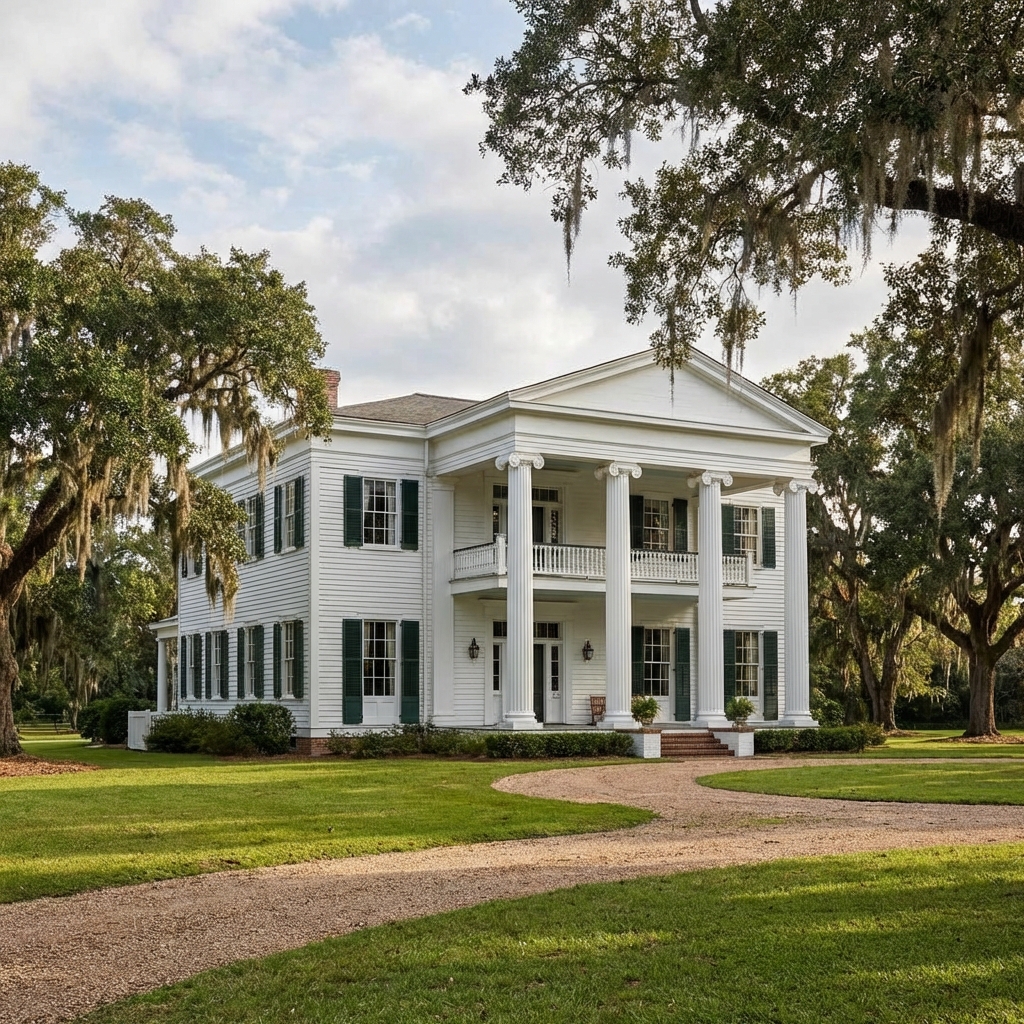
The one with the big columns that looks like a miniature Greek temple. A bold triangular pediment over the front porch, tall columns — sometimes round, sometimes square — and a front that was clearly designed to make a statement.
Greek Revival was the dominant architectural style in America from about 1825 to 1860. It spread through pattern books by architects like Asher Benjamin and Minard Lafever, and it hit every region of the country. In the South, it became the style of the plantation house. In the North, it showed up on farmhouses, courthouses, and banks.
The timing was not an accident. America was fascinated with Greek democracy in the early 1800s, and naming new towns after Greek cities — Athens, Sparta, Troy — was a national pastime. Building houses that looked like Greek temples was just the architectural version of the same impulse.
You do not need a mansion to spot one. Modest Greek Revival homes exist all over the country — a simple rectangular house with a front-facing gable, a heavy cornice, and maybe two square columns framing the porch. Once you know what to look for, you will see them everywhere.
11. Saltbox
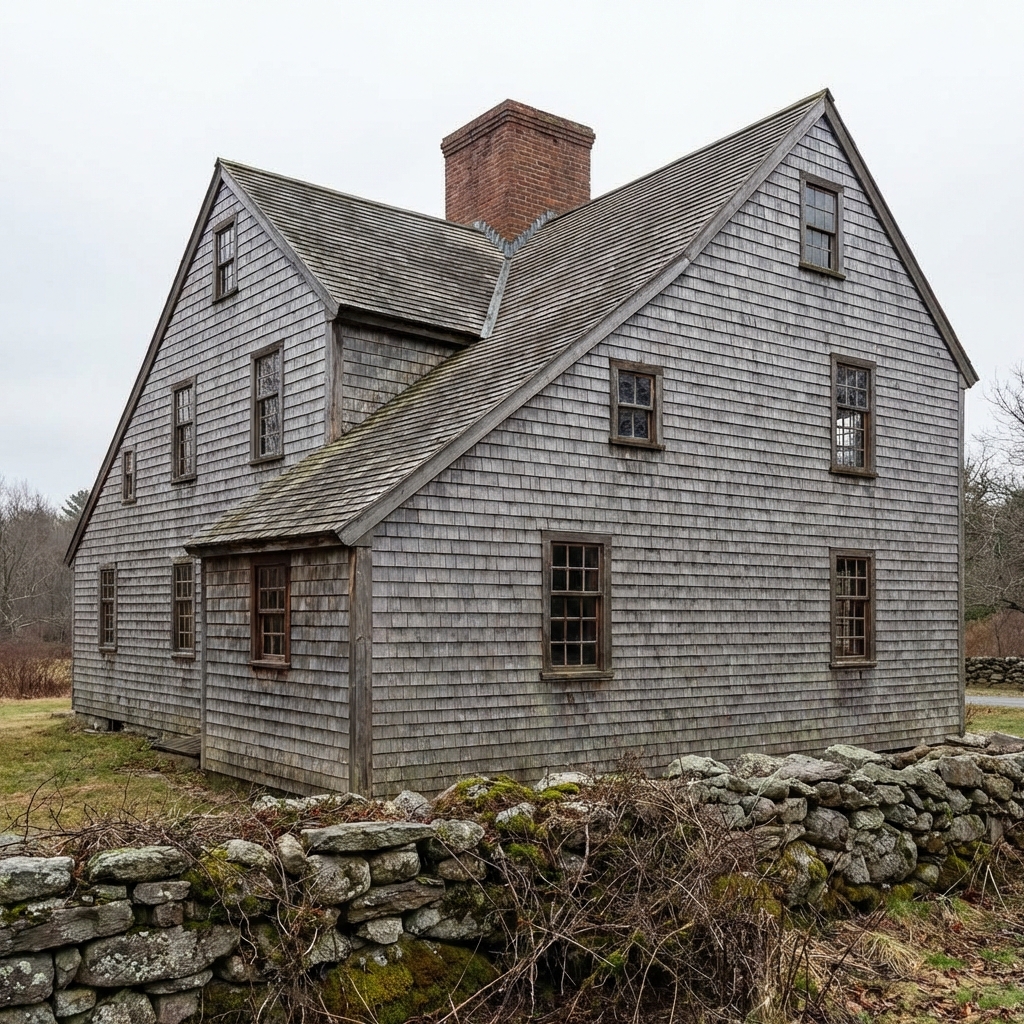
The asymmetrical one that is two stories in the front and one story in the back, with a long, sloping rear roofline that sweeps down almost to the ground. From the side, it looks exactly like the old wooden boxes colonists used to store salt — which is how it got its name.
Saltbox homes originated in 17th-century New England as a clever hack. Families needed more space, so they added a single-story lean-to onto the back of their existing two-story houses and extended the roof down to cover it. Eventually, builders started designing them that way from the start.
The long rear roof was not just practical for adding space — it also faced into prevailing winds, letting harsh New England weather blow up and over the house instead of pushing into the walls. The steep pitch shed rain and snow efficiently. It was smart, simple engineering from people who did not have time for anything else.
Saltbox homes are most common in New England — Connecticut and Massachusetts especially — but the style has been built in pockets throughout the Northeast and even into the Midwest. If you have ever driven through a small New England town and noticed a house that seemed to lean backward, you were looking at a Saltbox.
12. Georgian
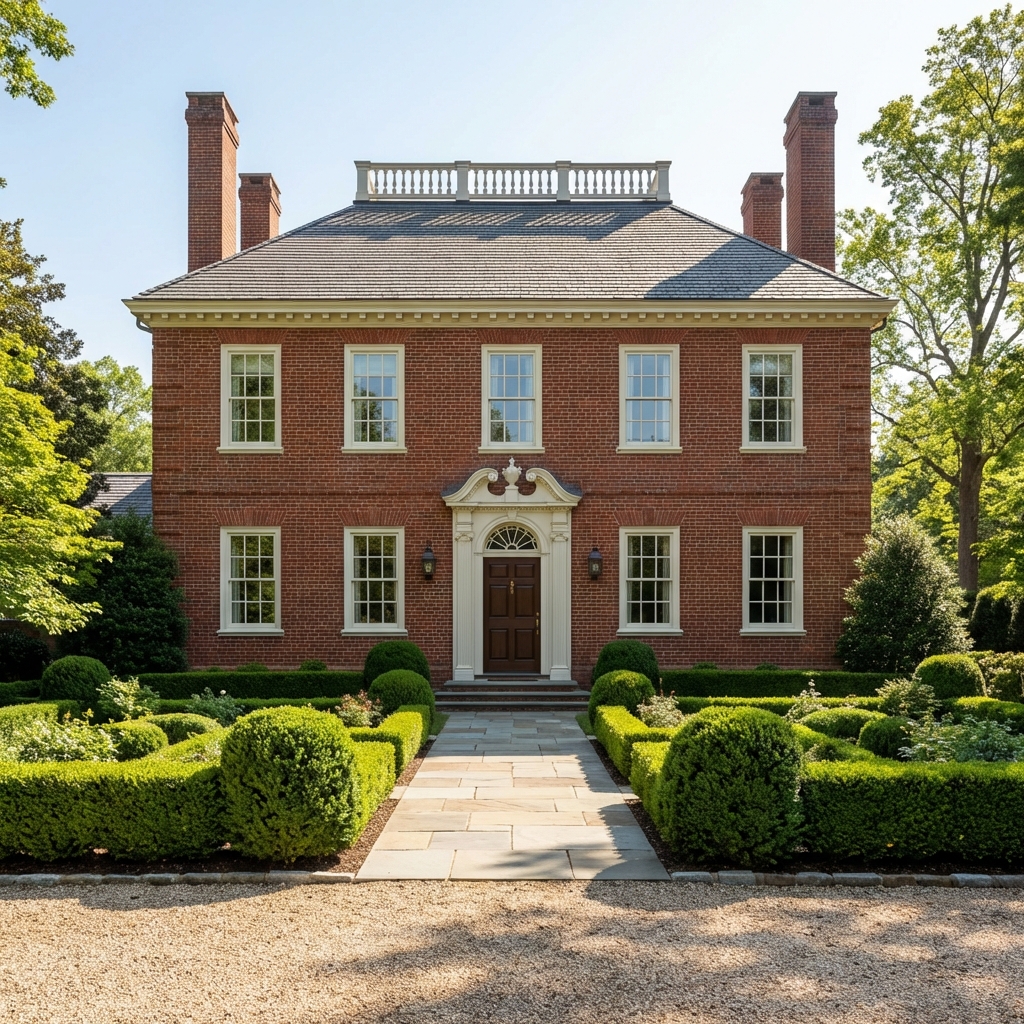
The formal, symmetrical brick house with five windows across the second floor, a center door with a decorative crown or pediment, and an overall sense of serious respectability. If a house looks like it was built by someone who believed in order above all else, it is a Georgian.
Georgian architecture dominated the American colonies from about 1700 to 1780 — the era of King George. These homes were built to show stability and wealth, with rigid symmetry and classical proportions pulled straight from Renaissance pattern books that had crossed the Atlantic from England.
The five-window front is the easiest tell. Georgian homes almost always have five bays across the second floor with the front door centered below. The windows are double-hung with multiple panes. The roofline is usually hipped or side-gabled, and paired chimneys sit at each end.
Georgian homes are the ancestors of both Federal and Colonial Revival styles. If you stand in front of a Georgian, a Federal, and a Colonial Revival lined up on the same street, you can trace the family resemblance — the Georgian being the heavyweight grandfather, the Federal the refined son, and the Colonial Revival the polished modern descendant.
13. A-Frame
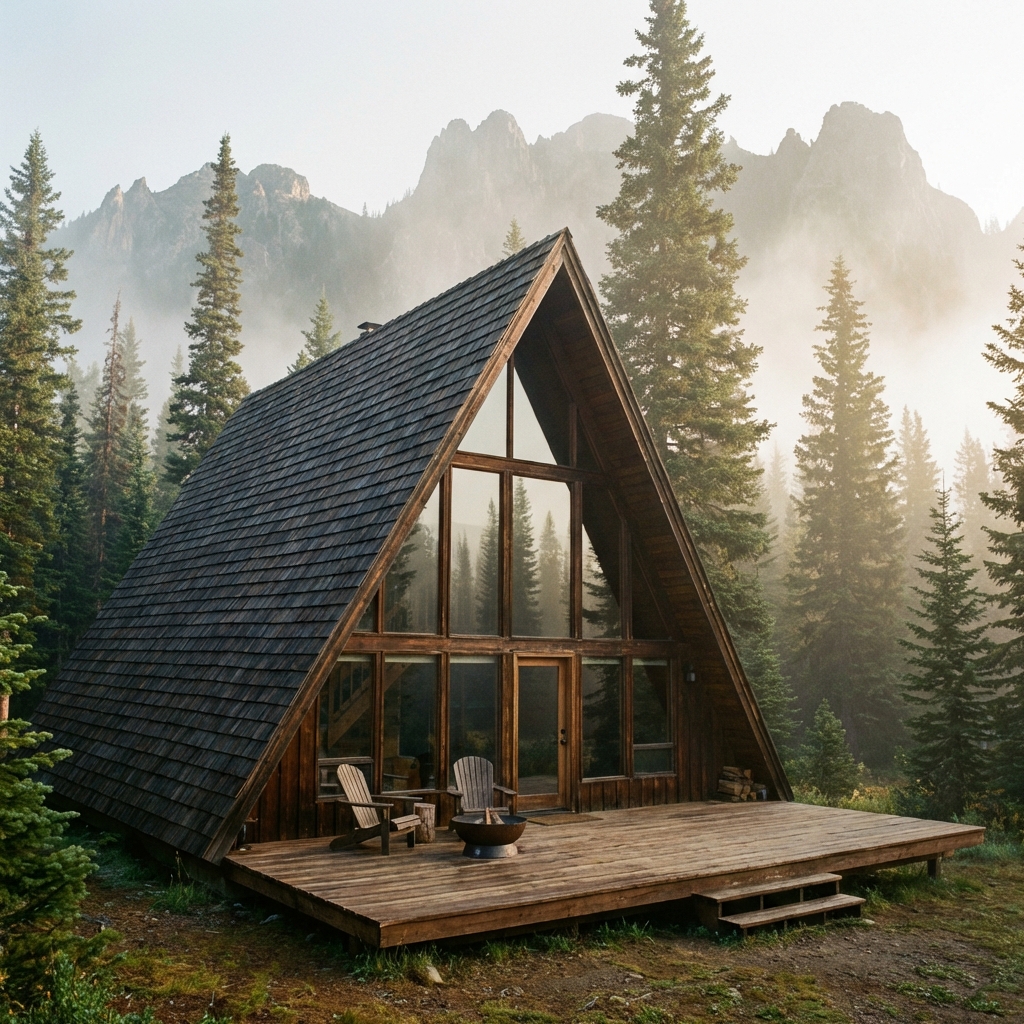
The triangle. The entire house is essentially one giant gabled roof that starts at or near the ground and rises to a steep peak. Two of the three walls are the roof. It looks like a tent made permanent.
A-Frames became popular in the 1950s and 1960s as affordable vacation homes. The design was cheap to build — the dramatic roofline eliminated the need for traditional walls on two sides — and it looked striking in wooded or mountainous settings. Ski lodges and lakeside retreats adopted the shape enthusiastically.
Most people associate A-Frames exclusively with cabins and vacation properties, but plenty were built as full-time residences, especially in areas with heavy snowfall where the steep pitch keeps snow from accumulating. The style never became a mainstream suburban choice, but it never fully went away either.
The A-Frame has had a significant resurgence in recent years, driven partly by the tiny-house movement and partly by social media, where the dramatic interior angles photograph extremely well. If you have seen a dreamy cabin photo on Instagram with soaring ceilings and a wall of windows at the peak, you have seen an A-Frame.
14. Italianate
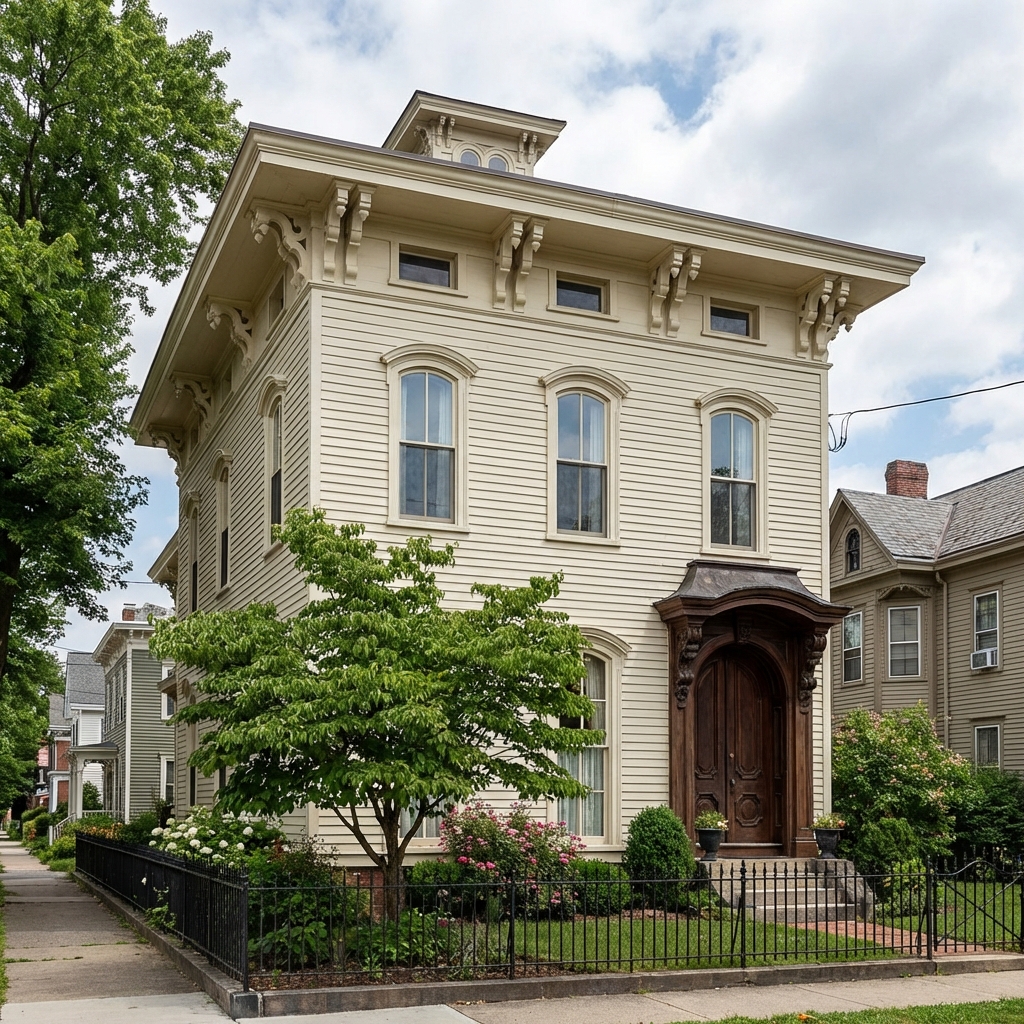
The tall, narrow Victorian with the wide, bracketed eaves. If a house has ornate wooden brackets lined up under the roofline like a row of decorative shelves, it is almost certainly an Italianate.
The style was popular in America from about 1840 to 1885, inspired by the romantic image of Italian country villas — though the actual connection to Italian architecture is loose at best. American architects took the general idea of a tall, dignified home with deep eaves and decorative brackets and ran with it.
Italianates tend to be taller and narrower than other Victorians. They favor flat or low-pitched roofs — a rarity for the era — with those distinctive overhanging eaves supported by elaborate brackets. The windows are often tall, narrow, and arched or rounded at the top. The front door usually has an arched or hooded surround.
You will find Italianates in older urban neighborhoods and small towns across the Midwest and East Coast. They were a favorite of the merchant class in the mid-1800s — prosperous but not ostentatious. Many survive as law offices, funeral homes, or beautifully maintained private residences on tree-lined streets.
15. Prairie
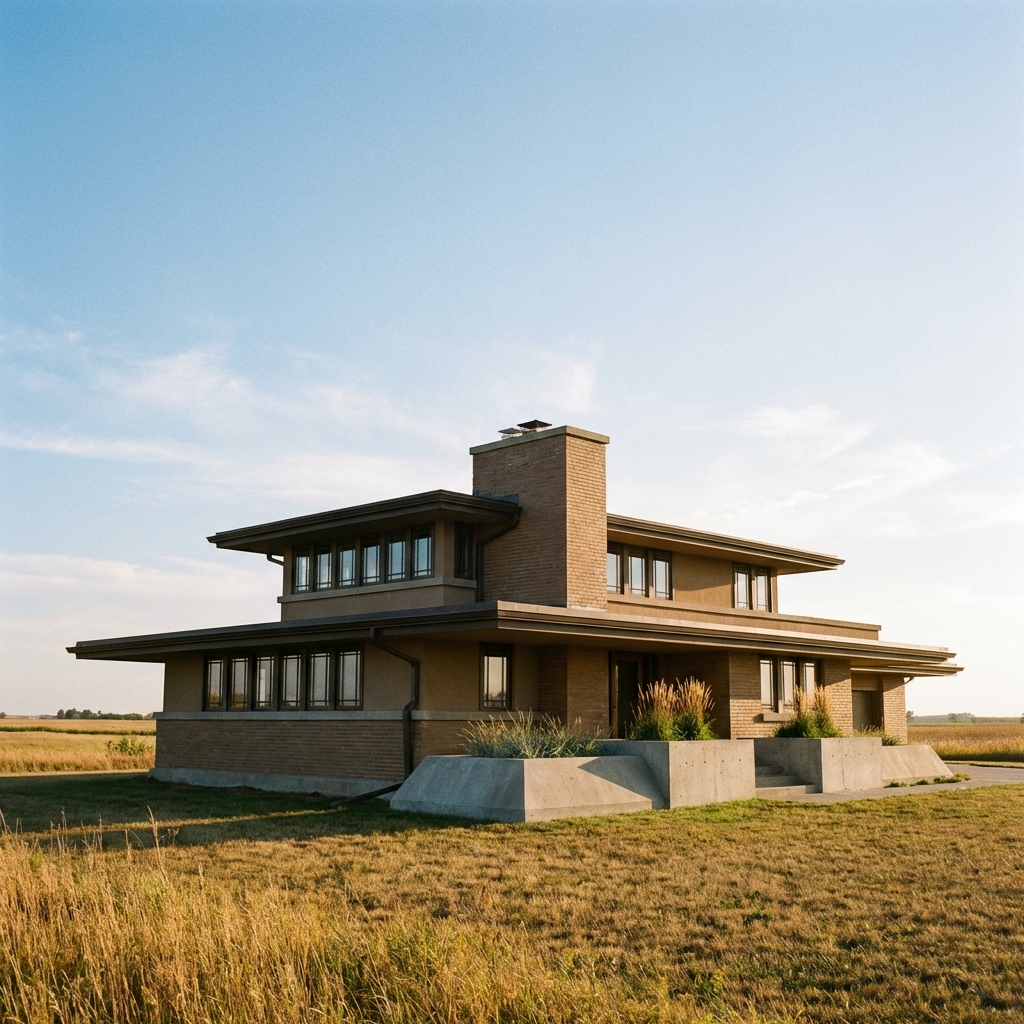
Frank Lloyd Wright’s signature residential style — long, low, and horizontal, designed to blend into the flat Midwestern landscape rather than rise above it. If a house looks like it is trying to hug the earth, it is a Prairie.
Prairie homes were built primarily between 1900 and 1920, and they were revolutionary. Horizontal bands of windows. Deep overhanging eaves with flat or hipped roofs. Central chimneys. Open interior floor plans that eliminated the boxy room-by-room layout of Victorian homes. Everything emphasized the horizontal line.
Wright was the most famous practitioner, but he was not alone. Architects like George Maher, Walter Burley Griffin, and Marion Mahony Griffin all worked in the Prairie style, primarily in and around Chicago where the movement began.
The pure Prairie home is relatively uncommon outside the Midwest, but its influence is enormous. The Ranch house — the most popular American home of the 1950s and 60s — borrowed heavily from Prairie principles. So every time you look at a long, low, one-story house with a wide roofline, you are seeing Wright’s DNA at work.
16. Spanish Revival / Mission
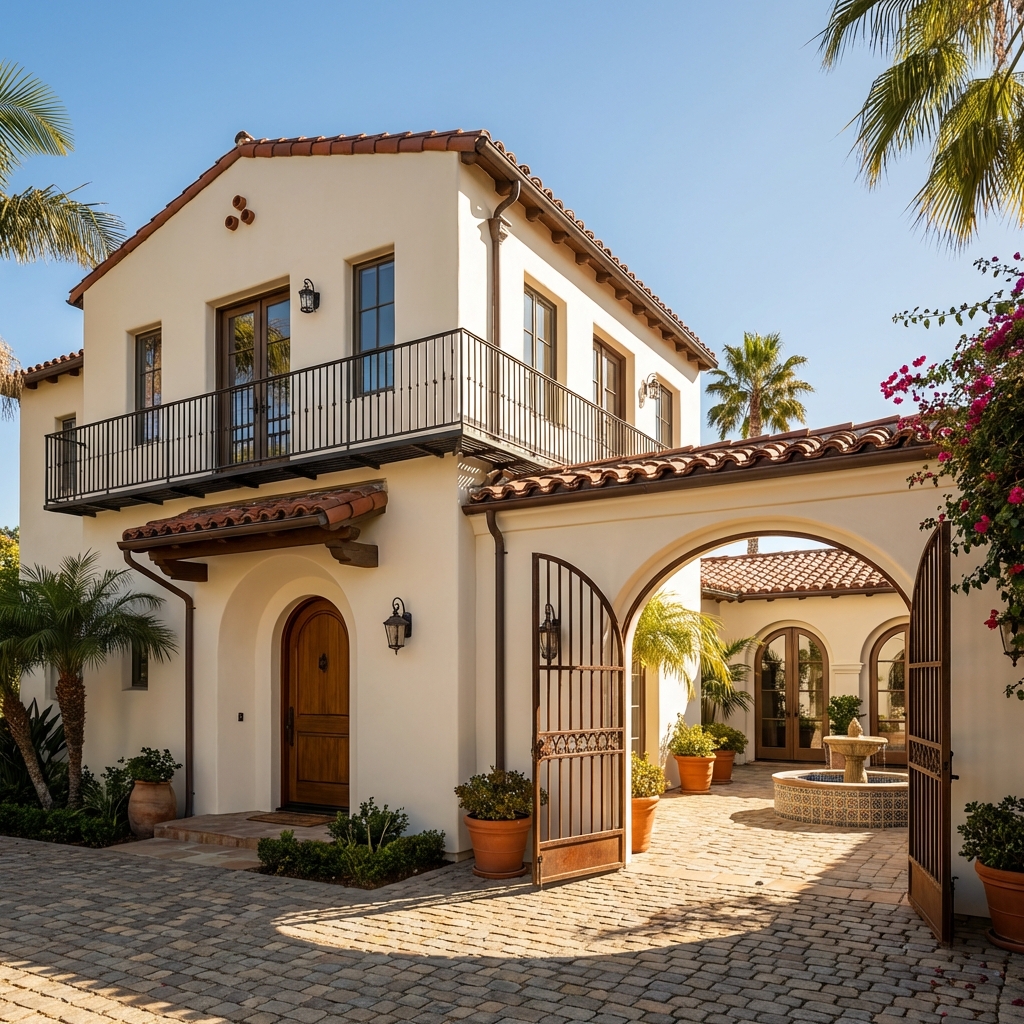
The stucco one with the red clay tile roof, arched doorways, and wrought-iron details. If a house looks like it belongs in a sunlit courtyard somewhere, it is a Spanish Revival.
The style draws from Spanish colonial architecture and the California missions, and it was enormously popular from about 1915 to 1940 — particularly in California, Florida, Texas, and the Southwest. The 1915 Panama-California Exposition in San Diego set the whole thing off, and within a decade, entire neighborhoods were being built in the style.
The identifying features are hard to miss. Smooth stucco walls, usually white or cream. A low-pitched roof covered in barrel-shaped red clay tiles. Arched windows and doorways. Courtyards, balconies, and decorative ironwork. Some versions lean heavier on the Mission influence, with curved parapets and bell-tower shapes at the roofline.
Spanish Revival is mostly associated with warm-weather states, but you will occasionally spot one in unexpected places — a builder in Ohio or Pennsylvania who fell in love with the look and decided to make it work. In its core regions, though, it is as common as Colonial Revival is in the Northeast.
17. English Cottage
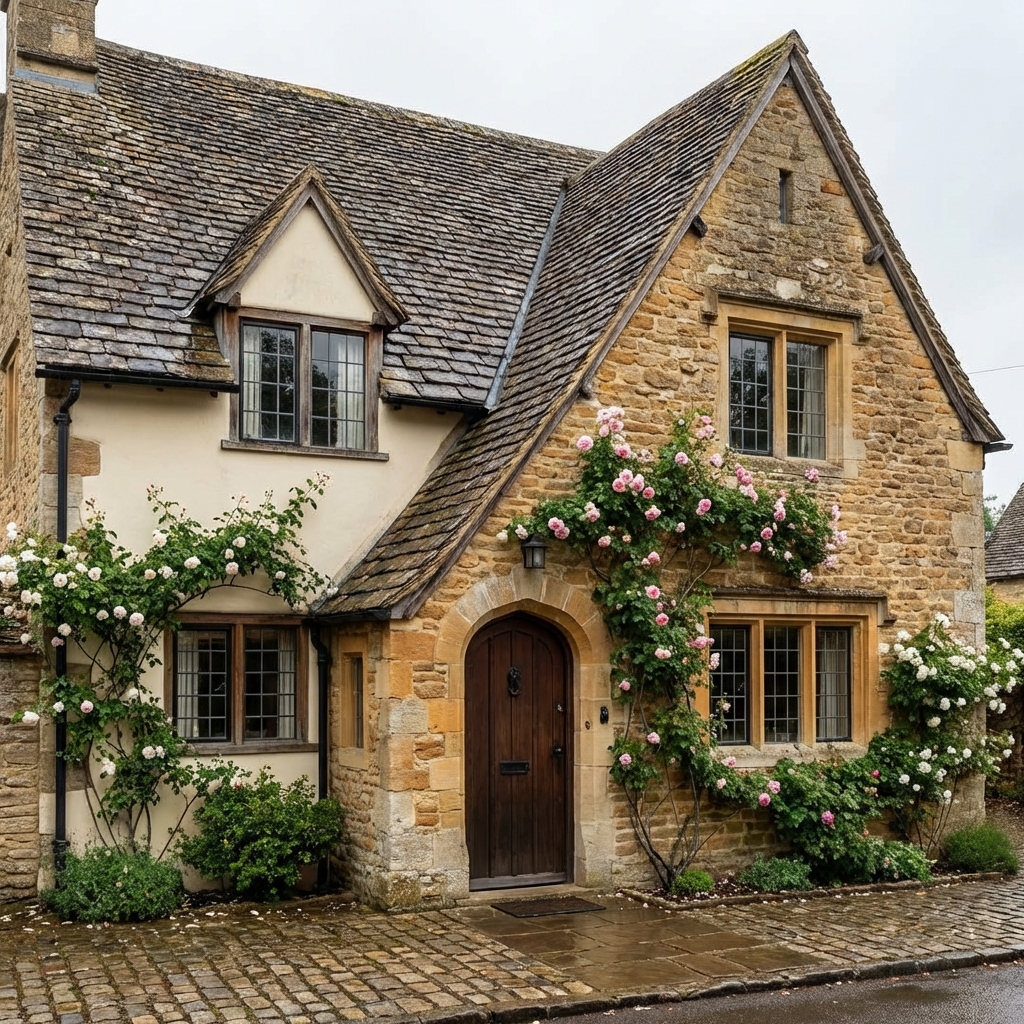
The cozy one with the steeply pitched roof, the rounded or arched front door, and a general feeling of having been plucked from the English countryside. English Cottages look like they were designed for hobbits, and people love them for it.
The style was popular in America during the 1920s and 1930s, part of the same romantic revival movement that gave us Tudor Revival homes. But where Tudor Revivals tend to be larger and more dramatic, English Cottages are deliberately small and charming. Think steeply pitched cross gables, rolled eaves that mimic the look of thatch, casement windows with divided panes, and stonework or brick accents mixed with stucco.
The front door is often the star of the show. A heavy, arched wooden door set into a stone or brick surround — sometimes with a tiny eyebrow-shaped hood over it — gives these homes their unmistakable fairy-tale quality.
You will find English Cottages scattered through older suburban neighborhoods, usually sitting quietly between larger homes. They are almost always the ones that make people slow down and say “what a cute little house.” Now you know what to call them.
18. Contemporary / Shed Style
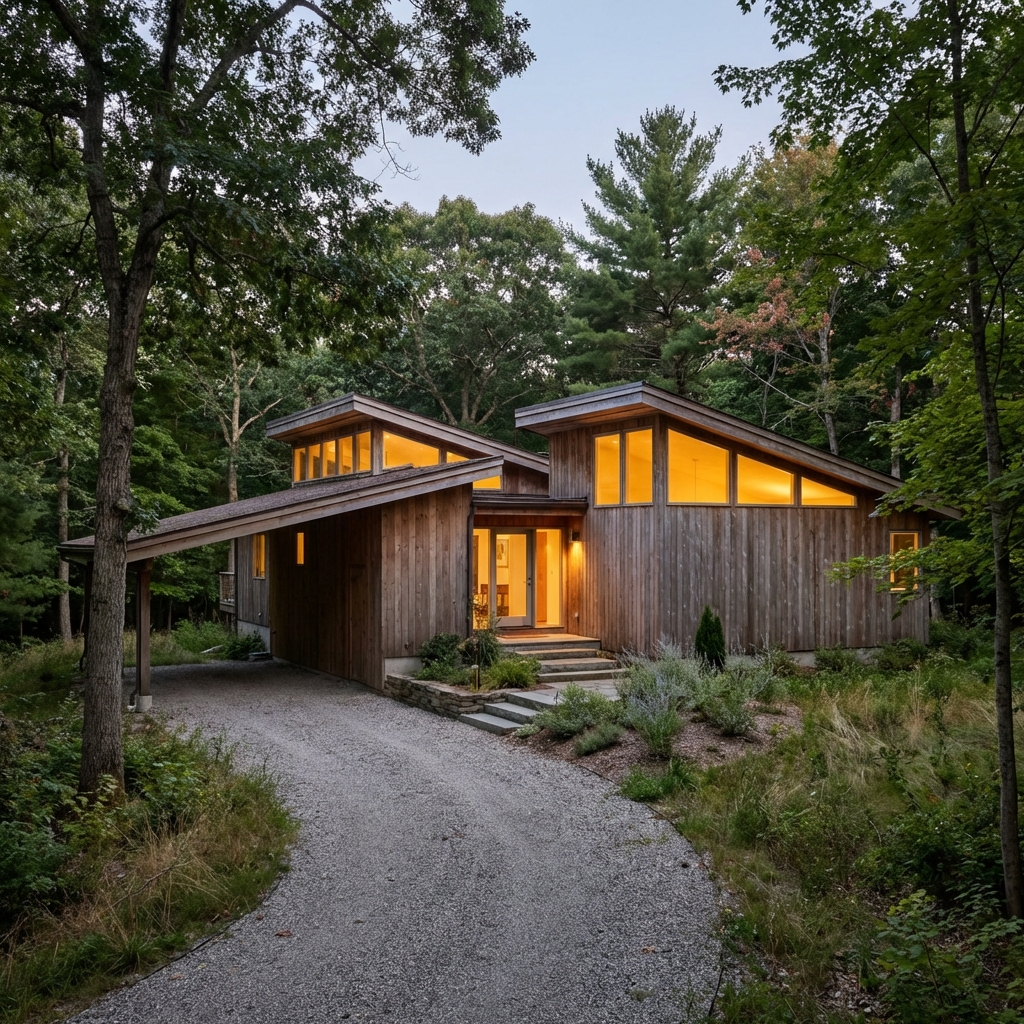
The angular one from the 1970s and 80s with the asymmetrical roofline that looks like several different roof planes crashing into each other. If a house appears to be made of competing geometric shapes — and it was built during the Carter or Reagan administration — you are probably looking at a Contemporary.
Contemporary and Shed-style homes were a reaction to the boxy uniformity of mid-century suburbs. Architects tilted the rooflines, added clerestory windows at odd angles, and used natural materials like cedar siding and stone to make homes feel organic and individual.
The shed roof is the hallmark feature — a single-slope roof plane that angles in one direction rather than peaking in the center. Many Contemporary homes stack multiple shed roofs at different heights and angles, creating dynamic, sculptural silhouettes that look nothing like any historical style.
These homes tend to polarize people. Some find them strikingly original. Others think they look like a building that could not decide what it wanted to be. Either way, they are a distinctly American contribution to residential architecture, and if you drive through a 1970s-era subdivision, you will know them when you see them.
19. Farmhouse
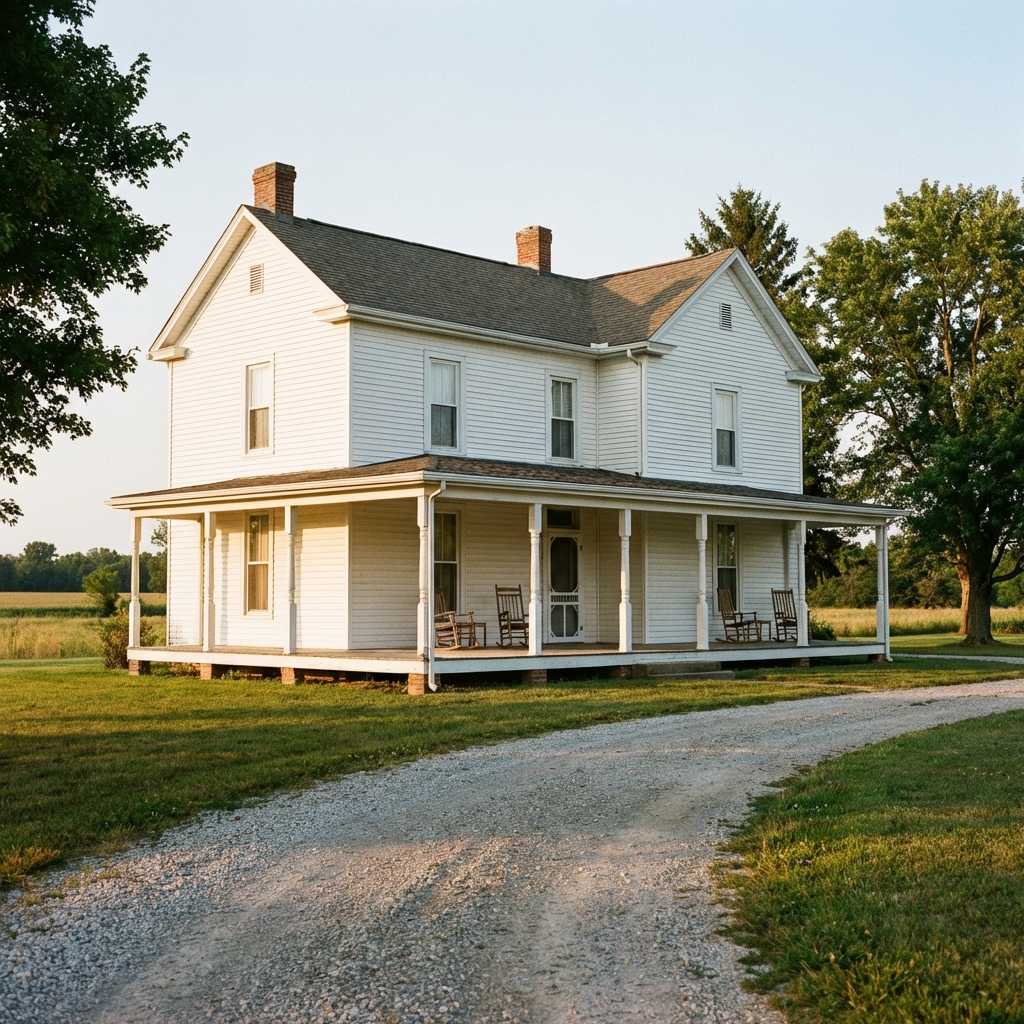
The simple, gabled one with the big front porch that everyone just thinks of as “old.” Farmhouses are so embedded in the American landscape that most people do not even consider them a style — they just think of them as the default house that existed before styles were invented.
But the Farmhouse is a style, and a specific one. Typically two stories with a side-gabled roof, clapboard siding, a symmetrical or slightly asymmetrical front, and a wide porch that runs across most or all of the facade. The form is practical and undecorated — built for working families who did not have time or money for ornament.
Farmhouses were built across rural and small-town America from the early 1700s through the early 1900s, evolving gradually with available materials and regional preferences. Some have Folk Victorian trim added later. Some got Colonial Revival updates. But the basic form — that tall, rectangular shape with the dominant front porch — stayed consistent.
The style has had a massive modern revival thanks to the “modern farmhouse” trend. Joanna Gaines and the shiplap revolution turned the Farmhouse into one of the most popular new-construction styles in the country. The originals, though — the real ones, with the settling foundations and the creaky porches — are the ones that earned the name.
20. Shotgun House
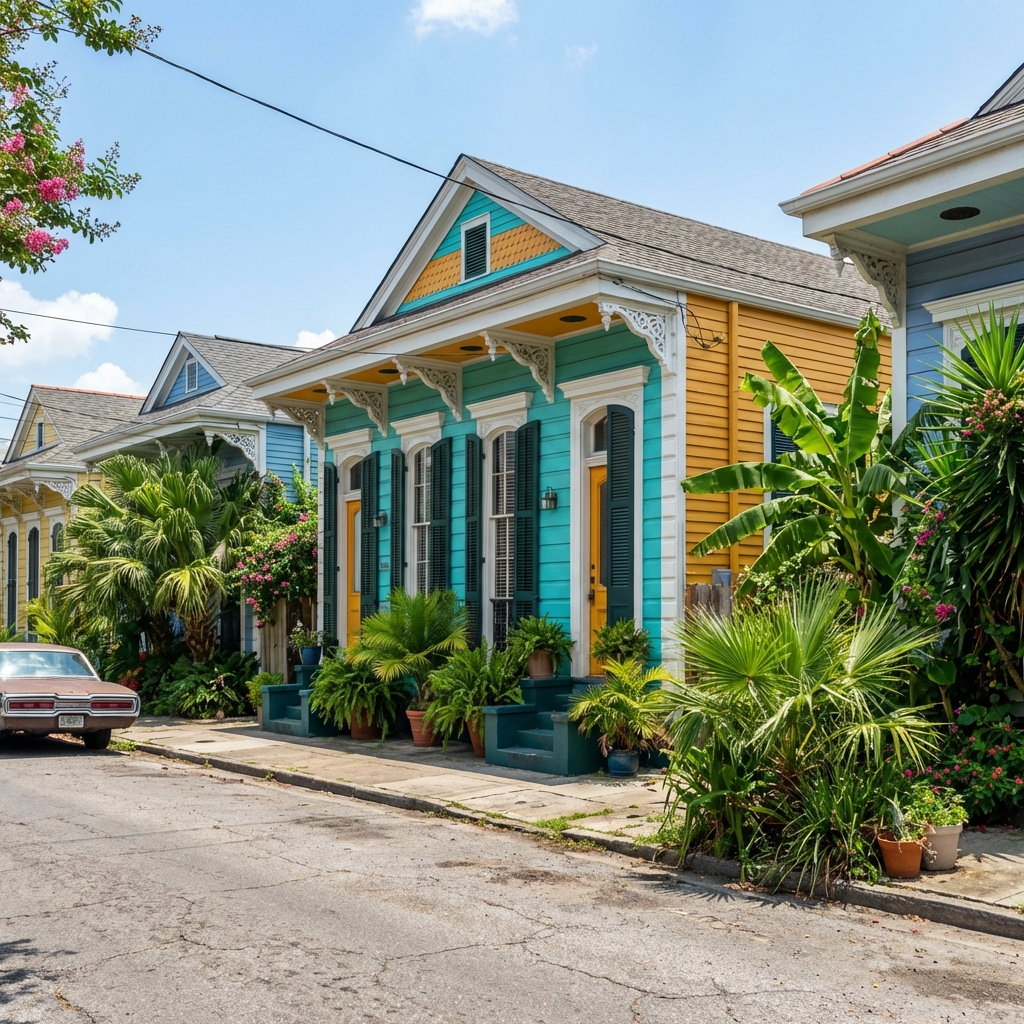
The narrow one. One room wide, several rooms deep, with the front door on the short end facing the street and all the rooms lined up in a row behind it. No hallway. You walk straight through every room to get from front to back.
The name supposedly comes from the idea that you could fire a shotgun through the front door and the bullet would travel clean through every room and out the back — though the name may actually derive from the West African word “togun,” meaning “house” or “gathering place.”
Shotgun houses originated in New Orleans in the early 1800s and became the dominant house type across the American South from the Civil War through the 1920s. They were cheap to build, fit on narrow lots, and the front-to-back layout with doors at each end created natural airflow in the days before air conditioning.
You will find them throughout New Orleans, Houston, Louisville, Atlanta, St. Louis, and as far north as Chicago. They are some of the most historically significant — and underappreciated — houses in America. In recent years, gentrification has turned many into highly sought-after properties, and some neighborhoods full of restored shotguns now command prices that would have been unthinkable a generation ago.
21. Second Empire
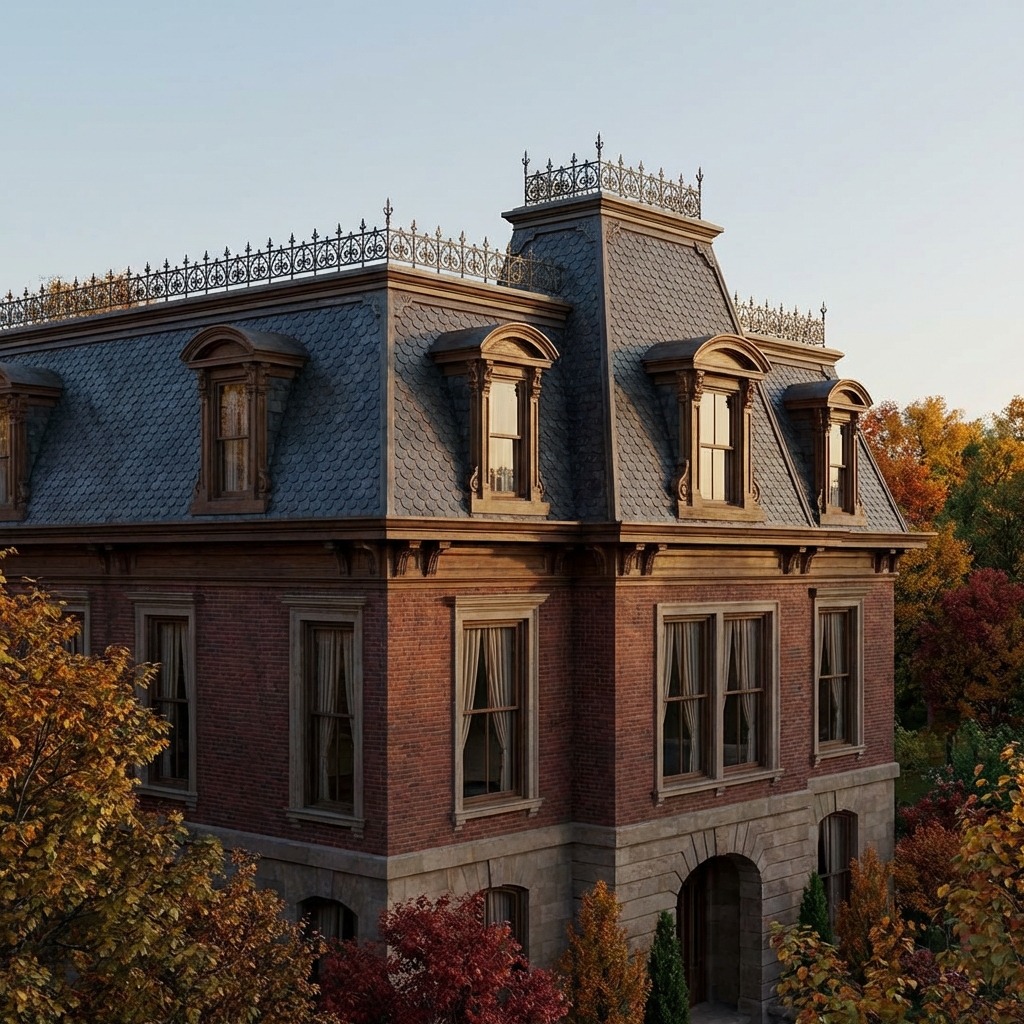
The one with the mansard roof — that distinctive roofline that is nearly vertical on the sides and flat or gently sloped on top, with dormer windows poking out of the steep lower slope. If a house looks like it is wearing a fancy French hat, it is a Second Empire.
The style takes its name from the Second French Empire under Napoleon III, when Baron Haussmann redesigned much of Paris in the 1850s and 60s. American architects fell in love with the look and brought it home, where it became hugely popular from about 1855 to 1885.
The mansard roof was not just stylish — it was practical. By making the upper portion of the roof nearly vertical, it created a full, usable top floor within the roofline. It was essentially an attic that functioned as a real story, and some towns even taxed it differently than a full additional floor.
Second Empire homes are sometimes called “haunted house style” because the mansard roof and tall dormer windows create a silhouette that horror movies love. The Bates Motel in Psycho is a Second Empire. So are a lot of the grand old homes in small-town America that local kids swear are haunted. They are not haunted. They are just French.
22. Shingle Style
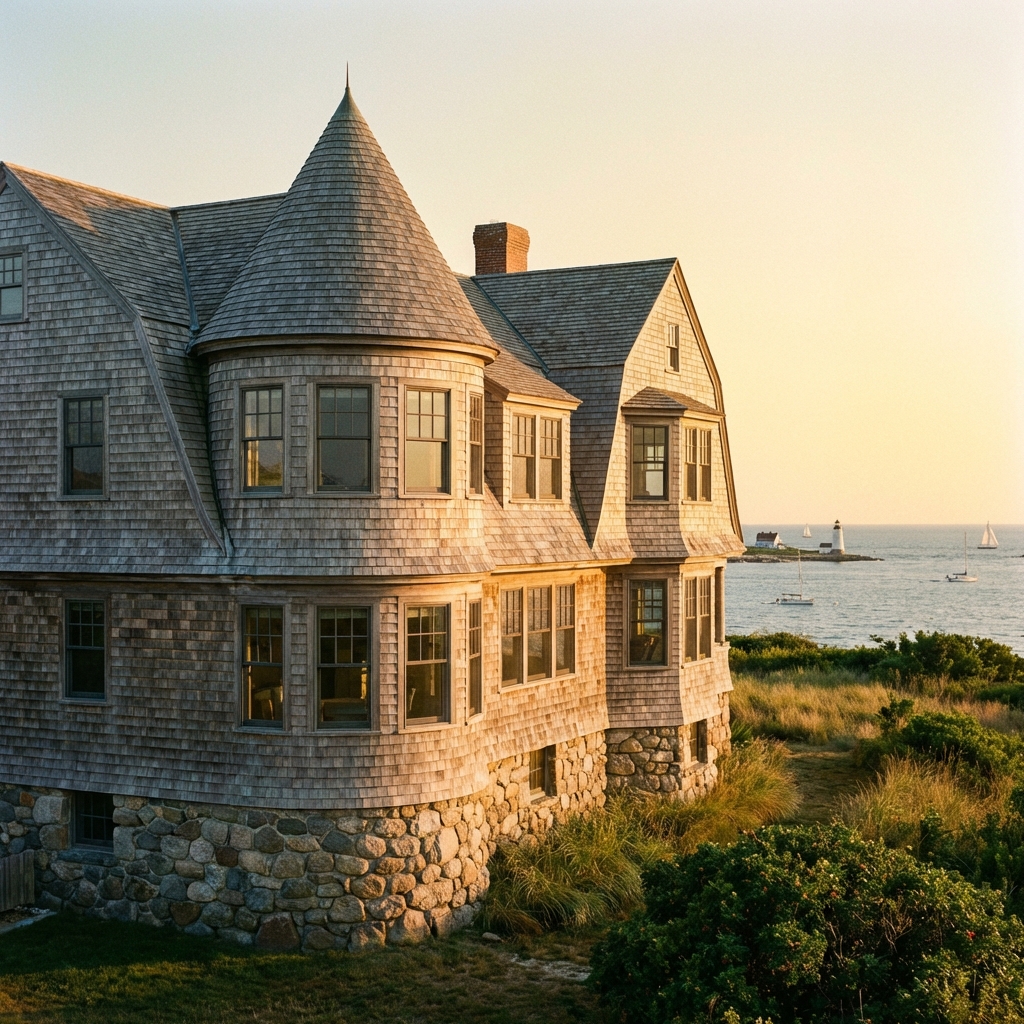
The one that looks like someone took a Queen Anne and wrapped it entirely in wood shingles — no trim, no paint changes, no contrasting materials. Just shingles everywhere, flowing around corners and over curves like a second skin.
Shingle Style emerged in the 1880s in New England, particularly along the coast. Architects like McKim, Mead and White and H.H. Richardson used continuous shingle cladding to unify the complex, irregular massing of Victorian-era homes into something that felt more organic and grounded.
Where Queen Anne homes are busy with multiple materials and colors, Shingle Style homes are monochromatic and fluid. The shingles wrap around bay windows, turrets, and porch columns without a break. The effect is of a house that was carved from a single piece of wood.
The style never spread far beyond the Northeast coast. It was an upper-class choice — these were summer houses for wealthy families in places like Newport, Nantucket, and the Hamptons. But its influence on later architecture was significant. The Shingle Style helped bridge the gap between Victorian excess and the simpler aesthetic of the Arts and Crafts movement.
23. Gothic Revival
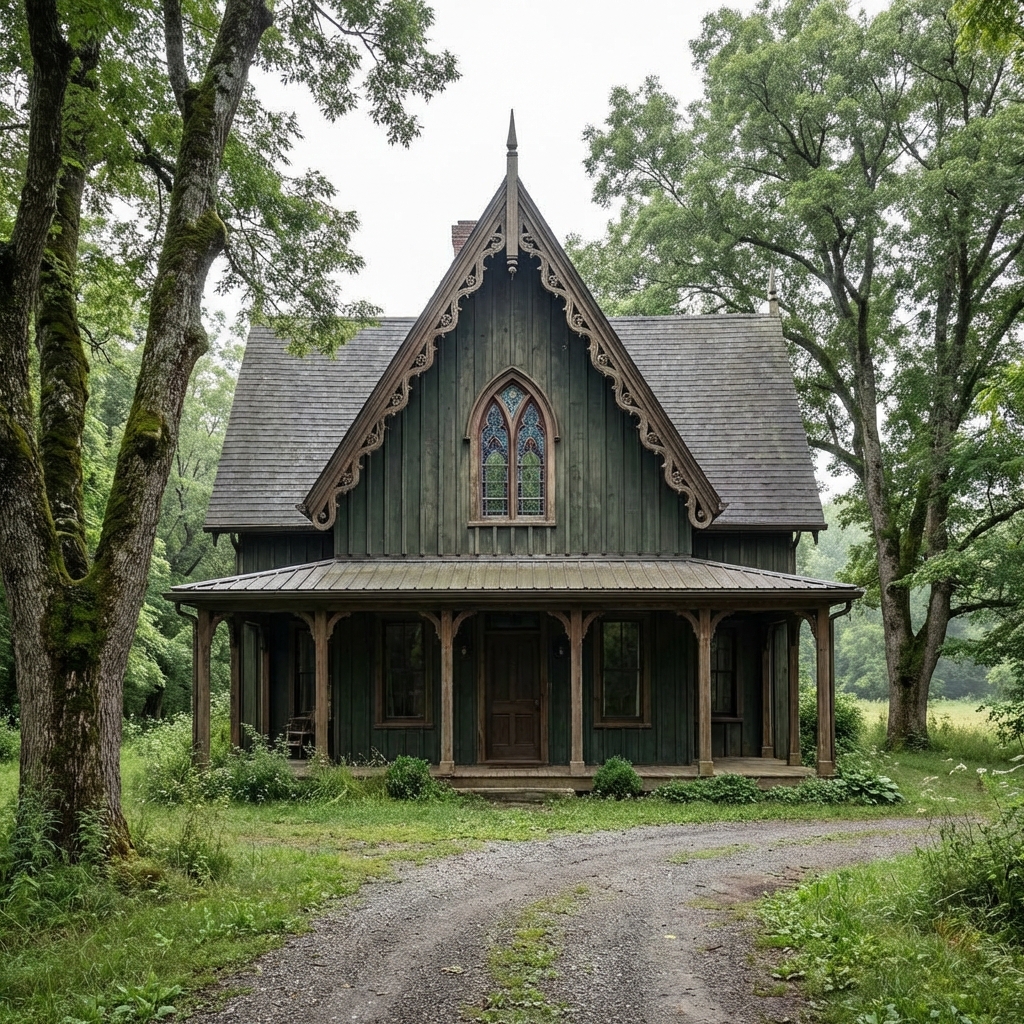
The one with the steep, pointed gables and the windows that come to a sharp arch at the top. If a house looks like it borrowed its roofline from a medieval cathedral — but in a residential, almost romantic way — it is a Gothic Revival.
The style was popular in America from about 1840 to 1880, promoted heavily by architect Andrew Jackson Downing through his hugely influential pattern books. Downing believed houses should be picturesque and harmonize with their natural surroundings, and the Gothic Revival — with its vertical lines and dramatic pointed shapes — was his weapon of choice.
The key features are those steeply pitched gables, often decorated with ornate wooden trim called “gingerbread” or bargeboards along the edges. Pointed-arch windows — the same shape you see in Gothic churches — are the clearest identifier. Board-and-batten siding is common on the more modest versions.
Gothic Revival homes tend to be scattered rather than concentrated in neighborhoods. You are more likely to find one standing alone on a rural road or tucked between other styles on a small-town street. They have a quiet drama to them — not as showy as a Queen Anne, but impossible to overlook once you know what you are seeing.
24. Folk Victorian
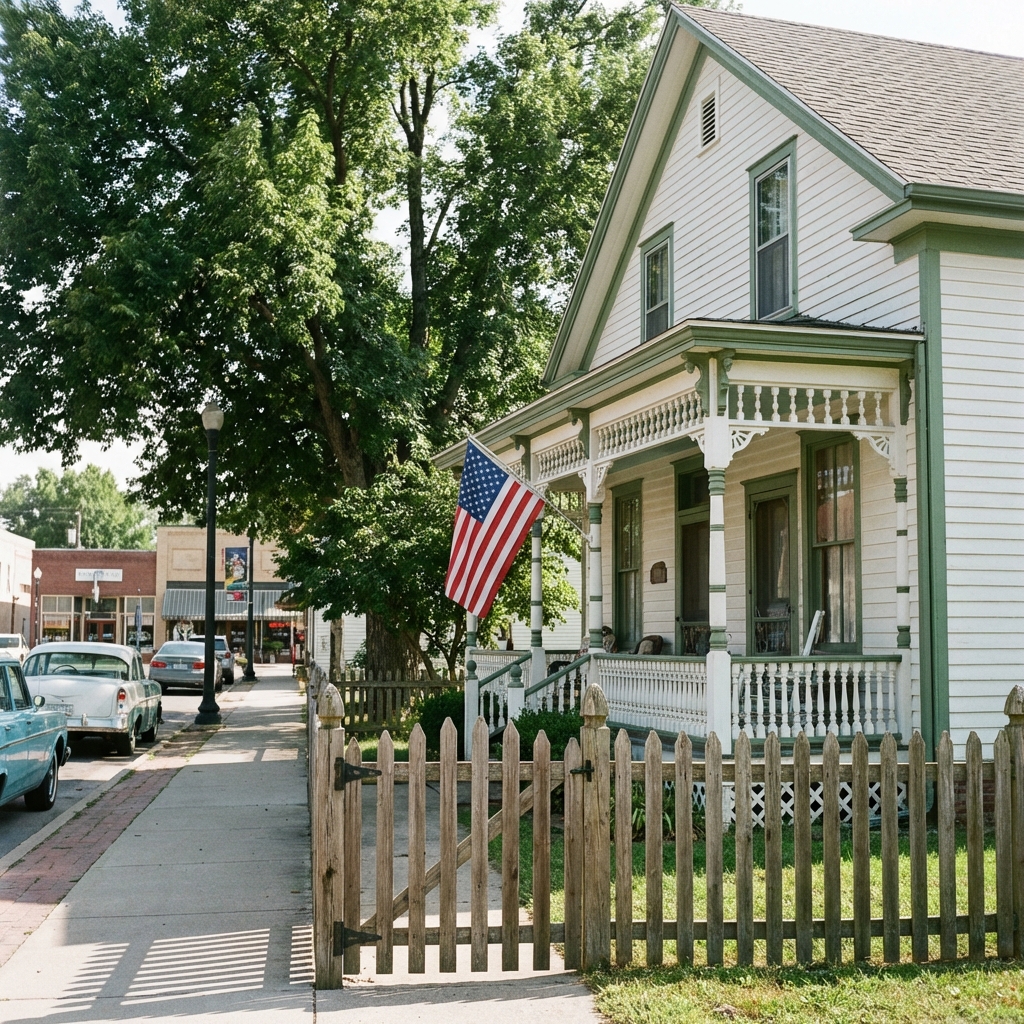
The modest one with just enough Victorian trim to qualify. A simple rectangular house — often a basic two-story gable-front or gable-and-wing form — decorated with mass-produced spindle-work, brackets, and porch details that became widely available after the railroad and the Industrial Revolution made factory-made ornamentation cheap.
Folk Victorian was the democratic version of the Queen Anne. Working-class and middle-class families could not afford the elaborate, architect-designed Victorians of the wealthy, but they could absolutely nail some decorative brackets under the eaves and add turned porch columns from a catalog. And they did — enthusiastically.
These homes were built from about 1870 to 1910, primarily in small towns and rural areas where carpenters worked from simple floor plans and dressed them up with whatever ornamental millwork they could get. The house underneath is usually a straightforward folk form — nothing fancy about the shape or layout. The decoration is what makes it Victorian.
Folk Victorians are everywhere in small-town America. They are the houses on Main Street with the nice porch and the bit of gingerbread trim — charming but humble, the kind of house that was built for people who wanted a little beauty in their lives without breaking the bank.
25. Brownstone / Row House
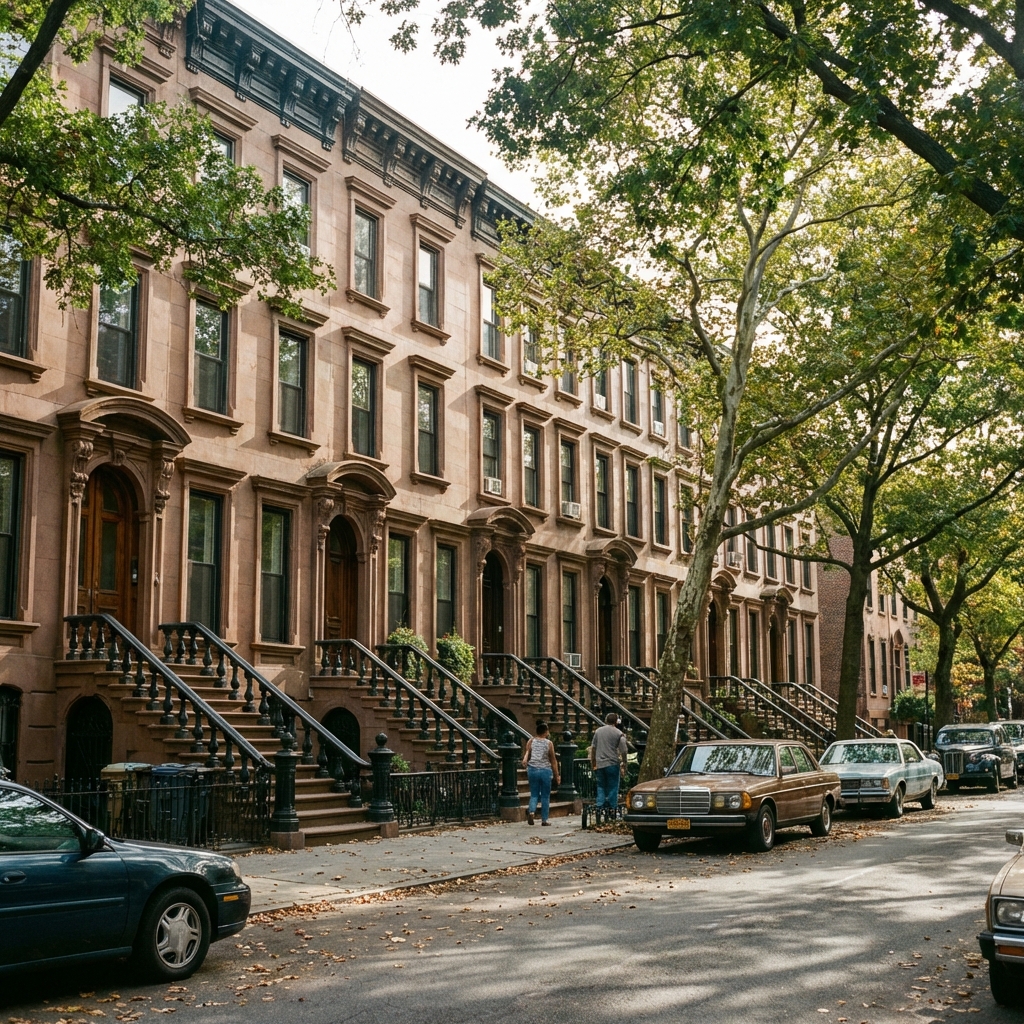
The narrow, attached, multi-story houses built wall-to-wall along city streets, with stoops leading up to the front door and — in the classic version — facades clad in brown sandstone. When people say “brownstone,” they usually mean this specific type of urban row house, though not all row houses are brownstones and not all brownstones are brown anymore.
Row houses have been a feature of American cities since the late 1700s. Philadelphia, Baltimore, Boston, and Washington D.C. all have vast neighborhoods of them. New York City’s brownstone-lined streets in Brooklyn and Manhattan became some of the most iconic residential images in the country.
The style was practical urbanism. Building houses that share side walls saved materials, maximized expensive city land, and created dense, walkable neighborhoods. The facades were the canvas — builders applied Federal, Italianate, Queen Anne, and Renaissance Revival details to what was essentially the same underlying structure.
Most people recognize a brownstone or row house instantly, but they rarely think of it as an architectural style — it is just “a city house.” But the row house is as much a distinct American building type as the Cape Cod or the Farmhouse, and it shaped the character of more American neighborhoods than almost any other style on this list.
Conclusion
Twenty-five styles. Twenty-five names. And the next time you drive through any neighborhood in America, you are going to see them differently.
That is the thing about houses — once you learn what to look for, you cannot unsee it. The gambrel roof on the Dutch Colonial. The brackets under the Italianate eaves. The mansard roof on the Second Empire that the neighborhood kids think is haunted. Every one of them is a piece of history sitting right there on the street, hiding in plain sight.
Most of these homes were built by people who never imagined anyone would still be living in them — let alone writing about them. They just needed a place to raise a family. But the styles they chose, and the details they added, turned out to be more durable than they ever expected.
So the next time someone points at a house and says “I love that old-fashioned one,” you can tell them exactly what it is. And they will probably look at you like you just performed a magic trick.